 Skip to content
People often think the “design” is what makes a leather accessory premium. In real life, the leather choice does more heavy lifting than the design ever will. Two wallets can share the same stitching, same edge paint, same logo placement—yet one feels expensive and the other feels ordinary. Most of the time, that difference comes down to a material decision you make early: full grain vs top grain leather.
Both are real leather from the upper layer of the hide. Both can be excellent. But they behave differently in your customer’s hands. Full grain shows more natural character and usually develops a deeper patina. Top grain tends to look more uniform from piece to piece and is easier to control in mass production. The “best” option depends on what you’re building: a rugged belt that should look better after five years, or a smooth, consistent handbag line that must match color and texture across thousands of units.
Here’s why this matters: returns, complaints, and bad reviews rarely say “you chose the wrong leather grade.” Instead, customers say things like “it scratched too easily,” “it feels plastic,” “it looks different from the photos,” or “it didn’t age well.” Those are leather selection problems—just described in everyday language.
Full grain leather keeps the hide’s natural grain layer intact, so it’s usually the most durable and develops a richer patina over time. Top grain leather comes from the same upper layer but is lightly sanded and finished to improve uniformity and smoothness. Choose full grain when you want maximum character and long-term wear; choose top grain when you need cleaner consistency, smoother feel, and easier production control.
A brand once asked for “premium leather” for a wallet line. After sampling, their team realized the real decision wasn’t “premium or not”—it was whether customers wanted a wallet that shows natural grain and patina, or a wallet that stays smooth and consistent for years. That’s the real full grain vs top grain conversation.
What Is Full Grain vs Top Grain Leather?
Full grain vs top grain leather is mainly a difference in surface treatment. Full grain keeps the natural grain surface; top grain is lightly corrected (sanded) and finished for a smoother, more uniform look. Both are strong leathers, but they differ in durability feel, aging behavior, appearance consistency, and the way they perform in accessories like bags, wallets, belts, and straps.
What Is Full Grain Leather in Full Grain vs Top Grain?
Full grain leather is the top surface of the hide with the grain layer left intact. That grain layer is where the hide’s fiber structure is densest, which is why full grain is known for strength and long service life.
What brands and product teams usually notice first is the look and hand-feel:
- The surface shows natural pores and grain variation
- Each panel can look slightly different, which signals “real leather” to many customers
- The leather typically becomes more attractive over time as it develops patina
Common full grain finishes used in accessories:
- Aniline: minimal finish, very natural look, stronger patina, shows marks more easily
- Semi-aniline: light protective finish, still natural, better stain resistance
- Wax/oil pull-up (often full grain): rich color movement, great for rugged styles
Full grain strengths that matter in real products:
- Better resistance to fiber breakage under repeated bending (important for belts, straps, wallet folds)
- More natural aging (scratches can blend into patina rather than staying bright)
- Higher perceived value in premium positioning
Full grain is often specified for:
- belts that must hold shape
- straps that must resist stretching
- wallets where the fold line sees thousands of cycles
- heritage-style bags that are meant to look better with use
Full grain reality check: it’s not “perfect-looking” leather. It’s strong leather with natural character. If your brand demands identical grain on every unit, full grain may require tighter sorting and more material planning.
What Is Top Grain Leather in Full Grain vs Top Grain?
Top grain leather is also from the upper layer of the hide, but the surface is lightly sanded or buffed to remove small imperfections. After that, the leather receives a finishing system that creates a more consistent appearance.
What top grain does well for brands:
- Cleaner visual consistency across a production run
- Smoother surface feel, especially for fashion accessories
- Easier color matching, especially for large orders
Top grain is often paired with finishes such as:
- Pigmented finish: strong color consistency and stain resistance (less natural look)
- Semi-aniline: balance of natural look and protection
- Embossed grain: consistent texture for style control
Where top grain shines in accessories:
- handbags where the surface must look uniform under retail lighting
- wallets that need smooth feel and easy cleaning
- accessories where you want fewer visible natural marks
Top grain reality check: heavy finishing can reduce the “raw leather feel.” The more coating you add, the more the surface can feel sealed. A well-made top grain still feels premium, but a heavily coated version can feel closer to “coated leather.” The key is choosing the right finishing level for your market and price point.
Why Do Buyers Compare Full Grain vs Top Grain?
Brands compare full grain vs top grain because the decision directly affects:
- customer touch perception (natural vs smooth)
- aging behavior (patina-rich vs stable appearance)
- quality consistency (variation vs uniformity)
- pricing and yield (sorting needs and usable area per hide)
- risk control (scratches, stains, color matching)
In product development, this choice usually comes down to what matters more for your SKU:
- “We want it to look better after 1–3 years” → lean full grain
- “We need every unit to look the same on the shelf” → lean top grain
- “We sell online and returns are expensive” → choose the leather that minimizes appearance surprises
Here’s a practical comparison that sourcing teams use when deciding material direction:
| Factor | Full Grain | Top Grain |
|---|---|---|
| Surface look | natural variation | more uniform |
| Feel in hand | more “real leather” texture | smoother, refined |
| Aging | stronger patina | more stable look |
| Scratch visibility | marks blend over time | depends on finish; may show lighter scratches |
| Stain resistance | depends on finish; aniline is low | often higher with pigmented/semi finishes |
| Production consistency | needs sorting | easier to standardize |
| Best for | premium/heritage, long-life items | fashion, uniform appearance, scalable runs |
From a manufacturer view (what factories care about):
- Full grain needs tighter selection and panel planning to maintain consistent appearance in one order
- Top grain helps reduce variation risk, which is useful when producing thousands of units for retail
At SzoneierLeather, when clients ask “Which is better?”, the better question is: what does your customer value more—natural character or visual consistency? Once that’s clear, the leather choice becomes much easier, and the development process becomes faster.
What Are the Key Differences in Full Grain vs Top Grain?
The key differences between full grain and top grain leather appear in four areas that directly affect leather accessories: fiber strength, surface appearance, aging behavior, and production cost. Full grain leather keeps the hide’s natural grain layer intact, giving it stronger fibers and a more natural surface. Top grain leather is lightly corrected and finished, which improves visual consistency and makes manufacturing easier for large production runs.
Understanding these differences helps product developers avoid common mistakes—such as choosing leather that looks beautiful on day one but performs poorly after months of use.
Which Is Stronger in Full Grain vs Top Grain?
Strength in leather comes from the density of collagen fibers near the grain layer. This top layer contains the tightest fiber structure of the hide. Because full grain leather preserves that structure, it typically offers the highest durability.
When hides are sanded to create top grain leather, a thin portion of the natural grain layer is removed. This slightly reduces fiber density at the surface, though the material remains strong enough for most accessories.
In laboratory flex testing, full grain leather generally withstands more bending cycles before fiber fatigue occurs. This matters for products that are repeatedly folded or tensioned.
| Leather type | Average flex resistance | Common applications |
|---|---|---|
| Full grain leather | 50,000–100,000 flex cycles | belts, straps, rugged bags |
| Top grain leather | 30,000–60,000 flex cycles | handbags, wallets, accessories |
For accessories exposed to constant bending or load, such as belts and watch straps, the higher fiber density of full grain leather provides noticeable advantages.
However, durability is not determined by leather grade alone. Other variables also matter:
- hide thickness
- tanning method
- finishing coatings
- internal reinforcement materials
For example, a 1.8 mm vegetable-tanned top grain leather belt may outperform a 1.2 mm full grain fashion leather strap simply because thickness and tanning play a larger role in structural strength.
This is why experienced manufacturers evaluate leather performance using both grade and physical specifications before recommending materials.
Which Looks Better in Full Grain vs Top Grain?
Appearance is where full grain and top grain leather diverge most clearly.
Full grain leather shows the natural characteristics of the hide. Grain pores, wrinkles, and subtle marks remain visible. Many customers interpret these variations as proof of authenticity.
Top grain leather, by contrast, is lightly sanded and then finished to create a more even surface texture. This makes it easier to achieve consistent color and appearance across large batches of products.
Below is a visual comparison used during material selection.
| Property | Full Grain Leather | Top Grain Leather |
|---|---|---|
| Grain texture | natural and irregular | smoother and uniform |
| Surface finish | minimal coating | coated or corrected |
| Color consistency | moderate | high |
| Visual character | strong | controlled |
For premium heritage-style accessories, visible grain variation can be desirable because it communicates natural authenticity.
For fashion accessories, uniform appearance is often preferred because customers expect every product in a retail display to look identical.
Designers must also consider how leather interacts with light.
Full grain leather surfaces often show depth and tonal variation, which creates a richer visual appearance under natural lighting.
Top grain leather surfaces reflect light more evenly, which can create a cleaner and more polished aesthetic.
Both aesthetics can be attractive depending on brand positioning.
Which Ages Better in Full Grain vs Top Grain?
Leather aging is one of the most important considerations for accessories intended to last many years.
Full grain leather is known for developing patina, a gradual darkening and polishing of the surface caused by oils, friction, and environmental exposure.
This process creates a deeper color tone and a softer sheen that many leather enthusiasts consider desirable.
Patina development depends on several factors:
- tanning method
- oil content in the leather
- frequency of use
- exposure to sunlight
Vegetable-tanned full grain leather typically develops the most dramatic patina.
Top grain leather behaves differently because of its surface finishing layer.
Protective coatings reduce absorption of oils and moisture, which slows visible aging.
As a result:
| Aging behavior | Full Grain Leather | Top Grain Leather |
|---|---|---|
| Patina development | strong | limited |
| Surface color change | noticeable | minimal |
| Scratch blending | improves with time | scratches remain more visible |
| Long-term character | increases | remains stable |
This difference influences product positioning.
Brands producing heritage-style leather goods often choose full grain leather because customers expect the product to evolve visually.
Brands producing fashion accessories may prefer top grain leather because customers want the product to look the same for longer.
Neither behavior is inherently better—it simply depends on the customer’s expectations.
Which Costs More in Full Grain vs Top Grain?
Material cost is another major factor when selecting leather.
Full grain leather usually costs more than top grain leather for several reasons.
First, full grain hides require stricter selection during grading. Because the natural grain is not corrected, visible scars or imperfections reduce usable area.
This lowers yield per hide and increases cost.
Second, manufacturers often need to sort panels carefully to ensure products look consistent within a production batch.
Top grain leather allows more flexibility because sanding removes surface defects. This increases usable yield and reduces waste.
Typical price ranges for leather used in accessories:
| Leather grade | Approx material price (per sq ft) |
|---|---|
| Full grain leather | $6 – $12 |
| Top grain leather | $4 – $9 |
Prices vary widely depending on:
- animal hide source
- tanning process
- leather thickness
- finishing technique
Material cost also affects retail pricing.
Luxury brands often choose full grain leather despite higher cost because the material supports premium positioning.
Mid-market brands may select top grain leather because it offers a strong balance of quality, appearance, and cost efficiency.
For manufacturers such as SzoneierLeather, the goal is not simply to choose the “best” leather but to match the material with the product’s intended market, durability requirements, and price structure.
Which Accessories Use Full Grain vs Top Grain?
Different leather accessories demand different material characteristics. Some products require maximum structural strength, while others prioritize surface smoothness, color consistency, or flexibility. Because of these differences, manufacturers rarely use a single leather type across all accessory categories. Instead, they select leather based on how the product will be used and how customers expect it to age.
Understanding which leather works best for each accessory category helps brands design products that perform well over time and maintain a consistent customer experience.
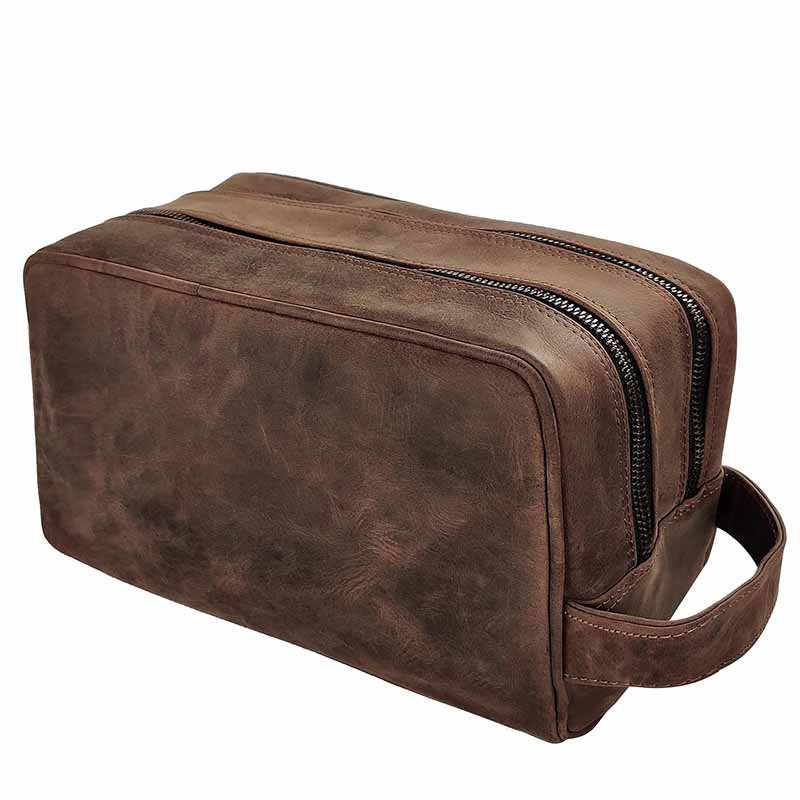
Which Bags Use Full Grain vs Top Grain?
Leather bags place high demands on both durability and appearance. The leather must resist stretching under weight, maintain structural shape, and remain visually appealing after long-term use.
Full grain leather is often used for premium backpacks, travel bags, and heritage-style handbags. The dense grain layer provides strong resistance to stretching, while the natural surface texture gives the bag character that improves with age.
Top grain leather is widely used in fashion handbags and retail collections. Because the surface is more uniform, designers can achieve consistent color and texture across large production runs.
Typical leather thickness for bags:
| Bag category | Leather thickness | Common leather choice |
|---|---|---|
| Luxury handbags | 1.4 – 1.8 mm | full grain or top grain |
| Structured tote bags | 1.6 – 2.0 mm | full grain |
| Fashion handbags | 1.2 – 1.6 mm | top grain |
| Travel bags | 1.8 – 2.2 mm | full grain |
Designers also consider weight. Full grain leather is often slightly heavier, which may influence material selection when creating lightweight fashion bags.
In practice, many premium bag brands combine both materials—for example, full grain leather panels with top grain leather linings or trims to balance durability and manufacturing consistency.
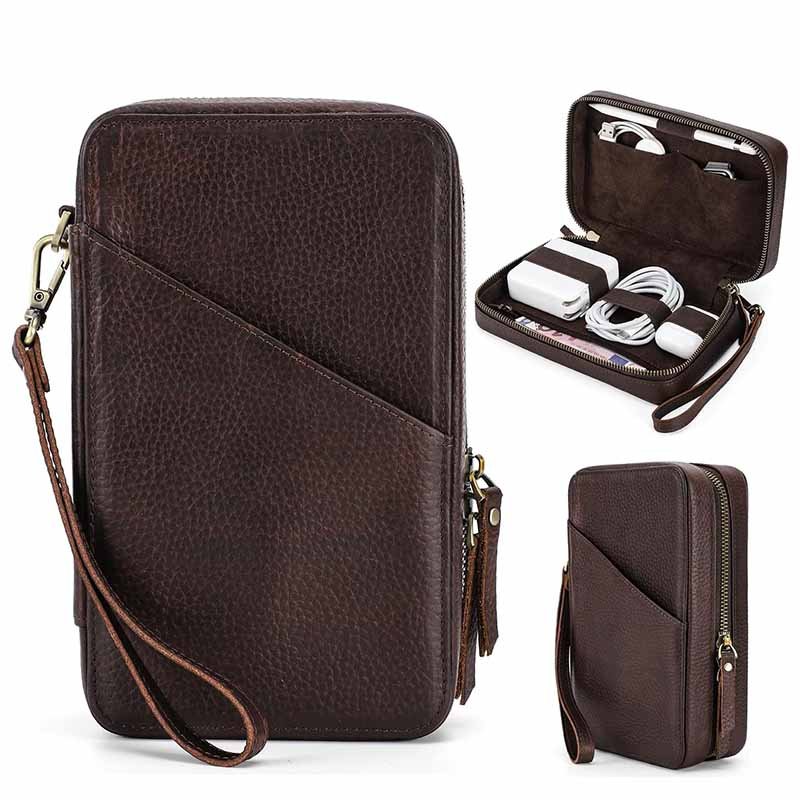
Which Wallets Use Full Grain vs Top Grain?
Wallets undergo frequent bending and friction. Every time a wallet is opened or closed, the leather flexes at the fold line. Over time, lower-quality leather can crack or lose shape.
Full grain leather performs well in wallets because its fiber structure tolerates repeated bending. It also develops a distinctive patina that many customers appreciate.
However, top grain leather remains extremely popular for wallets because of its smoother appearance and lower production cost.
Typical wallet leather specifications:
| Wallet type | Leather thickness | Preferred leather |
|---|---|---|
| bifold wallet | 0.9 – 1.2 mm | full grain or top grain |
| slim wallet | 0.8 – 1.0 mm | top grain |
| luxury wallet | 1.0 – 1.2 mm | full grain |
| card holder | 0.8 – 1.0 mm | top grain |
Many manufacturers split thicker leather to achieve the correct thickness for wallet interiors.
This process helps maintain flexibility while still benefiting from the strength of the grain layer.
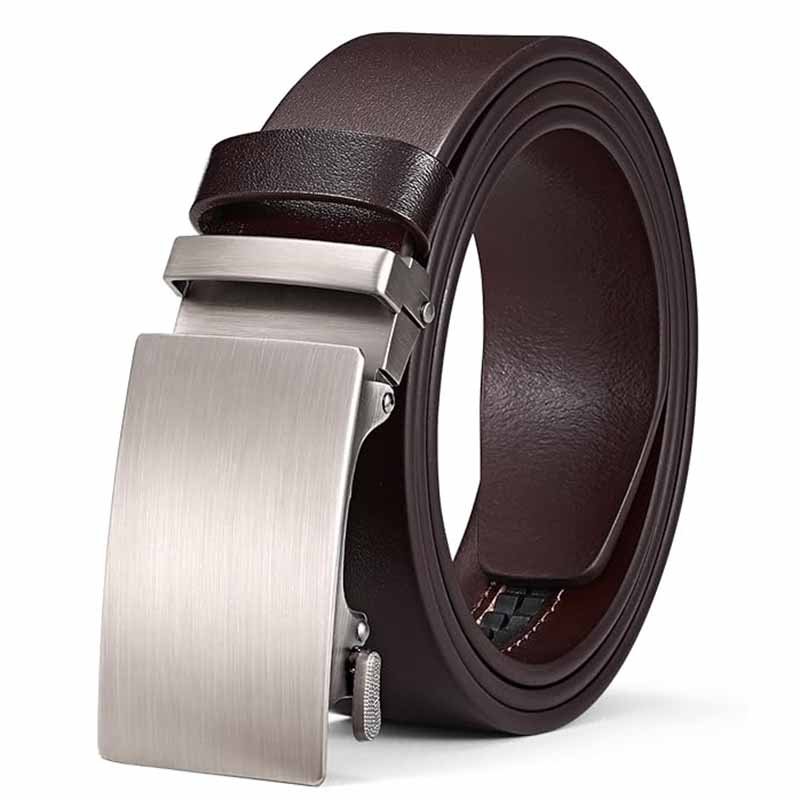
Which Belts Use Full Grain vs Top Grain?
Belts experience constant tension and load-bearing. Because of this, structural strength becomes the primary requirement.
Full grain leather is widely considered the best option for belts because the intact grain layer provides maximum resistance to stretching and cracking.
Typical belt specifications:
| Belt category | Leather thickness | Leather type |
|---|---|---|
| dress belt | 3.0 – 3.5 mm | full grain |
| casual belt | 3.5 – 4.0 mm | full grain |
| fashion belt | 2.8 – 3.2 mm | top grain |
| work belt | 4.0 – 4.5 mm | full grain |
A full grain belt can maintain its structure for many years if properly constructed.
Top grain leather belts are also common in fashion accessories where aesthetic consistency is more important than extreme durability.
Manufacturers sometimes laminate two layers of leather to create thicker belt constructions while controlling material cost.
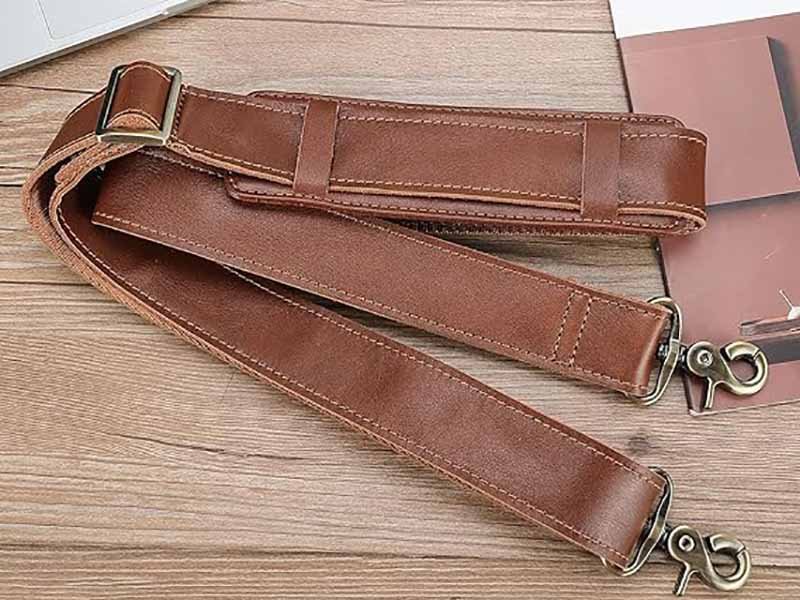
Which Straps Use Full Grain vs Top Grain?
Straps include a wide range of accessories, such as watch straps, camera straps, bag straps, and luggage handles. These components often experience constant friction and movement, which requires durable leather.
Full grain leather performs well in watch straps and heavy-duty bag straps because it resists tearing and develops a natural patina over time.
Top grain leather is frequently used in fashion straps, where designers prefer a smooth and consistent surface.
Typical strap specifications:
| Strap type | Thickness | Leather type |
|---|---|---|
| watch strap | 1.2 – 1.6 mm | full grain |
| camera strap | 2.5 – 3.0 mm | full grain |
| handbag strap | 1.6 – 2.0 mm | top grain |
| luggage strap | 2.8 – 3.5 mm | full grain |
Straps are also reinforced internally using nylon webbing or additional leather layers to increase strength.
How Do Manufacturers Handle Full Grain vs Top Grain?
Manufacturing leather accessories involves much more than simply cutting leather into shapes. Factories must evaluate leather thickness, fiber direction, finishing behavior, and structural reinforcement to ensure products perform correctly in everyday use.
Professional leather manufacturers follow a structured workflow that integrates material sourcing, design engineering, sampling, and quality control.
How Is Full Grain vs Top Grain Leather Processed?
Before leather becomes a finished accessory, it passes through several preparation stages.
| Processing step | Purpose |
|---|---|
| hide grading | classify leather quality |
| splitting | adjust thickness |
| dyeing | create consistent color |
| finishing | protect leather surface |
| conditioning | improve flexibility |
Full grain leather typically receives lighter finishing treatments, preserving its natural surface texture.
Top grain leather often undergoes additional finishing layers to create a smoother appearance and improve stain resistance.
These processing differences influence the final look and performance of the leather product.
How Does Thickness Affect Full Grain vs Top Grain?
Leather thickness plays a critical role in accessory durability.
Common thickness ranges used in leather accessories:
| Product | Thickness |
|---|---|
| wallets | 0.8 – 1.2 mm |
| handbags | 1.2 – 1.8 mm |
| straps | 1.6 – 3.0 mm |
| belts | 3.0 – 4.5 mm |
Thicker leather increases structural strength but also increases product weight.
Manufacturers carefully balance thickness to ensure accessories remain comfortable for daily use.
How Do Factories Cut Full Grain vs Top Grain?
Leather cutting requires careful planning because hides have natural irregular shapes.
Factories usually map cutting patterns digitally or manually to maximize material efficiency.
Key considerations include:
- grain direction alignment
- avoiding weak areas near edges
- matching color tone across panels
For full grain leather, manufacturers often spend more time sorting panels to maintain visual consistency.
Top grain leather requires less sorting because the surface finish hides minor variations.
This difference affects both production time and material yield.
How Does SzoneierLeather Develop Full Grain vs Top Grain Products?
SzoneierLeather operates a vertically integrated leather manufacturing system with capabilities covering material sourcing, product design, sampling, and production.
With more than 18 years of experience in leather goods manufacturing, the company supports brands developing products such as:
- leather bags
- wallets
- belts
- straps
- leather boxes
- leather accessories
Typical product development workflow includes:
| Development stage | Description |
|---|---|
| concept discussion | identify product goals |
| material selection | choose full grain or top grain leather |
| prototype design | create product drawings |
| sample production | build initial prototype |
| revision stage | refine details |
| mass production | scale manufacturing |
SzoneierLeather also offers custom packaging development, branding options, and strict quality inspection procedures, helping clients build reliable leather product lines.
Which Should Buyers Choose in Full Grain vs Top Grain?
When brands compare full grain and top grain leather, the real question is not simply which one is “better.” The more practical question is which leather works best for the specific accessory, customer expectation, and price level.
In real product development projects, material selection usually comes down to three practical considerations:
- how the product will be used
- how long the product is expected to last
- what price range the brand targets
Leather that performs perfectly for a heavy-duty belt may not be the best option for a fashion wallet, and leather that works well for a luxury heritage bag may not suit a high-volume retail product line.
The most successful brands evaluate leather choices by comparing performance, appearance, and manufacturing practicality.
Which Is Better for Premium Leather Accessories?
For brands positioning their products as premium or heritage-quality, full grain leather is often the preferred choice.
Full grain leather keeps the entire natural grain layer of the hide. This dense fiber structure gives the material greater durability and allows it to develop a natural patina over time.
In premium leather accessories, aging behavior is often part of the product’s appeal. Customers expect the leather to change gradually through use.
Examples of accessories where full grain leather performs particularly well:
| Product | Reason full grain works well |
|---|---|
| belts | high tensile strength prevents stretching |
| travel bags | strong fibers support heavier loads |
| camera straps | resistance to long-term stress |
| heritage wallets | develops rich patina over time |
In durability testing, high-quality full grain leather often performs well under repeated bending and abrasion.
For example, flex resistance tests frequently show:
| Leather type | Approximate flex durability |
|---|---|
| full grain leather | 60,000–100,000 flex cycles |
| top grain leather | 35,000–70,000 flex cycles |
For accessories expected to last five to ten years, this difference can become noticeable.
Another factor is brand perception. Many premium brands emphasize full grain leather in their product descriptions because customers associate the term with authenticity and craftsmanship.
However, full grain leather also introduces certain production challenges:
- natural grain variation between hides
- visible scars or marks
- lower material yield during cutting
This means factories often need to sort leather panels more carefully to maintain visual consistency across a production batch.
Which Works Best for Everyday Accessories?
For many everyday leather accessories, top grain leather provides an excellent balance of quality, consistency, and cost.
Because the surface is lightly sanded and finished, top grain leather offers a cleaner, smoother appearance. This can be especially valuable for accessories that must look identical across hundreds or thousands of units.
Products where top grain leather is commonly used include:
| Product | Why top grain works well |
|---|---|
| handbags | smooth surface improves visual consistency |
| fashion wallets | easier color matching |
| card holders | thin and flexible |
| small accessories | cleaner surface appearance |
Top grain leather is also easier to finish in different textures and colors. Manufacturers can apply embossing patterns, protective coatings, or pigment finishes to achieve very controlled surface aesthetics.
Another advantage is predictable production results.
When factories produce large batches of leather accessories, consistent leather appearance reduces the need for panel sorting. This helps maintain stable manufacturing timelines and reduces material waste.
From a cost perspective, top grain leather generally falls into a moderate price range.
| Leather type | Approximate price range (per square foot) |
|---|---|
| full grain leather | $6 – $12 |
| top grain leather | $4 – $9 |
For brands producing mid-range accessories, this cost difference can significantly affect final retail pricing.
Which Is Better for Long-Term Durability?
Durability depends on more than just leather grade. Thickness, tanning method, and product construction all play important roles.
However, when comparing equivalent thickness and tanning methods, full grain leather typically offers the strongest structural performance.
The reason lies in the hide’s fiber structure. The grain layer contains tightly packed collagen fibers that resist tearing and stretching.
Typical leather thickness used in accessories:
| Product type | Recommended thickness |
|---|---|
| wallet exterior | 1.0 – 1.2 mm |
| handbag panels | 1.4 – 1.8 mm |
| watch straps | 1.2 – 1.6 mm |
| belts | 3.2 – 4.2 mm |
If durability is the top priority, manufacturers often recommend full grain leather combined with proper thickness and reinforcement.
For example:
- belts may use two layers of 3 mm full grain leather
- bag straps may include internal nylon reinforcement
- wallet interiors may use split leather backing for flexibility
Top grain leather can still provide excellent durability, especially when paired with strong tanning methods such as chrome tanning or vegetable tanning.
In many everyday accessories, the difference in durability between high-quality full grain and top grain leather may not be noticeable during normal use.
How Should Buyers Source Full Grain vs Top Grain Leather?
When sourcing leather accessories from manufacturers, buyers should evaluate leather using both technical specifications and physical samples.
A reliable sourcing process usually includes the following steps:
| Step | Purpose |
|---|---|
| define product use | determine durability requirements |
| select leather grade | full grain or top grain |
| review leather samples | evaluate surface and feel |
| confirm thickness | ensure structural strength |
| build prototypes | test real product performance |
Buyers should also request clear material specifications from manufacturers.
Important parameters include:
- leather grade
- tanning method
- thickness range
- finishing type
- color consistency tolerance
Experienced factories such as SzoneierLeather often assist clients during this stage by recommending leather options that match the intended product function.
Because the company works with a strong raw material supply chain and multiple leather types, it can help brands test different materials before finalizing production.
This collaborative development process helps avoid common mistakes such as choosing leather that looks good in a small sample but performs poorly in mass production.
Work With SzoneierLeather to Develop Custom Leather Accessories
Selecting the right leather is only the first step in building successful leather accessories. The real advantage comes from working with a manufacturer that understands both material science and product engineering.
SzoneierLeather has over 18 years of experience in leather product development and manufacturing, supporting global brands and custom wholesale clients.
The factory provides:
- strong raw material supply chains
- leather material research and development
- product design and engineering
- fast sample production
- stable manufacturing capacity
- packaging design and quality inspection
Whether you are developing custom leather bags, wallets, belts, straps, or premium accessories, the SzoneierLeather team can help refine material selection and produce products that meet both aesthetic and performance expectations.
If you are planning to launch a leather accessory line or upgrade your current product materials, you are welcome to contact SzoneierLeather to discuss custom development and receive a professional quotation.
The right leather choice can transform a simple accessory into a product customers use for years—and that is the foundation of a successful leather brand.


