
What Weight Leather for a Wallet: Thickness, Types & OEM Tips
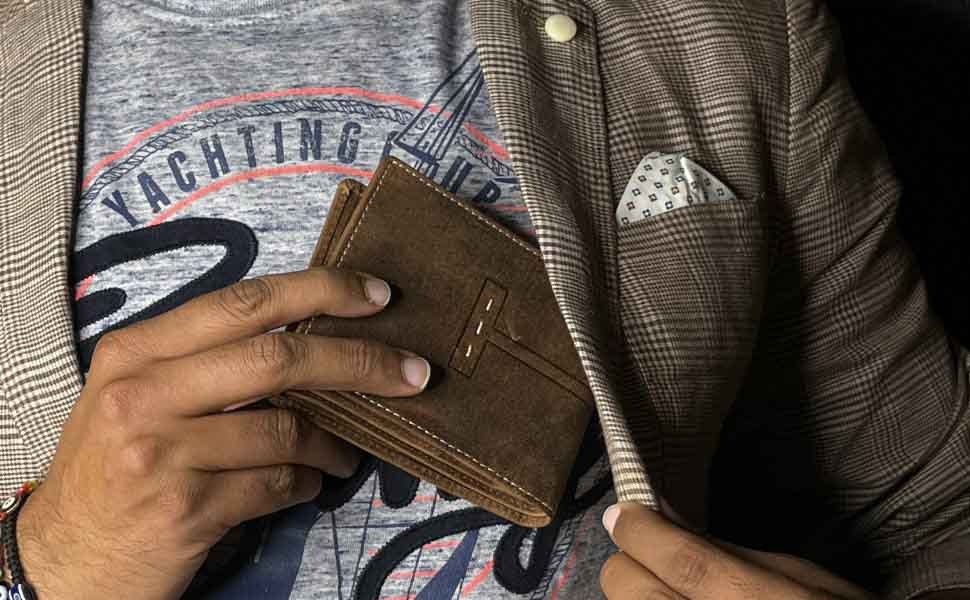
Wallets live a rough life: pocket heat, humidity, flex, coins, cards, keys, and the occasional coffee spill. Choose the wrong leather weight and you’ll feel it on day one—bulky seams, wavy edges, cracked folds, or pockets that never break in. Choose wisely and a wallet disappears in the pocket, molds to the owner, and ages into something they show off. Weight (thickness) isn’t the only variable—tannage, temper, skiving, lining, thread, and finish matter too—but it’s the first decision that sets every other choice.
The best leather weight for most wallets is 3–4 oz (≈1.2–1.6 mm) for the outer shell and 2–3 oz (≈0.8–1.2 mm) for interior pockets. Minimalist cardholders can use 1.5–2.5 oz (≈0.6–1.0 mm), while long/travel wallets often pair 3.5–4.5 oz outers with 2–3 oz pockets. Skiving folds, choosing the right tannage, and controlling tolerances ensure slimness without sacrificing durability.
A brand brings us a gorgeous 4.5 oz veg-tan bifold—heirloom leather, museum edges—but it feels like a brick in jeans. We re-engineer: 3.5 oz shell, 2 oz pockets, deep skives at the spine, a lighter lining, and tighter stitch SPI. The wallet keeps its character, loses 22% bulk, and suddenly sits flat even stuffed. That’s the power of weight done right.
What Does Leather ‘Weight’ Mean—and How Do Oz and mm Convert?
Leather “weight” means thickness. In the wallet world you’ll see ounces (oz) and millimeters (mm). As a rule of thumb, 1 oz ≈ 0.4 mm. Because hides vary, good factories specify tolerances (e.g., ±0.15–0.2 mm) and measure with a calibrated thickness gauge on conditioned leather. Translating oz↔mm and locking tolerances early prevents bulky seams, misfitting pockets, and edge-paint cracking.
What is the difference between ounce (oz) and millimeter (mm)?
- Ounce (oz) in leather is a legacy, craft-friendly way to talk about thickness, not weight per area.
- Millimeter (mm) is the SI thickness unit most brand tech packs prefer.
- Because hides are natural, even the same “oz” from different lots can vary. Always specify mm + tolerance in production docs.
Which conversion chart should brands use?
| Leather Weight (oz) | Approx. Thickness (mm) | Typical Wallet Use |
|---|---|---|
| 1.0 oz | 0.4 mm | Lining, reinforcement wraps |
| 1.5 oz | 0.6 mm | Minimalist card pockets/liners |
| 2.0 oz | 0.8 mm | Interior pockets/card slots |
| 2.5 oz | 1.0 mm | Slim pockets, coin pouches |
| 3.0 oz | 1.2 mm | Outer shells (slim styles) |
| 3.5 oz | 1.4 mm | Outer shells (bifold/long) |
| 4.0 oz | 1.6 mm | Rugged outer shells |
| 4.5 oz | 1.8 mm | Stiff, structured outers (select) |
| 5.0 oz | 2.0 mm | Rare; cases/knife sheaths more than wallets |
Is thickness tolerance important for slim wallets?
Absolutely. ±0.2 mm swing multiplied across 4–8 stacked layers at the fold can turn a sleek 12 mm profile into a 14+ mm “pocket rock.” Szoneier sets incoming QC and in-process checks (pre-skive / post-skive / pre-edge) to keep your finished thickness inside spec.
How do we measure reliably?
- Condition leather 24 h at 20–23 °C / 45–55% RH.
- Use a calibrated dead-weight thickness gauge; measure at least 5 points per panel; record min/max/mean.
- For split or skived parts, record pre/post skive thickness on the traveler card.
Which Leather Weights Fit Each Wallet Style Best?
Most wallets land on 3–4 oz (≈1.2–1.6 mm) for the outer shell and 2–3 oz (≈0.8–1.2 mm) for interior pockets. Minimalist cardholders run 1.5–2.5 oz (≈0.6–1.0 mm), while long/continental styles prefer a slightly firmer shell (3.5–4.5 oz / 1.4–1.8 mm) with 2–3 oz pockets. Always skive fold areas and pocket lips to control stack height. Adjust down ~0.2–0.3 mm when using soft chrome-tan or fabric linings; keep veg-tan a touch lighter at the same stiffness.
What is the best weight of leather for a wallet?
- Outer shell: 3–4 oz (1.2–1.6 mm) for a durable, hand-filling feel without bulk.
- Interior pockets: 2–3 oz (0.8–1.2 mm) for easy break-in and clean stacking.
- Minimalist cardholders: 1.5–2.5 oz (0.6–1.0 mm) depending on card count and desired stiffness.
- Long/travel wallets: 3.5–4.5 oz outers, 2–3 oz interiors to keep tickets/notes flat.
What weight for bifold and trifold wallets?
- Bifold: 3–3.5 oz shell is the daily-driver sweet spot; 2–2.5 oz pockets keep the fold slim.
- Trifold: Because folds stack, aim lighter—3.0 oz shell with 2.0–2.5 oz pockets. Deep skives at flap ends prevent “hot spots” where edges press through.
What weight for minimalist cardholders and slim sleeves?
- One-pocket sleeve: 1.5–2.0 oz overall; add a hidden stiffener if you want more snap.
- Two-slot or three-slot: 2.0–2.5 oz pockets, 2.5–3.0 oz back plate if you want a firm hand.
- Consider chrome-tan or embossed leathers at the lower mm to avoid cardboard-stiff feel.
What weight for long wallets, travel wallets, and coin pouches?
- Long/travel: 3.5–4.5 oz outer to resist bending in large panels; 2–3 oz pockets. If you add zipper pockets, taper the seam to avoid a lumpy spine.
- Coin pouch: 2.5–3.0 oz balances fingertip control and shape. For snap closures, back the snap with a small reinforcement washer or patch skived to ~1.0 mm.
Do lining choices change recommended weights?
Yes. Fabric linings (twill, rPET) let you drop pocket leather by 0.2–0.3 mm while maintaining slide. All-leather interiors feel luxe but add stack; plan more aggressive skives and higher stitch SPI. For RFID, a thin aluminum or copper mesh layer adds ~0.05–0.08 mm; account for it at the fold.
Style Guide
| Wallet Style | Outer Shell (oz / mm) | Interior Pockets (oz / mm) | Why it works / Notes |
|---|---|---|---|
| Bifold (everyday) | 3.0–3.5 oz / 1.2–1.4 mm | 2.0–2.5 oz / 0.8–1.0 mm | Slim in-pocket feel, breaks in quickly; skive spine & pocket lips 30–50%. |
| Trifold | 3.0 oz / 1.2 mm | 2.0–2.5 oz / 0.8–1.0 mm | Three panels stack—favor lighter shell, deeper skives at flap ends. |
| Minimalist sleeve (1 pocket) | 1.5–2.0 oz / 0.6–0.8 mm | — | Ultra-slim; add thin stiffener if you want more “snap.” |
| Minimalist 2–3 slot cardholder | 2.5–3.0 oz / 1.0–1.2 mm (backplate) | 2.0–2.5 oz / 0.8–1.0 mm | Backplate provides firmness; pockets stay sleek for card slide. |
| Long / Continental / Checkbook | 3.5–4.5 oz / 1.4–1.8 mm | 2.0–3.0 oz / 0.8–1.2 mm | Larger panels need structure to stay flat; taper seams near the spine. |
| Travel / Passport | 3.0–3.5 oz / 1.2–1.4 mm | 2.0–2.5 oz / 0.8–1.0 mm | Multiple slots + boarding-pass pocket; skive hinge aggressively. |
| Coin pouch (snap/zip) | 2.5–3.0 oz / 1.0–1.2 mm | — | Balances fingertip control and shape; use a snap backer patch. |
| Zip-around (full perimeter) | 3.0–3.5 oz / 1.2–1.4 mm | 2.0–2.5 oz / 0.8–1.0 mm | Zipper tape adds bulk—keep pockets lean; radius corners need careful skive. |
| Lanyard/ID holder | 2.0–2.5 oz / 0.8–1.0 mm | — | Comfort against neck/clothing; reinforce grommet area. |
Which Leather Types and Constructions Affect the Ideal Weight?
Veg-tan feels denser and holds edges—great from 2.5–4.0 oz. Chrome-tan breaks in softer, perfect at 1.5–3.0 oz interiors. Full-grain resists wear best; top-grain/corrected need careful finishing when thin. Skiving, edge finishing, stiffeners, and lining shift what weight “feels right.” Check quality by grain authenticity, edge/burnish, stitch SPI, lining, hardware, and smell. A full-grain wallet can last 5–15+ years with care.
Veg-tan vs. chrome-tan—does density change the feel at the same mm?
- Vegetable-tanned: Fibers are tighter, edges burnish beautifully, and the leather “firms up” as it dries after construction. A 3.0 oz veg-tan often feels stiffer than a 3.0 oz chrome-tan, so you can run thinner without floppiness. Ideal for heirloom bifolds, long wallets, and hand-stitched builds.
- Chrome-tanned: Softer hand, better drape, and color range. It excels in interior pockets at 2.0–2.5 oz where slide matters and bulk kills. Many premium brands pair a veg-tan shell with chrome-tan interiors for the best of both worlds.
Are full-grain, top-grain, and corrected-grain equally suitable when thinned?
- Full-grain: Best long-term; maintains fiber integrity at low thickness, resists polish-through at edges.
- Top-grain: Slightly sanded; still good if the split is minor and finishing is high-quality.
- Corrected-grain: Embossed surface can look perfect on day one, but when skived thin, the finish may show stress at tight curves. Use with edge paint rather than raw burnish.
How do skiving, edge finishing, and stiffeners alter final thickness?
- Skiving: Taper pockets and fold lines by 30–60% to kill bulk. Feather skives to avoid a visible line under the outer shell.
- Edges: Burnished edges need consistent fiber compaction (veg-tan shines here). Edge paint adds ~0.1–0.2 mm; use multiple thin coats rather than one heavy pass.
- Stiffeners: Thermoplastic (e.g., salpa, Texon, Bontex) or fiber stiffeners can add shape without weight. Place them away from fold knuckles to prevent cracking.
How can you tell if a leather wallet is high-quality?
- Grain authenticity: Real full-grain shows subtle, non-repeating pores and growth marks—no repeating print.
- Edges: Even, glossy burnish or clean, well-leveled edge paint with no steps or pinholes.
- Stitching: Consistent SPI (e.g., 7–10 SPI for wallets), tidy back-tacks, no skipped holes or loose threads.
- Pockets: Symmetrical slot spacing; cards slide yet stay put.
- Lining: Bonded neatly, no ripples; fabric edges turned or taped, not raw.
- Hardware: Snaps/rivets set flush; no plating burrs.
- Smell/feel: Clean leather aroma; no harsh solvent odor or oily residue.
How long will a full-grain leather wallet last?
- Everyday carry: 5–10 years is common; 10–15+ years with proper care. Veg-tan darkens and polishes; chrome-tan keeps color and stays soft.
- Care basics: Avoid soaking; wipe and air-dry. Use a tiny amount of neutral conditioner 1–2×/year (avoid over-oiling, which softens slots). Keep out of baking car dashboards and saltwater soak.
- Failure points to watch: Fold knuckles (too thick = cracks), edge paint (too thick = chips), coin pouch snaps (backers too thin = pull-through).
Do exotics and embossed leathers require different pocket weights?
Yes. Exotics (croc, lizard, ostrich) have surface geometry that can stress at tight curves. Run thinner pockets (≈2.0 oz), widen seam allowances slightly, and prefer edge paint over burnish on corrected/embossed surfaces to prevent fiber show-through.
Adjust by leather type
| Leather Type | Practical Adjustment | Why |
|---|---|---|
| Veg-tan (firm, dense) | You can go ~0.2 mm thinner than chrome-tan for the same stiffness. | Dense fiber structure, edges burnish and harden. |
| Chrome-tan (soft, drapey) | Keep at mid-range of the table or add a thin stiffener. | Softer temper collapses if too thin. |
| Goat / Calf (tight grain) | Pockets at 2.0–2.2 oz feel crisp; shells 3.0–3.5 oz. | High tear at low mm; elegant break-in. |
| Corrected / Embossed | Favor edge paint; avoid ultra-thin skives at tight curves. | Finish layer can show stress when too thin. |
| Exotics (croc, lizard, ostrich) | 2.0–2.5 oz pockets, slightly wider seam allowances. | Surface geometry resists tight bends; paint beats burnish. |
How Do You Balance Durability, Slimness, and Cost in Production?
Start with 3–4 oz shells + 2–3 oz pockets, then slim by skiving folds, choosing chrome-tan interiors, and setting a target finished thickness at the spine. Use SPI 7–10, thread sizes matched to holes, and edge systems (burnish or multi-coat paint) that suit the leather. Validate with fold/flex, humidity/heat cycling, and everyday pocket tests. Improve margin via pattern nesting and mixing weights (e.g., 2 oz pockets + 3.5 oz shell).
Which stitch gauge, thread size, and crease/edge-paint settings suit thin leathers?
- SPI (stitches per inch): 7–10 SPI keeps strength without sawing the edge. Higher SPI on thin chrome-tan avoids “cheese-grater” edges.
- Thread: Machine TKT 20–40 / Tex 45–70; hand-stitch 0.4–0.6 mm looks refined. Match awl/pricking iron size to thread; holes too large weaken seams.
- Creasing: On veg-tan, a warm crease line sets stitch visually. On chrome-tan, keep heat low to avoid print-through.
- Edge systems:
- Burnish (veg-tan): bevel → sand 400→800 → gum/CMC → slick → wax; repeat thin coats.
- Edge paint (chrome/corrected): 2–4 thin coats, sand between, final topcoat or wax. Avoid thick single coats that chip.
Do you need wear tests (fold/flex), humidity/heat cycling, and colorfastness?
Yes—these predict returns before they happen. Szoneier’s wallet test pack typically includes:
- Fold/flex: 5–10k cycles; inspect for edge paint cracks, stitch abrasion, slot creep.
- Humidity/heat: 24 h at 40–50 °C & 80–90% RH; check adhesive bond and shape.
- Crocking: dry/wet rub on high-chroma leathers; protect pale linings.
- Dimensional stability: card slot gauge checks after 24 h conditioning.
How much can pattern nesting and panel mix save?
- Panel mix: Pockets at 2.0–2.5 oz and shell at 3.5 oz often reduce material cost 8–12% vs. all-thick builds—while improving break-in.
- Nesting: Smart CAD nesting around belly/neck areas, mirrored component planning, and size-graded pocket sets can reduce offcuts 5–10% on average.
- Yield guardrails: Avoid orienting long parts across stretch direction; keep grain orientation consistent to prevent wavy edges after edge paint.
Cost-performance checklist
| Lever | Save | Risk | Mitigation |
|---|---|---|---|
| Pockets 2.5 → 2.0 oz | − material, − bulk | Flop if chrome-tan too soft | Add thin stiffener; tighten SPI |
| Shell 4.0 → 3.5 oz | − weight | Less “hefty” feel | Choose firmer veg-tan temper |
| Edge paint coats 4 → 3 | − time | Lower chip resistance | Sand finer, thinner coats |
| Hardware simplification | − parts | Utility loss | Test coins/keys use patterns |
How Can Brands OEM Wallets with Szoneier Leather?
We prototype weight trials (e.g., 2.0 vs 2.5 oz pockets; 3.0 vs 3.5 oz shells) in 7–10 days, then lock tolerances and finishes. You’ll get transparent BOMs, tier pricing (e.g., 200/500/1,000+ pcs), and a QC plan (thickness checks, edge tests, fold/flex). We source veg-tan, chrome-tan, nubuck, exotics, recycled linings, and scale cleanly with low MOQs.
What sampling and MOQ options exist for weight trials?
- A/B sets: identical patterns with only thickness changed (e.g., 2.0 vs 2.5 oz pockets) so your team can decide by feel and caliper.
- Finish ladders: burnish vs edge-paint vs hybrid on the same leather.
- Lead time: 7–10 days for functional samples; PP samples after feedback.
- MOQs: from 200 pcs/style/color; we can mix shell/pocket weights in the same PO if the leather line supports it.
Which materials can Szoneier source?
- Veg-tan: European, American, and Asian tanneries; natural, drum-dyed, aniline.
- Chrome-tan: Smooth, pebbled, saffiano, nubuck, suede; a spectrum of tempers.
- Exotics & embossed: Croc/ostrich prints, genuine exotics on request (with documentation).
- Linings: rPET twill, microfiber suede, goat/calf splits.
- Reinforcements: salpa/Texon, thermoplastics, RFID foils/meshes.
How do we document specs (oz/mm), tolerances, and QC so retail teams can scale?
- Tech pack: oz + mm both listed for every part (pre/post skive), with tolerance and measurement point diagrams.
- Edge spec: burnish or paint recipe (abrasive grits, compounds, coat counts, cure times).
- Stitch spec: SPI, thread, needle, back-tack length, and corner radii.
- Incoming inspection: leather lot control (thickness, temper, color), adhesion tests for linings, and crock checks for dark leathers against pale linings.
- Inline & final: fold/flex samples per batch, edge adhesion peel checks, 100% visual on edges/hardware.
Quick Tables You Can Drop into a Tech Pack
1) Default weight map
| Part | Target (oz) | Target (mm) | Tolerance (mm) |
|---|---|---|---|
| Outer shell | 3.5 | 1.4 | ±0.15 |
| Pocket faces | 2.2 | 0.9 | ±0.15 |
| Pocket backs | 2.5 | 1.0 | ±0.15 |
| Coin flap | 2.8 | 1.1 | ±0.15 |
| Spine/fold (post-skive) | — | 0.8–1.0 | ±0.10 |
2) Quality checklist
| Checkpoint | Pass Signal | Fail Symptom |
|---|---|---|
| Thickness | Within tolerance map | Over-thick stack at fold |
| Edges | Smooth burnish / even paint | Ragged fibers / chips |
| Stitching | 7–10 SPI, clean back-tacks | Skips, bird-nesting |
| Pocket fit | Cards insert with light resistance | Wave, flare, or crush lines |
| Colorfastness | No transfer (dry/wet rub) | Dye on white cloth |
| Odor | Clean leather, low solvent | Harsh chemical smell |
Conclusion
The right leather weight makes a wallet feel purpose-built: slim where it folds, firm where it needs structure, and handsome everywhere. As a starting point, think 3–4 oz shells with 2–3 oz pockets—then fine-tune by tannage, skiving, lining, and finishing until the sample makes your team say “that’s the one.” When you lock thickness tolerances and test the edges and folds, returns drop and five-star reviews rise.
Ready to build a wallet line that looks premium and carries like air?
Szoneier Leather can prototype weight trials in 7–10 days, run fold/flex and edge tests, and scale with low MOQs—backed by transparent BOMs and dependable QC.
Send your brief (style, target thickness, finish preference). We’ll turn it into a wallet spec that sells—and lasts.
What Can I Do For You?
Here, developing your OEM/ODM private label leather goods collection is no longer a challenge,it’s an excellent opportunity to bring your creative vision to life.
Make A Sample First?
If you have your own tech packs, logo design artwork, or just an idea,please provide details about your project requirements, including preferred fabric, color, and customization options,we’re excited to assist you in bringing your leather goods designs to life through our sample production process.