
What is the best material for a passport cover:a complete guide
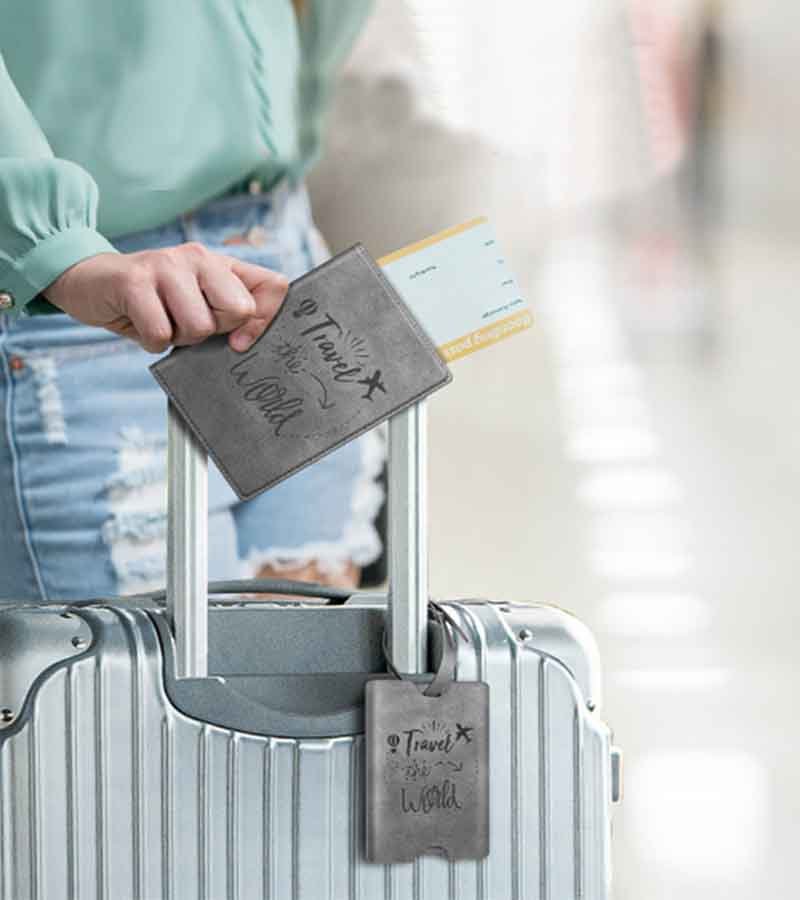
Pick up five passport covers and you’ll feel five different stories—sleek full-grain leather that ages into a richer patina, color-popping PU that shrugs off rain, waxed canvas that looks better scuffed, and techy nylon that’s feather-light yet tough. The “best” material depends on how you travel, where you go, and how you brand. For a daily flier, durability and scanner-friendly design matter most; for a gift SKU, handfeel and color may win. The key is balancing protection, thickness, weight, and long-term wear against budget and brand intent.
For premium longevity and patina, full-grain or top-grain leather (1.2–1.6 mm) is the best all-around passport-cover material. For vibrant color, light weight, and water resistance at lower cost, choose quality PU (microfiber or coated split). For rugged, casual styles, waxed canvas or 1680D coated nylon performs well. Add tested RFID-blocking lining only if your buyers want extra privacy, and size/weight the cover to pass airport checks smoothly.
A fashion brand once sent Szoneier a message: “luxury feel, slim silhouette, and no drama at security.” Their first prototype used a thick board-stiffener and a magnetic snap—great in studio photos, awkward at the e-gate. We rebuilt the stack: top-grain leather outer, microfiber lining, stitched pockets with no magnetic hardware, and a thin-tested RFID panel only behind the card sleeve. Result: a cover that felt premium, scanned instantly, and sold through on its first run.
What Materials Are Common for Passport Covers?
The most common materials are full-grain/top-grain leather for premium aging, PU/“vegan” leather for color and water resistance, canvas/nylon for rugged or lightweight builds, and specialty options like cork or recycled composites for sustainability stories. Each differs in thickness limits, abrasion resistance, stitch retention, and branding options. Choose by look + lifespan, then confirm thickness (mm), stiffness, and lining compatibility before you scale.
What is the difference between full-grain, top-grain, and split leather?
- Full-grain leather retains the entire grain surface. It shows natural character, resists surface wear best, and develops the most desirable patina. In passport covers it’s typically used at 1.2–1.6 mm for a slim but protective build.
- Top-grain leather is lightly corrected/sanded for uniformity. It’s slightly more forgiving on cosmetic defects, great for consistent color and emboss/foil. Typical thickness 1.1–1.5 mm.
- Split leather (from beneath the grain) or coated splits can look clean and take color well, but their tear resistance is lower; reinforce stress areas and avoid thin edge skives.
Is PU/“vegan” leather durable enough for frequent travel?
Yes—if you spec quality PU (microfiber PU or multi-layer coated splits). Good PU resists spills, cleans easily, and holds bright colors and prints. Watch for hydrolysis resistance (anti-peel in humid/tropical regions) and avoid over-thin builds that crease at the spine. For airlines crews and frequent travelers, we pair microfiber PU with a non-stretch fabric backer for longevity.
Are canvas, nylon, or microfiber good alternatives to leather?
Absolutely. Waxed canvas brings tactile character; 1680D ballistic nylon or Cordura-class nylons offer high abrasion resistance in a slim profile; microfiber non-wovens feel suede-soft and keep weight low. For non-leather builds, add edge binding or turned edges to prevent fray, and spec water-resistant coatings if your market is rainy/humid.
Is cork or recycled composite a viable option for passport covers?
Cork bonded to a fabric backer is light, grippy, and eco-forward; it can crack if folded too sharply, so keep spines curved and avoid rigid board reinforcements. Recycled composites (rPET faux leather, paper-based laminates) can be convincing visually; validate edge-paint adhesion and fold endurance before big orders. These materials are great for sustainability stories when your buyers value that narrative.
Material Comparison
| Material | Typical Thickness (mm) | Abrasion Resistance | Water Resistance | Aging/Patina | Branding Methods |
|---|---|---|---|---|---|
| Full-grain leather | 1.2–1.6 | High | Medium (with care) | Excellent | Deboss, blind/foil, laser |
| Top-grain leather | 1.1–1.5 | High | Medium | Very good | Deboss/foil/print |
| PU (microfiber/coated) | 1.0–1.4 | Med-High | High | Low (stays same) | UV print, foil, emboss |
| Waxed canvas | 1.0–1.5 (with liner) | Medium | Medium (rewax) | Good (rugged) | Screen/patch/emb |
| 1680D nylon | 0.8–1.2 (with liner) | High | High | Low | Screen/patch/TPU |
| Cork composite | 1.0–1.4 | Medium | Medium | Medium | Laser/foil limited |
Which Material Offers the Best Durability and Ageing?
For longest life and graceful aging, full-grain and top-grain leather outperform most alternatives when built at ~1.2–1.6 mm with quality stitching and edges. Ballistic/cordura nylon rivals leather in abrasion and water resistance but doesn’t develop patina. PU is stable and color-true but doesn’t “age up.” If your customers prize heritage feel, choose leather; if they prioritize low maintenance, consider PU or coated nylon.
When we talk “durability,” we mean how a cover holds stitching, resists corner wear, and survives repeated spine bending at the e-gate. Ageing adds the aesthetic dimension: patina vs. plasticity.
1) Abrasion & corner wear The first failure mode on passport covers is corner rounding where the outer material rubs inside a bag. Full-grain leather’s dense grain stands up best; top-grain is close behind. Nylon’s filament weave resists scuffing and won’t absorb stray moisture, but it can fuzz at very high cycles unless denier and coating are chosen well. PU’s outer film resists water and stains; watch for edge-paint chipping on sharp corners.
2) Stitch retention & tear strength Leather’s interlocked fiber structure holds stitches exceptionally well when stitch length is appropriate (≈3.0–3.5 mm for covers) and edges are skived and turned. In synthetics, stitch retention depends on backer fabric and the coating’s ductility; microfiber PU with a woven backer is better than thin films. Canvas needs interlining at stress points.
3) Spine bending & fold endurance Covers bend at the same place thousands of times. A living hinge built in leather at 1.2–1.4 mm remains supple; over-stiff boards cause cracking in both leather and PU. Nylon with a soft fusible interliner bends cleanly. Cork composites must avoid sharp creases.
4) Environmental exposure
- Humidity/heat: PU can fail by hydrolysis if low-grade; spec hydrolysis-resistant PU and test accelerated aging if you sell to tropical markets. Leather tolerates humidity but needs conditioners; waxed canvas appreciates occasional re-waxing.
- UV: Nylon and PU pigments should be UV-stable especially for bright colors. Leather darkens slightly—often a positive.
5) Aging—how it looks year 3, year 5 Full-grain leather wins on patina; top-grain ages well with slightly more color stability out of box. PU looks similar for a long time but rarely gets better-looking; that’s fine if your brand wants always-new. Nylon stays consistent and “technical.”
Durability & Aging(Guideline)
| Property | Full-grain | Top-grain | PU (quality) | 1680D Nylon | Waxed Canvas |
|---|---|---|---|---|---|
| Corner abrasion | 9/10 | 8.5/10 | 7.5/10 | 8.5/10 | 7/10 |
| Stitch retention | 9.5/10 | 9/10 | 8/10 | 8/10 | 7.5/10 |
| Fold endurance | 9/10 | 8.5/10 | 8/10 | 8.5/10 | 7.5/10 |
| Water tolerance | 7/10 | 7/10 | 9/10 | 9/10 | 7.5/10 |
| Patina appeal | 10/10 | 9/10 | 5/10 | 4/10 | 8/10 |
Do You Need RFID Blocking, and Which Liners Work Best?
Modern e-passports require the cover to be opened and data unlocked before reading, so everyday skimming risk is low. Still, buyers like the peace of mind of RFID liners. If offered, use tested shielding fabric (copper/nickel or silver-coated textiles) placed behind card sleeves, not across the spine, to keep e-gate scans smooth. Market it as optional, not mandatory.
What is RFID skimming and do e-passports really need blocking? e-Passports use contactless chips (ISO 14443) and security like BAC (Basic Access Control) or more advanced protocols. In practice, the chip won’t reveal personal data without the machine-readable zone (MRZ) opening sequence present. This means that casual, drive-by skimming of closed, uncooperative passports is highly unlikely. That said, consumer trust often favors an RFID claim, and some buyers want a wallet that shields payment cards too.
Which RFID-blocking fabrics are effective and airport-safe? Look for conductive textiles (nickel/copper/silver blends) laminated to a thin substrate. The shielding should achieve broad attenuation in the 13.56 MHz band used by passports and NFC payment cards. We place the shield inside card pockets or as a discrete panel so the passport page area remains flexible. Avoid heavy foils that create a sharp metal edge detectable by security scanners or that stiffen the spine.
Are discrete card sleeves safer than built-in full-panel blockers? For usability, yes. A targeted card shield protects contactless cards while letting the passport itself scan cleanly during border checks without removing the cover. Full-panel blockers across the whole cover can force travelers to remove the passport—slowing them down and slightly increasing handling wear.
What’s the difference between an official passport holder and an ordinary passport holder? Two different meanings circulate:
- Passport types: An official or diplomatic passport is government-issued to officials for work travel; an ordinary passport is the standard citizen passport. A “holder” here means the person, not the cover.
- Covers: Some state agencies issue official covers with national emblems and security features (sometimes including RFID shields and strict colorways). These are not for general sale. Ordinary/consumer covers are commercial products in leather/PU/fabric with optional RFID, pockets, and branding. If your RFQ asks for an “official passport holder,” clarify which meaning applies to avoid compliance issues.
RFID Options
| Option | Shield Area | Pros | Cons | Best For |
|---|---|---|---|---|
| No RFID | None | Slim, scans fastest | No “privacy” story | Minimalist buyers |
| Card-only shield | Card pockets | Protects cards, passport scans fine | Slightly higher BOM | Frequent flyers |
| Full-panel shield | Whole cover | Strong marketing claim | Can slow e-gate; stiffer | Gift lines, specific retailers |
How Do Weight, Thickness, and Handfeel Affect Daily Use?
Target a finished stack around 1.2–1.8 mm outer, plus lining and pockets, to keep the cover slim and scanner-friendly. Softer leathers or quality PU give a pleasant hand; microfiber lining protects pages and chip. Avoid bulky snaps/magnets near the spine. The right thickness, stiffness, and edge finish will decide whether travelers keep your cover on—or ditch it at the first e-gate.
Thickness & stiffness. A passport cover should protect without fighting the hinge. For leather, we like outer 1.2–1.6 mm with skived, turned edges. PU and nylon builds can go thinner (1.0–1.3 mm outer) because the substrate is more uniform; compensate with a non-stretch interliner. Too thick and the e-gate insists on repeated tries; too thin and corners curl.
Handfeel & lining.Microfiber or suede-touch linings protect the data page finish, while fabric-backed PU can act as both lining and structure. Suede/nubuck inside feels luxurious but can transfer color if not well finished—test for crocking. For humid markets, choose wipe-clean linings that don’t absorb moisture.
Closures & hardware. Magnetic snaps and thick clasps add grams and can surprise airport scanners. Many high-end covers simply rely on turned edges, sturdy spine, and precise fit—clean, minimal, scan-friendly. If you need closure, a low-profile elastic or small tab away from the spine is safer.
Edge construction. Edge paint on leather looks polished; ensure it’s flex-rated for repeated bends. PU edges can be heat-sealed or painted. Fabric edges favor binding to stop fray.
How to choose a passport holder?
- Travel frequency & route: Weekly flyers: slim, scanner-friendly leather or PU, no bulky snaps, card-only RFID shield.
- Climate: Tropics: hydrolysis-resistant PU or leather with sealed edges; temperate: any.
- Style & branding: Luxury gift: full/top-grain leather with deboss/foil; colorful retail: PU with UV print.
- Weight target: 60–110 g finished (material & pocket count determine final).
- Function: Need extra cards/tickets? Add a boarding-pass sleeve but keep spine flexible.
- Care: Leather ages; PU stays looking new; nylon shrugs off rain—match to buyer expectations.
Thickness & Weight Guide
| Build | Outer Material | Outer (mm) | Lining | Est. Finished Weight* | Notes |
|---|---|---|---|---|---|
| Slim leather | Top-grain | 1.2–1.4 | Microfiber | 70–90 g | Premium feel, great patina |
| Heritage leather | Full-grain | 1.5–1.6 | Leather/microfiber | 90–110 g | Rich look; ensure flexible spine |
| Lightweight PU | Microfiber PU | 1.0–1.2 | Fabric backer | 60–80 g | Bright colors, easy clean |
| Tech nylon | 1680D | 0.9–1.1 | Interliner | 60–80 g | Rugged, water resistant |
Which Material Is Best for Customization and Branding?
For luxury branding, deboss or blind emboss on full/top-grain leather looks timeless; foil adds shine but needs edge-paint and care. For color-rich logos or patterns, PU excels with UV or screen printing. Nylon/canvas favor silkscreen, patches, or woven labels. Match method to material—and to how the product will be handled over time.
Leather (full/top-grain).
- Deboss/blind emboss: Best-in-class for subtle, premium branding. The grain compresses cleanly; logos remain legible for years.
- Foil stamping: Great for gift lines. Use high-adhesion foils and smooth grain; test for rub resistance at edges.
- Laser marking: Crisp on veg-tan and some aniline leathers; color contrast varies—run strikes before mass.
PU.
- UV printing: Photographic detail and Pantone accuracy; choose flexible inks to avoid cracks at the spine.
- Foil/emboss: Possible on quality PU; heat windows are narrower than leather—pilot first.
- Edge color play: PU accepts contrasting edge paints well.
Nylon/Canvas.
- Silkscreen/transfer: Good coverage on flat weaves; pre-heat can help adhesion.
- Patches (woven/embroidered/TPU): On-trend technical look; sew-on improves durability.
- Labeling: Woven label on inside pocket is tidy and cost-effective.
Thread & edge systems.Bonded polyester threads in Tex 30–45 provide abrasion and UV resistance; pick stitch length 3.0–3.5 mm for clean corners. Edge paint should be multi-coat and heat-set for leather; binding tape for fabrics prevents fray without bulk.
Branding Method Guide
| Material | Deboss/Blind | Foil | UV Print | Screen | Patch/Label |
|---|---|---|---|---|---|
| Full-grain | ★★★★☆ | ★★★★☆ | ★★☆☆☆ | ★★☆☆☆ | ★★★☆☆ |
| Top-grain | ★★★★★ | ★★★★☆ | ★★☆☆☆ | ★★☆☆☆ | ★★★☆☆ |
| PU | ★★★☆☆ | ★★★☆☆ | ★★★★★ | ★★★★☆ | ★★★☆☆ |
| Nylon | ★☆☆☆☆ | ★☆☆☆☆ | ★★★☆☆ | ★★★★☆ | ★★★★★ |
| Canvas | ★★☆☆☆ | ★★☆☆☆ | ★★★☆☆ | ★★★★☆ | ★★★★★ |
How Do Budget and Sustainability Shape the Final Choice?
Leather costs more but elevates brand perception and lifetime value. PU hits key price points with color freedom. Nylon/canvas balance durability and cost. For sustainability, rPET PU/nylon or certified leathers help; ensure compliance with REACH/Prop 65 where required. Build a costed stack that meets your margin while matching buyer expectations.
Cost tiers(indicative, ex-factory influences).
| Build | Material | Relative Material Cost | Branding Cost Flex | MOQ Sensitivity |
|---|---|---|---|---|
| Premium | Full-grain leather | High | Medium (deboss/foil) | Moderate (color yields) |
| Upper-mid | Top-grain leather | Med-High | Medium | Moderate |
| Mid | Quality PU | Medium | High (UV/screen) | Low–Moderate |
| Value/Tech | Nylon/Canvas | Low–Medium | High (screen/patch) | Low |
Remember, total unit cost depends on labor minutes and rejects as much as materials. Full-grain with turned edges and hand-buffed paint takes longer but commands higher MSRP. PU accelerates throughput and supports bold graphics that photograph well—a win for DTC ad conversion.
Sustainability levers.
- Materials: rPET PU or nylon; leather from LWG-audited tanneries; cork or paper composites for niche collections.
- Chemistry: Low-VOC edge paints, azo-free dyes, PFAS-free water resistance where possible.
- Waste reduction: Efficient marker layouts (especially on leather), standardized pocket parts across SKUs, and modular dielines that fit multiple brands.
- Documentation: For EU/US markets, many retailers will request REACH SVHC, CPSIA/Prop 65 declarations, and, for recycled claims, chain-of-custody paperwork.
Compliance checklist for passport covers (general goods).
- Materials: Heavy metals/azo dye limits per market; colorfastness against rubbing/sweat.
- Hardware: Nickel release limits (EU) if skin contact; secure magnet specs if used.
- Packaging: Correct labeling and warning statements (if any). Szoneier integrates these into the tech pack so your onboarding with retailers is smooth.
Three “Good-Better-Best” Passport Cover Solutions Recipes
GOOD (Value/Travel-Proof)
- Outer: Microfiber PU, 1.1 mm
- Lining: Wipe-clean microfiber
- Pockets: 2 card + boarding pass sleeve
- RFID: Card-only shield
- Branding: UV print + subtle deboss
- Edge: Painted, 2-coat
- Why: Bright color, low upkeep, fast throughput
BETTER (Everyday Premium)
- Outer: Top-grain leather, 1.3–1.4 mm
- Lining: Microfiber or smooth calf split
- Pockets: 2–4 card, SIM tray
- RFID: Optional card shield
- Branding: Deboss + foil option
- Edge: Multi-coat edge paint, heat-set
- Why: Premium hand, slim, ages nicely
BEST (Heritage Luxury)
- Outer: Full-grain leather, 1.5–1.6 mm
- Lining: Smooth leather/microfiber hybrid
- Pockets: 4 card + ticket sleeve, gusseted
- RFID: Discrete panel on card side
- Branding: Deep blind emboss, tonal stitch
- Edge: Polished multi-coat with bevel
- Why: Rich patina, heirloom feel, flagship SKU
FAQ about Best Material for a Passport Cover
Is leather or PU better for a passport cover? Leather wins on patina and heritage; PU wins on color, price, and easy care. Both can be built slim and durable when specified correctly.
Do I need RFID blocking? Not strictly, but customers value the feature. We prefer card-only shields to keep airport scans quick.
Will a thick cover cause airport scanning issues? It can. Keep the spine flexible, avoid bulky snaps, and spec total thickness to scan reliably.
How do I clean a leather passport cover? Wipe with a slightly damp cloth, dry, then condition occasionally. Avoid soaking or harsh solvents.
Ready to Prototype the Perfect Passport Cover?
Szoneier Leather has 18+ years building passport covers, wallets, belts, straps, accessories, and leather boxes with in-house material R&D, design, sampling, manufacturing, packaging, and quality control. Share your target buyer, style references, budget tier, and markets (U.S./EU/UK). We’ll return two or three costed material stacks (full/top-grain, PU, nylon/canvas), sample on your dieline, and include a compliance map and branding tests (deboss/foil/UV).
Tell us what you need today—Szoneier will engineer a cover that feels premium in hand, scans cleanly at the e-gate, and ships on time.
What Can I Do For You?
Here, developing your OEM/ODM private label leather goods collection is no longer a challenge,it’s an excellent opportunity to bring your creative vision to life.
Make A Sample First?
If you have your own tech packs, logo design artwork, or just an idea,please provide details about your project requirements, including preferred fabric, color, and customization options,we’re excited to assist you in bringing your leather goods designs to life through our sample production process.