
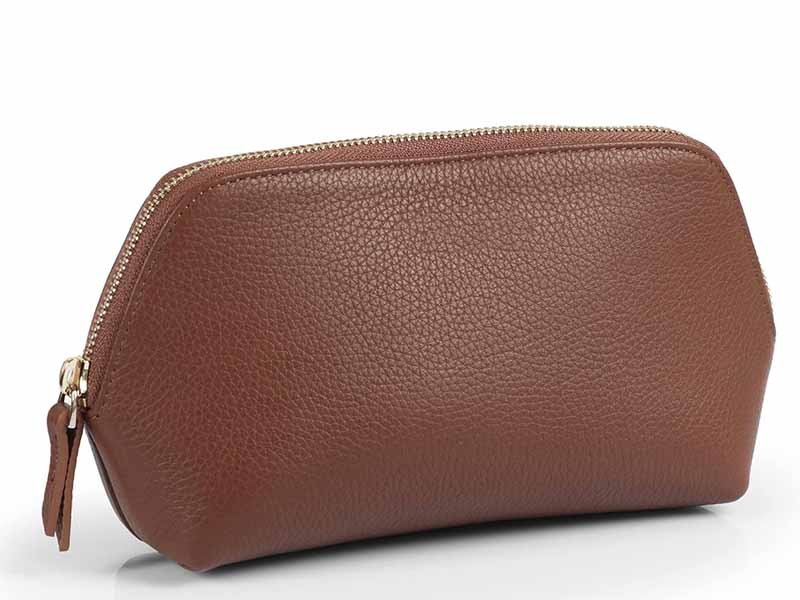
Makeup bags look simple, but they are one of the hardest daily-use accessories to get right. A handbag may only face hand oils, dust, and occasional scratches. A makeup bag deals with liquid foundation, concealer, loose powder, lipstick oil, sunscreen, hand cream, perfume mist, and leaking skincare bottles. It gets opened in bathrooms, on vanity tables, in handbags, in hotel rooms, and inside suitcases. That means the material is tested again and again by stains, friction, moisture, and cleaning.
For brands developing leather makeup bags, the material choice usually narrows down to two directions: PU leather or genuine leather. One offers easier wiping, lower cost, and more uniform production. The other offers better texture, stronger material identity, and a longer premium life cycle. On paper, both can work. In real projects, though, one small material decision can change return rates, cleaning complaints, retail pricing, and how customers feel about the product after six months of use.
PU leather is usually easier to clean for makeup bags because its coated surface resists most cosmetic oils, pigments, and moisture. Genuine leather is usually stronger, more premium, and longer lasting, but it needs better surface care and faster stain handling. The better material depends on your target price, user habits, and the balance you want between easy maintenance and long-term value.
This is why many successful cosmetic brands do not ask only which material looks better. They ask which material performs better in the real mess of daily beauty use. That is where the real business decision starts.
What Is PU Leather vs Genuine Leather for Makeup Bags?
PU leather and genuine leather are the two most common “leather-look” materials used when developing makeup bags, cosmetic pouches, and beauty travel organizers. On the surface, they may appear similar: both can have grain textures, both can be printed with brand logos, and both can be used to create structured cosmetic bags. However, the way these materials are made—and how they behave when exposed to cosmetics, moisture, and repeated cleaning—are very different.
For cosmetic brands, this difference becomes important quickly. Makeup bags are exposed to substances that most other accessories never encounter: foundation oils, silicone-based primers, pigments, alcohol from perfumes, sunscreen residue, and skincare creams. These substances interact with materials differently, so understanding how PU leather and genuine leather are built helps brands choose the right solution.
In simple terms:
- PU leather is a synthetic coated material designed to imitate leather appearance while offering easier maintenance and lower cost.
- Genuine leather is made from natural animal hide and offers stronger durability, natural texture, and longer product lifespan.
Both materials can be used successfully for makeup bags, but they serve different product strategies depending on price range, customer expectations, and cleaning requirements.
What Is PU Leather for Makeup Bags?
PU leather (polyurethane leather) is a synthetic material created by coating a base fabric with polyurethane layers. The base fabric is typically polyester, microfiber, or cotton blend, which provides structure and flexibility. The polyurethane coating forms the outer surface that looks and feels like leather.
This construction gives PU leather several practical advantages in cosmetic bags.
First, the surface is sealed, which means many cosmetic products remain on the top layer instead of penetrating the material. This is particularly helpful for makeup bags because cosmetic spills are common.
Second, PU leather is produced in large uniform rolls, which allows manufacturers to maintain stable thickness, color, and texture. This consistency helps factories control cutting efficiency and reduce material waste during production.
Third, PU leather can be engineered with different finishes to meet brand design goals. Some PU leathers are smooth and glossy, while others are embossed with pebble grain or saffiano patterns to resemble genuine leather.
Typical properties of PU leather used in cosmetic bags include:
| Property | PU Leather Performance |
|---|---|
| Surface structure | Coated synthetic layer |
| Resistance to cosmetic oils | High |
| Cleaning difficulty | Low |
| Color consistency | Very stable |
| Thickness control | Precise |
| Average lifespan | 2–5 years |
For beauty brands producing promotional cosmetic bags, gift sets, or travel kits, PU leather offers a balance between aesthetics and functionality. It provides a leather-like look while remaining easy for customers to maintain.
However, the quality of PU leather can vary significantly depending on production methods. Low-grade PU may crack or peel after extended use, especially if the coating layer is thin or the backing fabric lacks strength. Higher-grade PU leather often includes microfiber backing and thicker coatings to improve flexibility and durability.
Because of these differences, professional manufacturers typically test PU leather using folding tests, abrasion tests, and stain resistance tests before approving it for production.
What Is Genuine Leather for Makeup Bags?
Genuine leather is produced from animal hides that have been processed through tanning and finishing procedures. Unlike PU leather, genuine leather retains a natural network of collagen fibers. These fibers provide the material with strength, flexibility, and durability that synthetic materials cannot fully replicate.
For cosmetic bags positioned in the premium market, genuine leather offers several advantages.
The most noticeable difference is texture and depth. Real leather has natural grain patterns that create subtle variations in the surface. These variations make each piece unique and contribute to a richer appearance.
Another advantage is longevity. High-quality leather cosmetic bags can last many years when properly maintained. Instead of cracking like synthetic coatings, leather fibers remain flexible and gradually develop a patina that enhances their appearance.
Common types of leather used in makeup bags include:
| Leather Type | Characteristics | Typical Cosmetic Bag Use |
|---|---|---|
| Full grain leather | Natural grain, strongest fibers | Luxury cosmetic bags |
| Top grain leather | Smooth surface, slightly processed | Premium retail cosmetic bags |
| Corrected grain leather | Surface sanded and embossed | Mid-range leather accessories |
| Split leather | Lower layer of hide | Budget leather products |
One challenge with genuine leather is that it is more porous than PU leather. Cosmetic oils and pigments may penetrate the surface if spills are not cleaned promptly. For this reason, many leather cosmetic bags use protective finishes or coatings that improve stain resistance.
Cleaning genuine leather usually requires slightly more care. Customers may use leather-safe cleaners, soft cloths, and conditioning products to maintain the material’s flexibility.
Despite these maintenance requirements, genuine leather remains the preferred choice for many luxury cosmetic brands because it delivers stronger brand value and longer product lifespan.
How PU Leather and Genuine Leather Behave in Cosmetic Bags
To understand the difference in real use, it helps to look at how both materials react to common cosmetic products.
Makeup bags often encounter:
- liquid foundation
- lipstick oils
- powder residue
- skincare creams
- perfume alcohol
Each of these substances interacts differently with the surface.
| Cosmetic Exposure | PU Leather Reaction | Genuine Leather Reaction |
|---|---|---|
| Liquid foundation | Usually wipes off | May stain if not cleaned quickly |
| Lipstick oils | Remains on surface | Can absorb into pores |
| Loose powder | Easy to wipe | Can settle in grain texture |
| Skincare cream | Leaves oily film | May darken surface temporarily |
| Alcohol-based perfume | No major effect | Can dry surface over time |
Because of these behaviors, many cosmetic bag designs combine materials strategically. A common structure used by experienced manufacturers includes:
- genuine leather exterior for premium appearance
- PU leather or coated lining inside for easy cleaning
This hybrid approach provides both luxury aesthetics and practical usability.
Manufacturing Considerations for Makeup Bag Projects
When brands develop leather cosmetic bags, the material choice also affects production workflow.
PU leather is easier to cut and sew because it comes in uniform sheets. Genuine leather hides, however, contain natural variations such as scars, wrinkles, and grain changes. These variations require careful cutting layouts to ensure product quality.
| Production Factor | PU Leather | Genuine Leather |
|---|---|---|
| Material format | Roll goods | Natural hide |
| Cutting efficiency | High | Moderate |
| Surface consistency | Very stable | Natural variation |
| Sampling speed | Faster | Slower |
| Waste percentage | Low | Higher |
Factories with strong leather sourcing experience can minimize waste and improve yield when working with genuine leather.
For cosmetic brands, the most effective strategy is to select materials based on customer expectations, cleaning needs, and product positioning, rather than assuming one material is always superior.
In many successful cosmetic bag lines, PU leather and genuine leather are used together in carefully designed combinations to deliver both durability and convenience.
Which Is Easier to Clean for Makeup Bags: PU Leather or Genuine Leather?
For makeup bags, cleaning performance is often more important than appearance. Cosmetic products contain oils, pigments, waxes, alcohol, and silicone-based ingredients. These substances easily transfer onto bag surfaces, especially inside cosmetic pouches where bottles leak, brushes carry powder residue, and lipstick caps open accidentally.
Between the two materials, PU leather is generally easier to clean than genuine leather. Its coated surface prevents most cosmetic substances from penetrating the material, allowing stains to be wiped away quickly. Genuine leather, while stronger and more premium, has microscopic pores that can absorb oils and pigments if spills remain on the surface too long.
However, cleaning difficulty is not only determined by the material itself. The surface finish, leather grade, cosmetic formula, and cleaning timing all affect the final result. A heavily finished genuine leather may resist stains better than low-quality PU leather, while untreated leather may absorb pigment faster than expected.
For cosmetic brands designing makeup bags, understanding how real cosmetic products interact with each material helps avoid customer complaints about staining or discoloration.
Is PU Leather Easy to Clean for Makeup Bags?
PU leather is widely used in cosmetic bags because it handles everyday cosmetic stains with minimal maintenance. The polyurethane coating creates a sealed layer that keeps most makeup residues on the surface instead of allowing them to penetrate the material.
This characteristic becomes important when dealing with products like foundation or concealer. These formulas often contain oils and pigments that are difficult to remove from porous materials. On PU leather, however, they usually remain as surface smears that can be removed with simple cleaning methods.
Common cleaning methods include:
- wiping with a damp cloth
- using alcohol-free makeup wipes
- mild soap solutions for heavier stains
For daily users, this convenience significantly improves the product experience. Many customers prefer a cosmetic bag that can be cleaned in seconds rather than one that requires specialized leather care products.
Typical stain behavior on PU leather surfaces is shown below.
| Cosmetic Product | PU Leather Stain Behavior | Cleaning Difficulty |
|---|---|---|
| Liquid foundation | Stays on surface | Easy |
| Lipstick oils | Surface smear | Easy |
| Loose powder | Dust residue | Very easy |
| Mascara | Can leave dark marks | Easy to moderate |
| Sunscreen | Oily film | Easy |
Another advantage of PU leather is its moisture resistance. Cosmetic bags frequently store skincare products that leak small amounts of liquid. PU leather resists moisture penetration, reducing the chance of permanent damage.
However, PU leather also has limitations. If pigments remain on the surface for a long period—especially strong dyes such as red lipstick or liquid blush—they may leave faint discoloration. In addition, repeated cleaning with harsh chemicals can gradually weaken the polyurethane coating.
For brands targeting travel cosmetic kits or daily-use beauty pouches, PU leather remains one of the most practical material choices due to its cleaning convenience.
Is Genuine Leather Easy to Clean for Makeup Bags?
Genuine leather makeup bags require more careful cleaning than PU leather, but they can still perform well when the right leather finish is selected. The key difference lies in the structure of natural leather.
Unlike synthetic coatings, genuine leather contains microscopic pores within its fiber network. These pores allow the material to breathe and maintain flexibility, but they also allow oils and pigments to penetrate more easily.
When cosmetic spills occur, timing becomes critical. If the spill is wiped away quickly, the stain often remains superficial. If the substance sits on the leather for an extended period, the oils may seep into the material and cause permanent discoloration.
Cleaning genuine leather typically involves:
- gently wiping the spill immediately
- using a leather-safe cleaning solution
- drying the surface with a soft cloth
- applying leather conditioner periodically
Leather finishes play a major role in stain resistance. Heavily finished leather surfaces are more resistant to cosmetic stains than untreated leather.
| Leather Finish Type | Stain Resistance | Cleaning Difficulty |
|---|---|---|
| Pigmented leather | High | Moderate |
| Embossed leather | Medium-high | Moderate |
| Semi-aniline leather | Medium | Moderate to high |
| Aniline leather | Low | High |
For cosmetic bags, many manufacturers prefer pigmented or embossed leather finishes, which add a protective layer that improves stain resistance.
Despite requiring more care, genuine leather offers a benefit that PU leather cannot replicate: material recovery. Light stains and scratches on leather can often be improved with conditioning products, restoring the surface appearance.
This is one reason why genuine leather cosmetic bags remain popular in luxury segments even though they require slightly more maintenance.
How Do Makeup Stains Affect PU Leather vs Genuine Leather Makeup Bags?
Cosmetic formulas are complex mixtures of oils, pigments, waxes, and alcohol-based ingredients. Each component interacts differently with PU leather and genuine leather surfaces.
The biggest difference lies in absorption behavior.
PU leather acts as a barrier layer. Most cosmetic substances remain on top of the surface until they are wiped away. Genuine leather allows small amounts of oil to enter its fiber structure, which may create darker spots or color changes.
Below is a comparison of how each material reacts to common cosmetic substances.
| Cosmetic Substance | PU Leather Reaction | Genuine Leather Reaction |
|---|---|---|
| Foundation | Surface smear | Possible absorption |
| Lipstick pigment | Wipes off easily | May stain if delayed |
| Loose powder | Dust residue | Can settle in grain |
| Skincare oil | Surface film | Temporary darkening |
| Alcohol-based perfume | No major impact | May dry leather surface |
Because of these differences, many cosmetic bag designs use hybrid material structures. A typical high-quality makeup bag may feature:
- genuine leather exterior panels for premium appearance
- PU leather or coated fabric lining inside for easy cleaning
This structure balances luxury aesthetics with practical maintenance.
For brands developing custom cosmetic bags, the decision is rarely limited to choosing one material over the other. Instead, experienced manufacturers combine materials strategically to optimize durability, cleaning performance, and product value.
By testing materials with real cosmetic products during the sampling stage, factories can ensure the final product meets customer expectations for both appearance and usability.
How Durable Are PU Leather vs Genuine Leather Makeup Bags?
PU leather and genuine leather makeup bags differ significantly in durability. PU leather provides stable structure and good short-term resistance to stains and moisture, but over time its synthetic coating may crack, peel, or lose flexibility. Genuine leather, built from natural fiber networks, typically lasts far longer and becomes softer and more resilient with use. For brands planning cosmetic bag collections, durability directly affects product lifespan, customer satisfaction, and repeat purchase cycles.
How Long Do PU Leather Makeup Bags Last?
PU leather makeup bags are usually designed for medium-term use rather than long lifecycle performance. Under normal daily conditions—being opened frequently, placed inside handbags, exposed to cosmetics, and cleaned regularly—most PU leather cosmetic bags maintain good appearance for approximately 2–5 years depending on the quality of the material and the thickness of the polyurethane coating.
The durability of PU leather depends heavily on three technical factors:
- coating thickness
- backing fabric strength
- environmental exposure
Thicker polyurethane layers improve scratch resistance and delay cracking, but they also increase stiffness. High-quality PU leather often uses microfiber backing or woven fabric support to maintain flexibility.
Environmental factors also influence performance. Heat, humidity, and repeated bending at the same fold points can gradually weaken the synthetic coating. Cosmetic bags are often squeezed inside handbags or luggage, which accelerates this wear pattern.
| Durability Factor | PU Leather Performance |
|---|---|
| Average lifespan | 2–5 years |
| Crack resistance | Medium |
| Oil resistance | High |
| Scratch resistance | Medium |
| UV resistance | Medium |
| Structural fatigue | Moderate over time |
For beauty brands producing seasonal collections or promotional cosmetic bags, this lifespan is usually acceptable. The bag serves as a functional accessory rather than a long-term personal item. Customers may replace the bag when purchasing new cosmetics or travel kits.
However, if the product is positioned as a premium leather accessory, PU leather may struggle to meet customer expectations for longevity. This is where genuine leather begins to show clear advantages.
How Long Do Genuine Leather Makeup Bags Last?
Genuine leather makeup bags are significantly more durable because their internal fiber structure remains strong even after years of bending and use. Instead of relying on a surface coating, leather contains a natural network of collagen fibers that maintain flexibility and strength.
With proper finishing and occasional maintenance, a genuine leather cosmetic bag can last 8–15 years or longer. Over time the leather may soften and develop subtle surface changes known as patina, which many consumers associate with authenticity and quality.
Durability also depends on the leather grade used in the product. Different types of leather behave differently under daily cosmetic bag use.
| Leather Type | Durability | Typical Use in Cosmetic Bags |
|---|---|---|
| Full grain leather | Very high | Luxury cosmetic bags |
| Top grain leather | High | Premium retail cosmetic bags |
| Corrected grain leather | Medium–high | Mid-range leather accessories |
| Split leather | Medium | Budget leather products |
Higher-quality leather also tolerates bending better than PU leather. Cosmetic bags are opened and folded constantly, especially when stored in handbags or luggage. Natural leather fibers handle this repeated movement without the peeling risk seen in synthetic coatings.
Another important factor is repairability. If a genuine leather cosmetic bag experiences surface scratches or dryness, leather conditioners and cleaning products can restore much of the material’s appearance. PU leather, once cracked or peeled, is far harder to repair.
From a long-term ownership perspective, genuine leather bags usually deliver stronger value retention, which explains why many luxury cosmetic brands continue to choose real leather for their accessories.
Which Material Is Better for Daily Makeup Bags?
The better material depends on how the cosmetic bag will be used. Durability alone does not determine the best choice. Brands must balance lifespan, price level, and maintenance expectations.
For example, a travel makeup bag that customers carry daily may experience constant exposure to cosmetics, moisture, and friction inside handbags. In this scenario, a wipeable PU leather interior can provide excellent practicality.
On the other hand, a vanity cosmetic pouch used mostly at home may benefit from the aesthetic and durability advantages of genuine leather.
| Usage Scenario | Recommended Material |
|---|---|
| Daily handbag cosmetic pouch | PU leather or hybrid design |
| Travel makeup organizer | PU leather interior, leather exterior |
| Luxury vanity cosmetic bag | Genuine leather |
| Promotional cosmetic bags | PU leather |
| Premium brand accessories | Genuine leather |
Many successful cosmetic bag designs combine both materials strategically. Genuine leather may form the outer shell to deliver luxury appearance and long-term durability, while PU leather or coated fabric is used for the interior lining where makeup spills occur.
This hybrid design approach allows brands to capture the strengths of both materials while minimizing their weaknesses.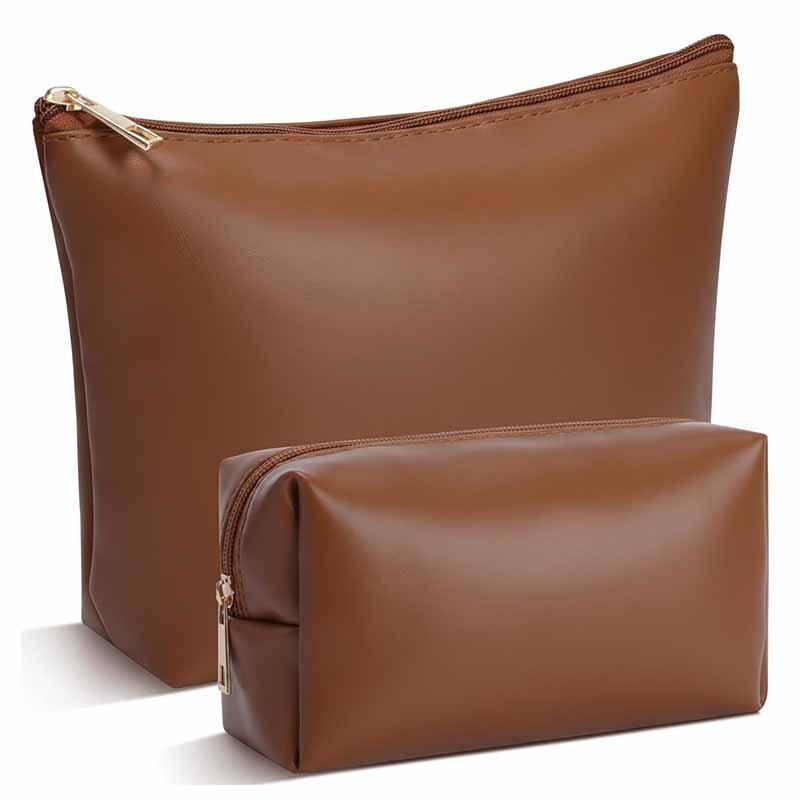
Do Brands Prefer PU Leather or Genuine Leather Makeup Bags?
Both materials are widely used in cosmetic bag production, but brands tend to choose one over the other depending on market positioning. PU leather dominates mass retail and promotional markets because it is cost-efficient and easy to maintain. Genuine leather is favored by premium and luxury brands because it provides stronger brand storytelling, higher perceived value, and longer product lifespan.
Why Do Many Brands Use PU Leather Makeup Bags?
Many beauty brands prefer PU leather makeup bags because they offer strong practicality and predictable manufacturing costs. For cosmetic brands launching gift sets, seasonal promotions, or retail accessories, PU leather allows consistent material supply and fast product development.
Another advantage is easy customization. PU leather surfaces can be printed, embossed, heat stamped, or textured easily, enabling brands to create distinctive designs without major production complexity.
| Advantage | Impact for Cosmetic Brands |
|---|---|
| Lower material cost | Supports competitive retail pricing |
| Consistent material rolls | Easier production planning |
| Easy cleaning | Reduces consumer complaints |
| Flexible color options | Supports seasonal collections |
| Lightweight | Ideal for travel cosmetics |
Because beauty products often change quickly in packaging design and branding campaigns, many companies treat cosmetic bags as fashion accessories rather than lifetime items. PU leather fits this cycle well because it balances aesthetics, cost control, and functional performance.
Why Do Luxury Brands Use Genuine Leather Makeup Bags?
Luxury beauty brands often prefer genuine leather because it aligns better with their brand image. Real leather conveys craftsmanship, authenticity, and material richness—qualities that resonate strongly with customers purchasing high-end cosmetics.
The tactile experience also plays a major role. Genuine leather offers a natural grain pattern, a distinct scent, and a softer hand feel that synthetic materials struggle to replicate convincingly.
Luxury cosmetic bags are often positioned as collectible accessories rather than disposable packaging. A genuine leather makeup bag can accompany a customer for many years, reinforcing the brand’s reputation for quality.
| Luxury Benefit | Customer Perception |
|---|---|
| Natural grain texture | Authentic craftsmanship |
| Long lifespan | Higher product value |
| Premium material story | Brand prestige |
| Aging patina | Unique character over time |
Because luxury brands sell emotional value as much as functional products, genuine leather helps strengthen the overall brand narrative.
Which Market Uses PU Leather vs Genuine Leather Makeup Bags?
The choice between PU leather and genuine leather often reflects the target market and price segment of the product.
| Market Segment | Preferred Material |
|---|---|
| Promotional cosmetic gifts | PU leather |
| Drugstore beauty brands | PU leather |
| Travel cosmetic kits | PU leather or hybrid |
| Mid-range beauty brands | Mixed materials |
| Luxury beauty brands | Genuine leather |
Another growing trend is hybrid cosmetic bag design, where both materials appear in the same product. This allows brands to maintain luxury appearance while controlling costs and improving usability.
For example, many premium cosmetic bags now use:
- genuine leather exterior panels
- PU leather interior lining
- waterproof cosmetic-resistant fabrics
This layered material strategy creates a product that looks premium on the outside but remains easy to clean inside.
For manufacturers like SzoneierLeather, this approach has become increasingly popular among international beauty brands seeking balance between luxury and practicality.
How to Choose PU Leather vs Genuine Leather Makeup Bags?
Choosing between PU leather and genuine leather for makeup bags is not only a material decision; it is a product strategy decision. The right choice depends on target customers, price positioning, product lifespan expectations, cleaning behavior, and brand image. For cosmetic brands developing new accessories, the best approach is to analyze how customers actually use makeup bags rather than focusing only on material prestige.
For example, a luxury beauty brand selling premium skincare sets may want a cosmetic bag that reinforces brand value and feels like a collectible accessory. In that case, genuine leather provides a strong storytelling advantage. A travel-friendly beauty kit sold in retail chains, however, may prioritize easy cleaning, affordability, and light weight—conditions where PU leather often performs better.
Which Leather Is Best for Travel Makeup Bags?
Travel makeup bags must survive constant movement, frequent opening, and unpredictable cosmetic spills. Customers may place the bag in handbags, backpacks, carry-on luggage, or bathroom counters. This means the material must handle both mechanical stress and cosmetic residue.
In many travel-focused designs, PU leather performs well because its coated surface can resist oil-based cosmetics and liquid foundation. Travelers also prefer materials that can be wiped clean quickly in hotel bathrooms or airports.
| Travel Requirement | PU Leather Performance | Genuine Leather Performance |
|---|---|---|
| Cosmetic spill resistance | Strong | Moderate |
| Quick cleaning | Very easy | Moderate |
| Weight | Light | Medium |
| Flexibility in luggage | Good | Good |
| Scratch visibility | Low to medium | Medium |
Because of these practical advantages, many travel makeup bags use PU leather as the primary exterior material or as an interior lining. Some premium travel designs use genuine leather on outer panels while maintaining wipeable synthetic materials inside.
For cosmetic brands launching travel kits or gift sets, this mixed-material strategy can deliver both usability and visual appeal.
Which Leather Is Best for Luxury Makeup Bags?
Luxury cosmetic bags operate in a different market space. Customers purchasing premium beauty products often value materials that reflect craftsmanship and long-term quality. In this environment, genuine leather has clear advantages.
Real leather carries a strong emotional value. The natural grain pattern, subtle scent, and soft hand feel communicate authenticity and durability. Over time, the material develops a patina that makes each bag unique.
| Luxury Feature | Genuine Leather Advantage |
|---|---|
| Natural texture | High |
| Long lifespan | 10+ years |
| Premium brand perception | Strong |
| Unique aging pattern | Yes |
Luxury brands also use leather makeup bags as brand extension products. The bag is not only packaging; it becomes part of the customer experience. Some customers continue using the bag long after the cosmetics inside have been consumed.
For high-end cosmetic houses, the durability and prestige of genuine leather help reinforce brand loyalty and justify higher product pricing.
How Do Manufacturers Customize Leather Makeup Bags?
For brands developing their own cosmetic accessories, customization is often the most important part of the manufacturing process. A reliable leather goods factory does more than simply assemble bags; it helps brands translate product ideas into manufacturable designs.
Professional leather manufacturers typically support customization in several areas:
| Customization Area | Options |
|---|---|
| Material selection | PU leather, full grain leather, top grain leather |
| Surface finish | Smooth, pebble grain, saffiano, embossed patterns |
| Color development | Custom Pantone color matching |
| Logo methods | Debossing, embossing, metal logo, foil stamping |
| Interior lining | Easy-clean PU lining, waterproof fabric |
| Structure design | Single pouch, multi-compartment organizer |
Material combinations are also common. A cosmetic bag may feature genuine leather panels on visible surfaces and PU leather lining inside. This approach improves cleaning performance while maintaining luxury appearance.
Manufacturers with strong supply chains can also assist with material testing, ensuring the leather resists cosmetic oils, pigments, and alcohol-based formulas.
For many cosmetic brands, working with an experienced factory significantly reduces development risk and shortens the sampling process.
PU Leather vs Genuine Leather Makeup Bags Cost Comparison
When brands develop makeup bags, the cost difference between PU leather and genuine leather is one of the most practical considerations. At the sourcing stage, buyers usually look beyond the appearance of the material and focus on material cost, production efficiency, durability, and long-term product value.
In most cases, PU leather makeup bags cost significantly less to produce than genuine leather versions. This difference comes from raw material sourcing, manufacturing complexity, and waste rates during production. Synthetic PU leather can be produced in large rolls at relatively low cost, while genuine leather requires animal hides that must be processed through labor-intensive tanning and finishing procedures.
For cosmetic bag projects, the cost gap can influence retail pricing, profit margins, and target market positioning.
Material Cost per Meter or Square Foot
The first cost layer is the raw material itself. PU leather is a synthetic polymer material applied to fabric backing, which allows large-scale automated production. Because of this manufacturing process, its price is usually far lower than real leather.
Typical market price ranges show the difference clearly:
| Material Type | Typical Material Cost |
|---|---|
| PU leather | about $3.5–$4.5 per meter depending on texture and finish |
| Full-grain leather | about $3–$6+ per square foot depending on grade |
| Top-grain leather | about $4–$7 per square foot depending on tanning |
PU leather is cheaper because it uses synthetic polymers and machine production, while genuine leather requires animal hides and a longer tanning process that can take weeks.
Another difference is material utilization efficiency. PU leather comes in consistent rolls with minimal defects, while natural hides contain scars, wrinkles, and irregular shapes. These natural imperfections reduce usable area during cutting.
| Production Factor | PU Leather | Genuine Leather |
|---|---|---|
| Material format | Continuous rolls | Irregular hides |
| Cutting efficiency | 85–95% | 65–80% |
| Waste rate | Low | Higher |
| Color consistency | Very stable | Natural variation |
Because of these yield differences, genuine leather projects often require more raw material than the final bag surface area suggests.
Manufacturing Cost Differences
Material price is only one part of the total cost. Cosmetic bags also include labor, cutting, stitching, lining materials, hardware, and finishing.
PU leather is easier to process because it behaves like fabric sheets. It can be cut quickly with automated cutting machines and sewn with standard equipment. Genuine leather requires more careful handling and skilled workers to manage thickness variation and natural grain direction.
| Manufacturing Step | PU Leather Makeup Bags | Genuine Leather Makeup Bags |
|---|---|---|
| Cutting process | Automated roll cutting | Manual hide layout |
| Labor skill level | Standard sewing | Skilled leather work |
| Edge finishing | Simple folding | Edge painting or burnishing |
| Production speed | Faster | Slower |
These factors increase labor time for genuine leather products. In many leather goods factories, the labor portion of genuine leather bags can be 20–40% higher than similar PU leather bags.
Example Production Cost for Makeup Bags
To better understand the difference, consider a simplified example of a medium-size cosmetic bag (approx. 22 × 14 × 10 cm).
| Cost Component | PU Leather Makeup Bag | Genuine Leather Makeup Bag |
|---|---|---|
| Outer material | $1.8 – $3.0 | $6 – $12 |
| Lining & structure | $1.2 – $2.0 | $1.5 – $2.5 |
| Zipper & hardware | $0.8 – $1.5 | $0.8 – $1.5 |
| Labor | $2 – $3 | $3 – $5 |
| Packaging | $0.5 – $1 | $0.5 – $1 |
Estimated factory cost range:
| Bag Type | Estimated Production Cost |
|---|---|
| PU leather makeup bag | $6 – $10 |
| Genuine leather makeup bag | $12 – $22+ |
Actual pricing varies depending on leather grade, hardware quality, order quantity, and factory capability, but genuine leather cosmetic bags commonly cost 2–5 times more than PU leather versions with similar designs.
Retail Pricing and Market Position
The production cost difference directly affects retail pricing and market positioning.
| Market Segment | Typical Material Choice | Retail Range |
|---|---|---|
| Promotional beauty gifts | PU leather | $10 – $25 |
| Travel cosmetic kits | PU leather or hybrid | $20 – $60 |
| Mid-range beauty brands | PU exterior + leather trim | $40 – $120 |
| Luxury cosmetic brands | Genuine leather | $120 – $400+ |
PU leather works well for fast-moving beauty products where the cosmetic bag is part of a seasonal promotion or gift set. Genuine leather makeup bags, on the other hand, are often sold as standalone accessories that support premium brand identity.
Long-Term Cost Perspective
While genuine leather costs more initially, it usually lasts much longer than PU leather. A well-maintained leather bag can remain functional for 10–20 years, while PU leather products generally last 1–5 years before cracking or peeling depending on quality.
This difference changes the cost calculation over time.
| Material | Average Lifespan | Example Cost | Cost per Year |
|---|---|---|---|
| PU leather bag | ~2–5 years | $70 | $14–$35/year |
| Genuine leather bag | ~10 years | $300 | ~$30/year |
In other words, PU leather is cheaper upfront, but genuine leather can deliver comparable value over long use periods.
Practical Cost Strategy for Cosmetic Bag Brands
Many cosmetic brands solve the cost trade-off by combining materials strategically.
A common structure used in high-quality cosmetic bags includes:
- genuine leather exterior panels
- PU leather or coated fabric interior lining
- reinforced bottom panel for durability
This hybrid design allows brands to maintain a premium look while keeping production costs under control and ensuring easy cleaning inside the bag.
For brands developing custom cosmetic bags, understanding the cost structure helps determine the right balance between product price, material durability, and customer expectations.
Working with an experienced leather goods manufacturer—such as SzoneierLeather—can help optimize these decisions during the sampling stage, ensuring the final product aligns with both market positioning and long-term product performance.
Develop Custom Leather Makeup Bags with SzoneierLeather
Selecting the right material for a cosmetic bag is only one part of building a successful product. Design structure, material finishing, stitching methods, and quality control all influence how the final product performs in real-world use.
SzoneierLeather has more than 18 years of experience in leather product development and manufacturing, specializing in custom leather bags, wallets, belts, straps, cosmetic bags, and other leather accessories. Our factory integrates raw material sourcing, product design, sampling, production, and packaging development under one system.
For cosmetic brands and retailers, we support a full range of OEM and private label services.
Our team works closely with clients to recommend the most suitable material structure based on product positioning, cleaning requirements, and target retail price.
If you are planning to launch custom leather makeup bags or cosmetic accessories, SzoneierLeather can help turn your concept into a high-quality product ready for market.
Feel free to contact our team to discuss your next cosmetic bag project and explore material solutions that match your brand’s vision.