
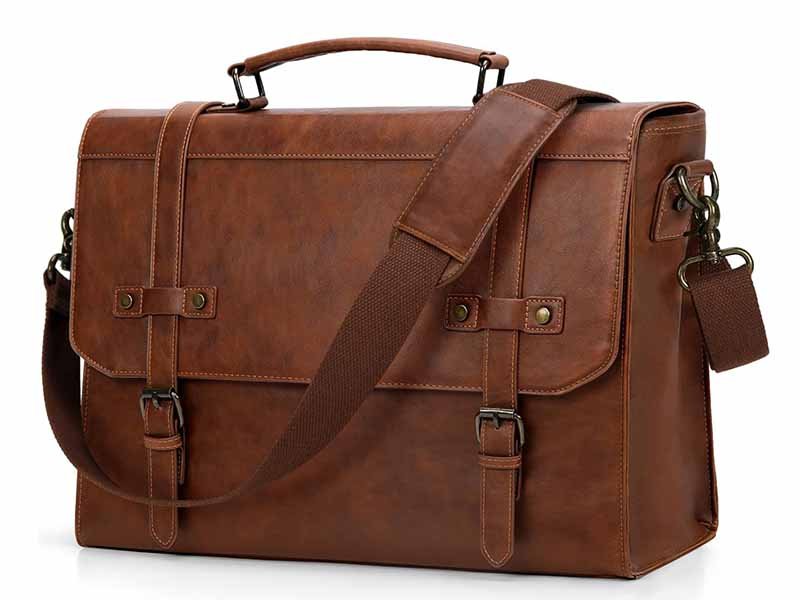
A leather laptop bag can impress a customer in seconds with rich texture, clean edges, and premium hardware. But the part that decides whether that bag survives real daily use is usually much less glamorous: the strap. That is where weight gathers, where motion repeats, and where weak construction starts to show. A laptop bag may carry a computer, charger, notebook, cables, mouse, power bank, and personal items every working day. Under that kind of repeated load, a strap made with only surface appearance in mind will gradually stretch, twist, crease, and sometimes fail at the anchor points. This is why experienced brands no longer treat the strap as a simple accessory part. They treat it as a structural system.
Leather laptop bag strap reinforcement techniques are the methods used to make straps stronger, more stable, and more comfortable under repeated load. In practical manufacturing, these methods include layered leather construction, hidden anti-stretch cores, reinforcement materials, dense stitching patterns, and hardware support at high-stress points. When these elements are selected and combined correctly, the strap keeps its shape better, carries weight more safely, and gives the bag a longer service life.
The interesting part is that two leather laptop bags can look nearly identical in product photos, yet after six months of office commutes, airport travel, and daily shoulder carry, one still looks sharp while the other already feels tired. The difference is usually hidden inside the strap.
What Are Leather Laptop Bag Strap Reinforcement Techniques
Leather laptop bag strap reinforcement techniques are construction methods used to increase strap strength, reduce stretching, and improve long-term reliability. They work by combining leather layers, internal support materials, stitching engineering, and hardware reinforcement so the strap can carry daily laptop weight without losing shape too quickly.
What makes leather laptop bag strap reinforcement techniques
What makes strap reinforcement important is simple: a laptop bag strap is not carrying static weight. It carries moving weight. Every step, shoulder shift, lift, and drop creates dynamic stress. That means the strap must do more than just “not break.” It must resist stretch, stop deformation, protect the attachment point, and stay comfortable over time.
A non-reinforced leather strap often starts with one attractive advantage: it looks clean and simple. But under regular office and travel use, that simplicity can become a weakness. Leather on its own has natural beauty and good strength, but when used alone in a long shoulder strap, it can gradually elongate. This is exactly why many serious manufacturers add hidden reinforcement inside the strap. Saddleback, for example, describes some of its leather laptop bags as using extra stitching, rivets, or hidden polyester strips that do not stretch, showing how anti-stretch support is used in commercial bag construction.
In professional leather goods development, strap reinforcement is usually built from several layers of thinking rather than one single trick. The best results often come from combining multiple systems together.
A reinforced strap commonly includes:
- a face leather layer for appearance
- a backing layer for structure and finish
- an internal anti-stretch core such as polyester or webbing
- reinforcement at the anchor point
- stitching and hardware designed for repeated load
This is also why good strap reinforcement changes both performance and market positioning. It does not only prevent failure. It raises product confidence. A brand that sells to professionals, commuters, and business travelers cannot rely on appearance alone. The strap has to support the promise of the whole bag.
Here is a practical comparison:
| Strap Structure | Main Composition | Stretch Resistance | Shape Stability | Long-Term Reliability |
|---|---|---|---|---|
| Single-layer leather strap | One leather strip | Low | Low | Medium |
| Double-layer leather strap | Face + backing leather | Medium | Medium | Good |
| Leather strap with hidden core | Leather + polyester/webbing core | High | High | Very good |
| Multi-system reinforced strap | Leather + core + stitch + hardware support | Very high | Very high | Excellent |
The reason this matters so much in laptop bags is that the product is not a fashion-only item. It is a work tool. When the strap fails, the whole product fails with it.
How leather laptop bag strap reinforcement techniques work
These techniques work by controlling three problems at the same time: stretch, point-load stress, and fatigue at the attachment area. If a strap is made only from leather and thread, all three problems concentrate in a narrow load path. Over time, the strap gets longer, softer, and less stable. Reinforcement changes that load path.
The first method is layering. When two leather layers are bonded and stitched together, the strap becomes thicker and more dimensionally stable. The second method is a hidden core. This is often a polyester strip, nylon webbing, or another non-stretch support placed between leather layers. It does not change the external look much, but it significantly reduces elongation under daily carry. Industry and craft references also regularly discuss synthetic reinforcement and internal support materials for leather goods to improve shape retention and reduce stretch. Freudenberg notes that reinforcement materials are used in leather goods to help products hold shape, while leatherwork-specific construction guidance points to reinforcement layers such as bonded leather fiber or microfiber when the leather alone is too soft or drapey for the intended structure.
The third method is structural stitching and hardware support. Dense box stitches, X-stitches, bartacks, rivets, and reinforced folds spread force across a wider area instead of letting one small stitch line take the full strain. Weaver Leather Supply also emphasizes choosing strong stitching methods for bag straps and using rivets as both functional and design-support elements. British Leather Supplies similarly highlights rivets as reinforcements for stress points such as straps and heavy hardware.
A strong strap usually works like this:
| Reinforcement Element | What It Does | Main Benefit |
|---|---|---|
| Double leather layers | Adds body and thickness | Better shape retention |
| Polyester or webbing core | Limits elongation | Less stretch over time |
| Reinforcement lining | Supports softer leather | More stable structure |
| Box/X stitching | Spreads force | Lower seam failure risk |
| Rivets or reinforced hardware base | Strengthens anchor point | Better load security |
The most important insight for customers is that reinforcement is rarely one isolated technique. It is a system. A beautiful leather surface may attract the order, but the hidden construction is what protects the reputation of the product after shipping.
Are leather laptop bag strap reinforcement techniques needed
Yes, especially for leather laptop bags meant for real daily use. The more professional the target market, the more necessary reinforcement becomes. A laptop bag is expected to carry a fairly predictable set of heavy items: the computer itself, charger, notebook, cables, documents, and often extra personal gear. That means the strap is under repeated medium-to-heavy load, not occasional light use.
This is also why strap problems are so damaging commercially. When a strap stretches too fast, the customer notices immediately. The bag hangs lower, feels less balanced, and begins to look worn much sooner than expected. If the anchor area wrinkles, tears, or distorts, the whole bag can lose its premium image even if the body leather still looks good.
From a factory point of view, reinforcement is a cost decision. From a brand point of view, it is a return-rate decision. Reinforcement may add material, labor, and development time, but it also reduces the risk of product complaints. For B2B clients serving brand customers or informed wholesale customers, that trade-off is usually worth it.
A useful decision model looks like this:
| Product Position | Need for Reinforcement | Why It Matters |
|---|---|---|
| Fashion-only light carry bag | Medium | Appearance matters more than load capacity |
| Everyday office laptop bag | High | Daily repeated carry creates strap fatigue |
| Premium briefcase | Very high | Customers expect long service life |
| Travel laptop messenger bag | Very high | Higher load and movement stress |
| Corporate gift bag | High | Visible strap aging hurts brand image |
So the answer is not just that reinforcement is needed. It is that reinforcement becomes more necessary as the bag moves closer to premium, professional, or frequent-use positioning.
Why Leather Laptop Bag Strap Reinforcement Techniques
Leather laptop bag strap reinforcement techniques matter because they improve load-bearing strength, reduce stretching, and keep the bag more comfortable and stable during daily use. In commercial terms, they help the product look better for longer and reduce the chance of early strap-related complaints.
How leather laptop bag strap reinforcement techniques improve strength
Strength in a leather laptop strap does not come from leather thickness alone. It comes from how the full strap system is built. A very thick leather strap can still fail if the anchor fold is weak, if the thread choice is poor, or if all the tension is concentrated at one narrow stitched line. Reinforcement improves strength by distributing force.
There are three main strength zones in a laptop strap. The first is the strap body itself. The second is the adjustment area, if the strap is adjustable. The third is the connection point where the strap meets the bag. In lower-grade products, one of these zones usually becomes the failure point. In better products, all three zones are designed together.
The strongest leather laptop straps usually combine:
- a strong top leather or strap leather selection
- an anti-stretch inner support
- reinforced folded ends
- multiple rows of stitching at the anchor area
- hardware installed on supported, not loose, leather
This is why rivets and reinforcement folds remain common in durable bag construction. Rivets are often used to secure thick layers or support strap connections, while reinforcement materials behind the leather help the structure resist sagging and distortion.
A practical strength hierarchy looks like this:
| Construction Level | Load Strength | Common Weakness |
|---|---|---|
| Single leather + basic stitch | Low to medium | Stretch and anchor fatigue |
| Double leather + better stitch | Medium | Moderate anchor wear over time |
| Leather + core + reinforced anchor | High | Better daily durability |
| Leather + core + reinforced anchor + rivet support | Very high | Strong long-term performance |
For brands selling professional leather goods, this added strength is not a luxury feature. It is part of the product promise.
Why leather laptop bag strap reinforcement techniques reduce stretch
Stretch is one of the biggest hidden problems in leather laptop bag straps. Customers usually do not describe it with technical words. They simply say the bag “sags,” “hangs too low,” or “doesn’t feel new anymore.” In many cases, the leather is not tearing. It is slowly elongating.
Leather naturally moves under load, especially in longer shoulder straps. That movement can be acceptable in some fashion products, but in laptop bags it quickly becomes a problem. The bag becomes less balanced, the strap adjustment changes, and the bag can start hitting the hip or leg in an awkward way. Over time, the product feels less controlled and less premium.
This is why hidden anti-stretch cores are so valuable. Polyester strips, synthetic webbing, and reinforcement sheets inside the leather help the strap keep its designed length more consistently. Commercial leather bag makers and leathercraft sources both reference this logic: hidden polyester or synthetic support helps prevent stretching, especially in products under repeated tension.
Different anti-stretch strategies serve different products:
| Anti-Stretch Method | Best Use | Result |
|---|---|---|
| Thicker leather only | Lower to mid-range straps | Limited stretch control |
| Double leather layers | Structured briefcases | Better control |
| Polyester strip core | Long shoulder straps | Strong anti-stretch effect |
| Webbing core | Heavy-use messenger bags | High stability |
| Reinforcement sheet behind anchor zone | Hardware-heavy straps | Better shape retention |
For customers with some product knowledge, this is an important detail. A strap that stays stable for longer makes the whole bag feel better made, even when the reinforcement itself is invisible.
Do leather laptop bag strap reinforcement techniques improve comfort
Yes, and this is often overlooked. Many people think reinforcement only makes a strap stronger. In reality, it can also make the bag more comfortable because a stable strap carries weight more predictably. A strap that twists, stretches, and folds unevenly creates pressure points on the shoulder and makes the bag feel heavier than it is.
Comfort comes from controlled structure. When the strap keeps its intended width, shape, and length, it lies better on the shoulder. When the anchor point is reinforced, the bag hangs at a better angle. When the internal core prevents collapse, the strap feels more secure during walking.
Of course, reinforcement must be balanced carefully. Too much stiffness can create a hard, unfriendly feel. Too little reinforcement creates sag and instability. The best laptop straps sit in the middle: structured enough to support weight, flexible enough to move with the user.
This is where experienced leather goods factories create real value. SzoneierLeather’s strength is not only leather product manufacturing. It is the ability to work from raw material understanding through product design, sampling, construction, packaging, and quality inspection. That makes it easier to choose a reinforcement approach that suits the exact product level instead of overbuilding or underbuilding the strap.
A useful comfort comparison is below:
| Strap Condition | Carry Feel | User Experience |
|---|---|---|
| Soft but unreinforced | Feels fine at first | Sags and twists later |
| Overly stiff reinforced strap | Very stable | May feel hard on shoulder |
| Balanced reinforced strap | Stable and controlled | Best long-term comfort |
That balance is where better leather laptop bags separate themselves from average ones.
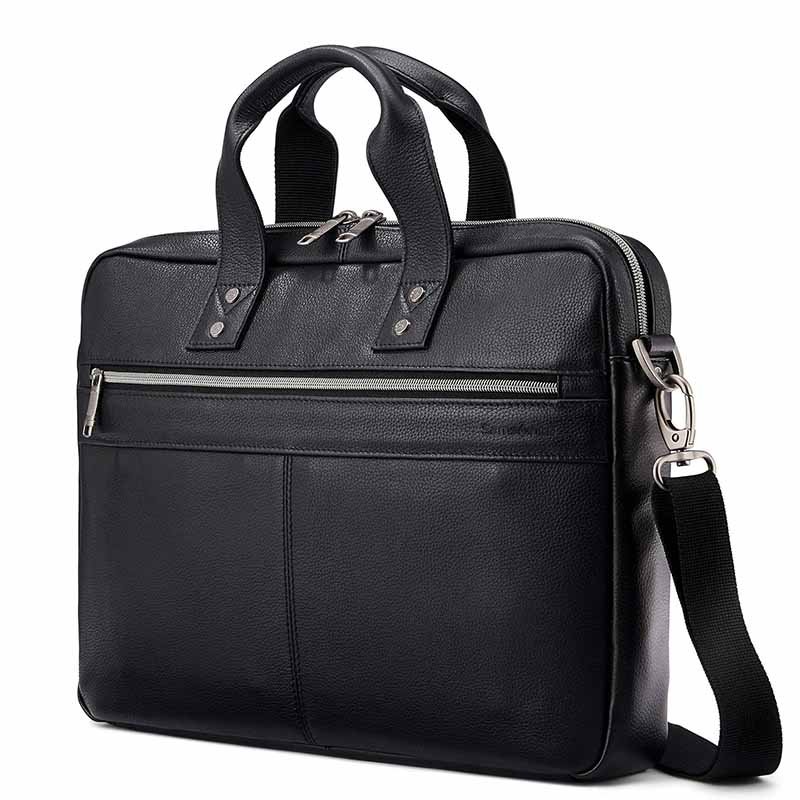
Which Leather Laptop Bag Strap Reinforcement Techniques
Leather laptop bag strap reinforcement techniques mainly include layered construction, internal core reinforcement, stitching engineering, and hardware reinforcement. Each technique solves a different structural problem, and the best-performing straps usually combine multiple methods rather than relying on just one.
Which layered leather laptop bag strap reinforcement techniques
Layered leather construction is one of the most widely used reinforcement methods. Instead of using a single strip of leather, the strap is built from two or more layers bonded and stitched together. This increases thickness, improves shape stability, and reduces deformation over time.
In real production, layered straps typically follow these structures:
- Top layer: full-grain or top-grain leather for appearance
- Middle layer (optional): reinforcement sheet or padding
- Bottom layer: split leather or lining for support and comfort
The advantage of layering is that it distributes load across a wider cross-section. This reduces stress concentration and slows down material fatigue.
Here is a performance comparison:
| Layer Structure | Thickness | Shape Stability | Cost Level | Best Use |
|---|---|---|---|---|
| Single-layer | Thin | Low | Low | Light-use bags |
| Double-layer | Medium | Medium–high | Medium | Daily laptop bags |
| Triple-layer | Thick | High | Higher | Premium and heavy-use bags |
However, layering alone does not fully prevent stretch. Leather fibers still move under continuous load. That is why layered construction is often combined with internal core reinforcement for better long-term performance.
For brands, layered straps offer:
- Better visual thickness (premium look)
- Improved durability
- Flexibility in material selection
But without internal reinforcement, long straps may still elongate over time.
Which core leather laptop bag strap reinforcement techniques
Core reinforcement is one of the most effective ways to control stretch. It involves placing a non-stretch material inside the leather strap to stabilize length and maintain structure.
Common core materials include:
- Polyester webbing
- Nylon webbing
- Reinforcement tapes or sheets
The core is usually hidden between leather layers, so it does not affect appearance but significantly improves performance.
Why core reinforcement matters:
- Leather naturally stretches under repeated load
- Long shoulder straps are especially prone to elongation
- Internal cores limit this movement and keep the strap stable
Here is a comparison of core types:
| Core Material | Stretch Resistance | Flexibility | Cost | Best Application |
|---|---|---|---|---|
| Polyester webbing | High | Medium | Low–medium | Standard laptop straps |
| Nylon webbing | Very high | High | Medium | Heavy-duty bags |
| Reinforcement sheet | Medium | Medium | Medium | Structured briefcases |
Core reinforcement is particularly important for:
- Adjustable shoulder straps
- Crossbody laptop bags
- Bags designed for daily commuting
Without a core, even a well-made leather strap can gradually become longer, affecting usability and product perception.
From a manufacturing perspective, integrating the core correctly requires:
- Accurate alignment during layering
- Strong bonding between layers
- Controlled stitching to avoid shifting
Factories like SzoneierLeather use structured assembly processes to ensure the core remains stable throughout production and use.
Which stitching leather laptop bag strap reinforcement techniques
Stitching is not only about joining materials—it is a key reinforcement method that directly affects strength and durability. The pattern, density, and thread type all influence how well the strap performs under load.
Common reinforcement stitching techniques include:
1. Box stitching
- Square-shaped stitch pattern
- Distributes load across four sides
2. X-stitch (cross stitch)
- Diagonal reinforcement inside a box
- Adds strength to high-stress areas
3. Double or triple stitching
- Multiple parallel stitch lines
- Increases seam strength
4. Bartack stitching
- Dense, short stitches at critical points
- Used in strap anchors and stress zones
Here is a comparison:
| Stitch Type | Strength Level | Application Area |
|---|---|---|
| Single stitch | Low–medium | Basic seams |
| Double stitch | Medium | Strap body |
| Box stitch | High | Strap attachment |
| Box + X stitch | Very high | Heavy load areas |
| Bartack | Very high | Reinforcement points |
The choice of thread also matters:
- Polyester thread → strong and UV-resistant
- Nylon thread → flexible and durable
Poor stitching design is one of the most common causes of strap failure. Even with good materials, weak stitching can lead to tearing or separation.
How Leather Laptop Bag Strap Reinforcement Techniques Are Made
Leather laptop bag strap reinforcement techniques are implemented through a structured manufacturing process that combines material preparation, layering, stitching, and hardware installation. Precision at each step ensures consistent quality and performance.
How cutting leather laptop bag strap reinforcement techniques work
The process starts with accurate cutting. Leather and reinforcement materials must be cut precisely to ensure proper alignment during assembly.
Key steps include:
- Selecting leather thickness and grade
- Cutting strap panels to exact dimensions
- Preparing core materials to match strap length
- Skiving (thinning edges) for smooth layering
Precision is critical because:
- Misalignment affects strap shape
- Uneven thickness impacts comfort
- Poor edge preparation reduces durability
Advanced factories use:
- Die-cutting tools
- CNC cutting machines
These methods improve consistency and reduce material waste.
How stitching leather laptop bag strap reinforcement techniques work
After layering and bonding, stitching is applied to secure the structure. This step determines how well the strap holds under load.
The process includes:
- Aligning layers and core materials
- Applying adhesive (optional) for stability
- Stitching with industrial sewing machines
- Reinforcing stress points with additional stitching
Important factors:
- Stitch density (more stitches = stronger seam)
- Thread quality
- Stitch placement accuracy
Poor stitching can cause:
- Uneven load distribution
- Early seam failure
- Reduced product lifespan
That is why high-quality factories implement strict quality control during stitching.
Are hardware leather laptop bag strap reinforcement techniques important
Hardware plays a critical role in strap reinforcement, especially at connection points. Even the strongest strap can fail if the hardware attachment is weak.
Common hardware includes:
- Metal buckles
- D-rings
- Hooks and clips
- Rivets
Reinforcement techniques for hardware:
- Double-layer leather at attachment points
- Rivet reinforcement
- Reinforced stitching around hardware
Here is a comparison:
| Hardware Method | Strength | Best Use |
|---|---|---|
| Stitch-only attachment | Medium | Light loads |
| Stitch + rivet | High | Standard laptop bags |
| Reinforced plate + rivet | Very high | Heavy-duty bags |
Hardware quality also matters:
- Zinc alloy → cost-effective
- Stainless steel → high durability
- Brass → premium positioning
At SzoneierLeather, hardware integration is carefully engineered to ensure:
- Strong load-bearing capacity
- Long-term durability
- Consistent product quality
How to Choose Leather Laptop Bag Strap Reinforcement Techniques
Choosing the right leather laptop bag strap reinforcement techniques is a balance of load requirement, product positioning, user comfort, and cost control. The goal is not to use every reinforcement method, but to combine the right ones to achieve reliable performance and strong market appeal.
What leather laptop bag strap reinforcement techniques to choose
The first step is to define how the bag will actually be used. Different use scenarios create very different stress levels on the strap.
Start with these three questions:
- How heavy will the bag typically be?
- How often will it be carried?
- Is it shoulder carry, crossbody, or hand carry?
Based on real usage, you can match reinforcement techniques:
| Use Scenario | Recommended Reinforcement | Reason |
|---|---|---|
| Light office use | Double-layer leather + basic stitching | Lower load, cost control |
| Daily commuting (3–6 kg) | Layered leather + core + box stitching | Balanced durability |
| Travel / heavy carry | Layered + core + reinforced anchor + rivets | High stress resistance |
| Premium business bags | Multi-layer + core + fine stitching + premium hardware | Performance + aesthetics |
A common mistake is over-engineering entry-level products or under-engineering daily-use products. The best approach is to match reinforcement level with actual load demand, not just perceived product value.
Which leather laptop bag strap reinforcement techniques fit best
The “best” reinforcement is not universal—it depends on how the strap interacts with the overall bag design, materials, and customer expectations.
Key matching principles:
1. Match reinforcement with leather type
- Soft leather → requires core support
- Firm leather → may rely more on layering
2. Match reinforcement with strap length
- Short handles → less stretch risk
- Long shoulder straps → must include anti-stretch core
3. Match reinforcement with bag structure
- Structured briefcase → reinforcement sheet + layered leather
- Soft messenger bag → webbing core + flexible stitching
Here is a compatibility guide:
| Strap Design | Best Reinforcement Combination |
|---|---|
| Short handle strap | Double-layer leather + reinforced stitching |
| Adjustable shoulder strap | Leather + webbing core + box/X stitch |
| Crossbody strap | Multi-layer + strong core + reinforced hardware |
| Luxury slim strap | Fine leather + hidden core + precise stitching |
Another critical factor is visual balance. Reinforcement should not compromise design. For example:
- Thick straps may look strong but feel bulky
- Too many rivets may reduce elegance
- Excess stitching may affect aesthetics
This is why experienced factories like SzoneierLeather focus on integrating reinforcement inside the structure, keeping the external design clean while maintaining strength.
How custom leather laptop bag strap reinforcement techniques help
Customization is where reinforcement becomes a strategic advantage instead of just a technical requirement. In today’s market, many leather laptop bags look similar, but performance differences become clear after months of use.
Custom reinforcement allows brands to:
1. Build product differentiation
- Unique strap structures
- Signature stitching patterns
- Hidden reinforcement systems
2. Improve target market fit
- Lighter straps for fashion-focused users
- Stronger straps for business professionals
- Heavy-duty straps for travel and work use
3. Optimize cost vs performance
- Adjust reinforcement level to price segment
- Avoid unnecessary material cost
- Focus investment on high-stress areas
4. Strengthen brand positioning
- Entry-level → simple reinforcement
- Mid-range → balanced construction
- Premium → advanced reinforcement + refined design
Here is a comparison:
| Aspect | Standard Strap | Custom Reinforced Strap (SzoneierLeather) |
|---|---|---|
| Design flexibility | Limited | Fully adjustable |
| Performance | Average | Optimized |
| Brand identity | Weak | Strong |
| Market competitiveness | Medium | High |
| Profit margin potential | Lower | Higher |
SzoneierLeather supports customization through:
- In-house leather sourcing and material development
- Product design and engineering support
- Fast sampling (usually 5–7 days)
- Low MOQ for testing new designs
- Full OEM/ODM production capability
This allows clients to quickly turn ideas into market-ready products with controlled quality and predictable performance.
Start Your Leather Laptop Bag Project with SzoneierLeather
A leather laptop bag is judged not only by how it looks on day one, but by how it performs after months of real use. The strap is one of the most critical parts of that experience. When reinforcement is done correctly, the bag feels stable, comfortable, and reliable. When it is done poorly, even high-quality leather cannot hide the problem.
SzoneierLeather combines 18+ years of leather manufacturing experience with strong material sourcing and product development capabilities. From leather selection to strap engineering, from sampling to mass production, every step is carefully controlled to deliver consistent quality.
If you are planning to develop or upgrade your leather laptop bag collection:
- Get free design consultation based on your target market
- Receive samples within 5–7 days
- Start with low MOQ to test your product concept
- Ensure strict quality inspection for every order
- Benefit from stable production and reliable delivery
Send us your concept, sketch, or reference product today. SzoneierLeather will help you create leather laptop bags with reinforced straps that not only look premium but also perform reliably in everyday use.