
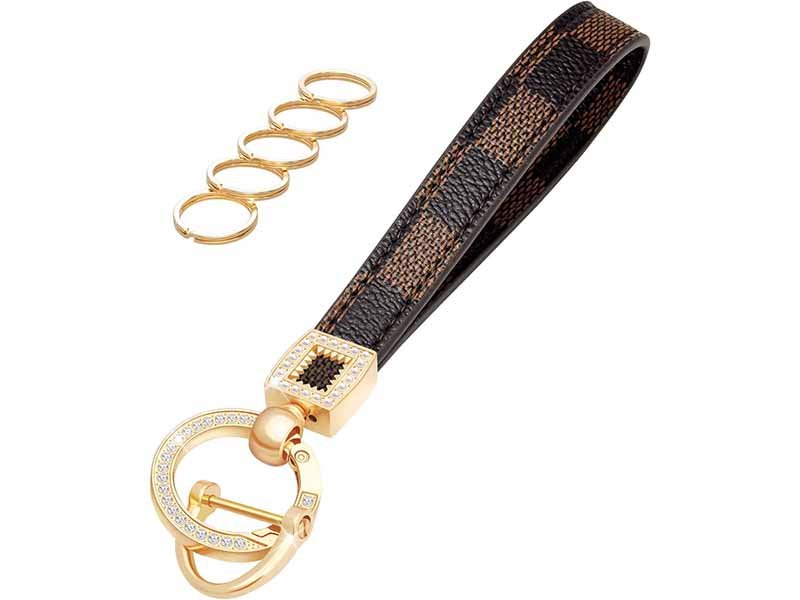
A leather keychain can be beautifully cut, edge-painted, and stamped with a premium logo—and still get returned for one simple reason: the split ring feels weak. Customers don’t describe it in engineering terms. They say things like “it bends,” “it opens,” “it turns my leather brown,” or “my keys fell off.” That one small metal part becomes the entire product in the customer’s mind, because it carries the daily stress: pockets, car ignition twists, bag hooks, sweat, rain, and constant friction.
Split rings for leather keychains should be chosen by ring diameter, wire thickness, and corrosion resistance. Smaller diameters work for lightweight key sets, while thicker wire and larger rings handle heavier loads. Stainless steel and high-quality plating reduce rust and prevent stains on leather. The best choice balances strength, comfort, and long-term appearance.
If you’ve ever seen a keychain ring leave a rust halo on light leather—or watched a ring deform after a few months—you know this is not a “small detail.” It’s the part that decides whether a customer trusts your product every single day.
What Are Split Rings for Leather Keychains?
Split rings are double-coil metal rings designed to hold keys securely by resisting accidental opening. In leather keychains, the split ring becomes the main load-bearing point, taking repeated twisting, pulling, and moisture exposure. Choosing the wrong split ring can cause bent rings, loose key retention, or rust stains on leather—problems that customers notice faster than stitching or leather grade.
What split rings actually do in daily use?
Split rings look simple, but they do three jobs at the same time:
- Hold keys without accidental release
- Absorb daily torque (car keys + ignition turning is a big stress test)
- Protect the leather connection point by distributing force more evenly than hooks or clips
A keychain is rarely “gently used.” Customers toss it into bags with coins, hang it on belt loops, drop it on wet tables, and keep it in sweaty pockets. That environment punishes weak split rings quickly.
Here’s a practical way to think about it: Leather is the body. Split rings are the joint. If the joint fails, the body doesn’t matter.
What are split rings used for?
For leather keychains, split rings are used to secure keys with low risk of accidental opening. The double-coil design forces the user to thread keys in a controlled way, which is why split rings remain the most trusted option for everyday key carry.
In real usage, split rings handle:
- Twist load: keys rotate and pull sideways (especially car fobs)
- Pull load: keys tug when clipped to belt loops or bags
- Impact: dropping keys on the ground deforms weak rings
- Friction: keys scrape plating and expose base metal over time
Customers expect two things:
- The ring should stay round (no oval deformation)
- Keys should stay on (no opening gap forming)
A small but important point: if the ring is too soft, it bends. If it’s too stiff but poorly finished, the sharp edges can scratch keys or wear leather attachment loops faster. Strength is important, but the feel and finish are part of “quality” to customers.
Why are split rings common in leather keychains?
Split rings are common because they are secure, familiar, compact, and easy to integrate into leather designs. Many customers also trust split rings more than clips because they’ve had clips open accidentally in bags or pockets.
From a production perspective, split rings fit well with:
- Leather loops (stitched or riveted)
- D-rings and O-rings (as a connector system)
- Fold-over leather tabs
- Hardware sets used in gift keychains and corporate orders
Split rings also help reduce leather stress. A clip concentrates force at one point; a split ring spreads the load around its coil, which can reduce tearing at the leather hole or loop over time.
Practical reason brands keep choosing split rings: They reduce “keys fell off” complaints—one of the most damaging complaints for a keychain product, because it suggests risk and unreliability.
Are split rings better than other keychain hardware?
Split rings are often the safest choice, but “better” depends on how the keychain is used. Some customers want quick-release convenience; others want maximum security. Here’s a clear comparison based on how customers actually use keychains.
| Hardware Type | Key Retention | One-Hand Use | Risk of Accidental Opening | Best For |
|---|---|---|---|---|
| Split rings | Very high | Medium | Very low | Everyday carry, car keys, premium leather |
| Snap hooks | Medium | High | Medium | Bags, lanyards, light keys |
| Carabiners | Medium | High | Medium | Outdoor, utility styles |
| Spring clips | Low–medium | Very high | High | Fashion items, low-risk use |
Where split rings win:
- Strong retention with minimal moving parts
- Less “mechanical failure” compared to clips
- Cleaner look, especially with leather
Where split rings can lose:
- Harder for some users (long nails, seniors) to add/remove keys
- If low-quality plating is used, rust staining can be worse than clips because the ring sits close to leather
So yes, split rings are often “better” for reliability—but only when the ring size, wire thickness, and corrosion resistance are chosen correctly.
Common failure reasons
These are the problems that trigger the most complaints in leather keychains:
| Customer Complaint | Likely Root Cause | How to Prevent |
|---|---|---|
| “Ring bent out of shape” | Wire too thin / soft metal | Increase wire diameter, upgrade material |
| “Keys fell off” | Opening gap formed | Use stronger ring + tighter coil + QC check |
| “Rust stains on leather” | Poor plating / base metal exposed | Stainless steel or higher-grade plating |
| “Looks cheap after 2 months” | Plating wear, scratches | Better coating + smoother finish |
Which Split Ring Sizes Are Most Common?
The right split ring size can make or break a leather keychain. When it comes to durability, comfort, and usability, size matters. If the ring is too small, it can put excessive stress on the leather and cause deformation. If it’s too large, it may feel bulky and awkward, making the keychain less user-friendly.
Here’s how different split ring sizes impact the overall performance of leather keychains and help ensure a better user experience.
Which Split Ring Sizes Fit Small Leather Keychains?
Small leather keychains typically use split rings ranging from 15 mm to 25 mm in diameter, depending on the size of the leather and the number of keys attached.
Why size matters for smaller keychains:
- Key comfort: A smaller ring means the keychain will not feel bulky in your pocket or bag. It also ensures that the leather loop stays tight and doesn’t get stretched or deformed under pressure.
- Aesthetics: Small rings give a sleek and refined look, which is especially important in high-end or custom designs.
Recommended sizes:
- 15 mm – 20 mm: Great for light leather keychains with just 1–3 small keys (e.g., home keys, key fobs).
- 20 mm – 25 mm: Suitable for slightly larger keychains or when customers want to attach multiple small keys, without making the overall design too bulky.
Customer concern: Small rings may feel too tight if leather thickness exceeds 3 mm. For thicker leather, a slightly larger split ring might be more appropriate.
Size selection table for small keychains:
| Keychain Use | Ring Size Range | Key Quantity | Leather Thickness | Ideal Ring Material |
|---|---|---|---|---|
| Home keychain | 15–18 mm | 1–2 keys | 2–3 mm | Stainless Steel, Brass |
| Car fob | 18–20 mm | 1–2 keys | 2–3 mm | Stainless Steel, Plated |
Which Split Ring Sizes Fit Heavy Leather Keychains?
For heavier keychains that will carry multiple keys or larger items like car keys, the split ring must be larger and stronger to handle the added load. These keychains often require split rings between 25 mm and 40 mm in diameter, with a thicker wire for added strength.
Why larger rings matter for heavy-duty keychains:
- Load-bearing: Larger rings with thicker wire are essential to prevent bending or opening under pressure.
- Long-term durability: Larger rings last longer because they distribute the weight of the keys more evenly, reducing wear on the leather.
- Stability: Heavier keychains, such as those used for car keys or toolbox keys, need to stay securely in place without deforming the ring.
Recommended sizes:
- 25 mm – 30 mm: Suitable for medium to heavy-duty keychains that hold several keys or other tools.
- 30 mm – 40 mm: Ideal for larger, more robust keychains with multiple heavy keys (e.g., office keys, toolbox keys, car keys).
Customer concern: Larger split rings may not always fit well with thin leather or compact designs, which is why selecting a compatible leather thickness and key count is important.
Size selection table for heavy keychains:
| Keychain Use | Ring Size Range | Key Quantity | Leather Thickness | Ideal Ring Material |
|---|---|---|---|---|
| Car keys | 25–30 mm | 3–5 keys | 3–5 mm | Stainless Steel, Nickel-Plated |
| Heavy-duty keychains | 30–40 mm | 4–7 keys | 3–5 mm | Brass, Stainless Steel |
How Do Split Ring Sizes Affect Daily Use?
Size doesn’t just affect how much weight the ring can carry—it also affects comfort and usability in everyday life. Split rings that are too large can create an uncomfortable bulge in pockets, while rings that are too small can be difficult to work with, especially when you need to quickly remove or add keys.
Impact of ring size on daily usability:
- Small rings (15–20 mm) are lightweight and compact, but they can be harder to open, especially with larger fingers or long nails.
- Larger rings (25–40 mm) are easier to work with but can feel too bulky or heavy, especially if the user carries only a few keys.
- The sweet spot is typically 20–30 mm, which offers a good balance between comfort, strength, and ease of use.
Customer concern: The right size prevents:
- Ring strain on the leather
- Difficult key removal
- Excessive bulk in pockets or bags
Performance table for comfort and usability:
| Ring Size Range | Comfort Level | Usability for Daily Carry | Key Count | Ideal Use |
|---|---|---|---|---|
| 15–20 mm | High | Low (harder to open) | 1–2 keys | Compact, minimal |
| 20–25 mm | Medium | Medium | 1–3 keys | Light use, compact |
| 25–30 mm | Low | High (easy access) | 3–5 keys | Heavy-duty, frequent use |
| 30–40 mm | Low | Medium | 4–7 keys | Bulkier designs, extra keys |
How Does Split Ring Size Relate to Leather Quality and Key Chain Design?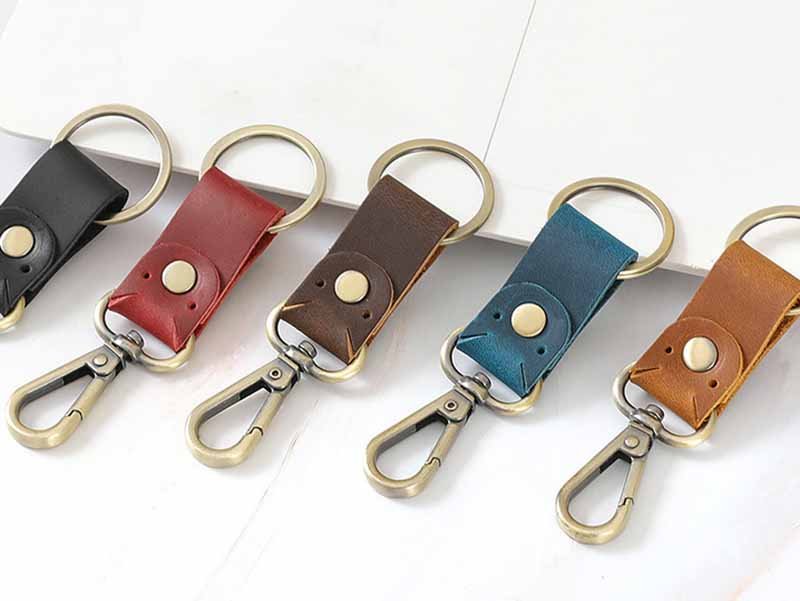
Leather thickness and design style are crucial factors when choosing the correct split ring size. Thicker leather, such as 6 mm leather loops, requires stronger, larger rings (30 mm and up) to prevent stress and deformation. On the other hand, thin leather (2–3 mm) pairs well with smaller rings (15–20 mm), providing a more sleek and lightweight design.
Design and leather pairing considerations:
- Thick leather loops: Larger split rings (30 mm and up) are required to avoid stretching and tearing of the leather.
- Thin leather loops: Smaller rings (15–25 mm) work best and maintain the elegance of the design.
- Custom designs: When designing custom leather keychains, it’s essential to match ring size with leather quality to avoid overloading or excessive slack.
Customer concern: Larger rings often feel awkward or bulky in smaller or thinner designs. Custom projects need to ensure that the ring size fits the overall design vision.
How to Choose the Right Split Ring Size for Your Keychain Design?
To choose the right split ring size, consider these factors:
- Leather thickness: Thicker leather needs a larger, more robust ring.
- Key quantity and weight: More keys require a larger and stronger ring.
- Design type: Consider the style of keychain. Minimalist designs should use smaller rings.
- Durability requirements: If the keychain will face heavy daily use, go for thicker wire and larger diameters.
Guideline for choosing split ring sizes:
| Design Requirement | Ring Size |
|---|---|
| Compact design, 1–2 keys | 15–20 mm |
| Slim leather, 1–3 keys | 20–25 mm |
| Heavy-duty, 3+ keys | 25–40 mm |
How Strong Are Split Rings for Leather Keychains?
Split ring strength is not about marketing terms like “heavy duty.” For customers, strength means one simple thing: the ring should not bend, open, or lose tension after months of daily use. In leather keychains, strength comes mainly from wire thickness, material hardness, and ring diameter, not just size alone.
What Makes Split Rings Strong or Weak?
In real-world use, split rings fail in three common ways:
- Permanent bending (ring loses its round shape)
- Opening gap increases (keys can slip out)
- Loss of spring tension (ring no longer closes tightly)
These failures are directly related to wire diameter and material quality.
Key strength factors explained simply:
- Wire thickness determines resistance to bending
- Material hardness controls how well the ring returns to shape
- Double-coil precision affects how tightly the ring stays closed
A thin ring made from hard steel may outperform a thick ring made from soft alloy. This is why strength should never be judged by appearance alone.
How Does Split Ring Thickness Affect Strength?
Wire thickness is the most reliable indicator of split ring strength for leather keychains.
Below is a practical strength guide based on long-term use data and factory testing:
| Wire Thickness | Typical Load Capacity* | Recommended Use |
|---|---|---|
| 1.2 mm | Light (1–2 keys) | Minimal keychains |
| 1.5 mm | Medium (2–3 keys) | Standard leather keychains |
| 1.8 mm | Medium–heavy (3–5 keys) | Car keys, daily carry |
| 2.0 mm+ | Heavy (5+ keys) | Work / tool keychains |
- Load capacity reflects daily use stress, not laboratory pull tests.
Customer reality:
Most complaints start when wire thickness is below 1.5 mm for daily-use keychains. For branded leather keychains meant to last, 1.8 mm is often the safest baseline.
Are Larger Split Rings Always Stronger?
No — this is a very common misunderstanding.
A larger diameter ring spreads load over a wider curve, which helps reduce stress concentration. But if the wire is thin, a large ring can still deform easily.
Correct way to think about strength:
- Diameter controls comfort and usability
- Wire thickness controls strength
- Material controls long-term elasticity
| Ring Diameter | Thin Wire | Thick Wire |
|---|---|---|
| Small ring | Stiff but hard to use | Very strong, compact |
| Large ring | Easy to bend | Strong and user-friendly |
For leather keychains, the best strength-to-comfort balance usually comes from:
- 20–30 mm diameter
- 1.8–2.0 mm wire
- Stainless steel or hardened steel with proper plating
Do Split Rings Rust Over Time?
Yes — split rings can rust, and when they do, they often damage the leather before customers notice the metal itself. Rust stains on leather are one of the most common and irreversible complaints in leather keychains.
Which Split Ring Materials Resist Rust Best?
Material choice is the most important decision for rust prevention.
| Material | Rust Resistance | Notes |
|---|---|---|
| Stainless steel (304/316) | Excellent | Best long-term option |
| Brass | Very good | No rust, but softer |
| Carbon steel + plating | Medium | Depends on plating quality |
| Iron / low-grade steel | Poor | Not suitable for leather |
If the keychain is expected to touch sweat, rain, or pockets, stainless steel split rings dramatically reduce complaints.
How Do Coatings Protect Split Rings from Corrosion?
When stainless steel is not used, surface coatings become critical.
Common coatings include:
- Nickel plating – smooth, affordable, moderate corrosion resistance
- Black plating / black oxide – aesthetic, but weaker corrosion protection
- Chrome plating – hard surface, better wear resistance
Where problems start:
- Coating wears at friction points
- Base metal becomes exposed
- Rust transfers directly to leather fibers
This is why low-cost plated rings often look fine at delivery, but fail after 2–6 months of use.
How Can Split Rings Last Longer in Daily Use?
From both factory and customer perspectives, longevity improves when:
- Ring material matches usage environment
- Wire thickness is not pushed to minimum cost
- Edges are smoothly finished
- Leather does not trap moisture against the ring
Simple design improvements that help:
- Slight gap between leather and ring to allow airflow
- Avoid sharp leather edges rubbing plating
- Use rivets or loops that don’t squeeze the ring tightly
Small design choices dramatically reduce corrosion risk over time.
How to Choose Split Rings for Leather Keychains?
Choosing split rings should never be done in isolation. The best results come from matching ring size, wire thickness, material, and leather structure as one system.
How to Match Split Rings with Leather Thickness?
| Leather Thickness | Recommended Ring |
|---|---|
| 2–3 mm | 15–20 mm, 1.5–1.8 mm wire |
| 3–4 mm | 20–25 mm, 1.8 mm wire |
| 4–5 mm | 25–30 mm, 1.8–2.0 mm wire |
Mismatch leads to leather stretching, ring deformation, or awkward handling.
How Do Split Rings Affect Keychain Comfort?
Comfort issues usually appear as:
- Bulky feel in pockets
- Keys pressing unevenly
- Ring digging into leather loop
The goal is secure but unnoticed. When customers forget about the ring, it means the design is right.
Which Split Rings Work Best for Custom Designs?
For branded or OEM leather keychains:
- Stainless steel split rings reduce after-sales issues
- 1.8 mm wire thickness balances strength and cost
- 20–25 mm diameter suits most global users
Custom engraving, color plating, or matte finishes should always be tested for wear before mass production.
Ready to Customize Leather Keychains with the Right Hardware?
At SzoneierLeather, we treat split rings as structural components, not accessories.
With over 18 years of experience in leather sourcing, hardware selection, prototyping, and mass production, we help brands:
- Select the right split ring size and material
- Test strength and corrosion resistance
- Match hardware to leather thickness and design
- Produce consistent quality from sample to bulk
- Reduce complaints and returns through smart design
If you’re developing custom leather keychains, corporate gifts, or branded accessories,
contact SzoneierLeather for professional advice, samples, and quotations.