
What Is a Valet Tray Used For:The Ultimate Guide
Picture this: you walk through the door, keys jangling, watch clasped around your wrist, wallet stuffed, phone in hand—and you need somewhere tidy to drop everything. That small chaos moment is exactly what a valet tray solves. And if you’re a brand owner, you might wonder: is there really space in the market for another valet tray? Yes—and smart, well-designed leather valet trays bring convenience, style, and protection together.
A valet tray is a small shallow dish or box—often made from leather—that serves as a catch-all for everyday items like keys, watch, wallet, and phone. It keeps surfaces neat, protects furniture from scratches or stains, and provides a dedicated spot for your essentials. Valet trays vary in materials, design, and portability—and well-crafted leather versions elevate both function and aesthetic.
Let’s explore what exactly a leather valet tray is, what its real purpose is, how it guards against scratches, the styles and materials available, how to choose the right one, and whether it’s worth investing in—whether for your home, your customers, or your brand. And if you stick around, you’ll read a story of a brand that used valet trays to win customer trust.
What Is a Valet Tray?
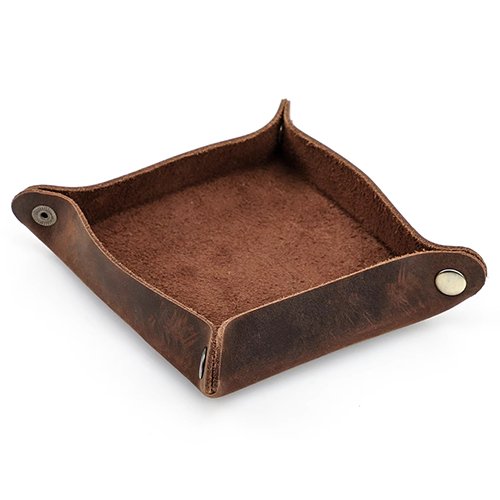
A valet tray is a shallow container—often tray-like or box-like—designed to hold small everyday carry items (keys, wallet, watch, glasses, coins). When made of leather, it combines soft protection with durability, giving surfaces a stylish shield. Leather valet trays protect finishes, reduce clutter, and add a refined touch to bedside tables, entry-ways, desks or dressers.
What is a leather valet tray?
A leather valet tray is exactly what the name suggests: a tray or dish crafted primarily from leather (or leather combined with lining or base material). These trays might be fully rigid with stiff sides or more flexible with fold-up corners. Leather valet trays often include contrast stitching, edge binding, optional lining (suede, microfiber, or felt), reinforced corners, and hardware (snaps or buttons) if they fold.
Leather offers aesthetic premium feel—a patina builds over time, visible grain or embossing adds luxury, and surface texture both delights touch and offers protection. Brands often choose leather valet trays as gifts, promotions, or luxury room accessories because they carry perceived value.
What materials are commonly used for valet trays?
While leather is highly popular, valet trays come in various materials: wood (walnut, mdf, bamboo), metal (brass, stainless steel), ceramic, felt, or even acrylic. But leather stands out for its durability, flexibility, and ability to protect delicate items (glasses, phones). Within leather types, goat leather, calf-skin, full-grain, top-grain, faux leather are choices.
Leather options allow variations in finish: smooth, pebbled, embossed, dyed, and can include linings (e.g. suede interior) to avoid scratches on silver or polished metals placed inside. Base materials may include stitched leather bottoms, wood inserts, or felt pads.
What items are typically stored in a valet tray?
Common items include:
- Keys (car, house)
- Wallets or cardholders
- Watch / bracelets / rings
- Phone
- Glasses / sunglasses
- Loose miscellaneous items: coins, small cables, earphones
The beauty of a valet tray is that it serves as a landing pad for these items as soon as you come home. It prevents misplacing them and protects your tabletop from scratches or liquids from wallet edges or watch backs.
What Are the Main Uses of a Valet Tray?
Valet trays serve both functional and aesthetic roles. Functionally, they organize everyday carry, protect surfaces from scratches or stains, and reduce clutter. Aesthetically, they contribute to decor, provide brand identity (in gifts or luxury collections), and project a sense of order. For many people, the point of a valet tray is as much about style as utility, especially in spaces like entryways, bedrooms, or office desks.
What is the point of a valet tray?
The “point” or purpose is multifold:
- Organization & Routine: By having a fixed drop-zone for essentials, you avoid morning scramble or lost items. Over time it becomes part of your routine—keys go in, watch goes off, wallet goes down—and that small ritual reduces friction in daily life.
- Surface Protection: Many everyday items have hard or sometimes sharp edges (key rings, watch clasps) that scratch tabletop surfaces or leave marks. A tray, preferably soft-leather lined or smooth, protects wood, marble, metal surfaces.
- Aesthetic / Decor Value: A well-designed leather valet tray acts as a style accent. It frames your personal items in a curated way, matches interior finishings (wood, leather furniture), and signals that you pay attention to detail. For brands, it’s a way to offer product that combines practicality with style.
- Gift & Branding Utility: Because valet trays are relatively compact yet visually impressive, they’re excellent for gifting, corporate promos, or as entry-level accessories in a leather goods line. They showcase material quality, stitching, finishing—areas where premium leather brands shine.
Is a valet tray only for home use?
Not at all. While many valet trays live on bedside tables, entryway consoles, or dressers, other uses include:
- Hotel rooms / VIP suites, where valet trays enhance guest experience.
- Offices, to keep desk surfaces tidy (wallet, lanyards, phones).
- Retail & boutiques, as display vessels for small items (rings, accessories), where a branded leather valet tray amplifies perceived value.
- Travel / portable valet trays, e.g., foldable or snap-button trays you throw in a suitcase to unpack in a hotel.
Do valet trays help with organizing everyday carry items?
Yes. A tray collects all those loose CEC (common everyday carry) items in one place, which minimizes misplacement and clutter. Users report less time looking for keys or wallet, fewer scratches or damage to surfaces, and an more peaceful visual environment. Brands often include valet trays in “everyday carry bundles” or interior accessories for leather goods sets, because customers value this organizational utility.
Which Types of Valet Trays Are Available?
Valet trays come in multiple types defined by material, structure, finish, portability, and intended use. Popular options include leather valet trays for premium aesthetics, wooden trays for classic decor, metal trays for modern minimalism, fabric/felt trays for soft protection, and travel-friendly foldable designs for portability. Advanced customization options such as embossed logos, suede lining, and multi-compartment layouts make them suitable for both personal and corporate branding needs.
Types of Valet Trays Explained
The diversity of valet trays on the market today reflects the intersection of style, functionality, and consumer lifestyle trends. Different materials and structural designs influence aesthetics, durability, cost, and brand positioning. Below is a comprehensive guide of the major categories.
1. Leather Valet Trays
Leather valet trays remain the gold standard for premium products. Crafted from full-grain, top-grain, or vegan leather, they offer a luxurious look, durability, and a soft protective surface for jewelry, watches, or electronics. Leather trays often feature:
- Stiff-walled designs for structure and elegance
- Foldable snap-corner versions for travel convenience
- Lined interiors (suede, microfiber) to prevent scratches
- Embossed or foil-stamped logos for branding and gifting purposes
These trays age gracefully, developing a natural patina over time, which appeals to consumers looking for both functionality and heritage aesthetics.
2. Wooden Valet Trays
Wooden valet trays bring a classic, rustic, or mid-century modern appeal to living spaces. Common materials include walnut, oak, bamboo, or MDF with veneer finishes. Many feature lacquered or oiled coatings for water resistance and easy cleaning.
Advantages:
- Naturally rigid and dimensionally stable
- Can incorporate multiple compartments for organizing keys, coins, pens, or watches
- Pairs well with luxury interiors, office desks, or hotel suites
3. Metal Valet Trays
Metal trays—often made from stainless steel, brass, or aluminum—offer a sleek, modern aesthetic suited for minimalist interiors or corporate environments.
Key Features:
- High durability: dent- and crack-resistant
- Finishes: matte, brushed, polished, or powder-coated
- Customization: laser engraving for logos or monograms
Some designs combine metal bases with leather or cork inserts, merging modern form with surface protection. However, full-metal trays can feel cold and industrial, so they appeal mostly to consumers seeking ultra-modern décor rather than classic warmth.
4. Fabric or Felt Valet Trays
Soft trays made from felt, canvas, or polyester blends are lightweight, affordable, and scratch-safe for delicate items like glasses or jewelry. Many are foldable with snap buttons, making them ideal as travel trays or corporate giveaways.
Pros:
- Low manufacturing cost
- Variety of colors and patterns
- Quiet, soft interior for metal accessories
Cons include reduced longevity compared to leather or wood, so they often target budget-conscious buyers or temporary promotional campaigns rather than luxury markets.
5. Travel-Friendly Foldable Valet Trays
For frequent travelers, foldable valet trays with snap or magnetic corners provide portability without losing functionality. These designs lay flat in luggage and pop into shape at the hotel, creating an instant catch-all station on nightstands or desks.
Features may include:
- Dual-sided materials (e.g., leather exterior + microfiber interior)
- Lightweight construction for easy packing
- Optional zippered pouches or compartments for added organization
Brands often customize these trays with debossed logos or stitched labels, making them popular corporate gifts at trade shows or client onboarding events.
6. Hybrid & Multi-Compartment Designs
Some trays combine materials—e.g., wood bases with leather walls, or metal frames with felt liners—offering the best of both worlds. Others feature multiple compartments or tiered layouts for users needing segmented organization (e.g., separate sections for keys, coins, pens, and watches).
These hybrid designs often target luxury homeware or office executives who want functionality plus aesthetic customization. Szoneier Leather, for instance, can integrate branding elements, premium materials, and ergonomic layouts to meet corporate gifting or retail product line requirements.
Comparison Table: Valet Tray Types & Features
| Tray Type | Material Example | Durability | Portability | Typical Use Case | Branding Options |
|---|---|---|---|---|---|
| Leather | Full-grain, top-grain | High | Moderate | Home, office, luxury gifts | Emboss, foil-stamp, lining |
| Wooden | Walnut, oak, bamboo | High | Low | Stationary décor, office | Laser engraving, staining |
| Metal | Brass, stainless steel | Very High | Low | Modern interiors, corporate | Laser engraving, powder-coat |
| Fabric/Felt | Polyester, canvas, wool | Moderate | High | Travel, budget gifts | Screen print, woven labels |
| Foldable Travel Trays | Leather/felt hybrids | Moderate | Very High | Hotels, corporate gifting | Deboss, stitched labels |
| Hybrid Designs | Wood + leather, metal + felt | High | Moderate | Luxury homeware, retail | Multi-material customization |
How to Choose the Right Valet Tray for Your Needs?
To choose the right valet tray, consider location (bedside, desk, entryway, travel), material durability, tray dimensions, interior finish (lining), detail protection features, and whether it models your brand identity (leather quality, stitching, embossing). For example, leather trays with padded felt base protect delicate metal watch backs. Foldable trays suit travel; thick square-walled leather boxes suit countertop display.
What factors affect valet tray size and style selection?
Several factors dictate what size and style work best:
- Purpose & location: An entryway tray for keys and incoming mail may be deeper / squared; a bedside tray holds glasses, watch, phone, and thus should be low-walled so items are reachable.
- Available surface area: Measure your dresser or hallway table—tray that’s too big looks cluttered; too small defeats the purpose of collecting items.
- User habits: If you carry many keys or large watches, you need more interior space; if travel often, collapsible style or light weight matters.
- Aesthetic match: The tray should harmonize with room decor—leather color, stitching contrast, embossing, matching metal details (hardware, buckles).
Which valet tray features matter for durability and aesthetics?
Key features to look for:
- Base/liner material: Felt, suede, microfiber help prevent items scratching tray or table, reduce noise.
- Edge finishing: Smooth edge painting, burnishing, stitching—these inhibit fraying and hide wear.
- Hardware & joining: Snaps, rivets, or tight stitching in corners maintain structure; folds or snap-up sides need strong snaps.
- Finish and protective coatings: A well-applied protective finish (wax, wax-oil, water-repellent leather treatment) increases resistance to spills and enhances maintenance ease.
- Leather type & thickness: Full-grain or top-grain leather of appropriate thickness gives structure; thinner leather makes foldable trays, heavier leather creates rigid ones.
Do leather valet trays prevent scratches?
Leather valet trays can significantly reduce scratches—if designed properly.
- A soft inside lining (suede, felt, microfiber) cushions hard or sharp edges from items like watch backs, keys, metal buckles.
- The outer leather or base must be robust enough to resist wear; grain, texture, or pebbling help mask minor surface marks.
- If corners or folds are reinforced, trays are less likely to collapse and spill items that cause scratches to the underlying table.
That said, no tray can fully eliminate scratches—metal-on-metal contact, acidic sweat, or abrasive edges on items will still cause wear without cleaning or protection. For brands, specifying soft linings and edge protection is key.
How to Care for and Maintain a Valet Tray?
Leather valet trays need gentle cleaning (dusting, mild cleaners), occasional conditioning, protection from moisture and sun, and careful storage/placement. With proper care, leather trays maintain look and utility for many years—patina improves appeal while preventing cracking or drying.
Do leather valet trays need special cleaning?
Yes, but “special” means gentle rather than complex.
- Dust regularly: Use a soft, dry cloth to wipe dust or debris.
- For stains or spills: Blot immediately, use pH-balanced leather cleaner or mild saddle soap, following manufacturer directions. Always test cleaners on hidden areas first.
- Avoid harsh cleaners: Alcohol, bleach, or strong detergents degrade leather fibers, remove oils, cause color fading or cracking.
- Drying: If damp, allow to dry naturally at room temperature; avoid direct heat sources which warp or harden the leather.
How often should you condition or polish a valet tray?
- Condition every 4-6 months for trays in frequent use, more often in dry climates or if it’s handled daily. Use a leather cream or wax suitable for the leather type.
- Edge and stitching maintenance: Condition edges lightly to prevent cracking; check stitching for loosening.
- Polishing / finish renewal: If tray has a gloss, antiqued or protective finish, occasional polishing or reapplication of protective coat (wax or water repellent) helps maintain look and durability.
Conclusion
Valet trays have evolved far beyond simple catch-all dishes. A leather valet tray combines functionality, organization, and aesthetic value in one versatile accessory. It keeps essentials like keys, wallets, phones, and watches neatly in one place, protects furniture from scratches, and elevates the look of any entryway, bedroom, or office space.
For brands, retailers, and corporate buyers, valet trays present a unique opportunity: they are compact, customizable, and highly functional, making them perfect for gifting, promotional campaigns, and premium product lines. With the right material, finish, and branding, a leather valet tray can transform from a simple organizer into a luxury lifestyle accessory that customers actually use and remember.
If you want to add custom leather valet trays to your product catalog or corporate gifting program, contact Szoneier Leather today to request:
- Free design mockups & sample trays
- Material and finish swatches
- A tailored quotation for your brand requirements
Let’s create valet trays that bring style, organization, and brand value together—crafted with the quality and expertise your customers expect.
What Can I Do For You?
Here, developing your OEM/ODM private label leather goods collection is no longer a challenge,it’s an excellent opportunity to bring your creative vision to life.
Make A Sample First?
If you have your own tech packs, logo design artwork, or just an idea,please provide details about your project requirements, including preferred fabric, color, and customization options,we’re excited to assist you in bringing your leather goods designs to life through our sample production process.