
What Is a Leather Harness: The Ultimate Guide
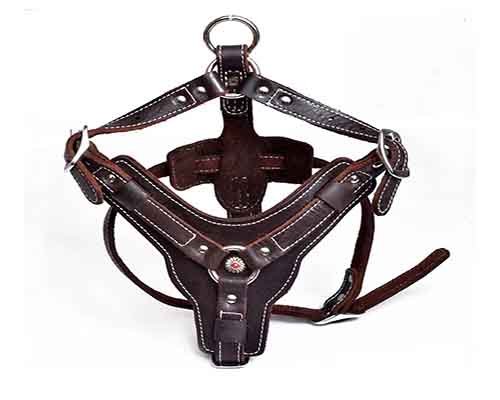
Pick up three “leather harnesses” and you’ll find three very different products: a minimalist streetwear chest rig built for style and light carry; a pet harness distributing leash pressure safely across the chest; and an equestrian breastplate engineered to anchor saddle stability over long distances. The word harness means “load managed by straps,” but the goals—safety, comfort, fashion, durability—shift dramatically across use cases. Getting it right is not just about leather quality; it’s about structural design, fit, hardware, and proof of performance.
A leather harness is a strap-based system—worn by people, pets, or horses—to distribute load, secure equipment, or deliver a style statement. The best build uses appropriate leather (full-grain/top-grain veg- or chrome-tan), correct thickness (2.8–4.0 mm human/equine load zones), corrosion-resistant hardware (brass or stainless), and verified sizing and QC (tensile, seam, hardware pull tests). Match materials and construction to the intended use; fashion rigs ≠ safety harnesses.
Years ago, a client asked us for a “fashion harness that could also double for climbing.” That request became a teachable moment: fall-arrest safety gear requires certified webbing and standards no fashion leather can claim. We redesigned as a streetwear chest rig with load-appropriate leather, breathable padding, and camera-strap attachment points—then clearly labeled use limits. Sales grew—and so did customer trust.
What Is a Leather Harness and Where Is It Used?
A leather harness is a network of straps and hardware that distributes force over the body (human, pet, or horse) or supports equipment (camera/tool). Common categories include fashion/streetwear, pet, equestrian, and utility/camera rigs. Harnesses are not fall-arrest devices. The meaning of “leather harness” varies by context; always define use, loads, and comfort requirements before choosing leather and hardware.
Leather harness meaning
In product terms, leather harness means a strap assembly—from minimalist fashion rigs to load-bearing tack—cut from leather, joined by stitching and/or rivets, and fitted with buckles, rings, or snaps. The essence is force management via geometry: shoulder, chest, and waist lines that spread pressure away from small points into larger surfaces.
What functions does a harness serve ?
Functions cluster into four buckets: style (aesthetic silhouette, brand storytelling), control (pet lead management), stability (equestrian saddle control), and carry (camera/tool weight distribution). Each calls for different leather temper (soft vs firm), edge treatment (comfort vs abrasion resistance), and hardware geometry (D-ring orientation, ladder locks, swivels).
Which categories exist—fashion/streetwear, pet, equestrian, tool/camera?
- Fashion/streetwear: Slim straps (15–25 mm) in top-grain or chrome-tan, moderate loads, high finish quality (edge paint/contrast stitch).
- Pet: Wider straps (20–38 mm) with chest yokes, soft backing, quick-release hardware; focus on chafe reduction and adjustability.
- Equestrian: Heavy sections (25–38 mm), veg-tan or bridle/harness leather, high tensile strength, weather resistance.
- Tool/Camera: Wider shoulder load paths (30–50 mm), swivels, quick length adjusters, padding at contact zones.
How is a harness different from belts, suspenders, or vests?
Belts encircle; suspenders lift trousers; vests are panels. Harnesses are skeletal frameworks where strap paths and anchor points handle direction changes and loads. This changes stitch programs, rivet placement, and leather thickness at junctions.
Is leather appropriate for safety-rated fall protection?
No. Fall-arrest harnesses require certified synthetic webbing and standards compliance (e.g., ANSI/OSHA/EN for fall protection). Leather fashion or pet/equine harnesses cannot substitute. Labeling must avoid safety claims unless certified for that purpose.
Which Leathers, Thicknesses, and Hardwares Work Best?
Use full-grain or top-grain leathers for strength and longevity; choose veg-tan for form and edge burnish, chrome-tan for suppleness and weathering. Typical strap thickness is 2.8–3.6 mm for human load paths and 3.5–4.2 mm for equestrian tack. Pair with solid brass or stainless steel hardware, and finish edges (paint/burnish) to prevent chafe. Threads should be bonded poly/nylon (Tex 70–135) with reinforced stitch programs.
What is harness leather made of?
Harness leather typically refers to veg-tanned full-grain cowhide that’s hot-stuffed or wax/oil impregnated for weather resistance and flexibility. The internal oils create a self-lubricating fiber matrix that bends smoothly without cracking. It’s prized in equestrian and heavy-duty utility straps for tensile strength, edge burnish quality, and weather resilience after proper conditioning.
What is the difference between bridle and harness leather?
Both are usually veg-tanned. Bridle leather is finished on both grain and flesh sides (often waxed and glazed), delivering a dressy, polished look ideal for reins, belts, and premium fashion harnesses. Harness leather is more oil/wax-stuffed, typically with a satin grain and waxy flesh, prioritizing workability and weather resistance. Bridle = refined finish; harness = work-ready endurance—though modern tanneries blur lines with hybrid recipes.
What leather types fit each use?
- Full-grain veg-tan (3.0–4.0 mm): Equestrian and utility; shapes cleanly, edges burnish like glass, highest long-term strength.
- Top-grain chrome-tan (2.8–3.4 mm): Fashion/streetwear and camera rigs needing flexibility, color range, and rapid break-in.
- Combination-tan (veg re-tan + chrome base): Balanced option for pet harnesses: structure + sweat resistance.
- Corrected-grain splits (3.0 mm with textile backer): Budget lines; reinforce holes and junctions to manage tear strength.
Which thickness/temper ranges balance strength and comfort?
For human wear, 2.8–3.2 mm carries tools/cameras comfortably while allowing contouring. Equestrian tack benefits from 3.8–4.2 mm in primary load zones. Pet harness chest plates may combine 2.0–2.4 mm leather laminated to EVA/neoprene 2–4 mm for cushioning. Temper should be medium to medium-firm in load paths and softer where straps contact skin/fur.
Which hardwares and platings are most durable?
Specify solid brass or stainless steel (304/316) for corrosion resistance and pull strength. Zinc alloy works in fashion lines but avoid at high loads. Choose roller buckles to reduce edge wear, welded D-rings for load points, and tubular or copper rivets (or Chicago screws with thread-lock) at junctions. Platings: PVD, nickel, antique brass, matte black—test for nickel release in skin-contact markets (EU).
Are edge finishes, threads, and stitch programs critical to longevity?
Yes. Edges can be burnished (veg-tan) or painted (poly/PU paints). Multi-coat edge paint with heat-set dramatically improves chip resistance. Use bonded polyester or nylon thread (Tex 70/90 for fashion, Tex 135 for heavy) and stitch length 3.0–4.0 mm. Reinforce stress points with box-X, double-needle, or bar-tacks; add stay-stitching near punched holes.
What is harness leather good for?
It excels in equestrian tack, heavy belts, dog leads, work straps, and premium fashion harnesses where bend endurance, edge quality, and weather resistance matter. It is less ideal where ultra-bright color and print fidelity are the priority (PU or chrome-tan may win there).
Material & Hardware Quick Guide
| Use Case | Recommended Leather | Strap Thickness | Hardware | Stitch/Edge Notes |
|---|---|---|---|---|
| Fashion chest rig | Top-grain chrome-tan | 2.8–3.2 mm | Brass/SS buckles, snaps | Tex 70–90; painted edges |
| Pet harness (M/L dog) | Combo-tan or harness leather | 2.6–3.2 mm | Welded D-rings, quick-release | EVA backing; box-X at leash point |
| Camera/tool harness | Full-/top-grain | 3.0–3.6 mm | Swivels, ladder locks | Tex 90–135; bar-tacks at anchors |
| Equestrian breastplate | Harness/bridle (veg-tan) | 3.8–4.2 mm | Brass/SS; tubular rivets | Burnish edges; stitched keepers |
How Do You Measure and Size a Harness Correctly?
Measure girth/chest, shoulder line, and waist/underbust (human) or neck base and chest (pet). Build adjustment ranges with hole spacing or sliders, and run a fit test for posture and movement: breathe deep, bend, reach, walk. Use gender/unisex pattern blocks thoughtfully; anchor strap geometry to bone landmarks, not soft tissue. Document size charts from real wear-tests—not just flat garment numbers.
What body/pet measurements are required for accurate fit? Humans: chest/bust circumference, underbust/waist, shoulder-to-shoulder (acromion), and torso length for vertical strap routing. Pets: neck base circumference (not collar point) and deepest chest girth behind forelegs. Record relaxed and expanded (breathing/motion) measurements; design with ease (typically +2–4 cm for fashion; +4–8 cm for pets, depending on padding).
Which adjustment strategies (hole spacing, sliders, elastic inserts) work best? Leather holes at 18–20 mm spacing give fine tuning; roller buckles ease micro-adjustments. Tri-glide sliders work where continuous range is needed (camera rigs). Hidden elastic inserts can absorb breathing expansion on fashion rigs but avoid in high-load dog leash points. Provide at least ±6 cm adjust range per strap in consumer products.
Do unisex vs. gendered size blocks change pattern geometry? Yes. Chest apex and shoulder slope differ. A unisex chest rig can use a floating sternum strap or adjustable cross-point to accommodate torso variation. Gendered blocks may angle straps to avoid pressure on breast tissue while keeping anchor points stable. For pets, breed morphology (deep-chested vs barrel-chested) changes yoke shape.
How do you run try-on and movement tests before production? Fit on size-representative models (or dog breeds). Run reach-up, cross-body, deep-breath, sit/stand/walk tests; for camera/tool rigs, add weighted load trials (2–6 kg typical). Look for strap migration, edge bite, and hardware hot spots. Mark positions, adjust, and re-sew prototypes until migration is <10 mm under movement. Freeze settings into the size chart and hole map.
Sizing Cheatsheet (Example—Human Chest Rig)
| Size | Chest (cm) | Underbust (cm) | Shoulder Span (cm) | Strap Adjust Range |
|---|---|---|---|---|
| S | 84–92 | 70–78 | 39–42 | ±6 cm on each strap |
| M | 92–100 | 78–86 | 42–45 | ±6 cm |
| L | 100–108 | 86–94 | 45–48 | ±6 cm |
| XL | 108–116 | 94–102 | 48–51 | ±6 cm |
How Are Leather Harnesses Designed and Manufactured?
Great harnesses start with pattern geometry and panel layout, then move through cutting, skiving, adhesive set, stitching, riveting, edging, and finishing. CAD and nesting improve yield and repeatability. Production must validate with QC tests (tensile, seam strength, rivet pull, corrosion) before shipment. Document tech packs so reorders match.
What pattern components and panel layouts define common styles? Expect primary straps (shoulder/chest/waist), yokes for load spread, keepers for strap management, and anchor tabs for hardware. Lay out parts to follow grain direction for maximum strength; avoid placing holes too close to strap edges (<6–8 mm).
Which processes (cutting, skiving, gluing, stitching, riveting) are essential?
- Cutting: Steel rule dies for volume; knife/laser for sampling.
- Skiving: Taper ends to reduce bulk at turns and buckle folds.
- Adhesive: Contact cement at folds; water-based options for low VOC.
- Stitching: Lockstitch with Tex 70–135; longer stitches (3.0–4.0 mm) reduce perforation.
- Riveting: Tubular, copper, or Chicago screws at junctions; peen or thread-lock for security.
- Edging: Burnish (veg-tan) or multi-coat edge paint (chrome-tan/PU); heat-set for durability.
- Finishing: Conditioners on veg-tan; water-repellent sprays as needed.
How do CAD, nesting, and templating improve yield and consistency? CAD builds size-graded patterns, simulates hole maps, and nests to minimize waste—crucial in leather where hide shape and defects matter. Templates ensure hardware placement is consistent within ±1 mm, improving both looks and load alignment.
What QC tests (tensile, seam, hardware pull) prove durability? Create a Qualification Plan for each harness type:
| Test | Target (Typical) | Method | Notes |
|---|---|---|---|
| Strap tensile | ≥ 800–1200 N (human fashion/utility) / ≥ 1500 N (equestrian primary) | Pull to break | Sample per size and strap width |
| Seam strength | ≥ 600–900 N | Grab method | Box-X or bar-tack locations |
| Rivet/Chicago pull-out | ≥ 500 N | Axial pull | Test after 24 h cure |
| Buckle tongue shear | ≥ 700 N | Shear | Roller buckle preferred |
| Salt spray/corrosion | 24–48 h no red rust (SS/Brass) | Chamber test | For coastal markets |
| Nickel release (EU) | Pass (≤ limits) | EN test | Skin-contact hardware |
Do Compliance, Ethics, and Safety Standards Apply?
Yes. Prioritize chemical safety (REACH, Prop 65), nickel release for skin-contact hardware, and label accuracy (no fall-arrest claims). Children’s and pet products may need extra testing. Support sustainability claims with LWG-audited tanneries and traceable paperwork. Proper labeling and documentation speed customs and retailer onboarding.
Which chemical and contact standards (REACH, Prop 65, nickel release) matter? For leather goods, many retailers require REACH SVHC screening, azo dye limits, chromium VI controls (especially for chrome-tan), and California Prop 65 compliance. Metal hardware needs nickel release testing for prolonged skin contact in the EU/UK.
Are children’s or pet products subject to additional regulations? Children’s items can require CPSIA (lead, phthalates) and small-parts rules; pet products increasingly follow durability and chemical guidelines by retailer policy. Always specify intended user groups in the RFQ so the test plan matches.
Which leather sourcing audits (e.g., LWG) support sustainability claims? Ask for LWG (Leather Working Group) audit status from tanneries; it reflects environmental management in tanning. For non-leather components, pursue RoHS or GRS (if recycled content used) to substantiate marketing claims.
Compliance Guide
| Domain | Typical Requirement |
|---|---|
| Chemicals | REACH SVHC, Prop 65, azo dye limits, Cr(VI) control |
| Hardware | Nickel release, corrosion resistance |
| Children/Pet | CPSIA (lead, phthalates), small-parts checks |
| Sustainability | LWG leather, optional GRS for recycled inputs |
| Docs | Tech pack, test reports, COC/DoC, labeling spec |
Which Customization and Branding Options Make Sense?
Choose deboss/blind emboss or foil on smooth leathers for luxury; laser for sharp detail on veg-tan; UV print on PU or coated splits for color. Elevate with edge paints, contrast stitching, and custom hardware finishes. Confirm MOQs and tool lead times early to align launches.
What logo methods (deboss, foil, laser, UV print) suit each leather?
- Deboss/Blind emboss: Best on full/top-grain; timeless and durable.
- Foil: High impact; test rub resistance and edge paint compatibility.
- Laser: Crisp on veg-tan; tone varies by dye.
- UV print: Vivid on PU; keep away from heavy bend zones.
Which colorways, edge paints, and contrast threads elevate the line? Classic palettes (black, chestnut, cognac) pair with tonal stitching for premium utility. Fashion lines can run matte black hardware, contrast saddle stitch (ecru on black), or color edge paints echoing brand accents. Edge paints should be multi-coat + heat-set; threads bonded poly for UV resistance.
How do hardware finishes align with brand positioning?
- Solid brass (natural/antique): Heritage/equestrian.
- Stainless (polished/matte): Technical/utility.
- PVD black/smoke: Urban/fashion.
- Nickel/chrome: Classic shine—confirm nickel release.
Are MOQs, tooling, and lead times predictable for custom work? Yes—plan for hardware molds (4–6 weeks) if you need custom buckles/emblems; otherwise, stock shapes with custom plating are faster. Leather colorways may have dye lot MOQs; edge-paint colors can be mixed to order. Szoneier helps calendar these dependencies so marketing and inventory stay aligned.
Branding Methods vs Material
| Material | Deboss | Foil | Laser | UV Print |
|---|---|---|---|---|
| Full-grain veg-tan | ★★★★★ | ★★★★☆ | ★★★★★ | ★☆☆☆☆ |
| Top-grain chrome-tan | ★★★★☆ | ★★★★☆ | ★★☆☆☆ | ★★☆☆☆ |
| PU/coated split | ★★☆☆☆ | ★★★☆☆ | ★☆☆☆☆ | ★★★★★ |
How Do You Care for, Price, and Scale a Harness Program?
Teach end users to wipe clean, dry naturally, and condition veg-tan occasionally. Price using a materials + hardware + labor minutes + reject rate model. Eco alternatives (plant-based or recycled) are viable with testing. Scale by building a core SKU set and adding seasonal colors/hardware on a shared platform to control MOQs.
How should end users clean, condition, and store leather harnesses? Advise damp-cloth wipe, air dry away from heat, and pH-balanced conditioner on veg-tan every few months. For pet/equestrian gear, mud off then condition; store hung or flat, not folded sharply. Avoid solvent cleaners and prolonged sun baking.
What drives cost—materials, hardware, labor minutes, rejection rate? Cost is a balance of leather yield (hide grade & nesting), hardware (brass/SS vs zinc), labor (skive, stitch, edge cycles), and QC rejects. Edge paint and hand burnish add time but raise MSRP. Below is a simple model:
Indicative Cost Model (per unit)
| Component | Fashion Rig | Pet Harness (M) | Equestrian Breastplate |
|---|---|---|---|
| Leather (sq ft @ grade) | $6.20 | $7.80 | $12.40 |
| Hardware set | $3.80 (zinc/brass mix) | $5.60 (welded rings) | $11.50 (brass/SS) |
| Liner/Padding | $0.80 | $1.60 | $1.20 |
| Edge finish | $1.10 | $1.40 | $1.80 |
| Stitch labor | $3.40 | $4.20 | $5.60 |
| QC/Pack | $0.90 | $1.10 | $1.30 |
| Ex-factory subtotal | $16.20 | $21.70 | $33.80 |
Are eco or plant-based alternatives viable for your market? Yes—LWG-audited leathers reduce environmental risk, while bio-based coated fabrics and recycled PU backers can work for fashion harnesses (after tear and edge-paint adhesion tests). For pet lines, ensure chew-resistance and colorfastness still pass retailer protocols.
Why Teams Choose Szoneier Leather for Harness Programs
Szoneier Leather brings 18+ years across bags, belts, straps, accessories, and boxes—with in-house material R&D, patterning, sampling, manufacturing, packaging design, and QC. For harnesses, we deliver:
- Material curation: Bridle vs harness leather, veg- vs chrome-tan, combo-tans for sweat and flex zones.
- Engineering-grade construction: Correct thickness, stitch programs, and junction reinforcement.
- Hardware sourcing: Solid brass/SS with custom platings; welded rings and roller buckles.
- Compliance & documentation: REACH/Prop 65/nickel release mapping; LWG options; shipment-ready tech packs.
- Repeatability: CAD patterns, nesting, hole maps, and golden samples for consistent reorders.
Ready to Spec or Prototype Your Leather Harness?
Tell us what you need today—share your use case (fashion, pet, equestrian, tool/camera), target sizes, look references, markets (U.S./EU/UK), and budget tier. We’ll propose two to three material stacks with thickness, hardware, edge systems, and branding options,Szoneier will design, test, and produce a harness for you that looks right, fits right, and lasts.
What Can I Do For You?
Here, developing your OEM/ODM private label leather goods collection is no longer a challenge,it’s an excellent opportunity to bring your creative vision to life.
Make A Sample First?
If you have your own tech packs, logo design artwork, or just an idea,please provide details about your project requirements, including preferred fabric, color, and customization options,we’re excited to assist you in bringing your leather goods designs to life through our sample production process.