
What Are the Five Types of Leather: A Complete Guide for Premium Goods
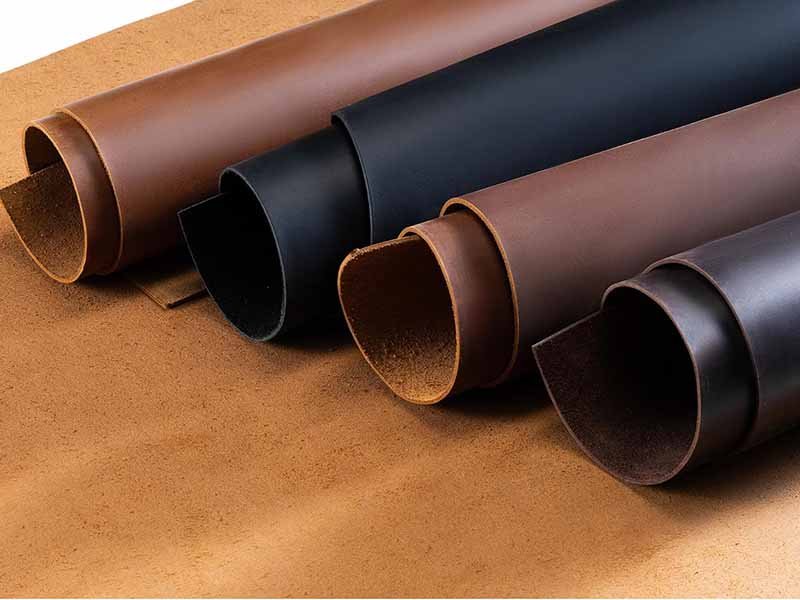
Leather has been a symbol of craftsmanship, durability, and luxury for centuries — from Italian handbags and British belts to minimalist wallets made by modern designers. Yet despite its ubiquity, few buyers fully understand that not all leathers are created equal. Behind every product lies a spectrum of materials — some natural, some heavily processed — that drastically affect appearance, longevity, and value.
The five main types of leather are Full-Grain, Top-Grain, Genuine, Split, and Bonded Leather. They differ in surface quality, thickness, strength, and treatment. Full-grain leather offers the best durability and natural texture, while bonded leather is made from scrap fibers and adhesives for cost efficiency. Choosing the right type depends on your product’s function, desired look, and price target.
At Szoneier Leather, understanding these distinctions is not just technical knowledge — it’s the foundation of quality production. Our engineers and designers treat every layer of leather as a key to defining brand identity. To illustrate why, let’s dive deep into what each type means and how to select the right one for your product line.
What Are the Five Types of Leather?
There are five main types of leather—full-grain, top-grain, split, corrected-grain, and bonded leather. They differ in quality, texture, thickness, and durability depending on how the hide is processed. Full-grain leather is the highest grade, retaining the hide’s natural surface; top-grain is lightly sanded for uniformity; split and corrected-grain are refined lower layers; bonded leather is made from recycled scraps.
1. Full-Grain Leather
Full-grain leather is the highest quality and most authentic form of hide. It comes from the outermost layer of the animal skin and retains all natural marks—scars, wrinkles, and grain texture. Because the surface is not sanded or corrected, full-grain leather offers unmatched durability and character.
This type ages gracefully, developing a rich patina over time that luxury buyers associate with prestige and craftsmanship. It’s breathable, water-resistant, and strong enough to last decades when properly cared for. However, its natural imperfections make it less uniform in appearance and more expensive to process.
Typical uses: high-end handbags, belts, shoes, and premium furniture.
2. Top-Grain Leather
Top-grain leather is the second-highest grade, created when the hide’s surface is sanded or buffed to remove scars and imperfections. This gives it a smooth, even look and allows easier color control during finishing.
The trade-off is a slight reduction in strength and breathability, as the top natural fibers are removed, but top-grain remains durable and resistant to wear. It’s easier to clean and less prone to staining than full-grain, making it a popular choice for luxury goods that must balance beauty, consistency, and practicality.
Typical uses: designer handbags, wallets, upholstery, travel goods.
3. Split Leather (Genuine Leather)
Split leather is made from the lower layer of the hide after the top grain has been separated. The texture is more fibrous and less durable, but coatings or embossing can make it visually similar to higher grades. Many products labeled “genuine leather” are actually made from split leather.
While not as robust as full-grain or top-grain, split leather offers an accessible price point and is still considered authentic animal hide. With surface treatments such as PU coatings or embossed patterns, it becomes suitable for fashion accessories where flexibility and low cost matter more than heritage.
Typical uses: mid-range handbags, inner bag panels, wallet interiors, and budget belts.
4. Corrected-Grain Leather
Corrected-grain leather is produced from hides with visible surface defects. The top layer is sanded and embossed with an artificial grain pattern to mimic natural leather texture. Pigments and protective coatings are then added to create a uniform finish.
This process enhances resistance to stains and scratches but reduces the natural softness and patina potential. The main advantage is visual and color consistency across large production runs—ideal for brands demanding uniform aesthetics and lower defect rates.
Typical uses: structured handbags, formal accessories, automotive interiors, corporate gift goods.
5. Bonded Leather
Bonded leather is made from recycled leather fibers, scraps, and adhesives pressed into sheets and embossed to imitate natural grain. It contains 10–20 % actual leather content but delivers a similar appearance at a fraction of the cost.
Although bonded leather is less durable and prone to peeling over time, it provides an environmentally responsible solution for budget or promotional products. Manufacturers can add top coatings for enhanced surface life. For brands, transparency is crucial—marketing bonded leather as sustainable or recycled rather than “genuine” avoids misleading claims.
Typical uses: inexpensive belts, small accessories, packaging boxes, or decorative panels.
Comparison Table: The Five Leather Types
| Leather Type | Hide Layer / Composition | Durability | Surface Texture | Aging / Patina | Typical Use | Brand Positioning |
|---|---|---|---|---|---|---|
| Full-Grain | Entire top layer with natural grain | ★★★★★ | Natural, unique | Develops rich patina | Luxury bags, belts, premium goods | Ultra-Luxury / Heritage |
| Top-Grain | Upper layer, lightly sanded | ★★★★☆ | Smooth, uniform | Light patina | Designer handbags, wallets | Premium / Contemporary |
| Split (Genuine) | Lower split layer | ★★★☆☆ | Coated or embossed | Minimal patina | Budget bags, wallet linings | Mid-range |
| Corrected-Grain | Sanded, embossed top layer | ★★★★☆ | Consistent, pigmented | Limited | Large-batch accessories | Modern / Uniform Aesthetic |
| Bonded | Reconstituted leather fibers | ★★☆☆☆ | Synthetic-like | None | Low-cost belts, boxes | Entry-level / Promotional |
Which Hides and Grades Matter Most?
Not all leathers are equal — even within the same “type.” The source animal, hide section, and grade dramatically influence feel, yield, and durability. Cowhide and buffalo deliver strength for bags and belts; goat and sheep offer softness for small goods. Hide grading (A, B, C) depends on visible defects and thickness uniformity.
Which Animal Hides Are Common (Cow, Buffalo, Goat, Sheep)?
Every animal hide has a unique fiber structure that determines elasticity, grain density, and strength.
- Cowhide is the global standard—thick, dense, and large enough (45–55 sq ft per hide) to yield big panels for tote bags and duffels. It balances firmness with flexibility, which is why most premium bag makers rely on it.
- Buffalo hide is tougher and grainier, giving a rugged look ideal for travel or outdoor collections. Its fiber bundles are thicker, but it’s slightly coarser to the touch.
- Goat leather is thinner yet strong; its fine pebble grain and soft drape make it ideal for wallets, gloves, and fashion accessories.
- Sheepskin is buttery soft but less tear-resistant; best suited for small luxury goods or interior linings.
What Is the Difference Between Grain, Split, and Suede?
A single hide yields multiple material layers:
- Grain layer — the topmost, dense fiber section. It carries the natural pore pattern and provides maximum strength. Used for full-grain and top-grain leathers.
- Split layer — obtained by splitting the hide horizontally. Softer, more porous, often finished with coatings or embossing.
- Suede — the inner flesh side of a split hide, buffed to raise the nap for a velvet texture.
These layers differ not just in appearance but also in performance. The grain layer withstands > 800 N tensile stress; split averages around 400 N. Suede, though attractive, has lower abrasion resistance.
How Do Thickness and Temper Affect Products?
Thickness (measured in millimeters or ounces) and temper (the leather’s firmness or softness) determine how the final product behaves:
- Thicker hides (2.0–3.0 mm) provide rigidity for belts, straps, and structured totes.
- Medium thickness (1.2–1.6 mm) suits handbags and wallets—firm enough to stand, yet flexible to sew.
- Thin hides (0.8–1.0 mm) are perfect for garment leather or linings.
Temper can range from soft (supple, drapey) to firm (stiff, structured). During finishing, tanneries adjust temper by adding oils or mechanical milling.
Poor temper choice leads to functional problems: soft leather may sag at seams; stiff leather may crack at folds.
Understanding Hide Grades (A/B/C System)
Hide grading ensures cost-performance alignment.
| Grade | Defect Level | Typical Usage | Cost Range (per sq ft) | Szoneier QC Acceptance |
|---|---|---|---|---|
| A Grade | Minimal scars, even color, uniform thickness | Luxury bags, belts, high-end wallets | $5–$10 + | ≤ 5 % defect area |
| B Grade | Minor marks, small vein lines, slight color variation | Mid-tier goods, interiors | $3–$6 | ≤ 15 % defect area |
| C Grade | Noticeable blemishes, uneven dyeing | Budget or hidden panels | $1–$3 | ≤ 25 % defect area |
Grading is visual and tactile; experienced inspectors check grain tightness, color depth, and tear strength. A single batch may include all grades, which factories must sort carefully to maintain product consistency.
Regional Differences in Hide Quality
Environmental factors affect hide quality:
- European hides (Italy, Spain, France) tend to have fewer scars due to fenced pastures—favored for luxury full-grain leathers.
- South American hides are thicker and heavier; ideal for belts and straps.
- Asian hides (China, India) are more abundant and cost-efficient, well suited for OEM production balancing price and performance.
- Australian and New Zealand sheepskins are prized for uniform fiber structure, common in luxury glove and apparel sectors.
Practical Matching of Hide & Product
| Product Category | Recommended Hide Type | Ideal Thickness | Temper | Notes / OEM Insight |
|---|---|---|---|---|
| Tote / Travel Bag | Cowhide or Buffalo | 1.6 – 2.0 mm | Medium-firm | Structured shape, strong handles |
| Wallet / Small Goods | Goat or Cow Top-grain | 1.0 – 1.4 mm | Medium | Fine grain, good folding behavior |
| Belt / Strap | Veg-tanned Cowhide | 3.0 – 4.0 mm | Firm | Requires high tensile strength |
| Watch Strap / Accessories | Calf or Goat | 0.9 – 1.2 mm | Soft-medium | Smooth texture, elegant finish |
| Interior Lining | Split Leather or Suede | 0.6 – 0.9 mm | Soft | Lightweight, comfortable feel |
How Is Leather Made?
Leather manufacturing transforms raw animal hides into durable, flexible material through tanning, retanning, dyeing, and finishing. The process stabilizes collagen fibers to prevent decay while enhancing color, feel, and performance. Two primary tanning methods—chrome and vegetable—dominate global production.
The Journey From Hide to Leather
Behind every finished leather bag or belt lies a meticulous industrial process that merges biology, chemistry, and craftsmanship. Raw hides are composed mainly of collagen and water. Left untreated, they would decompose rapidly; tanning converts them into stable, long-lasting material.
The core steps include: curing, soaking, liming, fleshing, tanning, retanning, dyeing, and finishing. Each step influences the leather’s final color, grain texture, softness, and durability. Small changes in chemical ratios, drum time, or humidity can alter flexibility and shade consistency — making process control critical for OEM production.
Step-by-Step Leather Production Process
| Stage | Purpose | Main Operations / Chemicals | Szoneier QC Focus |
|---|---|---|---|
| 1. Curing | Preserve raw hides from decay | Salt drying or chilling immediately after slaughter | Moisture < 15 % |
| 2. Soaking | Rehydrate and clean | Water, mild surfactants, anti-bacterial agents | pH control 7.0–8.0 |
| 3. Liming | Remove hair and open fiber structure | Lime (Ca(OH)₂), sodium sulfide | Uniform fiber opening |
| 4. Fleshing / Splitting | Remove fat & excess tissue; separate grain and split layers | Mechanical knives | Thickness tolerance ±0.05 mm |
| 5. Deliming / Bating | Neutralize lime, soften fibers | Ammonium salts, enzymes | Smooth texture pre-tan |
| 6. Pickling | Acidify to prepare for tanning | Sulfuric acid + salt solution | pH 2.8–3.2 |
| 7. Tanning | Stabilize collagen to prevent decay | Chrome salts or vegetable tannins | Shrink temp ≥ 100°C |
| 8. Retanning & Dyeing | Enhance body, color, softness | Syntans, dyes, resins | Color fastness ≥ Grade 4 |
| 9. Fatliquoring | Add oils for flexibility | Natural/synthetic emulsions | Even oil distribution |
| 10. Finishing | Surface coating, embossing, polishing | PU coatings, pigments, wax | Adhesion ≥ 4N, uniform gloss |
What Are Chrome vs Vegetable Tanning?
Chrome tanning is the most common industrial process, accounting for ~80 % of global leather. It uses chromium(III) salts, which bond strongly with collagen fibers.
- Advantages: faster (24 h), flexible, resistant to water and heat, consistent color absorption.
- Disadvantages: requires chemical waste management.
Vegetable tanning, by contrast, uses natural tannins extracted from tree bark (oak, mimosa, chestnut).
- Advantages: environmentally safer, creates a firmer feel, ages with a natural patina.
- Disadvantages: slower (2–4 weeks), more expensive, less color uniformity.
Semi-chrome tanning combines both methods for hybrid results—chrome for strength, vegetable for stiffness and color depth.
How Do Retanning, Dyeing, and Fatliquoring Work?
Once hides are stabilized through tanning, they undergo retanning—a stage that fine-tunes thickness, temper, and softness.
- Retanning: uses synthetic tanning agents (syntans) or resins to adjust fullness and hand feel.
- Dyeing: imparts color using acid or metal-complex dyes inside rotating drums for uniform penetration.
- Fatliquoring: adds natural or synthetic oils to lubricate fibers, enhancing flexibility and preventing brittleness.
This stage is often where “brand-specific” customization happens. For instance, Szoneier adjusts oil ratios, dye concentration, and milling duration to create leathers that match client swatches. A high-end wallet brand may request buttery softness and deep saturation, while a belt manufacturer might need firm temper and matte finish.
Quality control at this step includes:
- Even color distribution (ΔE ≤ 1.5 across panels)
- Oil absorption rate within 12 %–15 %
- Tear resistance ≥ 60 N These data are stored in each product’s QC file for client verification.
How Are Finishing and Surface Treatments Applied?
Finishing transforms semi-processed “crust leather” into visually appealing, functional material. Methods vary depending on product requirements:
- Pigment coating: adds color and protection, ensuring uniform surface appearance.
- Aniline finish: transparent dye showing natural grain.
- Embossing: applies patterns (saffiano, pebble, crocodile).
- Polishing / glazing: enhances gloss.
- Protective topcoat: provides resistance to water, stains, and UV light.
Each finish changes tactile experience and cost. For instance, pigmented leather is highly durable but less natural; aniline feels luxurious but needs more care.
Sustainability and Wastewater Management
Modern leather production must balance performance with environmental responsibility.
- Water recycling systems: reduce water use by 30–40 %.
- Chrome recovery: 98 % of chrome salts are re-used.
- Effluent treatment: ensures discharge within COD < 250 mg/L, BOD < 30 mg/L, meeting local regulations.
- Solid waste valorization: turning leather trimmings into bonded leather or fertilizer base.
Quality Control and Traceability
At every stage—tanning to finishing—Szoneier employs a multi-level QC system:
- Physical tests: tensile, tear, abrasion, color fastness, adhesion.
- Visual inspection: color uniformity under daylight (D65) illumination.
- Thickness & softness: digital gauge and durometer readings.
- Batch traceability: unique production code linking hide origin, tanning date, and QC results.
This ensures that every leather sheet shipped aligns with international standards (ISO 2418, ISO 3376) and client specifications.
The Art + Science of Leather Making
Leather production sits between science and artistry. The chemistry of collagen stabilization must blend with the human touch of drum operators, color matchers, and finish technicians.
In the right hands, these steps yield the supple, durable, and elegant leather that defines premium goods. Inexperienced processing can lead to shrinkage, cracking, or inconsistent tone — issues Szoneier eliminates through strict control and experienced technicians who’ve specialized in leather finishing for over a decade.
Which Leather Finishes Change Durability and Look?
Leather finishes determine how a product feels, performs, and ages. Common finish types—aniline, semi-aniline, pigmented, pull-up, and nubuck—offer unique combinations of texture, protection, and color depth. Natural finishes emphasize authenticity; coated finishes add durability.
What Are Aniline, Semi-Aniline, and Pigmented Finishes?
Aniline Leather
Aniline leather is dyed using transparent dyes, without any opaque surface pigments. It showcases the full natural grain of the hide — every pore, scar, and variation remains visible.
- Pros: exceptionally soft, breathable, and develops a deep natural patina.
- Cons: sensitive to stains, sunlight, and moisture; suitable for careful users or boutique products. Szoneier’s aniline leathers pass color fastness Grade 3–4 (dry) and are conditioned with protective oils to reduce absorption while maintaining natural feel — ideal for heritage-style wallets or artisan tote lines.
Semi-Aniline Leather
Semi-aniline leather starts as aniline, but receives a light protective topcoat with small amounts of pigment. It retains the natural look while improving resistance to dirt and fading.
- Pros: better stain resistance and color uniformity.
- Cons: slightly less natural feel compared to pure aniline. Szoneier calibrates coating thickness (6–10 µm) via precision spray systems to achieve both softness and resilience, making this finish popular for mid-to-high-end handbags and belts.
Pigmented Leather
Pigmented leather (also called protected leather) has a complete surface pigment coating, usually polyurethane-based, followed by a protective clear top layer.
- Pros: highly durable, water-resistant, color consistent, easy to clean.
- Cons: less breathable, limited patina development. Pigmented finishes are the standard choice for OEM clients producing large-batch, retail-grade products that must meet durability targets. Szoneier’s pigmented finishes routinely achieve >20,000 Martindale abrasion cycles and adhesion >4 N — essential for travel bags and utility accessories.
What Are Pull-Up and Nubuck Finishes?
Pull-Up Leather
Pull-up leather is full-grain leather impregnated with oils and waxes during finishing. When stretched or bent, lighter shades appear, creating a distressed “pull-up” effect.
- Pros: rich, rugged aesthetic; hides scratches naturally; water-resistant.
- Cons: may darken unevenly with age; requires periodic conditioning.
Nubuck Leather
Nubuck is created by lightly sanding or buffing the grain side of the hide, producing a soft, velvety surface similar to suede but with tighter fiber structure.
- Pros: luxurious touch, elegant matte appearance.
- Cons: prone to staining, moisture absorption; requires gentle care.
How Do Coatings, Sealers, and Embossing Affect Performance?
After dyeing, leathers may undergo surface modification for additional protection or style:
- Coating: polyurethane (PU) or acrylic layers protect against scratches and fading.
- Sealer: clear topcoat that locks in color and gloss; typical thickness 5–8 µm.
- Embossing: steel plates imprint textures like saffiano, pebble, or crocodile patterns under high pressure and heat (120–160 °C).
Each step adds value but alters feel. For example, saffiano embossing increases scratch resistance by ~30 % while slightly reducing flexibility.
Testing Metrics:
- Abrasion (Martindale): ≥ 20,000 cycles
- Color fastness to rubbing: ≥ Grade 4 dry, ≥ Grade 3 wet
- Water repellence (spray test): ≥ Grade 3
- UV resistance (24 h exposure): ΔE < 1.5
How Do Different Finishes Compare?
| Finish Type | Look / Feel | Durability | Breathability | Patina Potential | Maintenance | Best For |
|---|---|---|---|---|---|---|
| Aniline | Natural, soft, visible grain | ★★★☆☆ | ★★★★★ | ★★★★★ | High | Luxury wallets, limited-edition bags |
| Semi-Aniline | Smooth with subtle grain | ★★★★☆ | ★★★★☆ | ★★★★☆ | Medium | Designer handbags, belts |
| Pigmented | Uniform color, protective gloss | ★★★★★ | ★★☆☆☆ | ★☆☆☆☆ | Low | Travel bags, retail collections |
| Pull-Up | Oily, vintage tone shifts | ★★★★☆ | ★★★☆☆ | ★★★★★ | Medium | Heritage bags, outdoor styles |
| Nubuck | Velvety matte surface | ★★★☆☆ | ★★★★☆ | ★★★★☆ | High | Premium small goods, watch straps |
The Science of Finish Durability
Leather’s top coating behaves like a micro-protective membrane. The polymer composition, film thickness, and crosslink density determine its longevity.
- Thin films (5–8 µm) preserve softness but scratch more easily.
- Thicker films (10–15 µm) increase durability but reduce breathability.
- Oil-wax blends (pull-up) rely on self-healing surfaces that disguise minor wear.
Szoneier’s testing labs evaluate coating adhesion (ISO 11644), color stability (ISO 105-B02), and abrasion (ISO 5470-1) for each client specification. By documenting every formula, we maintain consistent production across repeat orders — essential for multi-season brand collections.
Eco-Friendly Finishing Innovations
Modern brands demand both performance and sustainability. Traditional solvent-based coatings emit VOCs; newer methods now use water-borne, low-VOC formulations and bio-based polymers. Szoneier’s finishing department offers:
- Water-based polyurethane topcoats (VOC < 0.3 %)
- Recyclable pigment pastes complying with ZDHC MRSL v3.1
- Chrome-free finishing systems for eco-certified product lines
Which Leather Fits Bags, Wallets, Belts, and Straps?
Different product categories require different leather properties. Bags and wallets need balance between flexibility and aesthetics; belts and straps demand strength, thickness, and tensile endurance. Full-grain and top-grain cowhide work best for structured bags and belts, while goat, sheep, and split leather fit wallets and linings.
Which Leathers Suit Bags and Luggage?
High-quality handbags and travel bags demand structural integrity and surface uniformity. Full-grain or top-grain cowhide is most common because of its balance of strength and elegance.
Ideal technical parameters:
- Thickness: 1.4–1.8 mm for structured handbags; 1.6–2.2 mm for travel duffels.
- Tensile strength: ≥ 800 N.
- Elongation: ≤ 25 %.
- Finish: semi-aniline or pigmented for scratch resistance.
Best leather types:
- Full-grain cowhide: premium luxury lines.
- Top-grain cowhide: commercial designer bags.
- Corrected-grain leather: high-volume retail runs requiring uniformity.
- Buffalo leather: rugged travel collections.
Which Leathers Suit Wallets and Small Leather Goods (SLG)?
Wallets, card holders, and pouches require thin, soft, and flexible leathers that can be folded repeatedly without surface cracking.
Ideal technical parameters:
- Thickness: 0.9–1.2 mm.
- Tensile strength: ≥ 600 N.
- Flex resistance: ≥ 10,000 folds without cracking.
- Finish: aniline, semi-aniline, or nubuck for luxurious feel; corrected-grain for mass production.
Best leather types:
- Goat leather: fine pebble texture, naturally flexible.
- Sheepskin: ultra-soft, smooth grain; used for luxury interiors.
- Split leather: suitable for inner linings with PU coating.
- Calfskin: delicate grain, upscale finish for boutique brands.
Which Leathers Suit Belts and Heavy-Duty Straps?
Belts, watch straps, and bag handles endure constant bending and pull tension. They require vegetable-tanned or semi-chrome leather for rigidity and long-term shape retention.
Technical parameters:
- Thickness: 3.0–4.0 mm for belts; 2.5–3.0 mm for straps.
- Tensile strength: ≥ 1,000 N.
- Elongation: ≤ 15 %.
- Stitch tear resistance: ≥ 50 N.
- Finish: waxed pull-up or pigmented matte finish for durability.
Best leather types:
- Full-grain veg-tanned cowhide: traditional craftsmanship and strength.
- Buffalo hide: rugged aesthetic with pronounced grain.
- Top-grain cowhide: smoother look for fashion belts.
- Corrected-grain leather: affordable option for OEM strap production.
How Do Linings, Edge Finishes, and Hardware Integration Affect Longevity?
Beyond the primary hide, supporting components define a product’s lifespan.
Linings
- Wallets: goat, pigskin, or synthetic microfiber (0.6–0.8 mm).
- Bags: split leather, cotton twill, or polyester RPET (≥ 180 gsm).
- Belts: full-grain backing or polyurethane reinforcement for anti-stretch.
Edge Finishes
Edge painting prevents moisture ingress and fraying. Premium products use 2–3 layers of polyurethane paint, cured between coats. Szoneier employs Italian edge-paint machines and ensures adhesion ≥ 4 N (ISO 11644 standard).
Hardware Compatibility
Straps and belt holes must withstand repeated metal contact. Szoneier uses reinforced punching dies and performs metal-edge abrasion tests (5,000 cycles) to ensure the leather does not split or tear under hardware pressure.
Comparative Guide — Product vs Leather Type
| Product Category | Recommended Leather Type | Finish Type | Thickness (mm) | Temper | Durability Rating | OEM Notes |
|---|---|---|---|---|---|---|
| Luxury Handbags | Full-grain cowhide or calfskin | Semi-aniline / pigmented | 1.4–1.8 | Medium-firm | ★★★★★ | Ideal for structure & natural texture |
| Casual Totes / Backpacks | Top-grain or corrected-grain | Pigmented / pull-up | 1.6–2.0 | Firm | ★★★★☆ | Consistent color; cost-effective |
| Wallets / Card Holders | Goat, calf, or split | Aniline / coated | 0.9–1.2 | Soft-medium | ★★★★☆ | Requires high flex resistance |
| Belts / Watch Straps | Veg-tanned full-grain cowhide | Waxed / pull-up | 3.0–4.0 | Firm | ★★★★★ | High tensile strength & edge sealing |
| Bag Handles / Straps | Buffalo or reinforced cowhide | Pigmented / matte | 2.5–3.0 | Firm | ★★★★☆ | Load tested; 10 kg per handle |
| Linings / Interiors | Split leather or microfiber | Coated | 0.6–0.9 | Soft | ★★★☆☆ | Lightweight & flexible for comfort |
Matching Leather Properties to Brand Positioning
| Brand Tier | Material Choice | Target Consumer Feel | Cost Range (USD/sq.ft) | Szoneier Recommendation |
|---|---|---|---|---|
| Heritage Luxury | Full-grain, vegetable-tanned | Natural, long-lasting, authentic | $8–12 | Emphasize patina and craftsmanship |
| Modern Premium | Top-grain, semi-aniline | Sleek, smooth, elegant | $5–8 | Balance consistency & softness |
| Accessible Designer | Corrected-grain, pigmented | Durable, uniform | $3–5 | High yield, good scaling potential |
| Eco-Conscious | Chrome-free, recycled leather | Sustainable, innovative | $4–7 | Highlight certifications |
| Mass Retail | Split or bonded | Affordable, stylish | $1–3 | Leverage cost efficiency |
How Do You Verify Quality and Compliance?
Leather quality and compliance are verified through rigorous testing, inspection, and certification. Factories evaluate tensile strength, color fastness, abrasion resistance, and chemical safety under ISO and REACH standards. At Szoneier Leather, every batch is tested for mechanical, visual, and chemical performance, supported by LWG and ISO certifications. This ensures each hide meets the durability, safety, and traceability requirements demanded by global brands and premium OEM buyers.
Szoneier’s Three-Stage QC Framework
| Stage | Inspection Point | Purpose | Key Metrics / Standards |
|---|---|---|---|
| 1. Raw Hide QC | Incoming hide check | Selects correct grade & removes defects | Hide size > 45 sq ft; ≤ 5 % scar area |
| 2. In-Process QC | Post-tanning & finishing | Controls chemical balance, thickness, color | pH 3.0–3.5; Thickness ± 0.05 mm; ΔE < 1.0 |
| 3. Final QC & Testing | Before packaging | Ensures product meets buyer specs | Tensile ≥ 800 N; Abrasion ≥ 20 000 cycles; Fastness ≥ Grade 4 |
Each stage includes digital tracking through QR-coded batch labels, giving clients full traceability from raw hide to shipment.
Mechanical & Physical Testing
Leather’s strength and elasticity determine how it performs in daily use. Core physical tests include:
- Tensile Strength (ISO 3376): measures maximum force before tearing.
- Target: ≥ 800 N for bag leather; ≥ 1 000 N for belt leather.
- Tear Resistance (ISO 3377-1): ensures seam and hole durability.
- Target: ≥ 60 N for bag panels.
- Flex Resistance (ISO 5402-1): repeated folding under stress.
- Target: ≥ 10 000 flex cycles without cracking.
- Abrasion Resistance (ISO 5470-1): rubs surface against fabric or sandpaper.
- Target: ≥ 20 000 cycles (Martindale test).
- Adhesion of Finish (ISO 11644): checks coating bond to base.
- Target: ≥ 4 N peel strength.
- Water Resistance (ISO 2419): ensures minimal water uptake.
- Target: Water absorption ≤ 12 %.
Visual & Dimensional Inspection
Beyond numbers, visual evaluation ensures that every panel is aesthetically perfect.
Key inspection points:
- Color Uniformity: measured by spectrophotometer ΔE < 1.0.
- Surface Defects: scars, veins, and uneven coatings < 3 % of area.
- Grain Alignment: consistent texture flow between panels.
- Thickness Tolerance: ± 0.05 mm for structured bags; ± 0.03 mm for wallets.
- Gloss Level: measured in GU (Gloss Units) — matte (10–20 GU), satin (25–35 GU), gloss (> 40 GU).
At Szoneier, trained inspectors assess every hide under D65 daylight lamps to eliminate color bias. Surface grading (A/B/C) is logged digitally with timestamped photos, allowing traceable comparison between sample approval and mass production.
Chemical Safety & Global Compliance
Leather must meet stringent chemical-content limits to pass international customs and retail audits.
Szoneier Leather complies with:
- REACH (EU): Cr VI < 3 mg/kg, Lead < 0.1 %, Formaldehyde < 75 ppm.
- RoHS (Directive 2011/65/EU): No restricted heavy metals.
- CA Prop 65 (USA): Zero carcinogenic solvent residue.
- ZDHC MRSL v3.1: Chemical input management.
- ISO 17075: Chromium VI testing via colorimetric analysis.
- OEKO-TEX LEATHER STANDARD Class II: Skin-contact safety certification (on request).
All chemical tests are performed at accredited partner labs, and full certificates are provided with each export batch.
Sustainability, Traceability & Ethical Auditing
Modern buyers expect transparency from tannery to tag.
Szoneier participates in Leather Working Group (LWG) audits, maintaining a Silver Rating across partner tanneries. This confirms:
- Responsible water & chemical management.
- Verified waste recycling (chrome recovery ≥ 98 %).
- Worker health & safety compliance.
Each batch is labeled with a trace code, linking it to:
- Hide origin (country & supplier ID).
- Tanning process (chrome / vegetable).
- Chemical lot number.
- QC test file & approval date.
Quality Documentation & AQL Inspection System
Before shipment, Szoneier applies AQL 2.5 inspection (Acceptable Quality Limit):
- Random sampling of 2–5 % of units.
- Defects categorized as Critical (0 tolerance), Major (≤ 2.5 %), Minor (≤ 4 %).
- Each shipment includes:
- QC Certificate (summary of mechanical & visual tests)
- Chemical Compliance Report (SGS/BV)
- Material Traceability Sheet
- Packaging Inspection Checklist
Third-Party Testing & Long-Term Monitoring
For premium brands or first-time collaborations, Szoneier encourages independent verification. We coordinate directly with SGS, Bureau Veritas, or Intertek for onsite inspection or batch sampling. Long-term clients can request annual re-testing programs, where Szoneier tracks performance of leathers in real market use, measuring:
- Color fade after 6 months UV exposure.
- Flex retention after 12 months.
- Edge paint adhesion after temperature cycling (−10 °C → 50 °C).
Are There Sustainable or Eco-Friendly Leather Alternatives?
Yes. Eco-friendly leather alternatives include vegetable-tanned, chrome-free, recycled, and plant-based options. Modern tanneries also use water-based dyes and renewable energy. These sustainable solutions reduce carbon impact while retaining performance, allowing brands to meet global environmental standards and appeal to conscious consumers.
Sustainability is reshaping the leather industry. According to the Global Leather Chemicals Market Report (2024), over 40% of global tanneries are shifting toward eco-certified processes.
Vegetable and Chrome-Free Tanning
Vegetable tanning, as used by Szoneier Leather, replaces chemical salts with natural tannins, producing biodegradable leathers. Chrome-free alternatives such as Aldehyde or Zeolite tanning also meet EU REACH compliance.
Recycled and Bonded Leather
Bonded leather, when made responsibly, recycles offcuts — reducing waste by up to 70% per ton of hide. Szoneier integrates recycled fibers into accessories like packaging and lining materials.
Plant-Based and Bio-Leathers
Emerging materials from pineapple leaves (Piñatex), mushroom mycelium, or apple peels are entering the market. While not yet as durable as full-grain leather, they offer vegan alternatives with distinct branding potential.
Energy & Water Efficiency
Modern production integrates closed-loop water systems and solar drying. At Szoneier, facilities operate under ISO14001 Environmental Management Certification, reducing water use by over 30% per square meter of finished leather.
Sustainability isn’t just a moral choice — it’s becoming a competitive advantage for brands positioning themselves for global markets.
Conclusion
The world of leather is as diverse as the brands that use it. Whether you’re designing high-end handbags, durable belts, or refined accessories, understanding material hierarchy — from full-grain to bonded — allows you to make decisions that align with your brand’s positioning, pricing, and product longevity.
Looking to create your own custom leather products?
What Can I Do For You?
Here, developing your OEM/ODM private label leather goods collection is no longer a challenge,it’s an excellent opportunity to bring your creative vision to life.
Make A Sample First?
If you have your own tech packs, logo design artwork, or just an idea,please provide details about your project requirements, including preferred fabric, color, and customization options,we’re excited to assist you in bringing your leather goods designs to life through our sample production process.