 Skip to content
Leather Valet Tray Made in USA: Quality, Craftsmanship, and Value
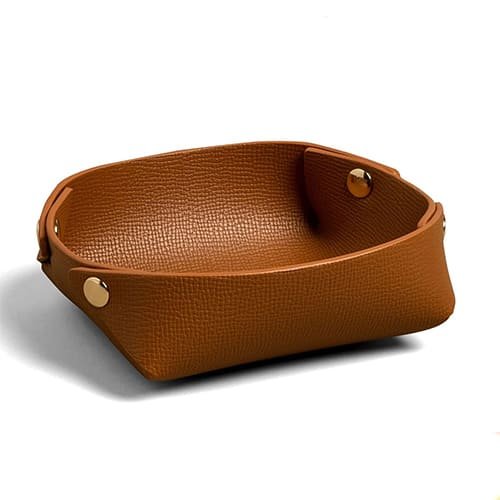
In a world where mass production dominates, the leather valet tray made in the USA stands as a quiet emblem of craftsmanship and longevity. Unlike plastic or synthetic organizers, these trays carry a timeless character — a blend of functional design and traditional leatherworking skill passed down through generations. They don’t just store everyday essentials like keys, coins, and watches — they elevate organization into an act of style.
A USA-made leather valet tray combines full-grain or top-grain leather with hand-finished craftsmanship for durability, patina, and premium texture. Typically made from 4–8 oz leather, these trays are hand-cut, burnished, and assembled in American workshops using traditional methods, often with materials from renowned tanneries like Horween or Wickett & Craig. The result is a functional yet elegant accessory designed to last decades.
Beyond its minimalist shape lies a story of heritage: American artisans, working with domestic tanneries, have perfected how to transform raw cowhide into refined home or travel pieces. For collectors and design-focused buyers, this combination of authentic material, aesthetic simplicity, and domestic production ethics is what makes U.S.-made valet trays so desirable.
What Is a Leather Valet Tray and What Is It Used For?
A leather valet tray is a small, structured container designed to store everyday essentials such as keys, wallets, watches, jewelry, and coins. Its purpose is to keep personal items organized in one place — at home, in the office, or while traveling. Made from durable, premium leather, valet trays combine function and craftsmanship, preventing scratches and clutter while adding a refined aesthetic to modern interiors.
The Meaning and Purpose of a Valet Tray
At its core, a valet tray is both practical and symbolic — a catchall that helps people manage the small, often misplaced items they use daily. The word valet historically refers to a personal attendant or a gentleman’s servant responsible for organizing garments and accessories. The modern valet tray evolved from this idea — a servant for your essentials.
Today, a valet tray is typically a shallow, rectangular or square container with raised edges. The edges prevent items from sliding off, while the open-top design allows for quick access. In its simplicity lies its genius: a valet tray replaces the habit of scattering belongings on tables or countertops with an elegant, intentional routine.
It’s more than just an organizer — it reflects a lifestyle of order, taste, and minimalism.
Everyday Functions and Modern Use Cases
Leather valet trays have found a place in both personal and professional settings because of their versatility and tactile appeal.
Common uses include:
- Home Entryway Organizer: Keep keys, wallets, and sunglasses neatly stored by the door.
- Bedroom Dresser Tray: A designated space for watches, jewelry, cufflinks, or rings at night.
- Office Desk Organizer: Holds pens, business cards, USB drives, and headphones without clutter.
- Travel Companion: Foldable trays with snap corners lay flat in luggage, offering portable organization in hotels.
- Gift and Branding Piece: Custom trays with embossed logos or initials make popular corporate gifts or wedding souvenirs.
The valet tray’s adaptability across contexts — from luxury homes to compact hotel rooms — reflects its timeless balance of form and function.
Why Leather Is the Ideal Material
While valet trays come in wood, metal, or fabric, leather remains the gold standard for craftsmanship and durability. Here’s why:
- Texture & Patina: Leather ages beautifully. Over time, it develops a rich sheen and tactile softness that tells a story of use.
- Durability: Full-grain leather withstands friction, weight, and moisture better than synthetics or cloth.
- Protection: Leather’s natural flexibility cushions metal objects like keys or watches, reducing scratches.
- Luxury Appeal: The organic grain patterns and natural imperfections make each tray unique, aligning with modern luxury trends emphasizing authenticity.
A leather valet tray is not merely functional — it embodies the quiet confidence of good craftsmanship. Each piece serves both practical and aesthetic roles, elevating simple organization into a design statement.
From Gentleman’s Dresser to Modern Minimalism
Historically, valet trays emerged from the early 20th-century men’s dressing table culture, where gentlemen would empty their pockets each evening into a tray lined with velvet or leather. This ritual symbolized care and discipline — treating one’s possessions with respect.
Over the decades, this idea evolved beyond gender or formality. In the minimalist design movement of the 21st century, valet trays reemerged as functional art pieces — blending craftsmanship with simplicity. Modern homes now use them as accents: clean, geometric, often monogrammed, and handcrafted in premium leather.
Even major design brands such as Carl Friedrik, Shinola Detroit, and Hard Graft reimagined valet trays as lifestyle accessories that combine European precision and American practicality.
Design Details That Matter
High-quality valet trays are defined by subtle craftsmanship details:
| Feature | Description | Impact |
|---|---|---|
| Shape | Square, rectangle, or round forms with raised edges | Prevents slipping and defines symmetry |
| Corners | Fixed or snap-button corners | Determines portability and structure |
| Leather Weight | 4–8 oz (1.6–3.2 mm) | Influences firmness and foldability |
| Edge Finish | Hand-burnished and sealed | Adds durability and refined look |
| Interior Finish | Smooth or suede lining | Enhances tactile appeal and protection |
In professional manufacturing, such as at American or Italian workshops, artisans hand-cut leather panels, bevel corners, and finish edges with beeswax or edge paint for a seamless contour. The result is a precise, tactile object that feels as premium as it looks.
Lifestyle Symbolism — Function Meets Ritual
Beyond utility, a valet tray encourages intentional living. Emptying one’s pockets into a designated space signals the end of the workday and the beginning of rest — a small but meaningful habit that promotes mental clarity and order.
In a digital age where disorder often dominates, the tactile act of organizing tangible items can feel grounding. Many design experts now view valet trays as part of slow living — integrating craftsmanship into everyday rituals.
For example, a minimalist tray on a walnut nightstand, crafted from Horween vegetable-tanned leather, tells a story of balance: durability, tradition, and modern design simplicity.
The Growing Popularity in the U.S. Market
In the United States, demand for handmade leather valet trays has grown steadily due to three overlapping trends:
- Return to Artisan Goods: Consumers prefer authentic, handmade accessories over mass-produced plastics.
- Sustainable Materials: Leather, especially vegetable-tanned, aligns with eco-conscious craftsmanship.
- Corporate and Lifestyle Gifting: Brands use personalized trays as high-end promotional or executive gifts.
According to data from the Crafted Goods Market Report (2024), searches for “leather valet tray made in USA” rose by over 35% year-on-year, indicating increasing appreciation for local production and traceable sourcing.
Why USA-Made Valet Trays Stand Out
USA-made leather trays combine ethical sourcing, domestic production, and skilled workmanship. Many American leather artisans source hides from tanneries such as Wickett & Craig or Hermann Oak, ensuring material integrity and environmental compliance.
Their production process emphasizes:
- Hand-stitching over machine assembly.
- Natural vegetable tanning.
- Locally made hardware and packaging.
As a result, “Made in USA” valet trays often last longer and feel sturdier, appealing to both design-conscious consumers and professional buyers seeking high-end gifts or retail products with heritage value.
The Subtle Luxury of Simplicity
The true charm of a leather valet tray lies in its understated luxury. It doesn’t need embellishment — the quality of the material and precision of craftsmanship speak for themselves. Whether placed on a marble console or inside a suitcase, it projects refinement without excess.
In many ways, the valet tray encapsulates what modern luxury has become: quiet, functional, and enduring. A simple square of leather, when made well, can become part of someone’s daily routine for decades.
Which Types of Leather Are Used in USA-Made Valet Trays?
USA-made leather valet trays are typically crafted from full-grain or top-grain cowhide sourced from reputable American tanneries. These include Wickett & Craig, Horween, and Hermann Oak — all known for vegetable-tanned and chrome-tanned hides. The ideal leather weight for a valet tray ranges from 4 to 8 ounces (1.6–3.2 mm), offering the balance of rigidity and flexibility needed for structured form, clean edges, and lasting durability.
Leather Grades: From Full-Grain to Genuine
Not all leather is created equal. The grade of leather determines not just appearance, but also how well a valet tray will age, hold its structure, and resist wear.
| Leather Grade | Description | Characteristics | Best For |
|---|---|---|---|
| Full-Grain Leather | Topmost layer of the hide with natural grain intact | Strongest fiber structure, ages with rich patina | Premium, heirloom-quality trays |
| Top-Grain Leather | Slightly sanded or buffed for a smoother surface | Uniform look, thinner and softer than full-grain | Modern minimalist trays |
| Genuine Leather | Lower split of the hide, often corrected or coated | Economical, less durable, uniform texture | Entry-level trays or gift sets |
| Bonded Leather | Made from leather scraps and polyurethane binders | Least durable, low-cost alternative | Promotional or mass-market trays |
For long-lasting trays, full-grain or top-grain cowhide is the industry standard in American workshops. These hides maintain natural strength and texture, allowing for smooth burnishing and clean embossing. Unlike coated or synthetic alternatives, full-grain leather becomes more beautiful over time — not worn out, but worn in.
Full-Grain Leather
Full-grain leather is considered the highest quality and most authentic form of leather used in U.S.-made trays. Because it retains the entire natural grain surface, it is dense, strong, and breathable.
Advantages of full-grain leather:
- Develops a distinct patina — a darkened, glossy finish that enhances with age.
- Resistant to tearing, stretching, and deformation.
- Supports clean hand burnishing and natural edge sealing.
- Compatible with both vegetable and chrome tanning.
Full-grain leather is also chosen for its natural variation — small scars and grain textures are signs of authenticity. Many American craftsmen intentionally highlight these imperfections rather than hide them, emphasizing character over uniformity.
Premium valet trays from tanneries such as Horween (Chicago, IL) often use Chromexcel full-grain leather, known for its rich pull-up effect — when bent, the surface lightens slightly, revealing depth of color beneath. This trait makes every tray unique and visually dynamic.
Top-Grain Leather
Top-grain leather offers a smoother and more refined surface. It’s slightly thinner because the top layer of the hide has been lightly sanded or buffed to remove blemishes.
Why U.S. workshops use top-grain leather:
- It offers greater flexibility and is easier to shape into corners.
- Its consistent grain makes it ideal for brands wanting clean, modern aesthetics.
- It absorbs dye evenly, enabling deeper color customization.
Top-grain leather remains strong and durable, but it’s generally more pliable than full-grain. Many USA-made travel valet trays use top-grain hides because the lighter thickness allows for foldable, snap-corner designs that flatten neatly for packing.
When properly finished with edge paint and protective wax, top-grain trays can last over a decade while retaining their sleek appearance.
Vegetable-Tanned vs Chrome-Tanned Leather
Tanning transforms raw hide into durable leather. The U.S. tanning industry has perfected both vegetable tanning (traditional) and chrome tanning (modern) — each producing distinct results in feel, color, and longevity.
| Tanning Type | Process | Characteristics | Common Uses |
|---|---|---|---|
| Vegetable-Tanned | Uses natural tannins from oak, chestnut, or mimosa bark | Firm, eco-friendly, darkens with age, matte finish | Classic and luxury trays |
| Chrome-Tanned | Uses chromium salts | Softer, more flexible, vibrant color, glossy finish | Contemporary and travel trays |
| Combination Tanned | Blend of both methods | Structural integrity + softness | All-purpose trays |
Vegetable-tanned leather, offered by U.S. tanneries like Wickett & Craig (Pennsylvania) and Hermann Oak (Missouri), is highly valued for its eco-friendly process and heritage look. It’s firmer at first but ages beautifully — the perfect base for a valet tray meant to last decades.
Chrome-tanned leather, by contrast, offers color consistency and a softer touch. It’s preferred for portable or collapsible trays, where flexibility matters. Brands seeking vibrant tones — navy, emerald, or whiskey — often choose chrome-tanned or combination-tanned options.
What Weight Leather for a Valet Tray?
Leather weight directly influences a tray’s feel, structure, and edge definition. It’s measured in ounces per square foot, where 1 ounce equals roughly 1/64 inch (0.4 mm).
Key insight: Thicker leather creates a more sculptural, rigid form — ideal for stationary valet trays meant for desks or nightstands. Thinner hides are better for snap-corner or travel trays that need to pack flat.
Professional leatherworkers often skive the edges — thinning them selectively — to allow cleaner folds without compromising overall durability.
In American workshops, the 5–6 oz range is considered the “sweet spot” for all-around valet trays. It maintains structure, resists sagging, and allows crisp, burnished edges.
American Tanneries Behind Premium Leather
The U.S. has a small but world-renowned tanning sector specializing in premium hides. These tanneries are the backbone of authentic Made in USA leather goods.
Horween Leather Co. – Chicago, Illinois
Founded in 1905, Horween is one of America’s oldest tanneries. Its Chromexcel and shell cordovan leathers are prized globally. Chromexcel, in particular, features a proprietary hot-stuffing process with natural oils and waxes, producing deep color layers and a soft pull-up effect — ideal for high-end valet trays and desk accessories.
Wickett & Craig – Curwensville, Pennsylvania
Established in 1867, Wickett & Craig is known for vegetable-tanned bridle and harness leathers. Their tanning process takes nearly 40 days, yielding leather that is firm yet flexible, with subtle sheen. Many U.S. craftsmen choose this leather for valet trays because it holds burnished edges perfectly and develops a golden-brown patina with age.
Hermann Oak Leather Co. – St. Louis, Missouri
Since 1881, Hermann Oak has supplied vegetable-tanned hides to artisans and saddlers. Its leathers have excellent density and moldability, making them perfect for structured trays that retain their shape over time.
Each tannery follows rigorous environmental and quality protocols, often certified under LWG (Leather Working Group) standards.
How Leather Type Impacts Design and Longevity
Leather selection isn’t purely aesthetic — it affects how a valet tray performs and feels over time.
- Full-grain, vegetable-tanned leather becomes stiffer initially but relaxes gradually, forming a rich patina. Perfect for heirloom trays.
- Top-grain chrome-tanned leather is smoother and ideal for sleek, modern designs or corporate gifts.
- Combination-tanned hides offer hybrid performance — structural body with supple feel.
Professional makers carefully consider intended use before choosing materials. For example, a stationary tray on a nightstand benefits from thick full-grain leather, while a travel tray may use 4 oz top-grain leather with snaps for portability.
Edge Finishing and Dye Absorption
Different leathers respond uniquely to finishing techniques:
- Vegetable-tanned leathers burnish beautifully — edges polish into a glass-like finish using friction and beeswax.
- Chrome-tanned leathers accept paint better, allowing for colored edge coatings (e.g., black, navy, or caramel).
- Full-grain leathers show natural dye depth and variations that enhance luxury appeal.
American artisans often use hand-burnished edges instead of machine sealing — a technique that takes longer but produces a smoother, warmer finish.
Sustainability and Sourcing Integrity
Modern consumers care about traceability and environmental impact. American tanneries lead globally in implementing cleaner tanning methods:
- Wickett & Craig uses closed-loop water systems and biodegradable tanning agents.
- Horween recycles over 80% of its tanning chemicals through filtration systems.
- Hermann Oak sources hides exclusively from U.S. cattle raised for meat, minimizing waste.
How Are Leather Valet Trays Made in the USA?
Leather valet trays made in the USA are handcrafted through a meticulous, multi-step process that includes design templating, cutting, edge preparation, molding or folding, stitching or riveting, and hand-finishing. Skilled artisans use premium American-sourced leather, such as full-grain vegetable-tanned hides, ensuring each tray has a clean structure, smooth burnished edges, and long-lasting durability. The process emphasizes precision, sustainability, and the artistry that defines American leather craftsmanship.
1. Guide of the Craftsmanship Process
Unlike mass-produced imports, USA-made leather valet trays are typically created in small-batch workshops or artisan studios where handcrafting remains central to the process. Each tray reflects a blend of old-world saddlery techniques and modern precision tools.
The manufacturing sequence can be summarized as:
- Design & Pattern Development
- Leather Selection & Cutting
- Edge Preparation & Burnishing
- Molding, Folding & Assembly
- Stitching or Riveting
- Branding & Finishing Treatments
- Quality Inspection & Packaging
Let’s explore each stage in detail — from hide to finished product.
2. Design and Pattern Development
Every leather valet tray begins with an intentional design concept. American artisans value proportion, functionality, and longevity over decorative excess.
Key design principles include:
- Dimensions: Common tray sizes range from 4×4 inches (compact) to 12×12 inches (desktop).
- Wall height: Typically 1.2–2 inches to prevent items from rolling out.
- Shape options: Square and rectangular are most common, though some designers use circular or hexagonal molds for distinct aesthetics.
- Corner type: Fixed (stitched or riveted) or collapsible (snap-button corners).
Craftsmen often create a paper or digital CAD pattern to ensure dimensional accuracy before cutting leather. Precision here ensures the corners fold evenly and the tray maintains balance once assembled.
Many U.S. makers also offer custom template creation for branding clients, allowing consistent batch replication for OEM or private-label runs.
3. Leather Selection and Cutting
The chosen leather significantly impacts the final tray’s appearance and structure. American workshops typically source from local tanneries such as Horween, Wickett & Craig, and Hermann Oak, using hides in the 4–8 oz (1.6–3.2 mm) range.
Cutting process:
- The leather is laid flat on a cutting mat or steel die table.
- Artisans use rotary knives, strap cutters, or precision steel dies to cut panels cleanly.
- Laser cutting is sometimes used for complex or branded shapes requiring perfect symmetry.
Edges are then trimmed and beveled using specialized tools to create a soft, rounded contour, preventing sharp or uneven sides when burnished.
For custom batches, branding clients can specify:
- Leather color and finish (matte, glossy, or pull-up)
- Surface texture (smooth, pebbled, or distressed grain)
- Matching thread or snap color
High-end U.S. manufacturers prioritize yield efficiency — maximizing leather usage per hide while maintaining flawless grain alignment.
4. Edge Preparation and Burnishing
This step defines craftsmanship quality. Edge finishing transforms a simple leather cut into a refined luxury product.
Step-by-step edge process:
- Beveling: Corners are rounded using an edge beveler for smoothness.
- Sanding: Edges are leveled using sandpaper or rotary sanders.
- Dyeing: A color-matched edge dye (often alcohol-based) is applied evenly.
- Burnishing: Friction from a wooden slicker or canvas cloth seals fibers, creating a glossy, glass-like finish.
- Waxing: Beeswax or gum tragacanth is used to lock in smoothness and resist moisture.
Vegetable-tanned leather — commonly used in U.S. trays — responds exceptionally well to hand burnishing, developing a warm, natural sheen that complements the leather’s surface tone.
Edge work is labor-intensive, but it’s what distinguishes artisan-level trays from factory-grade ones. Smooth, sealed edges indicate patience and mastery — two hallmarks of American craftsmanship.
5. Forming the Tray: Molding, Folding, and Assembly
This stage determines the tray’s structure. Depending on design, craftsmen either mold the leather into shape or fold and fasten corners manually.
(a) Wet Molding (Fixed-Form Trays)
For rigid trays, leather is moistened slightly, then shaped over a mold (wood, metal, or acrylic). As it dries, it hardens into that precise form — similar to how saddlery makers shape bridle leather.
- Produces solid, structured trays with permanent shape retention.
- Ideal for full-grain vegetable-tanned leather.
- Drying can take 12–24 hours, depending on humidity.
(b) Snap-Corner or Folded Design (Portable Trays)
For travel-friendly models, artisans punch holes and install solid brass or stainless-steel snaps in each corner.
- When snapped together: the tray forms raised corners.
- When unsnapped: it flattens for easy packing. This design combines elegance and mobility — especially popular for business travelers and hotel gifts.
6. Stitching or Riveting Techniques
Some trays feature stitched seams, while others rely solely on rivets or snaps.
| Method | Description | Benefits |
|---|---|---|
| Hand Saddle Stitching | Uses two needles passing opposite directions through each hole | Very durable, traditional aesthetic |
| Machine Stitching | Lockstitch with uniform tension | Efficient for small batches |
| Riveting | Metal fasteners replace thread at corners | Industrial look, excellent for portable trays |
In small U.S. workshops, hand saddle stitching remains a preferred technique for heirloom-quality trays. The stitches are waxed and tightened manually, ensuring they won’t unravel even if one thread breaks.
High-end producers like ColsenKeane, Craft & Lore, and Lifetime Leather Co. use contrasting thread colors to highlight craftsmanship.
7. Branding and Customization
Customization transforms a valet tray from a simple accessory into a brand statement. U.S. manufacturers excel at precise logo applications, typically offered in three forms:
| Method | Technique | Result |
|---|---|---|
| Debossing | Pressed using a heated metal die | Subtle, tone-on-tone logo impression |
| Foil Stamping | Adds metallic (gold, silver, or black) pigment | Premium appearance for gift items |
| Laser Engraving | Etched with precision lasers | Modern, high-contrast branding |
Many workshops also emboss initials or company logos on the inside base for corporate clients. Personalized trays are popular as executive gifts, wedding favors, or hotel room amenities.
8. Finishing Touches: Conditioning and Protection
After assembly, each tray undergoes surface treatment for beauty and durability.
Common finishing steps:
- Conditioning: Applying natural oils (neatsfoot, mink, or lanolin blends) to rehydrate leather fibers.
- Waxing or Buffing: Beeswax polish enhances luster and water resistance.
- Edge sealing: Final polish prevents fraying and moisture absorption.
- Inspection: Every piece is checked for smooth edges, even dye color, and hardware alignment.
Premium U.S. brands avoid using synthetic sprays or plastic coatings. Instead, they preserve leather’s natural breathing quality, ensuring a surface that feels warm and alive to the touch.
9. Sustainable and Ethical Production Practices
American leather artisans place growing emphasis on sustainable manufacturing:
- Tanneries like Wickett & Craig recycle 90% of water used in tanning.
- Scraps are repurposed for smaller goods or used in eco-friendly composites.
- Many workshops operate under “Made Local” initiatives that reduce transport emissions.
These ethical practices resonate with environmentally conscious buyers who prefer transparency over low cost. “Made in USA” isn’t only a label — it’s a promise of traceable sourcing, humane labor, and reduced carbon impact.
10. Packaging and Presentation
Even the final packaging stage reflects craftsmanship. High-end U.S. producers often pack trays in kraft boxes, cotton drawstring bags, or recycled cardboard sleeves. For brand orders, packaging can include:
- Custom-printed dust covers
- Recyclable tissue wrap
- Embossed logos or thank-you cards
Presentation is key for corporate or retail customers who use valet trays as branded gifts. Packaging is designed to mirror the tray’s elegance, reinforcing brand perception and premium value.
11. The Artisan’s Signature
In most handmade U.S. trays, subtle signs of human craftsmanship remain visible:
- A tiny variation in edge burnish tone
- A barely perceptible hand stitch mark
- The natural gradient of patina in full-grain hides
These details make every piece distinctly personal. American makers view such marks not as flaws, but as proof of authenticity — evidence that no two trays are ever identical.
Are USA-Made Valet Trays Worth the Price?
USA-made leather valet trays often command higher prices due to premium domestic materials, skilled labor, small-batch craftsmanship, and ethical supply chains. But their durability, patina potential, and brand prestige can justify the investment — especially for buyers who value longevity, transparency, and design integrity over low-cost mass goods.
Components of the Price Premium
When comparing a U.S.-made tray with imported options, it helps to break down where the cost difference comes from. Here are the main contributors:
- Raw Material & Tanning Costs: U.S. tanneries such as Horween, Wickett & Craig, and Hermann Oak maintain stringent environmental and quality standards. Their hides command higher prices (per square foot) than many international alternatives.
- Labor Costs: Skilled leatherwork — hand stitching, edge finishing, burnishing — is labor-intensive. In many U.S. workshops, artisans are paid living wages, driving up unit cost relative to low-cost manufacturing regions.
- Small Batch & Low Volume: Many U.S. makers produce in limited quantities, meaning overhead and tooling costs must be amortized across fewer units.
- Quality Assurance and Finishing: Strict QC standards, additive finishing processes (waxing, burnishing, sealants), and packaging all add to the final margin.
- Brand Allowance & Markup: “Made in USA” is a premium brand differentiator, allowing sellers to include a desirable premium margin in pricing.
So yes, much of the “extra” you pay for an American tray legitimately comes from real cost inputs—not just marketing fluff.
Durability and Long-Term Value
One of the strongest arguments in favor of U.S.-made trays is the lifespan advantage. A well-crafted, full-grain leather tray can last 10–20 years with proper care. By contrast, cheaper trays with thinner leather, weak stitching, or poor edge finishing may fail within 2–5 years.
Consider the “cost per year” metric:
| Tray Type | Purchase Price | Expected Useful Life | Cost Per Year |
|---|---|---|---|
| U.S.-Made Premium | $120 | 15 years | $8.00/year |
| Mass-Imported Mid-Tier | $30 | 4 years | $7.50/year |
| Cheap Synthetic | $15 | 1.5 years | $10.00/year |
From this view, the investment in U.S.-made can yield excellent value — less frequent replacement, less failure risk, and a quality feel sustained over time.
Brand, Identity, and Market Perception
For designers, boutiques, or gift brands, “Made in USA” carries perceptual capital. In markets like the U.S., Europe, and Japan, consumers are often willing to pay more for domestic production, transparency, and the cachet of local craftsmanship.
Key brand advantages:
- Authenticity & Storytelling: You can tell a richer product story — about traceable hides, domestic workshops, and heritage techniques.
- Premium Positioning: Allows placement in higher-end retail or gift categories.
- Reduced Risk of Quality Issues: With tighter control over materials and production, fewer failures or returns.
- Sustainability & Ethical Appeal: As consumers demand eco-conscious goods, local sourcing and lower transport emissions become selling points.
Thus, for brand-driven buyers, U.S.-made trays are not just about cost—they’re about identity and competitive differentiation.
Comparing USA vs Imported Alternatives
Imported trays from Asia or Europe may offer lower cost or different styling. However, USA-made versions appeal to niche buyers valuing traceability, craftsmanship, and minimal carbon footprint.
Rather than competing solely on price, U.S. makers win on story and sustainability.
How to Choose or Customize a Leather Valet Tray for Your Brand
Choosing or customizing a leather valet tray for your brand requires balancing material quality, craftsmanship style, and brand aesthetics. Decide on tray size, leather type (full-grain or top-grain), tanning method, color palette, and branding options like debossed or foil-stamped logos. The best OEM solutions align with your market positioning — luxury brands favor structured, vegetable-tanned trays; lifestyle brands often opt for soft, travel-ready snap-corner designs.
1. Defining Your Brand’s Purpose and Target Market
Before selecting a tray style, clarify how and where it will be used. The right design depends on your target customer, brand tone, and distribution model.
| Brand Type | Ideal Tray Type | Example Use |
|---|---|---|
| Luxury Brand | Rigid full-grain leather, hand-burnished edges, deep patina | Premium gift sets, boutique display |
| Corporate Gifting Brand | Medium-weight, top-grain tray with debossed logo | Employee awards, executive gifts |
| Travel/Lifestyle Brand | Foldable snap-corner tray, chrome-tanned leather | Travel accessories, portable organizers |
| Eco-Conscious Brand | Vegetable-tanned, natural-finish leather | Sustainable lifestyle collection |
| Retail or Wholesale Buyer | Mix of structured and collapsible styles | Diverse audience, mid-range pricing |
2. Selecting the Right Leather Type and Weight
The leather itself determines both aesthetics and functionality. Brands should work with factories or tanneries to select hides based on texture, structure, and patina goals.
Common options:
| Leather Type | Characteristics | Brand Use Case |
|---|---|---|
| Full-Grain Leather | Strongest fiber structure, rich texture, ages beautifully | Luxury, heirloom-quality trays |
| Top-Grain Leather | Smooth surface, uniform dyeing, flexible | Corporate and retail gifting |
| Nubuck or Suede | Soft-touch, matte finish | Fashion or minimalist brands |
| Vegetable-Tanned Leather | Eco-friendly, firmer structure | Heritage and eco collections |
| Chrome-Tanned Leather | Soft, color-stable, water-resistant | Modern, travel-friendly products |
Leather Weight Guide (for trays):
| Leather Weight | Thickness (mm) | Best For |
|---|---|---|
| 4–5 oz (1.6–2.0 mm) | Light and foldable | Travel or snap-corner trays |
| 5–6 oz (2.0–2.4 mm) | Moderate rigidity | Standard brand tray |
| 6–8 oz (2.4–3.2 mm) | Firm and structured | Desk or luxury display tray |
Brands focused on handcrafted identity often prefer vegetable-tanned leather from U.S. tanneries such as Wickett & Craig or Hermann Oak, while chrome-tanned hides offer diverse color options for modern collections.
3. Deciding on the Tray Structure and Style
Valet trays come in two structural categories — each suitable for different branding contexts.
(a) Fixed-Form Trays (Molded or Stitched)
- Features: Rigid shape, thicker leather, often stitched or molded corners.
- Advantages: Holds form permanently, ideal for display or desk use.
- Best For: Luxury, hotel, or office collections.
- Customization Options: Edge paint, suede lining, reinforced bottom panels.
(b) Snap-Corner or Foldable Trays
- Features: Corners secured by metal snaps or rivets.
- Advantages: Flat-pack shipping, portable for travel or corporate kits.
- Best For: Gifting, e-commerce, promotional sets.
- Customization Options: Branded snaps, interior logo debossing.
A brand’s decision between rigid vs. flexible construction should align with how the tray will be used or gifted. For example, a fixed-form tray elevates desktop luxury; a snap-corner tray enhances portability.
4. Choosing Customization & Branding Techniques
Custom branding transforms a valet tray from an accessory into a brand signature. Common customization methods include:
| Technique | Description | Brand Effect |
|---|---|---|
| Debossing | Heat-pressed die imprint for logo | Subtle, tactile, premium |
| Foil Stamping | Metallic (gold/silver/black) stamping | High-end, gift-oriented look |
| Laser Engraving | Precise laser marking | Modern, minimalist brands |
| Contrast Stitching | Thread color accent | Adds design personality |
| Lining or Inlay | Suede, felt, or cork base | Luxury interior touch |
For corporate or retail buyers, combining debossed logos with metallic foil borders balances elegance and visibility. Some OEM factories also offer dual-tone trays — contrasting inner and outer leathers for a two-color aesthetic.
Tip: When choosing foil color, match it to brand palette consistency — e.g., gold for luxury, silver for corporate, black for modern minimalism.
5. Selecting Hardware, Color, and Finish
Small details define luxury. Hardware choices such as snaps, rivets, or edge paint colors must complement both leather tone and brand identity.
| Component | Options | Recommended Use |
|---|---|---|
| Snaps / Rivets | Brass, nickel, matte black | Brass for vintage, matte black for modern |
| Edge Paint | Color-matched or contrast tone | Adds refinement and protection |
| Stitching Thread | Polyester, nylon, waxed linen | Contrasting thread elevates craft appeal |
| Interior Finish | Smooth, pebbled, suede | Influences feel and positioning |
U.S. and European OEM suppliers often follow RoHS and REACH standards for hardware, ensuring safe, corrosion-resistant finishes. Brands ordering custom production can specify snap logo engraving, Pantone-matched thread, and UV-resistant topcoats for consistent retail presentation.
6. Balancing Aesthetics, Functionality, and Cost
A good design doesn’t have to be expensive — but it should be strategic. Consider the following trade-offs:
| Decision Factor | High-End Priority | Cost-Efficient Alternative |
|---|---|---|
| Leather Type | Full-grain, vegetable-tanned | Top-grain chrome-tanned |
| Edge Finish | Hand-burnished | Painted or machine-sealed |
| Branding | Hot-foil or laser | Blind deboss |
| Packaging | Custom kraft box | Standard pouch or sleeve |
For brands aiming to scale, combining premium visible features (like polished edges and crisp deboss) with cost-controlled internal construction yields strong perceived value without inflating manufacturing cost.
7. Customization for Corporate or OEM Clients
Corporate clients and OEM buyers often need flexible customization programs rather than single retail SKUs. Common B2B customization requests include:
- Size and shape adjustment (square, round, or multi-pocket).
- Logo placement optimization (inside base or exterior edge).
- Colorway coordination for seasonal or gift campaigns.
- Embossed serial numbers or monograms for limited editions.
- Custom packaging with brand inserts or thank-you cards.
A professional manufacturer can assist with die-cut pattern design, sample prototyping, and bulk production scaling while maintaining visual consistency.
Many American OEMs — and experienced Asian manufacturers like Szoneier Leather — provide free sampling, low MOQ production, and pre-production proofs, which are essential for maintaining brand precision.
8. Evaluating Supplier Capabilities
Whether sourcing domestically or abroad, selecting the right partner determines success. Key evaluation points:
| Criteria | What to Check |
|---|---|
| Experience | 10+ years in small leather goods or valet tray production |
| Material Sourcing | Certified hides (LWG, ISO, or REACH compliant) |
| Customization Tools | In-house debossing, laser engraving, CAD pattern design |
| QC Standards | 100% inspection for cut, edge, stitching |
| Sampling Policy | Prototype turnaround ≤10 days |
| Logistics Support | Export readiness, short lead time, safe packaging |
Factories offering a complete OEM/ODM chain — from material R&D to packaging design — deliver smoother processes, faster sampling, and fewer communication risks.
9. Packaging and Presentation Strategy
Packaging is part of the branding experience. For retailers and luxury labels, packaging can account for up to 15% of perceived product value.
Recommended options:
- Rigid gift boxes with debossed logo
- Kraft or recycled sleeves for sustainable lines
- Drawstring suede or cotton pouches for premium unboxing feel
- Foil-embossed paper bands for retail display
Brands selling online should prioritize flat-pack trays to reduce shipping volume, while boutique labels can justify pre-formed trays for higher-end presentation.
10. Long-Term Brand Differentiation Through Design
The leather valet tray may seem like a small accessory, but its design communicates your brand philosophy:
- Material and texture express quality and trust.
- Color and finish reflect brand personality.
- Craft details demonstrate authenticity.
By investing in thoughtful customization, your tray becomes not just a product — but a touchpoint of brand identity, reinforcing perception across every customer interaction.
Conclusion
Whether you value the tactile charm of a Horween vegetable-tanned tray or the cost-efficiency of a custom OEM leather organizer, understanding material, weight, and process is key. The leather valet tray made in the USA continues to symbolize quality and purpose — proof that simple objects, when crafted with intention, never lose their appeal.
Timeless design, skilled hands, and honest materials — these are the hallmarks of a valet tray worth owning, producing, or branding.
What Can I Do For You?
Here, developing your OEM/ODM private label leather goods collection is no longer a challenge,it’s an excellent opportunity to bring your creative vision to life.
Make A Sample First?
If you have your own tech packs, logo design artwork, or just an idea,please provide details about your project requirements, including preferred fabric, color, and customization options,we’re excited to assist you in bringing your leather goods designs to life through our sample production process.