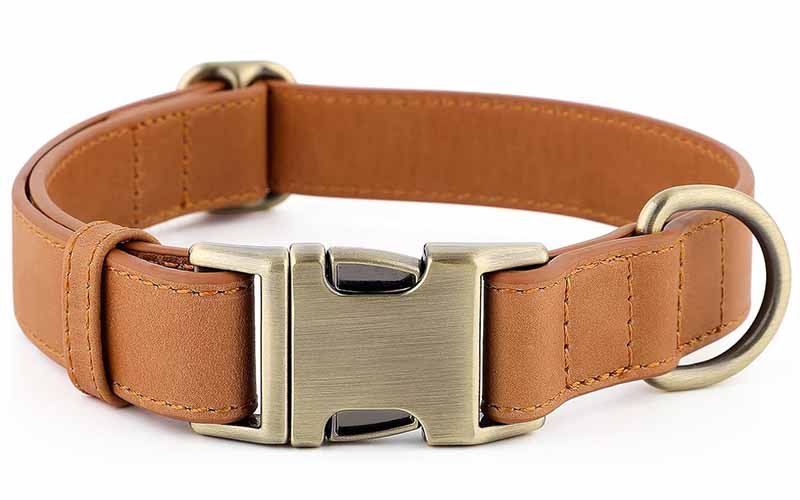
A leather pet product can look beautiful on a website, feel smooth in the hand, and still fail in daily use if the internal structure is weak. That is the real difference between a product made only for appearance and a product built for the demands of real pets and real owners. In collars, leashes, harness parts, straps, and small leather accessories for pets, reinforcement techniques are the practical methods used to make leather products stronger, safer, more stable, and more durable over time. They influence whether a leash can handle a sudden pull, whether a collar keeps its shape after months of use, and whether hardware stays locked in place under repeated stress.
Leather pet product reinforcement techniques are the design and production methods used to strengthen leather goods through better material layering, stronger stitching, reinforced hardware points, edge protection, and improved structural balance. These techniques help reduce stretching, tearing, hardware pull-out, and seam failure while improving service life, comfort, and safety.
For customers developing custom pet products, this is not a small technical detail. It affects product reputation, return rates, customer reviews, and long-term brand trust. A well-made leather leash does not become strong by accident. It becomes strong because every load-bearing point has been considered before sampling ever begins. At SzoneierLeather, this is where factory experience matters most. After more than 18 years in leather product development and manufacturing, we have seen the same lesson repeated many times: the leather surface may attract the first order, but the reinforcement structure is what protects repeat business. The rest of this article explains what reinforcement really means, why it matters so much in pet products, and what serious customers should evaluate before moving into development and production.
What Are Leather Pet Product Reinforcement Basics?
Leather pet product reinforcement basics are the foundational methods used to strengthen the stress points, structure, and joining areas of collars, leashes, harness parts, and related pet accessories. In practical terms, reinforcement means helping the product resist pulling force, repeated bending, hardware movement, friction, moisture, and shape loss.
What Are Leather Pet Product Reinforcement Basics?
At the most practical level, reinforcement means adding strength where a leather pet product is most likely to fail. In pet products, those weak points are rarely random. They usually appear in the same places: around buckle holes, near rivets, at folded strap ends, beside D-rings, along stitched seams, and at leash handle joints. These are the areas that receive the highest concentration of force during walking, pulling, tying, adjustment, and repeated daily handling.
A leather pet product is not tested only by appearance. It is tested by movement. A dog twists, lunges, runs, stops suddenly, and pulls from changing angles. That means the load on the product is not static. It changes direction and intensity again and again. Because of that, reinforcement must do more than increase thickness. It must control how force moves through the product.
In production, basic reinforcement usually includes several structural actions working together:
Main reinforcement actions in leather pet products
| Reinforcement action | What it does | Where it matters most |
|---|---|---|
| Material layering | Adds core strength and shape stability | Collars, leashes, harness straps |
| Stitch reinforcement | Holds layers and joints under repeated stress | Folded ends, handle joints, hardware areas |
| Hardware anchoring | Secures buckles, rings, clips, and snaps | Connection points |
| Edge finishing | Reduces moisture entry and surface wear | Strap edges, folded corners |
| Thickness control | Balances strength with flexibility | Full product body |
For customers developing private label or OEM pet products, understanding these basics helps answer a very important question: is the product only made to look premium, or is it actually built to perform like a premium product?
That distinction matters in pricing too. Many lower-cost leather pet products appear similar in online photos, but their reinforcement level is often very different. One product may use a single leather strip with basic stitching, while another uses layered leather, webbing support, reinforced folds, denser stitching, and higher-grade hardware. Visually, the difference can be subtle. In use, the difference is significant.
A serious factory does not treat reinforcement as an optional upgrade added later. It builds reinforcement into pattern development, material selection, and sample engineering from the beginning. That is especially important for customers serving premium retail, boutique pet brands, subscription pet brands, and specialty wholesalers where product failure can quickly damage customer trust.
Why Do Pet Products Need Reinforcement?
Leather pet products need reinforcement because the forces acting on them are stronger and more repetitive than many customers first assume. A collar or leash is not just an accessory. It is a control product, a safety product, and often a daily-use product. That combination means it must perform reliably under real pressure.
Even a dog of moderate size can create strong load force in a sudden movement. When a dog lunges, the force is concentrated first at the clip, then transferred through the strap body, then absorbed by stitches, folds, leather layers, and hardware joints. If one of those areas is weak, the product can stretch, deform, or fail.
The need for reinforcement increases under these conditions:
Common use conditions that increase stress
- Strong or active dogs
- Repeated pulling during walks
- Training use
- Outdoor use in wet or dusty environments
- Long-term exposure to sunlight and friction
- Frequent size adjustment
- Daily attachment and detachment of clips and rings
This is why reinforcement matters even more in pet products than in many fashion accessories. A wallet may open and close thousands of times, but it does not usually absorb sudden directional force. A leash does.
The table below helps show how real usage changes product demands.
| Product type | Main stress source | Main risk without reinforcement | Reinforcement priority |
|---|---|---|---|
| Dog collar | Pulling around buckle and D-ring | Hole deformation, strap stretching, ring pull-out | High |
| Dog leash | Sudden tension through full strap length | Stitch breakage, fold failure, clip detachment | Very high |
| Harness strap component | Multi-directional movement | Shape instability, seam wear, edge stress | Very high |
| Pet carrier strap | Weight load and repeated lifting | Strap elongation, hardware fatigue | High |
| Accessory strap | Repeated attachment and handling | Joint wear, cracking near bends | Medium to high |
For customers, reinforcement is closely tied to business outcomes. Stronger construction can help reduce complaints related to breakage, loose hardware, edge peeling, and premature wear. That often means fewer replacements, fewer disputes, and stronger product reviews.
Why reinforcement matters commercially
| Issue | Weakly reinforced product | Well-reinforced product |
|---|---|---|
| Return risk | Higher | Lower |
| Customer confidence | Unstable | Stronger |
| Product lifespan perception | Short | Longer |
| Review quality | Inconsistent | More positive |
| Reorder potential | Lower | Higher |
This is one reason experienced customers often ask detailed questions about internal structure, not just leather type. They know that appearance helps win the first click, but construction quality helps win the second purchase.
At SzoneierLeather, many customers come to us after seeing inconsistent quality from previous suppliers. In many of those cases, the visible leather was not the biggest problem. The real problem was weak internal planning: insufficient strap support, shallow stitch density, low-grade thread, poor fold construction, or hardware installed without enough structural backing.
What Happens If Reinforcement Is Ignored?
When reinforcement is ignored, product failure usually begins in small ways before becoming obvious. The first signs may not look dramatic. A strap starts to lengthen slightly. A buckle area becomes softer. A hole deforms. A folded end begins to separate. The edge starts to crack faster than expected. The clip rotates more loosely. These are early warnings that the product structure is not distributing force properly.
Over time, those small changes can become serious failures. In pet products, the consequences are more important than in ordinary accessories because failure can affect control and safety. A broken leash or detached ring is not just a quality issue. It can become a real-use risk.
Common failure points in under-reinforced leather pet products
| Failure point | What customers often notice first | Likely structural cause |
|---|---|---|
| Stitch line near hardware | Loose thread or seam opening | Low stitch density, weak thread, poor backstitching |
| Folded clip end | Separation or tearing | Weak fold structure, insufficient reinforcement layer |
| Buckle holes | Stretching or deformation | Leather too soft, poor thickness balance |
| Strap body | Length change or warping | No internal support, low dimensional stability |
| Edge area | Cracking, peeling, rough wear | Weak edge finishing, moisture entry |
| Rivet zone | Leather tearing around rivet | Stress concentration, poor spacing or weak substrate |
One important point many customers miss is that failure often begins internally before it becomes visible externally. A product may still look acceptable on a shelf or in packaging while its stress zones have already started weakening. That is why sample evaluation should not rely only on visual inspection. It should also consider bending, pull resistance, repeated motion, and joint stability.
Ignoring reinforcement can also create hidden cost problems:
- More product claims after shipment
- Higher replacement and compensation cost
- Lower retail trust
- More pressure on customer service teams
- Delays in scaling a product line
- Difficulty maintaining premium positioning
The table below shows how weak reinforcement can affect long-term cost.
| Cost factor | Weak structure | Strong structure |
|---|---|---|
| Initial unit cost | Lower | Slightly higher |
| Complaint risk | Higher | Lower |
| Replacement exposure | Higher | Lower |
| Margin protection | Weaker | Better |
| Brand damage risk | Higher | Lower |
| Long-term value | Lower | Higher |
For this reason, customers developing leather pet product lines should never evaluate cost only at unit price level. A lower unit cost can become an expensive sourcing decision if reinforcement is insufficient.
How Do Reinforcement Basics Affect Product Lifespan?
Reinforcement basics affect product lifespan by controlling how quickly the structure loses strength, shape, and stability under repeated use. In simple terms, a product lasts longer when stress is spread through the product correctly instead of being trapped in one small area.
Product lifespan in pet leather goods depends on several working factors at the same time:
- Strength of the leather itself
- Stability of the internal support structure
- Quality of stitching and thread
- Resistance of edges to moisture and abrasion
- Security of hardware connection points
- Balance between stiffness and flexibility
A very stiff product is not always better. If it is too rigid, it may crack sooner around bend points. A very soft product is not always better either. If it lacks support, it may stretch, deform, or lose control performance. Good reinforcement finds the right middle ground.
Below is a practical lifespan view based on common market behavior. Actual results vary by dog size, usage frequency, climate, and maintenance, but the comparison is useful for product planning.
| Construction level | Typical structure | Expected performance level |
|---|---|---|
| Entry level | Single leather layer, simple stitching, minimal support | Suitable for light use, lower lifespan |
| Mid-range | Better leather, denser stitching, improved hardware folds | More stable for daily use |
| Premium | Layered structure, stronger thread, reinforced hardware zones, protected edges | Longer service life, better consistency |
| Heavy-duty premium | Advanced reinforcement, optimized thickness, strong internal support, stricter QC | Best for demanding use and higher-value product lines |
For customers selling through retail stores, pet boutiques, online DTC channels, or premium wholesale markets, longer lifespan is closely tied to perceived quality. Consumers may not know the technical terms behind reinforcement, but they quickly notice whether a product keeps its shape, resists wear, and feels secure in use.
This is where factory capability makes a major difference. A professional manufacturer should be able to explain not only what material is used, but why the structure is built that way, what stress points were considered, and how the design supports long-term use.
At SzoneierLeather, reinforcement planning begins before bulk production. During development, we evaluate leather type, thickness, fold design, hardware load zones, stitching method, and edge treatment together rather than separately. That integrated approach helps customers develop pet products that look refined while still meeting practical durability expectations.
Basic reinforcement checkpoints customers should ask about
Before moving forward with a new leather pet product project, customers should ask clear structural questions such as:
- Is the product single-layer or multi-layer?
- Are hardware joints reinforced internally?
- What thread type is used?
- How dense is the stitching in stress zones?
- How are buckle holes protected against deformation?
- What edge treatment is used for outdoor or frequent-use products?
- Is the leather thickness selected for aesthetics only, or also for load performance?
- Can the factory adjust the structure for different dog sizes or use levels?
These questions often reveal more about product quality than surface appearance alone.
Quick product review guide for customers
| What to check | What strong construction usually shows |
|---|---|
| Strap body | Balanced thickness, stable shape, no excessive softness |
| Hardware area | Tight fit, clean fold, stable anchoring |
| Stitching | Even spacing, dense enough at stress points, no loose thread |
| Edges | Smooth, sealed, consistent finish |
| Adjustment holes | Clean shape, not too close to edge, no tearing signs |
| Overall hand feel | Strong but not overly rigid |
The strongest leather pet products are rarely the most decorative samples on first look. They are usually the ones where structure, materials, and craftsmanship were planned together with real use in mind.
For customers building a custom line, that is the foundation worth getting right from the start.
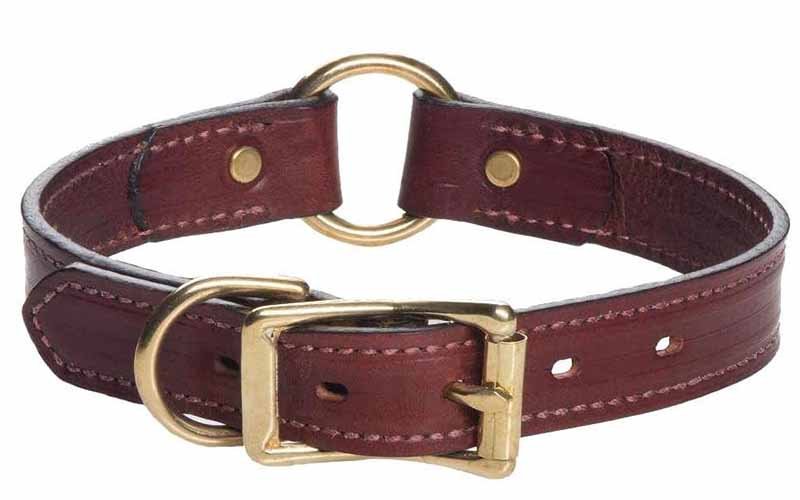
What Materials Support Leather Pet Product Reinforcement Techniques?
Leather pet product reinforcement techniques rely heavily on the right combination of materials, not just the outer leather. Strong products are built through layered structures, internal support materials, and carefully selected leather grades that work together to improve strength, stability, and long-term performance.
Which Materials Support Leather Pet Product Reinforcement Techniques?
The most durable leather pet products are rarely made from a single material. Instead, they use a multi-layer construction system, where each layer plays a specific role—outer appearance, internal strength, flexibility, and wear resistance.
Core material structure in reinforced leather pet products
| Layer Position | Material Type | Function |
|---|---|---|
| Outer layer | Full-grain / top-grain leather | Appearance, surface durability |
| Middle layer | Split leather / microfiber / webbing | Structural strength, anti-stretch |
| Inner layer | Soft leather / lining material | Comfort, skin protection |
| Edge layer | Edge paint / folded leather | Moisture protection, wear resistance |
This layered approach ensures that the product can absorb force, distribute tension, and maintain shape over time.
For customers, this means one important thing:
Two products may both be labeled “genuine leather,” but their internal structure can be completely different.
How Do Leather Grades Affect Reinforcement Performance?
Leather grade plays a major role in how well reinforcement works. Different leather types behave very differently under tension, bending, and long-term use.
Comparison of leather types in pet products
| Leather Type | Strength | Flexibility | Stretch Resistance | Cost Level | Recommended Use |
|---|---|---|---|---|---|
| Full-grain leather | Very high | Medium | High | High | Premium collars, leashes |
| Top-grain leather | High | Medium | Medium | Medium-high | Mid to high-end products |
| Split leather | Medium | High | Low | Medium | Inner layers, lining |
| Bonded leather | Low | Low | Very low | Low | Not recommended for load-bearing |
| PU leather | Low | Medium | Low | Low | Decorative use only |
For reinforcement, full-grain leather performs best because it maintains fiber integrity. However, even full-grain leather alone is not enough for high-load products—it still needs structural support.
At SzoneierLeather, we often combine:
- Full-grain leather (outer layer) for strength and premium look
- Reinforced core material (middle layer) to prevent stretching
- Soft lining (inner layer) for comfort
This combination balances durability with user experience.
What Internal Reinforcement Materials Are Used?
Internal materials are one of the most important but least visible parts of reinforcement. They directly control how much a product stretches, bends, or deforms under pressure.
Common internal reinforcement materials
| Material | Key Advantage | Best Application |
|---|---|---|
| Nylon webbing | High tensile strength, low stretch | Heavy-duty leashes, collars |
| Polyester webbing | Stable, good wear resistance | Medium-duty products |
| Microfiber core | Lightweight, shape retention | Fashion + functional products |
| Reinforced leather strip | Natural integration, consistent feel | Premium leather goods |
Among these, nylon webbing is widely used for high-strength reinforcement because it can handle repeated pulling without losing shape.
Why internal reinforcement matters
- Reduces stretching over time
- Improves load distribution
- Protects outer leather from excessive stress
- Maintains product shape under repeated use
A leash without internal reinforcement may look identical at first, but after weeks of use, it often becomes longer, softer, and less reliable.
How Do Materials Influence Product Performance in Real Use?
Material selection directly affects how a product performs in real-world conditions such as pulling, weather exposure, and repeated use.
Real-world performance comparison
| Scenario | Weak Material Structure | Reinforced Material Structure |
|---|---|---|
| Sudden pulling | Deformation, stress concentration | Even force distribution |
| Long-term use | Stretching, shape loss | Stable structure |
| Moisture exposure | Edge damage, cracking | Protected edges, longer life |
| Friction wear | Surface damage | Better resistance |
For customers selling in markets with active pet lifestyles (US, Canada, Europe), reinforcement becomes even more important due to:
- Larger dog sizes
- More outdoor use
- Higher customer expectations
How Does Material Selection Affect Cost and Value?
Material decisions directly influence both product cost and long-term value. Many customers focus on unit price, but reinforcement materials often determine total lifecycle cost.
Cost vs value comparison
| Factor | Low-cost material choice | Reinforced material choice |
|---|---|---|
| Initial cost | Lower | Slightly higher |
| Product lifespan | Short | Longer |
| Return rate | Higher | Lower |
| Customer satisfaction | Unstable | More consistent |
| Brand positioning | Limited | Premium-ready |
For brands targeting mid-to-high-end markets, using reinforced materials is not just about durability—it supports:
- Higher retail pricing
- Better customer reviews
- Stronger brand trust
How Does SzoneierLeather Select Materials for Reinforcement?
With over 18 years of experience, SzoneierLeather approaches material selection as a system, not a single decision.
Our material selection process includes:
- Matching leather type with product use (collar vs leash vs harness)
- Selecting internal reinforcement based on load requirements
- Balancing thickness, flexibility, and comfort
- Testing material combinations during sampling
- Adjusting structure based on customer feedback
Example: Heavy-duty dog leash structure
| Component | Material Used | Purpose |
|---|---|---|
| Outer layer | Full-grain leather | Strength + premium look |
| Inner core | Nylon webbing | Anti-stretch reinforcement |
| Stitching | High-strength polyester thread | Load stability |
| Hardware | Solid metal clip | Secure connection |
| Edge finish | Sealed edge coating | Wear resistance |
This type of structure is commonly used for customers targeting:
- Outdoor pet brands
- Training equipment
- Premium retail lines
How Do Stitching Techniques Improve Leather Pet Product Reinforcement Techniques?
Stitching is one of the most critical reinforcement elements in leather pet products. Even with strong materials, weak stitching can lead to early failure. Proper stitching techniques ensure that all layers stay bonded under tension, especially in high-stress areas like leash ends, collar holes, and hardware joints.
How Do Stitching Techniques Improve Leather Pet Product Reinforcement Techniques?
Strong stitching techniques improve reinforcement by increasing seam strength, preventing layer separation, and distributing stress across a wider area. The right combination of stitch type, density, and thread material ensures that leather products remain stable under repeated pulling and bending.
What Stitching Methods Are Used in Reinforced Leather Pet Products?
Different stitching methods provide different levels of strength and durability. In pet products, reinforcement stitching focuses on load-bearing performance, not just appearance.
Common stitching methods and their performance
| Stitch Type | Strength Level | Characteristics | Application |
|---|---|---|---|
| Saddle stitching | Very high | Hand-stitched, two-thread locking system | Premium collars, leashes |
| Lock stitching (machine) | High | Efficient, consistent, widely used | Mass production |
| Double stitching | High | Two parallel stitch lines for reinforcement | Strap edges, high-stress zones |
| Box stitching | Very high | Square pattern distributes load evenly | Leash handles, hardware joints |
| Cross stitching | Very high | X-pattern adds multi-directional strength | Heavy-duty connections |
Among these, box stitching and cross stitching are especially effective in high-force areas, as they spread tension across multiple directions instead of concentrating it in one line.
How Does Stitch Density Affect Strength?
Stitch density (stitches per inch) directly affects how well a seam can handle stress.
Stitch density impact
| Stitch Density | Effect |
|---|---|
| Low density | Faster production but weaker seams |
| Medium density | Balanced strength and flexibility |
| High density | Stronger seams but requires precision |
Higher stitch density increases strength but must be balanced. Too dense can weaken leather by creating too many perforations.
At SzoneierLeather, stitch density is adjusted based on:
- Leather thickness
- Product type
- Load requirements
What Thread Materials Are Used?
Thread choice is just as important as stitching method.
Common thread types
| Thread Type | Strength | Durability | Use Case |
|---|---|---|---|
| Nylon thread | Very high | Excellent | Heavy-duty products |
| Polyester thread | High | Very stable | Standard production |
| Cotton thread | Low | Limited | Decorative use only |
For reinforced pet products, nylon or polyester threads are standard due to their resistance to tension, moisture, and wear.
Where Is Stitch Reinforcement Most Important?
Not all areas require the same stitching strength. Reinforcement focuses on critical stress zones:
- Leash clip attachment points
- Collar buckle and D-ring areas
- Folded strap ends
- Handle loops
- Adjustment holes
These areas often use:
- Double stitching
- Box stitching
- Reinforced backstitching
How Does SzoneierLeather Control Stitch Quality?
Our production process includes:
- Pre-testing thread strength
- Matching stitch type to product function
- Reinforcing all high-load zones
- Conducting pull tests on sample seams
- Ensuring consistent stitch spacing
This ensures that stitching is not just visually clean, but structurally reliable.
How Do Structures Enhance Leather Pet Product Reinforcement Techniques?
Structural reinforcement refers to how a product is physically built—its layers, folds, hardware integration, and shape design. This determines how force flows through the product during use.
How Do Structures Enhance Leather Pet Product Reinforcement Techniques?
Structural reinforcement improves durability by distributing force across multiple components, reducing stress concentration, and preventing deformation. It ensures that the product maintains shape, strength, and reliability under repeated use.
How Do Layered Structures Improve Strength?
Layering is one of the most effective reinforcement methods.
Benefits of layered construction
- Prevents stretching
- Improves load distribution
- Enhances shape retention
- Adds internal support
A typical reinforced strap may include:
- Outer leather layer
- Internal webbing
- Inner lining
This creates a composite structure stronger than any single material.
What Role Do Rivets and Hardware Play?
Hardware is a major stress point. Poor hardware integration leads to failure even if the leather is strong.
Key hardware reinforcement factors
| Component | Risk Without Reinforcement | Solution |
|---|---|---|
| Rivets | Leather tearing | Use backing layers |
| D-rings | Pull-out | Reinforced stitching + folding |
| Buckles | Hole deformation | Proper spacing and thickness |
| Clips | Detachment | Strong fold + box stitching |
How Does Thickness and Width Affect Performance?
Product dimensions directly influence strength.
| Factor | Effect |
|---|---|
| Increased thickness | Higher strength, less flexibility |
| Increased width | Better force distribution |
| Balanced design | Best performance + comfort |
For example:
- Small dog leash: thinner, more flexible
- Large dog leash: wider, reinforced core
How Does Structure Affect Long-Term Stability?
A well-designed structure:
- Maintains shape over time
- Prevents twisting and warping
- Reduces localized wear
This is especially important for:
- Premium retail products
- Long-term use markets
How Does SzoneierLeather Optimize Structure?
We evaluate:
- Load points in product design
- Hardware stress zones
- Material combinations
- Product use scenarios
Then adjust:
- Layer thickness
- Stitch layout
- Hardware positioning
Do Leather Pet Product Reinforcement Techniques Improve Safety and Comfort?
Reinforcement is not only about strength—it also affects how safe and comfortable the product is for pets.
Do Leather Pet Product Reinforcement Techniques Improve Safety and Comfort?
Yes. Reinforcement techniques improve safety by preventing breakage under stress and improve comfort by maintaining structure, reducing pressure points, and ensuring smooth contact with the pet’s skin.
How Does Reinforcement Improve Safety?
- Prevents sudden product failure
- Reduces risk of leash breakage
- Secures hardware connections
- Maintains control during pulling
How Does Reinforcement Affect Comfort?
A well-reinforced product:
- Distributes pressure evenly
- Prevents sharp edges or deformation
- Maintains flexibility
Why Is Padding Important?
Padding adds:
- Shock absorption
- Skin protection
- Improved user experience
Are Reinforced Leather Products Better Than Alternatives?
| Material | Strength | Comfort | Longevity |
|---|---|---|---|
| Leather (reinforced) | High | High | Long |
| Nylon | Medium | Medium | Medium |
| PU | Low | Medium | Short |
Reinforced leather offers the best balance for premium markets.
How to Choose the Right Leather Pet Product Reinforcement Techniques?
Choosing the right reinforcement approach is critical for product success.
How to Choose the Right Leather Pet Product Reinforcement Techniques?
Customers should evaluate reinforcement by examining materials, stitching, structure, and manufacturing capability. Strong reinforcement ensures durability, safety, and long-term value.
What Features Indicate Strong Reinforcement?
- Multi-layer construction
- High-density stitching
- Reinforced hardware areas
- Anti-stretch internal core
- Clean, sealed edges
How to Evaluate Product Quality Quickly?
| Area | What to Check |
|---|---|
| Stitching | Even, dense, no loose threads |
| Hardware | Secure, no movement |
| Leather | Firm but flexible |
| Edges | Smooth, sealed |
| Structure | No weak points |
How to Choose a Reliable Manufacturer?
A strong manufacturer should provide:
- Material sourcing capability
- Sampling and design support
- Reinforcement expertise
- Quality control systems
Why Choose SzoneierLeather?
With over 18 years of experience, SzoneierLeather offers:
- Full material supply chain
- Custom design and sampling
- Advanced reinforcement techniques
- Stable production quality
- Flexible OEM/ODM solutions
We support:
- Leather pet collars
- Leather leashes
- Harness components
- Pet accessories
- Custom packaging
Start Your Custom Project with SzoneierLeather
If you are developing leather pet products for your brand, reinforcement techniques should be part of your product strategy from the beginning—not added later.
At SzoneierLeather, we help customers turn ideas into reliable, market-ready products by combining:
- Strong material selection
- Advanced reinforcement structures
- Professional manufacturing
- Consistent quality control
Whether you are launching a new product line or improving an existing one, our team can support you with:
- Product design optimization
- Sample development
- Material recommendations
- Cost-performance balancing
- Bulk production
Send us your design, reference images, or product requirements today.
Let’s build leather pet products that not only look premium—but perform like it.