
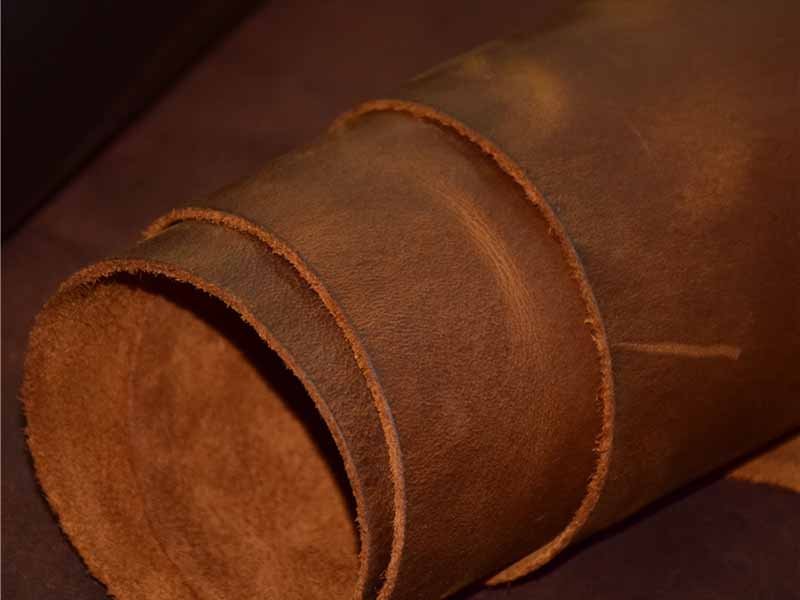
A leather product doesn’t “fail” because it’s bad—it often fails because it’s built for the wrong place. In a boutique, customers touch the leather, feel the hardware, check the smell, open the zipper, and decide in seconds. Online, the same item is judged through photos, reviews, and a box that traveled hundreds of miles. That difference changes what matters most: in-store products must look and feel premium on the shelf, while online products must arrive looking perfect, survive delivery handling, and match expectations closely enough to avoid returns.
Retail leather goods focus on instant visual and tactile impact, so specs lean toward premium hand feel, refined finishes, and presentation packaging. E-commerce leather goods must survive shipping and reduce return risk, so specs often shift toward scratch-resistant finishes, stronger structure, tighter consistency control, and protective packaging. Brands that use one spec for both channels commonly see higher online returns or weaker in-store conversion.
If you’ve ever seen a great “store seller” get returned online for “minor marks,” or an online best-seller feel “too plain” in retail, you’ve seen the spec gap in action. Below is a clear way to build the right specs for each channel.
What are retail vs e-commerce leather goods?
Retail leather goods are designed for in-person selling, where customers judge quality through touch, close inspection, and packaging presentation. E-commerce leather goods are designed for remote selling, where customers rely on images, reviews, and delivery condition. Because online returns are easier, e-commerce specs usually emphasize durability, scratch resistance, shipping protection, and tighter consistency.
What defines retail leather products?
Retail products are built for the “10-second test” in front of a shelf mirror. Customers pick up the item and immediately judge:
- Leather softness and smell
- Surface perfection under store lighting
- Hardware weight and “click” sound
- Stitching straightness and edge finishing
- Packaging that feels gift-ready
Retail spec priorities (what customers react to first):
- Cleaner, smoother-looking panels
- More “premium” hand feel (softer temper)
- Higher cosmetic expectations (fewer visible marks)
- Strong shelf presentation (hang tags, dust bag, rigid box)
| Retail touchpoint | What customers expect | Spec focus |
|---|---|---|
| Leather feel | soft, rich, not plastic | leather temper + finish choice |
| Visual look | clean surface, consistent tone | grade selection + surface QC |
| Hardware | solid, heavy, smooth action | plating + thickness |
| Packaging | gift-ready | box/tissue/dust bag |
Even if a bag is structurally strong, if it feels “stiff” or looks “dry” under lights, conversion drops.
What defines e-commerce leather products?
E-commerce products are built for the “arrival test.” Customers judge quality the moment they open the box. One scuff, one dent, or one color mismatch can trigger a return because they didn’t touch the product before buying.
E-commerce spec priorities:
- Surfaces that hide marks from shipping and handling
- Stronger structure to resist compression in cartons
- Lower risk of dye transfer and odor complaints
- Consistency across units (less variation surprises)
- Packaging that prevents corner dents and hardware scratches
| E-commerce risk | What customers complain about | Spec focus |
|---|---|---|
| Delivery handling | dents, corner crush | structure + packaging |
| Surface marks | scuffs, fingerprints | finish + leather texture |
| Color mismatch | “not as pictured” | batch control + lighting QC |
| Odor | “smells strong” | material selection + airing |
E-commerce reality:
The same leather that looks luxurious in a store (smooth, glossy) can be a return magnet online because it shows every touch mark and shipping rub.
How do customer expectations differ?
Retail and online customers want different “proof” of quality.
- Retail: “It feels premium right now.”
- E-commerce: “It matches the listing and arrives flawless.”
This changes how brands should write specs and QC standards.
| Customer expectation | Retail importance | E-commerce importance |
|---|---|---|
| Tactile luxury | Very high | Medium |
| Surface perfection on Day 1 | High | Very high |
| Durability | Medium-high | High |
| Packaging luxury | High | Medium |
| Consistency between units | Medium | Very high |
| Return tolerance | Low | Very high |
Practical takeaway:
Online specs need more focus on repeatability and shipping survival. Retail specs can afford more “hand feel” and visual drama, as long as durability is acceptable.
Which product specs change for retail vs e-commerce?
The biggest spec changes usually involve leather finish/texture, hardware choices, structure reinforcement, and production tolerances. Retail specs often prioritize softer feel, cleaner surfaces, and premium presentation details. E-commerce specs often prioritize scratch resistance, deformation resistance, lower shipping damage risk, and tighter batch consistency to reduce returns.
Which leather grades are preferred for each?
This is not about “good vs bad.” It’s about which grade behaves better in the channel.
Retail often prefers:
- Cleaner grain appearance for showroom lighting
- More refined touch feel
- Slightly lighter protective coating to feel “natural”
E-commerce often prefers:
- More stable grain behavior (less visible marks)
- Slightly stronger protection to resist rub and scuff
- Texture that hides shipping wear
| Channel | Leather preference | Why it fits the channel |
|---|---|---|
| Retail | smooth top-grain / clean full-grain | looks premium in hand |
| E-commerce | pebbled / semi-protected top-grain | hides shipping rub + fingerprints |
How do surface finishes differ?
Finish selection is one of the most powerful return-rate levers for online selling.
- Smooth, glossy finishes show touch marks and rub lines easily.
- Matte and textured finishes hide wear and look cleaner longer.
| Finish choice | Retail performance | E-commerce performance | Notes |
|---|---|---|---|
| Gloss smooth | strong shelf impact | high return risk | shows scuffs easily |
| Satin smooth | premium look | medium-high risk | fingerprints visible |
| Matte smooth | clean, modern | safer online | still shows scratches |
| Pebbled matte | less “dressy” | best for online | hides wear well |
| Semi-protected coat | depends on feel | very practical | reduces damage risk |
Which hardware choices vary by channel?
Hardware impacts perceived value (retail) and shipping cost + damage risk (online).
Retail customers often associate heavier hardware with quality. Online customers care more about:
- smooth function
- no scratches on arrival
- no rattling
- no plating wear after a few weeks
| Hardware factor | Retail spec direction | E-commerce spec direction |
|---|---|---|
| Weight | heavier feel | moderate weight |
| Scratch resistance | medium | high (packing + delivery) |
| Plating | brighter, decorative | stable, wear-resistant |
| Noise/rattle | less noticed | more complaints |
Common e-commerce complaint you can prevent:
“Hardware scratched out of the box.” Fix with: protective film, dust bag placement, and internal separators—not just “better hardware.”
Retail vs E-commerce Spec Checklist
| Spec item | Retail priority | E-commerce priority |
|---|---|---|
| Leather feel | very important | important |
| Scratch hiding | medium | very important |
| Color consistency | important | very important |
| Structure stiffness | medium | important (anti-crush) |
| Hardware weight | important | medium |
| Packaging protection | medium | very important |
| QC tolerance | medium | tight |
How does packaging differ between retail and e-commerce?
Packaging for leather goods in retail and e-commerce serves different purposes. Retail packaging focuses on aesthetic appeal, presentation, and tactile luxury to encourage immediate purchase. E-commerce packaging prioritizes protection, durability, and easy unboxing to ensure the product arrives in perfect condition while reducing shipping costs and return rates.
Packaging plays a crucial role in brand presentation and customer experience in both retail and e-commerce. However, the priorities diverge significantly depending on the sales channel.
For retail leather goods, packaging must provide a premium presentation that emphasizes luxury and high value. Think of boxes that feel like a gift when opened or paper wraps that enhance the sensory experience. Every element from the box material to the decorative tissue paper works to reinforce the feeling of exclusivity and make customers excited about their purchase. Retail packaging also serves the purpose of store display: it must be durable enough to withstand being handled by multiple customers, yet still remain neat and pristine.
For e-commerce leather goods, the goal is more about product protection during shipping and minimizing potential damage or wear. The packaging needs to protect the goods during long transit distances and handling by multiple logistics handlers. E-commerce packaging typically involves compact, durable boxes or mailers with foam padding, bubble wrap, or custom-fit inserts to secure the leather product. The emphasis is on preventing damage from crushing, scratching, or moisture while keeping shipping costs as low as possible.
| Packaging element | Retail requirement | E-commerce requirement |
|---|---|---|
| Box material | High-quality, rigid | Durable but cost-efficient |
| Visual appeal | Premium, luxurious, decorative | Functional, protective |
| Protective padding | Soft tissue, felt, high-end inserts | Foam padding, bubble wrap |
| Size & fit | Fits perfectly, aesthetically pleasing | Compact, minimal volume |
| Branding | Strong emphasis on luxury branding | Subtle, with attention to product protection |
| Handling | Display-friendly | Shipping-friendly |
Retail packaging that’s designed to impress may increase the unit cost, but e-commerce packaging, while focusing on protective quality, also needs to ensure that customer satisfaction post-unboxing is high. Customers should feel excited about the product without worrying about any damage during shipping.
What retail packaging elements matter?
Retail packaging’s main function is to encourage the customer to purchase the product right away. This means it should be highly functional, visually striking, and aligned with the luxury feel of the brand.
Key elements of retail packaging:
- Rigid packaging materials – Strong boxes or premium bags that maintain shape and structure during store handling.
- Luxurious finish – Embossed logos, glossy finishes, or matte touch finishes that create a premium feel.
- Decorative inserts – Custom tissue paper, velvet bags, or branded dust covers that elevate the unboxing experience.
- Clear branding – Prominently displayed logos and branding elements that reinforce brand identity on every surface of the package.
| Retail packaging factor | Impact on the customer experience | How it impacts the sale |
|---|---|---|
| Rigid packaging | Ensures product stays intact | Creates a feeling of durability |
| Decorative inserts | Adds a premium feel | Increases perceived value |
| Clear branding | Establishes brand presence | Enhances product desirability |
For luxury leather goods, presentation is key—a customer in a retail setting often buys based on a combination of instinct and sensory experience. Premium packaging tells the customer, “You are buying something valuable.”
What e-commerce packaging requirements exist?
E-commerce packaging, while needing to serve a practical purpose of protecting the goods during transit, still presents an opportunity for brand expression and first impressions. Packaging should protect, fit well, and still convey the product’s value even if it is simply a cardboard box.
Key factors in e-commerce packaging:
- Shipping durability – Use of corrugated boxes, bubble wrap, and custom fitments to avoid damage during transportation.
- Compact size – To reduce shipping costs, packaging should be designed to minimize space while offering maximum protection.
- Easy unboxing experience – Clear, simple, and easy-to-open packaging that still feels rewarding, like using pull tabs or perforated opening designs.
- Cost-effectiveness – Materials should be affordable but functional, providing both protection and cost control.
| E-commerce packaging factor | Impact on customer experience | How it impacts sales |
|---|---|---|
| Shipping protection | Ensures no damage to goods | Reduces returns due to damage |
| Compact design | Reduces shipping costs | Improves margins |
| Easy unboxing | Positive first impression | Increases customer satisfaction |
The customer’s first touchpoint with a product is often when they unbox it. A well-thought-out unboxing experience in e-commerce leads to higher satisfaction and lower return rates—something that plays a key role in maintaining profitability for online sales.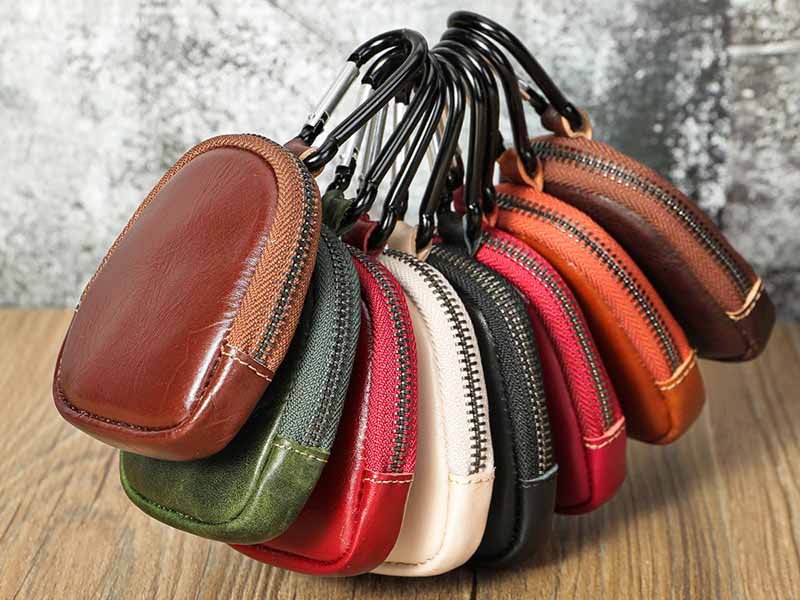
What pricing and warranty specs change?
Pricing and warranty specs for retail and e-commerce leather goods differ due to production, shipping costs, and return handling. Retail items often carry premium prices due to higher manufacturing costs and in-store experiences. E-commerce items must offer competitive prices, often with lower production costs, while warranty policies in e-commerce are more generous to accommodate higher return rates.
Pricing and warranty decisions are directly influenced by the channel through which products are sold.
Retail Pricing:
Retail leather goods are priced higher because of increased handling and display costs. Additionally, the luxury experience and visual appeal add to the perceived value. Customers expect higher quality and are often willing to pay for an immediate, tangible experience. The focus is not only on the product but the entire buying journey, from entering the store to handling the item.
E-commerce Pricing:
Online shoppers tend to be more price-sensitive due to the ease of price comparison and the inability to physically touch the product before purchase. To cater to this, e-commerce sellers often cut production costs (like using lower-cost packaging) and shipping costs to stay competitive. While this results in a lower average selling price (ASP), volume often makes up for it.
Warranty and Returns:
- Retail: Returns are less frequent but typically more complex and costly (handling physical goods). Warranties usually cover defective products that need in-store evaluation.
- E-commerce: Returns are higher, driven by size mismatches, quality perception differences, or product dissatisfaction. Warranty policies often extend beyond defective products to include free returns to reduce friction for customers.
| Pricing component | Retail impact | E-commerce impact |
|---|---|---|
| Product cost | High, includes premium packaging | Lower, focuses on minimal packaging |
| Warranty period | Longer, with in-store support | Shorter, with generous returns |
| Return rate | Low | Higher due to risk of dissatisfaction |
In retail, premium pricing creates a direct link between quality and experience, but in e-commerce, the key to success lies in providing value without compromising on durability.
How do you set specifications for both channels?
Brands must adapt material choices, stitching, packaging, and QC standards to meet both retail and e-commerce requirements. By standardizing key specs (leather grade, finish, stitch density, and product durability) while adjusting for each channel’s needs, brands can optimize for both retail impact and e-commerce practicality.
To successfully balance specs for both channels, brands must first understand each channel’s key pain points and align the specifications accordingly.
For example:
- Retail goods may need a higher-end leather finish, visible hardware, and more premium packaging.
- E-commerce goods may need scratch-resistant finishes, shipping-friendly packaging, and strong return policies.
Manufacturers often create hybrid production lines that allow them to adjust minor elements—such as thread thickness or finish coating—without changing the product design drastically. Customization capability and quality control remain consistent.
What hybrid spec strategies work?
A hybrid spec strategy involves designing leather products that can work for both retail and e-commerce but with slight variations in construction and materials.
For example:
- Using a durable pebbled leather finish that works in both channels while adjusting coating thickness for retail’s need for shine and e-commerce’s durability demands.
- Choosing custom hardware that can be both visually appealing for retail and lightweight and shipping-resistant for e-commerce.
| Strategy | Retail focus | E-commerce focus | Solution |
|---|---|---|---|
| Leather finish | Premium, polished | Durability, scratch resistance | Pebbled texture with protective coating |
| Hardware design | Heavy, luxurious | Lightweight, practical | Custom lightweight plating |
| Packaging | Luxury presentation | Shipping protection | Rigid box with foam inserts |
Optimizing specs for both channels maximizes profitability and consumer satisfaction, making it easier to transition between retail and online platforms without compromising product quality.
How should brands manage quality control for retail vs e-commerce?
Quality control for retail leather goods focuses on appearance, hand feel, and presentation consistency, while e-commerce quality control emphasizes durability, scratch resistance, packaging protection, and batch uniformity. Effective brands apply different inspection priorities for each channel while maintaining the same core material and construction standards to ensure stable long-term performance.
Quality control is where many channel strategies succeed or fail. A product can be beautifully designed yet still generate complaints if inspection criteria do not match the real risks of the sales channel. Retail complaints usually relate to cosmetic imperfections, while e-commerce complaints often involve damage on arrival, color mismatch, or unexpected wear.
Because of this, inspection checkpoints must be structured differently.
Which QC checkpoints matter most for retail?
Retail inspection is heavily weighted toward visual perfection and tactile experience, because customers examine the product directly before purchase.
Retail-critical QC items:
- Surface cleanliness under strong lighting
- Consistent leather color between panels
- Smooth edge paint without bubbles or cracks
- Straight stitching lines and tight thread ends
- Hardware polish free from scratches
| Retail QC focus | Why it matters in store | Inspection method |
|---|---|---|
| Surface appearance | First impression drives purchase | 360° visual check under light |
| Color consistency | Mismatch looks defective | Panel comparison test |
| Edge finishing | Rough edges feel low quality | Finger-touch inspection |
| Stitch alignment | Visible craftsmanship signal | Straightness measurement |
| Hardware polish | Reflects perceived value | Scratch and plating check |
Retail QC is therefore appearance-first, because visual quality strongly influences conversion.
Which QC checkpoints matter most for e-commerce?
E-commerce inspection shifts toward functional reliability and delivery condition, since customers cannot pre-check the item.
E-commerce-critical QC items:
- Scratch resistance after packing simulation
- Shape retention after compression testing
- Secure stitching at handles and stress points
- Accurate color matching to product photos
- Odor control and clean interior lining
| E-commerce QC focus | Customer complaint prevented | Test approach |
|---|---|---|
| Shipping damage resistance | “Arrived scratched or bent” | Drop & compression test |
| Structural strength | Broken handles or seams | Load test |
| Color accuracy | “Not as pictured” returns | Photo comparison under standard light |
| Odor control | Negative unboxing experience | Airing & material screening |
Online QC is therefore damage-prevention-first, reducing return rates and protecting customer trust.
How can brands design leather goods that work in both channels?
Brands can succeed in both retail and e-commerce by creating core product specifications that ensure durability and consistency, then adjusting surface finish, hardware weight, and packaging level for each channel. This hybrid strategy protects visual appeal in stores while maintaining shipping reliability and low return rates online.
Cross-channel success depends on engineering flexibility, not two completely different products.
Hybrid specification framework
A practical dual-channel strategy:
- Use durable top-grain leather as the shared base material
- Apply slightly different finish protection levels per channel
- Select hardware that balances weight and strength
- Design packaging layers that scale from retail to shipping
| Spec element | Retail version | E-commerce version | Shared core |
|---|---|---|---|
| Leather finish | smoother, softer | matte or lightly textured | same leather grade |
| Hardware | heavier decorative | lighter reinforced | same durability standard |
| Packaging | luxury presentation | protective shipping box | same dust bag |
| QC tolerance | appearance priority | durability priority | same core inspection |
This approach allows brands to control cost while maximizing market coverage.
When to separate product lines completely
Sometimes hybrid design is not enough. Full separation is recommended when:
- Retail targets luxury positioning with high packaging cost
- E-commerce targets high-volume price competition
- Shipping damage risk is unusually high
- Return rates exceed acceptable margins
In these cases, two spec tiers may deliver better profitability than one compromise design.
Start Your Custom Leather Goods Project with SzoneierLeather
Designing leather goods for both retail and e-commerce requires more than attractive styling. It demands material expertise, structural engineering, packaging knowledge, and strict quality control aligned with each sales channel.
With over 18 years of leather product R&D and manufacturing experience, SzoneierLeather supports global brands, wholesalers, and e-commerce sellers through:
- Stable full-grain and top-grain leather sourcing
- Channel-specific finish and hardware optimization
- Reinforced construction to reduce returns
- Retail-ready and shipping-safe packaging solutions
- Flexible MOQ sampling and efficient production timelines
- Comprehensive quality inspection before shipment
Whether you are launching a new private-label leather collection, expanding from retail into online sales, or optimizing specifications to lower return rates, our engineering team can deliver durable, market-ready leather goods tailored to your channel strategy.
Contact SzoneierLeather today to request samples, review specifications, or receive a customized quotation.
Because successful leather products are not only beautifully designed—they are engineered to perform wherever customers choose to buy them.