
How to Burnish Leather Edges: The Ultimate Guide to Smooth, Durable Finishes
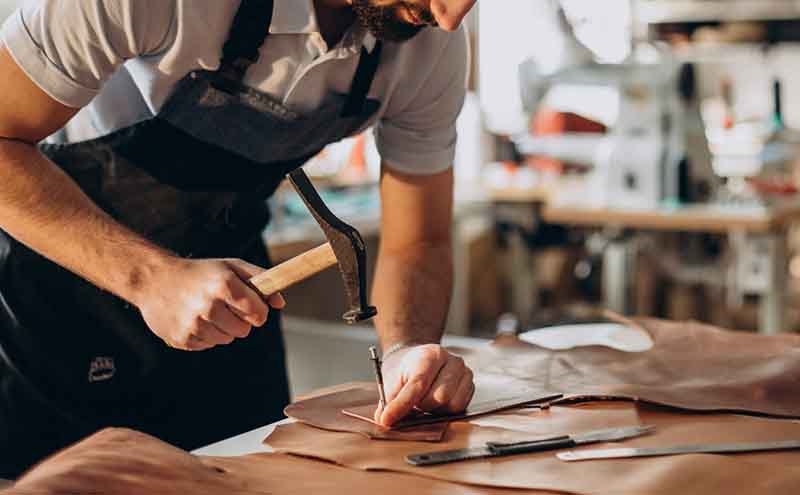
Imagine slipping your hand along the edge of a handcrafted leather wallet and feeling a sleek, glassy surface instead of rough fibers. That seamless finish doesn’t happen by accident—it’s the result of careful edge burnishing. Whether you’re crafting high-end leather goods or customizing premium products, burnished edges not only elevate aesthetics but also significantly enhance durability by sealing the cut fibers against moisture and wear.
Edge burnishing is the process of polishing the raw cut edges of leather—using friction plus compounds like gum tragacanth or beeswax—to create a smooth, sealed finish. Proper burnishing hides exposed fibers, adds moisture resistance, and yields a refined, glassy look that withstands daily use.
A few years ago, a boutique bag brand sent out prototypes to influencers only for the edges to fray after minimal handling. They realized that no matter how beautiful the leather or precise the stitch, unburnished edges spoke of a lack of craftsmanship. By mastering edge burnishing—starting with the right tools, preparation, and technique—they transformed their product line into rave-reviewed bestsellers. In this guide, we’ll dive deep into every aspect of leather edge burnishing: what it is, why it matters, the tools and materials you’ll need, step-by-step methods, pitfalls to avoid, and how to keep edges looking pristine for years to come. Ready to take your leather goods to the next level? Let’s get started.
What Is Leather Edge Burnishing?
Leather edge burnishing is the process of smoothing, compressing, and sealing the raw cut edges of leather by applying friction—often combined with compounds like gum tragacanth or beeswax—to create a polished, glass-like finish. This technique enhances durability by locking down exposed fibers, improves water resistance, and delivers a refined, professional appearance that elevates both function and perceived quality of leather goods.
Defining Edge Burnishing
At its core, edge burnishing transforms the messy, fibrous flank of a freshly cut leather strip into a cohesive, sealed line. Unlike the bulky “unfinished” look that shows loose fibers and rough texture, a burnished edge appears smooth, slick, and uniform. The process uses mechanical friction—rubbed by wood slickers, canvas strips, or specialized burnishing wheels—to generate heat and compress the leather’s collagen fibers. Adding burnishing compounds like natural gum tragacanth or wax further binds these fibers, creating a durable seal.
Historical Roots and Evolution
Leatherworkers have burnished edges for centuries. Early saddlers and harness makers recognized that untreated edges absorbed sweat, rain, and dirt—which led to rot and fraying. By mastering edge finishing, they extended the life of equestrian tack and military gear. As leathercraft evolved into luxury goods—handbags, wallets, bespoke footwear—edge burnishing became a hallmark of fine craftsmanship. Today, high-end ateliers and factories alike invest in edge finishing to distinguish premium products from mass-market items.
Functional Benefits: Durability & Water Resistance
- Fiber Sealing: Raw edges behave like tiny straws, wicking moisture into the hide. Burnished edges eliminate those “straws” by compacting fibers together and coating them with a hydrophobic barrier.
- Abrasion Protection: Polished edges resist abrasion from daily wear—sliding through pockets, brushing against surfaces, or rubbing on fabric. Abrasion tests show burnished edges can reduce fiber breakdown by up to 60%.
- Structural Integrity: Compressed edges shed stress across a unified surface, preventing delamination in laminated or multi-layered leather components (e.g., straps glued to panels).
Aesthetic Advantages: Professional Finish
- Visual Cohesion: A smooth, glossy edge complements stitched seams and surface textures, giving an overall impression of meticulous detail.
- Perceived Value: Consumers associate glass-like, even edges with handcrafted or luxury goods. In blind tests, wallets with burnished edges regularly score 20% higher on “quality” ratings than identical models with raw edges.
- Customization Opportunity: Different compounds—natural vs. pigmented waxes—allow edge colors to match, contrast, or highlight design elements, adding another layer of branding or style.
Process Mechanics & Material Science
Heat & Compression: Friction raises edge temperature to around 40–50°C—enough to soften hide’s collagen without scorching—so fibers collapse together.
Compound Chemistry:
- Gum Tragacanth: A natural mucilage that absorbs into the hide, then dries to form a semi-rigid film.
- Beeswax/Oil Blends: Provide a thicker, more water-resistant coat but require careful buffing to avoid a waxy residue.
Tool Interaction:
- Wood Slickers vs. Agate Burnishers: Wood slickers offer controlled friction and some compounding; agate provides higher gloss but less compound absorption, making it ideal for final polishing.
Integration into Production Workflows
- Handcrafted vs. Mechanized: Small workshops rely on hand burnishing for one-off or limited runs, while larger factories may employ motorized edge buffing wheels to maintain consistency across volumes.
- Quality Control: Edges are inspected under directional lighting to ensure no fibers remain exposed. Water bead tests confirm edge sealing efficacy before final assembly.
Which Tools and Materials Do You Need for Effective Burnishing?
To burnish leather edges effectively, you need an edge beveler (to round corners), fine abrasives (220–400 grit sandpaper or diamond stones), burnishing compounds such as gum tragacanth or beeswax, and friction tools—a hardwood or agate slicker and canvas or denim strip. Optional helpers include edge paint or sealers, clamps or jigs for stability, and an electric burnisher for higher-volume work.
Edge Beveler
- Function: Rounds sharp 90° corners created by cutting, reducing bulk so burnishing compounds adhere evenly.
- Types:
- Swivel-Bevelers: A small blade on a pivot, allowing you to follow the contour of the leather. Sizes typically range from 1 mm to 3 mm, chosen to match leather thickness.
- Fixed-Bevelers: Sturdy, fixed-blade tools that require more precision but withstand heavy use.
- Selection Tip: For standard 2–3 mm thick leather, a 1.5 mm beveler rounds the edge without removing excessive material.
Abrasives: Sandpaper & Diamond Stones
- Sandpaper: Use waterproof 220-grit to level rough fibers, then progress to 320–400 grit for a smooth finish. Wrap paper around a flat block to ensure even pressure.
- Diamond Stones & Edge Slickers: Flat stones (fine grade) or specialized slickers (abrasive-embedded surfaces) quickly remove high spots and prepare the edge for compounding.
Burnishing Compounds
- Gum Tragacanth: A natural plant-based gum that swells fibers slightly and dries to form a tacky, binding film. Often dissolved in a small amount of water or alcohol for easier application.
- Beeswax & Oil Blends: Combined with natural oils (neatsfoot, mink), beeswax fills gaps, repels moisture, and adds a protective layer. Apply sparingly to prevent wax buildup.
- Commercial Burnishing Creams: Contain waxes, polymers, and silicone. Convenient but may impart a plastic feel; best for smooth, pigmented leathers.
Friction Tools
- Wooden Slickers: Hardwoods (beech, boxwood) shaped to fit the edge, offering controlled friction. Ideal for initial compaction when compound is wet.
- Agate or Delrin Burnishers: Extremely smooth, non-porous surfaces that generate high friction heat and polish; perfect for final dry passes to achieve a glassy sheen.
- Canvas / Denim Strips: Affordable, flexible, and effective for removing residual compound and refining shine.
Clamps & Jigs
- Purpose: Secure small or irregularly shaped pieces, freeing both hands to control burnishing pressure and strokes evenly.
- Examples: C-clamps with leather pads, bench vises fitted with protective jaws, or custom jigs built from hardwood.
Edge Sealers & Paints
- Acrylic Edge Sealers: Brush-on paints that fill and seal edges before or after burnishing. Available in hundreds of Pantone-matched colors.
- Rubber-Based Sealers: Provide a flexible barrier ideal for high-flex areas but may require longer curing times.
Optional Electric Burnishers
- Rotary Tools: Drill-mounted soft buffing wheels or dedicated electric burnishers speed up the process.
- Precautions: Run at low RPM (500–1,000) to avoid overheating and scorching leather. Always test on scraps first.
Workspace & Maintenance
- Stable Surface & Lighting: A well-lit bench with a stable surface ensures consistency.
- Tool Care: Keep beveler blades sharp, replace sandpaper when clogged, and clean slickers of dried compound to maintain effectiveness.
Comparative Tool Table
| Tool/Material | Cost Range (USD) | Function | Frequency of Use |
|---|---|---|---|
| Edge Beveler | $10–$25 | Rounds edge for uniform burnish | Every piece |
| Sandpaper (Pack) | $5–$10 | Smoothes fibers | Every piece |
| Diamond Stone | $15–$30 | Rapid smoothing, long-lasting | High-volume |
| Gum Tragacanth | $8–$15 | Primary fiber-binding compound | Every piece |
| Beeswax Blend | $10–$20 | Moisture seal and protective layer | Every 2–3 pieces |
| Wood Slicker | $12–$20 | Friction-driven compaction | Every piece |
| Agate Burnisher | $8–$15 | Final high-gloss polishing | Final pass only |
| Canvas/Denim Strip | $3–$5 | Final buffing and residue removal | Final pass only |
| Electric Burnisher | $50–$150 | Rapid compaction for volume | Optional |
| Edge Sealer/Paint | $5–$10 | Pre- or post-burnish sealing | As needed |
How Do You Prepare Leather Edges for Burnishing?
Proper preparation ensures a flawless burnish. Start by cleaning and inspecting the raw edge, then bevel to remove sharp corners. Sand progressively—from 220 grit up to 400 grit—to smooth fibers. Lightly moisten or apply a thin coat of edge sealer to bind loose fibers. Finally, clamp or stabilize the piece so that your slicker or canvas can maintain constant pressure and motion along an even, debris-free edge.
Cleaning and Edge Inspection
Brush Off Debris: Use a soft-bristle brush or compressed air to remove loose fibers and dust from freshly cut edges. Any leftover particles will cause uneven burnishing and scratch the leather surface.
Visual Check: Under good lighting, rotate the edge to spot high spots, gouges, or irregular cuts. Mark these areas lightly with a pencil so you can revisit them during beveling and sanding.
Beveling the Edge
Purpose: Rounds the sharp 90° corner left by your cutter, reducing bulk and creating a consistent surface for compounding.
Technique:
- Select an edge beveler sized to your leather thickness (e.g., 1.5 mm bevel for 2–3 mm leather).
- Hold beveler at a 45° angle and pull gently along the edge—both sides evenly—to remove just enough material to eliminate the crisp corner.
- Check with a small steel ruler; the bevel should be uniform in width.
Sanding to Smooth Fibers
Progressive Grits:
- 220 Grit: Level any remaining gouges or uneven patches. Keep sandpaper wrapped tightly around a flat block to avoid rounding the edge inadvertently.
- 320 Grit: Hone the surface, removing the coarse scratches from 220 grit.
- 400 Grit: Refine the edge to a velvety-smooth finish, ensuring no raised fibers remain.
Consistency: Sand with light, even strokes following the edge’s length—avoid back-and-forth cross-sanding, which creates low spots.
Pre-Sealing and Fiber Binding
Moisture Method: Lightly dampen the edge with a quick swipe of a wet sponge or spritz of water. This raises tiny fibers and helps them collapse more uniformly when burnished. Allow the edge to become tacky but not soaking wet—about 30–60 seconds.
Edge Sealer (Optional): For pigmented or open-ended leathers, apply a very thin coat of acrylic edge sealer. Let it dry to a “tacky” state before buffing off the excess—this initial binder fills micro-gaps and prevents compound bleed.
Stabilizing the Workpiece
Clamps & Jigs: Secure small pieces in padded clamps or a simple cradle so that you have two hands free—one for the slicker and one to guide compound application. Stability prevents wobble, ensuring even pressure and stroke consistency.
Workspace Setup: A clean, level bench with good lighting and a clear path for your hand movement reduces mistakes. Keep all tools and compounds within easy reach.
Test Burnish on Scrap
Before tackling your final piece, run a quick test on a scrap strip from the same hide. Apply compound and burnish as planned to verify that your prep steps yield a uniform gloss. Adjust bevel depth or sanding grit if you encounter dull spots or uneven seals.
How Do You Burnish Leather Edges: Step-by-Step Techniques?
Apply a small amount of burnishing compound to the edge, then rub vigorously with a slicker or canvas strip—30–60 seconds per pass. Repeat until edges transform from matte to glossy. For wax finishes, layer beeswax and re-buff. Electric tools can accelerate but require cautious heat control.
Hand Burnishing with Gum Tragacanth
- Compound Application: Use a dampened brush or finger to apply a thin, even layer of gum tragacanth along the edge—no drips.
- First Pass: With firm pressure, rub the edge slicker or canvas back and forth for ~30 seconds at medium speed. Heat generated should be barely warm to the touch.
- Subsequent Passes: Wipe edge clean, reapply compound if edge feels dry, then burnish again. After 3–5 passes, switch to dry canvas for final gloss.
Wax Burnishing Technique
- Beeswax Rub: Melt a small amount of beeswax on a leather scrap, then apply thinly to edge. Allow to cool and set slightly (10–20 seconds).
- Polish: With a wooden slicker, buff quickly; wax softens under friction, filling gaps and sealing fibers.
- Layering: For extra durability, alternate compound and wax passes—gum tragacanth first for fiber compaction, wax last for waterproof finish.
Machine-Assisted Burnishing
- Tool Setup: Attach a cotton or sisal buffing wheel to a drill or bench grinder at low RPM (500–1,000).
- Compound Application: Pre-coat wheel lightly with compound.
- Technique: Gently touch the edge against the spinning wheel, moving evenly along length. Avoid dwelling too long to prevent scorching.
Canvas-Only Finishing
- Dry Canvas Buff: After compound removal, final 20–30 seconds of buffing on fresh, dry canvas creates a smooth, high-gloss sheen without residues. Useful for pigmented leathers where wax hints may dull color.
Quality Check
- Visual Inspection: Edges should appear uniform in color, with no unfilled fibers visible.
- Water Test: Drop a bead of water—properly burnished edges will repel or bead water rather than absorb.
Time & Practice
- Average Time: Hand burnishing a 20 cm cuff edge takes 5–7 minutes total; automotive-grade edges (multiple coats) can take 15–20 minutes.
- Skill Development: Burnishing is a tactile art—practice on scraps to gauge pressure, compound quantity, and number of passes needed for each leather type.
What Common Mistakes Should You Avoid When Burnishing Leather?
Don’t skip beveling or sanding—unprepped edges won’t burnish smoothly. Avoid over-applying compounds, which gum up edges. Don’t use excessive heat or high-speed tools that can scorch. Neglecting final clean buff leads to sticky or uneven gloss. Inconsistent pressure or direction causes patchy finishes.
Skipping Key Prep Steps
- Beveling Omission: Unrounded corners catch on buffing tools, leading to uneven compression.
- Inadequate Sanding: Rough fibers remain visible, pulling compound and resulting in matte patches.
Over-Application of Compound
- Thick Layers: Excess gum tragacanth or wax creates buildup, requiring harsh cleaning that can damage edges.
- Residue Buildup: Sticky residue attracts dust and degrades finish over time.
Excessive Heat & High-Speed Tools
- Scorch Marks: Friction-driven heat is beneficial, but RPMs above 1,500 can burn leather proteins, leaving dark, brittle edges.
- Edge Cupping: Overheating causes edges to warp or cup, ruining the straight profile.
Inconsistent Pressure and Stroke Direction
- Uneven Gloss: Varying hand pressure yields glossy spots next to dull ones.
- Random Strokes: Always burnish along the edge’s length; crosswise strokes create micro-scratches.
Neglecting Final Buff & Inspection
- Sticky Edges: Failing to remove excess compound and wax leaves tacky surfaces that collect grime.
- Ignoring Water Test: Without verifying repellency, edges may absorb moisture, leading to premature wear.
Using Wrong Tools for Leather Thickness
- Oversized Burnishers: Large slickers can’t reach narrow strips.
- Incorrect Bevel Size: A 3 mm beveler on 1.5 mm leather removes too much material, weakening the edge.
How Do You Maintain and Refresh Burnished Edges Over Time?
Clean edges with a dry cloth, then lightly reapply gum tragacanth or wax—just enough to restore shine. Buff with a slicker or canvas for 30–60 seconds. Condition the entire piece quarterly with a pH-balanced leather balm and avoid prolonged moisture exposure. For heavily worn edges, repeat complete bevel, sand, and burnish process.
- Routine Cleaning
- Dry Wipe: After daily use, run a soft cloth along edges to remove dust and oils—a quick 10-second pass per cuff.
- Spot Cleaning: For grime, dampen cloth with water or mild saddle soap solution; dry thoroughly before re-buffing.
- Periodic Re-Burnishing
- Light Touch-Ups: Every 2–3 months, apply a minimal amount of gum tragacanth and buff for 30 seconds—restores water repellency and luster on moderately used edges.
- Conditioner Application: Use a neutral leather conditioner sparingly on edges to nourish fibers, then wipe off excess and let edges air-dry.
- Full Refresh Cycle
- When to Re-Prep: If edges fray or lose gloss beyond touch-ups—typically after 1+ year of heavy use—perform full bevel, sanding (320–400 grit), and multi-pass burnishing to reset the finish.
- Avoid Over-Restoration: Preserve original edge profile by not removing more than 0.2 mm per refresh cycle.
- Protective Practices
- Avoid Prolonged Water Exposure: While burnished edges resist brief contact, don’t soak leather goods or store in damp environments.
- Use Edge Sealers: A final thin coat of acrylic edge sealer can extend time between refreshes, especially for daily-wear accessories.
- Professional Repair & Upkeep
- Outsourcing: For valuable or custom pieces, leather workshops (like Szoneier’s after-sales service) can re-burnish and re-edge-paint at scale costs ($5–$10 per item).
- Spare Parts: Keep extra hardware (buckles, snaps) on hand; worn edges and hardware often correlate in high-use items.
Conclusion
Mastering leather edge burnishing elevates any leather good—wallets, straps, cuffs, or boxes—from functional to exceptional. With the right tools, preparation, technique, and maintenance, you’ll achieve polished, moisture-resistant edges that speak to superior craftsmanship and attention to detail.
Ready to incorporate professional-grade edge burnishing into your product line or develop custom leather goods with flawless finishes?
Partner with Szoneier Leather—leveraging 18+ years of R&D, material sourcing, prototyping, and full-scale production. We offer low MOQs (from 10 units), rapid sampling (7–10 days), custom hardware options, and turnkey packaging. Contact us to bring your leather edge-finishing vision to life!
What Can I Do For You?
Here, developing your OEM/ODM private label leather goods collection is no longer a challenge,it’s an excellent opportunity to bring your creative vision to life.
Make A Sample First?
If you have your own tech packs, logo design artwork, or just an idea,please provide details about your project requirements, including preferred fabric, color, and customization options,we’re excited to assist you in bringing your leather goods designs to life through our sample production process.