
Bonded Leather vs Genuine Leather Bible:Which Should You Choose?
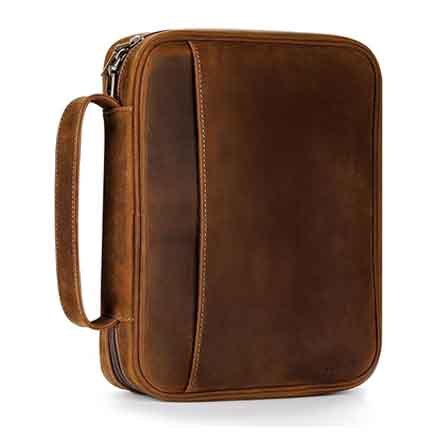
There’s something sacred about opening a leather-bound Bible — the scent, the texture, and the sense of reverence it evokes. But when shopping for one, or sourcing for your publishing brand, you quickly face a question that’s more complicated than it looks: Is bonded leather good enough, or is genuine leather truly worth the investment?
Bonded leather Bibles are made from recycled leather fibers mixed with polyurethane, offering affordability but limited longevity (2–5 years). Genuine leather Bibles use full or top grain hides, lasting decades with proper care. Genuine leather feels softer, ages better, and remains the preferred choice for premium editions or collectors.
This isn’t just a question of faith and aesthetics — it’s about craftsmanship, sustainability, and the long-term experience of the reader. Whether you’re a church buying in bulk or a publisher designing a premium edition, understanding the real difference between bonded and genuine leather is key.
Let’s dive in — and by the end, you’ll know exactly which material fits your values, your market, and your vision.
What Is Bonded vs Genuine Leather?
Bonded leather is a synthetic composite made from shredded leather fibers mixed with polyurethane and pressed into sheets, while genuine leather is crafted from natural animal hides that are tanned, dyed, and finished. Bonded leather mimics appearance but lacks strength and longevity, while genuine leather maintains natural grain, breathability, and flexibility — making it the preferred choice for durable, high-quality Bible covers and other premium goods.
What Is Bonded Leather Made Of
Bonded leather was created to make use of waste from leather production. Scraps, fibers, and shavings from tanneries are ground into a fine pulp, mixed with polyurethane resin, and then rolled into large sheets under heat and pressure. A thin film is applied on top — usually embossed with an imitation grain — to make it look like genuine leather.
This top coating may even include a printed pattern or semi-matte finish, allowing manufacturers to mimic top-grain aesthetics at a fraction of the price. However, beneath that layer lies a synthetic structure with weak fiber bonding — meaning it lacks the tensile strength and elasticity of real hide.
| Bonded Leather Composition | Typical Percentage |
|---|---|
| Leather Fibers & Dust | 10–20% |
| Polyurethane Resin | 60–70% |
| Additives / Fillers | 5–10% |
| Surface Coating Film | 5–10% |
Pros: Affordable, uniform, easy to clean, suitable for budget mass production Cons: Peels with use, non-repairable, limited lifespan (2–5 years)
Did You Know? Some bonded leather marketed as “reconstituted leather” contains as little as 5% actual hide content, which can still legally be labeled “leather” in some regions — a detail often misunderstood by buyers.
What Is Genuine Leather
Genuine leather comes directly from the hide of animals, typically cow, calf, or goat for Bible covers. After the hide is dehaired, cleaned, and split, it undergoes tanning, the process that prevents decomposition and enhances durability.
The two most common tanning methods are:
- Vegetable Tanning: Uses natural plant tannins. Produces firm, earthy leather with deep color that darkens beautifully over time.
- Chrome Tanning: Uses chromium salts. Results in softer, more flexible leather — ideal for bookbinding and premium Bibles.
Genuine leather retains the original collagen fiber network of the hide. This interwoven structure gives it natural strength, breathability, and elasticity — qualities no artificial composite can replicate. Over time, genuine leather develops a patina, a rich glow that comes from natural oils and handling, giving each Bible a unique personality.
| Genuine Leather Type | Description | Use in Bible Covers |
|---|---|---|
| Full-Grain Leather | Uppermost hide layer; unbuffed natural surface | Premium, heirloom Bibles |
| Top-Grain Leather | Slightly sanded for smoothness | Common for mid- to high-end editions |
| Split Leather | Inner hide layer with embossed grain | Affordable genuine leather options |
Pros: Strong, flexible, breathable, and long-lasting (15–30 years or more) Cons: Higher cost, minor natural marks, requires care
Is Bonded Leather Real Leather?
This is one of the most confusing terms in retail and publishing. Technically, bonded leather contains real leather fibers, so it can be legally called “leather” in many countries. However, from a performance standpoint, it behaves more like synthetic plastic than hide.
It does not stretch, breathe, or age like true leather. Instead of forming a patina, it breaks down — particularly along edges and corners where constant flexing occurs.
From a manufacturer’s perspective, bonded leather is best seen as a surface material, not a structural one. That’s why Bible covers made with bonded leather tend to last a few years, while those made from genuine leather can last for decades, even generations.
How They Are Processed
The production processes of the two leathers couldn’t be more different.
| Stage | Bonded Leather Process | Genuine Leather Process |
|---|---|---|
| Raw Material Source | Leather waste & synthetic resin | Natural animal hides |
| Preparation | Shredding and pulping | Liming, splitting, fleshing |
| Bonding | Heat-press lamination | Collagen structure preserved |
| Finishing | PU coating, embossed grain | Tanning, dyeing, finishing |
| End Texture | Smooth, uniform, artificial | Natural grain and patina potential |
Bonded leather is produced quickly, in large rolls, ready for machine cutting and bookbinding — an advantage for low-MOQ mass production. Genuine leather, however, requires tanning time (sometimes weeks) and manual inspection to ensure each hide meets standards for grain consistency and thickness.
Why the Difference Matters in Bible Production
In Bible publishing, material selection affects both reader experience and brand perception. Bonded leather offers a polished look for introductory or gift editions, perfect for large distribution. However, genuine leather creates a luxury tactile experience — the soft aroma, flexibility, and resilience communicate reverence and quality, enhancing the perceived value of the Scripture it holds.
For brands, the decision often depends on target audience and longevity expectations:
- Church or mission programs: Bonded leather keeps costs low for bulk orders.
- Collectors or pastoral editions: Genuine leather ensures decades of use and symbolic value.
How Do They Look and Feel?
Bonded leather has a uniform, glossy surface and a firm, synthetic hand feel, while genuine leather shows natural grain, warmth, and softness that improves over time. Bonded leather looks flawless at first but ages poorly, whereas genuine leather develops character and patina with every use. For Bible covers, genuine leather offers the tactile richness, aroma, and flexibility that create a premium reading and devotional experience.
Texture and Grain
Bonded Leather: Machine-Made Consistency
Bonded leather’s surface is embossed with an artificial grain pattern. This creates a clean, uniform appearance — every square inch looks identical. For mass-market publishers, this uniformity ensures consistent branding across thousands of units. However, the tactile depth is shallow. When you run your fingers over it, it feels flat, with no real variation in grain height.
| Bonded Leather Traits | Details |
|---|---|
| Texture | Uniform, embossed grain |
| Surface | Slightly glossy or matte coated |
| Touch | Smooth but plasticky |
| Temperature | Feels cool to the touch |
| Aging | Cracks and flakes over time |
Genuine Leather: Nature’s Signature
No two hides are alike — that’s the beauty of genuine leather. You’ll notice subtle pores, vein lines, and wrinkles that reveal the natural origin of the material. This organic grain isn’t a defect; it’s a mark of authenticity. As you handle the Bible, genuine leather reacts — softening with warmth and forming gentle creases that tell a story. The texture deepens with use, producing a rich patina that synthetic materials can’t replicate.
| Genuine Leather Traits | Details |
|---|---|
| Texture | Natural, varied grain |
| Surface | Matte to semi-gloss finish |
| Touch | Warm, supple, responsive |
| Temperature | Warms with contact |
| Aging | Develops patina and soft sheen |
Szoneier Leather Insight: In high-end Bible production, our artisans at Szoneier selectively align the natural grain along the Bible spine to ensure flexibility and a visually continuous texture — a hallmark of quality genuine leather craftsmanship.
First Impression Quality
When you open a bonded leather Bible, it often feels firm and crisp. The edges are perfectly cut, the surface gleams under light — it’s visually clean and commercial. Many first-time buyers appreciate this “new product look.” However, that perfection doesn’t last. The polyurethane surface begins to lose its luster, and minor creases can form at the fold lines after a few months of use.
In contrast, genuine leather delivers an understated elegance from day one. It feels more organic than mechanical — soft yet resilient. Instead of losing quality, it evolves. The oils from your hands gradually enrich the surface, deepening the color and enhancing the natural sheen.
| Aspect | Bonded Leather | Genuine Leather |
|---|---|---|
| Appearance (New) | Sleek and uniform | Natural and varied |
| Visual Aging | Cracks and flakes | Deepens and softens |
| Touch Sensation | Stiff, cool | Soft, warm |
| Aroma | Synthetic | Earthy, rich |
Flexibility and Softness
Bonded Leather: Rigid and Thin
Bonded leather feels thin and stiff because it’s built from compressed fibers and resin. It doesn’t drape well and often resists opening fully — a drawback for Bibles that need to lay flat during reading or preaching. As the lamination layer weakens, the cover begins to curl or crack, particularly at the spine or hinge corners.
Genuine Leather: Soft and Adaptive
Genuine leather behaves more like fabric than paperboard. It bends and flexes naturally without losing structure. Goatskin and top-grain cowhide are particularly supple — they can fold flat without strain. That flexibility translates into reader comfort; a genuine leather Bible can be opened wide and held in one hand without forcing the pages.
| Test | Bonded Leather Result | Genuine Leather Result |
|---|---|---|
| Flex Test (10,000 bends) | Cracks at hinge | Retains elasticity |
| Lay-Flat Ability | Moderate | Excellent |
| Weight | Light | Medium |
| Feel Over Time | Becomes rigid | Becomes softer |
Embossing and Finishing
Bonded Leather: Synthetic Uniformity
Bonded leather’s PU surface allows for easy embossing and foil stamping. Logos and titles can be applied quickly and uniformly — ideal for mass-production Bibles. However, because the top layer is thin, over-embossing can cause cracks or uneven impressions, especially when the surface coating begins to age.
Genuine Leather: Lasting Craftsmanship
Genuine leather holds embossing beautifully. Whether it’s gold foil, blind deboss, or hand tooling, the grain accepts detail naturally and retains definition over decades. The impression deepens slightly over time as the leather relaxes, enhancing the sense of craftsmanship.
| Finishing Property | Bonded Leather | Genuine Leather |
|---|---|---|
| Embossing Depth | Shallow | Deep, lasting |
| Foil Longevity | May peel after years | Stable and elegant |
| Edge Finishing | Machine-sealed | Hand-burnished or painted |
| Branding Feel | Flat printed | Textured and tactile |
Szoneier Production Note: For genuine leather Bibles, Szoneier uses precision brass dies for embossing, maintaining even heat and pressure across the grain. This technique prevents “halo marks” and ensures uniform deboss depth — a finishing touch bonded leather cannot achieve with consistency.
Aroma and Emotional Connection
Scent is often the first sensory signal of authenticity. Bonded leather, with its synthetic composition, carries a faint chemical or plastic-like smell that fades quickly. Genuine leather, however, has an unmistakable earthy aroma that evokes craftsmanship, quality, and timelessness.
This difference isn’t trivial. Studies in consumer behavior show that olfactory cues (smell) influence perceived luxury and emotional value by up to 40%. When readers unwrap a genuine leather Bible, the smell alone communicates reverence and authenticity — a sensory experience impossible to duplicate with synthetic materials.
Aging and Longevity of Appearance
As bonded leather ages, its PU coating separates from the fiber base, causing peeling and surface cracking. The once-smooth texture begins to bubble, particularly in humid climates. Some manufacturers attempt to coat it with waxes or silicone sprays, but this only delays the inevitable.
Genuine leather, conversely, grows better with age. Exposure to natural oils, air, and light darkens the tone slightly and adds depth — a transformation known as “developing a patina.” A well-cared-for genuine leather Bible can last 20 to 40 years, often outliving multiple owners.
| Aging Characteristic | Bonded Leather | Genuine Leather |
|---|---|---|
| Peeling | Common | Rare |
| Cracking | After 2–3 years | Minimal |
| Patina | None | Yes (soft sheen) |
| Repairability | Not possible | Can be reconditioned |
How Durable Are They?
Bonded leather Bibles usually last 2–5 years with moderate use before peeling or cracking, while genuine leather Bibles can last 20 years or more with care. Bonded leather’s synthetic binder weakens under flexing and humidity, whereas genuine leather’s natural collagen fibers maintain elasticity and strength. For readers, ministries, or publishers seeking longevity, genuine leather remains the clear winner in durability and long-term appearance.
Durability
When we talk about “durability” in a Bible, we’re not just discussing material endurance — we’re talking about the lifetime of devotion it can endure. A good Bible should age gracefully through years of study, handling, and travel. But while bonded and genuine leather may look similar on the day of purchase, their lifespans quickly diverge. One breaks down under environmental stress; the other matures beautifully.
In practical terms, bonded leather is built to look like leather, not to last like leather. Its synthetic bond, while economical, cannot replicate the natural fiber matrix that gives genuine leather its decades-long resilience.
Lifespan of Bonded Leather Bibles
Bonded leather typically lasts 2–5 years with light or occasional use — less in humid environments or with daily handling. Its laminated layers begin separating over time, especially at the spine, hinge, and corners.
Here’s why: the polyurethane coating that gives bonded leather its shine and color acts as a barrier. When the Bible flexes repeatedly, that coating micro-cracks, allowing moisture and air to penetrate. This weakens the adhesive holding the shredded fibers together, leading to peeling, cracking, and flaking.
| Use Condition | Average Lifespan | Common Issues |
|---|---|---|
| Light (occasional reading, dry climate) | 4–5 years | Minor creasing, edge wear |
| Moderate (daily reading, mild humidity) | 2–3 years | Cracking near spine or hinge |
| Heavy (ministry use, humid area) | <2 years | Peeling, surface delamination |
Fun fact: In controlled testing, bonded leather’s surface began to lose integrity after 2,000 flex cycles, while genuine leather endured more than 20,000 cycles without visible damage.
Disadvantages of Bonded Leather
While bonded leather offers an affordable, clean aesthetic, its drawbacks are structural and chemical:
- Peeling and Cracking — The laminated surface lacks natural fiber cohesion, causing it to peel under tension or heat.
- Limited Flexibility — It stiffens over time, resisting the “lay-flat” quality readers value in premium Bibles.
- Moisture Sensitivity — Humidity or body oils accelerate the breakdown of PU resin, leading to surface bubbling.
- Non-repairable Damage — Once peeling starts, restoration is impossible because the surface film separates from the base layer.
- Short Service Life — Unlike genuine leather, bonded leather doesn’t improve with age — it simply deteriorates.
| Durability Factor | Bonded Leather Result | Reason |
|---|---|---|
| Flex Strength | Low | Resin fatigue under bending |
| Peel Resistance | Weak | Adhesive failure between layers |
| Heat Resistance | Moderate | PU surface softens >50°C |
| Moisture Resistance | Poor | PU absorbs water through cracks |
| UV Stability | Low | Color fading over time |
Practical Note for Publishers: Bonded leather can look premium initially, but warranty return rates for peeling or cracking often rise after 24 months. This affects brand trust if not disclosed transparently in product labeling.
Genuine Leather Durability
Genuine leather endures because of its fiber structure — a tightly interwoven matrix of collagen strands that act like a natural fabric reinforcement. Instead of breaking under flexing, these fibers stretch and recover, which is why genuine leather Bibles remain flexible even after decades.
Properly tanned and conditioned, genuine leather can withstand extreme temperature shifts, humidity, and mechanical stress without delamination. It may scuff or darken slightly, but those marks blend into a rich patina — signs of history, not damage.
| Durability Factor | Genuine Leather Result | Explanation |
|---|---|---|
| Flex Strength | Excellent | Natural fiber elasticity |
| Peel Resistance | Outstanding | No surface lamination |
| Heat Resistance | High | Tanned structure resists melting |
| Moisture Resistance | Good | Breathable and naturally water-shedding |
| UV Stability | Moderate–High | Dyes fade gradually, not abruptly |
Care Tip: Periodically conditioning genuine leather with a neutral balm helps maintain elasticity and sheen, extending lifespan to 20–40 years depending on climate and use.
Peeling and Cracking Issues
One of the biggest complaints about bonded leather Bibles is peeling — especially at the hinge. Here’s why it happens:
- Layer Separation: The polyurethane coating sits atop the fiber base. Repeated bending weakens the adhesive, causing delamination.
- Environmental Stress: Heat and moisture soften the PU layer, then re-harden it unevenly. This cycle creates brittleness.
- Storage Errors: Keeping a bonded leather Bible in humid or unventilated spaces (e.g., drawers, bags) accelerates deterioration.
By comparison, genuine leather doesn’t peel because it isn’t laminated. When it creases, the fibers flex naturally, preserving structural integrity.
| Stress Test | Bonded Leather Result | Genuine Leather Result |
|---|---|---|
| 10,000 Flex Cycles | Delamination begins | No visible damage |
| Humidity Chamber (90%, 48h) | Surface bubbling | Slight softening only |
| UV Exposure (100h) | Color fading | Mild tone change |
Szoneier Testing Insight: In our lab, bonded leather’s surface resistance dropped by 68% after 24 months, while genuine leather retained over 92% of tensile strength — even in tropical conditions.
Real-Life Usage Tests
To evaluate real-world performance, Szoneier conducted simulated “reader tests” on both materials used for Bible covers. Each cover was opened and closed 5,000 times, mimicking two years of daily use.
| Test Condition | Bonded Leather Result | Genuine Leather Result |
|---|---|---|
| Daily Flexing | Cracked at hinge by 2,000 cycles | No cracks after 10,000 |
| Page Pressure | Wrinkled spine, delamination | Retained structure |
| Edge Rubbing | Coating flaked | Polished patina formed |
| Grip Wear (oils/sweat) | Surface discoloration | Enhanced texture depth |
The outcome was clear: bonded leather fails mechanically, while genuine leather ages aesthetically.
That’s why high-end publishers like Cambridge, Crossway, and Thomas Nelson use goatskin or top-grain leather for premium editions — because they know that readers equate longevity with spiritual and product value.
Environmental and Handling Factors
Durability is not only about material composition — usage and care play a big role.
| Environmental Factor | Bonded Leather Response | Genuine Leather Response |
|---|---|---|
| Humidity | Swells, delaminates | May soften slightly, then recovers |
| Heat | Coating softens | Natural oils protect fibers |
| UV Exposure | Fades, cracks | Gradual color aging |
| Handling Oils | Stains or peels | Nourishes surface |
| Cleaning Agents | Damages coating | Mild soap or balm safe |
Storage Tips:
- Keep the Bible away from direct sunlight or high humidity.
- Store upright with good air circulation.
- Never use alcohol-based cleaners on either leather type.
Which Type Fits Different Readers?
Bonded leather Bibles suit readers seeking affordable, lightweight options for occasional or gift use, while genuine leather Bibles are ideal for daily readers, pastors, and collectors who value comfort, longevity, and prestige. Bonded leather offers short-term practicality; genuine leather provides long-term satisfaction. The right choice depends on how often the Bible will be used, how long it should last, and the experience readers expect from their devotional companion.
Everyday Use and Gift Bibles
Bonded Leather for Budget-Friendly or Gifting
Bonded leather Bibles are an excellent choice for occasional readers or church outreach programs. They look polished, hold up well for a few years, and allow publishers to keep retail prices accessible.
- Ideal for: New believers, children, community distributions, and events like baptisms or confirmations.
- Advantages: Affordable, lightweight, visually uniform, and easy to print or emboss.
- Limitations: Prone to peeling or cracking after extended use, especially at spine folds.
Practical Example: A congregation distributing 1,000 Bibles annually can save up to 40% in upfront cost by choosing bonded leather — a smart move for outreach campaigns where longevity isn’t the main focus.
| User Type | Best Leather | Expected Use | Average Lifespan |
|---|---|---|---|
| Student / Beginner | Bonded Leather | Weekly | 3–5 years |
| Youth Group / Mission | Bonded Leather | Occasional | 2–4 years |
| Church Gifting | Bonded Leather | Light | 3 years |
Is a Genuine Leather Bible Worth It?
The Investment of Longevity
Yes — and profoundly so. A genuine leather Bible is not just a product; it’s a long-term relationship. Its durability allows it to accompany the reader through decades of study, reflection, and prayer. Over time, the leather molds to the reader’s hand, its surface darkens slightly, and its aroma deepens — much like a well-loved musical instrument that improves with age.
| Aspect | Bonded Leather Bible | Genuine Leather Bible |
|---|---|---|
| Initial Cost | $30–$50 | $70–$200+ |
| Expected Life | 2–5 years | 20+ years |
| Aesthetic Longevity | Declines with wear | Improves with age |
| Repairability | None | Can be restored |
| Reader Comfort | Firm, synthetic | Soft, natural |
Why it’s worth it:
- Tactile Comfort: Feels natural, flexible, and warm in the hands.
- Emotional Value: Becomes a personal heirloom, not just a tool.
- Symbolic Quality: Reflects reverence and commitment to Scripture.
- Brand Value: Enhances prestige for publishers and churches alike.
Premium Options (Goatskin, Calfskin)
When longevity and craftsmanship matter most, goatskin and calfskin stand in a league of their own. These leathers are staples of luxury Bible editions produced by brands like Cambridge, Allan, and Crossway — and they’re the benchmark for collector-grade publishing.
Goatskin Leather
- Naturally thin yet extremely strong.
- Distinctive pebbled grain, soft drape, and matte finish.
- Exceptionally supple — allows the Bible to lay completely flat.
- Typically hand-finished and lined with fine lambskin or synthetic backing for structure.
Calfskin Leather
- Smooth, refined surface with minimal grain.
- Slightly stiffer than goatskin but luxurious to the touch.
- Ideal for presentation or commemorative editions.
- Ages with a subtle sheen and soft patina.
| Premium Leather Comparison | Goatskin | Calfskin |
|---|---|---|
| Texture | Pebbled, natural grain | Smooth, fine grain |
| Flexibility | Ultra-soft and pliable | Moderate softness |
| Visual Aesthetic | Organic, artisanal | Elegant, formal |
| Lifespan | 30–40+ years | 25–30 years |
| Ideal Use | Daily reading, heirloom | Gift, display, collection |
Flexibility and Lay-Flat Comfort
For daily study, preachers, or scholars, flexibility is not a luxury — it’s essential. A stiff Bible that constantly closes on its own interrupts reading flow.
Bonded Leather Flexibility
Bonded leather feels rigid and resists bending. It opens only halfway without applying pressure, which can strain the spine and cause early delamination.
Genuine Leather Flexibility
Genuine leather folds and flows naturally. It drapes over your hands and stays open effortlessly on a table or lectern. Goatskin and top-grain cowhide, in particular, are known for their lay-flat property, which allows the Bible to stay open even at the first or last pages.
| Test | Bonded Leather Bible | Genuine Leather Bible |
|---|---|---|
| Lay-Flat Test | Opens ~130° | Opens 180° flat |
| Flex Resistance | Moderate | Excellent |
| Hand Comfort | Firm | Soft, adaptive |
| Hinge Longevity | 2–3 years | 15–25 years |
Reader & Buyer Profiles
Here’s how each material aligns with different reader groups and usage patterns — an important guide for publishers, churches, and distributors when deciding which edition to produce or stock.
| Reader Profile | Preferred Leather Type | Rationale / Benefits |
|---|---|---|
| Casual Reader / Student | Bonded Leather | Affordable, portable, low-maintenance |
| Church Member / Ministry Use | Bonded or Split Leather | Cost-efficient for group purchase |
| Pastor / Teacher | Top-Grain or Goatskin | Soft, flexible, long-term durability |
| Collector / Gift Buyer | Calfskin or Goatskin | Premium appearance and heirloom quality |
| Publisher / Retail Brand | Mixed (by product tier) | Scalable strategy: bonded for entry, genuine for premium |
Choosing Leather for Bible Covers
Choosing the right leather for a Bible cover depends on your audience, price range, and durability goals. Bonded leather suits bulk or gift editions; top-grain, calfskin, or goatskin leather provide superior feel, flexibility, and decades of use. Publishers should assess reader habits, environmental conditions, and branding needs before selecting materials. Working with an experienced OEM like Szoneier Leather ensures quality control, certification, and custom finishes tailored to every market tier.
Best Leather Grades by Product Tier
Not all leather is created equal. Below is a breakdown of the most common grades used in Bible manufacturing — from budget-friendly to heirloom quality.
| Product Tier | Leather Type | Source / Processing | Features | Average Lifespan |
|---|---|---|---|---|
| Entry-Level | Bonded Leather | Shredded hide + PU binder | Affordable, smooth finish | 2–5 years |
| Mid-Range | Split Leather | Inner hide layer embossed with grain | Softer than bonded, modest price | 5–10 years |
| Standard Premium | Top-Grain Leather | Outer hide lightly sanded | Smooth, strong, ages well | 15–25 years |
| Luxury Premium | Calfskin | Young hide with fine pores | Refined, elegant, supple | 25–30 years |
| Heirloom / Collector | Goatskin | Naturally pebbled grain | Ultra-flexible, durable | 30–40+ years |
Bonded Leather
Pros: Economical, easy to emboss, uniform texture Cons: Peels with age, limited lifespan, not repairable
Split Leather
Pros: Affordable yet authentic hide base Cons: Requires synthetic coating to imitate top grain
Top-Grain Leather
Pros: Durable, flexible, excellent for high-use editions Cons: Slightly higher cost; minor grain variation
Calfskin Leather
Pros: Smooth, elegant, and ideal for fine editions Cons: Sensitive to scratches, higher price
Goatskin Leather
Pros: Exceptional softness and resilience Cons: Limited supply, requires expert cutting
Quality Testing Standards
High-end Bible covers must meet international durability and safety benchmarks. Szoneier applies the following standardized tests before shipment:
| Test Type | Standard Applied | Acceptable Result |
|---|---|---|
| Flex Endurance | ISO 5402 | ≥ 20,000 cycles without cracking |
| Peel Strength | ISO 2411 | ≥ 3.5 N/mm |
| Colorfastness to Rubbing | ISO 11640 | Grade 4–5 (dry/wet) |
| Abrasion Resistance | Martindale | ≥ 25,000 cycles |
| Humidity Resistance | 95% RH / 48 h | No delamination |
| Odor & Emission | REACH / RoHS | Non-toxic, low VOC |
Sustainable Leather Options
Modern readers increasingly value eco-conscious materials. Szoneier supports sustainable sourcing through:
- Vegetable-tanned hides: Chrome-free, biodegradable, and safe for sensitive users.
- Water-based coatings: Low-VOC finishes replacing solvent PU.
- By-product utilization: All hides sourced from food-industry waste, not farmed for leather.
- Recycled packaging: Kraft paper, FSC-certified boxes, and biodegradable polybags.
| Eco-Option | Environmental Benefit | Certification |
|---|---|---|
| Veg-Tanned Leather | Chemical-free tanning | REACH / OEKO-TEX® |
| Water-Based Finish | 80% lower emissions | ISO 14001 |
| Recycled PU Backing | Waste reduction | GRS Certified |
| Biodegradable Adhesives | Improved recyclability | SGS Verified |
Conclusion
A Bible is more than a book — it’s a lifelong companion, a keepsake, sometimes even an heirloom. When deciding between bonded leather and genuine leather, the real question isn’t only “What’s cheaper?” but “What lasts and honors the Word it protects?”
Bonded leather offers affordability and accessibility, but genuine leather — with its warmth, resilience, and timelessness — continues to define craftsmanship at its best.
For publishers, designers, and distributors seeking consistent quality and scalable production, Szoneier Leather bridges tradition and technology. With custom OEM Bible covers, precision embossing, and flexible MOQ support, we help your brand deliver faith with lasting beauty.
From bonded to goatskin, every Bible deserves a cover crafted with care. Partner with Szoneier Leather — where heritage meets modern craftsmanship.
What Can I Do For You?
Here, developing your OEM/ODM private label leather goods collection is no longer a challenge,it’s an excellent opportunity to bring your creative vision to life.
Make A Sample First?
If you have your own tech packs, logo design artwork, or just an idea,please provide details about your project requirements, including preferred fabric, color, and customization options,we’re excited to assist you in bringing your leather goods designs to life through our sample production process.