 Skip to content
Are Leather Golf Gloves Worth It: Sourcing Guide
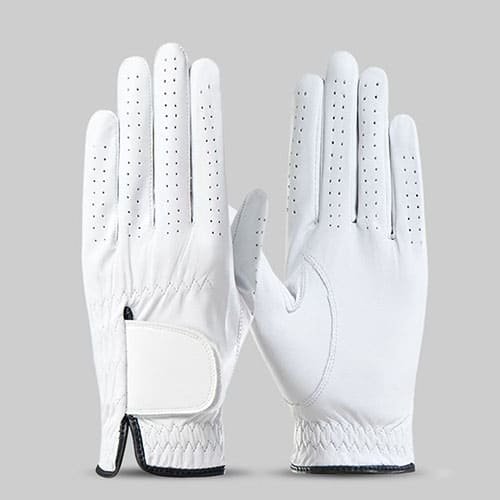
If a putter’s face is your instrument, a glove is the bow in your hand. It decides how confidently you hold a club at the top, how softly you release at impact, and whether your brain stops worrying about slippage long enough to execute the swing you imagined. That’s why golfers obsess over leather—especially cabretta. It’s not just “more expensive”; it’s a different conversation about feel, friction, and fatigue over 18 holes.
Leather golf gloves—especially cabretta—are usually worth it if you value grip consistency and shot feel. Leather grips the club well in dry or mildly humid weather and transmits feedback better than most synthetics, helping tempo and control. Synthetics can outlast leather and excel in heavy rain, but many players rotate a leather gamer with a synthetic/rain backup for best cost-per-round and performance across conditions.
What Makes Leather Golf Gloves Different from Synthetic Options?
Leather (cabretta/sheep) offers superb dry grip, thin hand-feel, and natural breathability; synthetics (microfiber/poly blends) offer higher durability, stretch, and wet-weather stability. Pros overwhelmingly favor leather for feel, then carry synthetic or rain gloves as backups. Downsides of leather: higher price, shorter life if sweated/over-dried, and weaker wet grip unless specially treated.
Cabretta vs synthetic—what changes on the club?
- Friction and feel: High-quality cabretta presents a very fine, uniform fiber structure. That creates consistent micro-friction without the rubbery “grab” some synthetics exhibit. You typically feel less twist at impact and better face awareness in the short game.
- Thickness and feedback: Premium leather gloves run thinner (often 0.4–0.6 mm zones) with zoned perforation, so you get clearer sensory feedback—helpful for distance control and shaping. Synthetics add spandex/mesh panels that improve flexibility but can slightly mute feedback in the palm.
- Breathability: Leather breathes naturally and manages light perspiration well when rotated and air-dried. Synthetics can feel clammy unless heavily perforated, though some microfiber palms maintain tack when damp.
- Wet performance: In heavy rain, purpose-built rain gloves (textile/microfiber) beat most leathers for security. Some leathers use hydrophobic finishes, but they’re still not “rain gloves.”
Do pros use leather—and does that matter for amateurs?
Tour players overwhelmingly wear leather in dry conditions because micro feel matters for them. For amateurs, the upside is still real: a glove that doesn’t slip quietly fixes grip-pressure creep (the mid-round strangling of the club to compensate for uncertainty). That saves wrists and tempo.
Are leather gloves cooler or more comfortable in heat?
In dry heat, leather can feel cooler because it wicks and breathes; in humid heat, both leather and synthetic will saturate if you don’t rotate gloves. The fix isn’t material alone—it’s carry two or three, rotate every few holes, and dry on the cart clip between shots.
Which performs better in rain—leather or microfiber blends?
Microfiber rain gloves win in sustained rain; they feel tackier when wet. For scattered showers or morning dew, a treated leather palm can suffice, but keep a microfiber pair in the bag.
What are the cons of leather gloves?
- Shorter life if used as a sweat sponge and jammed into a bag—salt stiffens, fibers break.
- Price per unit is higher than many synthetics.
- Wet grip is inconsistent unless the leather is specially finished.
- Care-dependent: needs rotation and gentle drying; no direct heat.
| Attribute | Leather (Cabretta/Sheep) | Synthetic/Microfiber |
|---|---|---|
| Dry grip & feel | Excellent | Good–Very good |
| Wet grip (rain) | Fair–Good (treated) | Very good–Excellent (rain gloves) |
| Breathability | Good | Good (with mesh) |
| Durability | Moderate | High |
| Price | Higher | Lower–Mid |
| Feedback (short game) | High | Moderate–High |
Are Leather Golf Gloves Worth the Price for Most Players?
Usually, yes—if you play in mostly dry conditions and value feel. Leather’s cost-per-round is competitive when you rotate gloves and dry them. For rain-heavy climates or range grinders, a hybrid or synthetic backup may be smarter. Many golfers keep one leather gamer for rounds and one synthetic/rain pair for practice or bad weather to balance budget and performance.
Durability and cost-per-round—realistic math Leather doesn’t have to be fragile. The key is rotation and drying. Below are illustrative ranges (your swing speed, grip pressure, climate, and care matter):
| Glove Type | Typical Price (USD) | Expected Rounds* | Cost per Round |
|---|---|---|---|
| Premium cabretta leather | $20–$32 | 12–20 | $1.00–$2.00 |
| Mid-grade leather | $15–$22 | 10–16 | $0.94–$2.20 |
| Synthetic/microfiber | $10–$18 | 18–30 | $0.33–$1.00 |
| Rain/textile glove (pair) | $25–$35 | 25–40 (wet days) | $0.63–$1.40 |
*Assumes rotation of 2–3 gloves and air-drying between holes/sessions.
If you practice more than you play, save your leather gamer for rounds and hit the range with a synthetic. If you play in a humid climate, rotating two leathers every 3–6 holes greatly extends life.
Do higher-priced leather gloves improve performance or just feel nicer? They’re not magic, but the consistency of AA/AAA cabretta—fewer thin spots, cleaner grain, better patterning—reduces hot spots and mid-round slippage. That steadies grip pressure and often reduces hand fatigue. The performance delta is most noticeable in the short game.
Is leather necessary for beginners—or only for low handicaps? Beginners benefit from confidence just like single-digits. A comfortable glove that feels secure helps maintain light grip pressure and better tempo. Consider a mid-grade leather (value) or hybrid (leather palm, synthetic back) to keep budgets sensible while learning.
Use cases that justify leather
- Tournaments & league play: prioritize feel and consistency; carry a rain backup.
- Dry climates or shoulder seasons: leather shines.
- Short-game practice: feedback matters; leather transmits more feel.
Poor value scenarios
- You routinely hit range buckets daily in hot humidity with no rotation—synthetic will beat leather on cost.
- You rarely dry your glove—expect premature hardening and palm blowouts.
Which Leather Types, Constructions, and Features Perform Best?
Best overall: AA/AAA cabretta leather for dry conditions—thin, grippy, precise feel. In heat/humidity, hybrids (leather palm + synthetic back) breathe better. In rain, microfiber rain gloves outperform leather. Look for Lycra knuckles, perforated fingers, pre-curved patterning, and reinforced palm patches in high-wear spots. “Cadet” sizes (wider palm, shorter fingers) dramatically improve fit—and therefore durability.
What leather types are used—cabretta, sheep, goat—and how do they differ?
- Cabretta (hair sheep): The gold standard. Fine, dense fiber network creates a supple, high-friction surface. Takes very thin splits without losing integrity—great for feel-first gamers.
- Sheep/calf variants: Similar hand with slight differences in tensile strength and stretch; good mid-priced options.
- Goat: Tougher at thin gauges; slightly coarser grain. Useful for reinforcement patches or value-focused models.
What is the best material for a golf glove?
- Dry to mildly humid: Premium cabretta wins for feel + friction.
- Hot & humid: Hybrid (cabretta palm + synthetic back/knuckles) balances grip and cooling.
- Rain: Dedicated microfiber rain gloves (usually sold in pairs) beat leather hands down. In short, cabretta is best when conditions suit it; build a two-glove kit to cover rain/heat.
Design details that matter
- Paneling & pre-curve: Glove patterns that mirror a natural grip reduce bunching (bunching = blisters).
- Lycra/mesh knuckles: Improve flex and reduce seam stress.
- Perforation maps: Vent between fingers and across the palm heel; too many holes in high-stress zones can tear, so smart mapping counts.
- Reinforced palm/heel: Thin goat or second cabretta layer where most wear appears (heel pad, thumb).
- Closure & tab: A slightly longer tab with micro-Velcro improves fine adjustment; poor tabs loosen mid-round.
- Edge paint vs turned edges: Turned edges feel smoother but add operations; fine edge paint saves weight and time.
Surface finishing and wet behavior
- Tacky microfilm or silicone micro-dots add initial grip but can wear; ensure they don’t glaze slick with sweat.
- Hydrophobic treatments help in dew but won’t replace rain gloves.
- Dye stability & sweat: Light leathers should pass colorfastness to sweat; blue palms after nine holes are a red flag.
Cadet sizes—real and important Many hands are wider in the palm and shorter in fingers. Cadet sizing addresses that. A correct cadet fit reduces fingertip bunching and palm stretch, directly improving glove life.
Material/feature
| Condition | Palm | Back | Key Features |
|---|---|---|---|
| Dry & cool | Cabretta | Cabretta | Thin gauge, perforated fingers, Lycra knuckles |
| Hot & humid | Cabretta | Synthetic mesh/lycra | Aggressive venting, moisture-wicking cuff |
| Light dew | Cabretta + hydrophobic finish | Hybrid | Slightly thicker palm, mapped perforation |
| Rain | Microfiber | Microfiber | Sold in pairs; grip improves wet |
| Range grinding | Goat/cabretta reinforced | Synthetic | Palm patch at heel & thumb |
How Do You Choose Size, Fit, and Care for Longer Life?
Wear a glove on your lead hand (left glove for right-handed golfers). Measure hand circumference (just below knuckles) and compare to brand charts; test fit by checking no loose fingertips and snug palm without pulling Velcro past 75%. Rotate 2–3 gloves, air-dry between holes, and never bake in a car or on a heater. Wipe salt/sweat, reshape flat, and store with a glove shaper or flat in the sleeve.
Size & fit—fast checklist
- Lead hand rule: Right-hander = left glove; left-hander = right glove.
- Measure: Wrap a tailor’s tape around the knuckles (excluding thumb).
- Try-on test: Fingers should reach the tips without extra “beaks”; palm should feel snug. The Velcro tab should close roughly mid-patch (not maxed out).
- Cadet or regular: If fingertips bunch while the palm fits, try cadet.
Common sizing cues
| Label | Hand Circumference (in) | Hand Circumference (cm) |
|---|---|---|
| S | 7.0–7.5 | 18–19 |
| M | 7.5–8.0 | 19–20.5 |
| ML | 8.0–8.5 | 20.5–21.5 |
| L | 8.5–9.0 | 21.5–23 |
| XL | 9.0–9.5 | 23–24 |
Break-in & care
- After the round: Lay the glove flat on a towel, wipe salt with a damp (not wet) cloth, gently reshape, and air-dry.
- Rotation strategy: Carry at least two (ideally three) gloves. Swap when a glove feels damp; clip the resting glove to your bag to dry in shade.
- Deep clean (occasionally): Lightly wipe with a barely damp cloth + a drop of mild soap, then remove soap with clean damp cloth. No soaking.
- Never: Dryer, radiator, car dashboard, or direct sun baking—this shrinks and brittles leather.
Do leather gloves shrink or stretch?
- Shrink: Heat + dehydration shrinks leather and cracks fibers.
- Stretch: Over-tight gloves stretch at stress points and then tear early. Aim for snug, not strangled.
Storage that adds life
- Use a flat card insert or glove shaper in the sleeve to keep shape.
- Keep an extra zip pouch with silica gel in your bag; moisture control pays back.
Care cheat sheet
| Issue | Cause | Fix |
|---|---|---|
| Hard, crusty palm | Salt & heat | Wipe, air-dry flat, never bake |
| Early thumb tear | Undersized glove | Refit; add thumb reinforcement model |
| Slippery when sweaty | Over-saturated leather | Rotate gloves; consider hybrid/rain |
| Dye transfer | Poor colorfastness | Switch supplier/spec; test sweat fastness |
How Can Brands OEM/ODM Leather Golf Gloves with Szoneier Leather?
Szoneier develops cabretta, hybrid, and microfiber rain gloves with low MOQs and 7–10-day sampling. We help you choose leather grade, gauge, perforation maps, and reinforcements, then validate with grip (dry/wet), abrasion, sweat colorfastness, and fit tests. You’ll get transparent BOMs, tier pricing (200/500/1,000+), and production SOPs. Custom branding (emboss/foil/silicone), eco options (LWG, water-based finishes), and retail packaging are available.
Sourcing brief—what to tell us
- Target golfer & climate: dry desert, humid coastal, or four seasons?
- Use case: tour-style gamer, hybrid for heat, rain pair, range workhorse.
- Leather grade & gauge: AA/AAA cabretta, palm reinforcement yes/no.
- Fit strategy: cadet range, extended sizes, women’s/junior grading.
- Brand & packaging: tab logo, wrist patch, blister card or box, hangtag story (sustainability, LWG).
Sampling & test plan
- Timeline: Functional samples in 7–10 days (two to three material stacks).
- Grip tests: Dry and damp friction tests on standardized grips; subjective panel feedback for feel.
- Durability tests: Abrasion at heel pad and thumb; seam strength at closure; colorfastness to sweat (no blue palms).
- Fit validation: Pre-curved pattern check, cadet sizing trial, Velcro fatigue cycles.
BOM transparency & cost levers
| Lever | What it changes | Typical Impact |
|---|---|---|
| Leather grade (AA→A) | Hand, consistency | −$0.60–$1.20/glove |
| Hybrid back | Breathability, cost | −$0.40–$0.90/glove |
| Palm reinforcement | Durability | +$0.20–$0.45/glove |
| Perforation density | Cooling vs tear risk | Neutral (choose smart mapping) |
| Closure hardware | Adjustability feel | ±$0.10–$0.30/glove |
| Packaging tier | Shelf impact | ±$0.25–$0.80/glove |
Tier pricing & MOQs (illustrative)
| Quantity | Cabretta Gamer | Hybrid (cabretta + mesh) | Rain (microfiber pair) |
|---|---|---|---|
| 200 | $10.90 | $8.90 | $15.80 |
| 500 | $9.90 | $8.10 | $14.90 |
| 1,000+ | $9.30 | $7.60 | $14.20 |
Sustainability & compliance
- LWGaudited tanneries, REACHaligned finishes, and water-based top-coats on request.
- Packaging options include FSC cards and recycled poly sleeves.
Conclusion
Leather golf gloves are worth it for most players who value feel, confidence, and consistent grip—especially in dry to mildly humid conditions. Treat them like performance gear: fit them right, rotate when damp, air-dry, and keep a synthetic or rain pair for bad weather. That strategy balances cost-per-round with the control better players crave and beginners benefit from.
Want to build a glove line that actually makes golfers better—and lasts longer? Szoneier Leather designs and manufactures cabretta gamers, hybrids, and rain gloves with transparent BOMs, low MOQs, fast sampling, and lab-backed performance tests. Send your brief (target golfer, climate, budget, branding). We’ll turn it into prototypes in 7–10 days and a production plan you can trust.
What Can I Do For You?
Here, developing your OEM/ODM private label leather goods collection is no longer a challenge,it’s an excellent opportunity to bring your creative vision to life.
Make A Sample First?
If you have your own tech packs, logo design artwork, or just an idea,please provide details about your project requirements, including preferred fabric, color, and customization options,we’re excited to assist you in bringing your leather goods designs to life through our sample production process.