 Skip to content
What is Semi-Aniline Top-Grain Leather:A Complete Guide
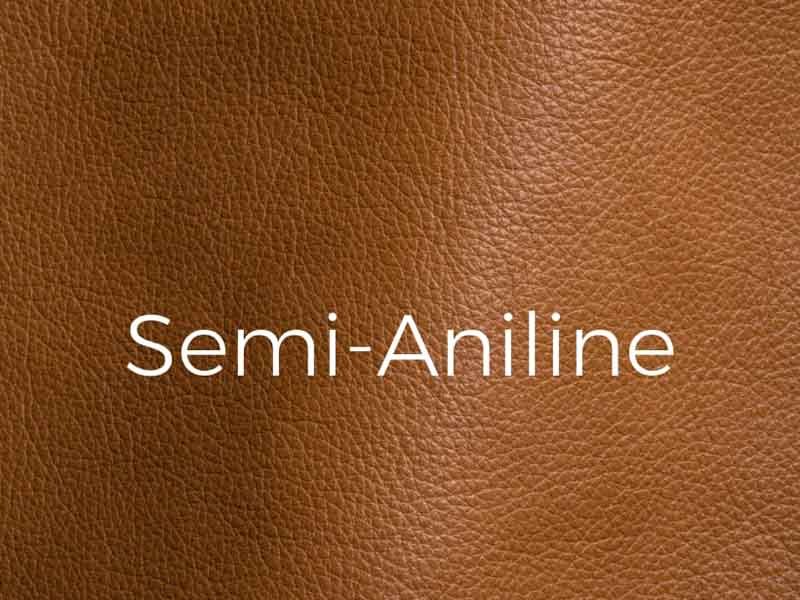
Leather lovers and professional buyers often ask: Where does semi-aniline top-grain leather fit in the world of materials? It sits at the sweet spot between natural beauty and functional protection — making it a favorite for premium bags, wallets, belts, and accessories. Unlike heavily coated pigmented leather, semi-aniline retains the natural look of the hide while adding a subtle protective finish that improves resistance to stains and fading.
Semi-aniline top-grain leather is made from high-quality hides dyed with soluble aniline pigments and finished with a light protective coating. This balance preserves the natural look and feel of leather while offering more durability and stain resistance than full-aniline. It is widely used for premium furniture, bags, wallets, and automotive interiors.
Imagine running your hand over a new wallet — you can still see the grain’s unique pores, yet you don’t worry about every spill or scratch ruining it. That’s the everyday practicality of semi-aniline leather. A material born for buyers who want authenticity but also need performance.
What is Semi-Aniline Top-Grain Leather?
Semi-aniline top-grain leather is genuine leather made from the top layer of animal hides, dyed with soluble aniline pigments, and finished with a thin, semi-transparent protective coating. This process preserves the natural grain and softness of leather while adding moderate resistance to stains, fading, and wear. It sits between full-aniline (most natural but delicate) and pigmented leather (most durable but less natural), making it ideal for premium bags, wallets, belts, and interiors.
Leather terminology is often confusing, especially with marketing language that blurs lines. To understand semi-aniline, it helps to break down the three pillars of leather classification:
- Grain Type (full-grain, top-grain, split)
- Top-grain: The upper layer of the hide, sanded or corrected slightly, but still keeping much of the natural fiber strength.
- Full-grain: The very outermost surface, uncorrected. Strongest and most natural.
- Split/Bonded: Lower layers or reconstituted scraps — cheaper but weaker.
- Dyeing Process (aniline vs pigmented)
- Aniline: Transparent dyes that soak into the fibers, leaving grain fully visible. No protective coating.
- Pigmented: Heavy opaque coatings mask natural grain, making leather uniform but less authentic.
- Finishing (coated vs uncoated)
- Semi-aniline: Dyed like full-aniline, but with a light finish (usually polyurethane or wax) that adds durability without fully hiding natural features.
What Makes It “Semi”?
- Transparency: Unlike pigmented leather, semi-aniline retains visible pores, scars, and variations of the hide.
- Protection: Unlike full-aniline, it doesn’t leave the surface completely raw. The thin finish makes it more practical for everyday use.
- Feel: Softer and more breathable than heavily pigmented leathers, yet less fragile than full-aniline.
In short, it’s the “middle ground” leather — authentic enough for luxury appeal, yet durable enough for mainstream premium products.
Semi-Aniline vs Other Leathers
| Type | Look | Feel | Durability | Protection | Common Use |
|---|---|---|---|---|---|
| Full-Aniline | Most natural, visible flaws | Soft, supple | Low (sensitive) | Very low | Ultra-luxury furniture, couture goods |
| Semi-Aniline | Natural, slightly corrected | Soft, breathable | Medium-high | Moderate | Premium bags, belts, automotive |
| Pigmented Leather | Uniform, consistent | Slightly stiff | Very high | High | Mass-market upholstery, shoes |
What is the Difference Between Leather and Semi-Aniline Leather?
This is one of the most common buyer queries.
- Leather (generic): Could mean any form — from bonded scraps to full-grain hides. Quality varies dramatically.
- Semi-Aniline Leather: Specifically refers to top-grain hides treated with aniline dye + light protective coating. It is a category within the broader leather universe.
Not all leather is semi-aniline, but all semi-aniline is real leather — usually among the better grades.
Why Use Top-Grain for Semi-Aniline?
Top-grain is chosen because:
- It has fewer scars/blemishes than full-grain, making it easier to finish.
- It balances strength and uniformity.
- It still carries the natural fiber matrix, unlike split or bonded leather.
Semi-aniline relies on hides that are “good but not perfect.” A little correction plus a transparent finish creates a clean yet natural final product.
Is Top-Grain Semi-Aniline Leather Good?
Yes — in fact, for most consumer-facing products, semi-aniline is often the ideal compromise.
- For brands: It reduces complaints about staining/fading that plague full-aniline.
- For buyers: It provides the authentic look and soft feel that pigmented leather lacks.
- For products: It handles daily wear while aging with dignity.
It’s no wonder automotive and premium bag brands use it extensively — it strikes a balance between luxury aesthetics and durability.
Industry Examples
- Automotive: BMW and Mercedes frequently use semi-aniline hides for interiors, balancing softness with resistance to sunlight and abrasion.
- Furniture: High-end sofas use semi-aniline because full-aniline would stain too easily, while pigmented looks too “plastic.”
- Fashion Accessories: Many premium bag and belt brands choose semi-aniline to deliver both prestige and usability.
Which Qualities Make It Different from Other Leathers?
Semi-aniline leather differs from other leathers because it combines the natural look of full-aniline with the durability of pigmented leather. It retains visible grain and softness while adding a thin protective coating that improves stain resistance and color consistency. Compared to full-aniline, it is less fragile, and compared to pigmented, it feels more authentic. This balance makes it popular for premium products such as handbags, belts, automotive interiors, and furniture.
Why Semi-Aniline Stands Apart
Most buyers struggle with leather terminology because “leather” is not one single material — it’s a spectrum. Semi-aniline sits in the middle, offering a balance between natural beauty and functional performance. Let’s break down the unique qualities that separate it from the rest.
Natural Appearance vs Uniformity
- Full-Aniline: Shows everything — scars, bites, wrinkles. Luxurious for connoisseurs, but risky for brands selling to mass consumers who expect “perfection.”
- Pigmented: Surface coated with thick pigments that mask all imperfections. Looks uniform but often “plastic-like.”
- Semi-Aniline: Preserves much of the natural grain (pores, subtle variations) but lightly corrected. The protective coat evens out major flaws while keeping authenticity.
Softness and Hand-Feel
- Semi-aniline retains the supple feel of leather because its coating is thin.
- Pigmented leather can feel stiffer due to heavy surface layers.
- Full-aniline is often even softer, but it’s delicate and absorbs liquids instantly.
Durability and Resistance
- Full-Aniline: Least durable. Easily stains, fades under UV, scratches visibly.
- Pigmented: Highly durable, resistant to spills, scratches, and fading.
- Semi-Aniline: Middle ground — its light finish improves stain, UV, and scratch resistance while still allowing breathability.
| Property | Full-Aniline | Semi-Aniline | Pigmented |
|---|---|---|---|
| Stain Resistance | Low | Medium | High |
| UV Resistance | Low | Medium-High | High |
| Scratch Resistance | Low | Medium | High |
| Breathability | High | High | Medium-Low |
Color Consistency
One hidden challenge in leather sourcing is shade matching:
- Full-Aniline: Since there’s no coating, each hide absorbs dye differently. Batch variation is common.
- Pigmented: Very consistent, as surface coating dictates color.
- Semi-Aniline: More uniform than full-aniline but still carries some natural variation.
For brands producing large runs, semi-aniline offers a good compromise between natural variation and production consistency.
Aging and Patina
- Full-Aniline: Develops a deep patina, considered beautiful in ultra-luxury markets.
- Pigmented: Hardly changes — remains uniform, which some buyers like, others find “lifeless.”
- Semi-Aniline: Ages gracefully, developing a lighter patina without the rapid wear issues of full-aniline.
Comfort and Breathability
- Semi-aniline maintains good breathability because the finish is thin.
- This makes it comfortable for wearables like straps, belts, and handbags that touch skin.
- Pigmented leather, with heavier coatings, can trap heat and feel less natural.
This is why automotive brands like BMW use semi-aniline for seating — it remains cool and supple while resisting stains.
Applications by Product Category
- Handbags & Wallets: Offers luxury feel with less risk of staining than full-aniline.
- Belts & Straps: Stronger than full-aniline, less cracking at folds.
- Automotive Interiors: Soft, breathable, resistant to UV and abrasion.
- Furniture: Chosen for high-end sofas and chairs in premium homes.
Case Study (Szoneier Client):
- A German accessories brand wanted to expand into automotive-inspired wallets. Full-aniline was too fragile, pigmented too synthetic. Semi-aniline delivered the “real leather” look while standing up to daily pocket use.
How is Semi-Aniline Top-Grain Leather Manufactured?
Semi-aniline top-grain leather is made by selecting quality hides, removing imperfections, dyeing them with soluble aniline dyes, and applying a thin semi-transparent finish. This process preserves the natural grain while adding moderate resistance to stains and fading. Production involves hide selection, preparation, dyeing, finishing, and strict quality control. The result is a leather type that balances authenticity with durability, making it suitable for premium bags, belts, furniture, and automotive interiors.
1. Raw Hide Selection
Not every hide can become semi-aniline. Unlike pigmented leather (where coatings can cover flaws), semi-aniline leaves grain visible, so the starting hide must be relatively clean.
- Sources: Typically bovine hides, occasionally sheep or goat for smaller accessories.
- Quality Control: Hides with fewer scars, insect bites, or deep wrinkles are prioritized.
- Grades Accepted: Slight imperfections are allowed since light coating will mask some, but hides must be strong and supple.
2. Hide Preparation
After raw hides arrive:
- Soaking: Removes dirt, salt, and preservatives.
- Liming: Hair and fat removed; hide fibers opened up.
- Deliming & Bating: Adjusts pH, enzymatic cleaning for flexibility.
- Splitting: Hides are split into layers — top-grain for semi-aniline, lower split often used for suede or bonded leather.
3. Tanning Process
- Chrome Tanning: Most common for semi-aniline; produces soft, flexible, and durable leather.
- Vegetable Tanning (less common): Used for eco-conscious projects, giving firmer character but less consistency in color.
- Wet Blue Stage: After chrome tanning, hides turn bluish-grey, known as “wet blue.” This semi-finished stage is key for quality inspection.
Chrome tanning dominates because it allows semi-aniline to maintain softness and flexibility, critical for bags, wallets, and automotive interiors.
4. Dyeing (The Aniline Treatment)
This is what gives semi-aniline its identity.
- Aniline Dyeing: Transparent dyes penetrate fibers, coloring the leather while allowing grain to remain visible.
- Semi-Aniline Variation: After aniline penetration, a light surface dye or pigment is applied for uniformity.
- Result: Natural markings remain visible but major imperfections are muted.
Compared to full-aniline (pure transparent dye, no finish), semi-aniline has slightly more consistency and protection.
5. Finishing (The Semi-Transparent Topcoat)
Here lies the main difference between semi-aniline and other leathers.
- Protective Layer: A thin polyurethane (PU) or acrylic topcoat is sprayed on.
- Thickness: Usually <0.05 mm — just enough to resist stains and fading but still let pores show.
- Additives: May include:
- UV inhibitors (for sunlight resistance).
- Anti-stain chemicals (oil, wine, ink).
- Soft waxes or oils (for tactile enhancement).
Think of this finish as makeup for leather: subtle, enhancing beauty, but not masking character.
6. Buffing, Conditioning & Softening
Once coated, leather is conditioned to restore softness:
- Mechanical Milling: Drums tumble hides, enhancing pliability.
- Fatliquoring: Oils and fats reintroduced for flexibility.
- Surface Touch-Ups: Grain embossed if needed, but usually natural grain is preserved.
7. Quality Control & Testing
Semi-aniline leather is premium, so QC is rigorous.
| Test | Standard | Purpose |
|---|---|---|
| Thickness Check | ±0.1 mm tolerance | Ensures consistency across hides |
| Colorfastness (Rubbing) | ISO 11640 / ASTM D7255 | Prevents dye transfer |
| Abrasion Resistance | Martindale ISO 12947 | Measures wear durability |
| Flex Endurance | ISO 5402 | Bending cycles without cracking |
| UV Lightfastness | ISO 105-B02 | Resistance to sunlight fading |
At Szoneier Leather, every batch undergoes 100% inspection before packaging: defects, uneven color, or finishing inconsistencies are rejected.
Semi-Aniline Production Flow (Step-by-Step)
- Raw Hide Selection → Premium top-grain hides only.
- Beamhouse Prep → Soaking, liming, splitting.
- Tanning → Usually chrome-tanned for softness.
- Dyeing → Soluble aniline dye for color depth.
- Finishing → Thin semi-transparent coating for protection.
- Softening → Mechanical and chemical conditioning.
- QC Testing → ISO/ASTM-certified durability checks.
What are the Benefits and Limitations for Product Use?
Semi-aniline leather offers softness, natural grain visibility, and moderate resistance to wear and stains. However, it is more expensive than pigmented leather and less durable than fully coated leathers. It’s best suited for premium consumer goods but requires careful maintenance.
Advantages
- Natural appearance and feel.
- Resistant to everyday stains and fading.
- Softer than pigmented leather.
- Ages gracefully with light patina.
Disadvantages of Semi-Aniline Leather
- Still susceptible to scratches and moisture.
- Higher cost than pigmented leathers.
- Limited hide selection = higher price.
- Not ideal for high-traffic commercial use (restaurants, public furniture).
Tip: Always align the product’s price point with semi-aniline’s perceived value. Customers expect premium feel and performance.
How Should Brands Design, Test, and Maintain Semi-Aniline Leather Products?
Brands should specify thickness, finish, and colorfastness when sourcing semi-aniline leather. Testing should follow ISO/ASTM standards for abrasion, flex, and colorfastness. Maintenance requires gentle cleaning, regular conditioning, and avoiding direct sunlight.
Specification Essentials
- Thickness: 1.2–1.6 mm for bags, 3+ mm for belts.
- Finish: Semi-transparent PU or wax coating.
- Grain: Top-grain, visible pores.
Testing Standards
- Abrasion (Martindale ISO 12947): 15,000–20,000 cycles.
- Flex (ISO 5402): 20,000+ bends.
- Colorfastness (ISO 11640): Resistant to rubbing, perspiration.
Maintenance Tips
- Condition every 6–12 months with neutral cream.
- Clean gently with damp cloth.
- Avoid solvents, alcohol-based cleaners.
- Store away from heat and sunlight.
Conclusion
Semi-aniline top-grain leather bridges authenticity and practicality. It delivers luxury aesthetics, softness, and moderate durability, making it perfect for bags, wallets, belts, and accessories aimed at discerning buyers.
Ready to create premium leather products? Let’s craft leather solutions that match your brand’s vision and your customers’ expectations.
What Can I Do For You?
Here, developing your OEM/ODM private label leather goods collection is no longer a challenge,it’s an excellent opportunity to bring your creative vision to life.
Make A Sample First?
If you have your own tech packs, logo design artwork, or just an idea,please provide details about your project requirements, including preferred fabric, color, and customization options,we’re excited to assist you in bringing your leather goods designs to life through our sample production process.