 Skip to content
Split Leather vs Genuine Leather: Differences, Quality & Uses
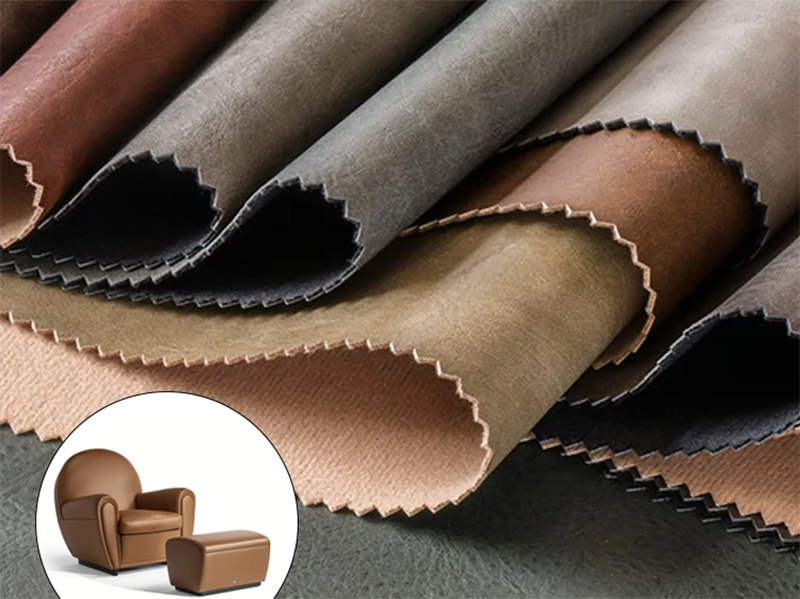
If you’ve ever shopped for leather bags, wallets, or belts, you’ve likely seen labels like “genuine leather,” “split leather,” or even “100% split leather.” They sound authoritative—but for many buyers, they raise more questions than answers. Is split leather real leather or just a cheaper substitute? Does “genuine leather” actually mean high quality? And why do products with similar labels perform so differently over time?
The confusion isn’t accidental. Leather terminology is often used loosely in marketing, while the real differences live beneath the surface of the hide. Two products can both claim to be leather, yet one ages beautifully for years while the other cracks, peels, or loses structure far too soon. For brands and informed buyers, understanding these differences isn’t about status—it’s about performance, longevity, and value. Split leather and genuine leather are both real leather, but they come from different layers of the hide and offer different performance. Split leather is taken from the lower layers and is usually coated or finished for durability and appearance, while “genuine leather” is a broad label that can include multiple leather layers. The better choice depends on product type, usage, and how the leather is finished.
At Szoneier Leather, with over 18 years of experience developing and manufacturing leather goods for global brands, we see the same misunderstanding repeat itself: buyers judge leather by the label, not by how it’s made or used. In this guide, we’ll break down split leather vs genuine leather clearly—so you can choose the right material for the right product, without guesswork or marketing noise.
What Is Split Leather
Split leather is real leather made from the lower layers of an animal hide after the top grain is separated. Because it lacks the dense natural grain structure, split leather is usually coated or finished to improve strength, appearance, and durability. It is widely used in bags, belts, and accessories where cost control and surface consistency are important.
How is split leather made from a hide?
To understand split leather, you need to understand how a hide is processed.
A raw animal hide is horizontally split into layers using a precision splitting machine:
- Top layer → becomes full-grain or top-grain leather
- Lower layers → become split leather
These lower layers come from the corium, the inner part of the hide where fibers are looser and less tightly interwoven. As a result, split leather:
- Has lower natural tensile strength
- Lacks visible grain pores
- Feels more fibrous and less elastic in its raw state
On its own, untreated split leather resembles suede. To make it suitable for commercial products, manufacturers apply surface treatments that stabilize the fibers and create a usable outer layer.
What does “100% split leather” mean on product labels?
“100% split leather” is a material composition statement, not a quality guarantee.
It means:
- All leather components in the product are made from split leather
- No top-grain or full-grain leather is used
It does not mean:
- Higher durability
- Better aging performance
- Premium leather quality
This label often misleads buyers because “100%” sounds positive. In reality, a 100% split leather bag can be:
- Well-engineered and durable, or
- Poorly coated and prone to cracking
The performance depends on thickness, coating quality, adhesion, and design, not the percentage itself.
Is split leather real leather or coated leather?
Split leather is real leather, but it is commonly coated.
This dual nature creates confusion. The base material comes from animal hide, but the surface behavior is largely controlled by finishing layers such as:
- Polyurethane (PU) coatings
- Pigmented resin finishes
- Embossed grain films
These coatings serve important functions:
- Improve abrasion resistance
- Add water and stain resistance
- Create uniform color and texture
However, heavy or low-quality coatings can also:
- Reduce breathability
- Feel plastic-like
- Crack or peel over time
So when people ask whether split leather is “fake,” the honest answer is: The leather is real; the surface performance is engineered.
Why does split leather quality vary so much?
Split leather has less inherent strength, which means manufacturing decisions matter more.
Key factors that create quality differences include:
- Hide selection (fiber density varies by animal and region)
- Splitting accuracy (uneven thickness weakens performance)
- Coating formulation (elastic vs rigid finishes)
- Adhesion process (how well coating bonds to fibers)
A well-finished split leather can outperform a poorly finished grain leather in certain applications. Conversely, low-grade split leather with thick coatings often fails early.
This is why buyer experiences with split leather range from “lasted years” to “cracked in months.”
Which products commonly use split leather?
Split leather is best suited for products where:
- Surface consistency matters
- Load and flex stress are moderate
- Cost control is important
Common applications include:
- Fashion handbags
- Structured bag panels
- Belt backings
- Furniture upholstery
- Decorative leather accessories
In professional manufacturing, split leather is often used strategically, paired with stronger leather at stress points such as handles, corners, and straps.
What Does “Genuine Leather” Actually Mean
“Genuine leather” means the product contains real animal leather, but it is not a quality grade. It is a broad, legal labeling term that can include different layers of the hide, such as top-grain, corrected-grain, or split leather. The durability and performance of genuine leather products vary widely depending on leather layer, thickness, and finishing—not the label itself.
Is “genuine leather” a quality grade or a broad label?
Contrary to popular belief, genuine leather is not a ranking or quality tier.
In the leather industry, the term exists mainly to:
- Distinguish real leather from synthetic materials (PU, PVC, microfiber)
- Meet labeling and consumer protection requirements in many markets
It does not indicate:
- Leather grade (full-grain, top-grain, split)
- Fiber strength
- Thickness
- Expected lifespan
This is where confusion begins. Consumers often assume:
“Genuine leather = good leather”
In reality, genuine leather simply answers one question only:
Is it made from animal hide? It does not answer how well it will perform.
Which leather layers are commonly sold as genuine leather?
In commercial production, several very different materials are legally labeled as genuine leather.
Most commonly, genuine leather includes:
- Corrected-grain leather (top layer sanded and coated)
- Split leather with heavy surface finish
- Composite leather constructions (grain + split combinations)
In mass-market goods, split leather is frequently:
- Coated with PU or resin
- Embossed with artificial grain
- Sold as “genuine leather” without further clarification
This practice is legal, but it creates a false sense of consistency. Two genuine leather bags may share the same label while having completely different durability and aging behavior.
Why does genuine leather vary so much in quality?
Because “genuine leather” describes origin, not structure.
Quality differences come from:
- Hide layer used (grain vs split)
- Thickness (1.0 mm vs 2.0 mm is a major difference)
- Tanning method (vegetable, chrome, combination)
- Surface treatment (natural finish vs heavy coating)
For example:
- A thick, lightly finished top-grain leather labeled “genuine leather” may last decades
- A thin, heavily coated split leather labeled “genuine leather” may crack within a year
The label stays the same. The performance does not.
This is why experienced buyers never rely on “genuine leather” alone when evaluating materials.
How can “genuine leather” be misleading on product tags?
Product tags often simplify information for marketing convenience.
Common omissions include:
- Leather layer
- Thickness in millimeters
- Whether the surface is coated
- Intended use or stress tolerance
As a result, buyers expect:
- Natural aging
- High durability
- Premium feel
But receive:
- Uniform, plastic-like surfaces
- Limited breathability
- Surface cracking instead of patina
This gap between expectation and reality is the core problem with the term, not dishonesty.
Professional manufacturers and brands avoid this by providing material specifications, not just labels.
How should buyers interpret “genuine leather” correctly?
The correct way to read “genuine leather” is:
It tells you the material source, not the material performance.
Smart buyers treat it as a starting point, then ask:
- Which layer of the hide is used?
- How thick is the leather?
- Is the surface coated or natural?
- What product is it used for?
When these questions are answered, the term “genuine leather” becomes almost irrelevant.
Which Is Better for Durability and Daily Wear
For durability and daily wear, grain-based genuine leather generally performs better than split leather because it retains the strongest fiber structure of the hide. Split leather can be durable in light- to medium-use applications, but its longevity depends heavily on surface coatings. For products exposed to frequent flexing, load, and friction, grain leather is usually the more reliable choice.
How do fiber structure and hide layers affect durability?
Durability starts inside the hide, not on the surface.
- Grain leather (full-grain or top-grain) comes from the outermost layer of the hide, where collagen fibers are densely packed and tightly interwoven.
- Split leather comes from the lower layers, where fibers are looser, longer, and less interconnected.
This structural difference directly affects:
- Tear resistance
- Load-bearing capacity
- Resistance to edge failure
- Long-term shape retention
In daily use, grain leather distributes stress across a dense fiber network. Split leather concentrates stress at fewer fiber junctions, making it more dependent on coatings and reinforcements to survive repeated use.
This is why two products with the same thickness but different hide layers can age very differently.
Does split leather crack easily with everyday use?
Split leather can crack, but cracking is not inevitable—it is conditional.
Cracking usually occurs when:
- The surface coating is too thick or too rigid
- The coating lacks elasticity
- The product bends repeatedly at the same stress points
- The environment is dry or experiences temperature swings
In daily-use items like bags and wallets, split leather relies on its coating system for protection. When that coating flexes well, split leather can last years. When it doesn’t, the surface fails long before the leather fibers do.
This explains why some users report split leather cracking quickly, while others have no issues—the difference lies in finishing quality, not the concept of split leather itself.
How does finishing and coating change daily-wear performance?
For split leather, finishing is not cosmetic—it is structural.
High-quality finishes:
- Use multi-layer elastic PU systems
- Bond deeply with leather fibers
- Flex repeatedly without surface fracture
- Resist abrasion and moisture
Low-quality finishes:
- Act like a plastic film
- Crack under bending
- Peel from the leather base
- Trap heat and moisture
Grain leather, by contrast, can tolerate lighter finishing because its natural surface already provides strength. That’s why grain leather often ages through wear and patina, while split leather ages through surface breakdown.
How do thickness and design influence durability more than leather type?
Leather type alone doesn’t guarantee durability.
Two critical multipliers are:
- Thickness (mm)
- Product design
For example:
- A 1.0 mm grain leather wallet may fail sooner than a 1.8 mm well-finished split leather bag panel.
- Poor edge design or sharp folds can destroy even premium leather.
Design choices that improve durability:
- Rounded fold lines
- Reinforced stress zones
- Layered construction
- Correct leather orientation (fiber direction)
Which leather handles daily flexing, friction, and load better?
Daily wear typically involves:
- Repeated bending (wallets, bag openings)
- Abrasion (corners, edges)
- Load stress (handles, straps)
Performance comparison in real use:
| Stress Type | Grain Leather | Split Leather |
|---|---|---|
| Repeated flex | Excellent | Moderate (finish-dependent) |
| Abrasion | Very good | Good with coating |
| Load-bearing | Excellent | Poor–moderate |
| Edge durability | High | Lower |
| Long-term aging | Improves | Surface degrades |
This is why grain leather is preferred for:
- Handles
- Straps
- Belts
- Wallet spines
And why split leather is better limited to:
- Bag panels
- Decorative surfaces
- Low-stress areas
How Do Split Leather and Genuine Leather Look and Feel
Split leather and genuine leather differ clearly in surface texture, softness, temperature response, and aging behavior. Split leather usually feels more uniform and coated, while grain-based genuine leather shows natural pores, subtle irregularities, and a warmer touch. Over time, genuine leather develops patina, while split leather maintains appearance or shows surface wear rather than natural aging.
Is split leather the same as suede or nubuck?
No—this is one of the most common misunderstandings.
- Split leather refers to the layer of the hide, not the surface finish.
- Suede is split leather with the fibrous side exposed and brushed.
- Nubuck is top-grain leather that has been lightly sanded on the grain side.
In most commercial bags and accessories, split leather is not used as suede. Instead, it is:
- Coated with PU or resin
- Embossed with artificial grain
- Finished to resemble smooth leather
As a result, coated split leather feels firmer and more uniform than suede, and lacks the soft nap associated with nubuck or suede. The confusion comes from origin, not performance.
How does surface texture differ between split leather and genuine leather?
Surface texture is often the fastest visual clue.
- Grain-based genuine leather shows:
- Irregular pores
- Natural grain breaks
- Subtle variation across panels
- Split leather (finished) typically shows:
- Repeating, symmetrical grain patterns
- Extremely even texture
- No visible pore variation
This uniformity is intentional—it improves visual consistency and reduces cost. However, it also removes the organic randomness that many people associate with “real leather feel.”
In short:
- Natural grain looks alive
- Finished split leather looks controlled
Neither is inherently wrong—but they communicate very different quality signals.
Which leather feels softer and warmer in the hand?
Touch response is where users notice differences immediately.
- Genuine grain leather
- Feels warmer within seconds
- Softens with handling
- Conforms slightly to the hand
- Split leather with coating
- Feels cooler at first touch
- Maintains a consistent firmness
- Softens very little over time
The reason is structural:
- Grain leather allows heat and oils to move into the surface
- Coated split leather creates a barrier between skin and fibers
For daily-handled items like wallets and handles, this tactile difference strongly affects perceived quality.
How do split leather and genuine leather age over time?
Aging behavior is one of the clearest long-term differences.
- Genuine grain leather
- Develops patina
- Darkens naturally
- Shows wear as character
- Split leather
- Does not develop true patina
- Retains color consistency
- Shows wear as surface change (dulling, micro-cracking, or abrasion)
This is why some users say split leather “doesn’t age well.” It doesn’t age visually—it either stays the same or degrades at the surface.
Whether that’s good or bad depends on the product’s intent:
- Premium heritage goods → patina is desirable
- Fashion or uniform designs → consistency may be preferred
Can smell, edges, and flexibility help identify them?
Yes—experienced buyers often rely on these subtle cues.
- Smell
- Grain leather smells earthy and organic
- Coated split leather smells neutral or faintly chemical
- Edge view
- Grain leather edges look dense and compact
- Split leather edges appear more fibrous
- Flex test
- Grain leather creases softly and rebounds
- Coated split leather shows surface tension or shine at fold lines
No single test is definitive, but together they form a reliable identification method.
How Do You Tell Split Leather from Genuine Leather When Buying
To tell split leather from genuine leather, check material labels, surface uniformity, edge structure, flexibility, and smell. Genuine grain leather shows natural pore variation, soft creasing, and warms quickly to the touch, while split leather often looks more uniform and feels coated. For accurate confirmation, request leather layer, thickness, and finishing details from the supplier.
What should you check first on labels and product descriptions?
Start with the label—but don’t stop there.
Common terms you may see:
- Genuine leather → means real leather, not a quality grade
- Split leather / leather split → explicitly states the hide layer
- Cowhide / buffalo leather → animal source, not layer
- PU leather / bonded leather → synthetic or composite, not full hide
What labels usually do not tell you:
- Whether the leather is grain or split
- Thickness in millimeters
- Surface coating type
If a product description avoids all structural details and relies only on “genuine leather,” treat it as incomplete information, not proof of quality.
How can surface appearance and grain patterns reveal the truth?
Visual inspection is one of the most powerful tools.
Look closely at:
- Grain repetition: perfectly repeating patterns often indicate embossed split leather
- Pore randomness: natural grain leather shows irregular pores
- Surface shine: high-gloss, plastic-like shine suggests heavy coating
A useful trick: Compare two adjacent panels. Natural grain leather rarely looks identical panel to panel. If everything looks cloned, it’s likely finished split leather.
How do edges and cross-sections help identify leather type?
Edges tell a story that surfaces try to hide.
- Grain leather edges
- Dense and compact
- Smooth when burnished
- Minimal fiber separation
- Split leather edges
- Fuzzy or fibrous
- Multiple visible layers
- Often painted or folded to hide texture
If you can see a raw or semi-finished edge (inside a pocket or zipper area), inspect it closely—it’s one of the most reliable indicators.
What does bending and flexibility tell you?
Gently flex the leather—don’t crease it sharply.
Observe:
- Grain leather
- Forms soft, uneven wrinkles
- Recovers shape smoothly
- No surface cracking
- Coated split leather
- Shows surface tension
- May create shiny stress lines
- Feels stiffer and rebounds less naturally
If you hear faint cracking sounds or see whitening at the bend, the surface coating is doing most of the work—common in split leather.
Can smell and temperature response help?
Yes—these sensory cues are subtle but useful.
- Smell
- Grain leather: earthy, organic
- Coated split leather: neutral or faintly chemical
- Temperature
- Grain leather warms quickly in hand
- Coated split leather stays cool longer
These tests are especially helpful when visual clues are masked by heavy finishing.
What should you ask the seller or factory directly?
When in doubt, ask technical questions. A professional supplier can answer them clearly.
Key questions:
- Which layer of the hide is used (grain or split)?
- What is the leather thickness (mm)?
- Is the surface coated? If yes, how?
- Where is the leather used on the product (panel, handle, strap)?
Vague or evasive answers often indicate cost-driven material choices.
At Szoneier Leather, we routinely provide:
- Material specs
- Thickness ranges
- Layer explanations
- Application recommendations
That transparency is what professional buyers expect.
Why simple “tests” online are often misleading
You may see advice like burning leather or scratching it. These methods are:
- Destructive
- Unreliable
- Inappropriate for finished goods
They may tell you if something is synthetic—but not whether it’s grain or split leather. Structural inspection and specs are far more accurate.
Quick Identification Checklist
Before buying, confirm at least 3 of the following:
- Natural, irregular grain
- Dense, compact edges
- Soft, uneven creasing when bent
- Warm touch within seconds
- Clear material specs from seller
If none apply, you’re likely looking at finished split leather, even if labeled “genuine leather.”
Which Should You Choose for Bags, Wallets, Belts, and Straps
The right choice depends on how much stress, flexing, and handling the product faces. Split leather works well for bag panels and decorative surfaces where cost and consistency matter. Grain-based genuine leather is better for wallets, belts, and straps that bend, carry load, and are handled daily. Choosing leather by product function—not by label—delivers better durability and value.
Is split leather cheap compared to genuine leather?
Split leather is generally more cost-efficient, but “cheap” is an oversimplification.
Why split leather costs less:
- More usable area per hide
- Easier to standardize surface appearance
- Lower raw material cost
However, price varies widely. A high-quality, well-coated split leather can cost more than low-grade genuine leather. The real question isn’t price—it’s performance per dollar.
Use split leather when:
- The product is price-sensitive
- Visual consistency matters
- Natural aging is not a selling point
Avoid using price alone as the deciding factor; durability and customer expectations matter more in the long run.
Which leather is better for bags and briefcases?
Bags benefit from strategic material mixing.
Best practice:
- Split leather → large panels, decorative areas
- Grain leather → handles, corners, stress points
Why this works:
- Panels need shape and appearance, not extreme strength
- Handles and corners absorb load, friction, and oils from hands
For fashion bags or seasonal designs, split leather can be a smart choice. For work bags and briefcases expected to last years, grain leather at contact points dramatically improves longevity and user satisfaction.
Professional factories rarely choose “all one leather” blindly—they engineer by zone.
Which leather works best for wallets and small leather goods?
Wallets experience:
- Constant bending
- Daily handling
- Edge stress
For this reason:
- Grain-based genuine leather is strongly recommended
- Split leather often fails early at folds and edges
Common wallet failures with split leather:
- Surface cracking at fold lines
- Delamination at card slots
- Loss of shape over time
If split leather is used at all, it should be:
- Properly reinforced
- Used only in non-flex areas
- Backed with stronger materials
For products meant to live in pockets, grain leather consistently performs better.
Which leather is best for belts and load-bearing straps?
Belts and straps are high-stress components.
They require:
- High tensile strength
- Excellent edge durability
- Resistance to repeated flex and pull
For these products:
- Grain leather is the correct choice
- Split leather should generally be avoided
Even thick split leather lacks the fiber density needed for long-term load-bearing. Over time, it stretches unevenly, cracks at holes, or fails at stress points.
If durability and safety matter, belts and straps should always be engineered from grain leather, often with specific fiber orientation and thickness control.
When does it make sense to combine split leather and genuine leather?
Some of the best-performing products use both materials intentionally.
Smart combinations include:
- Split leather for visual panels
- Grain leather for:
- Handles
- Straps
- Corners
- Edges
- Closures
This hybrid approach:
- Controls cost
- Improves durability
- Preserves premium feel where it matters most
What happens when the wrong leather is chosen?
Using the wrong leather doesn’t always fail immediately—but it fails predictably.
Examples:
- Split leather wallets crack at folds within months
- Split leather belts stretch and lose shape
- Overbuilt grain leather bags become heavy and uncomfortable
- Customers complain that the product “looks cheap” or “ages badly”
These issues are not material defects—they are design decision errors.
Choosing leather correctly at the development stage prevents returns, complaints, and brand damage later.
Quick Product–Leather Selection Guide
| Product Type | Recommended Leather | Reason |
|---|---|---|
| Fashion handbags | Split + grain mix | Cost + durability balance |
| Work bags / briefcases | Grain (stress zones) | Daily wear resistance |
| Wallets | Grain leather | Constant flex & handling |
| Belts | Grain leather only | Load-bearing strength |
| Straps & handles | Grain leather | Safety & longevity |
| Decorative panels | Split leather | Visual consistency |
Conclusion
The choice between top-grain and split leather is not a competition, but a selection process.
The best products don’t use the leather that “sounds best,” but rather leather with the following characteristics:
- The right leather layer
- The right thickness
- The right surface treatment
- Suitable for the specific application
Szoneier Leather has over 18 years of experience in leather research and manufacturing.
Ready to develop or customize your leather products?
If you plan to produce leather bags, wallets, belts, watch straps, or accessories, and want to find a factory that truly understands leather—
Contact Szoneier Leather to discuss material selection, prototyping, and OEM/ODM production. Share your product ideas, target market, and performance goals, and our team will help you choose the leather that’s truly right for your product—not just the name on the label.
What Can I Do For You?
Here, developing your OEM/ODM private label leather goods collection is no longer a challenge,it’s an excellent opportunity to bring your creative vision to life.
Make A Sample First?
If you have your own tech packs, logo design artwork, or just an idea,please provide details about your project requirements, including preferred fabric, color, and customization options,we’re excited to assist you in bringing your leather goods designs to life through our sample production process.