 Skip to content
PU Leather vs Bonded Leather: Differences & How to Choose
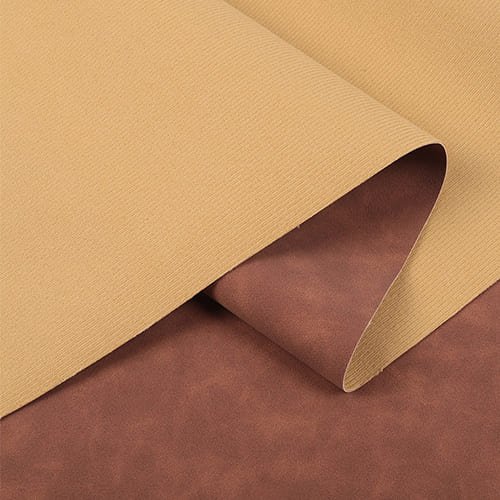
Imagine walking into a furniture showroom or boutique, running your hand over a sleek sofa or a stylish handbag—only to discover it’s not genuine cowhide, but a man‑made leather substitute. These materials, PU leather and bonded leather, dominate many markets today, prized for their affordability and versatility. But beneath their sometimes identical surfaces lie stark contrasts in composition, performance, and environmental impact.
PU leather is a synthetic material made by coating a fabric base with polyurethane, offering a uniform appearance and high water resistance. Bonded leather, in contrast, blends leftover leather scraps ground into fibers with a binding agent—usually polyurethane—then embossed over a fabric backing. While bonded leather contains real leather content, it’s less durable and more prone to peeling than PU leather. Choosing between them depends on budget, usage, and desired lifespan.
Let’s dive deep into materials, manufacturing, performance, costs, and sustainability to help you make an informed decision—and see how Szoneier Leather can bring your custom leather products to life.
What Are PU Leather and Bonded Leather?
PU leather (polyurethane leather) is a fully synthetic material where a fabric backing is coated with a layer of polyurethane for a consistent, water‑resistant finish. Bonded leather, by contrast, contains real leather scraps ground into fibers, mixed with polyurethane and applied over fabric—offering some leather content but suffering from lower durability. The key differences lie in raw material sources and construction: PU leather is uniform and long‑lasting, while bonded leather combines waste leather but tends to peel and degrade faster.
To understand the fundamental differences between PU leather and bonded leather, it’s essential to first grasp the broader categories of leather available, and then examine each material’s manufacturing process.
What Are the 5 Types of Leather?
- Full‑Grain Leather:
- Definition: The highest quality leather, taken from the top layer of the hide with all grain intact.
- Traits: Extremely durable, develops natural patina over time, retains original markings.
- Use Cases: Premium handbags, high‑end furniture, luxury car interiors.
- Top‑Grain Leather:
- Definition: The second highest grade; the surface is sanded to remove imperfections.
- Traits: More uniform look, good durability, slightly thinner than full‑grain.
- Use Cases: Quality wallets, mid‑range furniture, accessories.
- Genuine Leather:
- Definition: Split leather layers bonded together; lowest acceptable grade of “real” leather.
- Traits: Inexpensive, inconsistent appearance, moderate durability.
- Use Cases: Budget handbags, belts, entry‑level furniture.
- Split Leather (Suede/Nubuck):
- Definition: The lower layers of hide separated from the top grain; often brushed for nap.
- Traits: Soft texture, less durable, prone to staining.
- Use Cases: Fashion garments, soft accessories.
- Bonded Leather:
- Definition: Leather scraps ground into fibers, mixed with binders, and pressed onto a backing fabric.
- Traits: Contains a percentage of real leather (fiber content varies 10–20%), uniform but prone to peeling.
- Use Cases: Low‑cost furniture, notebooks, promotional products.
Understanding these five types sets the stage: PU leather isn’t true leather at all but a faux alternative, while bonded leather sits at the bottom of the “real” leather spectrum.
Manufacturing Processes of PU Leather and Bonded Leather
| Process Step | PU Leather | Bonded Leather |
|---|---|---|
| Base Material | Polyester or cotton fabric | Fabric backing (polyester/cotton) |
| Leather Content | 0% real leather | 10–20% ground leather fibers |
| Coating | Multiple layers of polyurethane (PU) | Blend of PU binder with leather fibers |
| Embossing | Grain pattern pressed into wet PU layer | Leather grain embossing over PU‑leather composite |
| Finishing | Topcoat for UV and scratch resistance | Clear coating to hide imperfections, low UV protection |
- PU Leather Production:
- A fabric base is fed through rollers; a liquid PU solution is applied, often in several layers.
- The wet PU is passed under heat lamps, curing it into a flexible, waterproof sheet.
- Grain patterns and color pigments are embossed or printed onto the surface.
- A protective top‑coat enhances scratch and UV resistance.
- Bonded Leather Production:
- Leather off‑cuts and trimmings are ground into fibers and mixed with PU binders.
- The mixture is spread onto a fabric backing as a thick slurry.
- After initial drying, the sheet is embossed with a grain pattern and coated lightly to conceal flaws.
- Because of variable fiber distribution, surface quality can be uneven, and bonded leather tends to delaminate over time.
These distinct processes yield materials with different structural integrity. PU leather’s uniform PU matrix resists moisture and wear, while bonded leather’s reliance on leather scraps makes it inherently weaker at the edges, leading to flaking and peeling.
Which Properties Compare: Durability, Feel & Appearance?
PU leather offers consistent grain, high abrasion resistance, and water impermeability, earning a 10,000+ Martindale rub score. Bonded leather, with 10–20% leather fiber content, scores lower (~3,000 rubs), and its surface may crack or peel after 1–2 years. PU’s uniform texture feels slightly plastic but can mimic grain patterns precisely; bonded leather retains a leather‑like feel initially but loses it as fibers break down. Appearance and hand feel diverge most over time.
When selecting a leather substitute, three key performance metrics dominate: durability, tactile quality, and aesthetic longevity. Below we evaluate each for both PU and bonded leather.
1. Durability & Wear Resistance
| Property | PU Leather | Bonded Leather |
|---|---|---|
| Abrasion Resistance | 10,000+ Martindale rubs | ~3,000 Martindale rubs |
| Tear Strength | High—uniform polymer matrix | Low—fiber‑PU matrix prone to tearing |
| Scratch Resistance | Excellent with clear top‑coat | Poor; scratches expose leather fibers |
| Moisture Resistance | Impermeable | Permeable at edges; absorbs moisture |
- PU Leather: Engineered for high abrasion scores, PU leather withstands heavy use—ideal for upholstery and high‑traffic accessories. Its impermeability thwarts stains and moisture damage.
- Bonded Leather: The leather‑fiber blend may exhibit decent initial toughness, but edge wear and surface flaking become apparent within 12–18 months in heavy-use contexts.
2. Tactile Quality & Flexibility
- Hand Feel: PU leather often feels slightly plastic, with uniform flexibility across the sheet. Advanced PU can incorporate micro‑perforations or soft‑touch finishes for improved hand feel.
- Bonded Leather: Initially mimics genuine leather softness, but as fibers loosen, the surface hardens and cracks. Flexibility declines, making seams and folds stiff.
3. Appearance & Aging
| Characteristic | PU Leather | Bonded Leather |
|---|---|---|
| Grain Realism | Precise, repeatable patterns | Less consistent embossing |
| Colorfastness | High—pigments bound in PU layers | Moderate—coating may fade or peel |
| Aging/Patina | No natural patina; remains static | Does not develop true patina; peels |
| Seam Integrity | Seams hold without fiber loss | Edges peel, seams fray over time |
- PU Leather: Maintains original appearance over the years, with no natural “break‑in” aging.
- Bonded Leather: Loses surface integrity, revealing underlying fibers—appearance deteriorates rapidly, negating any initial premium look.
4. Impact on Perceived Quality
Users equate surface consistency and durability with product quality. PU leather sustains its uniform appearance, reinforcing brand value over time. Bonded leather’s decline in look and feel can harm brand reputation, especially in mid‑ to high‑end markets.
How Do PU and Bonded Leather Perform in Different Applications?
PU leather excels in high‑traffic, moisture‑exposed applications—furniture upholstery, automotive interiors, and fashion accessories—due to its abrasion resistance and waterproof finish. Bonded leather fits low‑use items like decorative panels, notebook covers, or budget furniture, offering initial leather content at low cost. In heavy‑use or outdoor settings, bonded leather’s rapid wear and peeling make it unsuitable, whereas PU leather endures years of daily use.
Different end‑use scenarios demand unique material properties. Here’s how PU and bonded leather compare across key applications:
1. Furniture Upholstery
PU Leather:
- Pros: Survives daily wear, stains wipe away easily, resists UV‑induced fading when top‑coated.
- Cons: Can trap heat; less breathable than genuine leather.
- Use Cases: Office chairs, dining seating, lounge sofas.
Bonded Leather:
- Pros: Initial leather look at low price; acceptable in low‑use guest rooms.
- Cons: Prone to edge peeling; not recommended for family rooms or commercial settings.
- Use Cases: Low‑traffic waiting areas, decorative headboards.
2. Automotive Interiors
PU Leather:
- Pros: Impervious to spills, easy cleaning, withstands UV and temperature extremes.
- Cons: Can off‑gas slight VOCs initially; less natural breathability.
- Use Cases: Car seats, dashboards, door panels.
Bonded Leather:
- Pros: Cost‑effective trim pieces.
- Cons: Heat accelerates peeling; poor long‑term durability in sun‑exposed cabins.
- Use Cases: Temporary show vehicles, economy‑class trims.
3. Fashion Accessories (Bags, Wallets, Belts)
PU Leather:
- Pros: Holds shape, accommodates printing and embossing, waterproof.
- Cons: Lack of natural grain patina.
- Use Cases: Tote bags, backpacks, wallets, watch straps.
Bonded Leather:
- Pros: Genuine leather content might appeal to budget buyers.
- Cons: Surface flaking exposes fabric backing; belt holes and folds exacerbate cracking.
- Use Cases: Budget promotional wallets, decorative embellishments.
4. Commercial & Promotional Goods
- PU Leather: Preferred for promotional items where longevity reflects on brand.
- Bonded Leather: Suitable for single‑use or short‑term giveaway goods—conference organizers often use bonded leather badges or notebook covers.
Do PU and Bonded Leather Differ in Cost, Sustainability & Maintenance?
PU leather typically costs $5–$15 per square meter wholesale, while bonded leather runs $2–$6/m². PU’s 100% synthetic nature enables recycling in some markets, but its production involves petrochemicals. Bonded leather repurposes leather waste, reducing landfill, yet its shorter lifespan leads to higher replacement rates. PU leather cleans easily with mild soap; bonded leather requires extra care to prevent delamination. Cost, eco‑impact, and upkeep depend on product life‑cycle and brand ethics.
1. Cost Comparison
| Material | Wholesale Cost (USD/m²) | Lifespan | Annualized Cost (5 years) |
|---|---|---|---|
| PU Leather | $5–$15 | 5–10 years | $1–$3 |
| Bonded Leather | $2–$6 | 1–2 years | $1–$3 |
While bonded leather has a lower upfront cost, its short lifespan often results in similar or higher long‑term expense when replacements are factored in.
2. Environmental Impact
PU Leather:
- Derived from petrochemicals; manufacturing emits VOCs and uses solvents.
- Some factories now produce water‑based PU and recycle off‑cuts, improving sustainability.
Bonded Leather:
- Upcycles leather waste, reducing landfill volumes.
- However, PU binders prevent easy recycling; worn pieces often end in general waste.
Brands must weigh raw material sourcing, factory emissions, and end‑of‑life disposal when claiming sustainability credentials.
3. Maintenance & Cleaning
PU Leather:
- Wipe with damp cloth, mild soap, or specialized PU cleaner.
- Avoid abrasive pads; reapply top‑coat protectants annually
KKBonded Leather:
- Clean gently to avoid peeling; mild soap and soft cloth only.
- Delamination often irreversible; surface repair kits available but limited in efficacy.
4. Health & Indoor Air Quality
- PU leather off‑gassing typically diminishes within weeks; bonded leather may release tannins or adhesives over time.
- Look for GREENGUARD certification on PU leather products for low VOC emissions in indoor environments.
Is Bonded Leather as Ethical and Eco‑Friendly as PU Leather?
Bonded leather repurposes up to 20% leather waste, reducing landfill volume but relies on non‑biodegradable PU binders, making end‑of‑life recycling difficult. PU leather is 100% synthetic—no animal input—but its production uses petrochemicals and may release VOCs. True sustainability requires assessing each material’s full life cycle: raw resource extraction, manufacturing emissions, product longevity, and disposal or recycling pathways.
When comparing bonded leather and PU (polyurethane) leather through an environmental and ethical lens, it’s essential to examine their entire life cycles—from raw materials to end‑of‑life. Below, we unpack key factors that influence each material’s eco‑credentials and ethical considerations.
1. Raw Material Sourcing
- Bonded Leather: Utilizes leftover leather scraps from primary leather processing—an upcycling approach that diverts 10–20% of hide waste from landfills. This “circular” use of animal by‑products can be seen as a positive step toward reducing industry waste. However, the base leather itself originates from cattle farming, which carries heavy environmental burdens (deforestation, methane emissions, water use).
- PU Leather: Entirely synthetic, PU leather relies on petrochemical feedstocks (polyols and isocyanates). While it frees consumers from supporting animal agriculture, it locks in dependence on fossil fuels and doesn’t utilize any naturally derived by‑products.
2. Manufacturing Impact
Bonded Leather Production:
- Leather off‑cuts are ground into fibers, mixed with PU binders, and coated onto a textile backing.
- The process uses solvents and heat to cure binders, releasing volatile organic compounds (VOCs).
- Resulting composite sheets are embossed and finished, adding chemical coatings for surface smoothness.
- Environmental Concerns: The PU gating agent and curing solvents contribute to air emissions; the heterogeneous mix makes recycling difficult.
PU Leather Production:
- Fabric backings (polyester or cotton) are coated in water‑ or solvent‑based PU.
- Multi‑layer coating processes enhance durability and waterproofing.
- Pigments and clear top‑coats are applied.
- Environmental Concerns: Conventional solvent‑based PU releases higher VOCs than water‑based alternatives. Advancements in bio‑based PU (up to 50% renewable content) and closed‑loop solvent recovery can mitigate impacts.
3. Use‑Phase Performance
- Durability & Longevity: PU leather typically lasts 5–10 years under normal use; bonded leather often shows peeling and delamination within 1–2 years. Longer‑lasting materials reduce replacement frequency, lowering cumulative environmental impacts.
- Maintenance: Both materials require simple cleaning with mild soap. PU leather’s impermeability aids stain resistance; bonded leather may absorb moisture at seams, promoting mold or odor.
4. End‑of‑Life & Recycling
- Bonded Leather: The blend of leather fibers and PU means mechanical recycling is nearly impossible—used items generally end up in mixed‑waste streams, where neither component biodegrades fully.
- PU Leather: Technically recyclable in specialized facilities that reclaim polyurethane, though such programs are rare. Some manufacturers offer take‑back schemes or develop PU grades designed for chemical recycling.
5. Ethical Considerations
- Animal Welfare: PU leather is entirely animal‑free, aligning with vegan principles. Bonded leather contains animal derivatives, which may concern ethically driven consumers.
- Waste Reduction: Bonded leather’s use of by‑products is a strong circularity argument; however, the short lifespan and lack of recyclability undercut this benefit.
- Certifications & Transparency: Look for OEKO‑TEX® or Bluesign® certification on PU leather and bonded composites, indicating lower harmful substances and safer manufacturing.
How Should You Choose Between PU Leather and Bonded Leather for Your Product?
Select PU leather when you need consistent durability, water resistance, and detailed embossing—ideal for upholstery, high‑use accessories, or automotive interiors. Opt for bonded leather if your priorities are low upfront cost and moderate short‑term appearance for items like promotional giveaways or light‑use décor. Base your decision on factors such as expected product lifespan, budget constraints, customization demands, and your brand’s sustainability and animal‑content policies to deliver the best value to customers.
Choosing the right leather alternative will significantly impact your product’s performance, longevity, and customer satisfaction. Here’s a structured approach to guide your decision:
1. Define Your Use Case and Performance Requirements
High‑Traffic & Heavy‑Use Items:
- PU Leather: Excels under heavy abrasion (10,000+ Martindale rubs), resists water and stains, and maintains shape over years—perfect for office chairs, car seats, or frequently handled handbags.
- Bonded Leather: Prone to surface peeling and fiber loss after moderate wear; best avoided for products expected to withstand daily stress.
Light‑Use & Decorative Goods:
- Bonded Leather: Can deliver a genuine‑leather look at minimal cost for items like decorative book covers, guestroom furniture, or limited‑lifespan promotional products.
- PU Leather: Still viable for décor but may exceed the budget if longevity isn’t required.
2. Assess Budget Constraints vs. Total Cost of Ownership
| Factor | PU Leather | Bonded Leather |
|---|---|---|
| Material Cost | $5–$15/m² | $2–$6/m² |
| Expected Lifespan | 5–10 years | 1–2 years |
| Replacement Frequency | Low | High |
| Annualized Cost | $1–$3/year | $1–$3/year (with frequent replacement) |
- Upfront vs. Long‑Term: Bonded leather’s lower initial cost may be offset by more frequent replacements, negating short‑term savings.
- Brand Premium: If your brand positions itself as offering value through durability, PU leather’s longer lifespan supports higher price points and customer trust.
3. Evaluate Customization and Aesthetic Goals
Grain and Embossing:
- PU Leather: Uniform polymer layer allows precise embossing of fine grain, logos, and multi‑color printing—ideal for custom private‑label designs.
- Bonded Leather: Inconsistent fiber mixture can lead to uneven embossing and color absorption, limiting fine‑graphic work.
Color Range and Finish: PU leather accepts a wider spectrum of pigments and top‑coat finishes (matte, gloss, semi‑aniline simulation), whereas bonded leather’s thinner coating restricts vibrant hues and protective finishes.
4. Align with Sustainability and Ethical Policies
Animal Content Policy:
- PU Leather: Zero animal derivatives—completely vegan and appeals to ethically conscious markets.
- Bonded Leather: Contains 10–20% animal by‑product, which may contradict vegan or cruelty‑free brand claims.
Waste and Recycling:
- Bonded Leather: Reuses leather scraps, reducing immediate industry waste but poses recycling challenges at end‑of‑life.
- PU Leather: Emerging water‑based chemistries and take‑back programs improve its lifecycle impact, though it remains petroleum‑derived.
5. Consider Supplier Capabilities and Lead Times
Szoneier Leather’s Offerings:
- PU Leather: Access to water‑based, chrome‑free PU, customizable grain patterns, and private‑label finishes with low MOQs and rapid sampling (2–3 weeks).
- Bonded Leather: Custom fiber ratios, emboss designs, and surface coatings tuned to project budgets and timelines.
Quality Assurance: Szoneier’s ISO 9001 processes and OEKO‑TEX®‑compliant materials ensure consistent performance—critical when scaling from samples to large production runs.
Ready to Develop Your Leather Products?
Whether you aim to launch a premium PU leather line or a cost‑effective bonded leather series, Szoneier Leather combines 18+ years of R&D, material expertise, and OEM/ODM manufacturing to bring your vision to market. We provide low MOQs, free design support, rapid sampling, and end‑to‑end quality control—ensuring your products stand out for performance, aesthetics, and sustainability.
Contact Szoneier today for a free consultation and sample request!
What Can I Do For You?
Here, developing your OEM/ODM private label leather goods collection is no longer a challenge,it’s an excellent opportunity to bring your creative vision to life.
Make A Sample First?
If you have your own tech packs, logo design artwork, or just an idea,please provide details about your project requirements, including preferred fabric, color, and customization options,we’re excited to assist you in bringing your leather goods designs to life through our sample production process.