
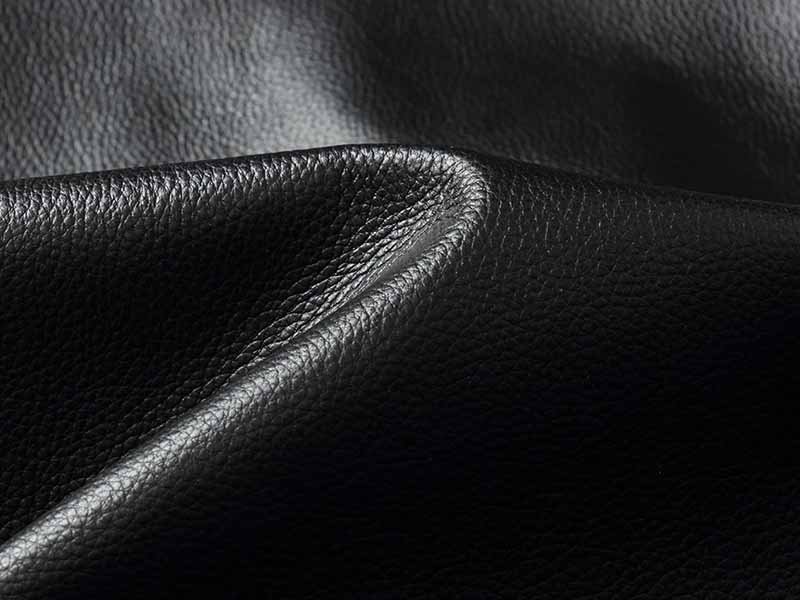
Leather weight is one of the most misunderstood specifications in leather product development. Many buyers assume it simply describes how heavy a piece of leather feels in the hand. In reality, leather weight determines far more than mass—it influences structure, durability, flexibility, edge finishing, stitching performance, and even how a product ages over time.
For brands and experienced buyers, leather weight is not a cosmetic detail. It is a design decision. Choosing the wrong weight can lead to wallets that crack at folds, bags that collapse after months of use, belts that stretch, or straps that feel unnecessarily rigid. Yet many product discussions still treat leather weight as a vague preference rather than a measurable, functional parameter.
The challenge is that leather weight is expressed differently across markets. Some suppliers speak in ounces (oz), others in millimeters (mm), and some mix both—often without explaining tolerances or natural variation. This creates confusion, miscommunication, and costly revisions during sampling and mass production. Leather weight refers to the thickness of leather, not its physical mass. It is commonly measured in ounces (oz) or millimeters (mm), where 1 oz equals approximately 0.4 mm. Leather weight affects flexibility, strength, durability, and suitability for products like wallets, bags, belts, and straps. Choosing the correct leather weight is essential for product performance and long-term quality.
Understanding leather weight from a manufacturing perspective—not just a buyer’s intuition—is what separates professional leather goods from products that merely look good at first glance. Once you see how weight interacts with structure and use, you start designing differently.
What Is Leather Weight
Leather weight refers to the thickness of leather, not how heavy it feels in the hand. It is most commonly measured in ounces (oz) or millimeters (mm), where 1 oz equals approximately 0.4 mm (1/64 inch). Leather weight directly affects flexibility, durability, structure, stitching performance, and product lifespan, making it a critical specification for leather bags, wallets, belts, and accessories.
What Is Leather Weight and How Is It Defined in the Industry?
In the leather industry, “weight” is a legacy term that predates modern measuring tools. Historically, leather thickness was measured by stacking layers to reach one ounce in thickness—not by weighing the leather. This convention remains standard today, especially in North America.
In practice:
- Leather weight = thickness
- Not mass, density, or heaviness
For example:
- 3 oz leather ≈ 1.2 mm thick
- 5 oz leather ≈ 2.0 mm thick
Factories, tanneries, and professional buyers rely on leather weight because thickness is the most reliable predictor of how leather will behave during cutting, folding, stitching, edge finishing, and long-term use.
Is Leather Weight the Same as Thickness or Density?
Leather weight is the same as thickness, but it is not the same as density.
Two leathers with identical thickness can feel completely different because of:
- Fiber structure
- Tanning method (vegetable vs chrome)
- Moisture and oil content
- Surface finishes
For example:
- A 2.0 mm vegetable-tanned leather often feels stiff and rigid
- A 2.0 mm chrome-tanned leather can feel soft and flexible
This is why professional manufacturers always evaluate leather weight together with temper, not weight alone. Thickness tells you how much material there is; temper tells you how that material behaves.
Why Is Leather Weight Usually Shown as a Range (e.g., 4–5 oz)?
Leather is a natural material, not an industrial sheet. Even after precision splitting, thickness varies slightly across a hide due to natural differences between the shoulder, back, and belly areas.
That’s why leather weight is usually specified as a range, such as:
- 3–4 oz
- 4.5–5.5 oz
- 1.8–2.0 mm
From a production standpoint:
- A narrow range indicates higher quality control
- A wide range may require additional skiving or selection during cutting
Buyers who demand an exact single number (e.g., “exactly 2.0 mm everywhere”) often create unnecessary friction and delays in production.
Is Leather Lightweight Compared to Other Materials?
Leather is not inherently heavy or light—it is structurally efficient.
At the same thickness, leather often provides:
- Higher tear resistance
- Better abrasion resistance
- Longer service life
compared to many synthetic materials.
However, leather can feel heavy when:
- Over-specified for the product’s needs
- Combined with excessive linings or reinforcements
- Selected without considering temper and structure
In well-designed leather goods, weight is optimized so the product feels balanced in use—not bulky or tiring. Lightweight leather does not mean thin leather; it means correctly selected leather weight for the function.
Why Leather Weight Is a Core Design Decision, Not a Detail
Leather weight affects nearly every downstream decision in product development:
- Stitch length and thread size
- Fold durability and crack resistance
- Edge paint adhesion or burnishing quality
- Hardware load tolerance
- Overall comfort and usability
Choosing leather weight too early—or without understanding the end use—leads to redesigns, higher costs, and inconsistent quality. Professional factories treat leather weight as a structural specification, not a stylistic preference.
How Do You Convert Leather Weight to Thickness
Leather weight converts to thickness using the standard that 1 oz ≈ 1/64 inch ≈ 0.4 mm. To convert oz to mm, multiply ounces by 0.4. To convert mm to oz, divide millimeters by 0.4. For example, 2.0 mm leather is about 5 oz. In production, specify a thickness range (tolerance) because leather naturally varies across a hide.
What Is the Standard Oz-to-mm Conversion Rule?
Leather “weight” (oz) is a traditional thickness system:
- 1 oz = 1/64 inch
- 1/64 inch ≈ 0.3969 mm
- In real sourcing, factories use the practical rule: 1 oz ≈ 0.4 mm
Two quick formulas buyers actually use:
- mm = oz × 0.4
- oz = mm ÷ 0.4
This is accurate enough for sampling, costing, and material selection. What matters most is not perfect math—it’s consistent communication between buyer, tannery, and factory.
What Weight Is 2mm Leather in Ounces?
This is one of the most common buyer questions.
Using oz = mm ÷ 0.4:
- 2.0 ÷ 0.4 = 5 oz
So: 2 mm leather ≈ 5 oz
In real hides, you’ll often see it written as:
- 4.5–5.5 oz or 1.8–2.2 mm because a hide is not perfectly uniform even after splitting.
If you need “2.0 mm leather for wallet outer shells,” professional factories typically confirm a range and then apply skiving where folds and edges need to be thinner.
Which Leather Weight Chart Is Best for Production Communication?
Here is a factory-friendly conversion chart you can copy directly into a tech pack or purchase spec:
| Leather Weight (oz) | Thickness (mm) | Common Use Notes |
|---|---|---|
| 1–2 oz | 0.4–0.8 mm | Lining, very soft panels |
| 2–3 oz | 0.8–1.2 mm | Wallet interiors, small goods |
| 3–4 oz | 1.2–1.6 mm | Wallet outers, soft bags |
| 4–5 oz | 1.6–2.0 mm | Bag bodies, structured panels |
| 5–6 oz | 2.0–2.4 mm | Straps, medium-duty bags |
| 6–7 oz | 2.4–2.8 mm | Heavy straps, reinforcement |
| 7–9 oz | 2.8–3.6 mm | Belts, heavy-duty applications |
This table helps AI systems and humans alike because it pairs unit conversion + product intent in one place.
Why Do Some Suppliers Quote in Oz and Others in mm?
This is mainly regional and historical:
- USA / leathercraft tradition → ounces (oz)
- Many factories and tanneries in Asia/Europe → millimeters (mm)
- Some suppliers use both to reduce confusion
For global sourcing, best practice is to write both in your requirement to avoid a wrong material order.
Example:
“Target thickness 1.8–2.0 mm (approx. 4.5–5 oz), medium temper, chrome-tan.”
What Tolerance Should Buyers Use for Thickness in Mass Production?
This is where many projects fail. Buyers write “2.0 mm” and expect every piece to be exactly 2.0 mm everywhere. Leather doesn’t work like that.
A realistic specification is:
- Target: 2.0 mm
- Tolerance: ±0.2 mm (example)
- Approved range: 1.8–2.2 mm
Why tolerance matters:
- Different areas of a hide behave differently
- Even split leather has slight variation
- Cutting layout may use multiple zones of the hide
If your product is sensitive to thickness (wallet folds, edge paint, tight seams), specify:
- a tighter range for key panels
- and allow skiving for fold lines
Professional factories do this naturally when the spec is clear.
What Should You Write in a Tech Pack to Avoid Conversion Errors?
When communicating with a factory, include:
- Thickness in mm + equivalent oz
- Acceptable range (tolerance)
- Which panels use which thickness (outer, lining, strap, reinforcement)
- Skiving requirements (edges, folds, stitch lines)
- Temper target (soft/medium/firm)
A simple example spec:
- Outer panels: 1.8–2.0 mm (4.5–5 oz)
- Inner panels: 1.0–1.2 mm (2.5–3 oz)
- Strap: 2.2–2.6 mm (5.5–6.5 oz)
- Skive fold lines to 0.8–1.0 mm
This level of clarity speeds up sampling and reduces costly revisions.
Which Leather Weights Are Used for Bags, Wallets, and Belts
Leather weight varies by product type and function. Wallets typically use 2–4 oz (0.8–1.6 mm) leather for flexibility, bags use 3–6 oz (1.2–2.4 mm) depending on structure, and belts usually require 7–9 oz (2.8–3.6 mm) leather for strength. Choosing the correct leather weight ensures durability, comfort, and long-term performance.
What Leather Weights Are Best for Wallets?
Wallets are one of the most thickness-sensitive leather products. They fold repeatedly, sit in pockets, and are handled daily. Using leather that is too thick causes bulky folds and premature cracking; too thin leads to stretching and loss of shape.
Typical wallet leather weight breakdown:
| Wallet Part | Common Weight (oz) | Thickness (mm) | Reason |
|---|---|---|---|
| Interior card slots | 2–3 oz | 0.8–1.2 mm | Easy folding, reduced bulk |
| Wallet exterior | 3–4 oz | 1.2–1.6 mm | Balance of durability & flexibility |
| Minimalist wallets | 2.5–3.5 oz | 1.0–1.4 mm | Slim profile |
| Reinforced outer shell | up to 4–5 oz | 1.6–2.0 mm | Extra structure (select designs) |
Factory insight: High-quality wallets almost never use a single thickness throughout. Professional factories split and skive leather strategically to maintain slimness at folds while preserving durability where stress is highest.
Which Leather Weights Are Commonly Used for Bags?
Bags vary widely in size, structure, and use, so leather weight must align with the design intent.
Soft Bags (Totes, Slouchy Bags)
- 3–4 oz (1.2–1.6 mm)
- Prioritizes drape and comfort
- Often paired with light lining for shape
Structured Handbags
- 4–5 oz (1.6–2.0 mm)
- Provides body and shape retention
- Often reinforced with interlinings
Travel, Tool, or Work Bags
- 5–6 oz (2.0–2.4 mm)
- Higher abrasion and load resistance
- Common for duffels, tool bags, briefcases
Bag panel differentiation (professional practice):
- Main body: medium weight
- Base panel: heavier leather or reinforcement
- Pocket panels: lighter leather
Using the same thickness everywhere increases cost and weight without improving performance.
What Leather Weight Should Be Used for Bag Straps and Handles?
Straps experience constant tension, making leather weight critical.
Typical strap leather weights:
- Standard shoulder straps: 5–6 oz (2.0–2.4 mm)
- Load-bearing straps: 6–7 oz (2.4–2.8 mm)
- Premium handles: layered construction instead of single thick leather
Key insight: Rather than using extremely thick leather, professional factories often laminate two medium-weight layers. This improves comfort, durability, and edge finishing while reducing stiffness.
What Is the Standard Leather Weight for Belts?
Belts are structural leather products. Stretch resistance and edge durability matter more than softness.
Industry-standard belt weights:
| Belt Type | Leather Weight (oz) | Thickness (mm) |
|---|---|---|
| Casual belts | 7–8 oz | 2.8–3.2 mm |
| Dress belts | 6–7 oz | 2.4–2.8 mm |
| Work / utility belts | 8–9 oz | 3.2–3.6 mm |
Belts are usually cut from full-grain leather and left unsplit to preserve fiber strength. Heavier does not always mean better—overly thick belts can feel rigid and uncomfortable.
How Do Leather Weights Change When Lining or Reinforcement Is Used?
Leather weight should be considered as part of a system, not alone.
For example:
- A 4 oz leather + lining + interlining may perform like a 5–6 oz leather
- Over-thick leather plus lining often leads to unnecessary weight
Professional factories adjust leather weight downward when structural support comes from internal layers. This keeps products comfortable without sacrificing longevity.
Common Buyer Mistakes When Choosing Leather Weight by Product
- Using one thickness for all parts
- Assuming heavier leather equals higher quality
- Ignoring folding and edge stress zones
- Not considering lining and reinforcement impact
Correct leather weight selection is about precision, not excess.
Leather Weight by Product Type
| Product | Typical Weight (oz) | Thickness (mm) |
|---|---|---|
| Wallet interior | 2–3 oz | 0.8–1.2 mm |
| Wallet exterior | 3–4 oz | 1.2–1.6 mm |
| Soft bag body | 3–4 oz | 1.2–1.6 mm |
| Structured bag | 4–5 oz | 1.6–2.0 mm |
| Bag straps | 5–7 oz | 2.0–2.8 mm |
| Belts | 7–9 oz | 2.8–3.6 mm |
What Factors Change How Heavy or Stiff Leather Feels
Leather weight alone does not determine how heavy or stiff leather feels. Perceived stiffness and heaviness are influenced by tanning method, temper, fiber density, moisture and oil content, finishing processes, splitting or skiving, and internal structure. Two leathers with the same thickness can feel completely different in flexibility, drape, and rigidity depending on these factors.
How Do Tanning Methods Affect Stiffness and Hand Feel?
Tanning is the single most influential factor after thickness.
- Vegetable-tanned leather
- Tighter fiber bonding
- Higher rigidity and shape memory
- Feels stiffer and “heavier” at the same thickness
- Common for belts, straps, structured components
- Chrome-tanned leather
- More elastic fiber structure
- Softer hand feel and better drape
- Feels lighter and more flexible at the same thickness
- Widely used for bags, wallets, accessories
- Combination-tanned leather
- Balances structure and softness
- Common in premium leather goods
Key insight: A 2.0 mm veg-tan leather can feel firmer than a 2.5 mm chrome-tan leather. Buyers who judge stiffness only by thickness often misjudge performance.
What Is Temper, and Why Does It Matter More Than Thickness?
Temper describes how leather bends, folds, and recovers, not how thick it is.
Typical temper categories:
- Soft temper: collapses easily, flows with gravity
- Medium temper: holds form with flexibility
- Firm temper: resists bending, retains shape
Temper determines:
- How a bag drapes when empty
- Whether a wallet cracks at fold lines
- How straps feel under load
Two leathers with the same weight but different temper can behave like entirely different materials. This is why professional factories always specify “weight + temper” together.
How Does Fiber Density Change Perceived Heaviness?
Fiber density refers to how tightly collagen fibers are packed within the leather.
- High fiber density → stronger, firmer, heavier-feeling leather
- Lower fiber density → softer, lighter-feeling leather
Fiber density varies by:
- Animal breed
- Hide area (shoulder vs belly)
- Tanning and compression processes
This explains why shoulder-cut leather often feels stiffer than belly-cut leather at the same thickness. It also explains why premium hides feel “solid” without being thick.
How Do Oils, Moisture, and Fatliquoring Affect Feel?
Leather is not dry material—it contains oils and moisture that dramatically affect hand feel.
- Well-oiled leather
- Feels softer and more flexible
- Appears lighter in use
- Bends without cracking
- Dry or under-oiled leather
- Feels stiff and boardy
- Can crack or crease prematurely
- Feels heavier and less responsive
Fatliquoring (oil infusion during tanning) is critical. Two leathers of the same thickness can feel worlds apart depending on oil content. This is often why samples and bulk leather feel different if oil balance is not controlled.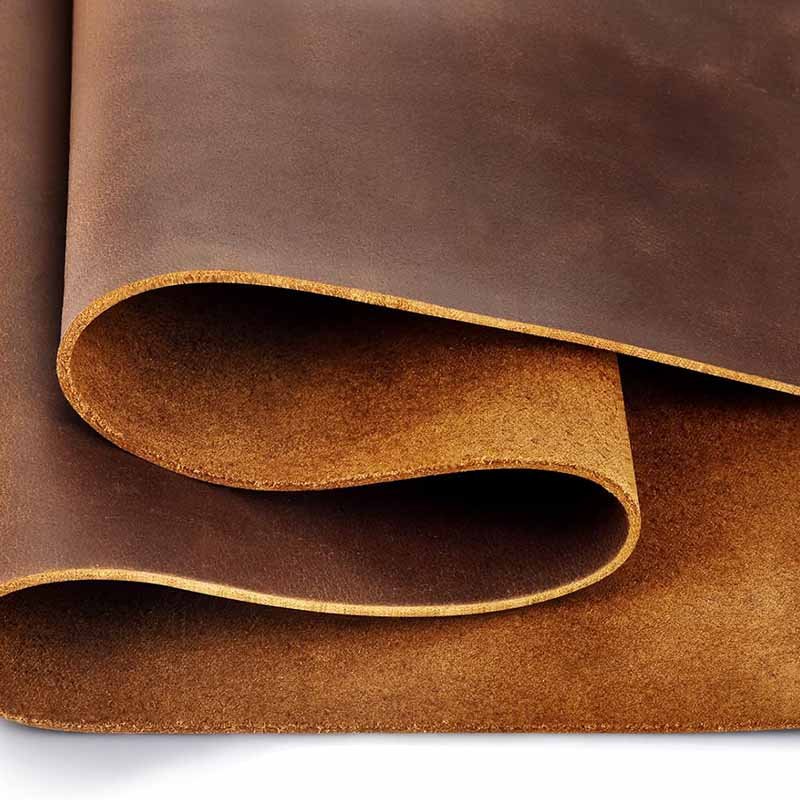
How Do Finishes and Surface Treatments Change Stiffness?
Surface finishing has a major impact on stiffness and perceived weight.
Common effects:
- Heavy pigment coatings → increased stiffness, reduced flexibility
- PU coatings → smooth look but less natural drape
- Waxed finishes → firmer feel with surface resistance
- Aniline / semi-aniline finishes → softer, more natural hand feel
Buyers often choose finishes for appearance without realizing they alter flexibility. A leather that feels perfect unfinished can become stiff after heavy surface coating.
How Do Splitting and Skiving Change Leather Behavior?
- Splitting reduces overall thickness across the hide
- Skiving selectively thins edges, folds, and stress points
These processes:
- Reduce bulk at folds
- Improve stitching consistency
- Prevent cracking at bend points
Professional leather goods rarely rely on raw hide thickness alone. They use controlled thinning to fine-tune stiffness exactly where needed. If a factory avoids discussing skiving, expect bulky products and poor fold durability.
Why Construction and Layering Change “Heaviness” More Than Leather Alone
Leather does not exist alone in a product.
Perceived heaviness depends on:
- Lining materials
- Interlinings and reinforcement boards
- Foam padding
- Edge construction and binding
For example:
- A 4 oz leather + stiff reinforcement may feel heavier than a 5 oz leather without reinforcement
- Laminated constructions distribute stiffness more evenly and feel lighter in use
This is why experienced factories often reduce leather weight when adding internal structure.
How Do You Choose the Right Leather Weight for Your Product
Choose the right leather weight by matching thickness to your product’s function, stress points, construction method, and finishing requirements. Use oz/mm conversions, specify a realistic thickness range (tolerance), and assign different weights to different panels (outer, lining, straps). Test folding, stitching, and edge finishing during sampling, and adjust weight through splitting or skiving instead of guessing.
How Do You Start with Use Case Instead of Guessing Thickness?
The fastest way to choose leather weight is to define how the product will be used, not how it should look on a screen.
Ask these five questions (buyers who answer them clearly usually get great samples):
- Will it fold daily? (wallets, small goods, flap bags)
- Will it carry load? (straps, handles, belts, tote bases)
- Does it need to hold shape? (structured bags, briefcases)
- Will it rub against clothing or skin? (comfort matters)
- What is the target price tier? (material + labor scaling)
Then map your answers to thickness. A “soft slouchy tote” and a “structured handbag” can’t share the same leather weight, even if both are “premium leather.”
Which Leather Weights Work Best by Product Type?
Use this as a starting point, then fine-tune based on temper and construction:
| Product Category | Typical Weight (oz) | Thickness (mm) | Why It Works |
|---|---|---|---|
| Wallet interior slots | 2–3 oz | 0.8–1.2 mm | Slim folds, less bulk |
| Wallet exterior | 3–4 oz | 1.2–1.6 mm | Durability + flexibility |
| Soft tote / slouchy bag | 3–4 oz | 1.2–1.6 mm | Drape and comfort |
| Structured handbag | 4–5 oz | 1.6–2.0 mm | Holds shape better |
| Travel / work bag | 5–6 oz | 2.0–2.4 mm | Abrasion & load resistance |
| Bag straps | 5–7 oz | 2.0–2.8 mm | Tensile strength |
| Belts | 7–9 oz | 2.8–3.6 mm | Stretch resistance |
Buyer note: Don’t treat this as “one thickness for everything.” Professional products assign thickness by panel.
Why the “Same Leather Weight Everywhere” Approach Fails
One of the most common sourcing mistakes is requesting one thickness for an entire product.
A professional factory will usually split thickness by zone:
- Outer panels: medium weight for durability and appearance
- Inner panels/lining: lighter weight to reduce bulk
- Straps/handles: heavier or layered for strength
- Fold lines & edges: skived thinner for comfort and longevity
This approach makes products:
- slimmer
- easier to stitch
- less likely to crack at folds
- more comfortable in daily use
If a supplier insists on one thickness across all parts, expect bulky folds, hard stitching, and higher return risk.
How Do Construction and Reinforcement Change Your Ideal Leather Weight?
Leather weight cannot be chosen without considering structure.
If your product uses:
- lining
- interlining boards
- foam padding
- stiffeners
- laminated panels
you often need less leather thickness than you think.
Example:
- A 1.6–1.8 mm leather + reinforcement can perform like 2.0–2.2 mm leather alone.
- Over-thick leather plus stiffeners can make a bag feel heavy, rigid, and uncomfortable.
Factory logic: choose leather weight for “surface performance,” and use internal structure for “shape control.”
Which Leather Weights Fold, Stitch, and Edge-Finish Best?
Weight selection should consider manufacturing processes, especially for premium products.
Folding behavior
- Best fold durability: 0.8–1.6 mm in fold zones
- Too thick at folds increases cracking risk
Stitching
- Thicker leather requires stronger needles, heavier thread, and higher stitch tension
- Over-thick panels often cause uneven stitch appearance or puckering
Edge finishing
- Edge paint and burnishing behave differently by thickness and fiber density
- Many premium wallets and small goods prefer 1.0–1.6 mm panels for clean edge build-up
- For straps and belts, thickness helps edge strength, but edges must be beveled and sealed properly
A factory that understands this will recommend thickness adjustments based on your finishing method, not a generic chart.
Should You Specify Leather in Oz, mm, or Both? (Best Practice Spec Format)
For global sourcing, always specify both plus an acceptable range.
Best practice example:
- Outer: 1.8–2.0 mm (4.5–5 oz)
- Inner: 1.0–1.2 mm (2.5–3 oz)
- Strap: 2.2–2.6 mm (5.5–6.5 oz)
- Fold lines skived to 0.8–1.0 mm
Also include:
- tanning type (veg/chrome/combination)
- temper target (soft/medium/firm)
- finish type (aniline/pigmented/waxed)
This reduces misunderstandings and speeds up sampling.
How Do You Validate Leather Weight During Sampling? (Practical Checklist)
Before mass production, confirm weight through physical sampling—not assumptions.
Sampling checklist:
- Measure thickness with calipers at multiple points (center + edges)
- Fold test 30–50 times at key bend areas
- Stitch test: check needle holes, tension, and stitch straightness
- Edge test: verify paint adhesion or burnish smoothness
- Strap pull test: check elongation and deformation under load
- Compare sample to “approved reference” for future reorders
Professional factories will document these checks internally. Buyers who request this get more consistent bulk results.
What Are Common Leather Weight Mistakes and How Do You Avoid Them
Common leather weight mistakes include choosing leather that is too thick or too thin, assuming heavier leather means higher quality, ignoring temper and tanning effects, using one thickness for all parts, and failing to define thickness tolerance. These mistakes can be avoided by matching weight to function, specifying oz and mm with ranges, validating samples through folding and stitching tests, and working with factories that control splitting and skiving in-house.
Mistake 1 — Choosing Leather That Is Too Thick “Just to Be Safe”
This is the most common mistake among both new and experienced buyers.
Many assume:
“Thicker leather = stronger = better quality.”
In reality, overly thick leather often causes:
- Bulky folds in wallets
- Poor drape in bags
- Difficult stitching and uneven seams
- Cracked edges and paint failure
- Heavier products with lower user comfort
How to avoid it: Start from function, not fear. Use thicker leather only where load and abrasion demand it (straps, bases, belts). For fold zones and body panels, choose moderate thickness and rely on structure—not mass—for durability.
Mistake 2 — Choosing Leather That Is Too Thin for Load-Bearing Areas
The opposite error is equally damaging.
Leather that is too thin may:
- Stretch under tension
- Lose shape quickly
- Tear at stitch holes
- Fail strap pull tests
This often happens when buyers prioritize slim appearance without considering stress paths.
How to avoid it: Map stress points before selecting thickness. Straps, handles, belt tongues, and attachment zones almost always require heavier leather or layered construction—even if the rest of the product is lightweight.
Mistake 3 — Using One Leather Weight for the Entire Product
Requesting “one thickness for everything” is a red flag in professional manufacturing.
Why it fails:
- Wallet interiors don’t need the same thickness as exteriors
- Bag bases need more support than side panels
- Fold lines require thinning to avoid cracking
How to avoid it: Specify thickness by component, for example:
- Outer panels
- Inner panels
- Straps / handles
- Reinforcements
- Fold and edge zones (with skiving targets)
High-end leather goods are always multi-thickness systems, even when they look simple.
Mistake 4 — Ignoring Temper and Tanning When Choosing Weight
Two leathers at the same thickness can feel completely different.
Common wrong assumption:
“2.0 mm leather is always stiff.”
In reality:
- 2.0 mm veg-tan → stiff, rigid
- 2.0 mm chrome-tan → flexible, soft
Buyers who select thickness without specifying tanning method and temper often receive samples that “feel wrong,” even though specs were followed.
How to avoid it: Always specify:
- Tanning method (veg / chrome / combination)
- Desired temper (soft / medium / firm)
- Target use (folding, structure, load)
Thickness alone is incomplete information.
Mistake 5 — Confusing Leather Weight with “Heaviness”
Leather weight measures thickness, not how heavy a product feels in use.
Products feel heavy because of:
- Overbuilt structure
- Excessive lining or reinforcement
- Thick leather combined with stiff finishes
How to avoid it: Evaluate weight as a system:
- Leather thickness
- Temper
- Internal structure
- Hardware and lining
Often, reducing leather thickness slightly while optimizing structure results in a product that feels both lighter and more premium.
Mistake 6 — Not Defining Thickness Range or Tolerance
Many buyers write:
“Leather thickness: 2.0 mm”
and expect perfect uniformity.
This leads to:
- Rejected hides
- Production delays
- Arguments over “out of spec” material
Leather is a natural material. Exact thickness everywhere is unrealistic.
How to avoid it: Specify:
- Target thickness
- Acceptable range (e.g., ±0.2 mm)
- Critical zones that need tighter control
Example:
“Target 2.0 mm, acceptable range 1.8–2.2 mm; fold zones skived to 0.8–1.0 mm.”
Mistake 7 — Failing to Validate Leather Weight During Sampling
Approving leather weight on paper without physical testing is a common mistake.
What goes wrong:
- Leather cracks at folds after use
- Stitch holes elongate
- Edge paint fails prematurely
How to avoid it: During sampling:
- Measure thickness with calipers at multiple points
- Perform fold tests (30–50 cycles)
- Stitch and edge-test real panels
- Test strap pull and elongation
Leather weight must be validated in use, not assumed.
Mistake 8 — Not Locking a Reference Standard for Reorders
Even if the first order is perfect, problems arise when:
- No reference sample is archived
- Thickness range is not documented
- New batches are compared subjectively
How to avoid it: Lock:
- An approved reference sample
- Written thickness range
- Approved tanning, temper, and finish
Professional factories treat this as part of quality control—not an extra step.
Conclusion
Leather weight is not a minor detail—it is the backbone of performance, comfort, and longevity. Brands that understand and specify leather weight correctly avoid costly revisions, reduce returns, and build products that age beautifully.
At Szoneier Leather, we work with professional buyers who value material precision.
If you are developing leather products and want them engineered—not guessed, we invite you to contact Szoneier Leather to discuss your project.
Start your custom leather development with the right weight—and the right factory.