
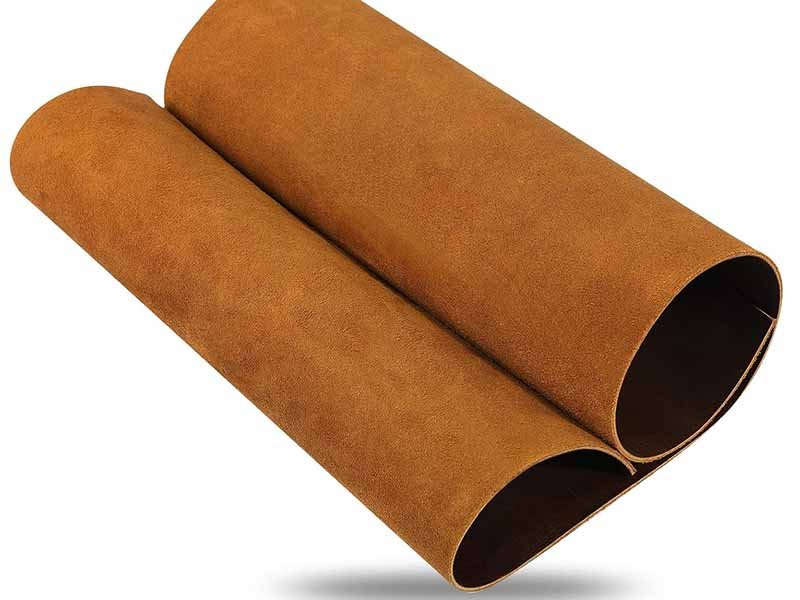
Leather thickness is one of the most discussed—and most misunderstood—specifications in leather product development. Buyers often ask for “premium leather,” “thick leather,” or “full grain leather,” assuming thickness alone defines quality. In reality, thickness is not a measure of luxury; it is a functional engineering choice that directly affects structure, flexibility, durability, edge finish, and long-term performance.
For leather bags, wallets, belts, and accessories, choosing the wrong thickness can cause real problems: wallets that feel bulky, straps that stretch, bags that collapse, or products that crack at folds. At the same time, over-specifying thickness increases cost, reduces comfort, and complicates mass production. This is why professional factories treat leather thickness as a design variable, not a marketing label.
The challenge is that leather thickness is described in multiple systems—ounces (oz), millimeters (mm), and inches—and varies naturally across the hide. A “2mm leather” from one tannery may behave very differently from a “5oz leather” from another. Without understanding how thickness is measured, converted, and controlled, even experienced buyers can misjudge material performance. Leather thickness refers to the measured depth of a leather hide, usually expressed in ounces (oz) or millimeters (mm). It affects stiffness, durability, flexibility, and suitability for different products. Thinner leather is used for wallets and linings, while thicker leather supports belts, straps, and structured bags. Choosing the right thickness depends on product function, construction method, and manufacturing tolerance.
Once you understand what leather thickness actually means—and how factories work with it—you can specify materials with confidence and avoid costly design mistakes.
What Is Leather Thickness and How Is It Measured
Leather thickness is the measured depth of a leather hide, typically expressed in millimeters (mm) or ounces (oz). It directly affects stiffness, flexibility, durability, and suitability for different leather products. Because leather is a natural material, thickness varies across a hide and must be controlled through splitting or skiving. Accurate measurement and tolerance control are essential for consistent manufacturing results.
What is leather thickness in practical manufacturing terms?
In real manufacturing, leather thickness is not a fixed number, but a controlled working range.
When a factory says leather is “1.8–2.0 mm,” it means:
- The hide has been processed (split) to fall within this range
- Small natural variation is accepted
- The leather is suitable for specific machines, stitches, and structures
Leather comes from animal hides, not uniform sheets. Thickness naturally varies:
- Thickest along the backbone
- Thinner toward the belly and shoulder areas
Without thickness control, products cut from different areas of the same hide would feel and perform differently. This is why professional factories treat thickness as an engineering parameter, not a marketing description.
What units are used to measure leather thickness (mm vs oz vs inches)?
Leather thickness is expressed in three main units, depending on region and industry habit:
- Millimeters (mm) – the most accurate and widely used unit in manufacturing
- Ounces (oz) – common in the U.S. leather trade and craft market
- Inches – rarely used today, mostly historical
The standard rule is:
- 1 oz ≈ 1/64 inch ≈ 0.4 mm
However, this conversion is approximate, not exact. “5oz leather” is a category, not a precision measurement. In contrast, “2.0 ± 0.1 mm” is a manufacturing-grade specification.
For OEM and private-label production, mm-based specs are always preferred, because they reduce ambiguity and improve consistency between samples and bulk orders.
How is leather thickness actually measured in factories?
Factories do not measure leather by hand feel—they use thickness gauges.
Common methods include:
- Mechanical thickness gauges
- Digital calipers
- Inline thickness sensors on splitting machines
Measurement is typically done:
- On incoming raw leather
- After splitting
- During random in-process QC checks
Importantly, thickness is measured under light pressure, not compressed. Excessive pressure gives false readings and hides real variation.
Professional factories define:
- Target thickness
- Acceptable tolerance (e.g., ±0.1 mm)
- Rejection thresholds
This is how consistency is maintained across thousands of units.
Why does leather thickness vary across the same hide?
Thickness variation is natural and unavoidable.
Reasons include:
- Anatomical differences across the animal’s body
- Fiber density variations
- Stretch and collagen structure differences
For example:
- Back and butt areas → denser, thicker, stronger
- Belly areas → looser fiber, thinner, stretchier
This is why high-quality production involves:
- Strategic cutting layouts
- Splitting hides to uniform thickness
- Skiving specific zones (edges, folds, overlaps)
Without these steps, even “high-quality leather” produces inconsistent results.
What is the difference between thickness before and after processing?
A common misunderstanding is assuming leather thickness is fixed once purchased.
In reality:
- Tanneries sell leather at a nominal thickness
- Factories often re-split leather to match product needs
- Final thickness may differ from original spec
For example:
- Tanner sells leather at ~2.2 mm
- Factory splits to 1.8–2.0 mm
- Edges and folds skived further during assembly
When buyers do not clarify final required thickness, misunderstandings occur. This is why professional specs always state “final thickness after splitting/skiving.”
How should buyers specify leather thickness correctly?
Clear thickness specifications prevent delays, re-sampling, and disputes.
Best-practice specification format:
- State thickness in mm, not just oz
- Provide a range, not a single number
- Specify application area
Example:
Full-grain cowhide, outer shell thickness 1.8–2.0 mm after splitting; interior panels skived to 0.9–1.1 mm.
This level of clarity allows factories to plan:
- Material selection
- Splitting settings
- Skiving operations
- Quality control standards
It also ensures samples and bulk production match expectations.
How Do You Convert Leather Thickness (oz to mm)
Leather thickness is commonly converted using the rule that 1 oz equals approximately 0.4 mm (or 1/64 inch). For example, 5oz leather is about 2.0 mm thick. However, this conversion is only an approximation because natural leather varies by hide area and tannery processing. For manufacturing accuracy, thickness should always be specified in millimeters with an acceptable tolerance range.
Where does the oz measurement for leather thickness come from?
The “ounce (oz)” system comes from traditional leather trading in the United States.
Originally:
- 1 oz = 1/64 inch of thickness
- This was a visual and tactile reference, not a precision measurement
At the time, leather was sold and judged largely by hand feel and experience. Precision tools and digital gauges were not standard. As a result, oz became a category system, not an engineering unit.
This historical background explains why oz is still common in retail, craft, and marketing contexts—but much less precise for modern manufacturing.
What is the standard conversion from oz to mm?
The widely accepted conversion rule is:
- 1 oz ≈ 0.4 mm
- 1 oz ≈ 1/64 inch ≈ 0.016 inch
Using this rule:
- 3 oz ≈ 1.2 mm
- 4 oz ≈ 1.6 mm
- 5 oz ≈ 2.0 mm
- 6 oz ≈ 2.4 mm
This conversion is directionally correct, but it should not be treated as exact. In practice, a leather sold as “5 oz” may measure anywhere from 1.8 to 2.2 mm depending on tannery, moisture, and splitting accuracy.
How thick is 5oz leather in real manufacturing terms?
In production, “5oz leather” is best understood as a thickness category, not a guaranteed measurement.
Typically:
- Nominal: 5 oz
- Practical range: 1.9–2.1 mm
- Possible variation across a hide: ±0.2 mm or more
This matters because:
- Stitch length changes with thickness
- Folding stress increases rapidly above 2.0 mm
- Edge finishing becomes harder without skiving
Professional factories rarely use 5oz leather “as is.” Instead, they:
- Measure incoming hides
- Re-split to a target mm range
- Skive edges and fold zones
So while 5oz ≈ 2.0 mm is a useful reference, mm-based control determines final product quality.
How thick is 2mm leather compared to oz leather?
2mm leather is roughly equivalent to 5oz leather, but the two terms are not interchangeable.
Key differences:
- “2mm leather” implies measured thickness
- “5oz leather” implies nominal category
A buyer specifying “2.0 ± 0.1 mm” gives the factory clear instruction. A buyer specifying “5oz leather” leaves room for interpretation.
In OEM and private-label production, mm specifications reduce risk, especially when multiple suppliers or repeated orders are involved.
Why oz-to-mm conversion is never exact
Several factors affect the real thickness after conversion:
- Natural hide variation (back vs belly)
- Tanning method (vegetable-tanned leather often feels firmer at the same mm)
- Moisture content
- Splitting machine calibration
Two leathers measuring the same thickness in mm may behave very differently in stiffness and folding. This is why thickness conversion must always be considered alongside leather type, grade, and finish.
Practical leather thickness conversion chart (oz ↔ mm)
| Nominal Thickness (oz) | Approx. Thickness (mm) | Typical Applications |
|---|---|---|
| 1–2 oz | 0.4–0.8 mm | Linings, interior pockets |
| 3 oz | ~1.2 mm | Wallet interiors, small goods |
| 4 oz | ~1.6 mm | Wallet exteriors (skived) |
| 5 oz | ~2.0 mm | Bag panels, straps (processed) |
| 6–7 oz | 2.4–2.8 mm | Belts, handles |
| 8–9 oz | 3.2–3.6 mm | Heavy belts, saddlery |
This chart is for reference, not final specification.
Why factories prefer mm over oz for OEM production
Professional factories almost always work in millimeters, not ounces, because:
- Machines are calibrated in mm
- Tolerances can be clearly defined (±0.1 mm)
- QC inspection is more objective
- Communication is clearer across countries
In practice, factories convert oz → mm once, then manage everything in mm. This is why buyers who specify thickness directly in mm experience fewer sampling issues and faster development cycles.
How should buyers specify thickness to avoid mistakes?
Best practice for thickness specification:
- Use mm, not just oz
- Define a range, not a single number
- Clarify final thickness after splitting/skiving
Example:
Full-grain cowhide, target thickness 1.8–2.0 mm after splitting; fold areas skived to 1.0–1.2 mm.
This level of clarity allows factories like Szoneier Leather to plan materials, processing steps, and QC correctly—resulting in more accurate samples and stable mass production.
Which Leather Thickness Is Best for Wallets and Small Goods
Wallets and small leather goods perform best with thinner, well-controlled leather thickness. Most designs use 0.6–1.2 mm leather for interiors and 1.2–1.8 mm for exteriors after skiving. Thicker leather without thinning leads to bulky edges, poor folding, and discomfort. Proper thickness selection focuses on structure, layering, and skiving—not maximum thickness.
Why leather thickness matters more for wallets than for bags
Wallets and small leather goods are high-contact, high-fold products. They are opened, closed, bent, and carried every day—often in pockets.
This creates three constraints that bags don’t face as strongly:
- Frequent folding stress
- Edge stacking from multiple layers
- Direct contact with the body
If leather is too thick:
- Folds become stiff and resist closing
- Corners crack prematurely
- The wallet feels bulky and uncomfortable in use
This is why professional wallet makers focus on thickness engineering, not “thick leather” marketing. In wallets, thinner leather—used correctly—almost always performs better long term.
What thickness works best for slim wallets and cardholders?
Slim wallets and cardholders require minimal bulk with sufficient strength.
Typical thickness ranges:
- 0.6–0.8 mm → card slots, interior pockets
- 0.8–1.2 mm → interior panels
- 1.2–1.6 mm → exterior shells (after skiving)
Using leather thicker than 1.6 mm without skiving usually causes:
- Overbuilt edges
- Difficulty stacking layers cleanly
- Poor edge paint or burnishing results
High-end slim wallets often feel strong despite thin profiles because the leather fiber quality is high and thickness is precisely controlled.
Which thickness is better for bifold wallets vs long wallets?
Different wallet structures place stress in different areas, so thickness choices should adapt accordingly.
Bifold wallets
- Central fold is the weakest point
- Require thinner leather at fold zones
- Typical practice:
- Start with 1.6–1.8 mm leather
- Skive fold area to 0.9–1.1 mm
Long wallets
- Fewer sharp folds
- Can tolerate slightly thicker panels
- Exteriors often remain at 1.4–1.8 mm
- Interiors still require thinning for clean stacking
This is why a “one-thickness-fits-all” approach rarely works for wallets. Structure dictates thickness—not preference.
How do skiving and layering change perceived thickness?
Skiving is the process of selectively thinning leather at edges, folds, or overlap zones. It is essential for wallet production.
Proper skiving:
- Reduces edge bulk
- Improves stitch strength
- Prevents cracking at folds
- Maintains overall durability
Layering also matters. A wallet made from:
- One thick piece of leather often performs worse than
- Multiple thin, well-managed layers
This is why professional factories rely on controlled skiving + intelligent layering, not raw thickness.
Does thicker leather make wallets more durable?
This is a common misconception.
Durability in wallets depends more on:
- Fiber density
- Grain quality
- Stress distribution
- Edge treatment
A thin full-grain leather with tight fibers can outlast a thicker, lower-grade leather. Excess thickness often creates stress concentration at folds, leading to cracks or delamination.
In wallet design, over-thick leather can reduce durability, not improve it.
Typical leather thickness recommendations by small goods type
| Product Type | Recommended Thickness (mm) | Notes |
|---|---|---|
| Cardholder | 0.6–1.2 mm | Focus on slim profile |
| Bifold wallet | 0.9–1.6 mm | Fold area skived |
| Long wallet | 1.2–1.8 mm | Interiors thinner |
| Coin pouch | 1.2–1.8 mm | Balance structure & softness |
| Key holder | 1.4–2.0 mm | Needs abrasion resistance |
These are starting points, not rigid rules. Final thickness depends on leather type, finish, and construction method.
How professional factories control thickness for small leather goods
In mass production, consistency matters more than nominal thickness.
Professional factories:
- Split leather to target ranges
- Skive critical zones during assembly
- Inspect thickness at multiple stages
- Adjust patterns based on stacking height
This ensures every wallet:
- Folds the same way
- Feels consistent in hand
- Matches sample and bulk production
Without thickness control, even high-quality leather produces inconsistent results across batches.
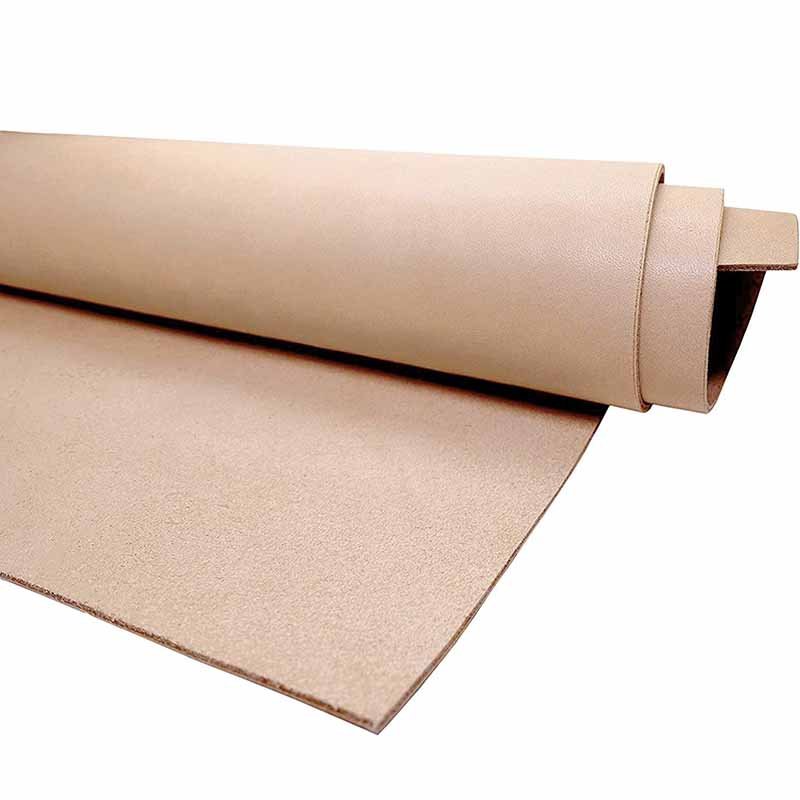
Which Leather Thickness Is Best for Belts, Straps, and Handles
Belts, straps, and handles require thicker leather than wallets to maintain strength and shape under load. Most leather belts use 2.8–3.6 mm leather, while bag straps and handles typically range from 2.0–3.0 mm, often reinforced or laminated. The optimal thickness depends on load, flexibility, comfort, and whether the construction uses single-layer or layered leather.
Why belts, straps, and handles need thicker leather than small goods
Unlike wallets, belts and straps are load-bearing components. They must resist:
- Continuous pulling force
- Stretch over time
- Bending at fixed stress points
Thickness directly affects:
- Tensile strength
- Shape retention
- Resistance to permanent deformation
If leather is too thin:
- Belts stretch and twist
- Bag straps elongate and lose balance
- Handles collapse or crease
This is why thickness requirements for belts and straps start where wallet thickness ends. In these products, structural performance matters more than slimness.
What thickness range is common for leather belts?
Leather belts typically fall into a narrow but critical thickness range.
Common specifications:
- 2.8–3.2 mm → dress belts, casual belts
- 3.2–3.6 mm → work belts, heavier everyday belts
- 4.0 mm+ → utility belts, specialty or tactical use
Using leather thinner than 2.8 mm often leads to:
- Rapid stretching
- Curling near the buckle
- Uneven edge wear
Many premium belts are made from single thick hides, but others achieve the same strength by laminating two thinner layers—allowing better control over stiffness and surface finish.
How thick should leather straps and bag shoulder straps be?
Bag straps and shoulder straps must balance strength and comfort.
Typical thickness guidelines:
- 2.0–2.4 mm → light-duty straps (small handbags, crossbody bags)
- 2.4–3.0 mm → medium to heavy-duty straps
- Laminated layers → large bags, long straps, heavy loads
A strap that is too thick feels rigid and uncomfortable on the shoulder. A strap that is too thin stretches and digs into the body.
Professional factories often use layered construction to fine-tune this balance, rather than relying on extreme thickness.
What thickness works best for leather handles?
Handles experience localized stress, especially where they attach to the bag.
Common handle thickness:
- 2.2–2.8 mm per layer
- Often doubled or reinforced internally
Key considerations:
- Handles should feel firm in hand
- They should not collapse under weight
- Stitching areas must resist tear-out
For premium bags, handles are often:
- Laminated (two layers bonded together)
- Reinforced with internal strips or cores
This approach improves durability without making the handle excessively bulky or stiff.
Is single-layer leather better than double-layer construction?
Not always.
Single-layer thick leather
- Simpler construction
- Natural look
- Heavier and stiffer
Double-layer (laminated) construction
- Better load distribution
- Reduced stretching
- Cleaner edges
- More comfort
For belts and straps, laminated construction often outperforms a single thick hide—especially in mass production where consistency matters.
How does leather type affect thickness choice for belts and straps?
Thickness must be evaluated together with leather type and tanning method.
For example:
- Vegetable-tanned leather is firmer at the same thickness
- Chrome-tanned leather is softer and may need extra thickness or reinforcement
A 3.0 mm veg-tan belt leather behaves very differently from a 3.0 mm soft chrome-tan leather. Professional buyers always consider thickness + leather behavior, not thickness alone.
Typical thickness recommendations by product type
| Product | Recommended Thickness (mm) | Notes |
|---|---|---|
| Dress belt | 2.8–3.2 mm | Balance flexibility and shape |
| Casual/work belt | 3.2–3.6 mm | Better stretch resistance |
| Bag shoulder strap | 2.4–3.0 mm | Often laminated |
| Crossbody strap | 2.0–2.6 mm | Comfort-focused |
| Top handles | 2.2–2.8 mm (per layer) | Reinforced construction |
These ranges are engineering guidelines, not absolute rules. Final decisions depend on load, length, leather type, and brand positioning.
How professional factories control thickness for belts and straps
In mass production, thickness consistency is critical.
Experienced factories like Szoneier Leather:
- Split hides to target thickness ranges
- Test stretch and recovery
- Skive attachment zones to reduce stress
- Inspect thickness and lamination strength during production
This ensures belts and straps remain stable, comfortable, and durable across thousands of units—not just in samples.
Which Leather Thickness Is Best for Bags, Cases, and Boxes
The best leather thickness for bags, cases, and boxes depends on structure rather than size alone. Soft bags typically use 1.4–1.8 mm leather, semi-structured bags use 1.8–2.2 mm, and structured bags use 2.0–2.6 mm or layered construction. Leather boxes and rigid cases rely on thin leather wrapped over internal boards, not thick hides, to achieve shape and durability.
Why leather thickness alone does not define bag quality
One of the most common buyer misconceptions is assuming thicker leather automatically means a better bag. In reality, leather bags fail or succeed based on structure management, not raw thickness.
Problems caused by overly thick leather:
- Excessive weight
- Poor flexibility at seams
- Cracking at folds and corners
- Difficulty in stitching and edge finishing
Professional bag manufacturing treats leather thickness as one variable among many, alongside reinforcement, lining, interlinings, and pattern engineering. A well-structured bag using 1.8 mm leather can outperform a poorly designed bag made from 3.0 mm leather.
What thickness is best for soft leather bags?
Soft bags are designed to drape, slouch, and move naturally.
Recommended thickness range:
- 1.4–1.8 mm
Common examples:
- Slouchy totes
- Hobo bags
- Soft backpacks
- Casual shoulder bags
Using leather thicker than 1.8 mm in soft bags often:
- Makes the bag feel stiff and unnatural
- Adds unnecessary weight
- Reduces comfort
Soft bags rely on leather softness and fiber quality, not thickness, to convey a premium feel.
What thickness works best for semi-structured handbags and totes?
Semi-structured bags need to hold shape while remaining flexible.
Typical thickness range:
- 1.8–2.2 mm
This range allows:
- Clean panel edges
- Stable silhouettes
- Comfortable daily use
To achieve structure, factories usually add:
- Interlining
- Reinforcement patches
- Partial stiffeners at the base or sides
Trying to force structure using thicker leather alone often results in bulky, uncomfortable bags with poor long-term performance.
Which leather thickness is suitable for fully structured bags?
Structured bags depend more on internal architecture than on leather thickness.
Common approaches:
- 2.0–2.6 mm leather, or
- 1.6–2.0 mm leather with internal boards or frames
Structured handbags, briefcases, and satchels typically include:
- Cardboard, fiberboard, or plastic sheets
- Reinforced corners and edges
- Defined seam geometry
Using extremely thick leather (3.0 mm+) for structured bags usually creates problems without improving shape retention.
How thick should leather be for backpacks and travel bags?
Backpacks and travel bags are load-driven products.
Typical thickness guidelines:
- 1.6–2.0 mm → main body panels
- 2.0–2.4 mm → high-stress zones (bottoms, strap anchors)
Rather than thickening the entire bag, professional factories selectively reinforce:
- Base panels
- Strap attachment points
- Corners and edges
This targeted approach improves durability while keeping weight manageable.
Which leather thickness is best for cases and organizers?
Cases and organizers sit between bags and boxes in structure.
Recommended thickness:
- 1.4–2.0 mm, depending on stiffness required
Examples:
- Laptop sleeves
- Tech organizers
- Document cases
In many cases, a thin leather outer layer combined with foam, felt, or board creates better protection than thick leather alone.
How thick should leather be for leather boxes and rigid cases?
Leather boxes are a special category where thicker leather is usually the wrong choice.
Typical construction:
- 0.8–1.2 mm leather outer layer
- Wrapped over rigid internal boards (MDF, cardboard, plastic)
Why thin leather works better:
- Wraps cleanly around sharp edges
- Avoids cracking at corners
- Produces crisp, luxury finishes
Using thick leather on rigid boxes often leads to:
- Poor corner definition
- Surface tension issues
- Visible wrinkles
Luxury leather boxes rely on structure first, leather second.
Typical leather thickness recommendations by product type
| Product Type | Recommended Thickness (mm) | Key Structural Notes |
|---|---|---|
| Soft tote / hobo | 1.4–1.8 | Focus on drape, light weight |
| Semi-structured handbag | 1.8–2.2 | Interlining for shape |
| Structured handbag / briefcase | 2.0–2.6 or layered | Internal boards |
| Backpack / travel bag | 1.6–2.4 | Reinforced stress zones |
| Leather case / organizer | 1.4–2.0 | Foam or board support |
| Leather box / rigid case | 0.8–1.2 | Wrapped over hard structure |
These values are engineering guidelines, not rigid rules. Leather type, tanning method, and internal construction always influence final decisions.
How professional factories manage thickness for bag production
In real OEM production, thickness control is systematic.
Professional factories like Szoneier Leather:
- Split hides to target thickness ranges
- Use different thicknesses within the same bag
- Skive seams and folds precisely
- Inspect thickness consistency during production
This ensures:
- Stable bag shape
- Comfortable handling
- Consistent quality across batches
Thickness is managed as part of a system, not as an isolated spec.
How Does Leather Thickness Affect Stiffness, Durability, and Manufacturing
Leather thickness directly influences stiffness, durability, folding behavior, edge finishing, and manufacturing efficiency. Thicker leather increases rigidity and load resistance but reduces flexibility and complicates stitching, skiving, and finishing. Thinner leather improves comfort and fold performance but requires higher fiber quality and structural support. Professional manufacturing balances thickness, leather type, and construction method rather than maximizing thickness alone.
How does leather thickness affect stiffness and flexibility?
Stiffness is the most immediate and visible effect of leather thickness—but it is not linear.
As thickness increases:
- Leather resists bending more strongly
- Fold radius becomes larger
- Natural drape decreases
However, stiffness is influenced by more than thickness:
- Fiber density
- Tanning method (vegetable vs chrome)
- Finish and coating
For example, a 2.0 mm vegetable-tanned leather can feel stiffer than a 2.6 mm soft chrome-tanned leather. This is why professional designers evaluate thickness + leather behavior, not thickness alone.
In product design, excessive stiffness often causes:
- Poor folding in wallets and straps
- Stress concentration at seams
- User discomfort
Controlled stiffness—not maximum stiffness—is the real goal.
Does thicker leather always mean better durability?
This is one of the most common misconceptions in leather sourcing.
Thicker leather does not automatically mean more durable.
Durability depends on:
- Fiber structure and density
- Grain integrity
- Stress distribution
- Construction quality
Problems with over-thick leather:
- Cracking at folds
- Edge delamination
- Uneven wear patterns
In contrast, a thinner full-grain leather with tight fibers can outperform a thicker split or bonded leather. In many cases, too much thickness reduces durability by forcing leather to bend beyond its optimal stress range.
Professional factories aim for optimal thickness, not maximum thickness.
How does thickness influence folding, creasing, and crack resistance?
Folding behavior is critical in products like wallets, straps, and bag flaps.
As thickness increases:
- Fold stress concentrates on the grain surface
- Creases become sharper
- Risk of surface cracking increases
This is why thick leather used without skiving often fails at:
- Wallet fold lines
- Strap bends near buckles
- Bag flap hinge zones
To manage this, factories:
- Skive fold areas thinner
- Adjust stitch placement
- Increase fold radius in patterns
Thickness control at fold zones is one of the clearest indicators of professional manufacturing.
How does leather thickness affect edge finishing and appearance?
Edge finishing quality is directly tied to thickness.
Thicker leather:
- Requires more edge paint layers
- Is harder to burnish evenly
- Amplifies edge defects
Thin or well-skived leather:
- Produces cleaner, sharper edges
- Reduces paint cracking
- Improves visual refinement
This is why premium leather goods often use moderate thickness with precise skiving, rather than heavy leather left untouched. Edge quality is one of the first things experienced buyers notice—and thickness plays a major role.
How does thickness affect stitching and machine compatibility?
Manufacturing efficiency changes dramatically with thickness.
As thickness increases:
- Needle size must increase
- Stitch length must be adjusted
- Thread tension becomes harder to control
- Sewing speed decreases
Overly thick leather causes:
- Needle breakage
- Uneven stitches
- Burn marks from friction
Professional factories select thickness based on machine capability, not just product feel. In mass production, even a 0.2–0.3 mm difference can affect yield, speed, and defect rate.
What is the relationship between thickness, skiving, and splitting?
Thickness is rarely final when leather arrives at a factory.
Key processes:
- Splitting: reduces thickness evenly across the hide
- Skiving: selectively thins specific zones
Professional workflow:
- Split leather to target range
- Cut components
- Skive edges, folds, overlaps
- Assemble and stitch
This allows:
- Strong panels
- Flexible folds
- Clean edges
Without skiving, thick leather becomes a liability rather than an advantage.
How does leather thickness affect production cost and yield?
Thickness directly impacts cost—often invisibly to buyers.
Thicker leather:
- Uses more raw material
- Generates more waste when skived
- Slows down production
- Increases rejection risk
Thinner, well-controlled leather:
- Improves cutting efficiency
- Reduces labor time
- Increases yield per hide
This is why experienced factories often recommend slightly thinner leather with better structure, rather than thicker leather that increases cost without improving performance.
Why factories treat leather thickness as a system variable
In professional manufacturing, thickness is never considered alone.
Factories evaluate thickness together with:
- Product structure
- Reinforcement strategy
- Lining and interlining
- Usage scenario
- Target price point
Changing thickness by even 0.3 mm can require:
- Pattern updates
- Stitch adjustments
- Edge finishing changes
This system-level thinking is what separates experienced leather manufacturers from simple workshops.
Conclusion
Leather thickness is not just a number—it is a design decision that affects performance, comfort, and cost. When thickness is chosen correctly, products feel balanced, durable, and premium. When it’s wrong, even the best leather cannot save the design.
If you are developing custom leather bags, wallets, belts, straps, or accessories, working with a factory that understands material behavior, skiving, splitting, and production tolerance is essential.
Contact Szoneier Leather today to discuss your leather thickness requirements and turn your product concept into a reliable, scalable reality.