
How Thick Is Leather: A Practical Guide to Leather Thickness
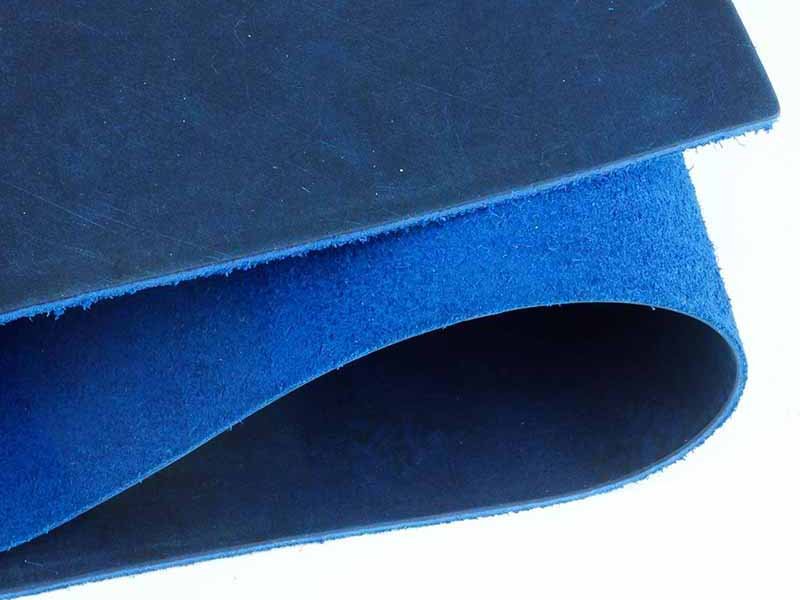
Leather thickness is one of the most misunderstood—and most important—factors in leather product development. Many buyers assume thicker leather automatically means higher quality, while others believe thinner leather always looks more refined. In reality, leather thickness is not about “better or worse,” but about function, structure, and long-term performance. Choosing the wrong thickness can make a wallet bulky, a bag collapse, or a strap fail under load.
The confusion often starts with terminology. Measurements like ounces (oz), millimeters (mm), full grain, split leather, or “real leather” are frequently used interchangeably online, even though they describe very different things. This makes it difficult for buyers, designers, and brands to communicate clearly with manufacturers—especially in custom or OEM projects where thickness directly affects cost, durability, and user experience. Leather thickness typically ranges from about 0.8 mm to over 5.0 mm, depending on leather type and application. It is commonly measured in ounces (oz), where 1 oz equals approximately 0.4 mm. Thinner leather is used for wallets and small accessories, while thicker leather is preferred for belts, straps, and structured products. Choosing the right thickness is critical for performance, comfort, and product lifespan.
Behind every well-made leather product is a deliberate thickness decision. To understand how professionals make that choice—and how you should approach it—let’s start with the fundamentals.
What Is Leather Thickness
Leather thickness refers to the measured depth of a leather hide after tanning, usually expressed in ounces (oz) or millimeters (mm). It determines how stiff, flexible, durable, and suitable the leather is for different products. Thinner leather is easier to fold and sew, while thicker leather provides more structure and strength. Choosing the correct leather thickness is essential for product performance, comfort, cost, and lifespan.
What is leather thickness?
Leather thickness is a physical measurement of how thick a piece of leather is from surface to flesh side. It is one of the most fundamental technical parameters in leather manufacturing, yet also one of the most misunderstood.
Thickness directly influences:
- How the leather bends and folds
- How much weight it can support
- How it feels in the hand
- How difficult it is to cut and sew
Importantly, leather thickness does not define leather quality on its own. A thinner, high-quality full-grain leather can outperform a thicker, lower-grade leather. Thickness should be understood as a functional design variable, not a quality label.
In professional manufacturing, thickness is always chosen based on product purpose, not personal preference.
How is leather thickness measured?
Leather thickness is measured using calibrated thickness gauges, typically at multiple points on the hide to account for natural variation.
There are two main measurement systems:
- Ounces (oz) – Common in the leather industry, especially in North America
- Millimeters (mm) – Widely used in international manufacturing and technical documentation
The standard conversion is:
- 1 oz ≈ 0.4 mm
Examples:
- 2 oz leather ≈ 0.8 mm
- 4 oz leather ≈ 1.6 mm
- 8 oz leather ≈ 3.2 mm
Professional factories always work with thickness ranges (e.g., 1.8–2.0 mm) rather than a single fixed number to ensure production consistency.
Do thickness units (oz vs mm) really matter?
Yes—especially in custom, OEM, and international projects.
Misunderstandings often occur when buyers and manufacturers use different units without clarification. For example, requesting “3 oz leather” without confirming the millimeter equivalent or tolerance can result in leather that feels thinner or thicker than expected.
Best practices include:
- Always stating thickness in both oz and mm
- Defining acceptable tolerance (e.g., ±0.1 mm)
- Confirming whether thickness is measured before or after finishing
Clear unit communication prevents sampling delays, cost overruns, and production disputes.
Is leather thickness the same as leather grade or type?
No—this is a very common misconception.
Leather grade (full grain, top grain, split leather) describes which layer of the hide is used. Leather type (vegetable-tanned, chrome-tanned) describes how the leather is processed. Leather thickness describes how thick that material is after processing.
Any leather type or grade can exist in multiple thicknesses. For example:
- Full-grain leather can be 1.2 mm or 4.0 mm
- Chrome-tanned leather can be thin and soft or relatively thick and structured
This distinction is critical for buyers evaluating samples or comparing suppliers.
Why Leather Thickness Is a Core Engineering Decision
In leather product development, thickness is not chosen in isolation—it affects nearly every downstream decision.
A change of just 0.2–0.3 mm can:
- Alter stitching strength
- Change how a bag holds its shape
- Affect comfort in wearable products
- Increase or reduce material and labor cost
Thickness also interacts with splitting and skiving. Most hides are initially thicker than needed and are mechanically split to achieve target thickness. Poor splitting weakens fiber structure, while skilled splitting preserves strength and consistency.
How Thick Is Leather Typically
Leather thickness typically ranges from 0.8 mm to over 5.0 mm, depending on the leather type, tanning method, and intended use. Most consumer leather goods use leather between 1.0 mm and 2.4 mm, while heavy-duty products like belts and straps use much thicker leather, often 3.5–5.0 mm (9–12 oz). There is no single standard thickness—appropriate thickness always depends on application.
How thick is real leather?
“Real leather” does not have a fixed or standard thickness.
In practice, real leather can range from under 1.0 mm to over 4.0 mm, depending on how it is processed and where it is used. The term real leather simply indicates that the material comes from animal hide, not synthetic alternatives—it does not describe thickness, quality, or performance.
Most real leather used in everyday products falls within these ranges:
- 1.0–1.4 mm for wallets, small accessories, and linings
- 1.6–2.2 mm for bags and everyday leather goods
- 3.0 mm and above for belts, straps, and load-bearing parts
This wide range explains why “real leather” alone is not enough information when evaluating a product.
How thick is vegetable tanned leather typically?
Vegetable tanned leather is usually thicker and firmer than other leather types.
Common thickness ranges are 1.6 mm to 5.0 mm (4–12 oz). Because veg-tan leather has a dense fiber structure and minimal softness treatments, it holds shape well and becomes stronger with use.
Thicker vegetable tanned leather is often used for:
- Belts and straps
- Structured bags
- Saddlery and leather hardware
Veg-tan leather is frequently split or skived to achieve precise thickness, but it generally starts thicker than chrome tanned leather. This makes thickness selection especially important for balancing rigidity and usability.
How thick is chrome tanned leather?
Chrome tanned leather is typically thinner and more flexible.
The most common thickness range is 0.8 mm to 2.2 mm, with 1.2–1.8 mm being the most widely used range for bags, wallets, and accessories.
Chrome tanning allows leather to remain soft and pliable even at slightly higher thicknesses. This makes it ideal for fashion products where comfort, drape, and ease of sewing are important.
Because of its flexibility, chrome tanned leather is often layered or reinforced rather than used in very thick single pieces.
How thick is upholstery leather?
Upholstery leather is designed to balance comfort, durability, and surface consistency.
Typical upholstery leather thickness ranges from 1.0 mm to 1.6 mm. This range provides enough strength for daily use while remaining soft enough for seating and contact surfaces.
Unlike leather used for belts or straps, upholstery leather rarely exceeds 2.0 mm. Excessive thickness would reduce comfort and flexibility without improving performance in furniture applications.
Are there industry “standard” leather thickness ranges?
There is no single universal standard, but the industry has adopted well-established typical ranges based on decades of manufacturing experience.
| Leather Application | Typical Thickness |
|---|---|
| Wallets & small goods | 0.8–1.4 mm |
| Bags & backpacks | 1.6–2.4 mm |
| Garments | 0.7–1.0 mm |
| Upholstery | 1.0–1.6 mm |
| Belts & straps | 3.5–5.0 mm |
These ranges exist because they reliably balance performance, comfort, and manufacturability. Deviating from them is possible—but usually requires strong design justification.
Why Typical Thickness Ranges Matter
These typical thickness ranges are the result of real-world trial and error, not theory.
Leather that is too thin for its application stretches, wrinkles, or tears prematurely. Leather that is too thick becomes difficult to sew, uncomfortable to use, and unnecessarily heavy. Over time, manufacturers and brands have learned which thicknesses perform best for specific products.
Which Leather Thickness Suits Which Products
Different leather products require different thicknesses to balance durability, flexibility, comfort, and structure. Wallets and small accessories usually use 0.8–1.4 mm leather, bags typically use 1.6–2.4 mm, while belts and straps require much thicker leather, often 3.5–5.0 mm (9–12 oz). Choosing the correct thickness ensures the product performs well, feels comfortable, and lasts longer without unnecessary bulk or cost.
Which leather thickness is best for wallets and small leather goods?
Wallets, card holders, and small accessories require thin, flexible leather.
The most common thickness range is 0.8–1.4 mm. This allows the leather to fold easily, sit comfortably in pockets, and accommodate multiple layers such as card slots and linings without becoming bulky.
Using leather that is too thick makes wallets stiff and uncomfortable, even if the leather itself is high quality. Professional manufacturers often combine thin outer leather with even thinner lining leather to achieve a refined feel while maintaining durability.
For premium wallets, precision thickness control matters more than thickness itself.
Which leather thickness is ideal for bags and backpacks?
Bags require a balance between structure and flexibility, which is why their thickness range is broader.
Most leather bags use leather in the 1.6–2.4 mm range. Soft totes and fashion handbags may use leather closer to the lower end, while structured handbags, backpacks, and travel bags often require thicker leather for shape retention.
Importantly, bags rarely use a single thickness throughout. Handles, bottoms, and stress points are often reinforced with thicker leather, while panels and gussets use slightly thinner leather. This multi-thickness construction improves durability without adding unnecessary weight.
Which leather thickness is recommended for belts and straps?
Belts and straps are load-bearing products, so thickness is critical.
High-quality leather belts and straps typically use leather in the 3.5–5.0 mm (9–12 oz) range. This thickness prevents stretching, sagging, and deformation over time.
Some manufacturers use laminated construction—bonding two thinner layers together—to achieve strength with better surface quality. Both approaches work when executed correctly, but insufficient thickness in belts almost always leads to premature failure.
How thick is 10 to 12 oz leather, and what products use it?
10–12 oz leather equals approximately 4.0–4.8 mm, making it very thick and rigid.
This thickness is commonly used for:
- Heavy-duty belts
- Shoulder straps
- Harnesses
- Tool straps and reinforcement components
It is rarely used for bag bodies or wallets because it is too stiff and heavy. Using this thickness where flexibility is required is one of the most common beginner mistakes in leather product development.
Which leather thickness suits leather garments and apparel?
Leather garments prioritize flexibility, drape, and comfort.
Typical thickness ranges from 0.7–1.0 mm, sometimes even thinner. This allows jackets, gloves, and apparel items to move naturally with the body.
Using thicker leather in garments restricts movement and reduces comfort, even if durability increases. For wearable products, softness and flexibility are often more important than raw strength.
Do different parts of a product require different leather thicknesses?
Yes—professional leather goods almost always use multiple thicknesses in one product.
For example:
- Bag bodies: 1.8–2.2 mm
- Handles and straps: 2.8–4.0 mm
- Linings: 0.6–1.0 mm
This targeted thickness approach improves performance, reduces weight, and controls cost. Applying one thickness everywhere is inefficient and often leads to poor user experience.
Table: Recommended Leather Thickness by Product Type
| Product Type | Typical Thickness Range |
|---|---|
| Wallets & card holders | 0.8–1.4 mm |
| Small accessories | 1.0–1.6 mm |
| Handbags & totes | 1.6–2.4 mm |
| Backpacks & travel bags | 1.8–2.6 mm |
| Belts & straps | 3.5–5.0 mm |
| Garments & apparel | 0.7–1.0 mm |
Why Matching Thickness to Product Matters
Leather thickness determines how a product feels, performs, and ages.
Products that are too thin fail early. Products that are too thick feel heavy and uncomfortable. The most successful leather goods strike a balance that users often can’t describe—but immediately recognize when it’s missing.
How Does Thickness Affect Leather Performance
Leather thickness directly affects durability, flexibility, comfort, weight, and ease of manufacturing. Thicker leather generally provides more structure and load-bearing strength, while thinner leather offers better flexibility and comfort. However, thickness alone does not determine performance—fiber density, tanning method, and construction quality are equally important. The best-performing leather products balance thickness with material quality and intended use.
Is thicker leather always more durable?
No—thicker leather is not automatically more durable, and this is one of the most common misunderstandings.
While thicker leather can resist tearing and deformation better, true durability depends more on fiber density, grain integrity, and tanning quality. A thick but loosely structured leather can stretch, crack, or delaminate faster than a thinner, high-quality full-grain leather.
In practice:
- Dense full-grain leather at 1.8–2.0 mm often outperforms lower-grade leather at 3.0 mm+
- Overly thick leather may mask weak fiber structure rather than improve it
Professional manufacturers evaluate thickness together with leather grade and internal fiber strength to achieve real durability.
How does thickness affect flexibility and comfort?
Thickness has a direct and noticeable impact on how leather feels in daily use.
- Thinner leather bends more easily, conforms to movement, and feels softer against the body
- Thicker leather resists bending, providing structure but reducing flexibility
For wearable or frequently handled products—wallets, straps, bags, and accessories—comfort often matters more than raw strength. Leather that is too thick can feel stiff, bulky, or uncomfortable, even if it lasts a long time.
The best products strike a balance: thick enough to support function, thin enough to remain comfortable.
How does leather thickness influence weight and usability?
Thickness directly increases product weight, especially in large leather goods.
For example, increasing leather thickness by just 0.3–0.4 mm across a large bag can noticeably increase overall weight. Heavier products may feel more “solid,” but they can also cause fatigue during daily use.
This is why premium brands often prefer moderate thickness with strong structure, rather than maximum thickness. Lightweight usability is increasingly important for modern consumers, particularly in bags, backpacks, and travel goods.
Are thicker leathers harder to sew and manufacture?
Yes—thicker leather significantly increases manufacturing difficulty.
Thick leather requires:
- More powerful industrial sewing machines
- Larger needles and heavier threads
- Slower stitching speeds and skilled operators
Improper handling of thick leather can lead to:
- Uneven stitches
- Broken needles
- Weakened seam strength
As thickness increases, labor cost, defect risk, and production time also increase. This is why thicker leather products are often more expensive—not just because of material cost, but because of craftsmanship requirements.
How does thickness affect shape retention and structure?
Thickness plays a major role in how well a leather product holds its shape.
- Thicker leather naturally provides more rigidity and structure
- Thinner leather often requires reinforcement (linings, interlayers) to maintain shape
However, relying on thickness alone for structure can make products stiff and uncomfortable. Many professional designs use moderate thickness combined with internal reinforcement, achieving better shape control with less weight.
This approach results in cleaner silhouettes and improved long-term performance.
Leather Performance Is a System, Not a Single Variable
Leather performance is the result of multiple factors working together, not thickness alone.
Thickness affects strength, flexibility, comfort, weight, and manufacturability—but these effects are amplified or reduced by:
- Leather grade (full grain vs split)
- Tanning method (vegetable vs chrome)
- Construction technique (layered vs single-piece)
- Stitching and reinforcement strategy
Overemphasizing thickness often leads to heavy, stiff products that don’t perform better in real use. Underestimating thickness leads to premature wear and structural failure.
What Tools Are Used to Measure Leather Thickness
Leather thickness is measured using thickness gauges that apply controlled pressure to determine the distance between the grain and flesh sides of the hide. Common tools include mechanical thickness gauges and digital thickness gauges, both calibrated in millimeters or ounces. Professional manufacturers measure leather at multiple points and work within thickness tolerances rather than relying on a single measurement to ensure consistency and quality.
What tools are commonly used to measure leather thickness?
The most widely used tools for measuring leather thickness are thickness gauges, specifically designed for soft and semi-rigid materials like leather.
The two most common types are:
- Mechanical (analog) thickness gauges
- Digital thickness gauges
Both tools work by placing leather between two flat measuring surfaces and applying light, standardized pressure. The reading shows the leather’s thickness at that specific point.
In professional settings, measurements are taken at multiple locations on a hide because natural leather varies in thickness across different areas.
How does a mechanical thickness gauge work?
A mechanical thickness gauge uses a spring-loaded arm and dial indicator.
When leather is placed between the jaws, the spring applies consistent pressure, and the dial displays the thickness. These gauges are simple, durable, and widely used in tanneries, workshops, and factories.
Advantages include:
- No batteries or electronics
- Reliable for quick checks
- Long service life
However, mechanical gauges require proper calibration and operator experience to ensure accurate readings, especially when measuring very soft or compressible leather.
Are digital thickness gauges more accurate than mechanical ones?
Digital thickness gauges are generally more precise and easier to read, especially in professional manufacturing environments.
They display measurements directly in millimeters or inches and often allow unit conversion at the push of a button. Digital gauges are especially useful for:
- Recording QC data
- Communicating specifications with clients
- Monitoring consistency across production batches
That said, digital accuracy still depends on proper calibration and correct measuring technique. Poor handling can produce misleading results regardless of tool type.
Why do manufacturers measure leather thickness at multiple points?
Leather is a natural material, not a uniform sheet.
Thickness varies across the hide due to:
- Different fiber densities
- Natural growth patterns
- Tanning and finishing processes
Measuring only one point can be misleading. Professional manufacturers measure several areas—such as the shoulder, belly, and back—to determine an average thickness and acceptable tolerance range.
This practice prevents inconsistent cutting, sewing issues, and uneven product performance.
What is thickness tolerance, and why does it matter?
Thickness tolerance defines how much variation is acceptable.
For example:
- Target thickness: 1.8 mm
- Acceptable tolerance: ±0.1–0.2 mm
Instead of demanding an impossible exact number, factories work within tolerance ranges to ensure practical consistency. Tight tolerances increase cost, while loose tolerances may affect product quality.
Understanding tolerance is essential for buyers communicating thickness requirements in custom or OEM projects.
How do factories control leather thickness during production?
Professional factories control thickness through:
- Splitting: Reducing overall thickness evenly
- Skiving: Thinning specific areas (edges, folds)
- Batch grading: Sorting leather by thickness range
Thickness is checked during:
- Incoming material inspection
- Pre-cutting preparation
- In-process quality control
This multi-stage approach ensures finished products match design intent and perform consistently.
Measuring Thickness Is About Consistency, Not Just Numbers
Measuring leather thickness is not a one-time task—it is part of an ongoing quality control system.
A leather piece that measures correctly at one point but varies widely elsewhere can cause:
- Uneven seams
- Poor folding behavior
- Inconsistent product feel
This is why professional manufacturers focus on thickness distribution and tolerance, not just single measurements. Tools are only effective when paired with process discipline and experience.
How Do Manufacturers Choose the Right Thickness
Manufacturers choose leather thickness based on product function, stress distribution, leather grade, construction method, and target customer expectations. The goal is to balance durability, flexibility, comfort, manufacturability, and cost. Professional factories evaluate thickness as part of an engineering system—considering how the leather will be cut, sewn, reinforced, and used—rather than selecting thickness in isolation.
How does product function determine leather thickness?
Product function is always the starting point.
Manufacturers first ask: What will this product actually do in daily use? A wallet must fold easily and stay slim, while a belt must resist stretching and support weight. These functional requirements immediately narrow the acceptable thickness range.
For example:
- Wallets prioritize flexibility → thinner leather
- Bags require shape and support → medium thickness
- Belts and straps carry load → thick leather
Choosing thickness without defining function leads to products that feel uncomfortable, wear out quickly, or cost more than necessary. Function-driven thickness selection is the foundation of good leather engineering.
How do stress points and load areas influence thickness choice?
Manufacturers do not choose one thickness for an entire product—they map stress zones.
High-stress areas such as handles, strap attachments, corners, and fold lines experience repeated tension. These zones often require:
- Thicker leather
- Reinforcement layers
- Higher stitch density
Low-stress areas like panels or decorative sections can use thinner leather to reduce weight and improve comfort. This zonal thickness strategy is how professional factories achieve durability without overbuilding the entire product.
How does leather grade affect the thickness decision?
Leather grade and thickness are closely related—but not interchangeable.
High-grade full-grain leather has dense, intact fibers and can perform well at moderate thicknesses. Lower-grade or split leather often requires extra thickness to compensate for weaker fiber structure, yet still may not perform as well.
Experienced manufacturers often choose better leather at slightly thinner thickness rather than poor-quality leather at excessive thickness. This results in lighter, stronger, and more refined products.
How does construction method change the ideal thickness?
Construction method plays a critical role.
Single-layer construction relies heavily on leather thickness for strength and structure. Multi-layer construction—using linings, reinforcements, or interlayers—allows manufacturers to use thinner outer leather while maintaining performance.
For example:
- Laminated belts may use two thinner layers instead of one very thick layer
- Structured bags may use internal boards with moderate leather thickness
Understanding construction options allows manufacturers to optimize thickness for both performance and cost.
How do customer expectations influence thickness selection?
Customer perception matters—especially for branded products.
Some markets associate heavier leather with durability and value, while others prioritize lightweight comfort and refined feel. Manufacturers adjust thickness recommendations based on:
- Target price point
- End-user lifestyle
- Brand positioning
A luxury fashion brand may prefer thinner, softer leather, while a heritage or workwear brand may intentionally choose thicker leather for a rugged feel. Thickness becomes part of the product’s identity.
How do cost and manufacturability factor into thickness decisions?
Thickness directly affects manufacturing complexity and cost.
Thicker leather increases:
- Material consumption
- Sewing difficulty
- Labor time and defect risk
Manufacturers must balance ideal performance with practical production limits. Choosing the maximum thickness is rarely the best solution. The right thickness is one that meets performance needs without unnecessary cost or manufacturing risk.
Thickness Selection Is an Engineering Process, Not a Guess
Professional manufacturers do not “pick” thickness—they engineer it.
Thickness decisions emerge from:
- Product testing and prototyping
- Material trials
- Sewing and assembly validation
- User experience feedback
A difference of 0.2–0.3 mm can significantly affect how a product feels, performs, and costs at scale. This is why experienced factories invest time upfront to validate thickness before mass production.
Why Thickness Matters for Custom Leather Goods
Leather thickness is critical in custom leather goods because it directly affects durability, comfort, appearance, cost, and long-term performance. Choosing the wrong thickness can lead to bulky products, poor usability, premature wear, or unnecessary manufacturing costs. In custom projects, thickness must be tailored to product function, construction method, and target users. Professional manufacturers optimize thickness to balance performance, aesthetics, and cost efficiency.
Why does leather thickness affect custom product quality so much?
In custom leather goods, thickness determines how the product behaves in real life, not just how it looks in samples.
If the leather is too thin, products may stretch, lose shape, or tear at stress points. If the leather is too thick, products become stiff, heavy, and uncomfortable to use. Either mistake reduces perceived quality—regardless of how expensive the leather itself is.
Custom products are judged more harshly because they represent a brand’s intent. Thickness errors are immediately noticeable to end users, making correct thickness selection a core quality decision rather than a minor detail.
How does thickness influence user experience and comfort?
User experience is where thickness decisions truly show their impact.
For items that are carried, worn, or handled daily—bags, straps, wallets, and accessories—leather thickness affects:
- How easily the product bends and moves
- How comfortable it feels against the body
- How heavy it feels during use
A custom bag that looks premium but feels heavy or stiff quickly loses appeal. Professional manufacturers adjust thickness to ensure the product feels natural in use, not just solid on first touch.
Why does thickness directly affect custom product cost?
Thickness has a direct and measurable impact on cost.
Thicker leather increases:
- Raw material usage
- Cutting waste
- Sewing difficulty and labor time
- Machine wear and defect risk
Even a 0.3 mm increase in thickness can significantly raise cost in large-scale production. In custom projects, choosing the right thickness—rather than the maximum thickness—helps control budget without sacrificing performance.
This is why thickness optimization is one of the most effective cost-control tools in OEM and private label manufacturing.
How does thickness affect product lifespan and returns?
Correct thickness extends product lifespan and reduces after-sales issues.
Products that are under-spec’d in thickness often fail early, leading to complaints, returns, and brand damage. Over-spec’d products may last long but generate negative feedback due to discomfort or weight.
The optimal thickness minimizes both risks—delivering durability and usability. For brands, this balance directly impacts customer satisfaction, repeat purchases, and long-term reputation.
Why is thickness especially important in custom and OEM projects?
Unlike off-the-shelf products, custom leather goods do not benefit from trial-and-error at retail scale.
Once mass production begins, thickness mistakes are expensive to fix. Reworking patterns, changing leather specs, or scrapping inventory can cost far more than careful thickness planning during development.
This makes thickness one of the most critical early decisions in any custom leather project—and one that should be guided by experienced manufacturers rather than assumptions.
How do professional manufacturers add value through thickness optimization?
Professional manufacturers add value not by using thicker leather, but by using smarter thickness strategies.
This includes:
- Using different thicknesses in different product zones
- Combining moderate thickness with internal reinforcement
- Selecting higher-grade leather to reduce required thickness
These techniques result in products that are lighter, stronger, and more refined—while remaining cost-efficient.
Thickness Is Where Customization Becomes Engineering
In custom leather goods, thickness is where design intent meets engineering reality.
Logos, colors, and materials define aesthetics—but thickness determines whether the product actually works. A well-chosen thickness can make a product feel premium even at a moderate price point, while poor thickness decisions can ruin an otherwise good design.
Conclusion
Leather thickness is not a guess—it’s a design decision that defines how a product looks, feels, performs, and lasts.
Szoneier Leather is a leather goods manufacturing factory with over 18 years of experience in leather R&D, product design, sampling, and production. We manufacture a wide range of leather products, including bags, wallets, belts, straps, accessories, and leather boxes, serving brand clients and professional buyers worldwide.
Contact Szoneier Leather today to discuss your leather product ideas, thickness requirements, and custom manufacturing needs.
What Can I Do For You?
Here, developing your OEM/ODM private label leather goods collection is no longer a challenge,it’s an excellent opportunity to bring your creative vision to life.
Make A Sample First?
If you have your own tech packs, logo design artwork, or just an idea,please provide details about your project requirements, including preferred fabric, color, and customization options,we’re excited to assist you in bringing your leather goods designs to life through our sample production process.