 Skip to content
How Long Does Real Leather Last:Lifespan, Types & Care
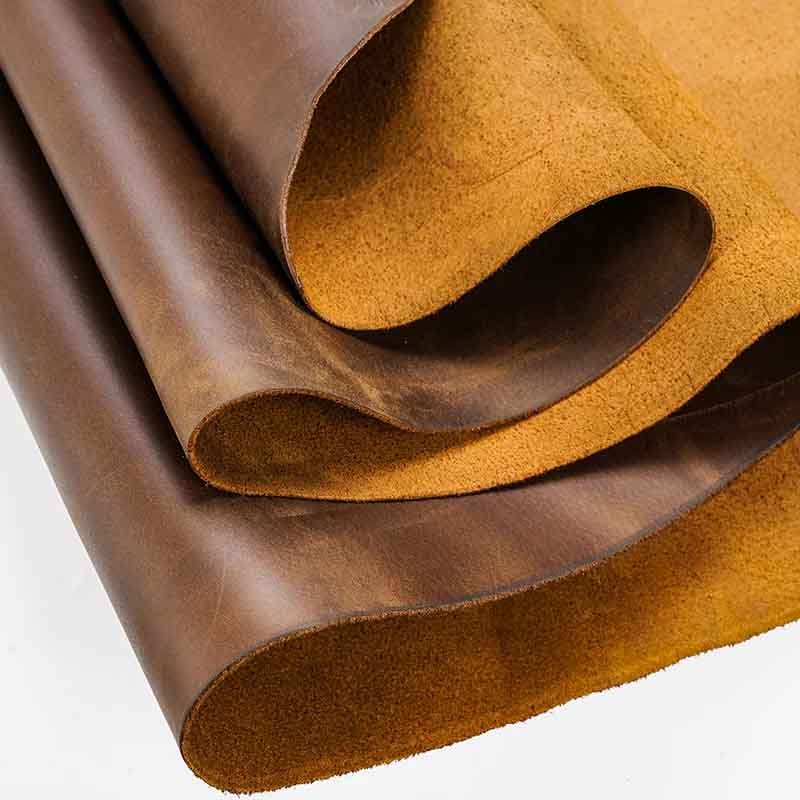
Imagine opening a centuries‑old chest and discovering a beautifully preserved leather-bound journal that feels as supple as the day it was made. That’s the magic of real leather—when crafted and cared for properly, it can outlast generations, weaving stories into its grain and patina. But just how long does real leather last? And what makes some leather goods endure a lifetime while others crack and fade in mere years?
Real leather’s lifespan depends on its type, thickness, tanning process, and care regimen. Full‑grain vegetable‑tanned leather can last 50–100 years or more, developing a rich patina with age. Top‑grain leather typically endures 15–30 years, while corrected‑grain or bonded leathers may last 5–10 years. Proper maintenance—cleaning, conditioning, and protecting from moisture and UV—can extend any leather’s life significantly.
Stick around as we explore what defines “real leather,” how its lifespan is measured, which types last the longest, and how you can ensure your Szoneier‑crafted leather goods become tomorrow’s heirlooms.
What Is “Real Leather” and How Is Its Durability Defined?
“Real leather” refers to animal hides—most commonly cowhide—that have undergone tanning to stabilize collagen fibers. Its durability hinges on grain structure, tanning method, and thickness. Full‑grain leather, retaining the hide’s complete outer layer, offers the highest fiber density and resists wear for decades. Top‑grain leather is sanded and pigmented for a uniform look, sacrificing some tear strength. Corrected‑grain and bonded leathers use reconstituted fibers and coatings, making them far less durable (5–10 years vs. 50+).
Understanding real leather’s durability starts with its anatomy and processing. Here’s a detailed look at the factors that define real leather—and why some hides outperform others:
1. Hide Anatomy & Grain Layers
Epidermis & Grain Layer (Full‑Grain):
- This outermost layer contains the tightest weave of collagen fibers, making full‑grain leather exceptionally strong and tear‑resistant. Natural scars, pores, and grain patterns remain visible, contributing to a unique patina over time.
Middle Layer (Top‑Grain):
- Tanners sand off the epidermis and buff imperfections, then apply a pigmented finish. While this yields a consistent appearance, it removes some fibers, slightly reducing tensile strength and abrasion resistance compared to full‑grain.
Split Layer (Corrected‑Grain):
- Beneath the grain, splits are looser and more fibrous. Corrected‑grain leathers are embossed with faux grain and heavily coated, but their loosely woven fibers mean quicker wear and cracking under stress.
Bonded Leather:
- A blend of leather scraps, fibers, and binders that mimic leather appearance. Since the fibers lack continuity, bonded leather can delaminate and flake within a few years.
2. Tanning Techniques & Their Impact
Vegetable Tanning:
- Uses plant‑based tannins to cross‑link collagen fibers. Produces firm, breathable leather that darkens and softens with age. The slow process (weeks to months) yields hides that resist microbial decay and maintain fiber integrity, contributing to lifespans of 50–100+ years.
Chrome Tanning:
- Employs chromium salts for a rapid (days) stabilization of fibers. Resulting hides are softer, more pliable, and water‑resistant, with lifespans of 15–30 years. However, the chemical process can leave residues that make the leather prone to surface cracking if the pigment layer is compromised.
Aldehyde & Synthetic Tanning:
- Niche processes (e.g., for chamois leather) that offer specialty hand feels but typically yield moderate lifespans (10–20 years).
3. Thickness & Fiber Density
Standard Ranges:
- Apparel & Accessories: 0.8–1.2 mm for flexibility.
- Bags & Footwear: 1.2–2.4 mm for structural support.
Correlation with Durability: Thicker hides contain more collagen layers, increasing puncture resistance and delaying wear‑through, especially in high‑stress areas like straps and soles.
4. Durability Testing & Metrics
Abrasion Tests (Martindale):
- Full‑grain leathers often exceed 100,000 rub cycles before visible wear; corrected‑grain may fail under 20,000.
Tensile & Tear Strength:
- Measured in megapascals (MPa); full‑grain can reach 15–20 MPa, while corrected‑grain often falls below 12 MPa.
Flex Endurance:
- Repeated bending over a fixed radius; high‑quality leather withstands tens of thousands of bends without cracking.
5. Environmental & Usage Factors
- UV Exposure: Breaks down collagen over time; leather with natural oils (veg‑tan) darkens gracefully, while pigmented leathers may fade or develop surface cracks.
- Moisture & Humidity: Leather breathes but can mold if stored wet; chrome‑tanned hides resist water better, yet all leathers benefit from protective treatments.
- Load & Abrasion: Constant friction (bag corners, belt holes) stresses fibers. Full‑grain leather’s tight weave ensures longer life under heavy use.
How Is the Lifespan of Leather Measured and Tested?
Leather lifespan is gauged through laboratory tests—abrasion (Martindale), tensile strength, and flex endurance—and real‑world aging simulations, like UV exposure and moisture cycling. In field studies, a full‑grain leather briefcase showed negligible wear after 5 years of daily use, while corrected‑grain items exhibited surface cracks in under 3 years. Manufacturers also track consumer returns and repair rates to estimate practical lifespans, correlating lab data with user experiences.
Accurately predicting leather’s longevity requires both quantitative testing and qualitative observations in real‑use scenarios. Here’s how it’s done:
Laboratory Testing Protocols
- Abrasion Resistance (Martindale Test):
- Method: Circular rubbing under specified pressure against wool or abrasive cloth.
- Metric: Number of cycles until noticeable wear—full‑grain often >100,000 cycles; corrected‑grain <30,000.
- Tensile Strength & Tear Resistance:
- Method: Tensile testers stretch samples until they break; tear testers measure force to propagate a cut.
- Relevance: Higher values indicate better performance in straps and seams.
- Flex Endurance (Oscillatory Fatigue):
- Method: Repeated bending over a rod or edge until cracks appear.
- Critical for: Wallet hinges, bag opening edges, belt folds.
- UV and Weathering Exposure:
- Method: Xenon arc lamps simulate sunlight; moisture chambers induce humidity cycling.
- Outcome: Measures colorfastness (ΔE values) and surface embrittlement.
Real‑World Aging Studies
- Consumer Product Trials:Example: 100 volunteers used a full‑grain leather backpack daily for 2 years; only 2% reported significant wear, and all noted improved patina.
- Return & Repair Data Analysis:OEMs like Szoneier track warranty claims—corrected‑grain goods had 12% return rate by year 3, while full‑grain remained below 3%.
- Longitudinal Case Studies:Vintage leather jackets from 1970s still functional with minor maintenance; archived field gear from the 1940s exhibited intact grain but needed re‑conditioning.
Correlating Lab and Field Data
- Predictive Models: Regression analyses link abrasion cycle counts to expected years of use under typical stress (e.g., 10,000 rubs ≈ 1 year of daily wear on bag corners).
- Adjustment Factors: Consider climate (dry vs. humid), frequency of use, and maintenance routines.
Measuring “End of Life”
- Functional Failure: When structural integrity is compromised—rips, seam failures, hardware pull‑outs.
- Aesthetic Threshold: Surface cracking, irreversible staining, loss of finish.
- Acceptable Wear: Consumer surveys show patina and minor scratches often add perceived value, delaying “end of life.”
Through a blend of controlled tests and real‑use monitoring, leather manufacturers can provide reliable lifespan estimates and guide customers on purchase decisions. In the next subsection, we’ll translate these findings into concrete life expectancy ranges.
What Is the Life Expectancy of Leather?
Life expectancy varies by leather type:
- Full‑Grain Vegetable‑Tanned: 50–100+ years
- Top‑Grain Chrome‑Tanned: 15–30 years
- Corrected‑Grain: 5–10 years
- Bonded Leather: 2–5 years
- Exotic Leathers: 50+ years with specialist care
These estimates assume annual conditioning, protective treatments, and average daily use. Climate extremes or neglect can halve expected lifespans, while meticulous maintenance can extend them beyond laboratory projections.
Which Types of Leather Last the Longest?
The longest‑lasting leathers are full‑grain vegetable‑tanned and exotic hides like crocodile, each enduring 50–100+ years when maintained. Top‑grain chrome‑tanned follows at 15–30 years. Corrected‑grain leathers last 5–10 years, while bonded leather often fails in under 5 years. Thickness (1.2–2.0 mm), tanning quality, and finish type (aniline vs. pigmented) further influence longevity. Thicker, minimally processed hides with tight grain structures resist wear best, making them the premier choice for heirloom‑grade goods.
Leather longevity hinges on intrinsic hide properties and processing methods. Below, we analyze how each major leather category performs over time:
Full‑Grain Vegetable‑Tanned Leather
- Fiber Integrity: Retains complete collagen fibers, providing unmatched tear and puncture resistance.
- Natural Grain: Imperfections become character marks rather than defects.
- Thickness Range: 1.2–2.0 mm allows heavy‑duty items—briefcases, saddles, harnesses—to endure rigorous use.
- Maintenance Requirements: Regular conditioning to prevent drying; yields 50–100+ years.
Exotic Skins (Crocodile, Ostrich, Stingray)
- Structural Features: Scales or quill patterns can conceal minor scratches.
- Tanning Complexity: Specialized protocols ensure scale adhesion; often vegetable‑tanned for luxury lines.
- Use Cases: High‑end handbags, belts, watch straps—pieces valued for rarity and longevity.
- Lifespan: 50+ years when rotated and professionally maintained.
Top‑Grain Chrome‑Tanned Leather
- Uniform Surface: Sanded and pigmented hides wear evenly but lack patina depth.
- Thickness: Commonly 1.0–1.4 mm for handbags and briefcases.
- Resistance: Chrome‑tanned hides resist moisture and UV better than veg‑tan, prolonging life to 15–30 years.
- Break‑In Period: Minimal, making them user‑friendly from day one.
Corrected‑Grain & Bonded Leathers
- Corrected‑Grain:
- Embossed to mask imperfections; thicker pigmented layers protect base, lasting 5–10 years.
- Bonded Leather:
- Composite of scraps and PU binders; lifespan drops sharply in harsh conditions—2–5 years.
- Suitability: Budget footwear, event giveaways; not recommended for heirloom products.
Veg‑Tan vs Chrome‑Tan: Comparative Data
| Metric | Veg‑Tan Full‑Grain | Chrome‑Tan Top‑Grain | Corrected‑Grain/Bonded |
|---|---|---|---|
| Abrasion Cycles (Martindale) | 120,000+ | 70,000–90,000 | 20,000–30,000 |
| Tensile Strength (MPa) | 15–20 | 12–15 | 8–12 |
| Water Resistance | Moderate (requires treatment) | High (natural resistance) | Low |
| UV Resistance | Moderate | High | Low |
| Consumer Return Rate (5 yrs) | <3% | 5–8% | 15–20% |
Thickness & Use Profiles
- Apparel (1.0–1.2 mm): Jackets and gloves—15–50 years.
- Bags & Briefcases (1.2–1.6 mm): 30–100 years for full‑grain, 10–30 years for top‑grain.
- Footwear (1.4–2.0 mm): Heavy boots last 20–50 years with resoling.
By selecting the right leather category for your product and following recommended care routines, manufacturers like Szoneier Leather ensure custom goods that resonate with consumers’ desire for both functional durability and lasting beauty.
Does Real Leather Get Better with Age?
Yes,full‑grain vegetable‑tanned leather develops a personalized patina as natural oils, sunlight, and handling interact with tannins in the hide. Over years, it gains depth of color, softened texture, and unique surface variations that enhance its aesthetic and value. Top‑grain ages more subtly, maintaining uniform color with minor sheen changes, while corrected‑grain rarely patinates, and bonded leather may crack rather than mature gracefully. Proper conditioning accelerates desirable aging effects.
What Factors Influence the Longevity of Leather Goods?
Leather lifespan hinges on hide quality (full vs. corrected grain), tanning method, thickness, finish type, environmental exposure (UV, humidity), usage frequency, and care routine. Thick full‑grain veg‑tan resists abrasion, while chrome‑tan handles moisture better. Sunlight breaks down fibers; humidity breeds mold; sweat acids degrade untreated leather. Regular cleaning, conditioning, and protective treatments offset these risks, extending functional life by 50–100%. Quality of hardware and stitching also critically affects overall durability.
Multiple variables converge to determine how long a leather item remains both functional and beautiful. Let’s examine each:
Material Factors
- Leather Grade & Thickness:
- Full‑grain hides >1.2 mm resist penetration and tearing.
- Thinner leathers (<1.0 mm) flex easily but may wear through at stress points.
- Tanning Process:
- Vegetable‐tanned leather offers deep character but is more prone to moisture damage unless treated.
- Chrome‐tanned leather gains water and UV resilience, but its pigmented finish can crack over time.
Environmental Exposures
- UV Light:
- Breaks down collagen fibers, causing color fading and surface embrittlement.
- Sunlight exposure accelerates aging; indoor storage or UV filters on windows mitigate damage.
- Humidity & Water:
- High humidity softens fibers but fosters mold.
- Water exposure can cause staining and stiffening if not dried and conditioned promptly.
- Temperature Extremes:
- Cold can stiffen leather; heat can dry it out and cause cracking.
Usage Patterns
- Daily vs. Occasional Use: Frequent handling transfers oils that nourish leather but also soil it; low‑use items may dry out.
- Load Stress: Overstuffing bags or belts carrying heavy tools strain seams and stretch fibers.
- Abrasion Points: Corners, straps, and flap edges bear the brunt of friction; reinforced stitching and thicker leather help.
Maintenance Regimens
- Cleaning Frequency: Monthly wipe‑downs remove dirt before it abrades grain.
- Conditioning Schedule: Apply a pH‑balanced leather conditioner every 3–6 months to replenish oils.
- Protective Treatments: Water‑repellent sprays, UV protectants, and edge paints guard against environmental threats.
Craftsmanship & Hardware
- Seam Construction: Saddle stitches provide redundancy; poor lock stitches fail under stress.
- Hardware Quality: Solid brass rivets and YKK zippers outlast plated alloys and chevron zippers by decades.
- Edge Finishing: Beveled and burnished edges resist fiber peeling; raw edges fray quickly.
How Do You Care for Leather to Maximize Its Lifespan?
To ensure real leather lasts decades, clean with a damp cloth and mild saddle soap monthly, condition with pH‑balanced leather cream every 3–6 months, and apply a PFC‑free water repellent annually. Air‑dry wet items at room temperature, avoiding heat sources. Store in breathable dust bags away from direct sunlight and humidity. Address stains promptly with specialized cleaners, and inspect seams and hardware periodically, repairing loose threads or tarnished fittings before issues escalate.
Optimal leather care strikes a balance between preservation and active aging—allowing patina while preventing damage.
Cleaning Protocols
- Routine Wipe‑Down:
- Use a microfiber cloth dampened with distilled water to remove surface dust.
- Avoid harsh detergents that strip natural oils.
- Deep Cleaning:
- Apply a saddle soap or pH‑neutral leather cleaner to a damp sponge; gently work into leather, then wipe off residue.
- Test cleaners on an inconspicuous area first.
Conditioning & Nourishment
- Leather Conditioner:
- Choose an oil‑based or wax‑based conditioner, free of silicones and harsh solvents.
- Apply sparingly in circular motions; allow 10–15 minutes absorption before buffing.
- Frequency:
- High‑use items: Every 3 months.
- Moderate‑use items: Every 6 months.
Protective Treatments
- Water & Stain Repellent:
- Spray a PFC‑free treatment to preserve eco‑credentials and prevent water ingress.
- Reapply after heavy rain or cleaning.
- UV Protectant:
- Use sprays containing UV blockers to shield colorfastness; especially important for items stored near windows.
Drying & Storage
- Drying Leathers:
- After wetting, air‑dry at ambient temperature; never use hairdryers or radiators, which cause shrinkage and cracks.
- Storage Conditions:
- Maintain 50–60% humidity and 65–75°F temperature.
- Store in breathable cotton bags or hinged wooden boxes; avoid plastic that traps moisture.
Hardware & Edge Care
- Zipper Lubrication: Use beeswax or paraffin to keep zippers moving smoothly.
- Edge Renewal: Reapply edge paint or burnish with beeswax when edges show fiber exposure.
Professional Maintenance
- Consider reconditioning services every 5–10 years for veg‑tan full‑grain items—re‑oiling, edge repainting, and hardware polishing revitalize longevity.
- Szoneier offers after‑sales services for high‑volume clients, ensuring branded products remain pristine.
By following these care steps, you not only preserve functionality but also nurture the evolving patina that makes real leather so uniquely rewarding over time.
Are Leather Products Worth the Investment Over Time?
Yes,real leather products often outlast synthetics by decades, amortizing their higher upfront cost. A $300 full‑grain briefcase with a 30‑year lifespan costs $10 per year, versus a $80 PU bag replaced every 3 years at $26 per year. Beyond durability, leather’s evolving patina enhances perceived value, and timeless style reduces fashion obsolescence. When factoring in repairability and resale potential, leather goods represent a cost‑effective, sustainable investment for both individuals and brands.
Assessing whether real leather is “worth it” demands both quantitative cost analysis and qualitative value judgments:
Cost‑Per‑Year Comparison
| Material | Upfront Cost | Expected Lifespan | Annual Cost |
|---|---|---|---|
| Full‑Grain Leather | $300 | 30 years | $10/year |
| Top‑Grain Leather | $200 | 20 years | $10/year |
| Corrected‑Grain | $100 | 7 years | $14/year |
| Bonded/PU Leather | $80 | 3 years | $26/year |
Repairability & Resale Value
- Leather Repairs: Scuffs can be recolored; seams re‑stitched; hardware replaced—extending life indefinitely.
- Second‑Hand Market: Well‑maintained full‑grain items retain 40–60% of retail value after 10 years. PU goods often fetch <10% resale.
Emotional & Aesthetic Return
- Patina as Story: Each scratch tells a tale, increasing emotional attachment and reducing disposal.
- Timeless Appeal: Leather’s classic look transcends seasonal trends, meaning fewer purchases over a lifetime.
Sustainability Perspective
- Natural Biodegradation: Vegetable‑tanned hides eventually return to the earth, unlike plastics.
- Reduced Waste: Long lifespans mean less frequent disposal and lower overall environmental footprint.
Brand Impact & Customer Loyalty
- Premium Perception: Brands that offer leather lines signal quality and command higher price points.
- Repeat Business: Customers who experience durable, beautiful products often become lifelong brand advocates.
Is It Worth Buying Real Leather?
Real leather is worth the investment for those valuing longevity, repairability, and timeless style. While the upfront cost may be 2–4× synthetic alternatives, the leather item’s extended lifespan and ability to develop cherished patina translate into lower annual cost, higher resale value, and deeper emotional satisfaction. For brands, leather lines justify premium pricing, enhance brand prestige, and foster customer loyalty through products that stand the test of time.
Conclusion & Inquiry
Real leather’s remarkable durability—spanning decades to centuries—sets it apart from synthetic alternatives. By understanding leather types, lifespan testing, influencing factors, and proper care, you can choose or design Szoneier Leather products that become tomorrow’s heirlooms.
Ready to offer custom leather goods that last lifetimes?Contact Szoneier Leather for expert material sourcing, bespoke design, and end‑to‑end OEM/ODM manufacturing.
What Can I Do For You?
Here, developing your OEM/ODM private label leather goods collection is no longer a challenge,it’s an excellent opportunity to bring your creative vision to life.
Make A Sample First?
If you have your own tech packs, logo design artwork, or just an idea,please provide details about your project requirements, including preferred fabric, color, and customization options,we’re excited to assist you in bringing your leather goods designs to life through our sample production process.