
Custom Leather Dog Collars: How to Develop Durable, Safe, and Brand-Ready Leather Collars
Leather dog collars look simple, but in real use they are one of the most demanding leather products to manufacture correctly. A collar is worn every day, exposed to pulling force, moisture, friction, and sudden impact. When problems occur, they are not just cosmetic—they affect safety, comfort, and brand trust.
Many pet brands encounter the same issues after launch: collars stretching out of shape, hardware loosening, edges cracking, or leather stiffening and rubbing against the dog’s neck. These problems rarely come from bad intentions. They come from treating a dog collar like a small fashion accessory instead of a load-bearing, safety-related leather product.
At Szoneierleather, we approach custom leather dog collars with the same discipline we apply to functional leather goods. Since 2007, our team in Guangdong, China has worked with international brands on leather products that require repeat durability and controlled performance. Supported by two specialized factories, 25+ engineers, and 10+ designers, we develop leather dog collars that balance strength, comfort, appearance, and long-term consistency.
We support projects from early concept and low-volume validation (starting from 20–100 pieces) through stable bulk production, with typical lead times of 15–25 days, depending on construction and materials. The goal is not just a good-looking collar—but one that can be produced again and again with the same performance.
Who Custom Leather Dog Collars Are Designed For
Custom leather works serve very different needs depending on the team behind the product. Understanding these differences is critical, because the right construction logic, cost structure, and production flow change significantly based on the development stage and business model.
These brands usually aim to create:
- daily-wear collars that stay on the dog for long periods
- products that feel soft on the neck but remain strong under tension
- designs that age well and develop a natural leather patina
For these projects, leather selection, edge finishing, and internal structure are more important than decorative elements. At Szoneierleather, we often recommend balanced leather temper and reinforced core layers to prevent stretching while maintaining comfort.
This category focuses on:
- higher pulling force
- sudden directional stress
- exposure to dirt, moisture, and abrasion
Leather dog collars for this use case must prioritize strength and control. Hardware attachment, stitching density, and layered construction become the core engineering focus. Our engineers are involved early to ensure that reinforcement does not create discomfort or sharp edges.
These collars emphasize:
- color consistency
- logo visibility
- coordination with leashes or harnesses
Here, branding and finishing must remain consistent across batches. With 10+ designers handling product and packaging coordination, Szoneierleather helps ensure that visual details do not compromise structural integrity.
These projects often require:
- controlled cost without visible quality loss
- repeatable production for restocking
- reduced return risk
Our low-MOQ capability allows teams to validate fit, sizing, and durability before scaling, while our dual-factory setup supports stable repeat orders.
Some brands develop:
- size-graded collars (XS to XL)
- breed-focused designs with different strength requirements
In these cases, we adjust leather thickness, width, and reinforcement logic by size, rather than applying one construction across all SKUs.
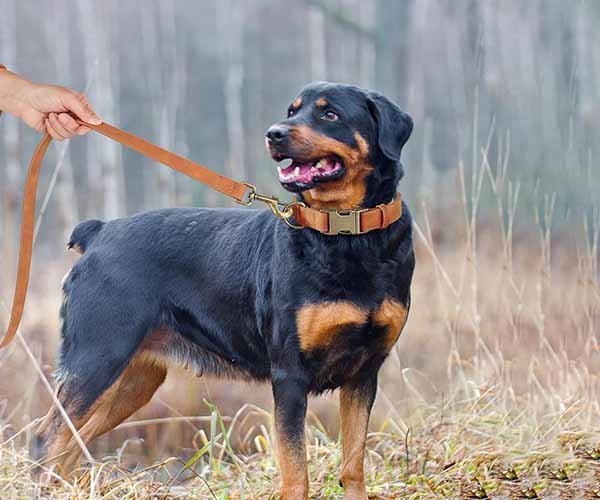
Why Custom Leather Dog Collars Require Serious Engineering
A leather dog collar is a functional safety product, not a decorative accessory. Without proper engineering, small construction mistakes quickly lead to stretching, hardware failure, discomfort, or loss of control during real use.
Real-world stresses leather dog collars face
Unlike handbags or wallets, dog collars are exposed to:
- constant tension from leashes
- sudden pulling or jerking forces
- moisture from rain, sweat, and washing
- friction against fur and skin
- temperature and humidity changes
These conditions accelerate wear and expose weak construction choices quickly.
Common failure points we see in dog collars
1. Stretching and deformation
Single-layer leather without internal reinforcement often stretches over time, especially in medium and large dog sizes.
2. Hardware loosening or tearing out
If buckles or D-rings are attached without proper backing layers, the leather around them can tear under stress.
3. Edge cracking and irritation
Poor edge finishing leads to cracking, which not only looks bad but can irritate a dog’s neck.
4. Stitch failure under load
Incorrect thread selection or stitch density causes seams to weaken where leash force concentrates.
5. Inconsistent sizing across batches
Small dimensional shifts can cause fit problems and increase returns.
Why early engineering matters
Once a leather dog collar fails in the field, brand reputation suffers immediately. Fixing these issues after bulk production is costly and often impossible.
At Szoneierleather, we focus on identifying where collars fail first, then engineering materials, structure, stitching, and hardware to prevent those failures—especially for projects that begin with small validation runs (20–100 pieces) and later scale to larger volumes.
How this benefits long-term product lines
By treating leather dog collars as engineered products:
- durability improves
- comfort complaints decrease
- repeat orders become predictable
- collections can expand into leashes, harnesses, and sets
This approach has allowed us to support stable export programs since 2007, across a wide range of leather product categories.
Key Engineering Factors Before Developing Custom Leather Dog Collars
Before sampling a leather dog collar, several engineering decisions must be made correctly. These choices directly affect safety, comfort, durability, cost control, and whether the collar can be produced consistently across sizes and batches.
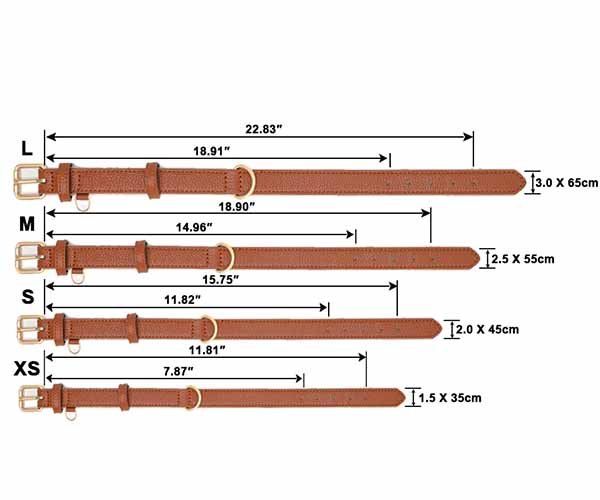
Collar Width and Load Distribution
Width is not a visual preference; it is a load-management decision.
A narrow collar concentrates force on a small area of leather and stitching. This increases the risk of:
- stretching
- stitch tearing near hardware
- discomfort on the dog’s neck
In our experience, many early failures happen because width is selected only based on appearance. At Szoneierleather, we usually adjust width by dog size and intended use, allowing force to spread more evenly across the leather surface.
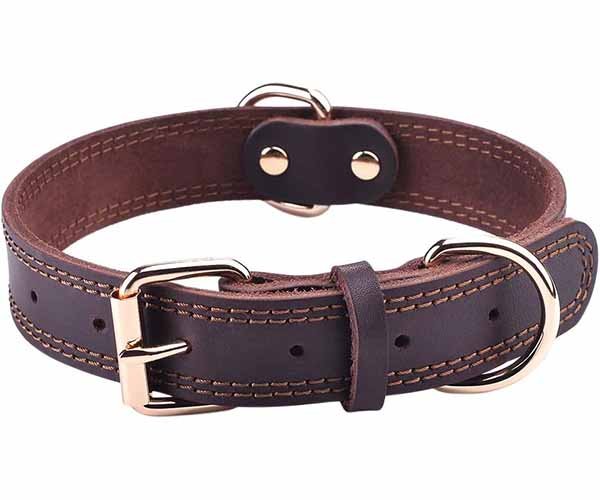
Leather Thickness and Temper Selection
Thicker leather does not automatically mean a stronger collar.
Very thick but soft leather can stretch over time. Very stiff leather can cause discomfort and edge irritation.
We evaluate:
- thickness by size range (small, medium, large dogs)
- temper by movement and pulling behavior
- surface finish by moisture exposure
Because we are involved in leather material processing as well as finished collar production, we can balance thickness and temper rather than relying on one fixed specification.
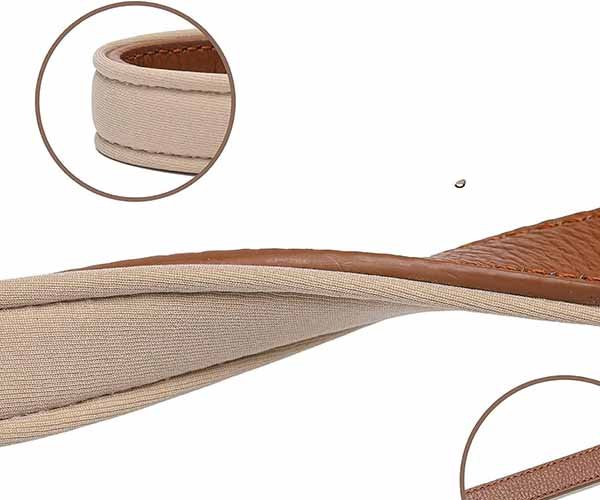
Internal Reinforcement Strategy
One of the most common mistakes is relying on leather alone to carry load.
Single-layer collars often:
- elongate after repeated pulling
- deform around buckle holes
- lose shape near the D-ring
For many projects, we introduce an internal reinforcement layer that:
- carries tensile force
- limits stretching
- does not create stiffness against the neck
The reinforcement design changes by collar size and target strength, rather than being identical across all SKUs.
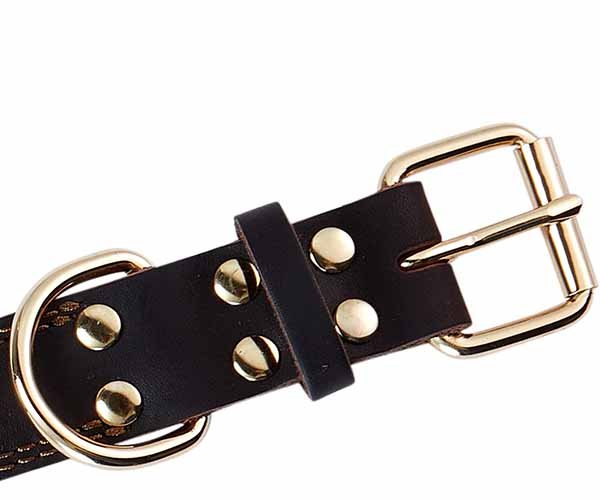
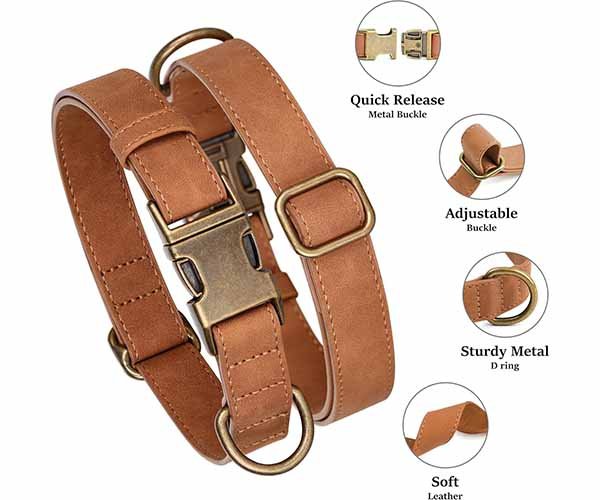
Hardware Type, Size, and Attachment Method
Hardware is not just a decorative component.
Buckles, D-rings, and rivets are the points where force is transferred from leash to collar. Incorrect attachment leads to tearing even if the hardware itself is strong.
We define:
- hardware size matched to collar width
- backing material behind hardware
- stitch and rivet combination (when needed)
Hardware decisions are locked during development to prevent late-stage failures.
Stitching Specification and Seam Placement
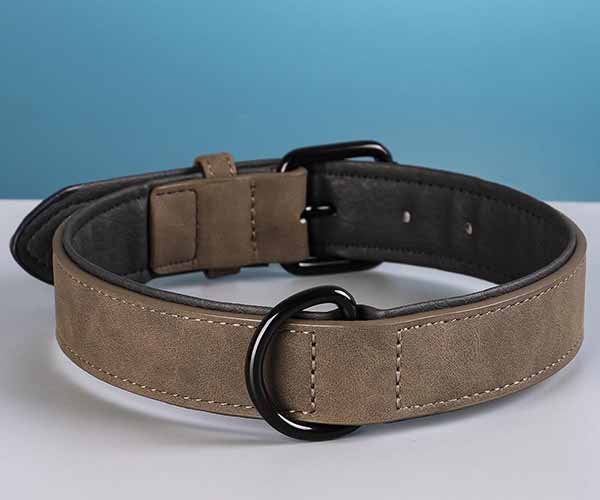
Stitching near hardware is often where collars fail first.
Key factors include:
- thread thickness
- stitch density
- seam distance from edge
- direction of force relative to stitch line
Instead of “stronger stitching everywhere,” we reinforce only where load concentrates. This avoids stiffness while improving durability.
Edge Finishing and Neck Comfort
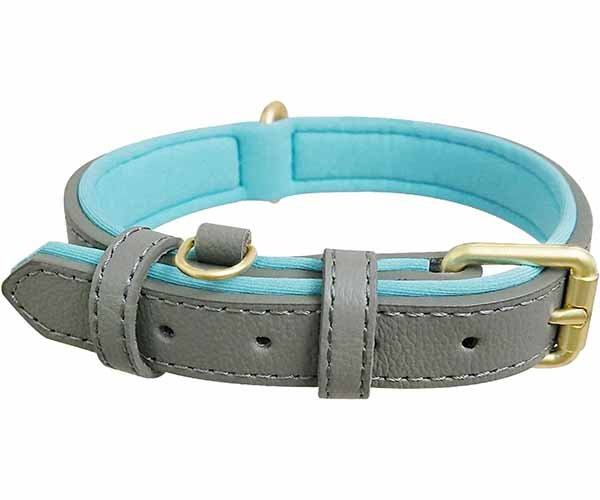
Edges directly contact fur and skin.
Poor edge finishing can cause:
- cracking
- hardening after moisture exposure
- irritation during long wear
We evaluate edge systems based on:
- bending frequency
- moisture exposure
- collar width and thickness
Edge finishing is tested during sampling through repeated bending, not just visual checks.
Size Grading and Hole Placement Accuracy
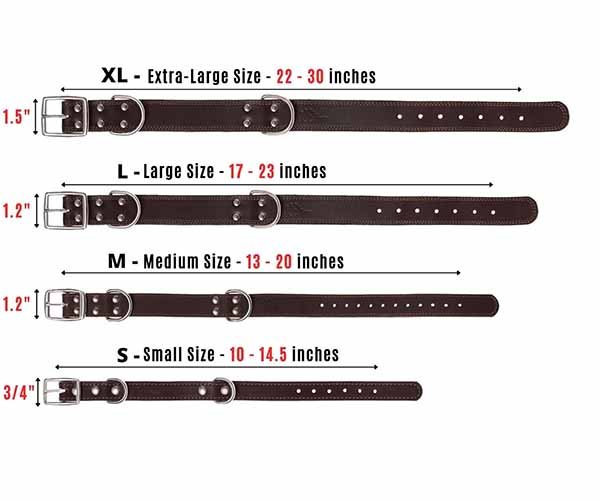
Dog collars are size-sensitive products.
Small dimensional errors result in:
- poor fit
- increased returns
- discomfort complaints
Hole spacing, hole size, and distance from buckle are controlled with templates, especially for size-graded programs.
Cost Structure and MOQ Planning
Cost control is linked to construction choices.
Overbuilt collars increase cost without improving comfort. Underbuilt collars increase failure risk.
With low MOQ capability starting from 20–100 pieces, we often suggest:
- validating one core size and construction first
- scaling to additional sizes after performance is confirmed
This approach reduces risk and improves long-term margin stability.
How Szoneierleather Develops Leather Dog Collars in Real Projects
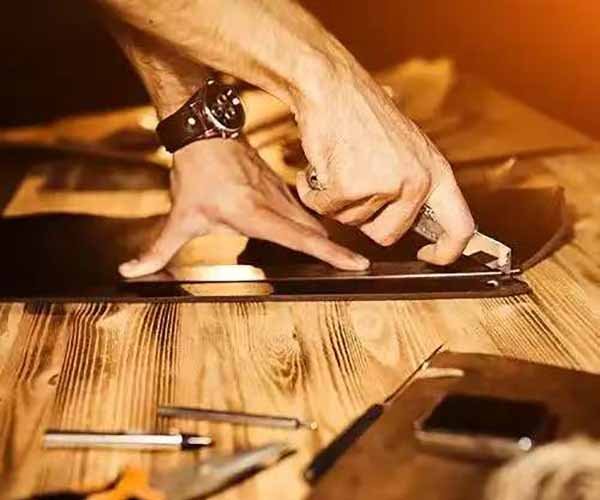
Leather dog collars are developed through a practical, experience-driven process. Each stage focuses on how the collar behaves in real use, not how fast a sample can be approved.
Starting from real usage, not just drawings
Most projects begin with reference photos or simple sketches. Before cutting leather, we discuss how the collar will be used: daily walking, training, outdoor activity, or occasional wear.
This discussion helps identify:
- expected pulling force
- frequency of adjustment
- exposure to moisture and dirt
Our engineers are involved at this stage, especially for projects with small initial runs (20–100 pieces), where early mistakes are costly.
Translating design into stable construction
Once direction is clear, patterns are developed with attention to:
- leather folding behavior
- reinforcement placement
- stitch path around hardware
Many collars fail because patterns look correct but ignore how leather stretches under load. These issues are addressed during sampling, not postponed.
Locking materials and hardware early
Leather type, reinforcement material, and hardware are confirmed before the final sample is approved.
Late material changes often lead to:
- unexpected stretching
- edge failure
- cost increases
By locking these variables early, bulk production becomes predictable.
Sampling as stress testing, not decoration
Sampling is used to test:
- pull resistance
- edge durability
- comfort after bending
Adjustments are based on how the collar reacts under force, not only on appearance.
Low-volume validation before scaling
For many collar programs, we recommend producing 20–100 pieces before scaling.
This reveals:
- stitching rhythm consistency
- hardware alignment variation
- edge curing stability
Problems found here are far easier to correct than after full production.
Preparing for repeatable production
Once validated, production is scheduled. Typical lead time is 15–25 days, depending on construction and materials.
With two specialized factories, production is assigned based on collar complexity, ensuring consistent results across batches.
Types of Custom Leather Dog Collars
Leather dog collars should be classified by how they carry load, how they contact the neck, and where they fail over time. This section breaks down collar types in practical manufacturing terms, not just product names.
Single-Layer Leather Flat Collars (Entry-Level / Light Use)
Where this type fits
- small dogs or light pulling behavior
- fashion-oriented programs where weight load is low
- occasional wear rather than daily training
Why it’s popular
- clean look, lower material cost
- faster development cycle
- easier branding placement
Where it fails first
- stretching along the length over weeks of pulling
- edge cracking if finishing is not controlled
- deformation around buckle holes
How we usually build it responsibly
- avoid overly soft leather that stretches quickly
- tighten cutting tolerance and hole spacing templates
- choose an edge system based on bending frequency, not appearance only
For brands targeting long-term wear, we often recommend upgrading to a reinforced core construction even if the visual design stays minimal.
Double-Layer Leather Collars (Classic Premium Standard)
Where this type fits
- daily wear for medium and large dogs
- brands that want a premium hand-feel and longer lifespan
- collar programs that expect repeat orders and consistent performance
Why it works better
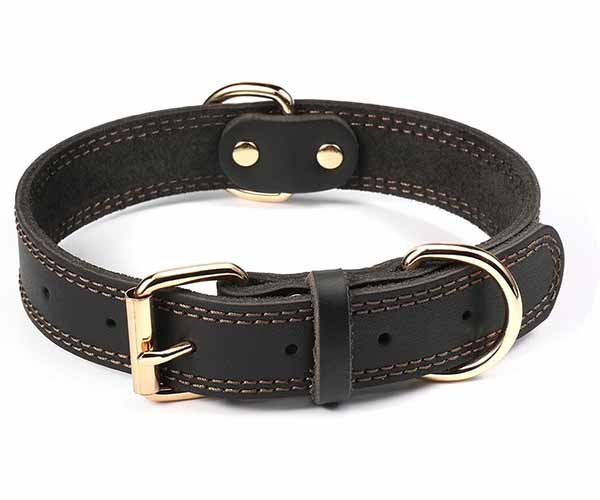
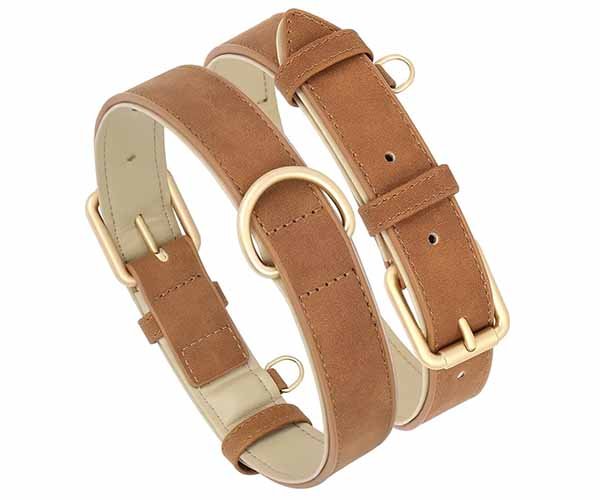
Two layers allow:
- better tensile stability
- cleaner edge profiles
- stronger hardware attachment zones
Where problems still occur
- stiffness if thickness is not managed
- poor lamination/bonding leading to bubbling or separation
- uneven edge thickness causing discomfort
How we typically control it
- manage thickness so comfort remains acceptable
- reinforce hardware zones without overbuilding the full collar
- ensure lamination method stays stable under humidity changes
Reinforced-Core Leather Collars (Anti-Stretch / Training Use)
Where this type fits
- strong pullers, active dogs, training programs
- outdoor brands where collars face moisture and abrasion
- size ranges that include large breeds
What makes it different
Instead of relying on leather alone, we introduce an internal reinforcement core designed to:
- carry tensile load
- reduce elongation
- protect buckle hole zones from deformation
Where this type can fail
- poor core selection that makes the collar too stiff
- edges becoming hard if finishing is rushed
- core shifting if construction is not controlled
How we engineer it At Szoneierleather, reinforced collars are engineered for balance:
- core strength is increased where needed (near buckle and D-ring zones)
- neck-contact feel remains smooth and flexible
- edge finishing is selected to prevent hardening over time
This type is often the best choice when brands want a leather collar that behaves more like a functional control product than a fashion accessory.
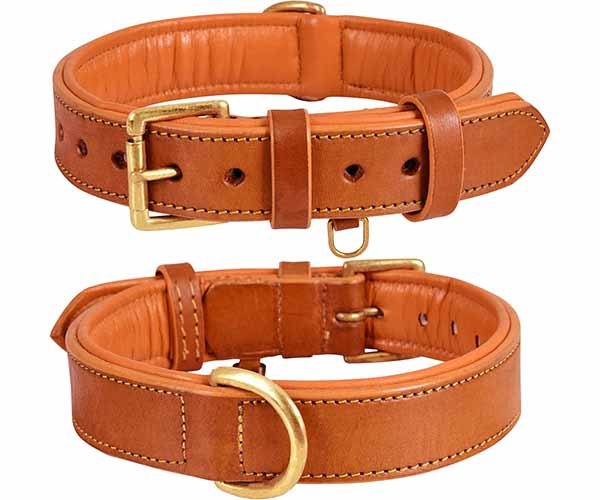
Padded Leather Collars (Comfort-First / Sensitive-Neck Dogs)
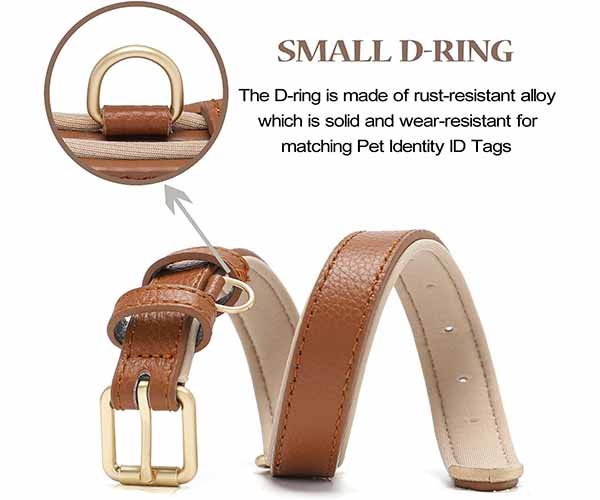
Where this type fits
- medium to large dogs
- brands focusing on comfort and strong presence
- programs aiming to reduce neck pressure from pulling
Key engineering benefit
A wider collar distributes force over a larger area, which can:
- improve comfort
- reduce stress concentration on stitches
- reduce risk of stretching compared to narrow collars
Failure risks
- shape collapse if internal structure is missing
- curling edges if leather temper is too soft
- hardware rotation issues if width and buckle proportion are mismatched
How we usually build it
- adjust structure and reinforcement to prevent curling
- match buckle size and D-ring size to collar width
- maintain consistent width tolerance during cutting
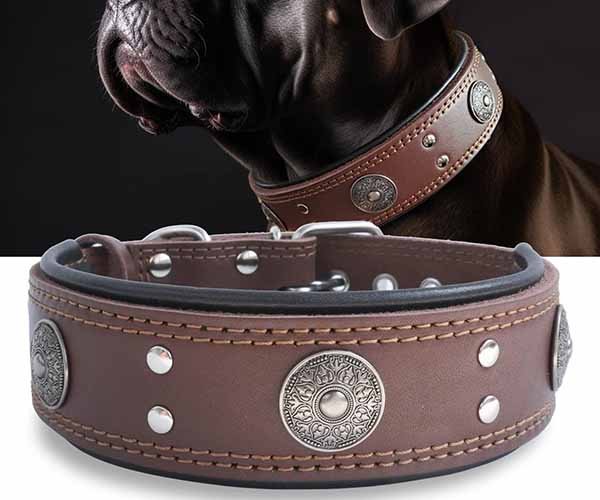
Wide Leather Collars
Where this type fits
- medium to large dogs
- brands focusing on comfort and strong presence
- programs aiming to reduce neck pressure from pulling
Key engineering benefit
A wider collar distributes force over a larger area, which can:
- improve comfort
- reduce stress concentration on stitches
- reduce risk of stretching compared to narrow collars
Failure risks
- shape collapse if internal structure is missing
- curling edges if leather temper is too soft
- hardware rotation issues if width and buckle proportion are mismatched
How we usually build it
- adjust structure and reinforcement to prevent curling
- match buckle size and D-ring size to collar width
- maintain consistent width tolerance during cutting
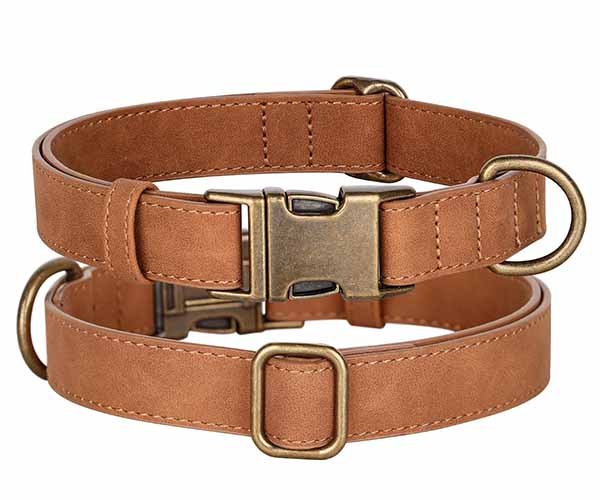
Rolled Leather Collars (Hair-Friendly / Round Profile)
Where this type fits
- long-haired breeds where flat collars cause hair breakage
- boutique brands seeking a premium niche product
Why this type is difficult
Rolled collars require:
- precise skiving
- controlled wrapping and seam positioning
- very stable internal core behavior
Common failure points
- uneven roundness along the length
- seam irritation if seam placement is wrong
- stretching if the core is too soft
How we typically manage it
- lock core specification early
- control seam placement away from neck contact zones
- enforce tighter production consistency, because small variations are visible
This type can be premium, but it is less forgiving than flat collars.
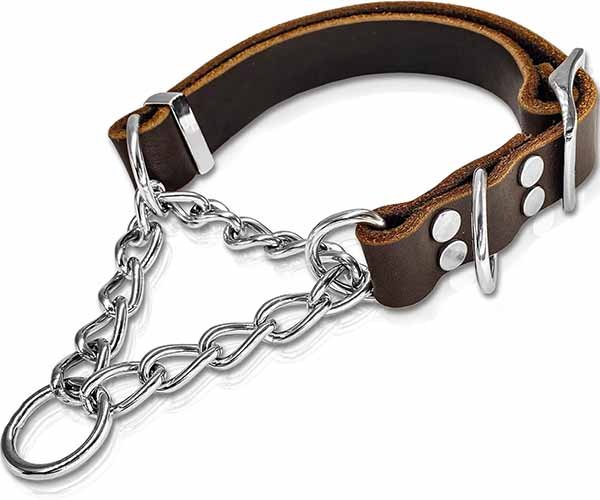
Martingale-Style Leather Collars (Control Without Choking)
Where this type fits
- dogs that slip out of standard collars
- training programs that need controlled tightening
Key engineering concerns
- ring placement accuracy
- strap movement smoothness
- stress concentration at ring points
Failure risks
- ring tear-out under sudden pull
- stitching opening at moving strap zones
- inconsistent tightening behavior if lengths are not controlled
How we approach it
- reinforce ring zones heavily but neatly
- define movement path to avoid leather abrasion
- validate function through repeated pull testing during sampling
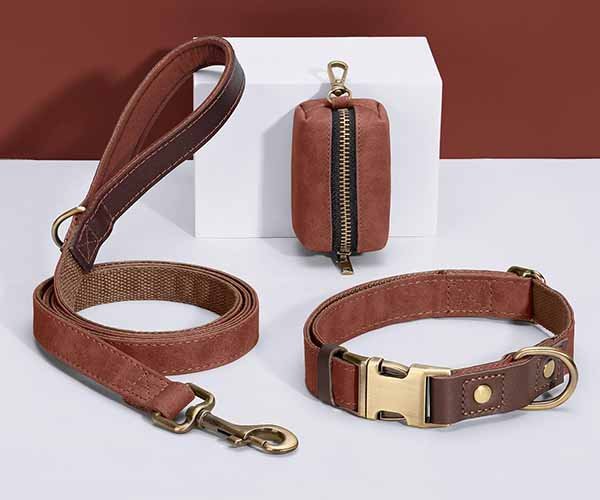
Custom Sets (Matching Collars + Leashes + Accessories)
Where this type fits
- brands selling coordinated collections
- gift and premium programs
Main difficulty
Consistency across items:
- leather tone matching
- stitching color matching
- hardware plating matching
- branding alignment
How we manage it
- lock a master leather lot standard for the set
- unify edge and stitching standards
- coordinate packaging and presentation through our 10+ designer team
| Collar Type | Best For | Typical Risk | Engineering Priority |
|---|---|---|---|
| Single-layer flat | light use / small dogs | stretching | leather temper & edges |
| Double-layer | daily wear | stiffness/separation | thickness control |
| Reinforced-core | training / strong pull | too stiff | core balance |
| Padded | comfort-first | moisture/edge bulk | padding system |
| Wide | pressure distribution | curling | structure + hardware ratio |
| Rolled | long-haired breeds | inconsistency | precision build |
| Martingale | anti-slip control | ring tear-out | reinforcement zones |
| Matching sets | premium collections | mismatch | standardization |
Materials & Construction for Leather Dog Collars
Leather collars fail in predictable ways: stretching, tear-out, edge cracking, and discomfort. The right materials and construction choices prevent these failures. This section explains practical material decisions and how they connect to durability and comfort.
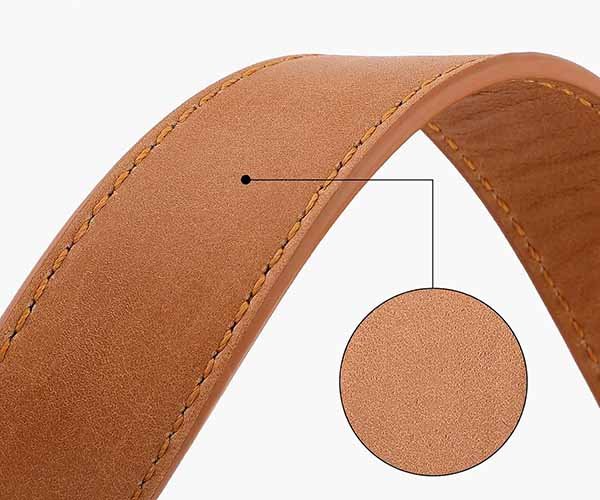
Leather Selection: Temper and Surface Matter More Than “Genuine Leather”
For collars, leather must handle:
- tension
- bending
- moisture cycles
- friction
Key leather decisions
- temper: too soft stretches; too stiff irritates
- finish: coated finishes may resist moisture but affect feel and branding
- thickness planning: different zones may require different thickness behavior
In collar development, we avoid selecting leather purely by appearance swatches. We evaluate how it bends, how it reacts to moisture, and how stable it remains under load.
Reinforcement Core Options
Stretching is the #1 long-term complaint in leather collars for strong pullers.
A reinforcement core can:
- limit elongation
- stabilize buckle hole zones
- improve long-term shape
But core selection must balance comfort. If the collar becomes too rigid, it will create wear discomfort and negative reviews.
We usually adjust core strength by:
- dog size group
- intended usage (daily walk vs training)
- collar width
This is one area where engineering input matters, especially for brands starting small with 20–100 pcs validation runs.
Stitching & Thread Decisions
Most stitching failures occur:
- near D-rings
- near buckles
- at folded return points
Key controls:
- thread thickness matched to leather thickness
- stitch density increased at load zones
- seam path designed to avoid edge splitting
Instead of stitching “strong everywhere,” we reinforce strategically where force concentrates.
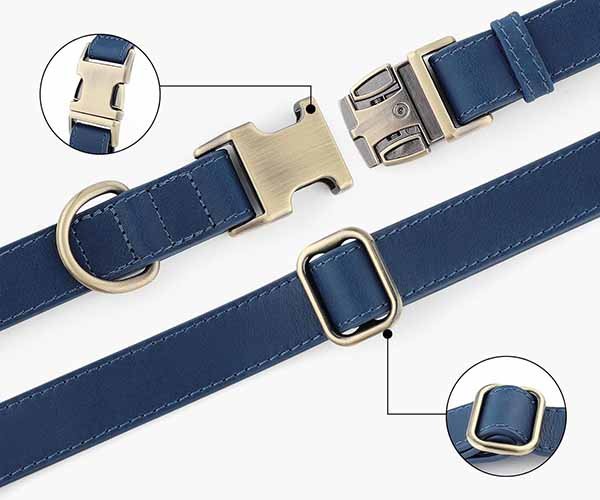
Hardware System
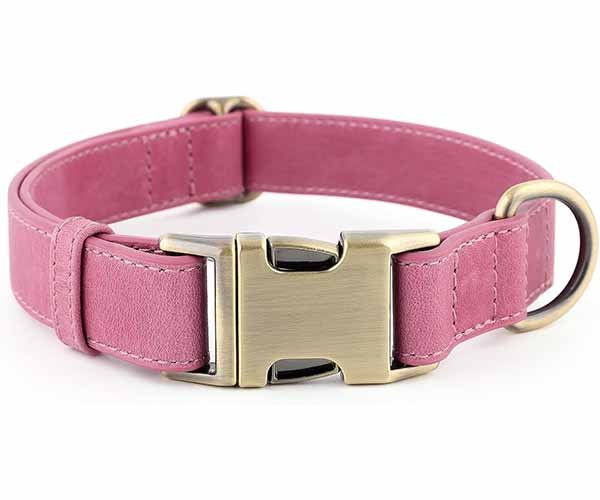
Hardware is only as strong as the leather around it.
Important decisions include:
- buckle size proportional to collar width
- D-ring thickness matched to expected force
- backing reinforcement behind hardware
- rivet vs stitch vs combination choice
Hardware zones are engineered early, not corrected after failures.
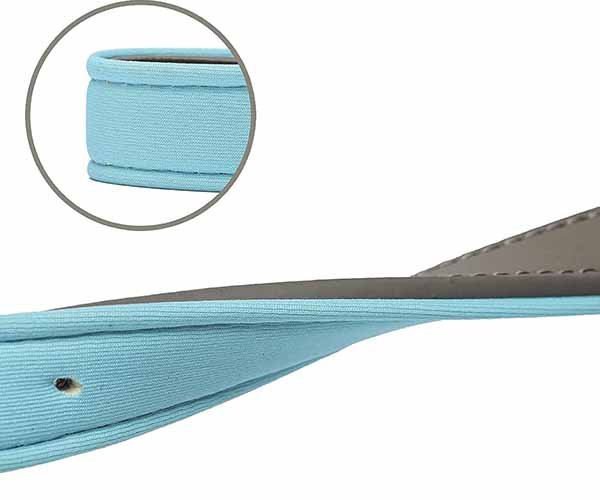
Edge Finishing and Comfort
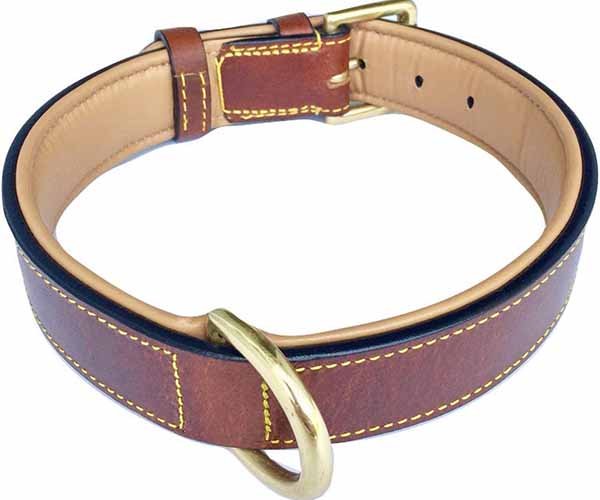
Edge systems determine comfort and long-term appearance.
Failure patterns:
- edges crack after bending
- edges harden after moisture exposure
- edges become rough and irritate skin
We select edge finishing based on:
- collar thickness
- bending frequency
- moisture exposure risk
- target “softness” feel
Moisture, Odor, and Long-Term Wear Considerations
Dog collars are exposed to:
- rain
- sweat
- washing
- humidity
Material and construction choices that reduce problems:
- moisture-resistant surface treatments when needed
- lining choices that reduce odor retention
- construction planning that avoids water-trap layers (especially in padded collars)
Production Consistency: Why Repeat Orders Depend on Documentation
Collars require consistent:
- width tolerance
- hole placement accuracy
- hardware alignment
- edge finish thickness
At Szoneierleather, stable repeat production is supported by:
- structured sampling documentation
- templates for hole spacing and placement
- dual-factory production coordination
- engineering oversight from a team built since 2007 in Guangdong
Projects can start with low MOQ (20–100 pcs), then scale into repeat orders with consistent outcomes, with bulk timelines typically 15–25 days depending on complexity.
Customization & Branding for Custom Leather Dog Collars
Branding on leather dog collars must survive daily wear, pulling force, and moisture exposure. At Szoneierleather, customization decisions are engineered for durability and consistency, not only visual impact in the first batch.
Why branding on dog collars fails more often than expected
Dog collars are one of the harshest environments for branding:
- constant bending near buckle zones
- friction from fur and skin
- moisture from rain, sweat, and cleaning
- repeated adjustment through holes and loops
A logo that looks perfect on a flat leather sample can fade, crack, or distort quickly if the branding method and placement are not chosen carefully. This is why branding on collars cannot be treated the same way as branding on wallets or handbags.
Since 2007, we have seen that most branding complaints come from early decisions that were made for appearance only, without considering how the collar behaves in real use.
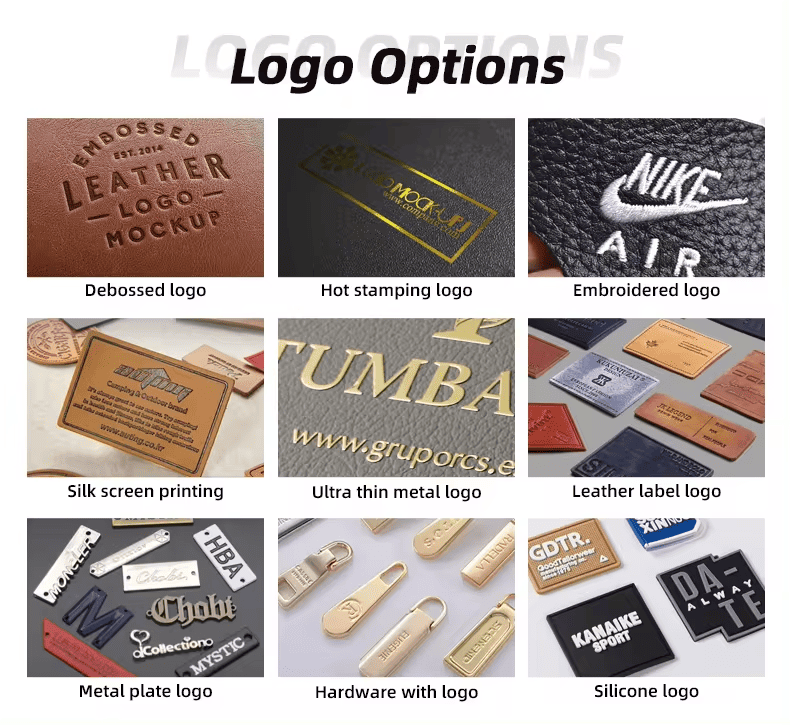
Logo Method Selection (Durability Before Decoration)
We usually help brands evaluate logo methods based on:
- leather surface finish
- collar thickness and flexibility
- expected wear frequency
Common options and practical notes:
Embossed / Debossed logos
- Long-lasting and resistant to wear
- Best for collars with enough thickness to hold shape
- Depth and pressure must be tested on the exact leather lot used in production
Foil stamping (gold, silver, color)
- Visually strong but less forgiving
- Not recommended near buckle holes or fold zones
- Requires controlled pressure and adhesion testing
Laser engraving
- Suitable for coated or smooth leather surfaces
- Depth and contrast must be balanced to avoid burning or discoloration
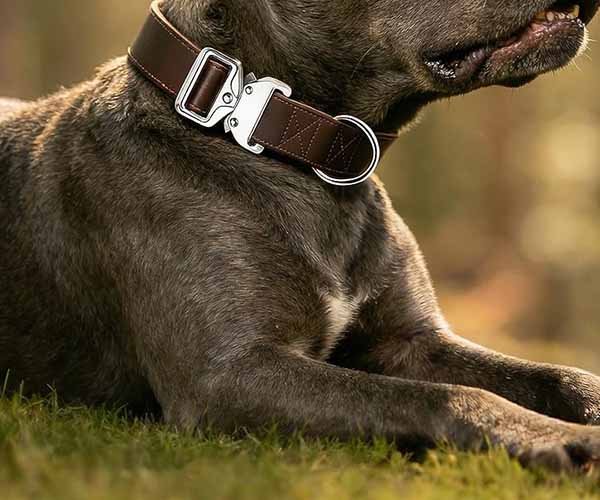
Metal logo plates or tags
- Strong brand presence
- Require internal reinforcement behind the plate
- Placement must avoid high-stress zones to prevent tear-out
At Szoneierleather, logo tests are performed during sampling using the same leather and construction planned for bulk, not substitute materials.
Logo Placement
Many collar branding problems are caused not by the logo method, but by where the logo is placed.
High-risk placement zones include:
- near buckle holes
- on folded return areas
- close to D-ring attachment points
We typically define:
- safe branding zones (low stress, minimal bending)
- restricted zones (high tension or repeated movement)
Placement templates are locked during development so branding remains consistent across batches and sizes.
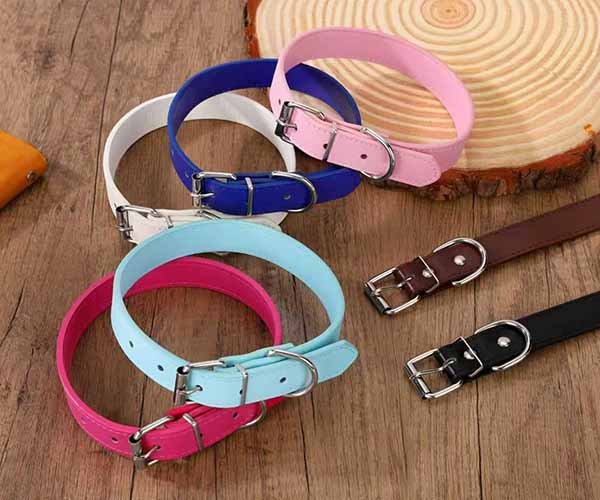
Color Control for Leather Collars
Color inconsistency becomes very visible in pet products, especially for:
- matching collar and leash sets
- size-graded programs
- repeat orders over time
To reduce variation, we recommend:
- approving a master leather color reference
- defining acceptable shade tolerance
- coordinating stitching, edge paint, and hardware finish together
This approach helps maintain visual consistency even when orders are placed months apart.
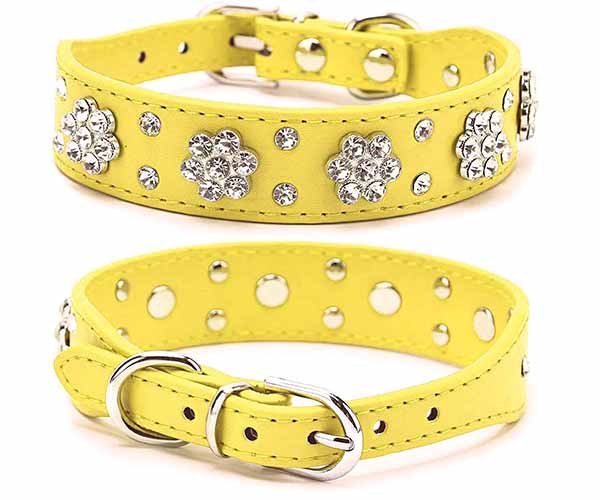
Decorative Elements and Their Structural Impact
Decorative features such as:
- studs
- contrast stitching
- layered color panels
can weaken a collar if not planned correctly.
We evaluate:
- whether decoration interferes with reinforcement layers
- how additional holes affect tensile strength
- whether surface elements increase irritation risk
Decoration is adjusted to support structure, not compromise it.
Packaging as Part of the Collar System
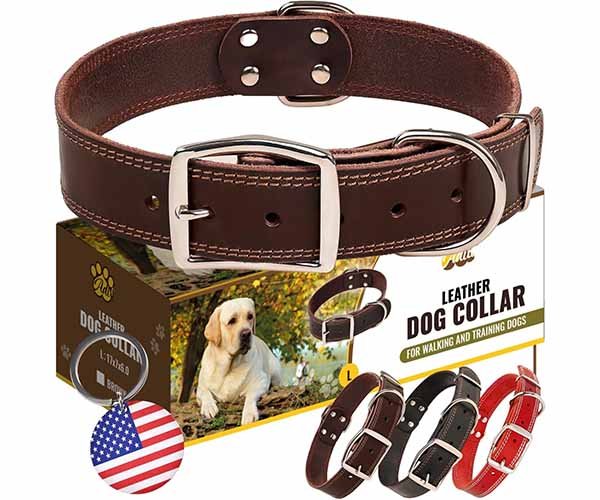
For leather dog collars, packaging is not just presentation—it affects:
- shape retention during shipping
- surface protection
- perceived product quality
Common packaging elements include:
- protective sleeves or dust bags
- backing cards to maintain shape
- branded boxes for premium lines
With 10+ designers handling product and packaging coordination, branding remains consistent from collar to unboxing.
Quality Control & Testing for Custom Leather Dog Collars
Leather dog collars must meet safety, durability, and comfort expectations consistently. Szoneierleather uses a practical quality control system focused on preventing failures at stress points rather than relying only on final inspection.
Why collar QC is different from fashion leather goods
Dog collars are safety-related products. A failure is not just a visual defect—it can lead to loss of control or injury. For this reason, quality control focuses heavily on:
- load-bearing areas
- attachment stability
- dimensional accuracy
Leather variability also means QC cannot rely on appearance checks alone.
Stage 1
Incoming Material Inspection
Before production begins, we check:
- leather surface condition and consistency
- thickness distribution across hides
- temper suitability for collar use
- hardware plating condition and finish
- reinforcement material stability
Materials that fail early inspection are corrected or rejected before they enter production.
Stage 2
In-Process Quality Control
This is the most critical stage for collars.
Key checkpoints include:
- skiving depth and consistency
- stitching alignment near hardware
- reinforcement placement accuracy
- edge finishing layers and curing time
- buckle hole punching accuracy
These checks prevent small deviations from becoming large batch-wide problems.
Stage 3
Final Inspection & Function Check
Final inspection focuses on:
- overall appearance and finish
- logo clarity and placement accuracy
- hole spacing and size accuracy
- buckle and D-ring movement
- manual pull resistance checks
Collars that do not meet defined acceptance standards are corrected or removed.
Practical Testing Logic for Leather Dog Collars
Testing is selected based on real usage, not arbitrary standards.
Pull resistance evaluation
- collars are checked at hardware zones
- reinforcement behavior is observed
Edge durability checks
- repeated bending in high-flex zones
- inspection for cracking or hardening
Hardware stability review
- buckle and D-ring attachment security
- rivet or stitch integrity
Comfort evaluation
- edge smoothness
- internal stiffness perception
Size and Fit Consistency Control
Collars are highly size-sensitive.
We control:
- width tolerance
- hole spacing
- distance from buckle to first hole
Templates and measurement references are used to keep sizing consistent across batches.
How QC Supports Repeat Orders
Stable repeat production depends on:
- documented specifications
- defined acceptance criteria
- consistent execution across factories
With two specialized factories and engineering oversight built since 2007, Szoneierleather supports both:
- low MOQ validation runs (20–100 pcs)
- scaled repeat orders with consistent quality
Typical bulk timelines remain 15–25 days, depending on complexity and materials.
Supplier Screening Checklist for Custom Leather Dog Collars
Choosing a supplier for leather dog collars is a safety decision, not only a sourcing task. This checklist reflects the questions that matter when durability, comfort, and repeatable quality are required.
Understanding of Real Collar Stress
What to ask
- Can the supplier explain where collars fail in real use?
- Do they talk about load zones, stretching, and hardware attachment clearly?
What to look for
- Discussion of reinforcement, stitching placement, and edge behavior
- Ability to explain trade-offs, not just quote prices
Our practice
At Szoneierleather, collars are treated as load-bearing leather products. Engineering input is involved early, especially for projects starting with 20–100 pieces.
Material & Construction Control
What to ask
- How is leather temper chosen for collars?
- How is stretching prevented without making collars stiff?
What to look for
- Clear explanation of leather behavior under tension
- Willingness to adjust construction by size and use case
Our practice
Because we work with leather materials and finished leather goods, thickness, temper, and reinforcement are balanced rather than fixed.
Size Consistency & Pattern Accuracy
What to ask
- How is hole spacing controlled?
- How do they keep sizing consistent across batches?
What to look for
- Use of templates and documented measurements
- Experience with size-graded collar programs
Our practice
Templates and specification records support repeat orders across both factories.
Branding Durability
What to ask
- Are logo methods tested on production leather?
- Is logo placement engineered or decorative?
What to look for
- Awareness of high-stress branding zones
- Testing during sampling, not after production
Our practice
Branding is tested on the same leather and construction planned for bulk.
Quality Control System
What to ask
- Is QC only final inspection?
- Are stress areas checked during production?
What to look for
- In-process checks
- Defined acceptance criteria
Our practice
Three-stage QC focuses on preventing collar failure rather than catching defects at the end.
| Area | What Matters | Szoneierleather |
|---|---|---|
| Stress understanding | Load & failure zones | Engineered approach |
| MOQ flexibility | Validation first | 20–100 pcs |
| QC system | In-process focus | 3 stages |
| Scale readiness | Repeat stability | Dual factories |
| Communication | Technical clarity | Direct & visual |
Custom Leather Dog Collars: Project Experience & Case Scenarios
Leather dog collars reveal their weaknesses only after real use. The following scenarios reflect actual development challenges we have solved, showing how structure, materials, and process decisions determine long-term performance.
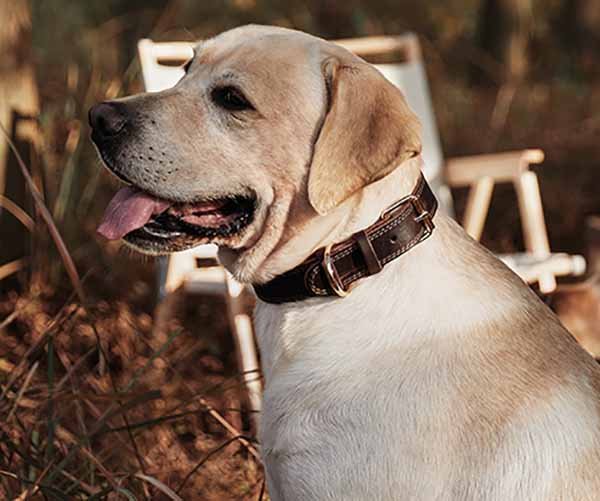
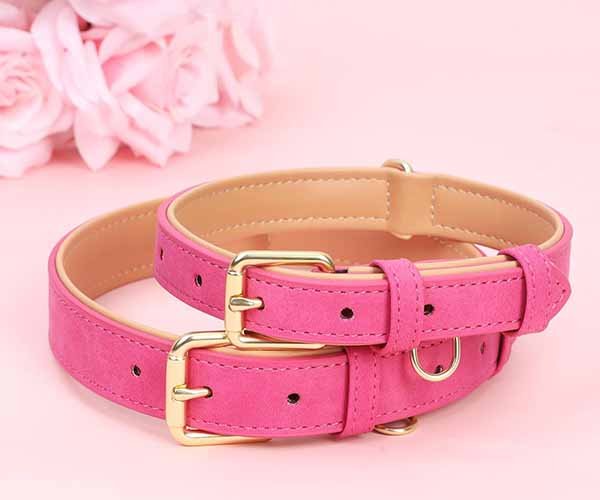
Daily-Wear Collar That Looked Premium but Stretched Too Fast
Project background
A premium pet brand launched a minimalist leather dog collar aimed at daily wear. The visual design was clean, and the first samples felt soft and comfortable.
Problem encountered After several weeks of real use, customers reported:
- collar length increasing noticeably
- fit becoming loose
- need for frequent re-adjustment
The leather itself was high quality, but the collar relied on a single leather layer to carry load.
Engineering decision Instead of switching to stiffer leather (which would reduce comfort), we introduced:
- a thin internal reinforcement layer to limit elongation
- adjusted stitch placement to share load with the reinforcement
- preserved the original leather temper on the neck-contact surface
Result
- stretching complaints dropped significantly
- comfort feedback remained positive
- the collar became suitable for repeat production
Training Collar Failing at the D-Ring Under Sudden Pull
Project background
A collar designed for medium-to-large dogs used during training and outdoor activity.
Problem encountered During use, the collar did not fail gradually—it failed suddenly:
- tearing near the D-ring
- stitching opening under sharp pulling force
Root cause Hardware strength was sufficient, but:
- the leather around the D-ring lacked backing
- stitching density was uniform instead of load-focused
Engineering decision We redesigned the hardware zone by:
- adding localized reinforcement behind the D-ring
- increasing stitch density only in the load zone
- adjusting hole distance to reduce tear propagation
Result
- collar withstood repeated sudden pulls
- no additional stiffness introduced to the neck area
- structure scaled cleanly into repeat orders
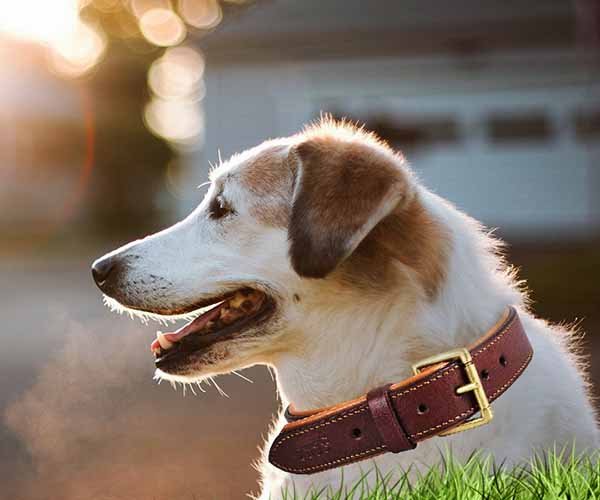
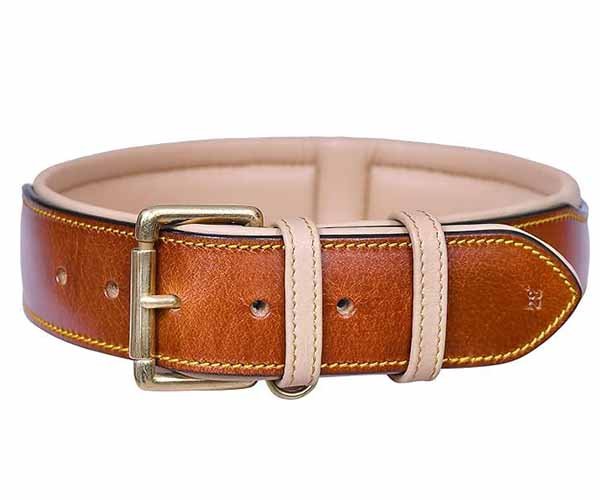
Logo Damage on a Fashion-Oriented Leather Collar
Project background
A fashion-driven collar with a prominent embossed logo intended as a visual centerpiece.
Problem encountered After wear:
- logo edges softened
- embossing depth became inconsistent
- cracking appeared near the logo area
Root cause The logo was placed too close to a fold and adjustment zone, where the collar bent repeatedly.
Engineering decision Rather than changing the logo method, we:
- relocated the logo to a low-stress section
- adjusted embossing depth for the specific leather surface
- locked logo placement templates for all sizes
Result
- logo durability improved significantly
- branding remained consistent across batches
- no impact on collar flexibility
Padded Collar That Felt Premium but Became Bulky
Project background
A comfort-focused padded leather dog collar designed for long daily wear.
Problem encountered Users reported:
- collar feeling thick and rigid
- edge pressure on the neck
- reduced flexibility during adjustment
Root cause Padding thickness was selected without considering:
- fold behavior near buckle zones
- edge profile after stitching and finishing
Engineering decision We:
- reduced padding thickness in adjustment zones
- shifted seam placement away from neck-contact edges
- refined edge finishing to soften transition layers
Result
- improved comfort without sacrificing structure
- better neck conformity
- reduced bulk perception
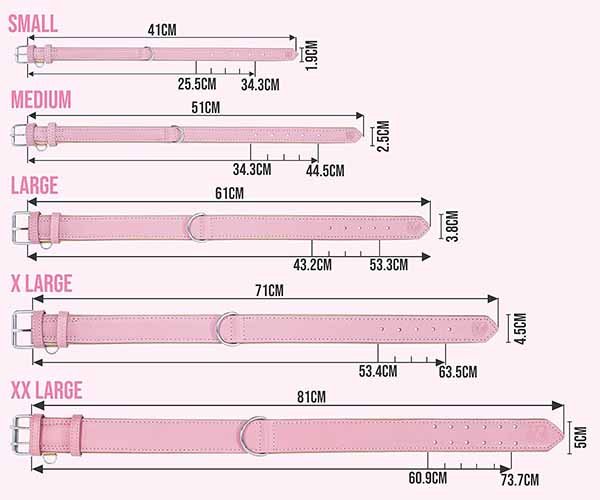
Size-Graded Collar Program That Used One Construction Across All Sizes
Project background
A collar program covering sizes from small to extra-large, all built with identical construction.
Problem encountered
- small sizes felt stiff
- large sizes stretched over time
- return rates varied significantly by size
Root cause One construction cannot handle both low and high tensile loads effectively.
Engineering decision We adjusted:
- leather thickness by size group
- reinforcement strength by expected pull force
- collar width proportions across sizes
Result
- improved fit consistency
- balanced comfort and durability across all sizes
- smoother scaling into repeat production
Matching Collar and Leash Set with Visual Inconsistency
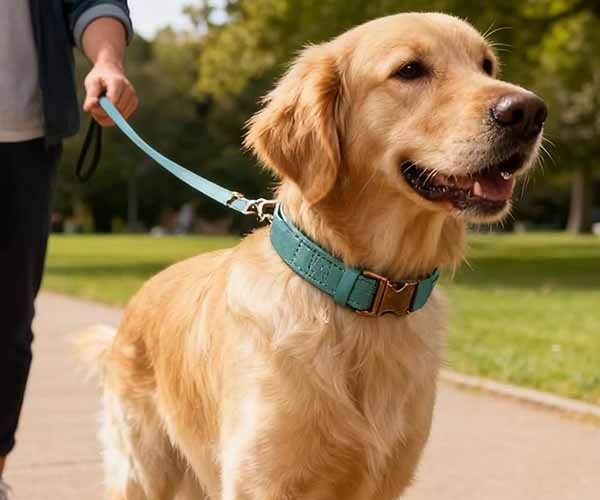
Project background A coordinated collar and leash set positioned as a premium product.
Problem encountered When placed side by side:
- leather tone varied slightly
- stitching and edge finishes did not fully match
- hardware plating appeared inconsistent
Root cause Components were developed separately without a unified standard.
Engineering decision We:
- established a master leather color reference
- unified stitching, edge, and hardware specifications
- synchronized production sequencing across components
Result
- consistent appearance across the full set
- improved perceived quality
- stronger presentation for retail and online channels
Make A Sample First
If you have your own tech packs, logo design artwork, or just an idea,please provide details about your project requirements, including preferred fabric, color, and customization options,we’re excited to assist you in bringing your leather goods designs to life through our sample production process.
FAQ: Custom Leather Dog Collars
1. What is your typical MOQ?
Our MOQ generally starts from 20–100 pieces, depending on construction and materials. This allows validation before scaling.
2. Can you work from simple sketches?
Yes. We often start from references or sketches and translate them into production-ready patterns through our sampling team.
3. How long does development take?
Sampling usually involves multiple rounds. Timeline depends on complexity and required adjustments.
4. What is the typical production lead time?
Bulk production typically takes 15–25 days, depending on order size and materials.
5. How do you prevent collars from stretching?
Through reinforcement design, leather temper selection, and controlled stitching—not by using overly stiff leather.
6. Can you support branding and packaging?
Yes. Logo methods and packaging are coordinated with our design team to ensure consistency.
7. How is sizing accuracy controlled?
We use templates and measurement references for cutting and hole placement.
8. How do you manage repeat orders?
Specifications, samples, and QC standards are documented to ensure consistency.
9. Where are your factories located?
We operate in Guangdong, China, with two specialized factories.
10. How long have you been producing leather goods?
Szoneierleather has been developing leather products since 2007.
Working with Szoneierleather
The most effective way to start a leather dog collar project is a technical discussion. Early alignment on structure, materials, and use case prevents costly revisions later.
What to share with us
reference images or sketches
target dog size range
intended usage (daily, training, outdoor)
quantity expectations
What we provide
- material and structure recommendations
- suggested MOQ and development approach
- realistic timelines
- clear next steps
If you have any questions or need a quote, please leave us a message. Our experts will respond within 12 hours to assist you in selecting the ideal fashion products tailored to your needs.
Exclusive Offer for You
As a first-time buyer, you’ll receive a Free bags Color Card to help you select the right material and shade. Once confirmed, we’ll also provide a Free Sample made by our factory—no extra cost.
For our regular partners, we send New Color Charts multiple times a year—completely free—to support your latest collections.