
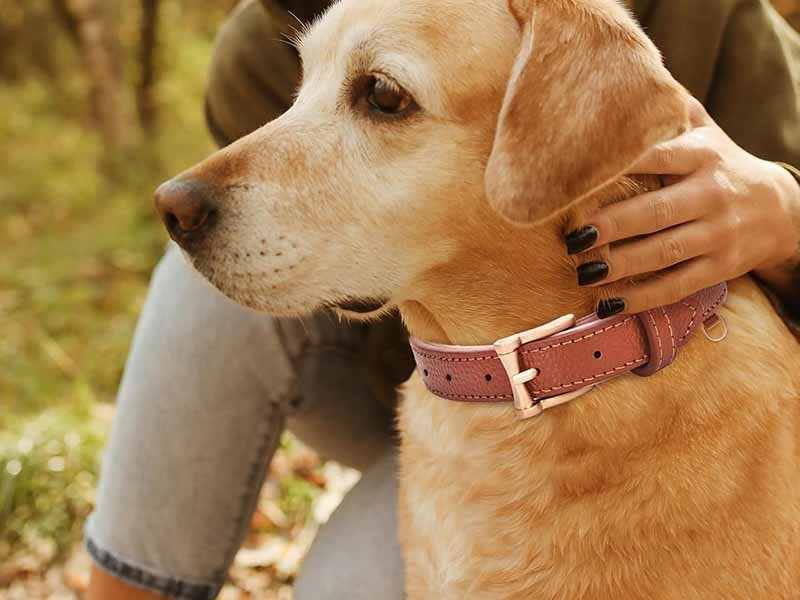
A leather dog collar can be crafted from beautiful full-grain leather, finished with premium hardware, and still get bad reviews for one reason: the sizing feels “off.” Pet owners don’t talk about pattern engineering—they say things like “runs small,” “holes don’t line up,” “my dog is between sizes,” or “it slips when he pulls.” And once sizing complaints appear, returns rise fast, especially online. That’s why smart pet brands treat the size chart as a product feature, not an afterthought.
The best XS–XL collar range planning starts with neck circumference ranges, then matches strap width, leather thickness, buckle size, and hole spacing to each size. Brands that build charts around real dogs (including mixed breeds) and allow enough adjustment room typically see fewer exchanges, better comfort feedback, and stronger repeat purchases. If you’re selling in e-commerce, one extra hole in the right location can save more money than any marketing discount.
A common story in collar development: a brand launches five sizes, but most returns happen because S and M overlap poorly—owners can’t get that “secure but comfortable” fit. Fixing the overlap and hole spacing often improves conversion without changing the design. Let’s start with the basics—what collar sizes really mean in measurable terms.
What are standard dog collar size categories?
Dog collar sizes (XS–XL) should be defined by adjustable neck circumference range, not by breed name. Each size needs enough adjustment space for growth, coat thickness, and comfort. A practical range plan usually gives 5 sizes that cover most pet dogs, with overlap between adjacent sizes to reduce “between size” problems.
What a good size system includes
- Minimum and maximum neck range (the holes that actually work)
- Comfort allowance guidance (two-finger rule)
- Strap width recommendation by size
- Hole count and spacing rules
- Overlap strategy between sizes (so customers can size up/down safely)
What measurements define XS, S, M, L, XL?
For leather collars, the measurement that matters is neck circumference at the collar resting point, plus adjustment room. Brands should publish the usable hole range, not just the collar’s total length.
| Size | Usable Neck Range (cm) | Usable Neck Range (in) | Best for Neck Type |
|---|---|---|---|
| XS | 18–25 | 7.1–9.8 | tiny / puppy / toy |
| S | 25–32 | 9.8–12.6 | small companion |
| M | 32–40 | 12.6–15.7 | medium mixed-breed |
| L | 40–50 | 15.7–19.7 | large active dogs |
| XL | 50–65 | 19.7–25.6 | giant / thick neck |
Why overlap matters: If XS ends at 25 and S begins at 25, you reduce “dead zones.” Online customers often measure slightly wrong or add coat thickness later—overlap protects you.
Recommended overlap design
| Adjacent Sizes | Overlap Range (cm) | Purpose |
|---|---|---|
| XS ↔ S | 24–25 | puppy growth + measurement error buffer |
| S ↔ M | 31–32 | most common “between size” zone |
| M ↔ L | 39–40 | coat thickness + athletic builds |
| L ↔ XL | 49–50 | thick-neck working dogs |
Which strap widths match each size range?
Strap width is not only style—it affects pressure distribution and comfort. Too narrow on a large dog concentrates force; too wide on a small dog restricts neck movement and looks bulky.
Strap width planning by size
| Size | Strap Width Range | Best Use |
|---|---|---|
| XS | 10–15 mm | toy dogs, puppies |
| S | 15–20 mm | small breeds, light pullers |
| M | 20–25 mm | everyday medium dogs |
| L | 25–30 mm | outdoor / active large dogs |
| XL | 30–40 mm | strong pullers, heavy builds |
width is also a visual cue. Customers expect XL to “look stronger.” If XL is too thin, they doubt durability even before reading specs.
Which breeds fit each size range (and how should brands use this)?
Breed labels help customers shop faster, but they should be used as examples, not as rules. Two Labradors can have different neck sizes depending on age, weight, and coat.
Breed examples
| Size | Breed Examples | Notes |
|---|---|---|
| XS | Chihuahua, Yorkie | also good for young puppies |
| S | Pomeranian, Shih Tzu | coat thickness affects sizing |
| M | Beagle, Cocker Spaniel | very common online orders |
| L | Labrador, Border Collie | athletic necks need good overlap |
| XL | GSD, Rottweiler | often needs wider strap + bigger buckle |
Important for brands: breed mapping helps reduce questions, but your size chart must still be based on neck measurement, or returns will spike.
Do mixed breeds need special sizing?
Yes, and mixed-breed dogs are a major reason brands should avoid “breed-only sizing.” Many mixed breeds have:
- thick neck + short circumference
- thin neck + wide shoulders (slip risk)
- growth variability (rescues, young dogs)
For mixed breeds, the best sizing plan includes:
- more holes (better micro-adjustment)
- smaller hole spacing in S/M (where most mixed breeds fall)
- a clear instruction: measure and choose by neck, not weight
Hole spacing strategy
| Size | Suggested Hole Count | Hole Spacing | Why it helps |
|---|---|---|---|
| XS | 5–7 holes | 10 mm | puppies grow fast |
| S | 7 holes | 10 mm | most “between size” orders |
| M | 7 holes | 12 mm | balance adjust + clean look |
| L | 5–7 holes | 12–15 mm | thicker leather, stronger pull |
| XL | 5 holes | 15 mm | heavy hardware, stable fit |
Brands often see the highest exchange rate in S and M, so giving those sizes more adjustment control is usually worth it.
How to measure dogs for collar sizing?
Correct measurement is the foundation of a low-return size chart. The goal is a collar that’s secure but not restrictive. The standard approach is the two-finger comfort rule—but brands should explain it clearly so customers apply it consistently.
The measurement brands should standardize
- Dog standing relaxed
- Tape placed at mid-neck collar position
- Add comfort space so two fingers slide under the tape
- Choose size where the dog will wear the collar near the middle holes (not the last hole)
What tools should customers use?
Keep it simple. The easier it is, the more likely customers will do it correctly.
- Soft measuring tape (best)
- String + ruler (backup)
- Printable size guide card (for retail)
| Mistake | What happens | Fix on your product page |
|---|---|---|
| Measuring too high (under jaw) | collar feels tight | show correct position diagram |
| Measuring too low (near shoulders) | collar slips | explain “where collar rests” |
| No comfort allowance | choking risk | explain two-finger rule |
| Choosing max hole | no room for growth | recommend mid-hole selection |
Which part of the neck should be measured?
Measure where the collar will sit—usually mid-neck. Do not measure:
- right under the jaw (too tight)
- at the shoulder base (too loose)
For fluffy dogs, owners should gently compress the fur when measuring. Otherwise they buy too large and complain about slipping.
How do brands keep sizing comfortable and safe?
Comfort and safety come from a combination of:
- correct circumference range
- enough adjustment holes
- suitable strap width
- smooth edges and hardware
| Feature | Recommendation | Why customers care |
|---|---|---|
| Edge finish | rounded / burnished | reduces rubbing |
| Leather thickness | 2.5–4.0 mm (by size) | strength without stiffness |
| Buckle size | matched to strap width | no wobble / no sharp corners |
| Adjustment range | 4–6 cm minimum | growth + coat changes |
What should brands include on a size chart?
A size chart should not be only a table. It should include instructions + examples + a simple decision rule:
- Measure neck
- Add comfort space
- Choose size where measurement sits in the middle of the range
- If between sizes, decide based on coat thickness and growth stage
| Size | Neck Range | Strap Width | Suggested Dog Weight (optional) |
|---|---|---|---|
| XS | 18–25 cm | 10–15 mm | 1–3 kg |
| S | 25–32 cm | 15–20 mm | 3–6 kg |
| M | 32–40 cm | 20–25 mm | 6–15 kg |
| L | 40–50 cm | 25–30 mm | 15–30 kg |
| XL | 50–65 cm | 30–40 mm | 30–55+ kg |
Weight is optional and less accurate than neck circumference, but some customers search by weight first, so including it can improve shopping speed.
What size chart structure helps brands reduce returns and improve sell-through?
A good collar size chart does more than describe measurements. It actively guides customers to the correct choice before checkout. When sizing logic is clear, brands typically see:
- fewer exchanges between S and M
- lower customer service workload
- higher repeat purchase confidence
- better online review scores
From a manufacturing and retail perspective, the most effective XS–XL systems share three structural rules:
- Balanced overlap between adjacent sizes
- Enough adjustment holes for real neck variation
- Clear visual instructions for measurement and fit
These details may look small, but they strongly influence conversion rate and return cost, especially in e-commerce.
How much overlap should exist between adjacent sizes?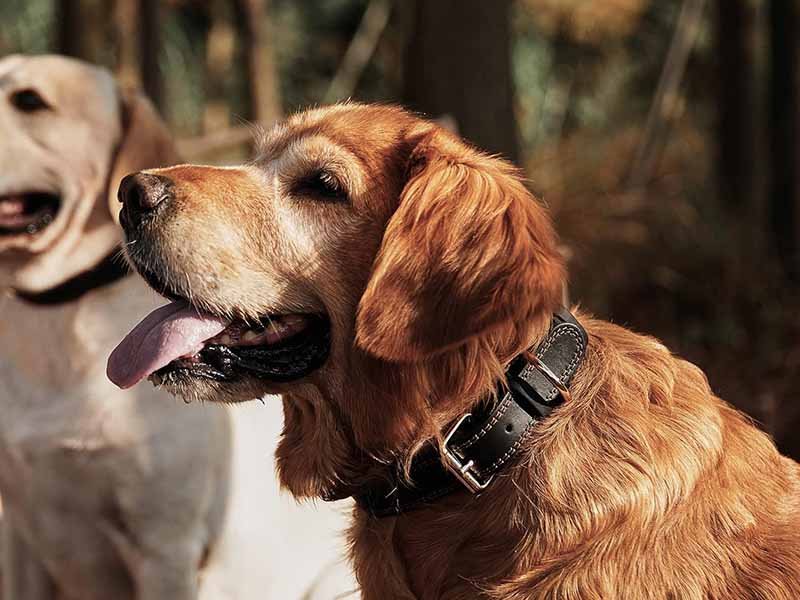
Overlap is one of the most important yet overlooked design choices. Without overlap, customers who measure near a boundary cannot achieve a comfortable fit, leading to immediate returns.
Most successful pet accessory brands use 1–2 cm overlap between usable neck ranges. This gives flexibility for:
- fur thickness differences
- seasonal weight change
- measurement error at home
| Overlap Width | Customer Experience | Return Risk |
|---|---|---|
| 0 cm | “Between sizes” frustration | Very high |
| 0.5–1 cm | Limited flexibility | Medium |
| 1–2 cm | Comfortable adjustment | Low |
| >2 cm | Inventory redundancy | Medium |
Too much overlap can confuse stocking strategy, so controlled overlap is the safest balance.
Should brands add XXS or XXL sizes?
Not every brand needs extended sizing. The decision depends on target market and price positioning.
When XXS makes sense
- Focus on toy breeds or puppies
- Urban pet boutique positioning
- Matching harness or fashion accessories
When XXL becomes necessary
- Large working or guard breeds
- Outdoor or tactical collar segment
- Premium leather collections with higher margins
| Brand Focus | Extra Size Needed | Reason |
|---|---|---|
| Toy-breed fashion | XXS | Higher demand in small dogs |
| General retail | None | XS–XL already covers most dogs |
| Outdoor / working | XXL | Neck sizes exceed 65 cm |
| Luxury niche | Both | Completeness of product line |
Adding sizes increases SKU count and inventory cost, so expansion should match real demand data.
How many adjustment holes create the best user experience?
Adjustment holes determine whether the collar feels precise or awkward. Too few holes limit comfort. Too many holes weaken strap strength or look crowded.
Most balanced designs follow these practical rules:
- XS–M: 6–7 holes for fine adjustment
- L–XL: 5–6 holes for strength and clean appearance
- Spacing: 10–15 mm depending on strap width
| Hole Count | Fit Precision | Strength Impact | Visual Cleanliness |
|---|---|---|---|
| 3–4 | Poor | Strong | Clean |
| 5–7 | Best balance | Good | Good |
| 8+ | Very precise | Weaker strap | Crowded look |
This is one of the lowest-cost improvements a brand can make to reduce exchanges.
How does leather collar construction affect real sizing performance?
Sizing is not only about numbers. Material thickness, buckle size, padding, and D-ring placement all influence how a collar fits in daily use.
Two collars with identical neck ranges can feel completely different depending on construction details.
How does leather thickness change fit and comfort?
Leather thickness affects:
- flexibility around the neck
- perceived strength
- hole durability
- overall weight
| Size | Recommended Thickness | Reason |
|---|---|---|
| XS | 2.0–2.5 mm | Soft for small necks |
| S | 2.5–3.0 mm | Balance comfort & strength |
| M | 3.0–3.5 mm | Everyday durability |
| L | 3.5–4.0 mm | Strong pull resistance |
| XL | 4.0–4.5 mm | Heavy-duty stability |
Too-thick leather on small sizes causes stiffness and rubbing, while too-thin leather on large sizes reduces lifespan.
Which buckle and D-ring sizes should match each collar size?
Hardware must scale with strap width and pulling force. Undersized hardware causes deformation or safety risk, while oversized hardware feels heavy and uncomfortable.
Hardware sizing logic
| Collar Size | Buckle Inner Width | D-Ring Diameter | Pull Strength Need |
|---|---|---|---|
| XS | 12–15 mm | 10–12 mm | Low |
| S | 15–20 mm | 12–15 mm | Light |
| M | 20–25 mm | 15–18 mm | Medium |
| L | 25–30 mm | 18–22 mm | High |
| XL | 30–40 mm | 22–28 mm | Very high |
Correct hardware scaling improves both safety perception and durability reputation.
Does padding or lining change collar sizing?
Padding adds thickness inside the circumference, slightly reducing usable neck range. If padding is included, brands should:
- increase strap length slightly
- adjust hole placement outward
- verify fit with real-dog testing
Ignoring padding impact is a frequent reason collars feel smaller than labeled size.
Should brands test sizing on real dogs before production?
Yes—real-dog testing is one of the most reliable ways to prevent sizing errors. Paper measurements cannot fully predict:
- fur compression
- neck movement during walking
- pulling pressure distribution
Even a small prototype test group can reveal issues early.
How many dogs are enough for prototype testing?
A practical guideline used in product development:
- 5–10 dogs per key size (S, M, L)
- include different breeds and coat types
- observe fit during walking, pulling, and resting
This sample size is usually enough to detect major sizing or comfort problems before mass production.
What real-world fit signals should brands watch?
During testing, brands should check:
- collar rotates excessively → too loose
- dog scratches neck → edge or stiffness issue
- buckle sits off-center → hole spacing problem
- fur flattening marks → pressure concentration
These visible signals often predict future customer complaints.
Is durability testing linked to sizing accuracy?
Indirectly, yes. If a collar stretches, cracks, or holes deform, the original size range becomes inaccurate over time. Therefore, sizing reliability depends on:
- leather tensile strength
- hole reinforcement
- hardware stability
Long-term durability protects size integrity, not just appearance.
Why brands choose SzoneierLeather for custom dog collars
Developing a successful leather dog collar collection requires more than good materials. It requires accurate sizing architecture, reliable production quality, and flexible customization support.
With over 18 years of leather product manufacturing experience, SzoneierLeather supports global brands through:
- full XS–XL size chart engineering
- premium leather sourcing and testing
- custom buckle, logo, and packaging design
- rapid sampling and prototype fitting
- strict quality inspection before shipment
- flexible MOQ for emerging and established brands
Whether your goal is:
- an entry-level retail collar line
- a durable outdoor working collar
- or a luxury leather pet accessory collection
our development team can transform your concept into a market-ready product with reliable sizing and comfort.
Ready to build your leather dog collar collection?
If you are planning a new pet accessory line—or improving sizing accuracy to reduce returns—this is the ideal time to collaborate with an experienced manufacturer.
Contact SzoneierLeather today to request samples, discuss custom sizing, and receive a tailored quotation for your leather dog collar project.