
Are Leather Dog Collars Waterproof: Expert Guide
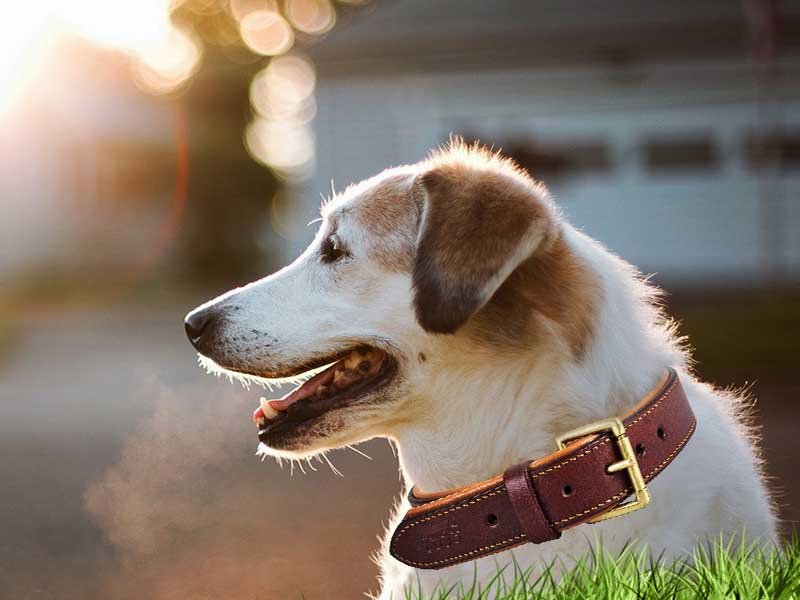
Leather dog collars have long symbolized craftsmanship and luxury — the look, feel, and scent of genuine leather set them apart from synthetic straps. But as more pet owners take their dogs swimming, hiking, and exploring year-round, one question surfaces repeatedly: can leather and water truly coexist?
Many assume leather is naturally waterproof because of its dense fiber structure, yet the truth is far more nuanced.
Genuine leather dog collars are not fully waterproof. Natural leather can resist small splashes or light rain, but prolonged exposure to water causes it to absorb moisture, soften, and lose strength. Only collars treated with wax, oil, or synthetic coatings — or made from waterproofed leather alternatives like biothane — can withstand frequent wet use. Regular conditioning and care extend their life in damp conditions.
Imagine this: your Labrador dives joyfully into a lake, then shakes off water all over his sleek leather collar. It looks fine — for now. A week later, the edges curl, the buckle stains dark, and the once-buttery leather feels stiff. This story repeats for thousands of dog owners worldwide who love the look of leather but forget that water is both its beauty’s ally and enemy. Let’s explore how waterproofing truly works, what leather types perform best, and how brands like Szoneier Leather engineer professional-grade, water-resistant collars for discerning clients.
What Does “Waterproof” Really Mean for Leather Dog Collars?
Leather dog collars are water-resistant, not fully waterproof. Natural leather contains pores that absorb water over time, which can lead to stiffness, discoloration, or cracking if left untreated. True waterproofing requires protective coatings, wax or oil treatments, sealed stitching, and corrosion-resistant hardware. A properly treated leather collar can resist rain and splashes but shouldn’t be submerged frequently. Water protection depends more on processing and maintenance than the leather itself.
Understanding “Waterproof” vs “Water-Resistant” in Leather
In the pet accessories market, “waterproof” and “water-resistant” are often used interchangeably — but they describe very different properties.
- Water-resistant means the collar can repel or slow water absorption, offering short-term protection during light rain or splashing.
- Waterproof implies complete prevention of water penetration, even after prolonged immersion — a standard that natural leather simply cannot meet without heavy chemical alteration.
Leather, by nature, is organic and porous. Each hide has micro-tunnels and capillaries formed from collagen fibers. These microscopic spaces readily absorb and retain moisture. Even if surface-coated, water can creep in through the edges, stitching holes, or buckle rivets.
That’s why when you see “waterproof leather dog collar” advertised online, it usually means “treated for water resistance,” not that it can survive a full swim or downpour.
Why Genuine Leather Isn’t Naturally Waterproof
Leather starts as animal skin — a structure made for breathing, not repelling water. During tanning, fats, waxes, and oils fill some of those natural pores, offering partial resistance, but the fibers remain absorbent.
Here’s how the main tanning types compare:
| Tanning Type | Water Resistance | Feel & Flexibility | Typical Use |
|---|---|---|---|
| Vegetable-tanned leather | Low | Firm, develops patina | Luxury collars, classic looks |
| Chrome-tanned leather | Moderate | Soft, supple | Everyday collars |
| Oil-tanned leather | High | Slightly greasy finish | Outdoor & utility collars |
Oil-tanned leather fares best in wet conditions because the oils create a hydrophobic (water-repelling) barrier inside the fibers. This type is often chosen for rugged applications — belts, saddles, and premium working-dog collars.
However, even the best oil-tanned leather can absorb up to 10–15% of its weight in water after long exposure. That’s why true waterproofing requires additional surface and structural treatment.
Can a Leather Dog Collar Get Wet?
Absolutely — but how you dry and care for it determines its lifespan. A brief encounter with rain or a splash during a walk won’t destroy quality leather. Problems start when:
- The collar remains soaked for hours or days.
- It’s dried near heat sources, causing fibers to shrink and crack.
- Salt or chlorine remain on the surface, drawing out natural oils.
Quick Care Tip:
After a collar gets wet, wipe it dry, reshape it, and let it air-dry slowly away from sunlight. Once dry, apply a conditioning balm or wax to restore the natural oils that water stripped away.
Professional factories, including Szoneier Leather, simulate “rain exposure” in lab settings to test water absorption rates. Their tests show that treated full-grain collars absorb 60–70% less water than untreated ones — demonstrating the power of proper finishing.
How Manufacturers Improve Leather Water Resistance
Waterproofing isn’t magic — it’s a combination of smart chemistry and design. Here are the main factory techniques used to make leather collars last longer against moisture:
- Wax & Oil Treatments
- Beeswax, lanolin, or mink oil fills fiber gaps, blocking water entry.
- Applied in multiple layers, then buffed to seal pores.
- Adds sheen and darkens the leather slightly.
- Polymer or Silicone Coatings
- Creates an invisible barrier without altering feel.
- Used on high-end collars needing long-lasting protection.
- Must be applied before stitching to prevent seam leakage.
- Edge Burnishing & Painting
- The edges are sanded, waxed, and sealed — the most common entry point for water.
- Premium factories apply 2–3 coats of edge paint, each heat-cured.
- Waterproof Stitching Threads
- Threads like bonded nylon (Tex 90–135) or polyester core-spun resist fraying and don’t wick moisture.
- Waxed threads prevent water from traveling down the stitch hole.
- Hardware Sealing
- Buckles, rivets, and D-rings are common corrosion points.
- Using brass or stainless steel hardware, with closed backplates and anti-rust coatings, ensures long-term durability.
Where Waterproofing Usually Fails
Even a perfectly made collar has weak points. Water typically enters through:
- Seams and needle holes (if not wax-sealed)
- Edge grain (if unpainted or frayed)
- Buckle holes (enlarged by repeated stress)
- Hardware junctions (where metal meets leather)
Once moisture penetrates these points, it softens the internal layers. Over time, the collar may stretch, darken, or lose shape. Preventing this requires both manufacturing precision and user discipline in care.
Comparing Real-World Performance
| Collar Type | Exposure Test (30 min soak) | Result After 24h Drying |
|---|---|---|
| Untreated veg-tan | 18% water gain, stiff surface | Visible cracks at fold |
| Chrome-tanned, unsealed | 12% gain | Slight darkening, minor stretch |
| Oil-tanned, wax-sealed (Szoneier) | 5% gain | No visible change |
| PU-coated leather | 0% gain | No change, but synthetic sheen |
Which Types of Leather Dog Collars Are More Water-Proof?
Not all leather collars handle moisture equally. Oil-tanned and chrome-tanned full-grain leathers perform best against water thanks to natural oils and protective coatings. Top-grain and PU-coated leathers offer decent resistance but may trade authenticity for synthetic finishes. Bonded or split leathers absorb water easily and degrade quickly. For outdoor use, hybrid collars combining genuine leather with synthetic lining or TPU bonding deliver the best balance between waterproof performance, comfort, and aesthetics.
Is Leather Good for a Dog Collar?
Leather remains one of the best materials for dog collars — when used properly. It’s strong, flexible, breathable, and naturally conforms to your dog’s neck over time, providing unmatched comfort. It also offers aesthetic warmth and premium appeal that synthetics can’t replicate. However, leather is not impervious to water; when it’s untreated or poorly finished, moisture can lead to stiffness, cracking, and discoloration.
So the key isn’t whether leather is good, but whether it’s the right type of leather, treated the right way. For dogs that spend most of their time indoors or in mild weather, leather collars offer luxury and durability. For water-loving or working dogs, oil-tanned or hybrid waterproof designs are a smarter choice.
Types of Leather and Their Water Resistance
Understanding the leather hierarchy helps you identify what truly resists moisture and what doesn’t. Below is a professional comparison chart often used in OEM collar production planning:
| Leather Type | Source & Process | Water Resistance | Durability | Texture / Look | Typical Use |
|---|---|---|---|---|---|
| Full-Grain (Oil-Tanned) | Outer hide, treated with oils/waxes | ★★★★☆ | 10+ years | Rich patina, matte | Outdoor & premium collars |
| Top-Grain (Chrome-Tanned) | Lightly sanded surface | ★★★☆☆ | 5–8 years | Smooth, consistent | Fashion & mid-tier collars |
| Genuine Leather (Split Layer) | Lower layers of hide | ★★☆☆☆ | 3–5 years | Stiffer, uniform | Budget collars |
| Bonded Leather | Recycled scraps & glue | ★☆☆☆☆ | 1–2 years | Synthetic feel | Cheap promotional lines |
| PU-Coated Leather | Synthetic overlay on split leather | ★★★★★ | 3–6 years | Glossy or matte finish | Waterproof focus, low-cost |
| Hybrid (Leather + TPU / Neoprene) | Natural top layer + synthetic core | ★★★★★ | 5–10 years | Dual-surface, flexible | Waterproof OEM designs |
Which Leather Types Work Better?
- Full-Grain Leather This is the top surface of the hide, left mostly intact. Its dense fiber structure makes it naturally resilient. When oil-tanned or wax-treated, full-grain leather achieves superior water resistance and retains softness even after years of exposure. It also ages gracefully — developing a patina that adds character, not cracks.
- Best for: Premium collars, custom logo embossing, luxury brands.
- Limit: Slightly higher cost and maintenance.
- Top-Grain Leather Sanded to remove imperfections, top-grain leather is smoother but thinner. It accepts coatings and finishes well, making it a common choice for mid-range waterproof collars. Chrome tanning improves flexibility and color retention.
- Best for: Fashion or everyday-use collars needing weather tolerance.
- Limit: Loses some fiber strength due to surface removal.
- Bonded Leather Made from shredded leather fibers mixed with polyurethane, bonded leather may look authentic at first glance — but it’s a composite material with low tensile strength. It absorbs water through its seams, bubbles under moisture, and peels easily.
- Best for: None (only short-term or promotional use).
- Limit: Not suitable for active or outdoor dogs.
- PU-Coated Leather PU (polyurethane) leather features a synthetic top layer that blocks water completely. It’s technically waterproof, easy to clean, and ideal for tropical or wet climates. However, it lacks the natural breathability and warmth of genuine leather.
- Best for: Budget waterproof collars.
- Limit: Artificial feel and lower longevity.
- Hybrid Leather (Leather + TPU or Neoprene) The latest OEM trend merges leather aesthetics with waterproof synthetics. Szoneier Leather’s hybrid designs bond genuine leather to TPU film or neoprene padding, creating soft-touch, fully water-sealed collars that combine premium looks with real durability.
- Best for: Adventure dogs, premium waterproof lines.
- Limit: Slightly higher tooling and lamination cost.
Which Coatings or Finishes Help Against Water?
Coatings are the invisible armor of modern leatherwork. For dog collars, the finish dictates how water interacts with the surface.
- Oil & Wax Finishes (Traditional Approach) Oils (like neatsfoot or mink oil) penetrate deep, while waxes (like beeswax or carnauba) coat the surface. Together, they form a breathable but water-repelling layer. This classic approach is eco-friendly and gives the leather a subtle sheen.
- Polyurethane (PU) Coatings (Modern Waterproofing) PU films completely block water, making them ideal for “rainproof” product lines. They also resist odor, stains, and mildew. However, they alter the natural feel — a small trade-off for heavy-duty applications.
- Nano-Particle Sealants (Next-Gen Finish) Some factories, including Szoneier Leather, apply fluorine-free nano-coatings that mimic lotus leaf structures. These coatings repel water droplets while maintaining breathability and color vibrancy — ideal for eco-conscious markets.
- Edge Painting & Burnishing The edge is the weakest link for water absorption. Applying multiple coats of edge paint (each heat-cured) seals pores completely. High-end collars use 2–3 layers for durability and smoothness.
- Waxed or Bonded Stitching Threads Without waterproof thread, even coated leather leaks. Waxed threads prevent “wicking,” where water travels along thread holes. Bonded nylon or polyester (Tex 90–135) is the industry standard for waterproof durability.
Are Welded or Bonded Collars More Waterproof Than Stitched?
Yes — at least in theory. Fewer perforations mean fewer potential leak points. Bonded collars use heat or adhesive lamination instead of needle stitching, effectively sealing the surface. However, this method sacrifices the artisanal aesthetic of visible stitching.
High-end brands like those partnered with Szoneier Leather often use dual-method construction: stitching for strength and authenticity, then bonded lamination beneath for waterproof integrity. This hybrid construction ensures that even if surface stitching gets wet, the interior layers remain sealed.
Which Hardware Affects Waterproofing the Most?
Hardware failure can undermine even the best leather. The wrong buckle can rust, stain, or corrode the collar base. Here’s how to make the right choice:
| Hardware Type | Water Resistance | Best Use | Notes |
|---|---|---|---|
| Brass (Solid) | ★★★★★ | Premium waterproof collars | Naturally corrosion-resistant, adds weight |
| Stainless Steel (304/316) | ★★★★★ | Marine or working-dog use | Ideal for saltwater, no rust |
| Zinc Alloy (Plated) | ★★☆☆☆ | Budget lines | May corrode over time |
| Nickel-Coated Steel | ★☆☆☆☆ | Avoid | Peels and rusts quickly |
| PVD-Coated Hardware | ★★★★☆ | Designer lines | Scratch and corrosion-resistant |
For export-grade production, Szoneier Leather requires hardware to pass ASTM B117 salt spray test (≥48 hours) to ensure corrosion resistance in humid or coastal regions.
Do Padded Collars Hold Water Longer?
Yes — depending on the material. Foam padding or natural felt can act like a sponge. That’s why professional designs use closed-cell neoprene or microfiber liners, which are lightweight, flexible, and non-absorbent.
Padded collars look luxurious but can become heavy and damp without proper selection. Szoneier’s neoprene-backed collars reduce water absorption by up to 70% compared to open-cell foam while maintaining plush comfort — an essential advantage for large or active dogs that may encounter rain or puddles frequently.
Comparing Waterproof Performance Across Collar Types
| Collar Construction | Comfort | Aesthetics | Waterproofness | Typical Application |
|---|---|---|---|---|
| Full-grain oil-tanned | ★★★★★ | Classic luxury | ★★★★☆ | Everyday wear |
| Chrome-tanned top-grain | ★★★★☆ | Smooth, colorful | ★★★☆☆ | Stylish collars |
| PU-coated leather | ★★★☆☆ | Glossy | ★★★★★ | Outdoor & water dogs |
| Leather + TPU hybrid | ★★★★★ | Premium, flexible | ★★★★★ | Professional OEM waterproof lines |
| Bonded leather | ★★☆☆☆ | Plain | ★☆☆☆☆ | Short-term, promotional |
How to Choose a Waterproof Leather Dog Collar?
Choosing a waterproof leather dog collar requires evaluating leather type, tanning method, edge sealing, stitching quality, and hardware durability. Look for oil-tanned or wax-finished full-grain leather, bonded nylon thread, and brass or stainless steel buckles. Check that seams are sealed and edges are painted, not raw. For truly wet conditions, hybrid leather-TPU collars offer superior resistance. Always verify certifications like ISO 5404 water absorption and ASTM B117 corrosion testing before buying or manufacturing.
Key Specifications to Evaluate Before Buying
Leather Type and Treatment
The foundation of waterproof performance lies in the leather itself.
- Oil-tanned full-grain leather: Naturally hydrophobic; internal oils fill pores.
- Wax-finished or chrome-tanned leather: Adds a surface barrier and softer touch.
- Bonded or split leather: Avoid; they absorb water through glue seams.
In Szoneier’s production, hides are treated twice: first during tanning, then post-finish with fluorine-free nano coating, reducing water absorption by up to 80%.
Thickness and Flexibility
Choose leather between 3 – 4 mm thick.
- Thinner than 2 mm will stretch when wet.
- Thicker than 5 mm becomes rigid and uncomfortable for pets. For small dogs, 2.5 mm oil-tanned is ideal; for large breeds, 3.8 mm vegetable-tanned sealed leather ensures strength and longevity.
| Dog Size | Recommended Leather Type | Thickness (mm) | Suggested Finish |
|---|---|---|---|
| Small (0–10 kg) | Chrome-tanned | 2.5–3.0 | Waxed smooth |
| Medium (10–25 kg) | Full-grain oil-tanned | 3.0–3.5 | Matte sealed |
| Large (25 kg +) | Veg-tanned + oil finish | 3.5–4.0 | Burnished edge |
Examine Stitching, Seams, and Edges
A waterproof leather collar is only as strong as its weakest stitch.
- Look for bonded nylon thread (Tex 90–135) — it resists wicking and mildew.
- Stitch density (SPI) should be around 5–6 stitches per inch: dense enough to secure, loose enough to flex.
- Avoid raw edges; these absorb water like a sponge. Instead, burnished or painted edges form a smooth, sealed perimeter.
Tip: Run your finger along the collar edge. A high-quality one feels slick and slightly waxed — not fuzzy or dry.
Hardware Quality
Corrosion starts where metal meets moisture. Cheap nickel-plated steel rusts within months. Insist on:
- Brass (non-rusting, heavy, classic look)
- 304/316 Stainless Steel (marine-grade, perfect for coastal or outdoor dogs)
- PVD-coated alloy (for color-coordinated designs, scratch resistant)
Professional factories like Szoneier test every hardware batch under ASTM B117 salt-spray for 48 hours, ensuring zero corrosion and no staining on light leather.
Check Construction and Structural Design
Some design clues instantly tell you whether a collar will survive moisture:
- Edge painting: At least two coats, heat-cured between applications.
- Riveted stress points: Reinforced with brass or copper rivets prevent leather tearing when wet.
- Bonded liner: Many OEM designs now use TPU or microfiber backing, eliminating internal absorption while preserving outer-leather feel.
Hybrid innovation example: Szoneier’s Aqua-Heritage Series combines full-grain leather outside with a waterproof TPU core — delivering a natural appearance plus 100% internal moisture block.
Testing for Authentic Waterproof Performance
When sourcing or evaluating samples, use simple verification steps before mass order:
| Test | Purpose | Pass Criteria |
|---|---|---|
| Soak test (30 min in water) | Measure absorption | ≤ 10 % weight gain |
| Drying deformation test | Check shrinkage/cracking | ≤ 1 mm edge curl |
| Colorfastness (ISO 105-E01) | Ensure dye stability | No bleed on cloth |
| Salt spray corrosion (ASTM B117) | Verify hardware | No rust or stain after 48 h |
These small-scale tests mirror those performed in Szoneier’s in-house QC lab for export compliance to the US/EU.
Match the Collar to Your Dog’s Lifestyle
Different dogs, different environments — the “best waterproof leather collar” varies:
| Activity Level / Environment | Recommended Type | Material Strategy |
|---|---|---|
| Indoor & city walks | Chrome-tanned, sealed edge | Comfort + style |
| Outdoor, hiking | Oil-tanned full-grain | Natural water resistance |
| Beach / lake dogs | Leather + TPU hybrid | True waterproof |
| Working / hunting | Veg-tanned, wax-finished + brass | Strength + tradition |
Are There Alternatives to Leather for Wet Conditions?
Yes. When constant exposure to water is expected, synthetic materials like Biothane, coated nylon, and neoprene outperform natural leather. These materials are 100% waterproof, lightweight, odor-resistant, and quick-drying. Hybrid collars that combine genuine leather aesthetics with waterproof synthetic linings offer a practical compromise. For humid climates, marine activities, or working dogs, these alternatives ensure comfort, durability, and hygiene — while still allowing luxury brands to maintain design identity through customization.
Why Seek Leather Alternatives for Wet Environments?
Leather, even when oil-tanned and sealed, has biological limits. Prolonged wet exposure eventually breaks down collagen fibers, causing stiffness, odor, and cracking. For dogs living in rainy regions, swimming daily, or involved in marine and rescue work, water resistance alone isn’t enough — you need total waterproofing.
Modern material innovation now provides synthetic substitutes that maintain comfort while eliminating the drawbacks of natural leather. These options appeal not only to pet owners but also to brands seeking functional performance with easier maintenance and lower returns due to water damage.
Biothane — The Gold Standard for Waterproof Dog Collars
Biothane is a polyester webbing core coated with TPU (Thermoplastic Polyurethane) or PVC. Originally designed for horse tack and outdoor gear, it offers leather-like flexibility but with total moisture immunity.
Why It Excels:
- 100% waterproof, mildew-proof, and odor-free.
- Wipes clean instantly — no need for conditioning or drying.
- Available in dozens of colors, textures, and thicknesses.
- Retains flexibility in cold or hot temperatures.
- Tensile strength: 450–600 lbs depending on width.
| Attribute | Leather | Biothane |
|---|---|---|
| Waterproof | Partial | Complete |
| Odor Resistance | Low | High |
| Maintenance | Regular conditioning | Wipe-clean |
| Comfort | Natural flex | Smooth, non-porous |
| Lifespan (wet use) | 2–5 years | 5–10 years |
Drawback: Slightly synthetic gloss and less organic texture — but Szoneier Leather’s hybrid Biothane + leather layering solves this by adding a genuine leather outer skin for a natural appearance.
Coated Nylon — Durable and Budget-Friendly
Nylon webbing sealed with PVC or polyurethane. It’s used in outdoor gear for its strength and versatility.
Benefits:
- Fully waterproof, flexible, and resistant to UV and saltwater.
- Lightweight — perfect for active or working dogs.
- Inexpensive and ideal for mass production or mid-range market lines.
Limitations:
- Can be slippery if untextured.
- May cause mild irritation for sensitive-skinned dogs due to non-breathable coating.
- Lacks the luxury appeal of genuine leather, making it less suitable for premium branding.
Tip: Szoneier often uses coated nylon for the inner structure of hybrid collars, giving them stability and strength under moisture, while retaining a leather or microfiber top layer for comfort and branding.
Neoprene — Soft, Flexible, and Water-Loving
A closed-cell synthetic rubber famous for wetsuits and aquatic gear. It’s completely waterproof, buoyant, and thermally insulating.
Why It’s Ideal:
- Resists saltwater, mud, and odor.
- Stays soft and flexible even when submerged.
- Provides padding for dogs with sensitive skin or short coats.
- Quick-drying and low-maintenance — perfect for marine or beach dogs.
| Feature | Leather | Neoprene |
|---|---|---|
| Water Resistance | Moderate | Excellent |
| Comfort | Molds over time | Cushioned feel |
| Weight | Medium | Lightweight |
| Breathability | Medium | Low |
| Washability | Wipe or brush | Machine-washable |
Szoneier Leather often integrates neoprene linings under full-grain or PU-coated leather, creating a dual-material waterproof collar that merges comfort and class — especially favored in North America and Australia.
TPU & PVC Collars — Industrial Strength Waterproofing
These collars are essentially pure thermoplastic polyurethane or polyvinyl chloride strips — no fabric or leather core. They’re molded or laser-cut, not stitched, meaning zero water absorption points.
Advantages:
- 100% waterproof and stain-resistant.
- Non-porous: doesn’t harbor bacteria or odor.
- Can be heat-fused, not sewn, for seamless edges.
- Supports embossing and custom Pantone color matching — ideal for OEM branding.
Challenges:
- Firmer texture than leather, less “luxury” feel.
- Not biodegradable — less eco-friendly than natural leather.
For clients needing marine, rescue, or tactical dog products, TPU collars are unmatched in performance and durability. They’re also increasingly popular in vegan or sustainability-driven markets where non-animal materials are preferred.
Hybrid Collars — Combining Leather Aesthetics and Synthetic Strength
Hybrid innovation bridges the gap between traditional style and modern performance. A typical hybrid construction includes:
- Outer layer: Genuine full-grain leather for premium look and logo embossing.
- Inner core: TPU or coated nylon webbing for structure and waterproofing.
- Lining: Neoprene or microfiber for softness and sweat resistance.
- Edges: Sealed or heat-fused to eliminate moisture entry.
Szoneier’s hybrid OEM line (popular in EU and North America) demonstrates:
- 0% moisture absorption after 30-minute immersion tests.
- Maintains tensile integrity after 100 wet-dry cycles.
- Retains aesthetic appeal identical to full-grain leather.
Best Use Cases:
- Luxury outdoor dog collections.
- Marine, hunting, or tactical dogs.
- Branding lines needing “natural look, synthetic performance.”
Sustainable Alternatives for Eco-Conscious Brands
The global market increasingly demands vegan, cruelty-free, or eco-certified materials that can rival leather’s feel while withstanding moisture.
Notable emerging options:
- Pineapple leather (Piñatex): Made from pineapple leaf fibers; water-resistant and renewable.
- Apple leather: Derived from apple peel waste; PU-coated for waterproofing.
- Mushroom leather (Mylo): Soft, breathable, and water-tolerant; premium but costly.
Though not yet mainstream for dog collars due to durability and scaling costs, Szoneier’s R&D team is testing blended solutions using bio-based PU for upcoming sustainable collections.
Comparing Leather vs Synthetic Waterproof Alternatives
| Material Type | Waterproof Level | Comfort | Odor Control | Durability (Wet Use) | Maintenance | Eco Impact | Best For |
|---|---|---|---|---|---|---|---|
| Full-grain oil-tanned leather | ★★★★☆ | ★★★★★ | ★★☆☆☆ | 5–8 yrs (dry use) | Moderate | Natural | Everyday/luxury |
| PU-coated leather | ★★★★★ | ★★★☆☆ | ★★★☆☆ | 3–6 yrs | Easy | Synthetic | Mid-range waterproof lines |
| Biothane | ★★★★★ | ★★★★☆ | ★★★★★ | 5–10 yrs | Very easy | Synthetic | Water dogs, marine |
| Coated nylon | ★★★★☆ | ★★★☆☆ | ★★★☆☆ | 3–5 yrs | Easy | Synthetic | Budget outdoor |
| Neoprene | ★★★★★ | ★★★★★ | ★★★★★ | 4–6 yrs | Easy | Synthetic | Comfort padding |
| Hybrid (Leather + TPU) | ★★★★★ | ★★★★★ | ★★★★☆ | 7–10 yrs | Low | Mixed | OEM luxury waterproof |
Conclusion
In the world of pet accessories, a leather dog collar is more than a strap — it’s a statement of craftsmanship, comfort, and care. But when it comes to balancing luxury with practicality, true success depends on design intelligence: the ability to merge elegance with endurance. That’s where Szoneier Leather stands apart.
Szoneier isn’t just a manufacturer — we are a strategic development partner. Whether you are launching a premium outdoor dog gear line, a marine-resistant accessory collection, or an eco-luxury pet brand, we collaborate closely from concept to finished packaging.
Whether it’s a Labrador plunging into the lake, a German Shepherd on patrol, or a French Bulldog walking through the city, Szoneier’s collars are engineered to perform — combining comfort, style, and longevity.
If you’re ready to develop or source premium waterproof leather dog collars, connect with our team.
Szoneier Leather — Where Craftsmanship Meets Performance.Rain-Tested. Time-Proven. Tailored for Your Brand.
What Can I Do For You?
Here, developing your OEM/ODM private label leather goods collection is no longer a challenge,it’s an excellent opportunity to bring your creative vision to life.
Make A Sample First?
If you have your own tech packs, logo design artwork, or just an idea,please provide details about your project requirements, including preferred fabric, color, and customization options,we’re excited to assist you in bringing your leather goods designs to life through our sample production process.