 Skip to content
20 Best Leather Camera Straps: Which One Suits Your Style and Gear?
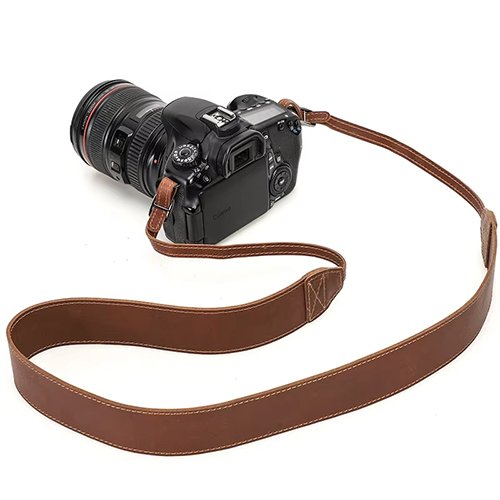
In today’s world of digital photography, your camera strap does more than just keep your DSLR or mirrorless rig from falling—it’s a statement piece, a comfort enhancer, and sometimes the difference between hours of painless shooting and a sore neck by sunset. Leather straps, in particular, blend durability and luxury, aging gracefully as they pick up character marks that tell the story of every shoot.
A high-quality leather camera strap combines full-grain or top-grain leather with robust hardware (brass or stainless steel), offers ergonomic width (1.5–2″) for weight distribution, and features reliable attachment methods (lug anchors, quick-release clips). Properly chosen, a leather strap not only secures your camera safely but also enhances shooting comfort, personal style, and brand image.
Let’s explore what makes a leather strap truly special, and reveal the top 20 pickups that marry function, comfort, and aesthetic finesse.
What Makes a High-Quality Leather Camera Strap?
A premium leather camera strap uses full-grain or top-grain leather (1.4–2.0 mm thick), durable brass or stainless hardware, and a padded lining to distribute up to 5 kg of camera weight. Key features include reinforced stitching, adjustable length (90–130 cm), and secure attachment points (lug-style or quick-release). These elements ensure safety, longevity, and comfort during extended shoots.
Choosing the right leather strap goes beyond picking a color or pattern. Let’s dissect the core components that differentiate an heirloom-quality strap from a disposable one:
Leather Grade & Thickness
- Full-Grain Leather: Retains natural surface, showing unique grain patterns and developing a rich patina over time. Thickness of 1.6–2.0 mm ensures robustness under heavy camera loads.
- Top-Grain Leather: Sanded for uniformity, less grain variation but still highly durable at 1.4–1.8 mm. Often more consistent in color.
- Split/Corrected Grain: Cheaper, less durable—prone to flaking. Avoid for professional use.
Hardware Quality
Brass vs. Stainless Steel:
- Brass: Classic look, tarnishes gracefully, corrosion-resistant.
- Stainless Steel: Modern, shinier, more scratch-resistant but heavier.
Attachment Types:
- Lug Anchors: Thin leather or metal loops thread through your camera’s strap lugs—low profile but secure.
- Quick-Release Clips: Offer speedy camera detachment but require precise engineering to avoid accidental drops.
Ergonomics & Comfort
Width & Padding:
- 1.5–2″ width: Distributes weight across the collarbone.
- Foam or suede Lining: Cushions pressure points, wicks sweat.
Adjustability:
- Range: 90–130 cm accommodates handheld and neck/shoulder carry.
- Buckle vs. Slider: Buckles allow micro-adjustments; sliders are quicker but can slip.
Stitching & Reinforcement
Stitch Count & Thread:
- 8–10 stitches per inch at stress points (ends, attachments) with bonded nylon thread for UV resistance.
Edge Finishing:
- Burnishing vs. Painted Edges: Burnished edges age naturally; painted edges preserve color but may chip.
Aesthetic & Branding
- Custom Accent Stitching or Embossing: Monogram initials or brand logos add personality—requires hot-foil embossing dies.
- Colorfast Dyes: Vegetable-tanned leather with aniline dyes retains depth and resists fading under sunlight.
Which Types of Leather Are Best for Camera Straps?
Full-grain leather offers the highest strength and patina development, ideal for pros carrying heavy kits; top-grain leather provides uniform appearance and slightly lighter weight; vegetable-tanned options give natural aging but require more care, while chrome-tanned leathers offer water resistance and softer hand feel. Choose based on load, environmental exposure, and desired aging characteristics.
Leather origin, tannage, and finish dictate performance:
Full-Grain Leather
- Source & Tannage: The strongest layer—fiber-dense and unbuffed—tanned with vegetable extracts.
- Pros: Ultimate durability, develops a unique patina reflecting your shoot history; high tear resistance (~20 MPa tensile).
- Cons: Requires regular conditioning to prevent drying; pricier.
Top-Grain Leather
- Source & Tannage: Sanded to remove imperfections, often dyed or finished for consistency.
- Pros: Uniform color and texture; drip-resistant finishes available; easier break-in period.
- Cons: Slightly less breathable; patina less pronounced.
Vegetable-Tanned vs Chrome-Tanned
Vegetable-Tanned:
- Natural Aging: Deepens in color, showing character.
- Environmental Footprint: Lower chemical use.
- Care: Sensitive to moisture and staining; needs more frequent oiling.
Chrome-Tanned:
- Water Resistance: Better holds up to humidity and light rain.
- Softness: More pliable straight off the rack.
- Color Range: Wide dye palette; less dramatic patina.
Exotic Leathers (Alligator, Ostrich)
- Use Cases: Ultra-luxury straps with distinctive scales or quill patterns.
- Considerations: Significantly higher cost; require specialized care; may not be allowed in certain countries due to CITES regulations.
How Do Strap Designs and Configurations Affect Comfort?
Strap comfort hinges on width, padding material, shape, and attachment style. Wider straps (1.5–2″) distribute camera weight more evenly; memory-foam or neoprene padding cushions shoulders; pre-curved contours prevent slippage; and dual-point versus single-point (sling) attachments influence how the camera swings and rests. Proper adjustability—90–130 cm length range—and wearing technique (crossbody, neck, or shoulder carry) further mitigate fatigue during extended shoots.
Your camera strap is the interface between you and your gear—it must cradle your equipment securely while remaining nearly invisible in terms of fatigue and distraction. Let’s unpack the design and configuration elements that transform a basic strap into an ergonomic marvel.
1. Strap Width and Load Distribution
Optimal Width (1.5–2″):
- Pressure Reduction: A 2″ strap can lower peak shoulder pressure by up to 40% compared to a 1″ strap, spreading the load across a broader surface.
- Weight Capacity: Wider straps support heavier camera setups (3–5 kg DSLRs or mirrorless with battery grips) without digging into skin.
Tapered vs. Uniform Width:
- Uniform Width: Consistent comfort; may feel bulky near the attachment points.
- Tapered Design: Narrower ends for easy adjustment and attachment, wider central pad for comfort.
2. Padding Materials and Cushioning
Memory Foam Cores:
- Adaptive Support: Conforms to shoulder shape over time, offering personalized cushioning.
- Longevity: High-density memory foam resists bottoming out after hundreds of compressions.
Neoprene and Suede Backing:
- Moisture Wicking: Neoprene repels water and sweat, keeping the strap from slipping during hot shoots.
- Grip: Suede lining prevents lateral movement on clothing, essential for active or outdoor photography.
Gel Inserts:
- Shock Absorption: Adds damping for bouncy environments (e.g., shooting from moving vehicles).
- Bulk: Adds thickness—best for straps dedicated to heavy gear.
3. Pre-Curved vs. Straight Profiles
Pre-Curved Straps:
- Ergonomic Fit: Molded curve matches shoulder contours, reducing strap roll-off and pressure points.
- Comfort Range: Particularly beneficial for crossbody or neck carry over long periods (4+ hours).
Straight Straps:
- Versatility: Simpler construction, often lighter.
- Combination Solutions: Pair straight straps with anti-slip backings to mitigate shifting.
4. Attachment Configurations and Camera Movement
Dual-Point Attachment:
- Balance: Cameras anchored at both lugs remain stable, minimizing swing when walking.
- Rotation Speed: Requires hand repositioning to swing camera to shooting position—slower than sling systems.
Single-Point (Sling) Attachment:
- 360° Pivot: Enables quick rotation under the armpit into shooting position, ideal for street or run-and-gun photography.
- Stress on One Lug: Demands high-quality swivel hardware and reinforced strap ends to prevent wear.
5. Adjustability and Length Customization
Length Range (90–130 cm):
- Versatility: Accommodates different body sizes and carry styles (from neck to hip).
- Fine-Tuning: Buckle adjusters enable precise length settings, while slider adjusters offer rapid changes—ensure they include friction locks to prevent slipping under load.
Quick-Adjust Mechanisms:
- Cam Buckles: Secure, tool-free adjustment but add weight.
- Friction Slider: Lightweight; choose designs with rubberized or serrated contact surfaces for grip.
6. Wearing Techniques and Best Practices
Neck Carry:
- Classic Portrait Style: Strap around neck, camera at chest height. Good for controlled shoots but can strain the throat on longer sessions.
Shoulder Carry:
- Hip Positioning: Strap over one shoulder; camera rests at hip. Quick grab but may cause unbalanced posture.
Crossbody Sling:
- Even Weight Distribution: Strap diagonally across torso, camera rests near back when idle. Eases neck pressure and allows fast draw.
Alternating Positions:
- Rotating Carry Styles: Switching between neck, shoulder, and sling carry every hour prevents numbness and fatigue.
How Do Strap Designs and Configurations Affect Comfort?
Strap comfort hinges on width, padding, curvature, and attachment style. Wider straps (1.5–2″) spread weight across a larger surface; memory-foam or neoprene padding cushions against pressure; pre-curved profiles conform to your shoulder or neck; and dual-point versus single-point (sling) attachments determine how the camera swings and rests. Proper adjustability—90–130 cm length range—and wearing technique (neck, shoulder, crossbody) further reduce fatigue during long shoots.
When you’re shooting for hours—whether at a wedding, on a wildlife trek, or in fast-paced street photography—your strap becomes an extension of your body. Small design choices can mean the difference between a painless day and a sore neck or shoulder. Let’s explore the key factors:
1. Strap Width & Weight Distribution
Optimal Width (1.5–2″):
- Distributes load more evenly across the collarbone and shoulder, reducing peak pressure by up to 40% compared to narrow (1″) straps.
- Supports heavier rigs (3–5 kg) without digging in, crucial for DSLRs with grip and large lenses.
Tapered vs. Constant Width:
- Constant Width: Offers uniform comfort but can feel bulky near camera attachments.
- Tapered Ends: Easier to adjust and thread through camera lugs, while maintaining wide central padding.
2. Padding & Lining Materials
Memory Foam Core:
- Adapts to your body over time, providing a personalized fit. Retains shape through 500+ compressions.
Neoprene with Suede Backing:
- Wicks sweat and prevents slipping, especially valuable in warm climates or active shoots.
Gel Inserts:
- Offer additional shock absorption, reducing transmitted jolt when moving on uneven terrain. Bulkier—best for highly active or adventure uses.
3. Pre-Curved vs. Straight Profiles
Pre-Curved (Ergonomic) Straps:
- Contoured to match shoulder/neck curvature, preventing roll-off and concentrating padding where it’s most needed.
- Ideal for crossbody sling use, maintaining contact during movement.
Straight Straps:
- Simpler, lighter, and often more affordable. Combine with anti-slip backings to improve stability.
4. Attachment Configuration & Camera Mobility
Dual-Point Attachment:
- Keeps camera stable, minimizing side-to-side swing. Preferred for portrait and tripod work but slows quick-draw to eye level.
Single-Point (Sling Style):
- Allows 360° pivot for rapid camera access under the arm—favored by photojournalists and videographers. Requires high-quality swiveling hardware to avoid tangles.
5. Adjustability & Length Mechanisms
Length Range (90–130 cm):
- Accommodates various body sizes and shooting styles: neck carry, shoulder carry, or crossbody.
Buckle Adjusters vs. Sliders:
- Buckle: Precise micro-adjustment but adds weight and complexity.
- Slider with Friction Lock: Faster adjustments; ensure friction surfaces prevent slippage under heavy loads.
6. Wearing Techniques & Rotation
Neck Carry:
- Camera rests at chest height—good for controlled settings but may compress the throat on longer shoots.
Shoulder Carry:
- Strap over one shoulder; quicker camera grabs at hip but can lead to uneven posture over time.
Crossbody Sling:
- Weight distributed across torso; camera rests behind back when idle and swings forward instantly when needed.
Rotation Strategy:
- Alternate carry styles every hour to redistribute pressure and prevent muscle fatigue.
Which Brands and Models Offer the Best Durability and Style?
Top leather camera strap brands blend craftsmanship, hardware quality, and ergonomic design. Notable models include Artisan & Artist ACAM-301N (Italian leather, brass hardware), HoldFast F-1.1 (vintage pull-up leather), Peak Design Slide Lite (leather-backed for slip resistance), and Szoneier’s custom straps offering full-grain leather with personalized embossing. Each balances aesthetics, weight capacity (up to 5 kg), and comfort features like suede backing and quick-adjust buckles.
Below is a comparative guide of standout leather straps from leading makers and Szoneier’s bespoke offerings:
| Brand | Model | Leather Type | Hardware | Key Feature |
|---|---|---|---|---|
| Artisan & Artist | ACAM-301N | Italian full-grain | Solid brass clips | Suede-padded lining, 2″ width |
| HoldFast | F-1.1 Vintage | Pull-up vegetable-tan | Stainless steel swivel rings | Memory foam backing, pre-curved design |
| Peak Design | Slide Lite (Leather Edition) | Horween-backed nylon | Aircraft-grade aluminum | Suede backing, ultra-wide load capacity |
| Ona | The Union Street | Horween Essex veg-tan | Brass buckles | Minimalist, 1.5″ flat profile |
| BlackRapid | Leather Breathe | Top-grain leather | Quick-release carabiners | Rapid sling action, padded neoprene pad |
| Gariz | Premium Leather Strap | Full-grain veg-tanned | Brass D-rings | Dual-attachment ends, quick-adjust sliders |
| Tap & Dye | Leather Camera Strap | American veg-tanned | Stainless steel clips | Hand-stitched, custom color options |
| BlueCurfew | Alberto | Italian full-grain | Brass swivel hooks | Ultra-thin profile, laser-etched logo |
| Kase Feather | Leather Camera Strap | Top-grain cowhide | Zinc alloy quick-releases | Lightweight, weatherproof finish |
| Szoneier | Vintage Custom Series | Full-grain veg-tanned | Custom brass hardware | Embossed branding, low-MOQ private label |
| ZKIN | Estrange Leather | European full-grain | Brass buckles | Two-layer foam padding, 1.75″ width |
| Capture Camera Gear | CSL Elite Leather | Top-grain leather | Aircraft-grade aluminum | Integrated hand-strap loop |
| BlackRapid | Classic Full Leather | Full-grain veg-tanned | Brass carabiners | Ergonomic shoulder pad |
| Candid.Grid | Luxe Leather Strap | Italian veg-tanned | Stainless steel quick-links | Angled shoulder cut for stability |
| SLR Magic | Leather Sling Strap | Full-grain leather | Steel swivel hooks | Adjustable crossbody sling |
| KATA | Air Strap Leather Edition | Top-grain leather | Brass D-rings | Anti-twist shoulder pad |
| Cameraleather | Oslo Strap | Full-grain leather | Brass snaps | Custom-name embossing |
| DELSEY | Heritage Leather Strap | Pull-up veg-tanned | Brass clips | Vintage styling, suede backing |
| Neewer | Professional Leather Strap | PU leather | Metal quick-release clips | Value-oriented, neoprene padding |
| SmallRig | Leather Hand Strap | Top-grain leather | Steel locking ring | Secure wrist carry, anti-slip grip |
Key Considerations When Choosing a Brand
- Craftsmanship: Handmade stitching vs. machine—hand-stitched often lasts longer.
- Hardware Reliability: Brass ages; stainless steel resists corrosion.
- Style vs Function: Vintage-look pull-up leather scratches attractively but needs care; nylon blends suit rugged use.
How Do You Care for and Maintain Your Leather Strap?
Keep leather straps supple by cleaning with a damp cloth, conditioning quarterly with pH-neutral leather balm, and avoiding prolonged sun or moisture exposure. Gently buff hardware with microcrystalline wax to prevent tarnish. Store in a cool, dry place in dust bags or hung flat. Regular checks for stitching integrity and attachment wear ensure safety over years of use.
Proper care extends both beauty and safety:
1. Cleaning & Conditioning
- Surface Cleaning: Wipe with a soft, slightly damp microfiber cloth after use. For stains, use saddle soap sparingly, followed by immediate repainting of conditioning oil.
- Conditioning: Every 3 months, apply a small amount of leather conditioner (neutral pH, beeswax-based) with a lint-free cloth. Avoid the suede lining to maintain grip.
2. Hardware Maintenance
- Brass Hardware: Buff lightly with a cloth and microcrystalline wax like Renaissance Wax to arrest tarnish.
- Stainless Steel: Polish with a non-abrasive cloth; avoid cleaners that strip protective coatings.
3. Storage
- Dust Bag & Humidity Control: Store in a breathable dust bag at 40–60% humidity to prevent mold or drying.
- Flat or Padded Hanger: Avoid folding; let straps hang or lie flat to preserve shape.
4. Inspection & Repair
- Stitching Checks: Look for loose threads or frays—reinforce with nylon thread if needed.
- Attachment Wear: Ensure clips or lug loops show no cracks. Replace leather anchors before failure.
What’s the Best Leather Strap for Your Budget and Shooting Needs?
Budget-conscious photographers may prioritize cost-effective top-grain straps like Ona’s ($100) or Peak Design’s nylon-leather hybrids($70), while pros carrying heavy gear invest in premium veg-tanned straps like HoldFast ($200+) or custom Szoneier straps (MOQ $50) offering personalized embossing. Balance your camera weight, shoot duration, and aesthetic preferences against strap features and price to find your ideal match.
When budgets vary widely, align strap choice to your primary shooting scenarios:
1. Entry-Level (≤$80)
- Peak Design Slide Lite: Nylon with leather backing, $70; wide load rating.
- Szoneier Basic Series: Top-grain with metal clips, MOQ $50; minimal customization.
2. Mid-Range ($80–$150)
- Ona The Union Street: Horween leather, $100; sleek for mirrorless kits.
- Artisan & Artist ACAM-301N: Italian leather, $120; plush suede lining.
3. Premium ($150+)
- HoldFast F-1.1: Veg-tanned pull-up, $180; rugged and vintage charm.
- Szoneier Vintage Custom: Full-grain with embossed logo, customizable color, starting $150.
4. Matching Strap to Use Case
| Use Case | Primary Need | Recommended Tier |
|---|---|---|
| Casual travel | Lightweight, quick access | Entry-Level |
| Event/wedding shoots | Comfort, style | Mid-Range |
| Outdoor/professional | Durability, heavy load | Premium |
| Brand/custom projects | Logo embossing | Szoneier Custom Series |
Conclusion
From selecting the perfect full-grain leather to matching hardware, comfort design, and budget, your camera strap becomes an extension of your craft—combining function, safety, and style. Whether you’re chasing landscapes or wedding memories, the right strap ensures every shot is taken in comfort and confidence.
At Szoneier, we leverage 18+ years of R&D and production to deliver custom leather camera straps tailored to your brand and shooting needs. Enjoy free design mockups, low-MOQ private-label runs, rapid sampling, and 100% quality assurance. Contact Szoneier today to craft your signature strap and carry your vision—one frame at a time.
What Can I Do For You?
Here, developing your OEM/ODM private label leather goods collection is no longer a challenge,it’s an excellent opportunity to bring your creative vision to life.
Make A Sample First?
If you have your own tech packs, logo design artwork, or just an idea,please provide details about your project requirements, including preferred fabric, color, and customization options,we’re excited to assist you in bringing your leather goods designs to life through our sample production process.