
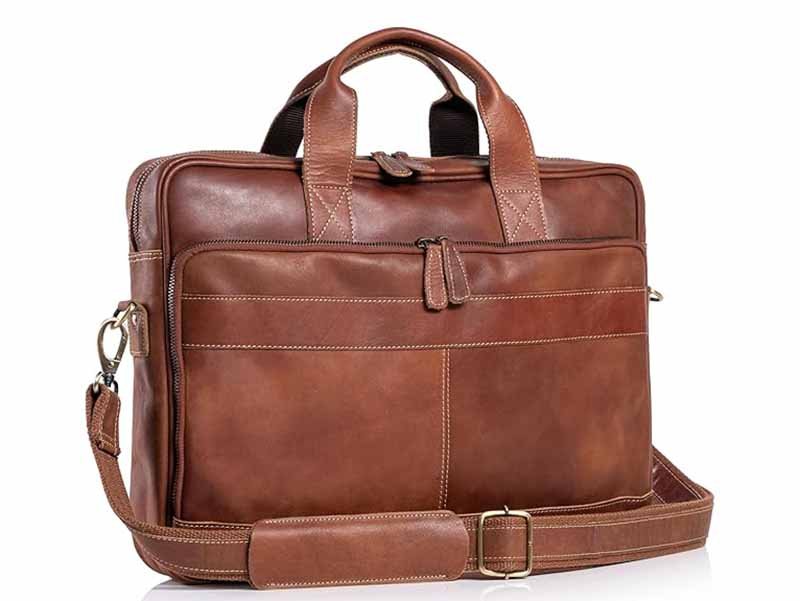
A leather briefcase can look outstanding on a product page and still fail in daily use if the weight is wrong. That problem shows up fast in the real world. A customer loads in a 14-inch or 15-inch laptop, charger, notebook, documents, power bank, maybe a bottle of water, and then starts commuting. What felt solid and premium in the showroom can start feeling tiring halfway through the day. That is why weight target is not a small technical detail. It is one of the first decisions that shapes comfort, product positioning, customer satisfaction, return risk, and even repeat orders.
For most brands, a comfortable leather briefcase should usually land around 1.1 kg to 1.6 kg empty, with slim models often closer to 0.9 kg to 1.3 kg and larger double-gusset or travel-focused models often rising to 1.4 kg to 1.8 kg or more depending on leather thickness, hardware, lining, and internal structure. Many mainstream leather briefcases listed by major brands and retailers fall inside this range, from slim models near 2.0 lb to 2.8 lb to thicker full-grain designs around 4.0 lb to 5.3 lb. At the same time, many modern business laptops weigh roughly 1.4 kg to 1.8 kg, so if the bag starts too heavy, the full carried load can become uncomfortable very quickly.
Good brands do not ask only, “How premium should this briefcase look?” They also ask, “How long will our customer carry it, what will go inside it, and what weight will still feel reasonable at 8:30 in the morning and again at 6:30 in the evening?” That is where smart development begins. A few extra millimeters of leather, heavier metal fittings, thicker foam, or a second gusset can easily push a product from comfortable to tiring. And once the customer feels that, no marketing line can hide it. This is exactly why weight target should be set early, tested during sampling, and controlled all the way through production.
What Is the Ideal Weight for a Leather Briefcase?
For most daily-use business products, the ideal empty weight for a leather briefcase is usually around 1.1 kg to 1.6 kg. That range gives brands enough room for real leather structure, laptop protection, and durable hardware without making the bag feel overly heavy before the customer even puts anything inside. Slim designs can go lighter, while larger multi-compartment styles often need a slightly higher target.
What Weight Feels Comfortable for a Leather Briefcase?
Comfort starts with the full carrying situation, not the empty bag on a table. A leather briefcase is rarely carried empty. In real use, customers often add:
| Daily Carry Items | Common Weight Range |
|---|---|
| 14″–15″ laptop | 1.4–1.8 kg |
| Charger and cables | 0.3–0.6 kg |
| Notebook and documents | 0.4–0.8 kg |
| Mouse / power bank / small accessories | 0.2–0.5 kg |
| Water bottle | 0.3–0.7 kg |
Many business users therefore end up carrying 2.6 kg to 4.4 kg of contents before counting the bag itself. If the briefcase already weighs 1.8 kg to 2.4 kg, the full load can easily move above 4.5 kg to 6.5 kg, which starts to feel very noticeable on one shoulder during commuting. Average laptop weight alone is often around 1.4 kg to 1.8 kg, so the bag has to leave room for the rest of the load.
This is why many brands that target office workers, consultants, and commuting professionals try to keep their empty briefcase weight under control. A slim leather briefcase at roughly 0.9 kg to 1.3 kg usually feels much easier in daily use than a heavy structured model above 1.8 kg, even if both look premium. That does not mean lighter is always better. If a briefcase becomes too light, customers may feel the leather is thin, the body is weak, or the product lacks substance. The right target is the point where the customer still feels quality in hand, but not strain on the shoulder.
For product development, a useful comfort rule is to think in layers:
- Below 1.0 kg empty: very light, usually slim, sometimes too minimal for premium positioning
- 1.1–1.3 kg empty: strong target for slim office briefcases
- 1.3–1.6 kg empty: balanced target for most premium laptop briefcases
- 1.6–1.8 kg empty: acceptable for larger or more structured briefcases
- Above 1.8 kg empty: should be justified by size, protection level, or travel function
If your customer is carrying the product five days a week, the bag cannot rely on appearance alone. It has to respect the body.
How Heavy Are Most Leather Briefcases Today?
The market shows a very wide spread, which is exactly why brands should set a clear target before development begins. Public product listings from major brands and retailers show that slim leather briefcases can be close to 2.0 lb (about 0.9 kg), while some compact full-grain models sit around 2.65 lb to 2.79 lb (about 1.19 kg to 1.27 kg). Once the briefcase gets thicker, uses heavier full-grain leather, or adds more compartments, product weights often jump to 3.97 lb (about 1.8 kg) or even 5.3 lb (about 2.4 kg).
That range matters because many customers do not realize how much leather construction changes the feel of a product until they hold it. On screen, a 1.2 kg briefcase and a 2.2 kg briefcase may look equally attractive. In the hand, they are not remotely the same product experience.
A practical market breakdown looks like this:
| Briefcase Type | Empty Weight Range | Real-World Feel |
|---|---|---|
| Slim leather briefcase | 0.9–1.3 kg | Easy for daily office carry |
| Standard laptop briefcase | 1.2–1.6 kg | Best balance for most users |
| Double-gusset briefcase | 1.4–1.8 kg | Better capacity, more noticeable weight |
| Large full-grain business case | 1.8–2.4 kg | Premium feel, but heavier in commuting |
| Travel-oriented leather briefcase | 1.6–2.2 kg | Works if extra storage is essential |
The lesson for brands is simple: the market does not reward weight by itself. Customers do not buy a briefcase because it is heavier. They buy a briefcase because it looks refined, carries comfortably, protects their gear, and feels durable. Weight only helps when it supports those goals. Once it starts working against comfort, it becomes a problem.
That is why smart collections often separate products by use case rather than trying to force one bag to do everything. A slim office line can target lower weight. A travel-business line can accept more structure and a higher weight ceiling. But each one needs a reason for the number it lands on.
Why Does Leather Briefcase Weight Matter?
Weight affects much more than shoulder comfort. It changes customer expectations, product reviews, shipping economics, and even how premium the product feels. In leather goods, this balance is especially sensitive because heavier materials often signal quality, but too much weight can make the bag feel inconvenient in daily life.
The commercial impact shows up in several ways:
| Why Weight Matters | What Happens in Real Use |
|---|---|
| Daily comfort | Heavy bags feel tiring during commuting |
| Perceived quality | Too light can feel cheap; too heavy can feel impractical |
| Laptop-carry experience | Heavy empty bag leaves less comfort margin for device load |
| Shipping cost | Heavier goods increase freight and warehouse costs |
| Online conversion | Customers increasingly check specs before buying |
| Returns / complaints | “Beautiful but too heavy” is a common reason for disappointment |
For e-commerce brands, this point is especially important. Many customers now compare product dimensions and weight before ordering, especially in premium categories. A leather briefcase is no longer judged only by appearance. Customers want to know whether it will be realistic for office commuting, flights, and meetings.
Weight also affects hardware and construction decisions. For example:
- thicker leather raises weight fast
- full metal zipper pulls add up across multiple compartments
- reinforced laptop padding improves protection but increases mass
- full leather lining feels luxurious but may push the briefcase too heavy
- larger gussets increase both capacity and total carry burden
In other words, every “upgrade” has a weight cost. Brands that skip this calculation often end up with a product that looks better in development than it feels in actual use.
At SzoneierLeather, this is where factory experience becomes useful. With more than 18 years of leather goods development and production experience, the team can help brands decide where weight should stay and where weight should go. Sometimes the answer is thinner leather in non-stress panels. Sometimes it is lighter lining, smaller hardware, cleaner compartment planning, or better structural reinforcement so the bag stays strong without becoming bulky. That is how a briefcase moves from “nice sample” to “comfortable product.”
What Makes a Leather Briefcase Heavy or Light?
The final weight of a leather briefcase is not determined by a single factor. It is the result of several structural and material choices made during product development. Leather thickness, hardware type, internal reinforcement, lining materials, and compartment design all contribute to the total mass of the bag.
A briefcase may look similar on the outside yet feel dramatically different in the hand depending on how these components are engineered. For brands planning a new product line, understanding where weight comes from allows designers to control the balance between durability and comfort.
A simplified breakdown of weight contributors shows how different parts of a briefcase influence the final product.
| Component | Typical Weight Influence | Notes |
|---|---|---|
| Leather panels | 40–55% | Main structural material |
| Lining materials | 10–20% | Fabric or leather lining |
| Metal hardware | 10–15% | Buckles, zippers, rings |
| Internal padding | 10–15% | Laptop protection layers |
| Reinforcement boards | 5–10% | Shape stability panels |
Because leather itself already contributes a significant portion of the total weight, even small differences in thickness or coverage can change the final product weight by several hundred grams.
For example, replacing 1.8 mm leather panels with 1.4 mm leather can reduce total bag weight by approximately 200–350 grams depending on bag size. Similarly, replacing full leather lining with lightweight textile lining can reduce another 150–250 grams.
Experienced manufacturers evaluate these factors early in the design stage to prevent weight from increasing unintentionally during development.
How Does Leather Thickness Affect Leather Briefcase Weight?
Leather thickness is one of the most important variables controlling the weight of a leather briefcase. In leather goods manufacturing, thickness is typically measured in millimeters. Different briefcase styles use different thickness ranges depending on structure and target market.
A simplified thickness comparison helps illustrate the effect.
| Leather Thickness | Common Use | Weight Impact |
|---|---|---|
| 1.2–1.4 mm | Slim briefcases | Lightweight |
| 1.4–1.6 mm | Standard business briefcases | Balanced |
| 1.6–1.8 mm | Premium structured briefcases | Heavier |
| 2.0 mm+ | Heavy-duty briefcases | Significantly heavier |
A briefcase made entirely with 2.0 mm thick full-grain leather may feel very luxurious but can easily push the bag weight above 2 kg before any items are placed inside.
However, using thinner leather does not necessarily mean sacrificing durability. Many factories strategically combine different thickness levels across different areas of the bag.
For example:
- exterior body panels: 1.4–1.6 mm
- handle reinforcement: 1.8–2.0 mm
- flap sections: 1.2–1.4 mm
- internal divider panels: 1.2–1.3 mm
This layered approach maintains structural strength in high-stress areas while reducing unnecessary weight in lower-stress zones.
Another important factor is leather type. Full-grain leather generally weighs more than corrected-grain or microfiber leather because it retains the entire fiber structure. While premium brands often prefer full-grain leather for durability and natural appearance, designers must account for its additional weight during development.
Manufacturers such as SzoneierLeather often help brands analyze leather options during sampling to achieve the right balance between premium feel and manageable weight.
How Do Hardware and Structure Affect Leather Briefcase Weight?
Hardware and structural components can add surprising amounts of weight to a briefcase. Customers rarely notice these parts individually, but together they can account for several hundred grams.
Common hardware elements include:
- zipper systems
- buckles
- D-rings
- handle brackets
- magnetic closures
- shoulder strap hooks
The difference between hardware materials can be significant.
| Hardware Type | Average Weight Impact |
|---|---|
| Lightweight aluminum hardware | Lower |
| Zinc alloy hardware | Medium |
| Solid brass hardware | Higher |
For example, a briefcase with solid brass buckles and thick zipper pulls may add 150–300 grams compared with lighter alternatives.
Internal structure also affects weight. Modern leather briefcases often include padded laptop compartments, foam reinforcement, and rigid board panels to maintain shape. While these features improve durability and protection, they increase total bag weight.
A typical laptop compartment structure may include:
| Layer | Function |
|---|---|
| Foam padding | Shock absorption |
| Fabric lining | Device protection |
| Reinforcement board | Shape stability |
Combined, these layers can add 200–400 grams to the bag depending on size.
Designers therefore need to carefully consider whether each structural component truly adds value to the user experience.
For instance, a briefcase intended primarily for carrying documents may not require heavy laptop padding, while a tech-focused business bag may justify the additional weight.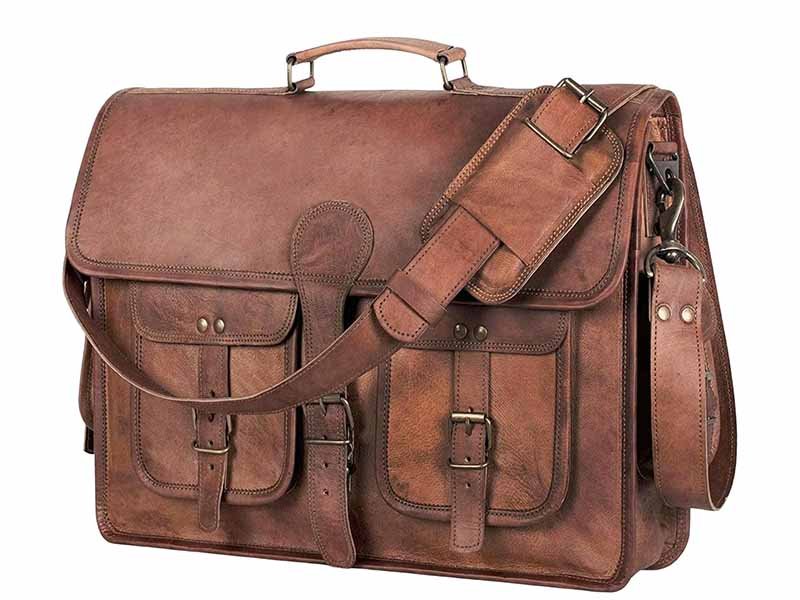
Which Materials Reduce Leather Briefcase Weight?
Reducing briefcase weight does not mean abandoning leather. Instead, designers can strategically combine leather with other lightweight materials to maintain durability while improving comfort.
Several approaches are commonly used in modern briefcase design.
1. Lightweight Lining Fabrics
Replacing leather lining with high-quality fabric lining can significantly reduce weight.
| Lining Material | Weight Advantage |
|---|---|
| Polyester lining | Lightweight |
| Nylon lining | Strong and light |
| Microfiber lining | Premium feel with reduced weight |
2. Composite Reinforcement Panels
Instead of thick leather boards, manufacturers may use lightweight composite reinforcement panels to maintain shape.
3. Strategic Leather Placement
Some sections of a briefcase do not require full leather thickness. For example:
- interior divider panels
- pocket structures
- secondary compartments
Using thinner leather in these areas can reduce weight while preserving durability in load-bearing sections.
4. Optimized Hardware Selection
Selecting smaller or hollow metal hardware can also reduce weight without affecting performance.
The goal is not simply to remove weight but to optimize where weight is necessary and where it is not.
Professional leather goods factories often run multiple prototype samples to test different material combinations. During this process, developers measure weight changes and evaluate whether the bag still meets durability standards.
For brands working with experienced manufacturers like SzoneierLeather, this stage becomes an important opportunity to refine the product before moving into full production. Adjustments to leather thickness, lining material, and hardware selection can reduce weight by 300–600 grams without significantly changing the visual design.
How Do Brands Set Weight Targets for a Leather Briefcase?
Setting a weight target for a leather briefcase is not something that should happen after the product is already designed. Successful brands usually define a weight range during the early concept stage, before leather selection, hardware sourcing, or structural engineering begins. When weight is treated as a key product parameter from the start, the design team can control materials, structure, and functionality much more effectively.
A clear weight target helps product developers answer several practical questions:
- How thick should the leather be?
- How many compartments should the bag include?
- What type of hardware is appropriate?
- Should the bag prioritize minimalism or storage capacity?
Without a defined weight goal, it is easy for a briefcase to gradually become heavier during development as additional features are added.
A practical approach used by many brands is to establish three product categories with different weight targets.
| Product Category | Target Empty Weight | Typical Use |
|---|---|---|
| Slim briefcase | 0.9–1.2 kg | Daily office carry |
| Standard laptop briefcase | 1.2–1.5 kg | Business commuting |
| Large business briefcase | 1.5–1.8 kg | Travel and heavy carry |
This structured approach allows a brand to develop multiple models that address different user needs while maintaining consistency in product performance.
For example, a slim briefcase designed for professionals who carry only a laptop and documents should remain lightweight. On the other hand, a double-gusset briefcase designed for consultants or lawyers may include additional storage and therefore accept a slightly higher weight.
What Weight Do Premium Leather Briefcases Usually Target?
Premium leather briefcase brands typically aim for a weight range between 1.2 kg and 1.6 kg for standard business models. This range provides enough structural strength to support high-quality leather while remaining comfortable for everyday use.
Premium brands often rely on several strategies to maintain this balance.
First, they use selective leather thickness rather than applying heavy leather panels across the entire bag. Stress areas such as handles and bottom panels receive thicker leather reinforcement, while larger surfaces use slightly thinner leather to reduce overall weight.
Second, they carefully limit unnecessary compartments. Although multiple pockets may seem attractive in marketing images, excessive internal structure increases weight and can reduce usable space.
Third, premium briefcases often integrate lighter internal lining systems instead of full leather lining. Fabric linings can provide durability while reducing hundreds of grams from the final product.
When brands combine these techniques, they can maintain a premium feel while keeping the briefcase practical for everyday use.
How Do Laptop Compartments Affect Leather Briefcase Weight?
Laptop compartments are one of the most important functional features in modern briefcases, but they also add significant weight.
A typical laptop compartment usually includes three protective layers:
| Layer | Function |
|---|---|
| Foam padding | Absorbs impact |
| Fabric lining | Prevents scratches |
| Reinforcement panel | Maintains structure |
Together these layers can add 200–400 grams to the bag depending on size and protection level.
Brands therefore need to carefully determine the intended device size and protection level. A briefcase designed for 13-inch laptops can often use lighter padding compared with a bag designed to carry 17-inch laptops.
Some manufacturers also use EVA foam panels or lightweight composite materials to reduce padding weight while maintaining adequate shock protection.
Another important consideration is the position of the laptop compartment. Placing the laptop pocket close to the user’s back improves weight distribution and reduces shoulder strain. This ergonomic detail improves comfort even if the total weight remains the same.
How Do Travel Features Change Leather Briefcase Weight?
Many modern leather briefcases include additional travel features that increase functionality but also influence weight.
Common travel-oriented features include:
- luggage trolley sleeves
- detachable shoulder straps
- expandable gussets
- tablet compartments
- hidden security pockets
Each feature adds value but also introduces additional material and hardware.
The following table illustrates typical weight contributions.
| Feature | Approximate Weight Impact |
|---|---|
| Shoulder strap with padding | 150–250 g |
| Trolley sleeve | 80–150 g |
| Expandable gusset structure | 120–200 g |
| Extra internal organizer pockets | 50–100 g |
For brands targeting frequent travelers, these features may be worth the additional weight. However, for a minimal office briefcase, excessive features may make the bag unnecessarily heavy.
Successful product designers therefore evaluate which features are truly essential for the intended user.
Which Leather Briefcase Designs Balance Weight Best?
Different briefcase structures distribute weight in different ways. Some designs naturally remain lighter because they use fewer materials, while others prioritize storage capacity and durability.
Understanding how structure affects weight helps brands create products that feel comfortable while still meeting user expectations.
Are Slim Leather Briefcases Lighter?
Slim leather briefcases are usually the lightest option in the leather briefcase category. Because they contain fewer compartments and thinner profiles, they require less leather and fewer internal components.
A typical slim briefcase includes:
- one main compartment
- laptop sleeve
- small accessory pocket
- external document pocket
Because of the simplified layout, slim briefcases often weigh between 0.9 kg and 1.3 kg.
These bags appeal to professionals who carry minimal items and prefer a lightweight design for daily commuting.
Slim briefcases also pair well with modern work styles where many documents are stored digitally rather than carried in paper form.
Are Double-Gusset Leather Briefcases Heavier?
Double-gusset briefcases are designed with two large compartments separated by a central divider. This structure provides more storage but also requires additional leather panels and reinforcement.
As a result, double-gusset designs often weigh 1.4 kg to 1.8 kg depending on materials.
Although heavier, this design offers several advantages:
- greater document capacity
- better separation between laptop and paperwork
- more organized internal storage
Professionals in fields such as law, consulting, and finance often prefer double-gusset briefcases because they need to carry more materials during meetings.
Which Leather Briefcase Structure Is Most Comfortable?
Comfort depends not only on total weight but also on how the weight is distributed.
Several structural elements influence carrying comfort.
| Design Element | Effect on Comfort |
|---|---|
| Wide shoulder strap | Reduces pressure on shoulder |
| Balanced handle placement | Improves hand carry |
| Reinforced bottom panel | Prevents sagging |
| Laptop compartment near back | Improves weight distribution |
A well-designed briefcase may feel comfortable even if it weighs slightly more because the load is distributed evenly.
Manufacturers often test prototypes by loading them with realistic items and evaluating how the bag behaves during walking and commuting.
How Can Manufacturers Control Leather Briefcase Weight?
Professional leather goods manufacturers use a combination of engineering and material selection to control product weight.
The goal is not simply to reduce weight but to optimize the structure so that the bag feels balanced and durable.
How Do Factories Optimize Leather Briefcase Structure?
Factories begin by analyzing the stress points of the briefcase.
Areas such as handles, shoulder strap attachments, and bottom panels experience the most mechanical stress. These sections require thicker leather or reinforcement.
Other areas such as side panels and internal dividers can use lighter materials.
By concentrating strength where it is needed and reducing material elsewhere, manufacturers can lower total weight without sacrificing durability.
How Does Leather Selection Control Leather Briefcase Weight?
Different leather types have different densities.
| Leather Type | Weight Characteristics |
|---|---|
| Full grain leather | Strong but heavier |
| Top grain leather | Balanced weight |
| Split leather | Lighter but less durable |
| Microfiber leather | Lightweight alternative |
Brands targeting premium markets often choose full grain leather but adjust thickness to keep weight manageable.
How Can Brands Customize a Lightweight Leather Briefcase?
Customization allows brands to fine-tune the balance between comfort and durability.
Manufacturers such as SzoneierLeather, with more than 18 years of leather goods development and production experience, support clients throughout the customization process.
The development workflow typically includes:
- Design consultation to define product goals
- Material selection based on durability and weight
- Prototype sampling within 5–7 days
- Structural adjustments based on weight testing
- Final production with strict quality control
Because SzoneierLeather maintains its own leather supply chain and product development team, brands can adjust leather thickness, hardware type, lining materials, and structural components during sampling.
These adjustments help ensure that the final briefcase meets both aesthetic and ergonomic requirements.
Conclusion: Designing Leather Briefcases That Balance Comfort and Durability
The weight of a leather briefcase plays a critical role in user experience. A bag that looks premium but feels too heavy can quickly lose favor with customers who carry it daily.
For most business applications, a briefcase weight between 1.1 kg and 1.6 kg provides a good balance between durability, functionality, and comfort.
By carefully controlling leather thickness, hardware selection, internal structure, and compartment design, brands can create products that feel strong without becoming burdensome.
If you are planning to develop custom leather briefcases, private label business bags, or premium leather office accessories, working with an experienced manufacturer can significantly simplify the development process.
SzoneierLeather has over 18 years of experience in the research, development, and manufacturing of leather products.
If you are developing a new leather briefcase collection or refining an existing design, you can contact the SzoneierLeather team to discuss your project and request a sample prototype tailored to your brand’s specifications.