
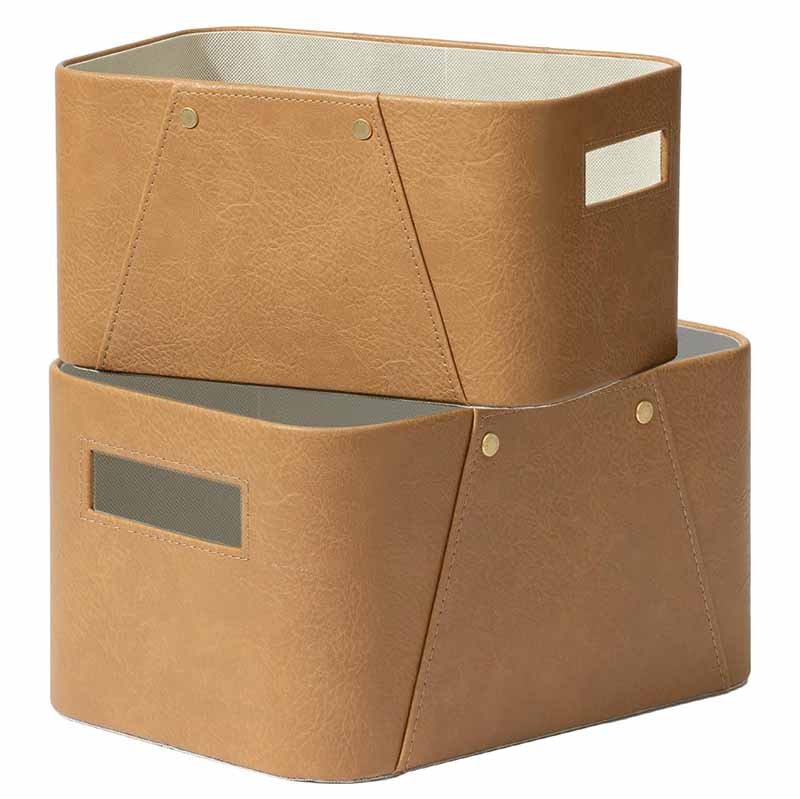
If you make premium leather boxes—watch boxes, jewelry boxes, gift boxes, collector packaging—you already know the painful truth: a box can look perfect at the factory and still warp later. The lid starts to “kiss” one corner instead of sitting flat. The base twists slightly. The corners that were sharp become visibly stressed. Customers may not use technical words like “panel deformation,” but they feel it instantly: “This doesn’t feel expensive.”
Warping happens because a leather box is not one material. It’s a layered structure: leather + adhesive + core board + lining. Each layer reacts differently to moisture and temperature. If one layer expands while another stays stable, the panel becomes a bent sandwich. This is why warping often shows up after shipping, after warehouse storage, or during seasonal humidity swings—even if your sewing, edge paint, and leather quality are excellent.
Leather boxes warp when leather and the internal core board absorb moisture at different rates. Humidity changes cause leather to expand or contract, while core boards can swell, shrink, or twist. If the panel structure is not balanced, or if bonding and core selection are wrong, stress builds and the box deforms. Stable core materials, balanced panel construction, controlled humidity, and proper testing prevent warping.
A brand can spend months perfecting logo placement and color matching—but one humid shipping season can ruin the whole impression. Let’s start from the root: what actually causes leather boxes to warp.
What Causes Warping in Leather Boxes?
Warping in leather boxes is mainly caused by moisture-driven movement inside the panel: leather absorbs/release moisture, core boards absorb moisture and swell, and adhesives can soften or re-cure under heat. When these movements happen unevenly across a panel (top vs bottom, edge vs center), stress bends the panel. Good core selection, balanced panel design, and humidity control reduce that internal stress.
What humidity changes affect Leather Boxes?
Leather is hygroscopic—it naturally exchanges moisture with the environment. The issue is not that leather “gets wet.” The issue is that leather’s moisture content changes, and that change affects dimensions and tension.
When humidity rises, leather can become slightly more flexible and may expand; when humidity drops, leather can lose moisture and tighten. On a flat leather sheet, this change might be small. But on a leather box panel, leather is glued to a rigid core. That mismatch creates tension.
Practical humidity ranges used in packaging factories
Most factories that make premium rigid boxes keep the workshop within a controlled range to reduce movement during bonding and pressing.
| Relative Humidity (RH) | What You’ll See in Leather Boxes | Risk Level |
|---|---|---|
| 30–35% | leather feels tighter/drier, panels may “pull” | Medium |
| 40–55% | stable bonding and panel flatness | Low |
| 56–65% | leather softens slightly, glue curing can change | Medium |
| 66–80% | board swelling + panel deformation becomes common | High |
What brands should remember:
If your product is made at 45–55% RH but stored/shipped at 70–85% RH, the panel behavior can change enough to cause visible deformation—even if the leather quality is premium.
Why do Leather Boxes warp after storage or shipping?
This is the most common complaint from brand customers:
“Samples were perfect, but bulk arrived with lid misalignment.”
That usually means the box passed inspection in one environment, then moved into another.
Here’s what changes during real logistics:
- Sea freight containers often have high humidity, especially on long routes.
- Temperature swings (day vs night) create condensation.
- Warehouses vary widely—some are dry and climate-controlled, others are not.
- Retail environments might be air-conditioned (dry) or coastal/humid (wet).
Realistic humidity exposure in the supply chain
| Stage | Common Environment | Typical RH Range |
|---|---|---|
| Factory assembly | controlled workshop | 40–55% |
| Carton storage | warehouse | 45–70% |
| Sea shipment | container + condensation risk | 65–90% |
| Destination warehouse | depends on facility | 35–75% |
| Retail display | air-con + lighting | 30–60% |
What happens inside the panel during these swings?
- Core board absorbs moisture → swells slightly
- Leather responds differently (less swelling than board, but tension changes)
- Adhesive layer can soften under heat → bond “relaxes”
- Result: the panel bends, lid alignment shifts, corners lift
Even 1–2 mm warping is enough to make a premium box look defective.
Are soft structures the main reason Leather Boxes bend?
Soft structure is a symptom. The real cause is usually core board behavior plus panel balance.
A leather box stays rigid because the core is rigid. If the core board is unstable under humidity, the whole box becomes unstable—no matter how expensive the leather is.
What makes core boards unstable
- uneven moisture absorption across the sheet
- fibers swelling in one direction more than another
- inconsistent board density
- board not conditioned before production
- thin board used for large panels without reinforcement
Common core materials and warping tendency
| Core Material | Strength | Moisture Sensitivity | Notes for Leather Boxes |
|---|---|---|---|
| Greyboard (chipboard) | Medium | Medium–High | common, cost-effective, needs sealing |
| MDF | High | Medium | dense, but edges absorb moisture easily |
| Plywood | High | Low | stable, higher cost, good for big panels |
| Plastic board (PP/ABS) | High | Very Low | best moisture resistance, premium option |
| Honeycomb/composite board | High | Low | lightweight, stable if bonded well |
Many warping issues start at the board edges. Moisture enters the edge faster than the center, so the panel bends like a banana. That’s why edge sealing and correct wrapping tension matter.
What does “panel balance” mean in Leather Boxes?
This is the part many brands don’t hear from suppliers, but it’s one of the most important.
A leather box panel is not just “leather glued to board.” It’s a layer system. If the top and bottom of the panel do not “pull” equally, the panel bends.
Typical panel layers
| Layer | Function | Common Risk |
|---|---|---|
| Outer leather | appearance + feel | expands/contracts with RH |
| Adhesive | bonding | softens with heat/humidity |
| Core board | rigidity | swells/twists with RH |
| Inner lining (microfiber/suede) | interior finish | can shrink/expand too |
If the outer leather is thick and tight but the inner lining is thin and loose (or bonded differently), the panel becomes unbalanced. Over time, the stronger side “wins,” and the panel curves.
Signs your panel balance is off
- lid corners lift slightly after 2–4 weeks
- base panels bow inward or outward
- the box sits flat at the factory but rocks on a table later
- corners show stress wrinkles on one side only
Practical board thickness guidance by box size
This is not a universal rule, but it’s a strong starting point for most premium leather boxes.
| Box Panel Size (Largest Face) | Suggested Core Thickness | Notes |
|---|---|---|
| ≤ 180 mm | 2.0–2.5 mm | stable for small boxes |
| 180–260 mm | 2.5–3.0 mm | common jewelry/watch boxes |
| 260–350 mm | 3.0–4.0 mm | needs better board quality |
| ≥ 350 mm | 4.0 mm+ or reinforced | consider plywood/composite |
When brands request very large panels with thin core board, warping risk increases sharply—especially during shipping.
Which Core Materials Work Best for Leather Boxes?
The stability of leather boxes depends heavily on the internal core board. Greyboard, MDF, plywood, and composite boards are commonly used. Each material has different strength, moisture resistance, and cost characteristics. Choosing the right core board thickness and density helps keep panels flat and prevents deformation when humidity changes during shipping or storage.
Which boards are used inside Leather Boxes?
The internal core board is the structural backbone of a leather box. It determines how rigid the box feels and how well it maintains its shape over time.
Most leather packaging boxes use engineered paper boards or wood-based boards because they provide good stiffness while remaining easy to cut and shape.
Most commonly used core boards in leather box manufacturing
| Core Material | Density | Advantages | Limitations |
|---|---|---|---|
| Greyboard (chipboard) | Medium | Cost-effective, easy to process | Sensitive to humidity |
| MDF board | High | Smooth surface, strong structure | Edges absorb moisture |
| Plywood | High | Excellent dimensional stability | Higher cost |
| Plastic boards (PP / ABS) | High | Moisture resistant, very stable | Less eco-friendly |
| Honeycomb composite | Medium–High | Lightweight, strong | Requires precise lamination |
Among these options, greyboard and MDF are the most widely used in leather box production because they balance cost and structural performance.
However, premium boxes—especially large jewelry boxes or watch boxes—often use plywood or composite boards to reduce long-term deformation risk.
Are MDF Leather Boxes stronger than greyboard Leather Boxes?
Both MDF and greyboard are commonly used, but they behave differently under stress and humidity.
Structural comparison
| Property | Greyboard | MDF |
|---|---|---|
| Density | Medium | High |
| Surface smoothness | Moderate | Very smooth |
| Structural rigidity | Medium | High |
| Moisture resistance | Moderate | Moderate |
| Cost | Lower | Higher |
Greyboard is produced from compressed recycled paper fibers. It is economical and widely available, making it the most common choice for standard packaging boxes.
MDF, on the other hand, is made from compressed wood fibers and resin. It is denser and stronger, which means panels are less likely to flex or bend.
However, MDF also has a weakness: the edges absorb moisture quickly. If edges are not sealed properly, MDF panels can swell slightly in high humidity environments.
Practical recommendation for box development
| Box Type | Recommended Core |
|---|---|
| Small gift boxes | Greyboard |
| Watch boxes | MDF |
| Jewelry boxes | MDF or plywood |
| Large presentation boxes | Plywood or composite boards |
This approach balances cost, durability, and structural reliability.
Do wood or plastic cores improve Leather Boxes stability?
For luxury packaging, stability often matters more than material cost. This is why some high-end leather boxes use wood or plastic structural boards.
These materials are less sensitive to humidity changes.
Performance comparison of high-end core materials
| Material | Moisture Resistance | Stability | Typical Applications |
|---|---|---|---|
| Plywood | High | Excellent | luxury watch boxes |
| ABS plastic board | Very high | Excellent | premium presentation boxes |
| Polypropylene board | Very high | Very good | travel cases |
| Aluminum composite | Extremely high | Exceptional | specialty packaging |
Wood-based cores such as plywood provide a natural balance between strength and workability. Plastic cores offer even greater moisture resistance but require specialized manufacturing processes.
Brands developing long-lasting collector boxes often prefer these materials because they maintain structural stability even in humid climates.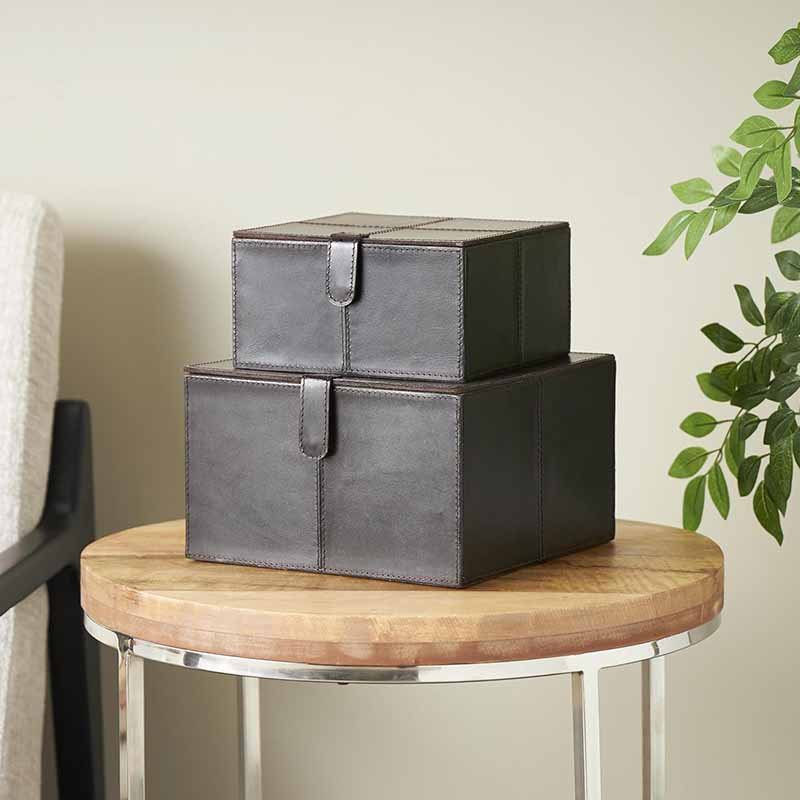
How Does Humidity Impact Leather Boxes?
Humidity affects leather boxes because both leather and core boards absorb moisture from the air. When humidity rises, leather becomes more flexible and core boards may swell. When humidity drops, materials shrink or tighten. Repeated moisture changes create internal stress that can bend panels or misalign lids. Maintaining stable humidity during manufacturing and storage reduces this risk.
What humidity levels are safe for Leather Boxes?
Environmental humidity plays a critical role in maintaining structural stability.
Most luxury packaging manufacturers control workshop humidity carefully during production.
Recommended humidity range for leather box production
| Environment | Ideal Relative Humidity |
|---|---|
| Leather storage | 45–55% |
| Box assembly workshop | 45–55% |
| Adhesive curing area | 40–50% |
| Finished goods storage | 40–60% |
Within this range, both leather and core boards remain relatively stable.
When humidity rises above 65%, moisture absorption increases rapidly. Boards may begin to swell slightly, while adhesives may soften.
When humidity drops below 35%, leather may shrink or tighten, which can pull against the internal structure.
How does moisture affect Leather Boxes and core boards differently?
Leather and core boards react to moisture in very different ways.
Leather tends to expand gradually and remain flexible, while paper-based boards absorb moisture through their fibers and may swell more aggressively.
Moisture reaction comparison
| Material | Moisture Reaction | Structural Impact |
|---|---|---|
| Leather | Expands slightly | Tension change |
| Greyboard | Fiber swelling | Panel bending |
| MDF | Edge swelling | Corner distortion |
| Plywood | Minimal expansion | Stable panel |
Because these materials respond differently, the adhesive layer between them must absorb some of this movement.
If the adhesive bond is too rigid or unevenly applied, stress accumulates in the panel.
Over time this stress causes:
- panel bending
- corner distortion
- lid misalignment
How do factories control humidity when making Leather Boxes?
Experienced leather box manufacturers invest in environmental control systems to reduce moisture-related issues.
These controls include both facility management and production procedures.
Common humidity control methods used in factories
| Control Method | Purpose |
|---|---|
| Dehumidifiers | Maintain stable workshop humidity |
| Climate-controlled storage | Protect raw leather |
| Material conditioning | Stabilize boards before cutting |
| Controlled adhesive curing | Ensure proper bonding |
Another important practice is material acclimatization.
Before production begins, leather and core boards are stored in the workshop for 24–48 hours. This allows materials to adjust to the workshop environment before assembly.
If materials are processed immediately after arriving from a different climate, dimensional instability may occur later.
Packaging strategies to reduce humidity risk
Even after production, packaging methods help reduce moisture exposure during shipping.
| Packaging Component | Function |
|---|---|
| Desiccant packets | Absorb moisture |
| Moisture barrier bags | Protect boxes during transport |
| Double-wall cartons | Reduce humidity penetration |
| Pallet wrapping | Protect from container condensation |
These measures are particularly important for international shipments, where goods may spend several weeks in humid sea freight containers.
How Can Core Engineering Strengthen Leather Boxes?
Core engineering strengthens leather boxes by selecting stable core materials, optimizing board thickness, balancing panel layers, sealing moisture-sensitive edges, and using adhesives that allow controlled flexibility. When these structural elements are engineered correctly, the panel maintains flatness even when humidity changes during shipping, storage, or retail display.
How thick should cores be in Leather Boxes?
Core thickness directly affects panel rigidity. A thin core board bends easily under small amounts of stress, especially when humidity fluctuates. However, simply increasing thickness is not always the best solution because it increases weight and material cost.
Experienced leather box manufacturers determine core thickness based on panel dimensions and structural load requirements.
Core thickness guideline used in many leather packaging factories
| Panel Size | Suggested Core Thickness | Structural Stability |
|---|---|---|
| ≤ 180 mm | 2.0–2.5 mm | Stable for small boxes |
| 180–260 mm | 2.5–3.0 mm | Suitable for jewelry boxes |
| 260–350 mm | 3.0–4.0 mm | Recommended for watch boxes |
| ≥ 350 mm | 4.0–5.0 mm | Required for large presentation boxes |
For example, a watch storage box measuring 300 mm × 200 mm typically uses a 3.5–4 mm core board to maintain rigidity.
If thinner boards are used for large panels, even minor moisture changes can cause visible panel distortion.
Another important consideration is board density. Two boards with the same thickness may perform differently if their density varies.
Typical density comparison
| Core Material | Average Density |
|---|---|
| Greyboard | 600–900 kg/m³ |
| MDF | 650–850 kg/m³ |
| Plywood | 500–700 kg/m³ |
| Composite board | 700–1000 kg/m³ |
Higher density generally improves resistance to bending and deformation.
How do layered cores improve Leather Boxes strength?
Many premium leather boxes are not built from a single core board. Instead, engineers create layered structural panels.
Layering materials improves dimensional stability because each layer distributes stress differently.
For example, a layered structure may include:
- structural board (rigidity)
- fiber reinforcement layer (stress distribution)
- inner lining material (tension balance)
Example layered panel construction
| Layer | Material | Role |
|---|---|---|
| Outer layer | Leather | Appearance |
| Adhesive | Flexible bonding layer | Stress absorption |
| Structural core | MDF / greyboard | Rigidity |
| Reinforcement sheet | Fiber layer | Reduce panel tension |
| Interior lining | Microfiber / suede | Balance panel stress |
This design allows small dimensional changes to be absorbed across multiple layers rather than concentrating stress in one area.
Luxury packaging manufacturers frequently use layered panels in:
- watch collector boxes
- jewelry storage cases
- luxury presentation boxes
These products must maintain precise alignment for years.
Do adhesives affect Leather Boxes warping?
Yes—adhesive selection has a major influence on panel stability.
The adhesive layer connects materials that respond differently to humidity. If the adhesive cannot tolerate small movements, stress builds between the leather and core board.
Adhesive characteristics important for leather boxes
| Property | Importance |
|---|---|
| Flexibility | absorbs material expansion |
| Bond strength | maintains panel structure |
| Moisture resistance | prevents adhesive weakening |
| Uniform application | avoids tension imbalance |
Common adhesives used in leather box production
| Adhesive Type | Advantages | Limitations |
|---|---|---|
| Water-based adhesive | flexible, eco-friendly | slower curing |
| Solvent adhesive | strong bonding | higher VOC |
| Hot melt adhesive | fast processing | less flexibility |
Water-based adhesives are widely used because they provide controlled flexibility, which allows the panel to adjust slightly when humidity changes.
Why edge sealing is critical in Leather Boxes
Edges are the most vulnerable part of a core board. Moisture usually enters through exposed edges rather than flat surfaces.
When edges absorb moisture, the board swells unevenly, causing the panel to bend.
Edge protection techniques
| Technique | Benefit |
|---|---|
| Edge paint sealing | reduces moisture absorption |
| Resin coating | strengthens board edges |
| Protective tape | adds corner durability |
| Leather wrapping | provides additional barrier |
Many premium leather boxes combine several of these techniques to protect the internal structure.
How Do Factories Test Leather Boxes for Warping?
Factories test leather boxes by simulating environmental conditions such as humidity changes, temperature fluctuations, and mechanical stress. Engineers monitor panel flatness, lid alignment, and structural integrity. These tests help ensure the box remains stable during transportation, storage, and retail display.
How do manufacturers simulate humidity changes?
Humidity testing helps determine whether a box will remain stable in different climates.
Example humidity test process
| Step | Procedure |
|---|---|
| 1 | Place finished boxes in environmental chamber |
| 2 | Increase humidity to 70–80% |
| 3 | Maintain conditions for 24–48 hours |
| 4 | Return to 45–55% humidity |
| 5 | Inspect panel deformation |
If the box remains structurally stable, the design is considered reliable.
Manufacturers often repeat the test several times to simulate long shipping journeys.
What structural tests are used for Leather Boxes?
Besides humidity testing, mechanical durability tests are also performed.
Common structural tests
| Test | Purpose |
|---|---|
| Lid opening cycle test | check hinge durability |
| Compression test | evaluate panel rigidity |
| Corner stress test | check structural joints |
| Drop test | simulate shipping impact |
For luxury packaging, engineers usually conduct multiple cycles of these tests to ensure long-term reliability.
How do factories inspect Leather Boxes before shipping?
Before shipment, quality control teams inspect every production batch.
Final inspection checklist used in many factories
| Inspection Item | What Inspectors Check |
|---|---|
| Lid alignment | smooth closing without gaps |
| Panel flatness | no bending or twisting |
| Corner integrity | sharp edges and proper angles |
| Adhesive bonding | no delamination |
| Leather surface | no wrinkles or bubbles |
Only products that pass inspection are packed for delivery.
Conclusion: Engineering Leather Boxes That Stay Flat and Stable
Preventing warping in leather boxes requires careful control of materials, environment, and structural engineering.
Successful leather box designs usually include:
- stable core board materials
- appropriate board thickness
- layered structural panels
- flexible adhesive bonding
- sealed edges to block moisture
- humidity control during production
- environmental testing before shipment
When these engineering principles are applied consistently, leather boxes remain stable even when exposed to different climates during shipping or storage.
Work With SzoneierLeather to Develop Custom Leather Boxes
Developing high-quality leather boxes requires both material knowledge and manufacturing expertise.
SzoneierLeather is a professional leather goods manufacturer with more than 18 years of experience producing leather boxes, bags, wallets, belts, straps, and accessories.
The company provides a complete development system including:
- raw material sourcing
- structural engineering support
- product design and prototyping
- fast sampling services
- precision manufacturing
- packaging and quality inspection
With strong control over raw materials and production processes, SzoneierLeather helps brands develop stable, durable, and visually precise leather boxes.
If you are planning to launch custom leather packaging, luxury gift boxes, or private label leather products, the SzoneierLeather team welcomes your inquiry and would be glad to help turn your concept into a finished product.