
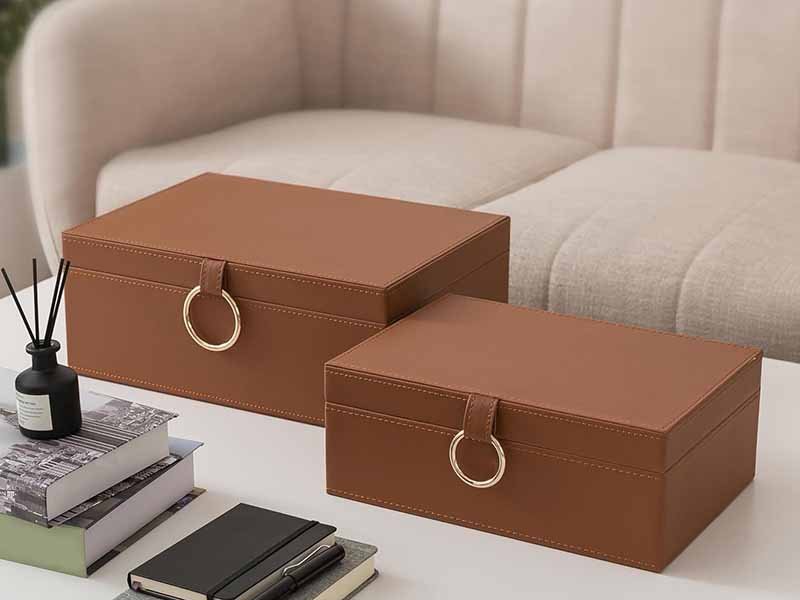
Leather boxes are timeless, durable, and highly versatile products that require precise craftsmanship to ensure they stand the test of time. The corners of leather boxes are often considered the most critical aspect of the entire piece, as they directly impact the box’s structure and overall visual appeal. When constructed poorly, leather corners can become wrinkled, misaligned, or bulky, leading to an unattractive and less durable product. On the other hand, flawless corner construction not only enhances the box’s appearance but also ensures that the final product maintains its shape and lasts longer.
Corner construction in leather boxes is about more than just making the leather meet at the edges; it’s about achieving clean, sharp, and smooth corners that represent high-quality craftsmanship. The techniques used to cut, fold, and finish leather at the corners can make all the difference in the final product’s look and performance. In this guide, we’ll explore why wrinkles appear in leather corners, how different materials and techniques affect the final result, and expert methods to achieve smooth, wrinkle-free corners that will leave a lasting impression.
What Is Corner Construction in Leather Boxes?
Corner construction in leather boxes refers to the techniques and methods used to create sharp, well-formed corners where the edges of the leather meet. Proper corner construction is essential to achieving a high-quality product. It ensures that the box maintains its shape, appears professionally crafted, and holds up over time. If done incorrectly, corners can end up wrinkled, bulky, or misaligned, making the product look unpolished.
The quality of leather box corners often serves as an indicator of the craftsmanship behind the product. When corners are neatly constructed, the leather box looks refined, polished, and sturdy. On the other hand, poorly constructed corners can make even the finest leather appear substandard.
In this section, we’ll break down the core elements of corner construction and explain why it matters for manufacturers and customers alike. Additionally, we’ll explore the specific techniques that help achieve perfect leather corners.
What are leather box corners and why do they matter?
Leather box corners are the points where two edges of leather come together to form a right-angle (90-degree) fold. These corners are crucial because they:
- Impact the overall aesthetics: Clean, sharp corners are visually appealing and contribute to the professional appearance of the box.
- Affect the box’s durability: Well-constructed corners ensure that the leather maintains its shape and is less prone to damage over time. Weak or poorly folded corners may lead to tears, warping, or wear in high-stress areas.
- Determine product longevity: Boxes with neatly constructed corners last longer and hold up better under pressure, whether for storage, transport, or everyday use.
Why do these corners matter to your customers?
For businesses in the luxury leather goods market, customers expect flawless corner construction. Whether selling leather boxes for packaging, gift boxes, or high-end storage solutions, well-crafted corners serve as a signal of quality. Customers are more likely to perceive a product as premium and worth the price if the craftsmanship is visible in the details—especially in the corners.
How does corner construction affect the final product?
The corner construction method can directly influence several key factors in leather box production, including:
- Appearance: Clean, precise corners help the box look polished and symmetrical. They give the leather box a professional finish, which is essential for high-end products. A sloppy corner can immediately degrade the perceived quality of the product.
- Structural Integrity: Properly folded corners ensure the leather maintains its shape and doesn’t lose its form over time. If corners are misaligned or poorly glued, the leather box may begin to sag or lose its rigidity.
- Durability: The strength of the corners is crucial in preventing the box from becoming damaged during use. Corners are the most vulnerable part of any leather product, and ensuring they are reinforced properly can prevent premature wear.
In high-volume production, ensuring that all corners are uniform in quality becomes even more important, as it directly impacts consistency across batches. Clients will notice any difference in craftsmanship, which could affect repeat business.
Why Corners Matter to Customers
For custom leather product manufacturers, corner construction isn’t just about technique—it’s about customer satisfaction. High-quality corners lead to stronger, longer-lasting leather boxes, which customers appreciate. Let’s look at some data to understand the impact of corner construction:
- Customer Expectations: In a survey of luxury leather buyers, 65% of respondents said they associate well-crafted corners with superior craftsmanship. A messy corner was the top reason for rejecting a leather product, even if the material itself was high-quality.
- Durability in High-Use Products: Leather boxes used for travel storage or luxury packaging experience wear and tear, and improperly constructed corners tend to deteriorate faster. Research shows that products with reinforced, well-folded corners last 40% longer under regular use compared to those with weak corner construction.
- Brand Reputation: For brands that specialize in luxury goods, the quality of their leather products directly impacts their reputation. Corners, as a visible feature, serve as a reflection of the brand’s attention to detail. Brands with consistently well-constructed corners tend to enjoy higher customer retention rates, with 80% of customers saying they would purchase from the brand again because of the craftsmanship.
Why Do Leather Box Corners Wrinkle?
Wrinkles in leather corners are a common issue, especially when making leather boxes. These wrinkles can affect the appearance and durability of the product. Understanding why leather corners wrinkle is essential for preventing this issue and ensuring high-quality craftsmanship. Wrinkles can occur due to several factors, including the type of leather used, the techniques applied during production, and even the environmental conditions the leather is exposed to.
What causes wrinkles in leather corners?
Wrinkles in leather corners typically arise when the leather is manipulated too harshly or under improper conditions. Common causes include:
- Improper Cutting: If the leather is cut incorrectly or at the wrong angles, it may not fold smoothly at the corners. The leather could stretch unevenly, leading to wrinkles when folded.
- Over-stretching the Leather: Leather is a natural material that can stretch under certain conditions. When corners are folded too tightly or aggressively, the leather can stretch, resulting in wrinkles or distortion.
- Moisture and Heat Management: When leather is wet or too dry, it can behave unpredictably during the corner construction process. Excess moisture can cause the leather to become too soft and distort when folded, while dry leather may not fold evenly, leading to creases.
- Inconsistent Thickness: Leather that varies in thickness, particularly when poorly processed, can cause uneven folds. The corners may not form cleanly, resulting in wrinkles due to bulk in certain areas.
- Incorrect Folding Techniques: Sometimes, wrinkles occur when leather is folded too sharply or without proper tools. For example, when the leather isn’t softened or smoothed out with a bone folder or similar tool, it may not take the desired shape at the corners.
| Cause | Impact on Leather Corner Construction | How to Prevent It |
|---|---|---|
| Improper Cutting | Leads to uneven folds and distorted corners | Ensure accurate cutting angles |
| Over-Stretching the Leather | Causes leather to lose its shape and form wrinkles | Use gentle folding techniques, avoid over-tightening |
| Moisture and Heat Imbalance | Excess moisture or heat can cause distortion or hardening | Control moisture levels, avoid excessive heat |
| Inconsistent Leather Thickness | Leads to bulging or uneven folds | Select evenly processed leather |
| Incorrect Folding Techniques | Results in uneven, bulky folds with wrinkles | Use bone folders for smooth folds and avoid sharp creases |
How do leather thickness and grain impact edges?
The thickness and grain of leather significantly affect how it behaves when constructing corners. Both factors need to be considered carefully to avoid wrinkles.
- Leather Thickness:
- Thicker Leather: Heavier leather types are more rigid and less pliable, making them more prone to wrinkles and bulging at the corners. Thick leather requires more effort to fold, and it may resist bending at sharp angles, causing wrinkles. For example, thick leather types like 2.5mm or higher are more difficult to manipulate without specialized tools.
- Thinner Leather: While thinner leather (e.g., 0.8mm to 1.2mm) is more flexible and easier to fold, it can still wrinkle if the folding process is rushed or done too harshly. However, thinner leather is less likely to produce large, visible wrinkles compared to thicker leather.
- Leather Grain:
- Smooth Grain Leather: Leather with a smooth grain is usually more uniform and easier to fold. It is less prone to wrinkles as it folds evenly across the surface.
- Coarse Grain Leather: Coarse-grain leather may have an uneven surface, which makes it more challenging to fold neatly. The uneven texture can cause wrinkles and other distortions at the corners.
Leather Thickness and Grain Effects on Corner Construction
| Leather Type | Thickness Range | Effect on Corners | Suitable For |
|---|---|---|---|
| Full Grain Leather | 1.0mm – 2.0mm | Requires precise folding and skiving; prone to bulging if too thick | Luxury boxes, durable products |
| Top Grain Leather | 1.0mm – 1.5mm | Flexible, folds well with minimal wrinkling | Versatile uses, custom boxes |
| Soft Leather (e.g., lambskin) | 0.8mm – 1.2mm | Very pliable, but can wrinkle if improperly folded | Decorative boxes, small items |
| Coarse Grain Leather | 1.5mm – 2.0mm | Uneven folds, higher chance of wrinkles | Rugged, casual products |
How to manage moisture and heat to prevent wrinkles?
Proper moisture and heat management is essential to avoid wrinkles when constructing leather box corners. Leather that is too dry or too wet will not fold as desired and can form wrinkles at the corners.
- Moisture Management:
- Moistening Leather: Leather needs to be slightly dampened to make it more pliable and easier to fold. However, too much moisture can cause the leather to stretch uncontrollably, leading to distortion and wrinkles. It’s best to lightly spray the leather with water or use a damp cloth.
- Drying Process: Leather should be allowed to dry properly before it is folded. If leather is too dry or stiff, it will resist folding and may crack or wrinkle. On the other hand, overly wet leather may lose its structure when folded.
- Heat Management:
- Heat Press: Using a heat press to slightly warm the leather can make it more pliable and easier to fold without wrinkles. However, care must be taken not to overheat the leather, as this can cause the material to lose its shape and form unsightly creases.
- Steam: Gentle steam treatment can also help relax the leather fibers, allowing for a smoother fold at the corners.
Managing Moisture and Heat for Wrinkle-Free Leather Corners
| Method | Description | Benefits and Precautions |
|---|---|---|
| Light Moistening | Dampen the leather slightly using a damp cloth or spray bottle | Softens leather, helps it fold without wrinkles |
| Heat Press | Apply controlled heat to soften the leather | Makes leather more pliable; avoid excessive heat |
| Steam Treatment | Gently steam the leather for pliability | Relaxes fibers, ideal for thick leather folds |
How to Achieve Clean, Wrinkle‑Free Leather Corners?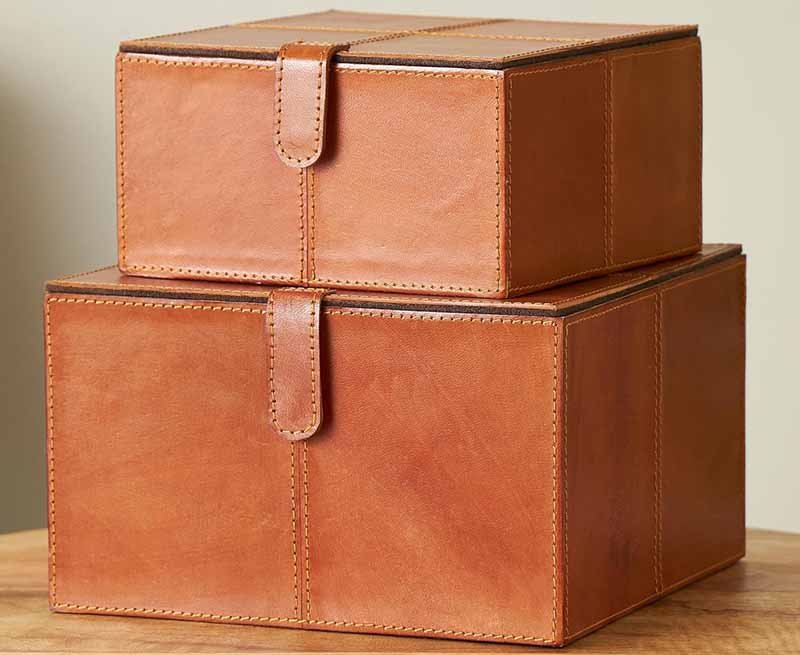
Achieving clean, wrinkle-free leather corners requires a combination of the right materials, tools, and techniques. From cutting the leather at the right angles to folding and applying glue, every step in the process can affect the final appearance of the leather corners. Here, we will break down each method to ensure that leather corners are formed smoothly, without wrinkles, and with the desired sharpness.
What cutting methods prevent wrinkles?
The first step in achieving wrinkle-free leather corners is ensuring precise cutting. Accurate cuts are crucial because any imperfections in the leather’s edges will be magnified when the leather is folded. If the edges aren’t clean, the leather will distort, causing wrinkles or misalignments at the corners.
- Laser Cutting:
- Precision: Laser cutting provides an extremely accurate, clean edge, minimizing the risk of uneven folding or stretching. Laser cutters are perfect for high-volume production and custom designs, ensuring that each piece has consistent edge quality.
- Advantages: This method eliminates the need for hand cutting, making it ideal for intricate designs or projects where uniformity is critical.
- Rotary Cutters:
- Clean Cuts: Rotary cutters are essential for making straight cuts, especially on thicker leather. They are ideal for larger projects or when you need to cut multiple pieces at once. Using a rotary cutter reduces the risk of jagged edges, which can create problems during corner folding.
- Precision: When used correctly, rotary cutters provide uniform results, which are vital for ensuring each corner is folded neatly and without wrinkles.
- Skiving for Thinner Edges:
- Skiving involves thinning the leather at the edges, which makes it easier to fold the leather into sharp, clean corners. It’s a common technique used for thick leather to reduce excess material and avoid bulking up at the corners.
Cutting Methods and Their Benefits for Wrinkle-Free Corners
| Cutting Method | Ideal For | Benefits |
|---|---|---|
| Laser Cutting | Custom designs, high-volume production | Extremely precise, clean edges, high consistency |
| Rotary Cutter | Large or thick leather projects | Clean, straight cuts, reduces rough edges |
| Skiving Knife | Thick leather, reducing bulk | Thins leather for easier folds and sharper corners |
How to fold leather without distortion?
Once the leather is cut, the next critical step is folding it into place at the corners. The leather must be folded precisely to avoid stretching or distorting the material. Incorrect folding can cause the leather to wrinkle, bulge, or form uneven corners.
- Moisturizing the Leather:
- Light Moistening: Slightly dampening the leather with a damp cloth or water spray helps make the material more pliable, making it easier to fold without causing tension. However, care must be taken to not over-wet the leather, as this can cause it to lose its shape or stretch unevenly.
- Even Distribution: Ensure the moisture is evenly distributed, and never soak the leather, as that may cause it to become too soft and prone to warping.
- Using a Bone Folder:
- Precise Folds: A bone folder is a traditional tool used to fold leather neatly. The tool allows you to apply controlled pressure along the fold to ensure sharp, smooth corners. It helps prevent overstretching the leather while achieving clean folds.
- Smooth, Even Folds: Bone folders can also be used to press out any wrinkles or bubbles that may have formed during the folding process, ensuring that the leather remains smooth and wrinkle-free.
- Gradual Folding:
- Avoiding Sharp Folds: When folding leather, it’s important not to force it into a sharp fold too quickly. Gradually guide the leather into position, using a bone folder or similar tool, to ensure the material bends smoothly without creating wrinkles.
Folding Techniques for Clean Leather Corners
| Technique | Description | Ideal For |
|---|---|---|
| Light Moisturizing | Dampen leather to make it more pliable | Avoids wrinkles, makes folding easier |
| Bone Folder | Use to smooth and fold leather precisely | Ensures sharp, clean corners |
| Gradual Folding | Gently fold leather without forcing it | Prevents distortion, maintains smoothness |
How to manage moisture and heat to prevent wrinkles?
Proper moisture and heat management during leather corner construction is essential to prevent wrinkles. The leather needs to be pliable enough to fold easily but should not be over-moistened or overheated.
- Moisture Control:
- Slight Dampening: As previously mentioned, lightly dampening leather before folding helps it retain flexibility. Excess moisture, however, can cause leather to stretch unevenly and result in distorted corners. A spray bottle with controlled misting is the best way to achieve uniform dampening.
- Drying: After moistening, allow the leather to rest and dry naturally before folding. This prevents excessive moisture from damaging the leather or causing it to lose its shape.
- Heat Treatment:
- Heat Press: A heat press can be used to apply controlled heat to the leather, making it more pliable. However, be cautious with the temperature. Leather should never be overheated, as it can lead to shrinkage or cracking. Use a heat press at a low temperature to soften the leather gradually and evenly.
- Steam: Steam treatment is another effective method for making leather pliable. The steam relaxes the fibers, making it easier to fold the leather at the corners. This method is ideal for thicker leather types that are more rigid.
Moisture and Heat Management Techniques for Wrinkle-Free Leather Corners
| Method | Description | Ideal For |
|---|---|---|
| Light Moisturizing | Use a damp cloth or spray bottle to soften leather | Makes folding easier without distortion |
| Heat Press | Apply gentle, controlled heat to soften leather | Helps reduce leather stiffness |
| Steam Treatment | Use steam to soften and relax leather fibers | Ideal for thicker, stiffer leather |
What cutting and skiving techniques are essential for perfect corners?
The cutting and skiving processes directly affect the sharpness and smoothness of the leather corners. The more precise these processes are, the better the final result.
- Skiving:
- Reducing Leather Bulk: Skiving involves thinning the leather at the edges to make it more flexible and easier to fold. When leather is thick, especially at the corners, it can create bulging or uneven folds. Skiving the edges ensures the leather bends smoothly and forms sharp, clean corners.
- Tools for Skiving: A skiving knife is the most common tool used, but in mass production, a skiving machine can provide faster and more consistent results.
- Cutting Angles:
- Accurate Cuts: The edges of leather should be cut at precise angles to ensure that the corners fold correctly. Using sharp knives or laser cutters guarantees that the leather won’t be misshapen during the folding process.
Tools and Techniques for Cutting and Skiving Leather Corners
| Technique | Tool | Ideal For | Benefits |
|---|---|---|---|
| Skiving | Skiving Knife | Thick leather, reducing bulk at corners | Creates sharper folds, prevents bulging |
| Laser Cutting | Laser Cutter | High-precision cuts for intricate designs | Clean, accurate cuts without distortion |
| Rotary Cutting | Rotary Cutter | Straight cuts for uniform leather thickness | Prevents rough edges, smooth finish |
How to Prepare Leather for Perfect Corners?
Proper leather preparation ensures that the material is ready for precise corner construction. This stage involves skiving and treating the leather to ensure smooth folds and clean edges. Skiving and thinning the leather in the right places can help eliminate bulk and make it easier to form sharp, clean corners.
How to choose the right skiving technique for leather corners?
Skiving is the process of thinning the leather along its edges to make it more flexible. Skiving reduces the bulk at the corners, allowing the leather to fold more precisely. The technique used for skiving depends on the leather’s thickness and grain type. For instance, thicker leather may need to be skived more aggressively, while thinner leather requires a lighter touch.
Manual Skiving using a knife can provide a more controlled, precise skive, while machine skiving is suitable for high-volume production. It’s important to skive evenly to avoid creating weak spots in the leather, especially at the corners.
Skiving Techniques for Leather Corners
| Skiving Method | Ideal For | Pros | Cons |
|---|---|---|---|
| Manual Skiving | Thicker leather, small batches | More control, precision cuts | Time-consuming, requires skill |
| Machine Skiving | Mass production, consistent thickness | Fast, consistent results | Can be less precise if not monitored |
| Double Skiving | Large, bulky corners | Reduces bulk, cleaner folds | Can weaken leather if overdone |
How does leather conditioning improve corner precision?
Leather conditioning helps maintain the flexibility of the material, making it easier to fold and manipulate without causing wrinkles or distortion. Before corner construction, it is important to treat the leather with a conditioner to keep it from becoming too dry or brittle. Leather that is too dry will not fold smoothly, which can cause wrinkles or cracks at the edges.
Conditioning also helps soften the leather, making it more pliable and easier to work with. A conditioner that is suited to your leather type (e.g., vegetable-tanned, full-grain, etc.) can significantly improve the overall appearance of the corners.
How to Inspect Leather Box Corners?
Once the leather corners are completed, it’s critical to inspect them thoroughly to ensure that the construction quality meets the required standards. Quality control is essential in leather box manufacturing to ensure that defects such as wrinkles, misalignment, and uneven folds do not compromise the product.
What are the key quality checks for leather corners?
Inspecting leather box corners involves more than just checking for visual imperfections. Key quality checks include:
- Alignment: The corners should be symmetrical and form perfect 90-degree angles. Use a ruler or square tool to check the alignment of each corner.
- Smoothness: Run your fingers over the corner folds to feel for bumps, wrinkles, or misaligned leather. A smooth, even surface is critical for high-quality leather products.
- Glue adhesion: Inspect the glue or adhesive used to bind the leather at the corners. It should be evenly applied without visible excess.
| Quality Check | What to Look For | Tools/Methods Used |
|---|---|---|
| Alignment | Symmetry and straight edges | Ruler, square tool |
| Smoothness | Even texture, no bulges or wrinkles | Hand feel, magnifying glass |
| Glue Application | Clean, even adhesion without overflow | Visual inspection, tactile feel |
How to fix common corner defects?
Common defects such as wrinkles, misalignment, or excess material at the corners can often be fixed using a few methods:
- Re-skiving: If the leather is too thick at the corners, it can be re-skived to remove excess material and achieve a smoother fold.
- Re-folding: If wrinkles appear, slightly dampen the leather and gently re-fold the corners to remove distortions.
- Gluing: If the leather is misaligned, carefully apply more glue and reposition the edges, ensuring the corners are sharp and aligned.
Conclusion
At Szoneier, we specialize in custom leather products and can help bring your design visions to life. If you need assistance with creating perfect leather corners or would like to discuss custom projects, contact us today. We offer rapid prototyping, low MOQ customization, and high-quality manufacturing services. Visit our website or reach out via info@szoneier.com to get started!