 Skip to content
How to Soften a Leather Belt: A Complete Guide
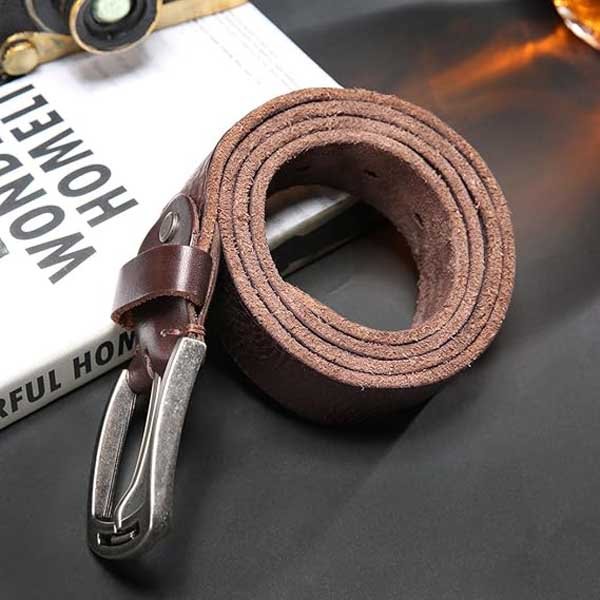
Leather belts are timeless accessories that elevate any outfit—but there’s nothing more uncomfortable than a stiff, unyielding belt digging into your waist. Whether it’s a brand-new full-grain leather strap or a cherished heirloom, knowing how to properly soften your leather belt can extend its lifespan and keep it feeling supple.
Softening a leather belt boils down to cleaning, conditioning, and gentle flexing using methods like leather conditioners, natural oils, or professional treatments. In most cases, applying a quality leather conditioner or a few drops of mink or neatsfoot oil, followed by regular bending and wearing, will restore flexibility within 24–48 hours.
In this guide, we’ll explore why belts get hard, which leathers need special care, how to prep, and which softening techniques work best, so you can move from rigid to relaxed with minimal fuss.
What Causes Leather Belts to Become Stiff?
Leather stiffness is generally due to two core factors: loss of natural oils and environmental extremes. During tanning, hides are treated with chemicals that strip away some of their natural lubricants, and without regular conditioning, those oils continue to evaporate. On top of that, storing belts in overly dry or humid settings can exacerbate dryness or mildewing, both of which make leather fibers contract and harden.
Tanning Impact
Vegetable-tanned hides retain more natural oils than chrome-tanned ones, but both lose oils over time—especially in dry climates.
Climate Fluctuations
In low humidity, leather fibers shrink and stiffen; in high humidity, they swell and then dry out in misshapen, rigid patterns.
Age and Use
A belt worn daily without conditioning will stiffen faster than one that’s cared for, because friction rubs away remaining oils.
Examining Stiffness Factors Critically
- Vegetable vs. Chrome Tanning
- Vegetable-tanned belts start firmer but age beautifully when cared for; chrome-tanned belts feel soft at first but degrade unevenly.
- Storage Practices
- Folded belts press fibers in certain spots, leading to permanent creases—hanging on a wide hook preserves shape.
- Wear Frequency
- A “weekend belt” not in regular rotation retains oils better; daily-used belts need conditioning every 6–8 weeks.
- Cleaning Routines
- Using household soaps often leaves residue that obstructs oil penetration; pH-neutral saddle soaps are recommended.
Which Types of Leather Belts Need Softening?
Not all leather belts respond the same way to softening techniques. Here’s how they differ:
Full-Grain Leather
– Why It’s Stiff: Almost untouched by processing, with all its natural grain intact. These belts take longer to soften but yield the richest patina.
Top-Grain Leather
– Why It’s Softer Initially: Sanded to remove imperfections, making it more pliable but also more prone to wearing through.
Genuine & Bonded Leather
– Why They Feel Softer: Made from scraps and reconstituted fibers, they’re pliable out of the box but can crack and peel if over-oiled.
Leather Type Analysis
Fiber Density & Oil Absorption
- Full-grain’s dense fiber structure resists oil uptake. Conditioners must be applied more heavily or repeatedly.
Durability vs. Softness Trade-off
- Bonded leather softens quickly but often delaminates; full-grain takes patience but lasts decades.
Exotic Hides
- Alligator and ostrich belts have unique scale patterns requiring specialized conditioning to avoid scale lifting.
Tanning Residues
- Chrome residues on the surface can block oil penetration—rinse with leather cleaner before conditioning.
How Do You Prepare a Leather Belt for Softening?
Proper prep ensures your softening treatment evenly nourishes fibers without creating blotches:
Surface Cleaning
– Wipe with a slightly damp cloth to remove dust and surface dirt. Avoid soaking; leather is porous.
Inspect Hardware
– Remove or cover buckles and rivets so oils don’t tarnish metal.
Patch Test
– Apply your chosen conditioner to an inconspicuous area (inside belt loop) and wait 24 hours to check for unwanted darkening or stiffness changes.
Preparation Best Practices
Cleaning Agents
– Saddle Soap vs. Gentle Soap: Saddle soap cleans deeply but can strip oils; a diluted pH-neutral leather cleaner preserves natural fats.
Hardware Handling
– Detaching buckles can be tricky—brass fixtures may stain if oils seep under the leather. A thin strip of painter’s tape protects edges.
pH Considerations
– Leather’s ideal pH is 4.5–5.5; cleaners that stray outside this range can weaken fibers.
Drying Protocol
– After cleaning, air-dry at room temperature—never use heaters or direct sunlight, which over-dry and cause fiber contraction.
What Are the Most Effective Methods to Soften a Leather Belt?
| Method | Absorption Time | Strengths | Potential Drawbacks |
|---|---|---|---|
| Commercial Conditioner | 24–48 hours | Balanced oil blend, protective waxes | May need repeated applications |
| Mink or Neatsfoot Oil | 12–24 hours | Deep oil penetration | Can darken leather significantly |
| Professional Steam Bath | Immediate | Rapid fiber relaxation | Risk of over-saturation and warping |
| Manual Flexing & Wearing | 1–2 hours | No chemicals, builds natural creases | Results vary, labor-intensive |
- Leather Conditioners: Usually blend lanolin, beeswax, and light oils, offering a protective barrier against future drying.
- Natural Oils: Mink oil excels at deep softening, neatsfoot oil at fiber restoration—but both can darken belts by 10–20% in shade.
- Steam Treatments: Pros saturate the fibers for instant suppleness, but require expert control—too much steam weakens the grain.
- Mechanical Flexing: Wrapping the belt around a form or simply bending it back and forth creates micro-cracks, breaking in the fibers gradually.
Methodological Trade-Offs
Penetration Depth
– Oils (low molecular weight) penetrate deeper than conditioners; too much can oversoften the corium layer.
Color Uniformity
– Conditioners with wax can impart a light sheen, while oils leave a matte, aged look—test for desired finish.
Fiber Integrity
– Over-flexing without oil can cause hairline cracks; oils lubricate fibers, reducing micro-damage during flexing.
Combined Protocols
– A light conditioner application followed by mechanical flexing often yields the best balance of softness and structure.
How Long Does It Take to Soften a Leather Belt?
Expect variances based on method, leather thickness, and environmental factors:
- Commercial Conditioners: 24–48 hours for full absorption. Thin belts (2–3 mm) may soften in 12–24 hours; thick straps (4–5 mm) need the full 48.
- Natural Oils: 12–24 hours; belt should feel noticeably more flexible within 6 hours of application.
- Steam: Immediate pliability, though drying/protection phases still require 24 hours.
- Flexing & Wear: Minor softening in an hour; optimal suppleness after a week of regular wear.
Time Factors
Leather Thickness & Density
– Each extra millimeter of thickness adds roughly 25% more conditioning time—plan accordingly.
Ambient Humidity
– 40–60% humidity is ideal; at 20% RH, leather draws moisture from oils, slowing softening.
Temperature
– 18–25°C accelerates oil absorption; below 10°C, oils thicken and penetrate slowly.
Application Volume
– Over-oiling saturates and pools; a thin, even layer ensures steady absorption without residue.
Do Leather Conditioners or Oils Work Better?
In general, conditioners excel at balanced care and protection, while oils deliver deeper softening at the cost of potential darkening:
| Product | Typical Ingredients | Performance | Color Impact |
|---|---|---|---|
| Leather Conditioner | Lanolin, beeswax, jojoba oil | Even oil/wax balance, protective layer | Minimal darkening |
| Mink Oil | Animal fat (mink tallow) | Deep, rapid softening | Moderate to heavy darkening |
| Neatsfoot Oil | Cattle shin bone oil | Restores cracked fibers | Moderate darkening |
| DIY Oil Mix | Olive oil + beeswax | Customizable ratio | Variable, often high |
- Conditioners: Offer surface conditioning and a protective wax barrier—ideal for daily maintenance.
- Mink & Neatsfoot Oils: Penetrate deeper to soften core fibers—best for very stiff belts after prolonged dryness.
Product Comparison
Molecular Size & Depth
– Neatsfoot oil molecules are smaller than lanolin, offering deeper penetration but higher risk of overstretch.
Long-Term Effects
– Conditioners with UV blockers help prevent sun damage; pure oils lack UV protection unless mixed with wax.
Ethical & Sustainability Concerns
– Animal-derived oils raise sourcing questions; plant-based alternatives offer cruelty-free options but may not match penetration.
User Testimonials
– Case studies: A luxury belt maker reports 95% customer satisfaction using blended conditioners over 100% mink oil.
Are There Any Risks or Precautions to Consider?
Improper softening can lead to overstretched fibers, discoloration, and weakened stitching. Always patch test first:
- Over-Oiling: Leaves the belt greasy and prone to dust-attraction; wipe off excess after 30 minutes.
- Discoloration: Darkening by 5–20% is normal; if unacceptable, choose a clear-finish conditioner.
- Stitch Integrity: Oils can weaken natural thread—avoid saturating seams or edges.
Weighing Risks
Patch Testing Protocol
– Apply conditioner/oil to a 1 cm² inconspicuous area; wait 24 hours and inspect color and texture changes.
Stitch Durability
– Evaluate tensile strength before vs. after oiling by gently pulling on a test seam.
Colorfastness Standards
– Use ISO 18454 test guidelines for simulated abrasion and perspiration to measure bleed-through risk.
Moisture Balance
– Steam can oversaturate—balance by towel-wiping and air-drying upright to avoid pooling.
What Maintenance Steps Keep Your Belt Soft Over Time?
Once softened, it’s all about preservation:
| Maintenance Step | Frequency | Benefit |
|---|---|---|
| Leather Conditioning | Every 3–6 months | Replenishes oils, prevents dryness |
| Proper Storage (Hanging) | Ongoing | Maintains shape, avoids creasing |
| Spill Cleanup | As needed | Prevents stains and water damage |
| Belt Rotation | Weekly | Even wear, extends overall lifespan |
Quarterly Conditioning
– Use a light coat of conditioner to refresh oils.
Climate-Controlled Storage
– 40–60% RH prevents excessive drying or mildew.
Gentle Cleaning
– Wipe spills immediately; avoid harsh soaps.
Rotation Strategy
– Rotating between two or more belts reduces stress on any single strap.
Sustaining Softness
Conditioning Frequency Debate
– High-use belts may need bi-monthly conditioning, while casual belts last six months between treatments.
Humidity Management
– Consider small silica gel packets in belt storage areas for consistent RH.
Cleaning vs. Conditioning Separation
– Clean first with pH-neutral soap, let fully dry, then condition—prevents trapping moisture.
Psychological Benefit of Rotation
– Switching belts not only extends life but also refreshes your style palette, keeping wardrobes interesting.
Conclusion
Maintaining a soft, luxurious leather belt takes a blend of careful prep, the right softening method, and ongoing maintenance. Whether you choose a balanced leather conditioner, deep-penetrating natural oil, or even a professional steam bath, the key is disciplined testing and follow-up.
Ready to elevate your leather accessory line with custom-designed belts that balance form and function? Contact Szoneier Leather—with 18+ years of expertise in raw material R&D, product design, sampling, production, and strict quality inspection—and let us develop and manufacture belts tailored to your brand’s exacting standards. We’ll help your customers experience the perfect fit, suppleness, and style they deserve.
What Can I Do For You?
Here, developing your OEM/ODM private label leather goods collection is no longer a challenge,it’s an excellent opportunity to bring your creative vision to life.
Make A Sample First?
If you have your own tech packs, logo design artwork, or just an idea,please provide details about your project requirements, including preferred fabric, color, and customization options,we’re excited to assist you in bringing your leather goods designs to life through our sample production process.