How to Line a Leather Belt: Complete Craft & Design Guide
Lining a leather belt is one of those deceptively simple processes that separates an everyday accessory from a product that feels intentional—the kind of belt a customer immediately notices when they touch it, smell it, or buckle it on for the first time. In the leather world, small details aren’t just finishing touches; they define the entire experience. You can see it in the way the belt lays flat, the way the edges move smoothly without cracking, and how the strap maintains its shape after years of wear. These differences are rarely noticed in marketing photos—but unmistakably felt in real life.
Beneath these subtle details lies a truth that every brand designer eventually learns: a well-lined belt is engineered, not improvised. It’s a combination of leather science, adhesive chemistry, structural reinforcement, edge treatment, and precise stitching. Lining isn’t about hiding the back of a belt—it’s about stabilizing its future.
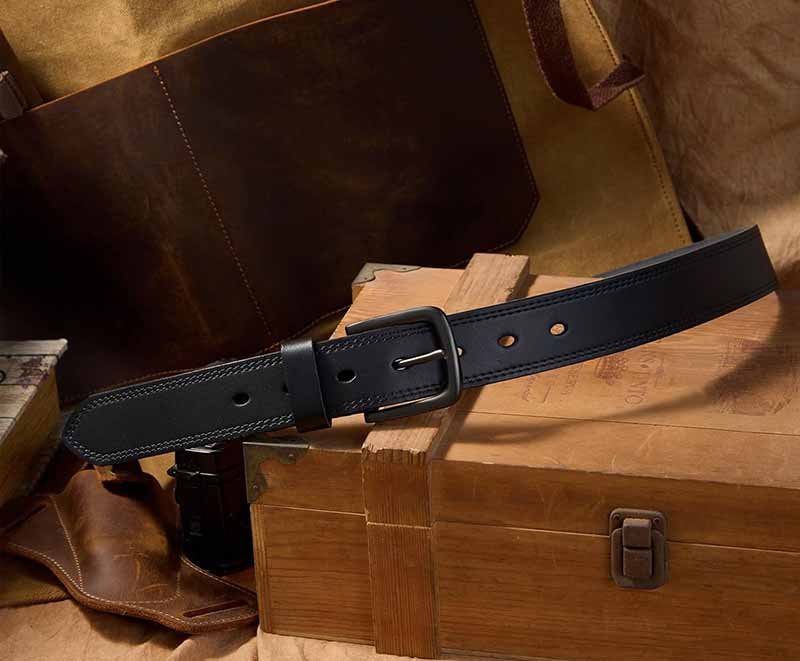
Lining a leather belt involves bonding a secondary layer—such as split leather, microfiber PU, or suede—to the back of the main leather strap. This stabilizes the belt, prevents stretching, improves comfort, and enhances long-term durability. Proper lining includes skiving, gluing, aligning, stitching, sealing edges, and punching notches. It ensures the belt maintains its shape, feel, and premium appearance over years of wear.
Back in Szoneier’s prototyping room, we often meet designers who bring a sample belt that “almost succeeded”—a buckle area that cracked, an edge that curled, or a lining that lifted after a humid season. When we remake the belt with proper lining preparation and edge sealing, their reaction is always the same: “I didn’t know a belt could feel this different.”
And that’s where this guide begins—not only with how to line a belt, but with how to line it beautifully, professionally, and consistently enough for your brand to build its reputation on it.
What Does It Mean to Line a Leather Belt?
Lining a leather belt means adding a secondary material layer—such as split leather, microfiber, suede, or top-grain leather—to the backside of the belt strap. This enhances strength, comfort, flexibility, and long-term durability. A lined belt resists stretching, curling, and cracking far better than an unlined one. The lining is bonded, stitched, and finished with sealed edges to create a stable, premium-quality belt suitable for fashion, luxury, and professional use.
What Exactly Is Added When You Line a Belt?
A belt lining is typically made from one of the following materials, depending on the brand’s market segment and price positioning:
| Lining Material | Feel | Durability | Cost | Ideal Use Case |
|---|---|---|---|---|
| Split Leather | Natural, sturdy | Very high | Medium | Premium stitched belts |
| Microfiber PU Leather | Smooth, uniform | High | Lower | Mass retail, vegan markets |
| Suede Leather | Soft, grippy | Medium | Medium-high | Luxury belts, fashion belts |
| Top-Grain Leather | Premium, smooth | Very high | High | High-end designer belts |
| Fabric / Canvas | Breathable, casual | Medium | Low | Casual belts, lightweight belts |
Each material interacts differently with the top layer, affecting flexibility, grain movement, and wear resistance.
How Lining Changes the Behavior of a Belt
1. Strength and Anti-Stretch Support
The lining reduces “pull stretch,” meaning the belt maintains its original length and doesn’t warp along the holes. This is critical for slim belts and fashion belts that undergo pulling stress every day.
2. Smooth, Comfortable Backside
An unlined belt often exposes the rough fiber side of leather. Lining transforms this into a smooth and skin-friendly surface, improving comfort and preventing clothing abrasion.
3. Better Stitching Quality
Lined belts allow for:
- cleaner stitch channels
- stronger thread anchoring
- more uniform stitching across the length
The result? Luxury-grade stitchwork that elevates brand perception.
4. Improved Shape Retention Over Time
Lined belts stay straight and flat. Unlined belts often curl or twist after repeated bending and humidity exposure.
Unlined vs Lined Belts: What’s the Real Difference?
| Feature | Unlined Belt | Lined Belt |
|---|---|---|
| Durability | Moderate | High |
| Comfort | Rougher backside | Soft, smooth |
| Stretch Resistance | Lower | Excellent |
| Shape Retention | Can warp | Very stable |
| Appearance | Natural, rustic | Clean, premium |
| Market Segment | Workwear, vintage | Fashion, luxury, designer |
Unlined belts are appreciated in certain styles (rugged Western belts or heavy full-grain belts), but lined belts dominate luxury fashion and premium retail.
Why Lining Is Essential for Fashion & Luxury Brands
For a brand, lining offers two major advantages:
1. Consistent Quality Across Mass Production
Even if top leather varies slightly in stiffness, thickness, or tanning batch, lining normalizes the behavior of the full belt. This ensures:
- uniform bending
- uniform thickness
- uniform finish across every belt in the batch.
2. More Design Freedom
Lining allows brands to:
- use thinner, softer top leather
- apply decorative embossing
- add stabilized stitching
- incorporate structured profiles for luxury belts
Without lining, many modern belt designs simply cannot hold their shape.
Which Leather Combinations Work Best for Lined Belts?
The best leather combinations for lined belts pair a strong outer leather—such as full-grain, top-grain, or vegetable-tanned cowhide—with a stable lining like split leather, microfiber PU, or smooth top-grain. The key is matching stiffness, thickness, and flexibility so both layers move together without wrinkling or delaminating. Properly matched materials create premium belts that resist stretching, retain shape, and deliver long-term comfort.
1. The Ideal Outer Leather Choices (Top Layer)
The top layer defines the belt’s appearance, grain texture, and premium feel. The most commonly used materials for the outer layer include:
A. Full-Grain Leather
Full-grain leather retains the strongest natural fibers, making it:
- exceptionally durable
- visually rich in grain
- ideal for belts that must last years
Pros:
- Ages beautifully (patina)
- High tensile strength
- Works well with stitched construction
Cons:
- Thick and stiff (must be paired with a supportive lining)
- Can be expensive
Best paired with: Split leather or microfiber lining for stability.
B. Top-Grain Leather
Top-grain leather is slightly corrected, giving it:
- a cleaner, more uniform surface
- reliable thickness
- consistent production quality
Pros:
- Great for brand printing, embossing
- Flexible and less prone to cracking
- Available in many colors for fashion belts
Cons:
- Less patina compared with full-grain
Best paired with: Split leather for structure Microfiber for smoothness & cost efficiency
C. Vegetable-Tanned Cowhide
It is firmer, denser, and ideal for formal belts and uniform belts.
Pros:
- Excellent stiffness
- Holds embossing very well
- Ages with a classic, rich tone
Cons:
- Sensitive to water
- Requires a lining to reduce stiffness
Best paired with: Suede, microfiber, or top-grain lining for comfort
2. The Best Lining Options (Bottom Layer)
The lining determines comfort, backside smoothness, and dimensional stability.
Below are the most reliable lining materials used in professional belt manufacturing:
A. Split Leather
Split leather is the top choice for most premium lined belts because:
- it remains dimensionally stable
- it adheres extremely well to adhesives
- its fiber structure resists stretching
Why factories love it: Split leather provides the perfect level of firmness, without being too stiff.
Perfect for: Formal belts, uniform belts, luxury belts.
B. Microfiber PU Leather
Microfiber has become the preferred lining for many fashion brands due to:
- consistent thickness
- resistance to humidity
- smooth, friction-free feel
Advantages:
- No stretching
- No odor
- No cracking
- Works beautifully with edge paint
Perfect for: Fashion belts, high-volume retail, vegan markets.
C. Suede Leather
Suede offers:
- soft texture
- excellent comfort
- premium, elegant appearance
But: Requires protective finishing to avoid staining.
Perfect for: High-end fashion belts, luxury unisex belts.
D. Top-Grain Leather
If the brand wants a uniform leather feel on both sides, top-grain lining is the most premium choice.
Advantages:
- Very comfortable
- Extremely durable
- Luxurious finish
Downside:
- Higher cost
- Must be carefully skived to avoid excess thickness
Perfect for: Designer belts priced $80–$200+.
3. How to Match the Right Combinations (Professional Pairing Guide)
Here is how belt manufacturers like Szoneier choose optimal pairings:
Rule 1: Match Flexibility
- If the top layer is stiff (veg-tan), the lining should be slightly soft.
- If the top layer is soft (top-grain), the lining should add structure.
Rule 2: Match Thickness After Bonding
A professional lined belt usually ends at 3.0–4.0 mm thickness.
If the top layer is:
- 2.2 mm full-grain, use 0.8–1.0 mm split leather
- 1.8 mm top-grain, use 1.0 mm microfiber
- 2.0 mm veg-tan, use 0.6–0.8 mm suede
Rule 3: Match Leather “Behavior”
Different leathers react differently to:
- humidity
- bending
- heat
- pressure
- repeated tension
Therefore:
| Top Leather | Best Lining | Why |
|---|---|---|
| Full-grain cowhide | Split leather | Maximum stability & anti-stretch |
| Top-grain leather | Microfiber PU | Smooth, unified flexibility |
| Veg-tan cowhide | Suede / microfiber | Reduces stiffness, anti-curl |
| Embossed leather | Microfiber | Prevents telegraphing (pattern imprint) |
4. Common Mistakes in Leather Pairing
Mistake 1 — Using leather that stretches too easily as lining
→ Leads to wrinkling and bubbling.
Solution: Always choose a stable lining (split, microfiber).
Mistake 2 — Pairing incompatible tanning types
Oil-tanned top with dry-tanned lining can cause adhesion failure.
Solution: Match tanning type or use bridging primers.
Mistake 3 — Not controlling final thickness
Belts become bulky, hard to stitch, or uncomfortable.
Solution (Szoneier): Automated thickness calibration ±0.1mm.
Mistake 4 — Top layer too soft without structural support
Results in curling and premature deformation.
Solution: Add firm lining or reinforce buckle area.
Recommended Leather Combinations Based on Market Segment
| Market Segment | Best Combination | Reason |
|---|---|---|
| Luxury Designer ($80–$200+) | Full-grain + split leather OR full-grain + top-grain lining | Premium feel, excellent longevity |
| Fashion Retail ($30–$80) | Top-grain + microfiber | Consistent quality, cost-effective |
| Vegan / Eco Brands | Microfiber + microfiber | Uniform, ethical, durable |
| Uniform / Workwear | Veg-tan + split leather | High strength, shape retention |
| Gift & Promotional | Embossed top-grain + microfiber | Good looks with reliable stability |
What Szoneier Uses Most Often (Based on 18+ Years of Production)
Szoneier’s best-performing and most requested combinations are:
① Full-Grain Cowhide (2.0–2.2 mm) + Split Leather (0.8–1.0 mm)
- Best for luxury belts
- Highest anti-stretch
- Best long-term shape retention
② Top-Grain Leather (1.6–1.8 mm) + Microfiber PU (1.0 mm)
- Extremely stable
- Smooth backside
- Perfect for retail brands & fashion belts
③ Veg-Tan Leather (2.0 mm) + Suede (0.6–0.8 mm)
- Beautiful tactile contrast
- Softens stiffness
- Ideal for premium artisan belts
How Do You Prepare the Belt Strips for Lining?
Preparing belt strips for lining includes cutting the top leather and lining to exact width, skiving the edges for a flush bond, applying uniform adhesive, aligning the layers precisely, and pressing them together under controlled pressure. The process also includes punching the buckle slot, creating the pointed notch, and sealing edges to ensure durability, comfort, and a premium finish. Proper preparation determines how well the belt stays flat, bonded, and structurally stable over time.
1. Cutting the Belt Strips — Precision from the First Step
Every belt begins with two strips:
- the top leather (visible outer layer)
- the lining material (inner support layer)
A. Why precision cutting matters
The belt must be:
- perfectly straight
- perfectly parallel
- perfectly even in thickness
Any deviation will cause:
- crooked stitching
- edge paint cracking
- buckle misalignment
- long-term curling
B. Cutting tools used in professional belt factories
- Hydraulic strap cutting machine
- Precision strap cutter
- Laser guide cutters (for luxury belts)
Szoneier Standard: Cutting tolerance is maintained within ±0.1 mm along the entire 110–130 cm length.
2. Skiving the Leather — Thinning the Edges for a Seamless Bond
Skiving is the process of shaving down the edges of both leather strips to create a smooth, even transition when the layers are joined.
A. Why skiving is critical
- Reduces edge bulk
- Prevents thick ridges under edge paint
- Allows belt to bend smoothly
- Prevents cracking near buckle area
- Ensures premium profile
B. Professional skiving parameters
Typical skiving depth:
- 0.6–1.0 mm on edges
- 1.2–1.6 mm in buckle fold area
C. Machines used
- Bell skiving machines (standard)
- Split skivers for large production
- Manual skiving knives (for artisan belts)
Szoneier Note: Our technicians follow a “dual-step skive”: deep skive on backside, soft taper on front—ensures invisible edge after bonding.
3. Applying Leather Adhesive — The Bond That Holds Everything Together
Bonding is the heart of a lined belt. Even perfect stitching cannot compensate for weak adhesive.
A. Types of adhesive used
| Adhesive Type | Pros | Usage |
|---|---|---|
| Water-based glue | More eco-friendly, no odor | Fashion belts, microfiber lining |
| Solvent-based glue | Strongest bond, humidity-resistant | Full-grain belts, veg-tan belts |
B. Essential rules for adhesive application
- Apply uniformly and thinly (no spots or blobs).
- Allow adhesive to semi-dry (tacky stage) before bonding.
- Avoid applying too close to the edges (prevents leakage).
- Ensure exact timing—too wet = slippery, too dry = weak bond.
C. Szoneier’s bonding process
We use:
- automated glue rollers for consistency
- controlled-drying tunnels
- industrial press machines for bonding stability
Bonding pressure: 3–5 kg/cm² Bonding time: 10–25 seconds, depending on leather type.
4. Aligning the Layers — The Most Critical Step for Straightness
Alignment decides whether a belt will stay straight for years or twist after a month.
A. How alignment is done professionally
- A long steel guide ensures the strips sit edge-to-edge
- Soft stretching avoids bubbles
- No manual pulling (prevents warping)
The top layer and lining must become one single structural unit.
B. Common alignment mistakes
Pulling the leather while bonding Uneven glue thickness Trapped air pockets Overlapping edges Misaligned grain direction
5. Creating the Belt Notch — Shape, Symmetry & Buckle Compatibility
Making the notch is not just for aesthetics—it ensures:
- the buckle tongue sits correctly
- the belt folds cleanly
- stitching remains symmetrical
A. How to make a notch the professional way
- Mark the fold position (typically 12–15 cm from the buckle end).
- Use a strap end punch to create the pointed or rounded tip.
- Punch both layers simultaneously for clean edges.
- Sand and smooth the tip for perfect paint adhesion.
B. Tools Szoneier uses
- High-carbon steel strap punches
- Hydraulic punching machines for consistency
- CNC die molds for designer shapes
Precision standard: Notch shape deviation must be less than 0.2 mm.
6. Sealing the Edges
Edge sealing gives the belt its luxury signature. Poor edge paint = cheap look + fast wear. Premium edge paint = designer quality.
A. Standard edge finishing steps
- Bevel the edges
- Sand smooth
- Apply first coat of edge paint
- Heat seal
- Sand again
- Apply second coat
- Heat polish
- Final top coat
Luxury brands often apply 3–5 layers.
B. Why edge sealing matters
- Prevents moisture penetration
- Prevents delamination
- Increases durability
- Provides luxury visual appeal
- Smooths rough fibers
C. Different edge finishing styles
| Style | Description | Market |
|---|---|---|
| Matte edge paint | Soft, modern | Fashion belts |
| Glossy edge paint | Mirror-shine | Luxury belts |
| Wax burnish | Rustic, natural | Artisan belts |
| Raw edge | No paint | Workwear belts |
Szoneier uses Italian edge paint for top-grade belts, ensuring resistance to cracking and peeling.
7. Final Trimming, Leveling & Quality Checks
Before stitching, every belt goes through:
- edge trimming
- thickness calibration
- bubble check
- stretch test
- bend test
Belts that fail any test are rejected before entering the stitching stage.
What Are the Benefits and Drawbacks of Lined Leather Belts?
Benefits of Lined Leather Belts
Lined leather belts are widely used in fashion, premium retail, and luxury accessories because the lining significantly enhances performance, comfort, and appearance. The lining acts as a stabilizing layer that supports the top leather, allowing the belt to maintain its structure and withstand daily wear. Below are the key advantages:
1. Better Shape Retention
Lined belts resist stretching, curling, twisting, and warping. The lining works as a structural backbone, keeping the belt flat and stable even after months or years of daily bending and tension. This is especially important around the buckle holes, which commonly deform in unlined belts.
2. Enhanced Durability and Lifespan
Because the belt is reinforced from the inside, it performs better under stress. The two-layer construction reduces cracking, prevents hole enlargement, supports stitching, and protects the belt from humidity changes. A high-quality lined belt can last 40–70% longer than an unlined belt.
3. A More Comfortable Backside
Instead of the raw fiber side of natural leather, lined belts offer a smooth, uniform, skin-friendly surface. This makes them more comfortable with dress shirts, tailored pants, and everyday wear. Premium brands often use microfiber, suede, or top-grain lining for a soft luxury feel.
4. Cleaner and Stronger Stitching
A lining layer allows stitching to sit more evenly and more securely. Threads anchor better, spacing becomes more consistent, and the belt looks more refined. High-end belts depend on this to create the “luxury stitch line” that consumers immediately notice.
5. More Design Flexibility
Because the lining provides structure, the outer leather can be softer, thinner, embossed, or exotic without losing stability. This expands the range of design options—especially for fashion, premium retail, or custom luxury belts.
6. More Premium and Refined Appearance
Lined belts feel firmer, look more polished, and hold their shape perfectly. They give the classic luxury belt thickness and symmetry that premium brands expect.
Drawbacks of Lined Leather Belts
Even with their many advantages, lined belts also have limitations that designers and brands should consider—especially when balancing cost, performance, and market positioning.
1. Higher Production Cost
Lined belts require:
- an additional material layer
- more adhesive
- more stitching
- more edge finishing
- more QC steps
This makes them 20–60% more costly compared to unlined belts. For mass-market or budget lines, this difference can be significant.
2. Lower Breathability
Because of the dual-layer construction, lined belts are less breathable than unlined belts. This is usually not an issue for fashion belts, but for heavy-duty workwear or extremely hot climates, a single-layer belt may feel more ventilated.
3. Requires Skilled Manufacturing
Bonding, alignment, and edge finishing must be done with high precision. If poorly made, lined belts can develop:
- bubbling
- delamination
- uneven surfaces
- cracking at the fold
- unstable edges
These are manufacturing issues, not material problems, which is why choosing a capable factory is important.
4. Slight Initial Stiffness
New lined belts often feel slightly stiffer due to the dual-layer structure. They soften after several wear cycles but require some break-in time.
5. Slightly Heavier Weight
Because the belt contains more material, it weighs more than unlined belts. While many consumers feel that “premium weight” equals quality, some casual or lightweight belt designs may prefer a single-layer construction.
Conclusion
A lined leather belt is far more than two layers glued together—it’s a product shaped by precision, craftsmanship, and engineering. Every detail matters: the leather combination, edge sealing, stitching path, adhesive, buckle fold, and even the angle of the notches. When done right, a lined belt becomes a signature product, one that elevates a brand’s reputation and satisfies customers for years.
At Szoneier Leather, we bring every step together through decades of expertise, advanced machinery, and a deep understanding of leather behavior. Whether you are a fashion brand, luxury goods company, or private-label wholesaler, we are ready to help you develop lined belts that meet the highest global standards.
Ready to create your custom leather belt line? Contact Szoneier today for OEM/ODM development, material recommendations, free design support, and fast sampling.
What Can I Do For You?
Here, developing your OEM/ODM private label leather goods collection is no longer a challenge,it’s an excellent opportunity to bring your creative vision to life.
Make A Sample First?
If you have your own tech packs, logo design artwork, or just an idea,please provide details about your project requirements, including preferred fabric, color, and customization options,we’re excited to assist you in bringing your leather goods designs to life through our sample production process.