
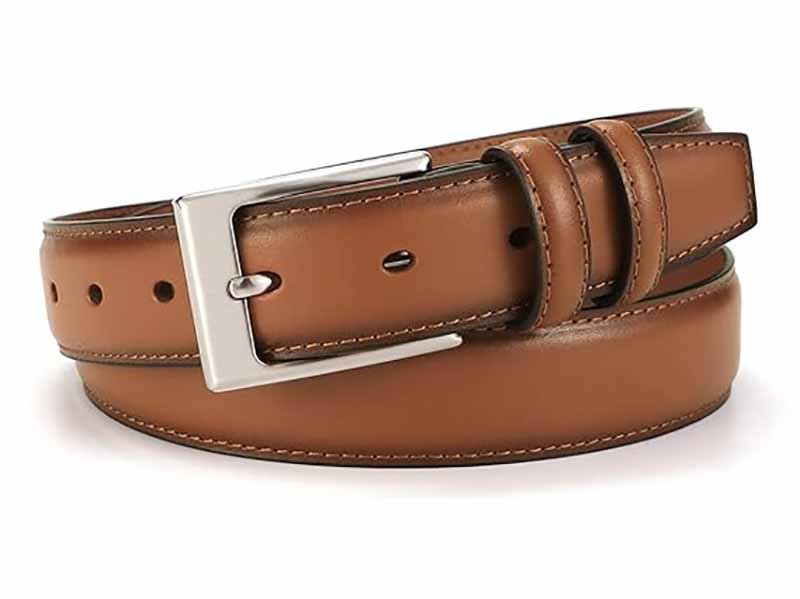
A leather belt is one of those products where customers assume it will “just fit.” They don’t want to think about measurements, hole positions, or buckle-to-hole distance. They put it on, and within five seconds they decide whether it feels right. If they have to use the last hole, if the belt tail is awkwardly long, or if the holes feel “off” by even a small amount, the belt gets labeled as the wrong size—then it gets returned. What’s frustrating is that many returns happen even when the leather is excellent and the stitching is perfect. The issue is often hole spacing and hole placement logic.
Leather belt hole spacing is the distance between the adjustment holes on a belt strap and the way those holes are positioned around the intended fit point. Most belts use 5 holes spaced about 1 inch (2.5 cm) apart, with the center hole designed as the best fit. When spacing and placement are engineered correctly, belts feel comfortable across clothing thickness changes and reduce sizing-related returns.
Brands that treat hole spacing as a “small detail” usually pay for it later with return costs, negative reviews, and extra customer service work. The good news is: once you understand the logic, this is one of the easiest belt problems to fix—at the pattern stage, before production starts.
What Is Leather Belt Hole Spacing?
Leather belt hole spacing is the measured distance between each adjustment hole and the position of those holes relative to the buckle. Standard leather belts usually have 5 holes, spaced 1 inch (2.5 cm) apart, centered around the target waist size. This creates a fit range of about ±2 inches from the intended size, helping customers get a natural fit without needing extra holes punched.
What does leather belt hole spacing mean?
Hole spacing is not only “the gap between holes.” In manufacturing terms, it includes three things that affect fit and comfort:
- Spacing: the distance between each hole (e.g., 20mm, 25mm, 30mm)
- Hole layout: how many holes, and how they’re distributed around the target fit
- Reference point: the distance measured from buckle pin to a specific hole (usually the center hole)
If any of these are wrong, customers feel it immediately.
Here’s the belt-fitting reality most brands deal with:
- A customer’s waist measurement changes between jeans, trousers, and winter layers.
- People wear belts at different points: high waist vs low waist.
- Some customers prefer a tighter fit, others prefer comfort.
A belt needs a practical adjustment system, not a “one-number” size claim.
Common belt hole spacing options used in production:
| Hole spacing | Metric | How it feels | Common use |
|---|---|---|---|
| Tight spacing | 18–20 mm | finer adjustment | premium / dress belts |
| Standard spacing | 25 mm | balanced adjustment | most belts |
| Wide spacing | 30 mm | fewer steps, less precise | work / casual belts |
If you want fewer returns, the goal is simple: make it easy for the customer to land on a comfortable hole without thinking.
How many holes should a leather belt have?
Most brands use 5 holes because it creates a clean look and enough adjustment range for most customers. Some brands use 7 holes (or 6 holes in some markets) to improve fit flexibility—especially in e-commerce where customers cannot try on before buying.
5-hole layout (most common):
| Hole number | Fit change vs center hole |
|---|---|
| 1 | -2 inches |
| 2 | -1 inch |
| 3 (center) | 0 |
| 4 | +1 inch |
| 5 | +2 inches |
This gives a practical total adjustment range of 4 inches (about 10 cm).
7-hole layout (more forgiving):
| Hole number | Fit change vs center hole |
|---|---|
| 1 | -3 inches |
| 2 | -2 inches |
| 3 | -1 inch |
| 4 (center) | 0 |
| 5 | +1 inch |
| 6 | +2 inches |
| 7 | +3 inches |
This range can reduce returns for online sales—especially for customers between sizes or wearing belts across seasons.
Trade-offs brands should know:
| Choice | Benefit | Risk |
|---|---|---|
| 5 holes | cleaner look, standard cost | less flexibility in fit |
| 7 holes | better fit range, fewer returns | more holes may look “busy” on dress belts |
For premium dress belts, many brands stay with 5 holes but use 20mm spacing to feel more precise without adding more holes.
Why is the center hole important in leather belt hole spacing?
The center hole is the real “size” of the belt. Professional factories do not size belts by total length end-to-end. The standard sizing logic used by serious manufacturers is:
Buckle pin → center hole = labeled belt size
This matters because customers don’t care how long the strap is. They care whether the belt closes comfortably and looks balanced when worn.
When the center hole is correct:
- the belt fits naturally without forcing the last hole
- the tail length looks normal (not too short, not too long)
- the belt sits evenly and doesn’t twist under tension
What customers notice when the center hole is wrong:
- “The size is correct but it feels tight.”
- “I can close it, but only on the last hole.”
- “The belt tail is too long and looks messy.”
Visual balance guideline (practical production target):
| Wearing result | What it usually means | Customer reaction |
|---|---|---|
| Tail extends ~10–15 cm (4–6 in) past buckle | center hole is correct | feels “right” |
| Tail is too short (<8 cm) | center hole too close to buckle | feels too small |
| Tail is too long (>18 cm) | center hole too far | looks sloppy |
A lot of “wrong size” reviews are actually “wrong center-hole placement” problems.
What belt measurements matter before setting hole spacing?
Before a factory can confirm hole spacing, the belt must have a clear measurement spec. Brands that skip this step often see inconsistent production results.
A solid belt specification should define:
- Buckle type (frame buckle vs plate buckle)
- Buckle pin position
- Belt width (e.g., 30mm, 35mm, 38mm)
- Leather thickness (e.g., 3.2–3.8mm)
- Target fit point (waist size equals center hole)
- Hole diameter (commonly 4mm–6mm depending on buckle pin)
Typical hole diameter reference:
| Belt style | Hole diameter | Why |
|---|---|---|
| Dress belt | 4–5 mm | cleaner look, smaller pin |
| Casual belt | 5–6 mm | more tolerance, thicker strap |
| Heavy duty/work belt | 6–7 mm | thicker pins, higher stress |
If the hole diameter is too small, customers struggle to buckle. If too large, holes deform faster, and the belt looks worn early.
How SzoneierLeather handles hole spacing consistency in production
When producing belts for brands, the most common headache is not choosing 25mm or 20mm spacing. It’s keeping every belt consistent across the order.
A professional belt factory controls hole spacing with:
- fixed measurement jigs (buckle pin to center hole reference)
- punching templates for each size
- in-line QC checks (hole alignment and distance)
- final inspection sampling by size group
Factory tolerance targets that reduce complaints:
| Control item | Practical tolerance | Why it matters |
|---|---|---|
| Buckle pin → center hole | ±2 mm | prevents “size feels wrong” |
| Hole-to-hole spacing | ±1 mm | ensures smooth adjustment |
| Hole alignment (straight line) | ≤1.5 mm deviation | improves look and ease of use |
| Hole diameter | ±0.3 mm | buckle compatibility |
These are small numbers, but they have a big impact on customer experience—especially for premium belts where customers notice details.
Why Does Leather Belt Hole Spacing Affect Fit?
Leather belt hole spacing affects how easily a wearer can find a comfortable position between tight and loose settings. If holes are spaced too far apart, the belt may feel either too tight or too loose. Proper spacing—usually around 25 mm (1 inch)—creates smooth adjustment steps and allows the belt to fit comfortably across different waist measurements and clothing layers.
How does leather belt hole spacing change comfort?
When customers adjust a belt, they are looking for a balance between security and comfort. If hole spacing is too large, the difference between two holes can feel dramatic.
For example, imagine a belt with 40 mm spacing between holes. A customer trying to adjust the belt might experience this situation:
- Hole 1: belt feels tight and restrictive
- Hole 2: belt suddenly feels loose
Even though the difference is only a few centimeters, the wearer feels there is no “perfect” hole.
This is why most brands keep spacing between 20–25 mm.
Typical comfort effect by spacing size:
| Hole spacing | Adjustment feel | Customer experience |
|---|---|---|
| 20 mm | very precise | comfortable for dress belts |
| 25 mm | balanced | standard for most belts |
| 30–35 mm | rough adjustment | acceptable for casual belts |
| >35 mm | poor adjustment | often causes dissatisfaction |
Dress belts and luxury belts often prefer 20 mm spacing because wearers expect a refined fit when pairing belts with tailored trousers or suits.
Casual belts, on the other hand, can tolerate slightly wider spacing because users often wear them with thicker denim.
Why can poor leather belt hole spacing cause sizing problems?
When belt hole spacing is poorly designed, several problems appear quickly in customer feedback.
The most common complaints include:
- “The belt is too tight even though I ordered the correct size.”
- “I have to use the last hole to make it work.”
- “I wish there was another hole between these two.”
These complaints usually happen because the hole layout doesn’t match real waist behavior.
Human waist measurements are not fixed numbers. Waist size changes throughout the day due to:
- clothing thickness
- sitting vs standing posture
- body weight fluctuations
- seasonal clothing differences
A belt must accommodate these variations.
Here is a simplified example.
Assume a customer waist measurement is 34 inches.
If the belt is designed correctly:
| Hole position | Fit range |
|---|---|
| Hole 1 | 32 inches |
| Hole 2 | 33 inches |
| Hole 3 | 34 inches |
| Hole 4 | 35 inches |
| Hole 5 | 36 inches |
This system works because the center hole represents the ideal fit.
If the spacing were incorrect, the same belt might produce this range:
| Hole position | Fit range |
|---|---|
| Hole 1 | 32 inches |
| Hole 2 | 34 inches |
| Hole 3 | 36 inches |
Now the wearer has no comfortable option between 34 and 36 inches.
Small spacing errors can therefore produce major usability problems.
Which hole should customers normally use on a leather belt?
A well-designed belt should be worn on the center hole under normal conditions.
The center-hole rule is widely used in professional leather goods manufacturing because it provides balanced adjustment options.
The logic is simple:
- two holes allow tightening
- two holes allow loosening
This means the belt can accommodate changes in clothing or body measurement.
Correct usage example:
| Hole position | Typical situation |
|---|---|
| Hole 1 | wearer lost weight |
| Hole 2 | slightly tighter preference |
| Hole 3 | normal daily fit |
| Hole 4 | thicker clothing |
| Hole 5 | winter layering |
This structure also ensures that the belt tail length remains visually balanced.
When customers wear belts using the center hole, the belt tip usually extends about 10–15 cm beyond the buckle, which is considered the most aesthetically balanced proportion.
If the belt must be worn on the first or last hole regularly, customers often assume they purchased the wrong size—even if the measurement technically matches.
This misunderstanding is a major source of belt returns.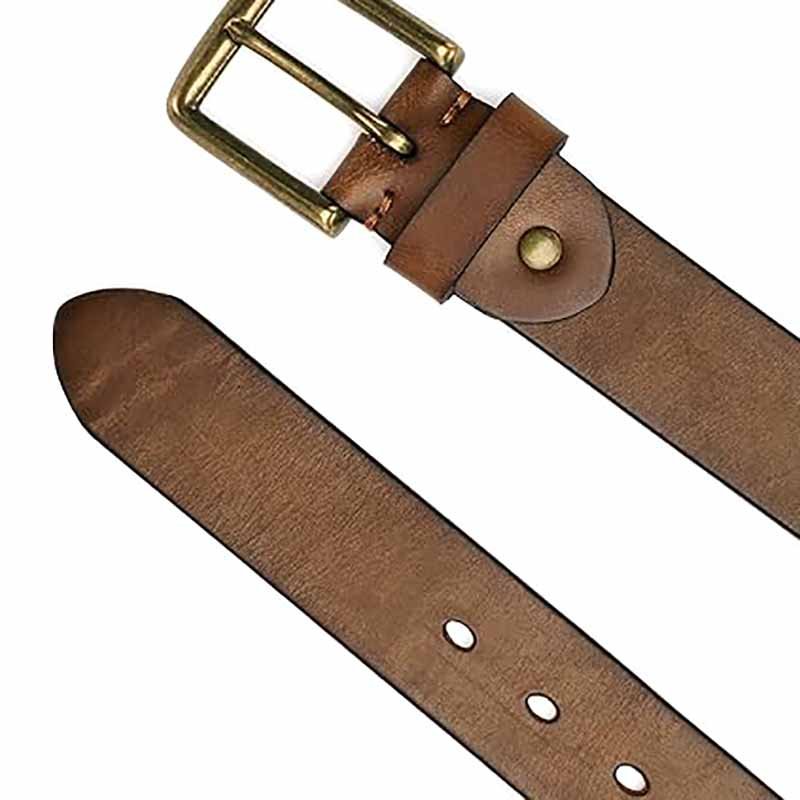
How clothing style affects hole spacing requirements
Different clothing categories change how belts are worn.
For example:
| Clothing type | Fit behavior | Recommended spacing |
|---|---|---|
| Suit trousers | precise waist fit | 20–22 mm |
| Business casual | moderate flexibility | 22–25 mm |
| Jeans | thicker waistband | 25 mm |
| Workwear | heavy clothing layers | 25–30 mm |
A belt designed only around waist measurement may not perform well across these scenarios.
For this reason, many brands adjust spacing depending on the target market segment.
Market differences in belt fit expectations
Regional markets also influence hole spacing choices.
Customer expectations vary slightly by geography.
| Market | Preferred belt fit style |
|---|---|
| United States | relaxed fit, thicker clothing |
| Europe | tailored fit, precise sizing |
| Japan | compact waist sizing, neat appearance |
Because of these differences, some brands create region-specific sizing systems.
For example:
- US belts may keep 25 mm spacing with 5 holes
- EU dress belts may use 20 mm spacing
- Japanese belts sometimes use shorter tail proportions
These adjustments help brands deliver a better customer experience in different markets.
Why brands that optimize hole spacing reduce returns
Return rates for belts can be surprisingly high in online retail.
Many retailers report that belt sizing issues account for a large share of returns.
Improving hole spacing helps solve this problem in several ways:
- Customers find a comfortable fit more easily
- Belt adjustment accommodates clothing variation
- Visual balance improves when worn
- Customers feel the sizing system is intuitive
Brands that optimize belt sizing systems often see improvements in:
- product reviews
- customer satisfaction
- repeat purchases
These improvements cost very little compared with the expense of handling product returns.
Practical belt fit testing used by manufacturers
Before approving production, many manufacturers perform simple fit validation.
Common steps include:
- selecting testers across several waist sizes
- testing belts with different clothing types
- checking center-hole comfort
- verifying tail length balance
A typical testing checklist might include:
| Test item | Purpose |
|---|---|
| center-hole comfort | confirms sizing accuracy |
| hole accessibility | ensures buckle fits easily |
| tail length balance | checks visual appearance |
| adjustment usability | confirms smooth spacing |
These tests help identify fit issues before the belt reaches customers.
What Leather Belt Hole Spacing Do Brands Use?
Most leather belt brands follow a standard hole spacing of 25 mm (1 inch) with five holes, centered around the belt size. Premium dress belts often use 20 mm spacing for finer adjustment, while casual or work belts may use slightly wider spacing. These standards help maintain consistent sizing, improve comfort, and ensure belts fit correctly across different clothing styles.
What spacing do classic leather belts use?
Traditional leather belts typically follow a system that has been used by belt manufacturers for decades. The most widely accepted standard is 1 inch (25 mm) between holes.
This measurement works well because it balances three important factors:
- comfortable adjustment increments
- consistent visual appearance
- simple manufacturing setup
The typical configuration looks like this:
| Belt Specification | Standard Value |
|---|---|
| Hole spacing | 25 mm |
| Hole count | 5 |
| Center hole | belt size reference |
| Adjustment range | ±2 inches |
For example, a size 34 belt normally measures:
- 34 inches from buckle pin to center hole
- 32–36 inch total adjustment range
This system has proven reliable across decades of apparel manufacturing.
Which leather belt hole spacing works best for dress belts?
Dress belts require more precise fit control because they are worn with tailored clothing such as:
- suits
- formal trousers
- business attire
For these products, many brands reduce hole spacing slightly to improve comfort.
Common dress belt specifications:
| Feature | Typical value |
|---|---|
| Hole spacing | 18–22 mm |
| Hole count | 5 |
| Leather thickness | 3–3.5 mm |
| Belt width | 30–35 mm |
Smaller spacing allows wearers to fine-tune fit without creating noticeable visual differences between holes.
Customers wearing suits often expect belts to feel more precise and balanced, which is why luxury brands sometimes adopt tighter spacing.
How does leather belt hole spacing differ in casual belts?
Casual belts, including jeans belts or outdoor belts, prioritize durability and flexibility over precision.
Typical casual belt configuration:
| Feature | Typical value |
|---|---|
| Hole spacing | 25–30 mm |
| Hole count | 5–7 |
| Leather thickness | 3.5–4.5 mm |
| Belt width | 38–40 mm |
These belts are often worn with thicker clothing and heavier denim waistbands, so slightly wider spacing can still feel comfortable.
Casual belts also tend to have:
- larger buckles
- thicker leather straps
- more rugged styling
Because of this, hole spacing does not need to be as visually subtle as dress belts.
How Can Leather Belt Hole Spacing Reduce Returns?
Correct leather belt hole spacing reduces returns by ensuring the belt fits comfortably at the center hole while still allowing adjustment for different waist sizes and clothing layers. When spacing is designed correctly, customers can easily find a comfortable position without needing extra holes or exchanging sizes.
Why do leather belt sizing mistakes cause returns?
Sizing confusion is one of the most common problems in belt sales.
Customers often choose belt sizes based on:
- pant size
- waist measurement
- previous belt size
However, different brands use slightly different sizing systems. If the hole layout does not accommodate this variation, customers quickly feel the belt does not fit.
Common return reasons include:
| Customer complaint | Actual cause |
|---|---|
| belt too short | center hole misaligned |
| belt too tight | spacing too wide |
| belt tail too long | hole placement incorrect |
| belt uncomfortable | poor adjustment range |
Even small spacing errors can make a belt feel poorly designed.
How does correct leather belt hole spacing improve fit accuracy?
A properly engineered belt sizing system works like a measurement buffer.
Instead of forcing the customer into a single measurement, the hole layout provides multiple adjustment options.
Correct design principles include:
- center hole equals labeled belt size
- two holes smaller
- two holes larger
Example fit system:
| Belt size | Adjustment range |
|---|---|
| 32 | 30–34 inches |
| 34 | 32–36 inches |
| 36 | 34–38 inches |
This design allows the belt to adapt naturally to real-world use.
What sizing rule helps reduce leather belt returns?
One widely used rule in belt design is the “pant size +2 inches” guideline.
Example:
| Pant size | Recommended belt size |
|---|---|
| 30 | 32 |
| 32 | 34 |
| 34 | 36 |
This works because pants are measured at the waistline, while belts wrap around the outer waistband and clothing layers.
Combining this rule with correct hole spacing significantly reduces sizing confusion.
Brands that clearly communicate this sizing logic often see fewer customer returns and higher satisfaction scores.
How Do Factories Set Leather Belt Hole Spacing?
Factories determine leather belt hole spacing during pattern development. Engineers measure the distance from the buckle pin to the center hole, then position additional holes using precision punching tools. Templates and quality control checks ensure each belt maintains consistent spacing, alignment, and hole diameter across the entire production batch.
How do factories measure leather belt hole spacing?
In professional belt production, measurements begin at the buckle pin, not the buckle frame.
This ensures the belt closes correctly.
Measurement reference system:
| Measurement | Purpose |
|---|---|
| buckle pin → center hole | defines belt size |
| center hole → other holes | adjustment spacing |
| center hole → belt tip | controls tail length |
Factories often use measurement jigs or templates to ensure consistent hole placement during production.
Which tools punch leather belt holes accurately?
Leather belt holes are typically punched using specialized tools.
Common equipment includes:
| Tool type | Application |
|---|---|
| manual punch press | small production |
| hydraulic punch machine | medium volume |
| CNC punching machine | high-precision production |
Hole diameter typically ranges from 4 mm to 6 mm, depending on buckle pin size.
High-quality punching tools create clean holes without damaging the surrounding leather fibers.
How do manufacturers check leather belt hole spacing quality?
Quality control is essential to ensure belts remain consistent across large orders.
Factories usually perform several inspections:
| QC check | Purpose |
|---|---|
| hole spacing measurement | confirms accuracy |
| hole alignment inspection | ensures visual straightness |
| buckle pin compatibility | verifies easy fastening |
| stress testing | ensures holes resist tearing |
Typical tolerance standards used in belt factories:
| Parameter | Tolerance |
|---|---|
| center hole distance | ±2 mm |
| hole spacing | ±1 mm |
| hole diameter | ±0.3 mm |
Maintaining these tolerances helps prevent customer complaints related to sizing and usability.
Conclusion
Leather belt design may appear simple, but details such as hole spacing and sizing logic play a major role in product success.
A well-designed belt should:
- fit comfortably at the center hole
- allow natural adjustment across multiple holes
- maintain balanced proportions when worn
- accommodate clothing variations
The most widely used industry standard—five holes spaced about 25 mm apart—remains effective because it provides both comfort and manufacturing efficiency.
However, different product categories may require adjustments. Dress belts often benefit from tighter spacing, while casual belts may use slightly wider spacing to accommodate thicker clothing.
For brands developing leather belts, working with an experienced manufacturer early in the design stage helps ensure the final product meets both functional and aesthetic expectations.
SzoneierLeather has more than 18 years of experience producing leather goods, including leather belts, wallets, straps, bags, accessories, and leather boxes. With strong in-house capabilities in material sourcing, product development, prototyping, manufacturing, and quality inspection, we help brands create leather belts that combine durability, precision fit, and premium craftsmanship.
If you are planning to launch custom leather belts for your brand, our team can assist with:
- belt structure and sizing design
- hole spacing engineering
- leather material selection
- prototype sampling and testing
- reliable mass production
Contact SzoneierLeather today to discuss your custom leather belt project and request a quotation or sample development.