
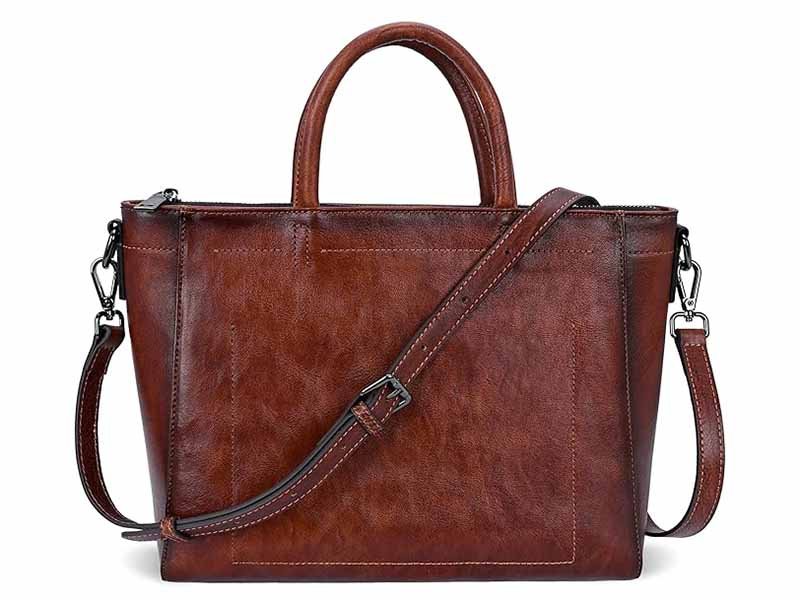
Vegetable tanned leather handbags are loved for one simple reason: they don’t stay the same. A brand-new bag starts clean, bright, and uniform—then real life happens. Sunlight warms the tone, hands leave natural oils, edges get polished by friction, and the leather slowly turns richer and deeper. That “living change” is exactly why many customers pay more for veg-tan. But the trade-off is just as real: the same open, natural surface that develops patina beautifully can show watermarks quickly—sometimes from a single splash, a wet hand, or a light rain.
Vegetable tanned leather handbags develop patina because the leather is naturally open and reacts to light, oxidation, and skin oils. That openness also makes it easier for water to penetrate unevenly, leaving darker rings or streaks. The right approach is not “patina or protection,” but choosing the correct hide, thickness, and finishing level so the bag ages attractively while keeping watermark risk within your brand’s tolerance.
At SzoneierLeather, we build veg-tan handbags for brands that want that premium “ages-with-you” story—but we also engineer the product so customers aren’t shocked by the first rain drop. Let’s start with the foundations.
What Are Vegetable Tanned Leather Handbags?
Vegetable tanned leather handbags are bags made from hides processed with natural plant tannins—usually extracted from tree bark, roots, and leaves—rather than chromium salts. This traditional tanning method produces leather that is firmer, more structured, and more responsive to light, touch, and environment. The result is a handbag that gradually darkens, softens, and develops patina over time.
But that’s the surface explanation. For brands and professional buyers, what really matters is how vegetable tanning affects performance, aging behavior, cost structure, and customer expectations.
Let’s break it down in practical terms.
1 How Is Vegetable Tanned Leather Different From Other Leather?
The biggest difference is the surface openness and fiber integrity.
Vegetable tanned leather:
- Retains a dense, tight fiber structure
- Uses minimal synthetic surface coating
- Shows natural grain and markings clearly
- Ages visibly with use
Compared with chrome-tanned leather:
| Feature | Vegetable Tanned Leather | Chrome-Tanned Leather |
|---|---|---|
| Tanning Time | 3–6 weeks | 1–3 days |
| Surface Finish | Light / natural | Often coated |
| Patina Development | Strong | Minimal |
| Water Resistance | Lower | Higher |
| Firmness | Medium to firm | Soft to flexible |
| Aging Appearance | Deepens in tone | Stays more uniform |
This difference directly affects handbag design decisions.
If your brand wants:
- A clean, color-stable fashion look → chrome leather often fits better.
- A heritage, aging, premium feel → vegetable tanned leather is stronger.
2 What Does Vegetable Tanning Actually Do to the Leather?
Vegetable tanning bonds plant tannins to collagen fibers inside the hide. This stabilizes the leather while keeping the fiber network relatively open.
Because the surface is less sealed:
- Oils from hands penetrate slowly.
- UV exposure darkens the leather naturally.
- Friction increases shine in high-contact areas.
That is why vegetable tanned leather handbags “tell a story” over time.
But this also means:
- Water penetrates more easily.
- Light colors change more dramatically.
- Care expectations must be managed.
3 What Types of Vegetable Tanned Leather Are Used in Handbags?
Not all vegetable tanned leather behaves the same.
There are several practical categories used in handbag production:
| Type | Description | Best For |
|---|---|---|
| Natural (undyed) veg-tan | Light beige, no pigment | Heritage brands, strong patina story |
| Dyed veg-tan | Colored during drum process | Balanced aesthetic + aging |
| Waxed veg-tan | Light wax coating | Reduced watermark contrast |
| Oiled veg-tan | Oil-infused surface | Softer feel, more even aging |
| Bridle leather | Heavily waxed surface | Structured luxury bags |
| Harness leather | Oil-rich, durable | Rugged designs |
For handbags, the most common thickness range is:
- 1.4–2.2 mm for body panels
- 1.2–1.6 mm for straps
- 1.0–1.4 mm for small leather goods
Thickness selection directly affects:
- Shape retention
- Weight
- Aging behavior
- Watermark visibility
4 Why Do Brands Choose Vegetable Tanned Leather for Handbags?
Professional brands typically choose vegetable tanned leather for three main reasons:
① Premium Perception
Vegetable tanning is slower and often more expensive. That process itself adds storytelling value.
Customers associate veg-tan with:
- Craftsmanship
- Sustainability perception
- Artisanal quality
- Longevity
② Aging Character
Unlike coated leather that remains flat in appearance, vegetable tanned leather gains depth.
After 6–12 months of use, a well-designed veg-tan handbag often looks richer than it did on day one.
③ Structural Strength
Vegetable tanned leather tends to hold its shape well, making it ideal for:
- Structured totes
- Satchels
- Briefcase-style handbags
- Leather boxes and rigid accessories
5 What Are the Real Performance Characteristics?
Here’s what brands need to understand beyond marketing language.
Strength
Vegetable tanned leather generally has:
- High tensile strength
- Strong edge durability
- Good resistance to stretching (if fiber density is high)
Shape Retention
Due to its firmness, it supports structured silhouettes without heavy internal reinforcement.
Water Sensitivity
Light exposure to water can create visible darkening.
This is mostly cosmetic but must be anticipated in design and finishing.
Maintenance Requirement
Compared with coated leather, veg-tan requires:
- Occasional conditioning
- Proper drying after moisture
- Avoidance of extreme humidity
6 What Does “Full-Grain Vegetable Tanned” Really Mean?
Many suppliers use this term loosely.
Full-grain vegetable tanned leather means:
- The top grain layer remains intact.
- No heavy sanding has removed fiber strength.
- Surface grain pattern is natural.
Full-grain + vegetable tanned is the strongest combination for handbags meant to age gracefully.
However, even within full-grain, quality varies.
Key evaluation factors:
- Fiber density
- Uniformity
- Minimal loose fiber
- Consistent thickness
- Controlled tanning process
Professional factories test these characteristics before cutting.
7 What Markets Prefer Vegetable Tanned Leather Handbags?
Vegetable tanned leather handbags are especially popular in:
- Europe (Italy, France heritage markets)
- Japan (craft-focused consumers)
- North America (premium lifestyle brands)
- Australia (rugged aesthetic preference)
They are less suitable for:
- Tropical mass-market daily use without protection
- Ultra-lightweight fast-fashion categories
- Low-maintenance customers expecting color consistency
Understanding your target market is critical before choosing veg-tan.
8 What Should Brands Clarify Before Development?
Before starting production, brands should clearly define:
- Target aging appearance (subtle vs dramatic)
- Expected climate exposure
- Customer tolerance for visible change
- Desired firmness
- Water resistance expectations
- Care instructions strategy
Vegetable tanned leather is not “high risk” — it is simply high character.
If positioned correctly, it enhances brand identity.
If misaligned with customer expectations, it increases complaints.
9 Production Insight from SzoneierLeather
From a factory perspective, vegetable tanned leather handbags require:
- Careful hide selection
- Moisture balance control before cutting
- Structured reinforcement planning
- Precise edge finishing
- Pre-production water drop testing
With over 18 years in leather manufacturing, SzoneierLeather works closely with brands to:
- Choose the right vegetable tanned leather grade
- Define finish level (raw, waxed, oiled)
- Adjust thickness for performance
- Control watermark contrast risk
- Maintain stable bulk production consistency
The difference between a beautiful aging handbag and a problematic one is not the material alone — it is how the material is engineered into the product.
Final Practical Definition
Vegetable tanned leather handbags are premium leather bags made from plant-tanned hides that develop patina over time due to their natural, minimally coated surface. They offer strong structure, rich aging character, and authentic luxury appeal—but require thoughtful finishing and care planning to manage watermark sensitivity.
For brands seeking long-term value, authentic material storytelling, and structured elegance, vegetable tanned leather remains one of the most powerful choices in handbag development.
Why Do Vegetable Tanned Leather Handbags Develop Patina?
Vegetable tanned leather handbags develop patina because the surface remains natural and absorbs small amounts of oil and moisture from touch, while UV light and oxygen gradually darken the tannins. Friction polishes high-contact areas like handles and corners, creating deeper tone and shine. Patina is expected behavior in veg-tan; the key is guiding it so the aging looks intentional, not patchy.
How does patina form on vegetable tanned leather handbags?
Patina comes from a mix of chemistry and daily habits. The main drivers are:
- UV exposure: sunlight darkens veg-tan faster than indoor light
- Oxidation: air exposure gradually changes tone
- Skin oils: repeated touch deepens color in contact zones
- Friction: rubbing polishes the grain and increases shine
A realistic patina timeline (what many brands see in customer photos):
| Time in use | What changes | Where it changes first |
|---|---|---|
| 1–2 weeks | warmth in tone, slight darkening | handles, top edge |
| 1–3 months | obvious shading difference | corners, strap contact points |
| 6–12 months | richer color + light gloss | front panel touch zones |
| 1–3 years | mature, deep patina | full bag, strongest at edges |
Why some bags age “beautifully” and others look messy:
It’s usually about finish level + usage pattern. Raw natural veg-tan in a rainy city can spot early. Lightly waxed veg-tan often ages more evenly while still developing character.
Which colors change most in vegetable tanned leather handbags?
Color is the biggest “patina amplifier.” If you start light, you’ll see dramatic change. If you start dark, you’ll see more subtle richness.
Typical color change behavior:
| Starting color | Patina visibility | Common end tone |
|---|---|---|
| Natural / undyed | very high | honey → amber → caramel |
| Light tan | high | cognac → chestnut |
| Medium tan | medium | deeper brown with shine |
| Dark brown | low | slightly darker + glossier |
Customer expectation warning:
Natural undyed veg-tan looks amazing when it matures—but it’s also the most likely to show early watermarks. Brands selling natural veg-tan should prepare customers with clear care guidance and “this leather will change” messaging, or returns will increase.
Do vegetable tanned leather handbags improve with age?
For the right customer segment, yes—patina is a feature, not a defect. But improvement depends on the buyer’s mindset and the brand’s positioning.
Why many customers love aged veg-tan:
- It looks more premium over time
- The bag becomes “personal” (unique to the owner)
- The surface develops depth and warmth that coated leather can’t mimic
Why some customers dislike it:
- They expect consistent color like coated leather
- They view watermarks as “damage”
- They want low-maintenance fashion, not a “care routine”
Positioning guide (simple but effective):
| Your customer wants… | Veg-tan approach | Product-page messaging |
|---|---|---|
| A bag that tells a story | natural/light veg-tan | patina is expected, show aging photos |
| A clean look with less stress | lightly waxed/oiled veg-tan | “ages gracefully with fewer spots” |
| Minimal maintenance | consider alternative leather | avoid overselling raw veg-tan |
At SzoneierLeather, we often build two versions for brands:
a patina-forward version (more natural) and a daily-safe version (light protection). This lets you serve different customers without changing the design language.
What Causes Watermarks on Vegetable Tanned Leather Handbags?
Watermarks on vegetable tanned leather handbags occur because the leather’s open fiber structure absorbs moisture unevenly. When water penetrates certain areas more than others, it temporarily darkens those zones. If drying is uneven, visible rings or spots remain. Most watermarks are surface-level cosmetic effects, not structural damage—but they can significantly affect appearance if unmanaged.
Understanding the Real Mechanism Behind Watermarks
Many customers assume water “damages” vegetable tanned leather immediately. In reality, watermarks happen because veg-tan absorbs moisture at different speeds depending on:
- Grain density
- Surface finish
- Contact time
- Water temperature
- Drying speed
- Existing oil content
Let’s break this down clearly.
Why Are Vegetable Tanned Leather Handbags Sensitive to Water?
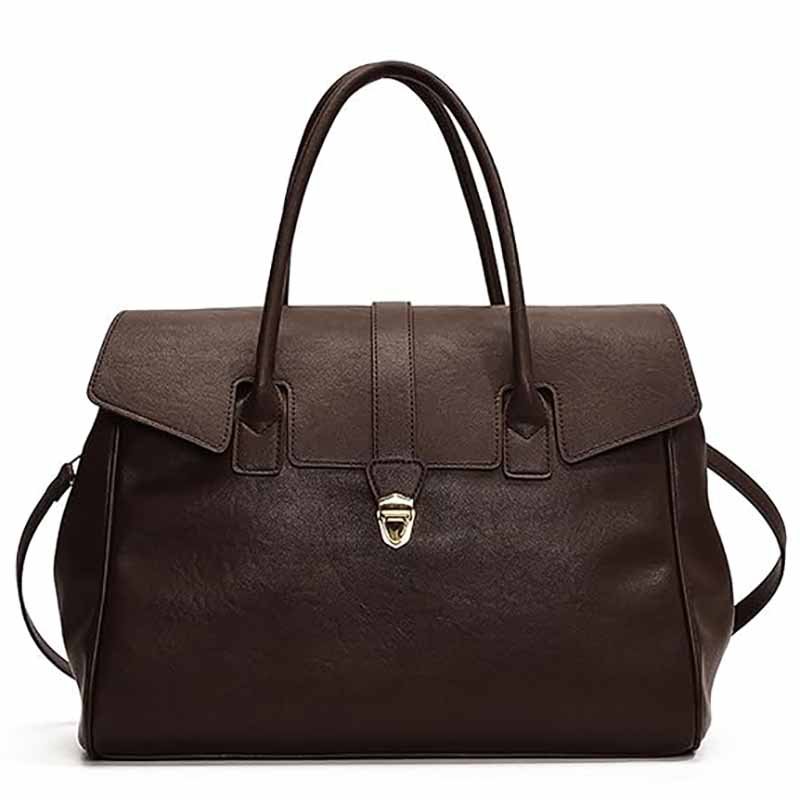 Vegetable tanning does not seal the leather surface with heavy synthetic coatings. That openness allows oils and light to penetrate — but it also allows water to enter.
Key structural reason:
Veg-tan leather fibers remain more porous than heavily finished chrome leather.
When water touches the surface:
- The fibers swell slightly.
- The area darkens.
- If drying occurs evenly, the color may normalize.
- If drying is uneven, a darker outline remains.
Moisture Absorption Behavior (Practical Comparison)
| Leather Type | Surface Finish Level | Water Reaction |
|---|---|---|
| Raw vegetable tan | Very low | Darkens quickly, high watermark risk |
| Lightly waxed veg-tan | Low–moderate | Slower absorption, reduced spotting |
| Oiled veg-tan | Moderate | More even darkening |
| Coated chrome leather | High | Minimal visible effect |
The more natural the surface, the more visible the reaction.
Environmental Risk Factors
Watermark risk increases in:
- High humidity climates
- Sudden rain exposure
- Sweat-heavy contact
- Air-conditioned environments (uneven drying)
In tropical markets (e.g., Southeast Asia), watermark complaints are more common than in dry European climates.
Brands must match leather finishing level to target geography.
How Do Water Spots Affect Vegetable Tanned Leather Handbags?
The majority of water spots are cosmetic, not structural.
Let’s separate myths from facts.
What Watermarks Usually Do
- Cause temporary or permanent darkening
- Leave circular rings if drying is uneven
- Increase contrast in light-colored leather
What Watermarks Usually Do NOT Do
- They rarely weaken fiber strength
- They do not cause tearing
- They do not destroy structure immediately
Water Exposure Severity Guide
| Exposure Type | Risk Level | Result |
|---|---|---|
| Light splash, wiped quickly | Low | Temporary darkening |
| Small rain drops | Moderate | Visible spots possible |
| Heavy rain soaking | High | Uneven tone, long drying |
| Full water saturation | Very high | Possible stiffness after drying |
Most complaints occur in the light splash to small rain drop range, not full saturation.
Why?
Because isolated droplets create high-contrast rings.
Visual Risk vs Functional Risk
For brand owners, watermark risk is about appearance consistency.
Functional strength usually remains intact unless the bag is repeatedly soaked and dried improperly.
The real risk is:
- Customer dissatisfaction
- Negative reviews
- Return requests
This makes finishing strategy critical.
Can Water Damage Weaken Vegetable Tanned Leather Handbags?
Yes — but only under extreme or repeated exposure.
Water becomes harmful when:
- Leather remains wet for long periods
- Drying is forced with heat (hair dryer, radiator)
- Conditioning is ignored after saturation
Long-Term Moisture Risks
Repeated heavy soaking can:
- Cause fiber brittleness
- Reduce flexibility
- Lead to surface cracking over years
However, occasional light rain exposure will not structurally destroy a properly built veg-tan handbag.
Proper Drying Protocol (What Brands Should Include in Care Cards)
If wet:
- Blot gently (do not rub)
- Let dry naturally at room temperature
- Avoid heat sources
- Condition lightly after full drying
Including clear care instructions reduces return risk.
How Can Vegetable Tanned Leather Handbags Balance Patina and Watermark Risks?
Vegetable tanned leather handbags can balance patina and watermark risks by selecting the correct leather grade, applying light protective finishes (wax or oil), adjusting thickness and temper, and designing structures that minimize high-exposure areas. The goal is not to eliminate patina but to guide aging evenly while reducing high-contrast water spots.
Balancing beauty and practicality is a production decision — not a marketing decision.
Here’s how to manage that balance professionally.
Which Finishes Protect Vegetable Tanned Leather Handbags?
Veg-tan can be finished at multiple levels.
Finish determines watermark visibility.
Finish Options Comparison
| Finish Type | Patina Visibility | Watermark Risk | Feel |
|---|---|---|---|
| Raw / Natural | Very High | High | Dry, firm |
| Light wax finish | High | Moderate | Smooth |
| Oil-infused | Medium–High | Lower | Softer |
| Protective topcoat | Low | Low | More sealed |
What We Recommend in Production
For most brands:
- Use light wax or oil finish.
- Avoid fully raw surface unless targeting heritage niche customers.
- Test sample under water drop simulation before approval.
At SzoneierLeather, we always conduct water drop testing during sampling:
Place controlled droplets
Let dry naturally
Evaluate color shift
This prevents surprises in mass production.
How Does Conditioning Affect Vegetable Tanned Leather Handbags?
Conditioning adds oils back into the leather.
Benefits:
- Reduces uneven absorption
- Improves flexibility
- Enhances patina smoothness
However:
Over-conditioning can darken leather excessively.
Conditioning Frequency Recommendation
| Usage Level | Conditioning Interval |
|---|---|
| Daily use | Every 3–6 months |
| Occasional use | Every 6–12 months |
| Heavy rain exposure | After drying |
Brands should educate customers without making care feel complicated.
Do Design Choices Reduce Watermark Visibility?
Yes — smart design reduces visible contrast.
Design Techniques That Help
- Slightly darker base color (reduces contrast)
- Avoid very flat large uninterrupted panels
- Add structural stitching to break visual fields
- Use edge dye darker than body tone
- Design handles slightly darker intentionally
Contrast control reduces complaint rate significantly.
Structural Considerations
Areas most exposed to water:
- Top edge
- Handles
- Front flap
- Bottom corners
Using slightly more treated leather in these zones can reduce visible spotting.
This zoned approach balances aesthetic and durability.
How to Choose High-Quality Vegetable Tanned Leather Handbags?
To choose high-quality vegetable tanned leather handbags, evaluate leather grade, fiber density, finishing level, thickness consistency, edge construction, stitching precision, and structural reinforcement. High-quality veg-tan should age evenly, resist excessive water spotting, and maintain structural integrity over years of use. Quality selection at the material stage determines long-term performance more than branding or styling.
Choosing vegetable tanned leather is not just about “full-grain” labeling.
It is about fiber structure, tanning control, and finishing balance.
What Leather Grade Suits Vegetable Tanned Leather Handbags Best?
For handbags, full-grain vegetable tanned leather is strongly recommended.
Why?
- Top fiber layer remains intact
- Strongest tensile strength
- Most stable long-term aging
- Best patina clarity
However, not all full-grain veg-tan is equal.
Important evaluation points:
1. Fiber Density
Denser fiber = slower uneven absorption.
Low-density hides:
- Absorb water faster
- Show darker watermark rings
- Stretch more easily
High-density hides:
- Age more evenly
- Hold structure better
- Reduce dramatic spotting
2. Surface Cleanliness vs Natural Character
Brands must decide:
| Preference | Leather Type |
|---|---|
| Minimal marks | Select hides carefully graded |
| Heritage authenticity | Accept natural scars and variation |
Natural veg-tan often includes small growth marks. These are not defects — but must align with brand positioning.
3. Thickness Consistency
Thickness tolerance should remain within ±0.1–0.2 mm for handbag panels.
Uneven thickness causes:
- Warping
- Uneven patina
- Edge finishing inconsistency
Professional factories measure thickness panel-by-panel before cutting.
Which Craftsmanship Details Matter in Vegetable Tanned Leather Handbags?
Craftsmanship determines whether patina looks luxurious — or chaotic.
Edge Finishing
Veg-tan edges can be:
- Hand burnished
- Edge painted
- Wax sealed
Burnished edges:
- Natural appearance
- Darken beautifully with age
Edge painted:
- Cleaner modern look
- Slightly better moisture protection
Incorrect edge finishing leads to:
- Cracking
- Color mismatch after aging
- Edge peeling
Stitching Precision
Veg-tan leather shows stitching more clearly.
Good stitching standards:
- Straight alignment
- Even tension
- High-density thread (polyester recommended)
- Stitch length: 3–3.5 mm typical for handbags
Uneven stitching becomes more visible as leather darkens.
Reinforcement Structure
Structured handbags require reinforcement at:
- Base panel
- Handle attachment points
- Strap anchors
Weak reinforcement leads to:
- Stretching
- Distorted shape
- Premature stress marks
Vegetable tanned leather is strong — but needs proper structural planning.
How Should Vegetable Tanned Leather Handbags Be Cared for Long Term?
Care influences both patina quality and watermark control.
Professional brands should provide:
- Clear care instructions
- Conditioning guidance
- Water exposure advice
Recommended Care Routine
| Situation | Action |
|---|---|
| Light rain exposure | Blot dry, air dry naturally |
| Surface spots | Wipe gently, allow even drying |
| Dry appearance | Light conditioning |
| Long-term storage | Dust bag, avoid plastic wrapping |
Avoid:
- Hair dryers
- Direct heater drying
- Over-conditioning
- Alcohol-based cleaners
Education reduces return rates.
Quality Control Standards for Vegetable Tanned Leather Handbags
In OEM production, vegetable tanned leather requires stricter inspection than heavily coated leather.
Why?
Because surface imperfections and finishing inconsistencies are more visible.
Key QC Inspection Points
1 Water Drop Test
Before mass production approval:
- Apply controlled water droplets
- Let dry naturally
- Evaluate spotting pattern
This prevents unexpected behavior after launch.
2 Flex Test
Bend stress areas repeatedly.
Check for:
- Cracking
- Surface discoloration
- Fiber stress lines
3 Edge Adhesion Test
Pull-test edge paint or burnishing layers.
Failure here results in long-term complaints.
4 Color Stability Under UV
Short UV exposure test predicts early darkening speed.
Important for light natural veg-tan.
Why Work with an Experienced Factory Like SzoneierLeather?
Vegetable tanned leather handbags require:
- Raw material understanding
- Finishing chemistry knowledge
- Structural engineering capability
- Skilled handcraft techniques
- Stable supply chain control
We understand that brand clients:
- Know leather basics
- Care about long-term product reputation
- Want production consistency
- Need watermark risk controlled — not eliminated blindly
We do not push “fully sealed leather” if your brand wants authentic patina.
We help you define the right balance.
Final Perspective: Patina Is a Feature — Risk Is a Management Decision
Vegetable tanned leather handbags offer something synthetic materials cannot:
They tell a story over time.
But that story must be intentional.
Patina benefits:
- Depth
- Warmth
- Character
- Luxury perception
Watermark risks:
- Visual inconsistency
- Customer confusion
- Avoidable returns
The solution is not choosing one over the other.
It is:
- Selecting the correct hide
- Applying the correct finish
- Engineering the right structure
- Communicating care clearly
- Partnering with a factory that understands veg-tan behavior deeply
Ready to Develop Your Vegetable Tanned Leather Handbag Line?
If you are:
- Launching a heritage-inspired brand
- Expanding into premium veg-tan handbags
- Developing OEM or private label leather products
- Looking for a reliable long-term leather manufacturing partner
SzoneierLeather can help you:
- Source high-quality vegetable tanned leather
- Control patina development behavior
- Reduce watermark complaints
- Engineer durable, elegant structures
- Provide stable, scalable production
Contact SzoneierLeather today to discuss your project.
Tell us:
- Target market
- Price positioning
- Desired patina effect
- Water resistance expectations
- MOQ requirements
We will recommend the right leather grade, finish, thickness, and construction solution for your brand.
Let’s create vegetable tanned leather handbags that age beautifully — and perform reliably — for years to come.