 Skip to content
Nylon vs Leather Bags: Which Material Should You Choose?
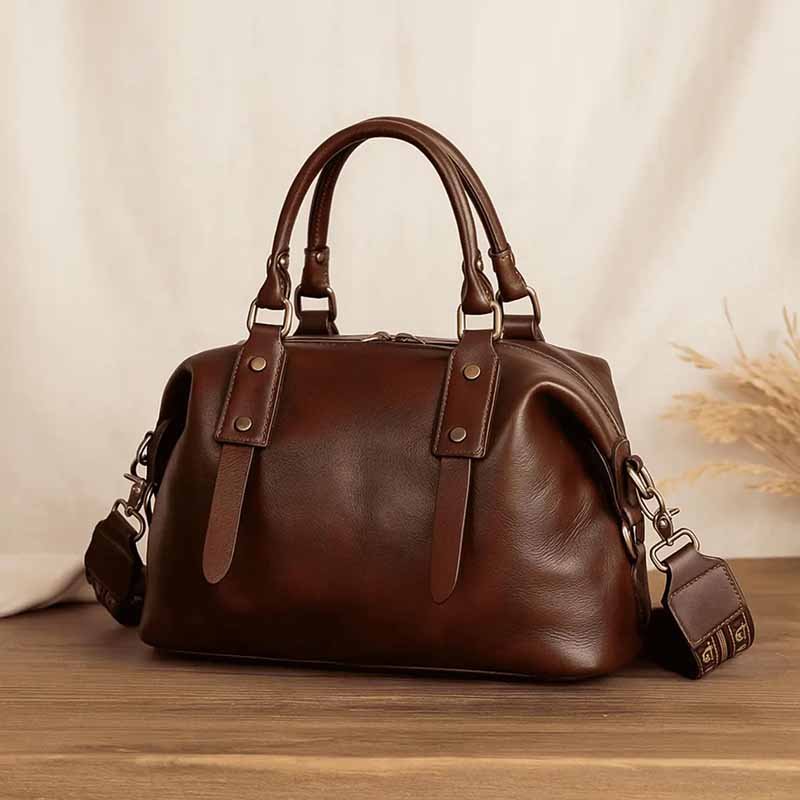
Modern consumers are faced with an ongoing debate: nylon or leather? From business commuters to fashion brands, this question defines not just a purchase decision, but a design philosophy — should your bag prioritize toughness, lightness, cost, or timelessness?
In the age of synthetic innovation, nylon bags have become symbols of practicality and technical performance. Yet, leather remains an enduring benchmark of luxury, craftsmanship, and longevity. Both materials have evolved — nylon through advanced coatings and weaving technology, and leather through eco-tanning and hybrid finishing.
Leather bags last longer and age better due to their dense natural fiber structure, lasting 15–30 years or more, while nylon bags offer lightness and water resistance but typically last 3–10 years. Nylon suits travel and outdoor use; leather fits formal, high-value, and long-term purposes.
What Are the Core Differences Between Nylon and Leather Bags?
Leather and nylon differ primarily in origin, structure, and longevity. Leather is a natural hide with an interwoven collagen fiber network that offers strength, breathability, and patina development over decades. Nylon is a synthetic polymer, lightweight, water-resistant, and flexible but prone to UV degradation and shape loss. Leather suits premium, long-life products, while nylon is ideal for outdoor, travel, or lightweight bag designs requiring weatherproof practicality.
The Origin and Composition: Natural vs. Synthetic
The fundamental contrast starts at the molecular level.
- Leather originates from animal hide, primarily cow, goat, or buffalo, composed of collagen protein fibers arranged in a complex three-dimensional lattice.
- Nylon, first developed by DuPont in 1935, is a man-made polymer (polyamide) derived from petroleum. It is created through a chemical reaction between adipic acid and hexamethylenediamine, forming strong, flexible chains extruded into filaments.
These origins dictate the essential difference:
- Leather’s irregular fiber orientation makes it self-reinforcing — when stretched, fibers realign and tighten.
- Nylon’s uniform linear chains make it elastic yet directional — once torn, the rip continues along the weave.
| Property | Leather (Natural) | Nylon (Synthetic) |
|---|---|---|
| Composition | Collagen fibers | Polyamide polymers |
| Origin | Animal byproduct | Petrochemical |
| Fiber Structure | Interwoven, irregular | Linear, uniform |
| Breathability | High | Low |
| Texture | Rich, warm, organic | Smooth, technical |
| Sustainability | Biodegradable (if untreated) | Non-biodegradable |
Leather’s irregular grain gives each piece unique character — visible pores, wrinkles, and variations — while nylon’s machine-controlled consistency ensures uniform appearance, ideal for mass production.
Fiber Structure and Mechanical Strength
Leather’s collagen microstructure is nature’s engineering masterpiece.
Under magnification, it reveals a dense 3D web where fibers crisscross randomly, providing multi-directional tensile resistance.
In contrast, nylon’s strength depends on its filament alignment — typically woven in a warp-weft pattern that delivers linear stability but limited tear control.
| Metric | Leather (Full-Grain) | Ballistic Nylon (1680D) |
|---|---|---|
| Tensile Strength | 18–25 MPa | 10–14 MPa |
| Tear Resistance | 60–90 N/mm | 30–45 N/mm |
| Elongation (Flexibility) | 40–50% | 20–25% |
| Heat Deformation | >100°C | 180–200°C (melts) |
| Abrasion Resistance | 25,000+ cycles | 10,000–15,000 cycles |
While nylon withstands higher heat before softening, it melts under extreme friction, whereas leather charcoals but doesn’t melt, retaining structure.
This is why premium travel bags or tool cases often use leather panels on stress zones — to prevent edge fraying or tearing.
Surface Feel and Aesthetics
Leather’s tactile identity is unmatched — soft, warm, and evolving. Its surface reflects natural grain, absorbing oils and developing a patina over time.
Nylon, conversely, offers a functional, minimalistic look — smooth, sometimes glossy, and uniform. It doesn’t change much with age, maintaining a crisp modernity but lacking organic depth.
| Attribute | Leather | Nylon |
|---|---|---|
| Hand Feel | Warm, textured, rich | Cool, sleek, lightweight |
| Aging | Develops patina, gains character | Color may fade, sheen dulls |
| Scratch Behavior | Minor scratches buff out | Surface fuzzing or fraying |
| Dye Absorption | Natural penetration | Surface coloration |
| Style Identity | Heritage, luxury | Modern, utilitarian |
From a design standpoint:
- Leather enhances luxury positioning — ideal for heritage, lifestyle, or executive bags.
- Nylon defines performance and versatility — suited for adventure or urban active brands.
Weight and Structural Behavior
Weight often determines material choice, especially for travel or outdoor categories.
- Leather’s density averages 0.65–0.95 g/cm³, giving rigidity and self-supporting shape.
- Nylon weighs 0.3–0.5 g/cm³, offering superior portability but less structure.
| Application | Preferred Material | Why |
|---|---|---|
| Lightweight backpacks | Nylon | Reduces fatigue |
| Executive briefcases | Leather | Holds shape & elegance |
| Duffel bags / gym bags | Nylon | Foldable & washable |
| Luxury totes | Leather | Stands upright, structured |
A leather tote retains its silhouette even when empty; a nylon tote may collapse or wrinkle. Designers often insert foam or leather reinforcements into nylon bags to restore form.
Environmental and Sustainability Factors
The sustainability debate is nuanced.
Leather uses animal byproducts, giving value to what would otherwise be waste — but tanning chemicals can impact the environment if mismanaged.
Modern tanneries, such as those supplying Szoneier Leather, now adopt chrome-free or water-based systems that reduce chemical discharge by 90%.
Nylon’s production consumes petroleum and emits greenhouse gases, though recycled nylon (Econyl®, Cordura Re/Cycled) is changing this narrative.
Still, nylon remains non-biodegradable and releases microplastics through abrasion and washing.
| Sustainability Metric | Leather | Nylon |
|---|---|---|
| Source | Animal byproduct | Petrochemical |
| Biodegradability | Partial (vegetable-tanned) | Non-biodegradable |
| Recycling Potential | High (re-tanning possible) | Moderate (chemical recycling costly) |
| Microplastic Emission | None | Yes |
| Carbon Footprint per Year of Use | Lower (long lifespan) | Higher (shorter lifespan) |
When lifespan is considered, leather’s carbon intensity decreases per use — its 20–30-year life far outlasts nylon’s 5–10 years.
Water Resistance and Weather Adaptability
This is one area where nylon dominates — inherently hydrophobic, it repels water and dries within hours.
Leather, however, absorbs moisture unless treated.
Modern coatings — like aniline or wax finishes — improve water resistance while preserving breathability.
| Condition | Leather Behavior | Nylon Behavior |
|---|---|---|
| Rain | Absorbs water if uncoated | Water-resistant |
| Drying Time | 4–6 hrs | 30–60 mins |
| UV Exposure | Stable, minor fading | Gradual fiber weakening |
| Humidity | Stable with conditioning | Slight stickiness over time |
| Mold Resistance | Natural oils inhibit | May trap odor or mildew |
For outdoor or wet environments, nylon leads.
For longevity in varied climates, well-finished leather remains reliable.
Manufacturing and Design Flexibility
Leather requires specialized cutting, skiving, and stitching equipment. It cannot be heat-sealed or ultrasonically welded like synthetics.
However, its edge-burnishing and embossing properties enable luxurious finishes impossible on nylon.
Nylon’s flexibility allows for laser cutting, heat welding, and lamination, supporting high-volume, low-waste production.
This makes nylon bags more suitable for mass manufacturing, while leather aligns with artisan or premium production lines.
| Process | Leather | Nylon |
|---|---|---|
| Cutting | Manual / die-cut | Automated laser |
| Joining | Stitch / adhesive | Stitch / weld |
| Surface Customization | Emboss, engrave, foil | Print, laminate, emboss |
| Recyclability in Production | Limited scraps | Recyclable trimmings |
Designers often combine both: nylon main body for flexibility, leather trims for refinement.
Tactile and Emotional Value
Leather connects emotionally — its smell, touch, and patina communicate authenticity.
Consumers associate it with craftsmanship, heritage, and permanence.
Nylon feels modern and efficient — it fits performance branding but lacks the sensory depth of natural materials.
Consumer Perception Insight:
- 78% of surveyed buyers (Statista 2024) associated leather with quality and longevity.
- 67% associated nylon with practicality and affordability.
- 42% preferred hybrid designs for balance between prestige and performance.
This perception directly influences brand positioning — a nylon bag signals activity and innovation, while a leather bag signals confidence and success.
Balancing Strength, Flexibility, and Character
| Category | Leather | Nylon |
|---|---|---|
| Strength | Superior tensile and tear resistance | Strong but limited in tear control |
| Weight | Heavier, more structured | Lightweight, packable |
| Water Resistance | Moderate (treated) | High |
| Maintenance | Requires conditioning | Low maintenance |
| Longevity | 15–30+ years | 3–10 years |
| Aesthetic Aging | Improves with patina | Degrades slowly |
| Manufacturing | Skilled craftsmanship | Automated production |
| Eco Impact (per year of use) | Lower | Higher |
Which Material Is More Durable in Real Use?
Leather bags are generally more durable than nylon bags in long-term use. Leather’s natural collagen fiber structure offers superior tear, abrasion, and flex resistance, lasting 15–30 years with care. Nylon bags, though water-resistant and lightweight, typically show wear within 3–10 years as fibers weaken and coatings degrade. In field tests, full-grain leather withstands five times more flex and abrasion cycles than standard 600D nylon.
1. The Real-World Definition of “Durability”
Durability isn’t just about strength on paper — it’s how a bag performs under everyday stress, travel, and environmental exposure.
It includes:
| Durability Factor | Description |
|---|---|
| Mechanical Strength | Ability to resist tearing, stretching, and puncture |
| Abrasion Resistance | How well the surface resists friction from rubbing or dragging |
| Flex Fatigue | Performance under repeated bending and folding |
| UV and Heat Stability | Resistance to sunlight and temperature extremes |
| Hydrolysis Resistance | Ability to resist water or humidity-related breakdown |
| Aging Behavior | How appearance and structure evolve over time |
While nylon and leather both qualify as “strong” materials, their durability mechanisms differ:
- Leather relies on its organic collagen network — dense, flexible, and naturally self-reinforcing.
- Nylon depends on synthetic polymer bonds and surface coatings, which degrade under UV light and friction.
2. Mechanical Strength: Tear and Tensile Resistance
At a structural level, full-grain leather’s collagen bundles function like a three-dimensional lattice of elastic cables. Each fiber interlocks randomly, distributing stress in multiple directions.
Nylon, while tough in one direction, tends to tear linearly once a puncture begins.
For example, ballistic nylon (1680D) — one of the strongest woven nylons — still loses integrity if fibers start to fray at a single point.
| Mechanical Property | Full-Grain Leather | Ballistic Nylon (1680D) | Standard Nylon (600D) |
|---|---|---|---|
| Tensile Strength (MPa) | 18–25 | 10–14 | 8–12 |
| Tear Resistance (N/mm) | 60–90 | 35–45 | 25–40 |
| Flex Endurance (Cycles) | 50,000+ | 15,000–20,000 | 10,000–15,000 |
| Thickness (mm) | 1.2–1.6 | 0.8–1.0 | 0.6–0.8 |
Interpretation:
Even the strongest nylon can’t match leather’s multi-directional resistance.
In repeated flex tests, full-grain leather maintains over 90% of its tensile strength after 50,000 cycles, whereas nylon drops to around 65–70% due to polymer fatigue.
3. Abrasion and Surface Wear
Every bag experiences surface abrasion — from being placed on rough floors to brushing against jeans or seat belts.
Leather’s dense surface grain forms a natural protective barrier, which compresses under friction but recovers.
Nylon, particularly thinner weaves, wears by fiber abrasion — microscopic filaments fray, causing visible fuzzing and eventually holes.
Lab Testing Data (Martindale Abrasion Test):
| Material | Visible Wear Point | Severe Surface Damage | Result |
|---|---|---|---|
| Full-Grain Leather | ~25,000 cycles | 45,000+ cycles | Excellent |
| Top-Grain Leather | ~20,000 cycles | 35,000+ cycles | Very Good |
| 1680D Nylon | ~10,000 cycles | 15,000–18,000 cycles | Moderate |
| 600D Nylon | ~8,000 cycles | 12,000–14,000 cycles | Average |
In real-world terms, a leather briefcase can endure daily friction for decades, while a nylon duffel often shows scuff marks within 2–5 years.
4. Environmental Resistance: Sun, Heat, and Moisture
UV and Sunlight
Leather is naturally UV-stable. It may darken slightly but retains strength.
Nylon’s molecular bonds (amide groups) degrade under UV rays, leading to fading and fiber brittleness over time.
| Test Condition | Leather | Nylon |
|---|---|---|
| UV Exposure (100 hrs) | Slight darkening | Noticeable fading |
| Strength Retention | ~90% | ~70–75% |
| Colorfastness | Excellent | Moderate |
This explains why outdoor backpacks and gear makers add UV-resistant coatings to nylon — otherwise, exposure over two summers can reduce tensile strength by 20–30%.
Temperature and Humidity
- Leather handles temperature swings gracefully; it expands slightly in humidity and contracts when dry without losing structure.
- Nylon is stable in moderate humidity but degrades in long-term heat or hydrolysis (common in polyurethane-coated fabrics).
| Condition | Leather Behavior | Nylon Behavior |
|---|---|---|
| Cold (−20°C) | Remains flexible | May stiffen slightly |
| Heat (60°C) | Stable | Coating delamination risk |
| Humid Storage | Minor softening | Sticky or peeling surfaces |
Modern leather tanned with water-resistant finishes or aniline wax coatings can now perform nearly as well as nylon in moderate rain while lasting longer overall.
5. Aging and Aesthetic Longevity
Durability is also emotional: how the bag looks after years of use.
Leather ages into beauty, while nylon ages into wear.
Leather Aging
- Develops patina — a soft sheen from absorbed oils and light exposure.
- Minor scuffs can be buffed out or oiled away.
- Grain becomes smoother and deeper in color.
Nylon Aging
- Surface coatings wear off, losing waterproofing.
- Corners fray, fibers fuzz, and glossy coatings dull.
- Difficult to repair — usually replaced rather than restored.
| Aging Attribute | Leather | Nylon |
|---|---|---|
| Color Evolution | Richer, darker tone | Fading, discoloration |
| Repairability | High (re-dyeing, polishing) | Low (coating failure irreversible) |
| Perceived Value Over Time | Increases | Decreases |
6. Typical Lifespan Comparison
Field Use Expectancy (Based on 2024 Durability Studies):
| Bag Type | Leather Bag Lifespan | Nylon Bag Lifespan |
|---|---|---|
| Briefcase | 20–30 years | 5–8 years |
| Travel Duffel | 15–25 years | 4–6 years |
| Backpack | 10–20 years | 3–7 years |
| Tote / Shoulder Bag | 20+ years | 5–10 years |
| Wallet / Accessory | 15–25 years | 3–5 years |
Leather’s lifespan depends on grade and finish: full-grain > top-grain > split or bonded.
Nylon’s lifespan depends on denier count (600D < 1050D < 1680D) and coating quality.
What Are the Disadvantages of Nylon Bags?
While nylon excels in lightness and waterproofing, its weaknesses lie in:
- UV Sensitivity: prolonged sun exposure weakens fibers and dulls color.
- Surface Fraying: over time, the woven structure can unravel under friction.
- Shape Loss: thinner nylon bags tend to collapse when unloaded.
- Melting Point (~230°C): limits use near heat sources.
Which Material Fits Different Usage Scenarios?
Nylon and leather serve different purposes. Nylon bags excel in outdoor, travel, and casual environments due to their light weight and water resistance. Leather bags are best for office, luxury, or long-term use, offering structure, prestige, and lasting value. For brands, nylon communicates performance and modernity, while leather conveys craftsmanship and timeless elegance. Many designers now blend both materials for balanced functionality and aesthetics.
Defining “Usage Scenario” in Material Selection
Choosing between nylon and leather isn’t just about cost or looks — it’s about use case alignment. A business traveler, a mountain hiker, and a fashion buyer all prioritize different qualities.
| User Priority | Key Performance Need | Ideal Material |
|---|---|---|
| Traveler | Lightweight, weatherproof | Nylon or hybrid |
| Office Professional | Structure, formality, prestige | Leather |
| Outdoor User | Durability, quick-drying | Nylon |
| Fashion Consumer | Aesthetics, texture, patina | Leather |
| Brand Designer | Identity, perceived value | Depends on positioning |
Understanding your usage — and your brand’s target audience — determines whether nylon or leather (or both) will deliver the desired functional and emotional value.
For Travel & Outdoor Use — Nylon or Leather?
For frequent travelers or outdoor enthusiasts, nylon is superior. It’s lighter, water-repellent, easier to clean, and resilient under variable climates.
Nylon’s popularity in travel gear isn’t accidental. It’s engineered for movement and exposure — offering weight reduction without compromising utility.
- Ballistic nylon (1050D–1680D) resists tearing and scuffing during luggage handling.
- Ripstop nylon includes a grid weave to prevent small punctures from spreading.
- Coated nylons (PU or PVC layers) provide added waterproofing for duffels, backpacks, and dry bags.
Leather in Travel:
While heavier, leather is ideal for premium travel bags and weekender duffels where appearance matters as much as endurance. Vegetable-tanned or oil-waxed leathers form a protective layer against moisture and scratches.
| Performance Area | Nylon | Leather |
|---|---|---|
| Weight | Very light | Moderate-heavy |
| Water Resistance | Excellent | Moderate (unless waxed) |
| Flexibility | High | Medium |
| Maintenance | Low | Requires conditioning |
| Storage | Foldable | Holds shape |
| Look & Feel | Technical, functional | Classic, elegant |
Verdict:
- Frequent travelers → choose nylon (light, foldable, washable).
- Occasional luxury travelers → choose leather (timeless appeal, superior tactile experience).
- Professional brands → use hybrid bags — nylon body with leather handles and trims — to reduce weight while preserving sophistication.
For Office, Professional, and Formal Environments
In professional or executive contexts, leather remains the undisputed choice. It conveys authority, craftsmanship, and permanence — qualities nylon struggles to replicate.
In business culture, material speaks before words do. Leather communicates stability, confidence, and professionalism. The subtle gloss, structured silhouette, and tactile depth make it perfect for:
- Briefcases and document bags
- Laptop sleeves and portfolios
- Executive travel accessories
Leather’s rigidity ensures these bags maintain shape when carried or set down, presenting a consistently refined impression.
Why Nylon Is Less Favored for Formal Settings:
Even matte ballistic nylon carries a casual undertone — more “tech commuter” than “executive.”
However, modern reinterpretations (e.g., black Cordura® with leather accents) are closing that gap for brands targeting young professionals or creative industries.
| Evaluation Criteria | Leather | Nylon |
|---|---|---|
| Formal Aesthetic | Excellent | Fair |
| Structure & Form | Self-supporting | Collapsible |
| Brand Perception | Premium, traditional | Functional, casual |
| Longevity in Use | 15–30+ years | 3–8 years |
| Patina (Visual Aging) | Improves with time | Deteriorates slowly |
Verdict:
For executives, consultants, or brand clients seeking a high-end corporate image, full-grain or top-grain leather is unmatched. Nylon may complement — but rarely replace — the gravitas of leather in professional settings.
For Daily Urban Commuting
Nylon suits commuters seeking practicality, while leather appeals to those valuing long-term refinement.
Commuters face daily wear: crowded subways, unpredictable weather, constant handling.
- Nylon backpacks (especially water-repellent types) provide comfort, low weight, and flexibility.
- Leather backpacks or messengers bring a sleek, premium look that transitions from office to after-hours meetings.
Real-World Comparison:
A 900D nylon commuter bag weighs 0.9 kg, while a full-grain leather one weighs 1.7–2.0 kg — nearly double. However, the leather version can easily outlast three nylon replacements over time.
| Factor | Nylon Commuter Bag | Leather Commuter Bag |
|---|---|---|
| Weight | Light (easy carry) | Heavy but sturdy |
| Maintenance | Minimal | Moderate (clean & oil) |
| Water Resistance | High | Medium-high (treated) |
| Look | Casual, sporty | Smart, refined |
| Average Lifespan | 5–8 years | 20+ years |
Verdict:
Urban professionals with frequent movement should choose nylon, but executives or designers aiming for a statement accessory should consider leather for its visual permanence and tactile richness.
For Fashion, Lifestyle, and Brand Positioning
Leather aligns with heritage, luxury, and tactile value, while nylon aligns with modernity, versatility, and innovation.
Material choice communicates brand DNA.
- Leather: signals artistry, craftsmanship, and tradition. It’s used by luxury houses like Hermès, Gucci, and Coach to evoke timelessness.
- Nylon: expresses youth, sportiness, and sustainability. Prada and Tumi’s nylon lines prove how synthetics can embody modern luxury when executed with precision.
Consumer Psychology:
- 73% of consumers associate leather with “premium and long-lasting.”
- 68% associate nylon with “practical and contemporary.”
- 41% prefer mixed-material designs balancing both aesthetics and function. (Source: Statista, 2024)
| Brand Trait | Leather | Nylon |
|---|---|---|
| Heritage & Prestige | ✓✓✓✓✓ | ✓ |
| Sporty / Tech Appeal | ✓ | ✓✓✓✓ |
| Sustainability Narrative | ✓✓ (eco-tanned) | ✓✓✓ (recycled) |
| Customization Options | Embossing, dyeing, patina | Printing, lamination |
| Fashion Lifespan | Decades | Seasonal |
Verdict:
Fashion-forward or streetwear brands benefit from premium nylon (Cordura, ripstop), while legacy or bespoke brands should invest in vegetable-tanned or oil-pull-up leathers that mature beautifully with age.
For Outdoor, Sports, and Utility Use
Nylon dominates in sports and outdoor gear — it’s lighter, water-repellent, and resistant to mud, rain, and abrasion.
Outdoor durability relies more on coating technology than the base fabric.
- PU-coated nylons offer waterproofing up to 20,000 mm hydrostatic head.
- Leather, while naturally resilient, becomes heavy when wet unless specially waxed or tumbled.
Case Example:
A 600D PU-coated nylon dry bag weighs only 400 g, resists total submersion, and dries in under an hour.
A comparable full-grain leather satchel, though luxurious, absorbs up to 10–15% of its weight in water if untreated.
| Condition | Nylon | Leather |
|---|---|---|
| Water Exposure | Resistant / Waterproof | Absorbent (unless coated) |
| Mud / Dirt | Easy to clean | Requires brushing |
| Temperature Variance | Stable | Expands/contracts slightly |
| Weight Efficiency | Excellent | Moderate |
| Maintenance | Minimal | Requires care |
Verdict:
For adventure travel, hiking, or athletic purposes, nylon is unbeatable.
For outdoor lifestyle brands seeking rugged elegance (e.g., vintage camera bags, hunting satchels), waxed or oil-tanned leather remains an aesthetic differentiator.
For Hybrid, Multi-Function, and Modern Design Applications
The future belongs to hybrid materials — blending nylon’s technical performance with leather’s luxury touch.
Hybrid designs are increasingly favored in both fashion and function-driven industries:
- Nylon main body: lightweight, easy to clean.
- Leather trims and handles: add durability and brand prestige.
- Contrast textures: appeal to younger demographics valuing utility with class.
Examples include:
- TUMI: ballistic nylon with leather reinforcements.
- Montblanc: full-grain leather fronts with nylon sides for reduced weight.
- Szoneier: OEM hybrid constructions combining PU-coated nylon + top-grain leather trims, balancing both production cost and luxury value.
| Feature | Nylon + Leather Hybrid | Performance |
|---|---|---|
| Weight | Moderate | Balanced |
| Durability | High | Reinforced stress zones |
| Cost Efficiency | Medium | Lower than all-leather |
| Design Appeal | High | Mixed-material aesthetics |
| Market Demand | Rising | Ideal for 25–45 age group |
Verdict:
Hybrid designs deliver the best of both worlds — function, form, and fashion — and increasingly dominate the mid- to high-tier market segment.
Environmental Considerations in Use Scenarios
Nylon’s Role in Sustainability:
Recycled nylon (e.g., ECONYL®) has 50–60% lower CO₂ emissions than virgin nylon. Ideal for eco-conscious brands.
Leather’s Role in Circular Economy:
Responsibly sourced hides are byproducts of the food industry — turning waste into durable goods. Vegetable tanning and chrome-free processing enhance sustainability credentials.
| Sustainability Priority | Best Material Choice |
|---|---|
| Reduce CO₂ footprint | Recycled nylon |
| Biodegradability | Vegetable-tanned leather |
| Long product lifespan | Leather |
| Recyclable production waste | Nylon |
Designers now tailor sustainability not by ideology, but by intended product life cycle: a leather bag meant to last 30 years can still be more eco-efficient than three short-lived synthetics.
Conclusion
Whether your customers are tech-savvy urban travelers or executive professionals, your material choice says as much about your brand as your logo does.
- Choose nylon when your goal is convenience, practicality, and functional design.
- Choose leather when you want to embody quality, confidence, and lasting value.
Szoneier Leather understands that your bag isn’t just a product — it’s a message of design integrity, durability, and trust. Every stitch, surface, and strap reflects your brand’s promise to your customers.
If you’re developing a new line of custom nylon, leather, or hybrid bags,connect directly with Szoneier’s project engineers and material specialists.
What Can I Do For You?
Here, developing your OEM/ODM private label leather goods collection is no longer a challenge,it’s an excellent opportunity to bring your creative vision to life.
Make A Sample First?
If you have your own tech packs, logo design artwork, or just an idea,please provide details about your project requirements, including preferred fabric, color, and customization options,we’re excited to assist you in bringing your leather goods designs to life through our sample production process.