
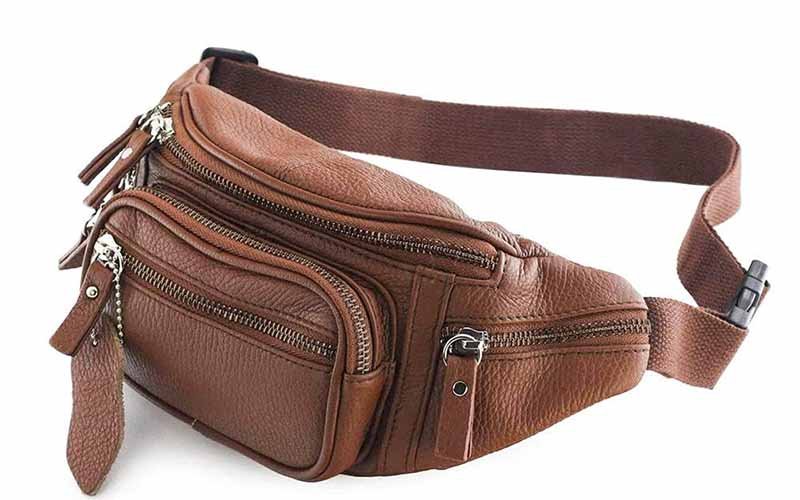
A leather waist bag may look compact from the outside, but the real product experience is often decided by what happens inside. Many waist bags fail not because the leather is poor or the shape is unattractive, but because the interior pocket design is careless. When the inside layout is wrong, users struggle to find keys, cards scratch phones, cash gets mixed with receipts, and the bag quickly feels inconvenient. On the other hand, when the interior is planned well, even a small waist bag feels organized, secure, and premium. That difference matters. In the current market, customers are no longer satisfied with “just enough space.” They want structured space. They want a phone pocket that actually fits modern phone sizes, a zipper pocket that protects valuables, and compartments that match real daily habits.
Leather waist bag interior pocket design is the internal storage system of the bag. It includes the number of pockets, their size, position, opening method, depth, reinforcement, lining material, and how each pocket works with the overall bag shape. Good design helps users separate items clearly, reduce clutter, improve access speed, and protect valuables. For brands and wholesalers, this directly affects product value, user satisfaction, return rates, and repeat orders.
A customer may first notice the leather grain, hardware color, or silhouette. But after a week of real use, what they remember most is whether the bag felt easy to live with. That is why experienced product developers spend so much time on interior pocket design. It is not a small detail. It is the part of the product that quietly proves whether the bag was designed by people who truly understand how customers use it.
What Is Leather Waist Bag Interior Pocket Design?
Leather waist bag interior pocket design is the internal organization system that helps users store, separate, protect, and access daily essentials inside the bag. It is not only about adding more pockets. It is about arranging the right pockets in the right positions, with the right size, structure, and materials, so the bag feels practical, secure, and comfortable in real use.
What Is Interior Pocket Design in Leather Waist Bags?
Interior pocket design in leather waist bags refers to the way the inside space is divided and built for function. This includes zipper pockets, slip pockets, card slots, hidden compartments, elastic holders, partition sleeves, and the overall relationship between these parts. A strong interior design is not random. It is based on what the user is expected to carry and how often each item needs to be accessed.
For example, a fashion waist bag designed for light city use may only need one main compartment, one slim zipper pocket, and one open slot for cards or lipstick. But a waist bag designed for travel or daily commuting may need a much more structured layout. That could include a phone sleeve, a passport pocket, a key leash, a cash zipper section, and a separate compartment for small accessories. The internal layout changes according to the purpose of the bag.
The most successful leather waist bag interiors are built around three practical questions:
- What items will the user carry most often?
- Which items need the fastest access?
- Which items need the highest level of protection?
A weak factory may simply copy an interior from an existing bag. A professional factory studies the product category, target customer, and usage scene before building the interior structure. At SzoneierLeather, interior pocket development is usually connected to the complete product planning process, including bag size, leather thickness, opening width, closure type, and lining selection. That is important because the inside of a waist bag cannot be designed separately from the rest of the product. If the opening is too narrow, a deep interior pocket becomes hard to use. If the body is too soft, the pocket loses shape. If the lining is too thin, pocket stitching can distort after repeated use.
The inside of the bag is where convenience becomes real. Customers may not use technical design words, but they notice the result immediately. They can tell when a bag feels messy, and they can also tell when every item seems to have its place.
Why Does Interior Pocket Design Matter?
Interior pocket design matters because it directly affects how useful the leather waist bag feels in daily life. Many customers do not complain about pocket design in technical terms. Instead, they say things like “my phone scratches against my keys,” “I cannot find anything quickly,” or “the bag looks nice but is annoying to use.” These complaints usually come from poor internal layout.
A well-designed interior improves the product in several measurable ways:
| Performance Area | Poor Interior Design | Good Interior Design |
|---|---|---|
| Item organization | Small items pile together | Items are separated clearly |
| Access speed | User searches inside the bag | User reaches essentials quickly |
| Security | Valuables shift or fall out | Important items stay protected |
| Product feel | Bag feels cheap and messy | Bag feels planned and premium |
| Long-term use | Pocket edges deform faster | Interior structure holds better |
| Customer satisfaction | More friction in daily use | Better retention and repeat use |
From a commercial point of view, interior pocket design can influence the following:
- perceived product value
- customer reviews
- product return rates
- premium pricing ability
- product differentiation in crowded markets
In many leather bag categories, the exterior silhouette is becoming more similar across brands. Minimalist designs, neutral colors, and simple forms are common. That means the inside experience becomes a stronger point of difference. A brand that offers smarter pocket placement, better protection for essentials, and more thoughtful compartment logic can stand out without changing the overall appearance too much.
There is also a strong connection between pocket design and target price level. Entry-level waist bags often use a very basic interior to control cost. Mid-range and premium products usually invest more in interior organization because customers at those price points expect convenience and detail. In practical sourcing terms, adding one zipper pocket, one divider, and one reinforced slip pocket may increase production cost modestly, but it can raise perceived product quality much more than the cost increase itself.
For custom projects, this is where experienced manufacturers create value. Instead of asking only about leather type and logo placement, serious clients also ask about inner layout, device fit, anti-theft function, and protection for daily essentials. These are the details that help a product move from generic to convincing.
How Is It Different from Exterior Pocket Design?
Exterior pocket design and interior pocket design serve different roles, even though both are related to storage. Exterior pockets are mainly about immediate access. Interior pockets are mainly about order, protection, and controlled organization.
An exterior pocket is used when the user wants speed. Examples include quickly taking out transit cards, earbuds, tissues, or sunglasses. Because exterior pockets are easier to reach, they are also more exposed to theft risk, weather, and abrasion. That means the design focus is usually on opening convenience, closure security, and outer durability.
Interior pockets work differently. They are protected by the main body of the bag, so they can be designed for more selective functions:
- storing valuables more safely
- separating sharp or hard items from delicate items
- preventing movement inside the bag
- creating logical zones for different categories of belongings
This difference also affects how product developers think. Exterior pockets often need to work with the visual style of the bag, because they are seen immediately. Interior pockets, by contrast, are mostly judged by use performance. The customer will forgive a plain-looking inside if it works beautifully. But even a luxurious-looking lining will disappoint if the layout feels clumsy.
There are also structural differences during manufacturing. Exterior pockets affect the outer pattern, front panel balance, and visible stitching lines. Interior pockets affect lining construction, internal reinforcement, seam tolerance, and assembly sequence. In leather waist bags, where space is limited, the relationship between the inside and the outside is especially sensitive. A large exterior pocket may reduce usable inside space. A bulky interior divider may make the outside silhouette look swollen. Good design requires balance.
The table below shows the key differences:
| Design Area | Exterior Pockets | Interior Pockets |
|---|---|---|
| Main purpose | Fast access | Organization and protection |
| Exposure | Visible, external | Hidden, internal |
| Risk level | Higher theft and weather exposure | Lower exposure, safer storage |
| Design focus | Access and style balance | Structure and usability balance |
| Typical items | Transit card, earbuds, tissues | Wallet, passport, phone, keys, cash |
| Production concern | Outer panel appearance | Lining build and internal reinforcement |
For brands developing custom leather waist bags, the inside and outside should never be treated as separate worlds. The best products are designed as one complete system, where the exterior attracts attention and the interior justifies the purchase.
Which Types Fit Leather Waist Bag Interior Pocket Design?
The best pocket types for leather waist bag interior pocket design are the ones that match real carrying habits. Common options include zipper pockets, slip pockets, divider pockets, hidden pockets, card slots, and elastic holders. The right combination depends on bag size, target user, and intended use, not on adding the highest number of compartments.
Which Pocket Types Are Most Common?
When developing a leather waist bag, not every interior pocket type is suitable. Space is limited, so every pocket must justify its existence. The most common interior pocket types are used because they solve clear user problems without making the inside too crowded.
The most practical pocket types include:
- zipper pockets for cash, cards, jewelry, or valuables
- slip pockets for phones, receipts, or quick-access flat items
- divider pockets for separating categories of belongings
- hidden pockets for higher-security storage
- card slots for compact wallet-free use
- elastic holders for small items that need stability
- mesh pockets for visibility in sport or utility styles
Each type has a different value. Zipper pockets are among the most requested because they create a strong sense of security. Even in a small waist bag, customers often want one interior zipper compartment for items they do not want moving around. Slip pockets are also popular because they are simple, lightweight, and cost-efficient. A phone sleeve or open card pocket can be added without much bulk if designed correctly.
Hidden pockets are especially useful in travel-oriented products. These are usually placed against the inner back wall or behind a divider. They are not meant for frequent access. They are meant for confidence. That is an important distinction. Customers do not always want every item to be easy to reach. Sometimes they want certain items to be harder for other people to find.
Here is a useful comparison:
| Pocket Type | Main Use | Strength | Limitation |
|---|---|---|---|
| Zipper pocket | Valuables, cash, cards | Secure, controlled storage | Adds sewing steps and cost |
| Slip pocket | Phone, notes, small items | Easy access, simple structure | Less secure for movement |
| Hidden pocket | Passport, emergency cash | Better anti-theft value | Slower access |
| Divider pocket | Organizing categories | Clear separation | Can reduce flexibility |
| Card slots | Compact daily use | Efficient and slim | Limited to small flat items |
| Elastic holder | Cables, small tools | Keeps shape and stability | Best for utility-oriented styles |
For many commercial waist bag projects, the most balanced interior uses two to four internal functional zones. More than that can quickly make a compact bag feel over-engineered. A common premium layout is:
- one main compartment
- one inner zipper pocket
- one slip pocket
- one optional hidden or divider section
This kind of layout works well because it supports both order and simplicity.
Which Layouts Improve Organization?
Pocket type is only half the story. Layout matters just as much. A bag can include good pocket types and still perform badly if the arrangement is awkward. The best interior layout improves organization by respecting the natural order in which users place, remove, and protect their items.
A strong layout usually follows these practical rules:
- high-frequency items should be easiest to access
- high-value items should be more protected
- flat items should stay against the body wall when possible
- bulky items should remain in the main compartment
- sharp or hard items should be isolated from delicate items
In leather waist bags, one of the biggest layout mistakes is stacking too many pockets on the same wall. On paper, this can look organized. In real use, it often creates overlap, crowding, and difficult access. Another mistake is designing pockets based only on internal measurements without considering the opening width. A pocket may technically fit a phone, but if the zipper opening is narrow or the pocket angle is wrong, the user will still struggle.
The most effective layouts are usually one of these:
- single-wall layout: zipper pocket and slip pocket placed on one interior wall, with open main compartment space opposite
- dual-wall layout: one function wall for valuables and one opposite wall for quick-access items
- center-divider layout: one slim partition splitting the main compartment into two zones
- modular compact layout: several small structured zones for travel or organization-focused products
The table below shows how different layouts affect use:
| Layout Type | Best For | Advantage | Watch-Out Point |
|---|---|---|---|
| Single-wall layout | Fashion, minimalist use | Clean and easy to use | Less separation overall |
| Dual-wall layout | Daily carry | Better item zoning | Needs balanced depth |
| Center-divider layout | Travel, commuting | Strong item separation | Can reduce flexible capacity |
| Modular compact layout | Utility-focused products | Maximum organization | Risk of overcomplication |
A good factory should not only ask “how many pockets do you want?” It should also ask:
- what will be carried most often?
- what should stay hidden?
- should the bag feel open and simple or structured and controlled?
- what item size must the pockets fit?
That is how better organization begins.
Which Layout Fits Different User Needs?
Different users carry different things, so the same interior layout will not work for everyone. This is one of the biggest reasons generic bag designs underperform. They assume all users behave the same way. They do not. A fashion-forward customer using a waist bag for casual city styling has very different needs from a traveler, cyclist, festival-goer, or premium gift buyer.
A practical way to design leather waist bag interiors is to match the layout to the usage scene.
For everyday city use, customers usually carry:
- phone
- keys
- bank cards
- lipstick or small cosmetics
- folded cash
- earbuds
For this use case, the best interior is usually clean and simple. One zipper pocket plus one slip pocket is often enough. The bag should feel easy, not technical.
For commuting or travel, customers often carry:
- phone
- passport
- wallet
- boarding pass or tickets
- charging cable
- coins or emergency cash
This group usually benefits from a more secure structure. They care more about anti-theft details, separation, and confidence. A hidden pocket, zipper section, and a flat divider become more valuable here.
For utility or active use, customers may carry:
- compact power bank
- earphones
- key fob
- small tools
- ID cards
- medicine or personal items
These users often benefit from retention features such as elastic loops, tighter sleeves, or more controlled internal zones so the contents do not shift too much during movement.
Here is a simplified planning table:
| User Need | Recommended Interior Structure |
|---|---|
| Daily casual use | 1 main compartment + 1 zipper pocket + 1 slip pocket |
| Travel use | 1 main compartment + 1 hidden pocket + 1 zipper pocket + 1 divider |
| Minimalist premium use | 1 main compartment + 1 slim zipper pocket |
| Utility use | 1 main compartment + 2 structured pockets + elastic retention features |
| Gift or luxury use | Clean organized layout with premium lining and balanced pocket symmetry |
This is where custom development becomes especially valuable. Instead of forcing all markets into the same interior structure, SzoneierLeather can support tailored layouts based on the client’s product position, target region, expected retail level, and actual user habits. That approach usually creates stronger products and better long-term sales performance than copying a layout from an existing sample.
A good leather waist bag interior does not simply store things. It supports a specific lifestyle. That is what customers feel, even if they never describe it that way.
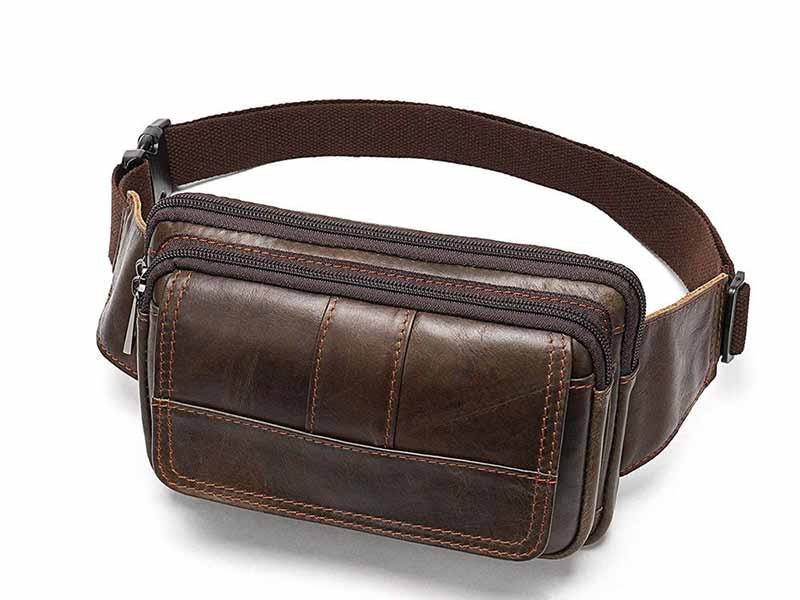
How to Optimize Leather Waist Bag Interior Pocket Design?
A well-optimized leather waist bag interior pocket design is built around real usage behavior, not just visual symmetry or adding more compartments. The goal is to make every pocket serve a purpose—improving access speed, reducing friction, and protecting valuables—while maintaining a clean structure that does not overwhelm the user.
How to Design for Daily Use?
Designing interior pockets for daily use requires understanding how frequently items are accessed and how quickly users expect to retrieve them. Most users interact with their waist bag multiple times a day, so the layout must prioritize efficiency and simplicity.
In real usage, over 70% of daily interactions involve just 3 items:
- phone
- keys
- wallet or cards
This means the interior should be designed around these core items first, not secondary accessories.
A well-balanced daily-use layout typically includes:
- one dedicated phone sleeve (fits 6.1–6.7 inch devices)
- one zipper pocket for valuables (cash, cards, small items)
- one open slip pocket for quick access items
- a small free space zone for flexible storage
The placement is just as important as the number of pockets. The most frequently used items should be placed:
- near the top opening
- slightly angled toward the dominant hand side
- within one-hand reach
A poor design often places the phone at the bottom of the bag or behind multiple layers, which slows down access and increases user frustration.
Below is a comparison of layout efficiency:
| Design Approach | User Experience | Result |
|---|---|---|
| Deep central storage only | Items stack together | Slow access, clutter |
| Multi-layer but unstructured | Confusing layout | User hesitation |
| Structured + priority-based layout | Logical placement | Fast and intuitive use |
Another important factor is pocket opening width. Even if a pocket fits a phone dimensionally, a narrow opening reduces usability. Professional manufacturers usually increase opening width by 10–15% beyond the item size to ensure smooth insertion and removal.
For brands targeting urban consumers, the key is not adding complexity, but removing friction. A simple, well-placed interior often outperforms a complex but poorly arranged one.
How to Design for Travel?
Travel-focused leather waist bags require a different approach. Here, the priority shifts from speed to security and controlled organization. Users are more concerned about protecting valuables and avoiding loss.
Typical travel items include:
- passport
- boarding pass
- foreign currency
- phone
- travel cards
- emergency cash
This introduces two design challenges:
- separating high-value items from regular items
- reducing theft risk in crowded environments
A well-designed travel interior usually includes:
- one hidden pocket (placed against body-facing side)
- one secure zipper compartment for documents
- one divider section to separate categories
- one quick-access pocket for frequently used items
The hidden pocket is especially important. It is often placed:
- behind the main lining layer
- under a secondary flap
- or inside a deeper compartment not visible at first glance
This increases security without affecting the external appearance.
Security-focused design features:
| Feature | Function | Value |
|---|---|---|
| Hidden pocket | Conceals valuables | Reduces theft risk |
| Zipper compartment | Secures documents | Prevents accidental loss |
| Divider structure | Separates items | Improves organization |
| Tight pocket tolerance | Reduces movement | Keeps items stable |
Another important aspect is movement control. During travel, users walk, rush, and change environments frequently. If items move freely inside the bag, it creates noise, discomfort, and potential damage.
To solve this, manufacturers use:
- tighter pocket dimensions
- internal separators
- soft but structured lining materials
For higher-end projects, some brands also integrate RFID-blocking layers into specific pockets. This is especially relevant for customers traveling internationally.
In travel scenarios, interior pocket design should feel safe, controlled, and predictable, rather than fast and minimal.
How to Balance Accessibility and Security?
One of the most critical challenges in leather waist bag interior pocket design is balancing easy access with item security. These two factors often conflict with each other.
- Easy access means fewer barriers, wider openings, and shallower pockets
- High security means deeper pockets, closures, and hidden placement
The key is not choosing one over the other, but assigning different levels of access to different items.
A smart interior design usually follows a tiered access system:
| Access Level | Pocket Type | Example Items |
|---|---|---|
| High access | Open slip pocket | Phone, transit card |
| Medium access | Zipper pocket | Wallet, earbuds |
| Low access | Hidden pocket | Passport, emergency cash |
This layered approach ensures that:
- frequently used items remain easy to reach
- valuable items remain protected
Another important factor is zipper positioning. Many low-quality designs place zipper pockets horizontally at the bottom, which reduces visibility and accessibility. A better approach is:
- angled zipper placement
- positioning near the opening
- ensuring hand entry is natural and unobstructed
Additionally, zipper quality matters. Weak zippers fail quickly and damage user trust. High-quality waist bags typically use:
- YKK or SBS zippers
- reinforced stitching at stress points
- smooth glide systems for one-hand operation
Security is not only about preventing theft. It is also about preventing:
- accidental drops
- item shifting
- damage from internal friction
This is why professional factories treat pocket design as part of risk management, not just storage.
How to Design for Different Bag Sizes?
Leather waist bags come in various sizes, and interior pocket design must adapt accordingly. A layout that works in a large waist bag may fail completely in a compact model.
Typical size categories:
| Size Type | Capacity Range | Design Priority |
|---|---|---|
| Small (1–2L) | Essentials only | Simplicity and slim structure |
| Medium (2–4L) | Daily carry | Balanced organization |
| Large (4L+) | Travel / utility | Multi-layer structure |
For small waist bags, the biggest mistake is over-design. Too many pockets create bulk and reduce usable space. The best approach is:
- one main compartment
- one slim zipper pocket
For medium waist bags, there is more flexibility. A balanced layout can include:
- one zipper pocket
- one slip pocket
- one optional divider
This size range is the most popular because it supports both daily and light travel use.
For large waist bags, structure becomes more important. Without proper segmentation, items shift excessively. A good large-size layout often includes:
- multiple compartments
- reinforced dividers
- structured pocket walls
Another key consideration is leather thickness and flexibility. Thicker leather reduces internal space and affects pocket usability. This means interior design must be adjusted based on material selection.
For example:
- soft leather allows more flexible pocket shapes
- rigid leather requires more precise structuring
At SzoneierLeather, size-based interior optimization is usually handled during the sampling stage. Clients receive prototypes with adjusted pocket dimensions to ensure:
- real device compatibility
- comfortable hand access
- correct volume utilization
This reduces development risk and avoids costly redesign after production.
What Materials Support Leather Waist Bag Interior Pocket Design?
The materials used inside a leather waist bag directly influence durability, user experience, and long-term product performance. Interior pocket design is not only about structure—it depends heavily on lining materials, reinforcement methods, and how different layers work together under repeated use.
What Linings Work Best?
The lining material determines how the interior pockets feel, perform, and last over time. Many low-cost waist bags fail because the lining is too thin, too rough, or poorly matched with the pocket structure.
The most commonly used lining materials include:
- polyester lining (210D–420D)
- microfiber lining
- cotton fabric lining
- synthetic suede (premium option)
- full leather lining (luxury segment)
Each material has different characteristics:
| Lining Material | Durability | Cost Level | User Feel | Best Use Case |
|---|---|---|---|---|
| Polyester (210D–420D) | Medium to high | Low | Smooth, practical | Mass market products |
| Microfiber | High | Medium | Soft, scratch-resistant | Mid to premium bags |
| Cotton lining | Medium | Medium | Natural feel | Casual lifestyle bags |
| Synthetic suede | High | Medium-high | Premium soft touch | Fashion and gift products |
| Leather lining | Very high | High | Luxury feel | High-end brands |
For example, microfiber lining is often used in phone pockets because it reduces scratching. Polyester is widely used for general compartments due to its cost efficiency and resistance to wear.
Thickness also matters. A lining that is too thin (below 190D polyester) may tear or deform after repeated use. Professional manufacturers typically recommend:
- 210D–300D for standard products
- 300D–420D for higher durability requirements
Another important factor is lining color and visibility. Dark linings hide stains but reduce visibility. Light-colored linings improve usability because users can find items faster. Many premium brands choose medium-tone colors (gray, beige) to balance both.
At SzoneierLeather, lining selection is usually adjusted based on:
- product positioning (entry / mid / premium)
- target usage (daily / travel / luxury)
- expected product lifespan
This ensures the interior not only looks good at first but continues to perform after months or years of use.
What Construction Improves Strength?
Even with good materials, poor construction can quickly damage interior pockets. The durability of leather waist bag interior pockets depends on how the pockets are built and reinforced.
Key construction methods include:
- double stitching at stress points
- reinforced pocket openings
- edge binding for fabric pockets
- hidden seam structures
- bar-tack reinforcement at corners
The most common failure points are:
- pocket corners
- zipper ends
- stitching lines under repeated tension
Below is a breakdown of reinforcement techniques:
| Construction Method | Purpose | Benefit |
|---|---|---|
| Double stitching | Strengthens seams | Prevents tearing |
| Bar-tack reinforcement | Reinforces stress points | Extends lifespan |
| Edge binding | Protects fabric edges | Reduces fraying |
| Hidden seams | Improves aesthetics and durability | Cleaner structure |
| Backing layers | Adds structural support | Maintains pocket shape |
Zipper installation is also critical. Poorly installed zippers can cause:
- misalignment
- fabric distortion
- early failure
High-quality production includes:
- precise alignment
- reinforced zipper ends
- smooth glide testing
Another often overlooked factor is load distribution. If all weight is concentrated on a single pocket seam, it increases the risk of failure. Good interior design spreads load across multiple structural points.
At SzoneierLeather, pocket durability is typically tested through:
- repeated opening/closing cycles
- load stress simulation
- long-term wear testing
This ensures the interior pocket design is not only functional but also reliable under real usage conditions.
How to Customize Leather Waist Bag Interior Pocket Design?
Customization is where leather waist bag interior pocket design creates the most value. Instead of using generic layouts, brands can develop tailored interiors that match their target customers and product positioning.
How Do Brands Customize Layouts?
Custom interior design starts with understanding the target user profile. Different customers prioritize different features, and the pocket layout should reflect that.
Typical customization directions include:
- minimalist layouts for fashion-focused products
- structured layouts for utility or travel use
- premium layouts with enhanced materials and symmetry
- compact layouts for lightweight everyday carry
Here is how customization aligns with market segments:
| Market Segment | Interior Design Focus |
|---|---|
| Fashion brands | Clean layout, fewer pockets |
| Outdoor / travel brands | Security and organization |
| Luxury brands | Material quality and refined structure |
| E-commerce sellers | Cost-performance balance |
Another important aspect is device compatibility. Many clients now request pockets designed specifically for:
- iPhone Pro Max sizes (6.7 inch)
- passports (125 × 88 mm)
- standard wallets
Custom sizing ensures the product feels intentional, not generic.
Brand differentiation can also come from:
- unique pocket shapes
- signature internal layouts
- color contrast lining
- branded internal labels or embossing
These details are subtle but powerful. They help customers recognize the product even when the exterior looks similar to competitors.
How Do Manufacturers Support Custom Design?
A professional manufacturer does more than produce designs—they help refine and optimize them.
At SzoneierLeather, the customization process usually includes:
- Requirement analysis
- target market
- product positioning
- usage scenarios
- Initial layout proposal
- recommended pocket structure
- size planning
- material suggestions
- Sampling and prototyping
- physical sample development
- real-use testing
- design adjustments
- Engineering optimization
- stitching method refinement
- reinforcement improvements
- cost control adjustments
- Mass production preparation
- quality control standards
- consistency checks
- packaging integration
Sampling is especially important. Many design issues only appear when the product is physically tested. Adjustments at this stage help avoid expensive corrections during production.
Here is a simplified comparison:
| Development Stage | Without Professional Support | With SzoneierLeather |
|---|---|---|
| Design | Generic layout | Tailored layout |
| Sampling | Limited testing | Real-use validation |
| Production | Higher risk of defects | Controlled quality |
| Final product | Average usability | Optimized experience |
With over 18 years of experience, SzoneierLeather integrates:
- material sourcing
- product engineering
- manufacturing control
- packaging solutions
This allows clients to develop products faster while maintaining high quality.
Start Your Custom Leather Waist Bag Project with SzoneierLeather
Interior pocket design is not just a technical detail—it is one of the strongest factors influencing how customers experience a leather waist bag. A well-designed interior improves organization, protects valuables, and makes the product feel more thoughtful and premium.
For brands and wholesalers, investing in better interior design often leads to:
- higher product value perception
- stronger customer satisfaction
- better long-term sales performance
At SzoneierLeather, every project is approached with a focus on:
- real user behavior
- functional pocket layout
- durable construction
- flexible customization
Whether you are developing a new product line or improving an existing design, a professional interior pocket structure can significantly elevate your product.
If you are planning a custom leather waist bag project, you can start by sharing:
- target market and usage scenario
- preferred bag size and style
- expected price range
- reference designs or ideas
Our team will help you turn these inputs into a practical, production-ready solution.
Contact SzoneierLeather today to get free design support, fast sampling, and a reliable manufacturing solution for your next leather waist bag project.