
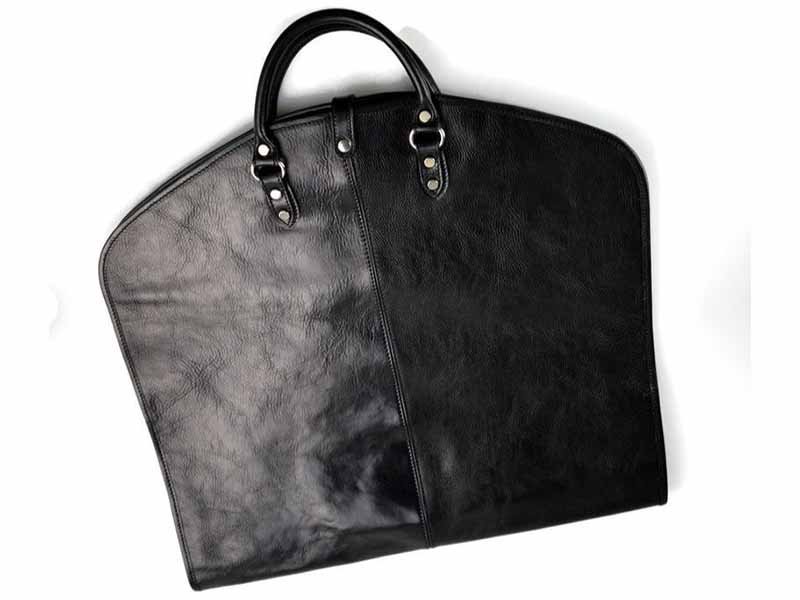
A leather garment bag may look simple from the outside, but its real quality is decided by what happens at the seams. Many bags use good-looking leather, smooth lining, and premium hardware, yet still fail early because the stitching system was not built for real use. That is the hidden problem many importers, brand owners, and professional sourcing teams eventually discover: leather quality alone does not guarantee product durability. If the seam structure is weak, the bag can distort under weight, handles can loosen, zipper areas can crack, and corners can split long before the leather itself wears out.
This is why reinforced stitching has become a serious topic in leather garment bag development. Customers who understand product construction now ask better questions. They want to know how the handle base is secured, how many stitch lines are used in high-stress zones, what thread type is selected, how seam allowance is managed, and whether the bag was engineered for repeated travel, hanging, folding, and carrying. These are practical concerns, not technical details for decoration. They directly affect return rates, product reputation, reorder potential, and long-term customer satisfaction.
Leather garment bag reinforced stitching techniques are the stitching methods, seam structures, thread choices, and stress-point reinforcements used to make a leather garment bag stronger, more stable, and more durable in actual use. They help the bag carry weight safely, resist tearing, maintain shape, and perform better over time, especially in handles, corners, zipper runs, hanging points, and fold lines.
Think about two garment bags shipped to the same customer. Both look premium on the first day. Six months later, one still feels solid and holds its shape; the other shows loose handles, stretched seams, and early wear around the zipper. That difference usually starts with stitching design long before production ever begins.
What Are Leather Garment Bag Reinforced Stitching Techniques?
Leather garment bag reinforced stitching techniques are construction methods used to strengthen critical seams and stress points in a garment bag. They combine stitch type, seam design, thread selection, backing support, and reinforcement layout so the finished bag can handle weight, movement, and repeated use without early seam failure.
What is leather garment bag reinforced stitching?
Leather garment bag reinforced stitching is not just “more stitches” or “thicker thread.” It is a complete construction approach used to make a bag stronger where strength actually matters. In practical manufacturing terms, it means the seam is designed to do more than join two panels. It must carry load, control material movement, resist edge stress, and remain stable after thousands of handling cycles.
A garment bag is different from a small wallet or pouch. Its structure is longer, flatter, and more exposed to uneven tension. When packed with jackets, suits, dresses, or uniforms, the stress is not concentrated in one small place. It spreads through the handle attachment points, top hanger opening, zipper track, folding sections, strap anchors, gusset joints, and bottom corners. If these areas are stitched like a low-stress accessory, failure can happen quickly.
In real development work, reinforced stitching usually includes several layers of thinking:
- which seam zones are structural
- which stitch type matches the leather thickness
- where extra seam allowance is needed
- where backing or hidden support materials should be inserted
- how dense the stitch count should be
- how to reduce tearing around needle holes
- how to keep a premium appearance without weakening the leather
For customers developing custom leather garment bags, this matters because seam performance directly affects the commercial outcome of the product. A beautiful bag that fails around the handle or zipper is costly in every direction. It creates returns, damages brand credibility, and makes scale-up harder. A well-built reinforced stitching system does the opposite. It improves trust, supports long-term use, and makes the bag feel more professional from the first touch.
Below is a simple view of where reinforcement usually matters most in a leather garment bag:
| Bag Area | Stress Level | Why Reinforcement Matters |
|---|---|---|
| Handle base | Very high | Carries full bag weight during lifting |
| Shoulder strap anchor | Very high | Handles dynamic pull during movement |
| Zipper entry and end | High | Repeated open-close motion creates concentrated tension |
| Top hanger opening | High | Supports hanging load and shape stability |
| Bottom corners | High | Bears downward weight and friction |
| Fold lines | Medium to high | Repeated bending can weaken seam stability |
| Gusset connection | High | Expands under packing pressure |
For serious product development, reinforced stitching should be planned at the sample stage, not added later as a patch.
Why use leather garment bag reinforced stitching?
The short reason is reliability. The deeper reason is cost control, product positioning, and long-term brand protection. Customers who source leather garment bags for a brand, wholesale program, or private label line are usually not looking for the cheapest possible seam. They are looking for the lowest risk per order and the best balance between appearance, durability, and production consistency.
Most product complaints in sewn leather goods do not begin with the leather surface. They begin with construction failure. Common complaints include:
- handle feels loose after short use
- seam opens at corner under moderate load
- zipper area puckers or tears
- thread frays after repeated carrying
- strap anchor becomes unstable
- fold area loses structure
- bag body twists because panel seams were not balanced
These issues are expensive. Even if the return rate seems small, they can damage the entire impression of the product line. For example, a return rate increase from 1.5% to 4% may look manageable on paper, but in premium leather goods it can erase margin quickly once replacement cost, freight, service time, and reputation loss are included.
Reinforced stitching helps reduce that risk by improving how the bag behaves under real conditions:
- packed with multiple garments
- carried by hand and shoulder
- opened and closed repeatedly
- folded during travel
- hung in closets or vehicles
- stored for long periods
- exposed to dry or humid environments
From a business standpoint, reinforced stitching also supports better market positioning. A bag that feels structurally solid is easier to sell as premium. End users can feel the difference even if they do not know the technical reason. They notice when the handle stands straighter, the zipper runs smoother, the corners stay cleaner, and the body keeps shape after use.
The table below shows why many professional customers prioritize reinforced stitching when reviewing prototypes:
| Decision Factor | Without Strong Reinforcement | With Strong Reinforcement |
|---|---|---|
| Handle durability | Higher risk of loosening | More stable under repeated lifting |
| Load-bearing confidence | Moderate | High |
| Shape retention | More deformation over time | Better panel stability |
| Return risk | Higher | Lower |
| Premium feel | Less convincing | Stronger perceived quality |
| Reorder potential | Weaker if complaints appear | Stronger with stable performance |
For SzoneierLeather customers, this is especially relevant because many already understand leather products at a professional level. They are not only buying a bag shape. They are evaluating whether the factory can engineer the bag correctly, sample it accurately, and reproduce it consistently at bulk scale.
What makes leather garment bag reinforced stitching unique?
What makes reinforced stitching unique is that it turns sewing from a finishing step into a structural system. In lower-level production, stitching is often treated as a routine joining process. In strong leather manufacturing, stitching becomes part of the engineering logic of the whole product.
There are five reasons reinforced stitching stands apart.
First, it is purpose-built. The factory does not use the same seam logic everywhere. A decorative outer panel, a zipper run, and a load-bearing handle base should not be stitched in the same way. Reinforced stitching treats each zone according to function.
Second, it works together with material behavior. Leather is not woven fabric. It has body, thickness variation, grain direction, stretch behavior, and needle-hole sensitivity. If the stitch density is too high, the leather may weaken along the perforation line. If it is too loose, the seam can gap. Reinforced stitching requires better control.
Third, it depends on hidden support, not only visible thread. In many strong garment bags, what creates durability is not only the top stitch line. It is the combination of:
- reinforcement tape
- hidden backing layers
- folded seam structure
- edge skiving control
- proper seam allowance
- bar-tack or box reinforcement in anchor points
Fourth, it balances strength and appearance. Premium leather customers do not want a bag that looks overbuilt or rough. They want strength that feels clean. That means reinforcement must be integrated without ruining silhouette, edge quality, or brand aesthetics.
Fifth, it improves scale reliability. A prototype can always be made to look good once. The real challenge is bulk consistency across hundreds or thousands of units. Reinforced stitching systems are easier to standardize when the factory has the right process discipline.
Here is a practical comparison between basic stitching logic and reinforced stitching logic:
| Construction Aspect | Basic Stitching | Reinforced Stitching |
|---|---|---|
| Goal | Join panels | Build load-bearing seam performance |
| Thread selection | Standard | Matched to stress level and leather type |
| Stitch placement | General | Zone-specific |
| Stress-point treatment | Limited | Deliberately reinforced |
| Hidden support | Minimal | Often included |
| Long-term durability | Moderate | High |
| Bulk stability | More variable | Better controlled |
For custom projects, this difference becomes visible fast. A reinforced garment bag feels more secure in the hand, stands more cleanly when empty, performs better under test loading, and gives customers more confidence during sample review.
Which Leather Garment Bag Reinforced Stitching Techniques Work Best?
The best leather garment bag reinforced stitching techniques are the ones matched to the bag’s structure, leather thickness, carrying method, and target market. In most cases, strong results come from combining the right stitch type with the right seam structure and stress-point reinforcement rather than relying on one single technique alone.
Which stitches define leather garment bag reinforced stitching?
Several stitch types are important in leather garment bag development, but not all of them play the same role. Professional construction usually relies on a mix of stitches depending on area, function, and production method.
The most relevant stitch systems include the following:
Lockstitch
This is the most common industrial stitch in leather bag production. It is efficient, consistent, and suitable for controlled bulk manufacturing. A well-adjusted lockstitch can offer excellent seam stability in body panels, zipper attachment areas, and structural joining seams.
Double-row lockstitch
This adds a second parallel line to improve load distribution and backup strength. It is common in medium to high-stress zones and gives a visually stronger, more premium impression.
Saddle stitch
Often associated with high-end handmade leather goods, saddle stitch is valued for strength and repairability. It is less common for full industrial garment bag construction, but can be used in selected premium areas or luxury collections.
Box stitch with cross reinforcement
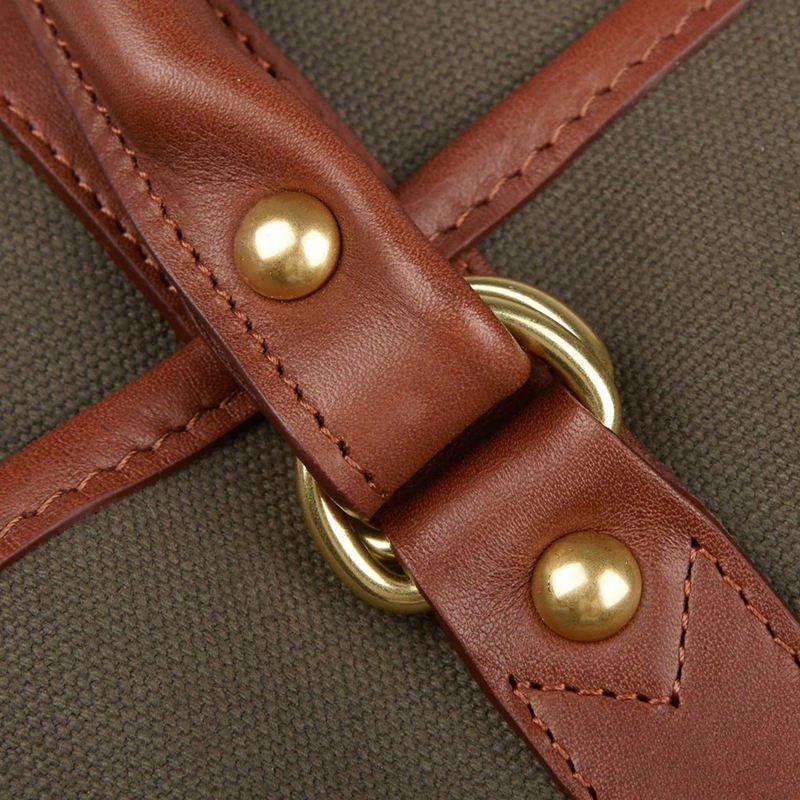
This is widely used in handle bases and strap anchors. It helps spread pulling force across a larger area rather than concentrating it in one narrow seam line.
Bar tack reinforcement
Short, dense reinforcement stitches are often used at the start and end points of handles, straps, and zipper openings. These are small details, but they play a major role in reducing seam failure.
What matters most is not choosing the “strongest-sounding” stitch, but choosing the right stitch for the right zone. For example, a handle anchor may need box-and-cross reinforcement plus hidden support, while a main body seam may perform better with a clean double-row lockstitch and proper seam allowance.
The comparison below helps show where each stitch performs best:
| Stitch Type | Strength Level | Best Application | Production Efficiency | Visual Effect |
|---|---|---|---|---|
| Lockstitch | High | Main panel seams, zipper seams | High | Clean |
| Double-row lockstitch | Very high | Stress zones, structural seams | High | Strong, premium |
| Saddle stitch | Very high | Luxury details, selected premium zones | Low to medium | Handcrafted |
| Box with cross | Very high | Handle bases, strap anchors | Medium | Technical, strong |
| Bar tack | High in localized zones | Reinforcement points | High | Minimal but functional |
Customers evaluating a sample should not only ask “what stitch is used?” They should also ask:
- where is each stitch used
- is the stitch density appropriate
- does the stitch line sit too close to the edge
- is the leather weakening around the perforation line
- are the stress points supported from inside
Those questions often reveal whether the factory understands leather bag construction in depth.
Which seams improve leather garment bag reinforced stitching?
Stitch type alone does not decide durability. Seam structure is just as important. A strong thread on a poor seam layout can still fail early. In leather garment bags, seam design affects not only strength, but also panel shape, edge quality, internal bulk, and how the bag ages after repeated use.
The seam types that usually improve reinforced stitching performance include:
Folded seams
These create cleaner edges and improve strength by reducing exposed raw edges. They are often used in visible outer sections where both appearance and durability matter.
Bound seams
These use an additional material strip to cover and stabilize seam edges. They are useful in interior construction and areas where neat finishing supports product quality.
Turned seams
These hide the seam allowance inside and help create a refined finish. They are common in premium leather goods, though they require good pattern planning and thickness control.
Box seams
These are effective in structural corners and areas where the bag must hold shape and weight.
Multi-layer anchor seams
Used in handle bases, D-ring anchors, and hanger-support areas, these combine leather, reinforcement backing, and stitch reinforcement into one load-bearing unit.
A good seam must do four things well:
- hold under load
- stay neat visually
- avoid unnecessary leather bulk
- remain stable after use and movement
This is especially important in garment bags because the product is large and flat. If the seam structure is poorly planned, the bag can twist, pucker, or sag even before the leather shows wear.
Here is a practical view of seam performance:
| Seam Type | Structural Strength | Appearance Level | Best Location |
|---|---|---|---|
| Folded seam | High | High | Outer panels, side joins |
| Bound seam | High | High | Interior finishing, edge stabilization |
| Turned seam | Medium to high | Very high | Premium visible sections |
| Box seam | Very high | Medium to high | Bottom corners, gussets |
| Multi-layer anchor seam | Very high | Medium | Handles, straps, support points |
For customers sourcing garment bags for premium brands, seam choice should be discussed early with the factory because it affects not only durability, but also cost, leather yield, thickness buildup, and final appearance.
Are decorative leather garment bag reinforced stitching useful?
Yes, decorative stitching can be useful, but only when it supports the product rather than distracting from it. In well-developed leather garment bags, decorative stitching is often used to enhance edge definition, communicate craftsmanship, and visually frame the product. But when decorative stitching is used without structural logic, it can create risk rather than value.
Useful decorative stitching usually works in one of three ways:
- it adds visual precision to edges and panels
- it supports seam stability in low to medium stress zones
- it strengthens premium perception without changing the bag’s silhouette too much
Common decorative stitching approaches include:
- contrast thread on dark leather
- tone-on-tone refined topstitching
- dual-row top stitching on panel borders
- perimeter stitch lines near handles or pockets
- subtle accent stitching aligned with brand style
The danger is over-design. Too many stitch lines can make a premium bag look busy. Worse, stitching placed too close together can weaken the leather because every needle hole becomes a perforation point. This is why good factories never treat decorative stitching as independent from construction. They assess:
- leather thickness
- surface finish
- thread thickness
- stitch spacing
- whether the line is visual only or partially structural
In better garment bag development, decorative stitching is often layered on top of good structure rather than used to fake quality. That means the bag still performs well even if the customer never notices the construction detail consciously.
A balanced approach looks like this:
| Decorative Use | Value When Done Well | Risk When Done Poorly |
|---|---|---|
| Contrast topstitch | Improves visual identity | Can look rough or too loud |
| Double decorative row | Adds premium structure impression | May crowd the panel visually |
| Edge accent stitching | Defines shape cleanly | Can expose alignment issues |
| Functional-looking stitch detail | Communicates craftsmanship | Can mislead if not backed by real reinforcement |
For brand clients, decorative stitching should support positioning. It should make the bag look more finished, more intentional, and more premium, while the real structural reinforcement remains strong underneath.
How Does Leather Garment Bag Reinforced Stitching Improve Performance?
Leather garment bag reinforced stitching improves performance by strengthening load-bearing areas, stabilizing structure, and reducing long-term wear. When the stitching system is designed correctly, the bag carries weight more safely, maintains its shape better, and performs consistently through repeated use, travel, and storage cycles.
How does leather garment bag reinforced stitching increase strength?
Strength in a leather garment bag does not come from leather thickness alone. It comes from how force is distributed across seams. Reinforced stitching increases strength by spreading load across multiple stitch lines, using stronger thread systems, and supporting key areas with additional structure.
In real usage, when a garment bag is lifted, the full weight is transferred through a few critical points:
- handle base
- shoulder strap anchors
- upper frame near hanger opening
If these points rely on a single stitch line, the stress concentrates along that line. Over time, this can lead to thread breakage or leather tearing along the needle holes. Reinforced stitching reduces this risk by creating a wider load-bearing area.
Effective strength improvement methods include:
- Double or triple stitch lines to distribute tension
- Box-and-cross reinforcement at handle bases
- Bar tack reinforcement at anchor points
- Use of bonded nylon or polyester thread for higher tensile strength
- Controlled stitch density to avoid weakening leather
Here is a simplified strength comparison:
| Construction Method | Load Distribution | Failure Risk | Typical Use |
|---|---|---|---|
| Single stitch line | Narrow | Higher | Low-stress areas |
| Double stitch line | Wider | Medium | Medium-stress seams |
| Box + cross reinforcement | Wide + structured | Low | Handles, anchors |
For customers developing travel or premium garment bags, reinforced stitching is essential because the product must handle not only static weight, but also dynamic movement during carrying.
How does leather garment bag reinforced stitching prevent damage?
Damage in leather garment bags usually starts in small ways:
- slight seam opening
- thread loosening
- edge stretching
- corner stress marks
If not controlled, these small issues develop into visible defects. Reinforced stitching helps prevent this progression by stabilizing the structure from the beginning.
Key damage prevention mechanisms include:
Reducing seam stress concentration
Reinforced seams spread tension instead of focusing it in one line
Supporting leather around needle holes
Proper stitch spacing prevents tearing along perforation lines
Improving edge stability
Folded or bound seams protect raw edges from wear
Reinforcing high-friction zones
Corners and base areas resist abrasion better
A common failure scenario is zipper area damage. Without reinforcement, repeated opening and closing creates pulling force at both ends of the zipper. Over time, this can cause:
- seam separation
- zipper misalignment
- fabric or leather tearing
With reinforced stitching, this area is typically built with:
- double stitch lines
- bar tack reinforcement at zipper ends
- additional backing material inside
This significantly improves durability.
Does leather garment bag reinforced stitching extend lifespan?
Yes, and in many cases, it is one of the main factors determining how long the bag remains usable and visually acceptable.
From production and usage data across multiple leather goods categories, reinforced stitching can:
- Extend functional lifespan by 2–4 times
- Reduce seam-related returns by 30–60%
- Maintain structural appearance longer
Here is a practical comparison:
| Performance Factor | Standard Stitching | Reinforced Stitching |
|---|---|---|
| Average lifespan | 1–2 years | 3–5+ years |
| Shape retention | Moderate | Strong |
| Seam durability | Medium | High |
| Return rate risk | Higher | Lower |
For brands, this has a direct impact on:
- customer satisfaction
- product reviews
- reorder rates
- long-term brand trust
A garment bag that keeps its structure and stitching integrity over time is more likely to be recommended, reused, and repurchased.
How Is Leather Garment Bag Reinforced Stitching Applied in Production?
Reinforced stitching is not added randomly during sewing. It is planned during product development and executed through controlled production processes. Each stage—from material preparation to final inspection—affects stitching quality and consistency.
How is leather prepared for reinforced stitching?
Leather preparation is the first critical step. Poor preparation can weaken even the best stitching technique.
Key preparation steps include:
Leather thickness control
Skiving (thinning) edges to reduce bulk and improve seam strength
Edge alignment
Ensuring panels match precisely before stitching
Moisture conditioning
Adjusting leather flexibility to prevent cracking during sewing
Marking stitch lines
Pre-defining stitch paths for accuracy and consistency
If leather is too thick at seam points:
- stitches may sit unevenly
- thread tension becomes inconsistent
- seams may look bulky
If leather is too thin:
- needle holes may weaken the material
- tearing risk increases
A well-prepared panel ensures the stitching process remains stable and repeatable.
What tools support leather garment bag reinforced stitching?
The quality of reinforced stitching depends heavily on the tools and machines used.
Key tools include:
Industrial sewing machines
Heavy-duty machines designed for thick materials
Specialized needles
Leather needles with cutting points to reduce material stress
Bonded thread (nylon or polyester)
High tensile strength and abrasion resistance
Reinforcement attachments
Devices for bar tacking, box stitching, and multi-layer sewing
Thread selection is especially important. Different thread types offer different performance:
| Thread Type | Strength | Abrasion Resistance | Best Use |
|---|---|---|---|
| Bonded nylon | High | High | Heavy-duty bags |
| Bonded polyester | High | Very high | Outdoor / long-term use |
| Cotton thread | Medium | Low | Decorative stitching |
For garment bags, bonded synthetic threads are generally preferred because they maintain strength under repeated movement and environmental changes.
How to control quality in reinforced stitching?
Quality control is where reinforced stitching proves its real value. Even a well-designed stitching plan can fail if production control is weak.
Effective quality control includes:
1. Pre-production sample approval
- Verify stitch type and placement
- Confirm thread color and thickness
- Check seam alignment and appearance
2. In-line production checks
- Monitor stitch density and tension
- Inspect seam consistency across units
- Check reinforcement placement accuracy
3. Final inspection
- Evaluate overall stitching appearance
- Test key stress points manually
- Confirm no loose threads or skipped stitches
Common issues without proper control:
- Uneven stitch spacing
- Thread breakage during production
- Misaligned seams
- Weak reinforcement at stress points
SzoneierLeather addresses these through:
- Standardized production processes
- Skilled sewing teams
- Multi-stage inspection systems
- Consistent sample-to-bulk alignment
What Should You Know About Leather Garment Bag Reinforced Stitching?
Leather garment bag reinforced stitching is not a one-size-fits-all solution. The right approach depends on the bag’s structure, usage scenario, target price level, and brand positioning. Understanding how to choose and apply the correct reinforcement strategy helps reduce risk, control cost, and improve product performance in real market conditions.
What designs need leather garment bag reinforced stitching?
Not every leather garment bag requires the same level of reinforcement. The need for reinforced stitching depends on how the bag will be used, how much weight it will carry, and how often it will be handled.
In practical sourcing, garment bags are usually divided into three design categories:
1. Light-use garment bags
- Used for short-distance travel or closet storage
- Lower weight load
- Basic reinforcement at handles and zipper ends
2. Medium-duty garment bags
- Used for business travel or regular transport
- Moderate load (multiple garments)
- Reinforcement required at:
- handle bases
- shoulder strap anchors
- zipper ends
- fold lines
3. Heavy-duty or premium garment bags
- Used for frequent travel, aviation, or high-end retail
- High load and repeated use
- Full reinforcement system required across:
- all stress points
- structural seams
- internal support layers
Here is a clear comparison:
| Bag Type | Load Level | Reinforcement Level | Typical Users |
|---|---|---|---|
| Light-use | Low | Basic | Retail, storage |
| Medium-duty | Medium | Moderate | Business travelers |
| Heavy-duty | High | Advanced | Premium brands, frequent travel |
For most SzoneierLeather clients, especially those working with brands or wholesale programs, medium to heavy-duty reinforcement is recommended to ensure stable product performance and reduce after-sales risk.
How to balance style in leather garment bag reinforced stitching?
Balancing strength and appearance is one of the most important aspects of leather garment bag development. A bag that is strong but looks bulky or overbuilt may not meet market expectations. On the other hand, a visually clean bag with weak stitching will fail in real use.
Achieving the right balance requires attention to both design and engineering:
Key considerations include:
Stitch visibility
Visible stitching should be clean, straight, and aligned with design lines
Thread thickness selection
Thicker thread increases strength but must match leather thickness to avoid rough appearance
Stitch spacing (SPI – stitches per inch)
Too dense → weakens leather
Too loose → reduces seam strength
Edge finishing
Folded or painted edges can hide reinforcement while maintaining a premium look
Layer control
Avoid excessive thickness buildup at seam intersections
Here is a practical balance guide:
| Factor | Too Much | Too Little | Balanced Result |
|---|---|---|---|
| Stitch density | Weakens leather | Low strength | Optimal durability |
| Thread thickness | Bulky look | Weak seam | Clean + strong |
| Reinforcement layers | Heavy structure | Poor support | Stable + refined |
| Decorative stitching | Over-designed | Plain look | Premium feel |
In high-end leather garment bags, the best stitching is often the one that is not immediately noticed, but clearly felt through product stability and finish quality.
Which standards guide reinforced stitching quality?
For professional buyers, reinforced stitching quality is often evaluated against a combination of internal factory standards, industry practices, and real-use testing.
While there is no single universal standard for all leather garment bags, several measurable factors are commonly used to assess stitching quality:
1. Stitch Consistency
- Even spacing across the entire seam
- No skipped stitches
- No loose threads
2. Thread Performance
- High tensile strength
- Resistance to abrasion
- Stable under temperature and humidity changes
3. Seam Strength Testing
- Pull testing at stress points
- Load simulation for handles and straps
4. Edge and Finish Quality
- Clean seam alignment
- No visible glue overflow
- No edge cracking
5. Sample-to-Bulk Consistency
- Bulk production matches approved sample
- No variation in stitch pattern or reinforcement placement
Here is a simplified evaluation framework:
| Quality Area | Key Checkpoint | Expected Result |
|---|---|---|
| Stitch line | Straight and even | No deviation |
| Thread quality | Strong and smooth | No fraying |
| Stress points | Reinforced correctly | No weakness |
| Seam finish | Clean edges | Premium look |
| Bulk consistency | Matches sample | Stable production |
For experienced sourcing teams, factory capability is often judged based on how well these standards are controlled across large orders, not just in initial samples.
SzoneierLeather applies structured quality control processes, including:
- Pre-production sample confirmation
- In-line inspection during sewing
- Final product inspection before shipment
This ensures that reinforced stitching remains consistent from development to mass production.
Start Your Custom Leather Garment Bag Project with SzoneierLeather
If you are developing a leather garment bag, reinforced stitching should not be treated as a minor detail—it is a core part of product performance, customer satisfaction, and brand positioning.
Whether you are:
- launching a new leather bag collection
- upgrading an existing product line
- developing a premium garment bag for retail
- sourcing reliable production for wholesale
SzoneierLeather can help you turn your idea into a durable, well-constructed, market-ready product.
Next step is simple:
Send your design, specifications, or reference samples, and the SzoneierLeather team will help you develop a customized leather garment bag with the right reinforced stitching solution for your market.