 Skip to content
Leather Dopp Kit Made in USA: What Buyers Should Know Before Choosing a Manufacturer
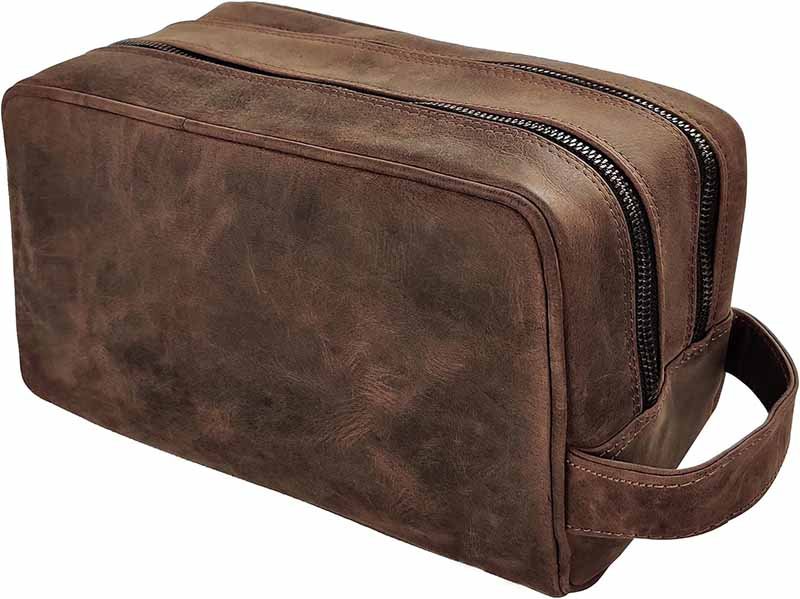
A leather Dopp kit—also known as a leather toiletry bag or travel grooming kit—has become one of the most iconic men’s travel essentials. As consumer interest shifts toward craftsmanship, heritage, and “buy it for life” products, searches for “leather dopp kit made in USA” have surged across Google. Buyers hope that American-made equals better quality, longer lifespan, and a more premium gifting experience. But is a USA-made Dopp kit truly superior, and does it justify the higher price? The answer is more nuanced than it appears. A leather Dopp kit made in the USA typically offers premium craftsmanship, local labor, and heritage-style construction, but it often costs 3–5× more than similar-quality products manufactured overseas. The best choice depends on your budget, leather preference, craftsmanship expectations, and whether you value local production or global OEM/ODM capabilities. High-end overseas manufacturers can match USA quality at significantly lower cost.
Many buyers assume “Made in USA” automatically means better materials or perfect craftsmanship—but real performance depends on leather grade, construction engineering, and the factory’s expertise, not just the country of origin. In fact, many USA luxury brands quietly use overseas manufacturing partners for consistency, scalability, and cost efficiency. I once visited a boutique brand’s workshop in California—only to learn their “handcrafted Dopp kits” were stitched in batches overseas before final finishing. That moment revealed the truth: smart brands choose manufacturers based on capability, not geography.
Let’s explore what buyers really need to understand before choosing a USA-made leather Dopp kit—or an alternative premium manufacturing source.
What Is a Leather Dopp Kit and Why Do Buyers Look for “Made in USA”?
A leather Dopp kit is a compact leather toiletry bag used to store grooming essentials for travel. Buyers search for “Made in USA” Dopp kits because they associate them with high craftsmanship, full-grain leather, small-batch manufacturing, durability, and heritage-style design. While USA-made bags carry strong emotional appeal, real quality depends on leather grade, construction methods, and the manufacturer’s capabilities—not the country of origin.
A leather Dopp kit—sometimes called a toiletry case, grooming kit, shaving bag, or wash bag—is one of the most enduring products in the men’s leather goods category. Its origins date back more than a century when Charles Doppelt created the first portable grooming case for American soldiers. Since then, the leather Dopp kit has evolved into a lifestyle accessory that symbolizes practicality, masculinity, craftsmanship, and luxury. Even today, the phrase “leather Dopp kit” triggers strong search interest because consumers view it as a premium, gift-worthy, long-lasting item.
Modern buyers, especially in the U.S. and Europe, increasingly search for “leather dopp kit made in usa” because the keyword signals more than just a location—it represents an entire value system: craftsmanship, authenticity, heritage, and ethical production. Many consumers believe USA-made products are handcrafted, more durable, and produced in small batches with better QC. The emotional appeal of domestic manufacturing is strong, especially around Father’s Day, Christmas gifting, weddings, and premium corporate gifting programs.
However, the perception often does not match the manufacturing reality. Many USA-branded Dopp kits use imported leather, imported hardware, or are assembled domestically from globally sourced components. Meanwhile, overseas factories—especially in China, Vietnam, and India—produce many of the top-selling “American-style” Dopp kits sold by U.S. brands, but at a much larger scale and with highly controlled quality systems.
This leads to an important truth: the quality of a leather Dopp kit depends primarily on the leather selection, pattern engineering, stitching accuracy, edge finishing, and QC—not the country listed on the label.
Leather grade is the biggest factor. Full-grain cowhide, vegetable-tanned leather, and oil-tanned leather create the rich character buyers expect from a premium kit. These materials develop patina, resist wear, and age gracefully. Top-grain and corrected-grain leather still perform well but lack the artisanal feel.
Another factor is construction engineering. USA workshops often highlight hand-stitching, but premium overseas factories frequently outperform domestic shops in stitching consistency, edge-paint precision, and hardware installation due to advanced equipment and strict QC processes. Many major U.S. brands take advantage of this for large-volume orders.
Ultimately, the preference for “Made in USA” stems from storytelling, heritage branding, and consumer trust—not necessarily material superiority. For B2B buyers, private labels, and emerging brands, the focus should shift from geography to manufacturing capability, customization freedom, and supply chain reliability, which is why many choose OEM/ODM partners such as Szoneier Leather.
What Defines a Premium Leather Dopp Kit?
A premium leather Dopp kit is defined by its leather grade (full-grain, top-grain, or veg-tan), pattern symmetry, reinforced stress points, high-quality lining, and precise hardware installation. The finish of the edges—painted, burnished, or folded—greatly influences perceived quality. True premium kits maintain structure without collapsing, use YKK or custom metal zippers, and offer long-lasting patina rather than peeling or cracking.
Why Do Some Buyers Prefer USA-Made Leather Goods?
Many buyers associate USA-made leather goods with heritage, ethical production, small-batch craftsmanship, and the idea of “supporting local makers.” This is especially strong among gift buyers and lifestyle-focused consumers. However, this preference is often emotional rather than technical. The actual durability and aesthetic quality depend on the factory’s skill, not simply the country of manufacture.
What Materials Are Commonly Used in High-End Dopp Kits?
High-end Dopp kits typically use full-grain cowhide, vegetable-tanned leather, crazy horse leather, waxed pull-up leather, or Italian-tanned hides. Interiors may include waterproof nylon, microfiber suede, or premium canvas. Hardware includes brass, gunmetal, or nickel finishes. These materials affect aging, structure, smell, durability, and retail price positioning.
Which Types of Leather Dopp Kits Are Most Popular Today?
The most popular leather Dopp kits today include classic box-shaped toiletry cases, vintage full-grain leather designs, minimalist travel-friendly kits, and premium gift-set versions. Each category appeals to different buyer groups—business travelers, heritage-style consumers, modern minimalists, and luxury gift buyers—making product selection highly dependent on target market and price positioning.
The leather Dopp kit market has expanded significantly as consumer preferences shift toward personalization, craftsmanship, and travel convenience. Modern buyers no longer see a Dopp kit as just a toiletry container—it has become a lifestyle accessory that reflects taste, identity, and practicality. As a result, the market now includes multiple distinct categories, each serving unique demographics, price points, and branding strategies.
Classic structured Dopp kits remain the most recognized and timeless design. Their rectangular silhouette, wide-mouth opening, and internal organization make them ideal for business travelers and premium gifting. This design emphasizes usability and structure, making it a staple for heritage-style and corporate gift collections.
Vintage full-grain leather Dopp kits cater to buyers who value patina, old-world craftsmanship, and a rugged aesthetic. These products use heavier, oil-tanned, or vegetable-tanned hides that age beautifully, developing a rich character over time. They are often featured in high-end men’s lifestyle retail, holiday gifting, and wedding collections.
Minimalist travel-friendly kits appeal to younger, urban consumers and sophisticated travelers who prioritize sleek lines, lightweight construction, and modern colors. These kits are particularly successful with digital nomads, tech-forward audiences, and frequent flyers who need efficient packing without sacrificing design.
Luxury gift-set Dopp kits dominate the premium corporate and boutique gifting markets. These products include matching accessories—razor sleeves, leather comb covers, monogrammed tags, or coordinated pouches—creating a more complete gifting experience. Their packaging plays a major role in perceived value, making them ideal for high-end brand launches and event merchandise.
Understanding these categories helps brands determine which styles best match their target customers. Retailers lean heavily on classic and vintage styles because they perform consistently in both online and offline stores. Meanwhile, direct-to-consumer brands often prefer minimalist or luxury gift sets to differentiate themselves and support higher price points.
By analyzing customer personas, traveling behavior, and retail positioning, brands can strategically select the Dopp kit type that aligns with their desired aesthetic, functionality, and margin goals. OEM/ODM manufacturers such as Szoneier Leather can customize each category’s silhouette, leather type, internal structure, and packaging to create a unique, market-ready product.
Classic Toiletry Cases
These are the traditional rectangular Dopp kits with a structured body and a wide opening for visibility. Popular among business travelers, they typically feature a rigid frame, organizational pockets, and a spacious interior. They are most often made with full-grain or top-grain leather and lined with waterproof nylon or microfiber. This category remains the strongest in retail due to its universal appeal.
Vintage Full-Grain Leather Dopp Kits
These kits appeal to buyers who appreciate patina, durability, and a rugged aesthetic. They often use vegetable-tanned or oil-tanned full-grain leather that develops character over time. Hardware may include brass zippers and rivets, enhancing a heritage-inspired identity. They serve premium consumers and gifting markets and are effective for brands that emphasize storytelling and craftsmanship.
Modern Travel-Friendly Minimalist Kits
Minimalist Dopp kits favor clean silhouettes, lightweight leather, and efficient internal layouts. They are frequently produced with pebbled leather or top-grain hides and incorporate slim profiles suitable for carry-on luggage. These styles attract younger, fashion-forward buyers who want function without bulk. Colors extend beyond brown and black to include navy, charcoal, tan, and contemporary tones.
Luxury Gift-Set Dopp Kits
Gift-set Dopp kits include coordinated accessories such as leather grooming sleeves, toothbrush covers, travel bottles, luggage tags, or monogramming options. Their value lies in presentation as much as the product itself. They are popular among premium retailers, wedding groups, and corporate gifting programs. Custom packaging—magnetic boxes, rigid gift boxes, foil-stamped inserts—dramatically increases perceived value.
How Do USA-Made Leather Dopp Kits Compare to Overseas Manufacturing?
USA-made leather Dopp kits emphasize small-batch craftsmanship and domestic production but have higher labor and overhead costs. Overseas manufacturing—especially from specialized leather factories—offers equal or superior consistency, advanced production equipment, scalable capacity, and significantly lower pricing. Quality depends on leather selection, engineering, and QC systems, not manufacturing geography.
Comparing USA-made leather Dopp kits with overseas-manufactured versions requires looking beyond national labels and focusing on the actual factors that determine quality: leather sourcing, craftsmanship, production engineering, QC systems, and cost efficiency. The belief that “Made in USA must be better” is common among consumers, but in professional manufacturing, capability—not geography—defines excellence.
USA-made Dopp kits are often produced in boutique workshops or small factories. They emphasize handcraftsmanship and heritage-driven storytelling. Buyers are drawn to the artisanal look, domestic production identity, and the idea of supporting local craftsmanship. However, U.S.-based workshops face limitations: high labor cost, limited production volume, higher overhead, and less access to large-scale leather supply chains. Most rely on imported hides from Italy, Brazil, or Asia, meaning material sourcing is not inherently local. Limited automation also means consistency varies by artisan skill, and scaling up production can be difficult.
Overseas manufacturing—especially in China, Vietnam, and India—has evolved into a highly technical, capability-driven industry. Leading factories operate with laser cutting machines, computerized pattern systems, automated skiving units, multi-layer hydraulic presses, and precision edge-painting lines. They employ large QC teams, structured workflows, and repeatability standards that boutique U.S. workshops often cannot match. Overseas manufacturers also have access to integrated leather ecosystems: tanneries, hardware suppliers, packaging producers, and finishing specialists all within the same region, improving efficiency and consistency.
In terms of cost, U.S. labor rates can be 4–8 times higher. A Dopp kit requiring 1.5–2 hours of skilled labor can cost $40–$80 in labor alone in the U.S., whereas the same skilled work overseas may cost $6–$18. Combined with overhead, USA-made Dopp kits often retail for $120–$300+, while overseas-made versions of similar or better craftsmanship can retail for $40–$120 or cost $20–$60 for OEM buyers.
Quality does not inherently belong to one country. Many luxury U.S. and European brands manufacture leather goods overseas while maintaining strict QC guidelines. Similarly, some USA artisans produce beautiful one-off pieces that overseas factories cannot replicate at scale. The difference is that overseas production offers consistency, scalability, and engineering strength, whereas domestic production offers storytelling and small-batch craftsmanship.
Ultimately, the right choice depends on the buyer:
- Retail consumers may pay more for heritage or “Made in USA” branding.
- Brands and B2B buyers typically prioritize scalability, QC consistency, customization, and cost efficiency—areas where overseas OEM/ODM partners excel.
What Are the Main Differences in Price?
USA-made Dopp kits generally retail between $120–$300+, driven by high labor cost, small production scale, and domestic markup. Overseas-made Dopp kits retail for $40–$120, and OEM production typically costs $20–$60 depending on leather type, pattern complexity, and hardware. For brands, this cost difference directly impacts margin strategy, wholesale pricing, and scalability.
Is Quality Always Higher for USA-Made Leather Goods?
Not necessarily. USA workshops deliver strong handcrafting skills, but top-tier overseas factories offer advanced machinery, precise cutting, professional edge finishing, and strict multi-stage QC. For large orders, overseas factories often produce better consistency and fewer defects. Ultimately, leather grade, construction technique, and QC processes define quality—not geography.
Are Overseas Manufacturers Equipped for High-End Leather?
Yes. Premium overseas manufacturers source full-grain and vegetable-tanned leathers globally, operate sophisticated finishing lines, and meet luxury brand requirements. Many top-tier U.S. and European brands already rely on overseas factories for consistency, cost control, and faster development. Leather R&D capability, sample engineering, and advanced tooling often give overseas factories a competitive advantage for high-end production.
What Do Buyers Pay for USA-Made Leather Dopp Kits?
USA-made leather Dopp kits typically cost $120–$300+ due to high labor costs, small-batch production, premium materials, and domestic overhead. Prices reflect artisan craftsmanship and branding rather than drastic differences in core materials. Comparable overseas-made Dopp kits often retail for $40–$120 or cost $20–$60 through OEM/ODM manufacturing, offering similar or higher consistency at a lower price point.
The price of a USA-made leather Dopp kit is shaped by a combination of labor cost, workshop scale, craftsmanship methods, leather sourcing, and brand positioning. Unlike mass-produced accessories, the typical USA-made Dopp kit comes from small studios or artisan-driven workshops that operate with higher overhead and limited production volume. A single craftsman may spend 1–3 hours cutting, stitching, edge-finishing, and assembling a kit, resulting in significantly higher unit labor costs compared with overseas factories that leverage larger, more efficient production lines.
In the U.S., specialized leatherworkers often earn between $20–$45 per hour, depending on region and skill level. Higher wages directly inflate the product cost. For example, stitching alone may cost $15–$30 in labor on a USA-made Dopp kit—equal to or higher than the entire OEM manufacturing cost overseas (materials + labor). Workshops also face higher facility rent, compliance expenses, insurance, and smaller purchasing power for leather and hardware. These factors collectively push retail prices into the $120–$300+ range.
Material costs, however, are not drastically different. Full-grain cowhide or vegetable-tanned leather sourced in the USA may come from Italy, Mexico, South America, or Asian tanneries. Tanneries worldwide produce premium-grade hides, and many USA brands use imported leather for its availability, consistency, and cost competitiveness. The raw leather for a premium Dopp kit may cost $8–$20 per square foot regardless of country. Hardware—zippers, brass components, and linings—are also globally standardized.
Brand positioning plays a huge role. USA-made leather goods tap into emotional appeal—heritage aesthetic, “buy local” values, and the narrative of American craftsmanship. For this reason, brands often price USA-made Dopp kits in the premium gifting tier. Consumers purchasing these products often shop not only for functionality but for perceived authenticity, craftsmanship story, and gift value.
In contrast, professional brands sourcing from OEM/ODM manufacturers can skip most of these markup layers. A similar full-grain leather Dopp kit manufactured overseas may cost $20–$60 depending on design complexity and order quantity. These savings do not necessarily come with a drop in quality—top manufacturing partners offer precision cutting, automated edge-paint lines, engineering-driven pattern refinement, and strict QC workflows. This is why many well-known USA brands privately manufacture abroad while maintaining premium branding.
Below is a comparative table illustrating typical pricing structure:
| Product Type | USA-Made Retail Price | Overseas Retail Price | OEM/ODM Factory Cost |
|---|---|---|---|
| Full-Grain Leather Dopp Kit | $150–$300 | $50–$120 | $20–$40 |
| Vegetable-Tanned Premium Dopp Kit | $200–$350 | $80–$150 | $25–$50 |
| Minimalist Top-Grain Leather Kit | $120–$180 | $40–$90 | $18–$35 |
| Luxury Gift-Set Kit | $180–$350 | $60–$140 | $30–$60 |
Understanding the price difference helps buyers and brands set realistic expectations: USA-made goods deliver artisan appeal but at a higher cost, while overseas manufacturing provides efficiency, consistency, and strong value for scaling product lines.
What Influences the Price Range?
Key factors include leather type (full-grain vs top-grain), tanning method, labor hours, stitching density, lining quality, hardware grade (brass, YKK), edge finishing technique, workshop overhead, and the brand’s storytelling strategy. USA-made kits emphasize craftsmanship and small-batch identity, which elevates cost.
Why Are USA-Made Goods More Expensive?
High hourly wages, limited production capacity, higher facility costs, lower economies of scale, and domestic positioning as “premium-crafted goods” all contribute to USA-made Dopp kits costing 2–4× more than their overseas equivalents. Labor—not material—is the main cost driver.
Do Premium Materials Significantly Increase Cost?
Yes and no. Using full-grain or vegetable-tanned leather increases raw material cost by $6–$15 per unit, and premium hardware may add $2–$5. But the largest price jump comes from craftsmanship: hand-finishing, stitching tension control, repeated edge painting, and manual construction steps. Material cost typically accounts for 20–40% of final USA-made pricing; labor accounts for 40–60%.
How Should Brands Choose the Right Manufacturer for Leather Dopp Kits?
Brands should choose a leather Dopp kit manufacturer based on technical expertise, leather sourcing capability, pattern engineering, craftsmanship consistency, QC systems, customization options, production scalability, and communication efficiency. The best partner is not the cheapest one, but the manufacturer that can ensure consistent quality, reliable lead times, and long-term support for product development and brand growth.
Selecting the right manufacturer for leather Dopp kits is one of the most strategic decisions a brand can make. A well-chosen partner can support your growth for years, while a poor choice can lead to product defects, inconsistent batches, shipping delays, or costly redesigns. The challenge is that leather manufacturing involves far more technical variables than fabric bags—hide selection, cutting precision, edge finishing, stitching tension, lining application, adhesive quality, and hardware installation all influence final product quality.
The first factor brands must evaluate is material expertise. Not all factories can handle full-grain leather, vegetable-tanned hides, crazy horse leather, distressed finishes, or rigid structured constructions. Understanding leather characteristics (fiber density, pliability, oil content, stretch behavior) is essential for creating a premium Dopp kit that maintains its shape and ages beautifully. A strong factory will guide you on which leather grades match your target retail price and customer expectations.
Next comes pattern engineering and structural design. A Dopp kit may appear simple, but achieving perfect symmetry, a clean profile, and smooth curves requires professional CAD patterns, repeated sampling, and an understanding of how different leathers behave when turned, stitched, or bonded. Factories without strong pattern engineers often produce bags that warp, collapse, or show uneven surfaces. Engineering-driven factories like Szoneier Leather ensure the product looks premium across every batch.
Craftsmanship consistency is another key differentiator. USA workshops excel at handcrafting, but often lack the scalability and reproducibility of large-volume OEM factories. Overseas manufacturers equipped with automated skiving machines, hydraulic cutting tables, computer-guided edge-painting lines, and standardized QC checkpoints can maintain consistent quality across thousands of units—something small workshops struggle to match.
Brands must also consider supply chain strength. A reliable manufacturer controls hide sourcing, lining fabrics, zippers, metal hardware, edge paint, adhesives, packaging, and quality inspection. This reduces delays and ensures material consistency. Factories relying on third-party suppliers without integration often struggle with variability or longer lead times.
Communication and development workflow are equally crucial. Your factory should offer clear quotation breakdowns, fast sampling, transparent lead time updates, production photos, QC reporting, and willingness to modify patterns until the product meets your expectations. Strong OEM/ODM partners operate like consultants, not just suppliers—they help optimize cost, improve structure, reduce waste, and enhance long-term product performance.
Finally, evaluate scalability. A manufacturer should be able to support both small-batch test runs and large retail production as your business grows. Scalability ensures you don’t need to constantly switch factories due to capacity issues, which can disrupt product consistency.
The best manufacturer is therefore not simply the one with the lowest price—it is the one with the technical depth, material mastery, engineering precision, and long-term partnership mindset to support your brand’s growth.
What Questions Should Brands Ask Before Outsourcing?
Brands should ask:
- What leather grades do you specialize in?
- Can you provide full CAD patterns and hand-feel recommendations?
- Do you offer multiple edge-finishing techniques (burnishing, folding, painting)?
- What QC checkpoints exist between cutting, stitching, and finishing?
- What is your defect rate across large batches?
- Can you provide sustainability or material traceability documentation? These questions reveal whether the manufacturer has true professional capability.
Which Skills and Capabilities Matter Most in Production?
Key skills include hide inspection, precision cutting, skiving control, stitching uniformity, edge-painting accuracy, lining installation, and hardware reinforcement. Manufacturers who can maintain stitching tension, symmetrical structure, and clean edges produce Dopp kits that look luxurious and last longer. Engineering-driven factories outperform purely handcraft-based workshops in consistency.
How Do OEM/ODM Services Benefit Growing Brands?
OEM/ODM services allow brands to:
- Create unique designs with proprietary molds or patterns
- Scale production without sacrificing quality
- Reduce cost through material optimization
- Maintain consistent product batches
- Develop signature collections with monograms, custom packaging, or exclusive leathers For new and growing brands, partnering with an experienced OEM like Szoneier Leather ensures shorter development cycles, better margins, and faster market entry.
Are There Better Alternatives to “Made in USA” for Scaling Leather Goods?
Yes. While “Made in USA” offers heritage appeal and small-batch craftsmanship, brands focused on scaling production often achieve better quality consistency, lower costs, faster lead times, and broader customization by partnering with overseas OEM/ODM manufacturers. Global factories provide advanced machinery, integrated supply chains, strong engineering capabilities, and scalable output—making them a more practical choice for long-term brand growth.
When a brand evolves from early-stage sales to a growing business, the challenges shift from storytelling and artisanal appeal to operational scalability, cost control, margin optimization, and production consistency. This is where “Made in USA” manufacturing often begins to show limitations—and where overseas OEM/ODM manufacturing becomes a significantly stronger alternative.
1. Production Scale and Capacity Limitations
Most U.S. leather workshops operate with 2–20 craftsmen. These studios excel at handcrafting unique or limited-quantity goods, but they typically cannot meet recurring production of 1,000–10,000 units with tight deadlines. For brands selling through Amazon, retailers, wholesale channels, corporate gifting, or seasonal campaigns, this becomes a major bottleneck.
In contrast, leading overseas factories—such as those in China, Vietnam, and India—operate full-scale production floors with:
- Laser cutting tables
- Automated skiving and edge-finishing machines
- Multi-line assembly workflows
- Dedicated QC teams
- Scalable labor resources
- Full documentation and export experience
This produces the consistency and volume that retail-ready brands require.
2. Cost-Efficiency and Margin Strategy
The largest difference between domestic and overseas manufacturing is cost structure. With U.S. labor rates at $20–$45/hour, a leather Dopp kit costing $50–$80 in domestic labor alone can cost $8–$18 in total manufacturing overseas—including materials, labor, and QC.
For brands, this translates into:
- Lower COGS
- Higher gross margin
- More competitive retail pricing
- Larger marketing budgets
- Greater profitability at scale
In many cases, brands reallocate cost savings into better materials—allowing the final product to outperform domestic equivalents in both quality and durability.
3. Engineering & Technical Precision
Although USA workshops excel at artisanal handcraft, overseas factories excel at precision engineering. This includes:
- CAD-based pattern development
- Thickness calibration and leather skiving
- Automated stitching machines for tension uniformity
- CNC edge-paint application
- Symmetrical shaping through mold-assisted construction
- Glue-line accuracy and high-strength bonding
- Multi-stage QC (pre-cutting, post-stitching, pre-packaging)
These techniques ensure consistency across thousands of units—required for retail-level brand reliability.
4. Integrated Supply Chain Ecosystem
U.S. workshops frequently rely on imported leather, imported hardware, imported adhesives, and imported packaging. Each link in the chain introduces variability and longer lead times.
Overseas ecosystems provide:
- Direct connections to tanneries
- Hardware sourcing within the same region
- Custom zippers and metal molds
- Edge-paint and glue manufacturers
- In-house packaging production
- Rapid prototyping capability
- One-stop production and fulfillment
This integrated system is not only faster, but more reliable and cost-effective.
5. Customization Opportunities
Overseas OEM/ODM factories can easily produce:
- Custom silhouettes
- Exclusive leather colors
- Private hardware molds
- Monogramming & embossing
- Gift packaging
- Branded dust bags
- Coordinated travel sets
- Premium stitching and edge-finishing options
This flexibility allows brands to build signature collections without the high costs associated with domestic custom work.
6. Sustainability and Compliance Evolution
Many brands assume overseas factories have lower environmental standards. However, this has changed dramatically in recent years.
Top overseas leather manufacturers now comply with:
- LWG (Leather Working Group) certification
- ISO9001 quality management
- ISO14001 environmental management
- REACH-compliant materials
- Water-borne adhesives
- Responsible waste treatment systems
In many cases, these standards exceed what small U.S. workshops can achieve due to resource limitations.
7. Risk Management and Reliability
USA workshops often struggle with:
- Workforce shortages
- Seasonal delays
- Small-scale inconsistency
- Limited QC resources
- Inflexible production schedules
Overseas manufacturers mitigate these risks with:
- Multi-line production redundancy
- Large trained teams
- Dedicated QC departments
- Seamless reordering capability
- Backup material suppliers
- Clear sampling & approval workflows
For brands aiming to scale, these advantages reduce operational risk.
Is Overseas Custom Manufacturing More Cost-Efficient?
Yes. Cost savings of 50–70% are common, even when using full-grain leather and premium hardware. This allows brands to price more competitively or maintain luxury positioning with higher profit margins. Lower production cost does not mean lower quality—what matters is the manufacturer’s R&D capability and production standards.
How Can Brands Maintain Premium Quality With Lower Production Cost?
By working with a technically strong OEM partner. Premium overseas factories use strict hide inspection, multi-stage QC, reinforced stitching, calibrated skiving, and precise edge finishing. Brands often reinvest cost savings into better materials, upgraded packaging, or premium zippers—resulting in higher perceived value and stronger customer retention.
Why Do Many USA Brands Work With Global Leather Factories?
Because global factories support growth. They offer faster sampling, reliable timelines, consistent quality, integrated supply chains, and affordable production costs. Even many U.S. luxury brands quietly produce overseas to achieve scalable margins, meet retailer demands, and maintain competitive pricing in the global market.
How Szoneier Leather Supports Premium Dopp Kit Manufacturing
Szoneier Leather supports premium Dopp kit manufacturing through full OEM/ODM services, advanced leather sourcing, engineering-based pattern development, strict multi-stage QC, and scalable production capacity. With 18+ years of experience, Szoneier provides consistent craftsmanship, flexible MOQs, rapid sampling, custom branding, and complete packaging solutions—helping brands build high-quality leather Dopp kits at competitive prices.
Choosing the right manufacturing partner is critical for brands that want to produce high-end leather Dopp kits. Szoneier Leather stands out because it offers end-to-end manufacturing, combining material expertise, engineering design, scalability, and strict quality assurance in a single integrated supply chain. Unlike small domestic workshops or general-purpose manufacturers, Szoneier specializes in premium leather goods with a strong emphasis on structure, durability, and luxury finishing—exactly what Dopp kits require.
1. Complete Material Sourcing & Leather R&D
Szoneier controls the entire upstream supply chain, ensuring that every hide used in production meets brand-level requirements. The company works with tanneries that produce:
- Full-grain cowhide
- Veg-tanned leather
- Crazy-horse and pull-up leather
- Oil-tanned leather
- Italian-inspired pebbled leather
- Soft Nappa and semi-aniline leather
The R&D team also evaluates thickness, fiber density, stretch behavior, finish type, and colorfastness—critical for Dopp kits that must maintain shape while resisting moisture, cosmetic spills, and friction.
Szoneier provides leather recommendations based on:
- Target retail price
- Branding or aesthetic style
- Market positioning (premium, heritage, minimalist, gifting)
- Durability expectations
- Patina or aging preference
This strategic guidance alone saves brands months of trial and error.
2. Engineering-Based Pattern Development
A leather Dopp kit looks simple, but its technical requirements are not. Szoneier’s engineering team uses CAD pattern systems, 3D sampling, and prototyping cycles to create perfect symmetry, clean box shapes, reinforced corners, and smooth curves.
Pattern engineering includes:
- Controlling leather stretch to avoid warping
- Calculating seam allowances based on hide thickness
- Reinforcing high-stress areas
- Ensuring zipper alignment remains smooth
- Avoiding collapse when the bag is empty
- Creating internal structures (pockets, loops, dividers)
This level of engineering is nearly impossible for small workshops and crucial for premium retail-grade quality.
3. Advanced Craftsmanship & Precision Equipment
Szoneier blends artisanal handcrafting with automated precision tools, ensuring both luxury aesthetics and scalable consistency.
Equipment includes:
- Hydraulic cutting machines
- Automated edge-painting systems
- Computer-guided skiving machines
- High-precision flatbed stitching units
- Edge-folding hot-melt systems
- UV curing stations for edge finish durability
Craftsmanship techniques include:
- Tight, even stitching (3–4 mm spacing)
- Smooth, bubble-free edge paint
- Structured boxing for shape retention
- Hand-burnished or folded edges
- Perfect zipper insertion with no wave distortion
Every detail—from cut to stitch to finishing—is optimized for longevity and aesthetic excellence.
4. Strict Multi-Stage Quality Control
Szoneier applies a multi-phase QC process aligned with ISO-style standards:
- Raw Material Inspection — leather thickness, grain uniformity, color consistency
- Cutting QC — shape accuracy, edge cleanliness
- Stitching QC — tension control, straight lines, reinforcement
- Edge Finishing QC — paint consistency, crack resistance
- Final Assembly QC — symmetry, zipper smoothness, structure stability
- Packaging QC — dust bags, tags, barcodes, protective wrapping
The result is a defect rate typically under 1–2%, compared with the 5–10% often seen in small-batch workshops.
5. Custom Branding & Full OEM/ODM Flexibility
Szoneier supports all major branding and packaging methods:
- Embossed or debossed logos
- Foil-stamped monograms in gold, silver, bronze, or black
- Custom zipper pullers and metal hardware molds
- Personalized stitching colors
- Satin lining with brand patterns
- Magnetic gift boxes, rigid boxes, or eco-friendly packaging
Clients can also request development of entire Travel Series Collections, including:
- Leather dopp kit
- Passport holders
- Leather belt bag
- Card holders
- Organizers and pouches
This enables cohesive product lines and stronger branding impact.
6. Scalable Production With Low MOQ Options
Szoneier offers:
- Small MOQ (100–200 pcs) for new brands
- Medium batch runs for Amazon sellers & boutique retailers
- Large-scale 5,000–30,000 pcs manufacturing for established brands
This flexibility allows brands to validate the market, scale gradually, and access high-volume production without changing suppliers.
Sampling is fast: 5–10 days for prototyping, ensuring brands can launch new SKUs rapidly.
7. Competitive Pricing & Transparent Cost Structure
Because Szoneier controls material sourcing and uses efficient production systems, pricing remains highly competitive—even with premium craftsmanship. Brands typically achieve:
- 50–70% lower manufacturing cost vs. USA production
- Higher margins when selling on retail or e-commerce platforms
- Better consistency across batches
- Optimized cost-to-value ratio using engineered materials
This approach allows brands to upgrade materials while still improving margin structure.
What Customization Options Can Szoneier Provide?
Szoneier supports full customization including size, leather type, color, internal layout, waterproof lining, handle type, stitching contrast, zipper length, hardware finish, logo placement, and packaging. The factory also offers special effects like antique finishes, distressed leather, tonal edge paint, and gift-set configurations.
What Makes Szoneier a Strong R&D and OEM Partner?
The company integrates leather research, pattern development, sample engineering, industrial equipment, and QC into one production ecosystem. This ensures faster development cycles, higher precision, better scalability, and reduced risk. Szoneier acts like a product development consultant—not just a factory—guiding brands through cost targets, material selection, and product engineering.
How Do We Ensure Material Selection, Craftsmanship, and Quality?
Szoneier implements strict inspection for every batch of leather, performs automated cutting for consistency, reinforces stress points with internal backing, standardizes stitching density, and applies multi-layer edge finishing. Each Dopp kit is inspected individually before packaging, ensuring durability, strong structure, and a premium brand-ready finish.
Conclusion
Choosing a leather Dopp kit—especially one labeled “Made in USA”—requires understanding materials, craftsmanship, price structures, and manufacturing capabilities. While USA-made kits carry emotional and heritage appeal, global OEM manufacturers like Szoneier Leather offer the best combination of quality, customization, scalability, and pricing.
Whether you’re building a boutique collection or scaling into major retail, Szoneier provides world-class craftsmanship at competitive cost—helping your brand deliver premium leather goods without compromise.
Contact Szoneier Leather for Custom Development
Ready to create your own premium leather Dopp kit collection?
📩 Email: info@szoneierleather.com 🌐 Website: www.szoneierleather.com 📞 Phone: (+86) 13823134897
Tell us your concept, target audience, materials, and budget. Our engineering and design teams will develop samples and pricing tailored to your brand.
What Can I Do For You?
Here, developing your OEM/ODM private label leather goods collection is no longer a challenge,it’s an excellent opportunity to bring your creative vision to life.
Make A Sample First?
If you have your own tech packs, logo design artwork, or just an idea,please provide details about your project requirements, including preferred fabric, color, and customization options,we’re excited to assist you in bringing your leather goods designs to life through our sample production process.