 Skip to content
Leather Bag Prices: Cost Drivers & Smart Buying Guide
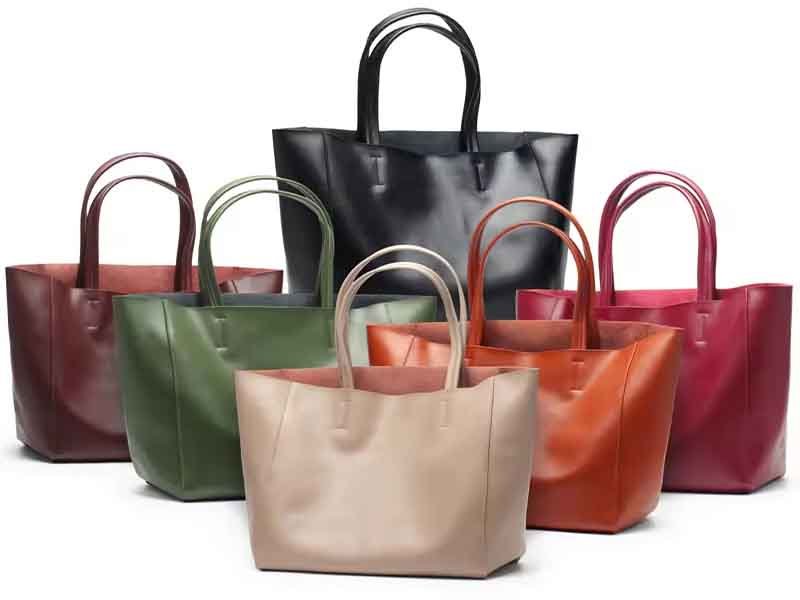
Two totes can look almost identical on Instagram—same silhouette, same color, same hardware shine—yet one retails for $139 and the other for $399. What gives? Leather pricing is a stack of decisions: hide grade, tanning chemistry, cut yield, stitch density, edge system, liner, hardware, origin, MOQs, testing—and yes, branding. If you’re a buyer or a brand, knowing which knobs actually move cost (and which are just theater) is how you protect margin without cheapening the product.
Leather bag prices are driven by leather grade (full-grain/top-grain/corrected/split), tanning method (veg-tan vs chrome), cut yield and panel size, construction minutes (stitch count, edges, structure), hardware quality, origin and MOQs, and testing/compliance. Expect wholesale (FOB) ranges of $28–$95+ for common styles and retail multipliers of 2.3–3.5×. The smartest savings come from yield, hardware tiers, and edge systems, not from downgrading core leather.
A client specced “full-grain” totes and couldn’t hit price. Their panels were oversized, forcing low yield from standard sides; they also used hand-painted edges with four coats on every seam. We held leather quality, downsized panels by 8 mm to fit the hide better, switched to burnish on non-contact seams, and moved from custom die-cast buckles to a stock brass shape. Result: the same retail look, $7.60 FOB saved per unit, and fewer returns. That’s not magic; it’s manufacturing literacy.
What Determines the Price of a Leather Bag?
Price comes from materials (leather grade, finish, thickness), process (tanning, construction minutes, edge system), components (hardware, zippers, linings), and business variables (origin, MOQs, duties, freight, brand margin). Leather quality and yield are the biggest levers, followed by stitch/edge time and hardware. Exchange rates and shipping can swing landed cost by 5–15%.
Why Are Leather Bags Expensive?
Start with the hide. Full-grain bovine sides cost more because you’re paying for dense fiber structure, minimal correction, and a surface that ages well. Then comes tanning—veg-tan requires time and capital; top veg programs can be 1.3–1.8× the cost of comparable chrome-tan. Finally, labor minutes: a structured tote with 8 panel pieces, hand-painted edges (three to four coats), and lining/zip inserts can take 35–70 minutes of bench time. Add YKK zippers, solid brass, or custom molds, and you’re stacking dollars.
Cost contributors at a glance :
| Driver | Typical Cost Impact | Notes |
|---|---|---|
| Leather grade/finish | High | Full-grain aniline > top-grain semi-aniline > corrected/split |
| Yield (panel size, defect map) | High | Oversized panels waste hide; grain-matching costs extra |
| Construction minutes (SMV) | Medium–High | Edges, stitch SPI, structure, pockets add minutes |
| Hardware & zips | Medium | Solid brass/YKK WR > generic alloy |
| Lining & structure | Medium | Microfiber suedes/foams/boards add |
| Origin & MOQs | Medium | Small runs, higher labor → higher FOB |
| Duties & freight | Low–Medium | Swing with season and currency |
| Brand & packaging | Low–Medium | Custom molds/boxes lift perceived value and cost |
Tanning and finishing:
- Vegetable-tanned: premium look, patina, firm temper—costs more and demands skilled finishing.
- Chrome-tanned: consistent, color-flexible, efficient; the workhorse for most fashion bags.
- Hybrid (re-tan): chrome base + veg re-tan for a veg-like hand at a mid price.
Yield & panel strategy: Hide defects (brands, scars) force re-layout. A 20 mm panel width change can improve yield 5–8%. Grain-matching (for premium) typically reduces yield—budget for it.
Exchange rates, duties, freight: Small compared to leather and labor, but in tight programs they matter. Air vs. ocean and carton efficiency (flat-pack, knock-down boards) shift the landed number.
Which Leather Types and Finishes Cost More?
Costs climb with hide quality (full-grain > top-grain > corrected/split), tanning time (veg-tan > hybrid re-tan > chrome), and finish complexity (aniline/nubuck/pull-up > semi-aniline > pigmented/patent). Prices also rise when yield falls—large, clean panels for totes/briefcases waste more hide. Exotic leathers and specialty effects (deep emboss, metallic/pearl, waterproof re-tans) add steps, tooling, rejects, and compliance costs. Smart brands protect leather quality, then tune finishes and construction for value.
The price ladder: grades, tans, and finishes
| Leather / Finish | Why it’s pricier (or not) | Typical Use |
|---|---|---|
| Full-grain aniline | Top 10–15% of hides only; visible natural grain so you must cut around scars → low yield; minimal coating means more rejects | Heritage totes, premium briefcases |
| Full-grain semi-aniline | Slight protective finish improves yield while keeping natural look; good color control | Everyday premium lines |
| Top-grain semi-aniline | Light correction evens surface; better color consistency and yield than full-grain | Fashion/color stories |
| Corrected-grain (pigmented) | Surface coated/embossed hides defects → high yield, easy maintenance; less “character” | Value/utility programs |
| Split / coated split | Lower fiber strength; heavy finish masks structure; not for stress points | Low-load panels, small goods |
| Vegetable-tanned (aniline/handwax) | Weeks in pits/drums; water/space/capital intensive; edges burnish—craft labor adds | Belts, structured heirloom bags |
| Chrome-tanned | Fast, scalable, excellent color range; best price/performance | Most modern bags |
| Hybrid re-tan (chrome base + veg re-tan) | Veg-like hand with chrome yield; extra drum time/chemistry | Premium daily carry |
| Nubuck / suede (full-grain split) | Buffing + higher reject risk (shading/crocking); protection coats add steps | Luxe touch zones |
| Pull-up / wax-oil | Higher-grade hides + multiple wax/oil steps; patina sells value | Rugged totes, duffels |
| Patent / high-gloss | Multi-layer coatings and strict QC (dust nibs/rework); great color pop | Occasion pieces |
| Deep emboss (saffiano, pebble, croc) | Tooling + press time; deep grains can reduce yield on tight radii | Brand texture, scratch hiding |
| Metallic/pearl finishes | Extra coats, slow drying, higher reject rate; colorfastness testing | Fashion capsules |
Relative tiers are indicative; actual quotes depend on thickness, origin, color, and MOQ.
Why the same “type” can cost wildly different
1) Yield is king (and invisible on the price tag). Leather is cut from irregular shapes with scars, brands, and belly looseness. If your panel set demands large, clean pieces (think: 480–520 mm tote fronts), the yield drops—even with the same hide price per square foot. An aniline surface exposes natural marks, so a premium build requires cutting around them. Semi-aniline increases usable area; pigmented/corrected-grain boosts it further. This is why two “full-grain” bags can differ in price by 15–30%—the expensive one is eating more hide to achieve the same silhouette.
2) Tanning time and chemistry.
- Vegetable-tan uses plant tannins and time. Long drum/pit work ties up capacity, and tanning liquor is expensive to maintain. You pay for the classic hand, patina, and clean burnished edges.
- Chrome-tan is fast and uniform, enabling sharp pricing and wide color palettes.
- Hybrid re-tan adds extra drum steps to chrome-tan for a firmer, veg-like feel—more cost than straight chrome, less than full veg.
- Waterproof/hydro-repellent re-tans and low-VOC finishing systems add specialty chemistries and tests, nudging cost up.
3) Finish risk and reject rate. Aniline and nubuck are less forgiving: minor shade or grain variance = reject. Metallics and patent are high-gloss “truth serum”; any dust nib or fisheye shows, so yields fall. Deep emboss requires heat/pressure recipes per color; mis-embossed panels are scrap. Each percent of rejects moves the average cost up.
4) Thickness and temper. Thicker leathers (e.g., 1.8–2.0 mm for structured briefs) use more area per bag and may force two sides per unit instead of one. Firmer tempers resist stretch (better for long panels) but are pricier to source consistently.
Cost vs value: when premium finishes earn their keep
- Full-grain aniline: costs most, but patinas beautifully and signals authenticity—customers “forgive” scuffs as character. If your brand story is longevity, the cost-per-use can beat cheaper finishes that look tired after a season.
- Semi-aniline: sweet spot for upscale daily carry—more durable in rain/coffee life, more stable color, still looks natural.
- Corrected/pigmented: value hero for high-traffic bags (commuter totes, travel duffels). Colorfast, easy to clean, and lets you invest in better zippers/hardware without blowing BOM.
- Nubuck/suede: tactile luxury that photographs beautifully; budget for anti-crock top-coats and careful cutting to minimize shading.
- Pull-up/wax-oil: dramatic break and color play; requires better hides and careful edge finishing. Perfect for “lived-in” rugged lines.
Region, species, and compliance also move price
- Origin & tannery credentials: European and LWG-Gold tanneries carry higher overhead and environmental controls—prices reflect that, but retailers value the documentation.
- Species: Calf (tight grain, small sides) and selected buffalo grades can price higher than standard cow. Goat is efficient for small goods (great tear for thin pockets) and can be cost-effective at scale.
- Compliance: REACH / Prop-65 alignment, azo-free dyes, and low-VOC top-coats add lab work and preferred chemistries, modestly increasing cost but reducing retail risk.
Look-for-less swaps (keep quality, lower BOM)
| Goal | Premium Spec | Value-Savvy Swap | Why it works |
|---|---|---|---|
| Natural look, better yield | Full-grain aniline | Full-grain semi-aniline | Keeps real grain; safer color/cleaning |
| Luxe touch | Nubuck | Fine micro-pebble semi-aniline | Similar softness in hand, fewer rejects |
| Rugged patina | Pull-up | Semi-aniline with hand-wax top | Visual depth, lower wax process cost |
| Croc statement | Genuine exotic | Deep croc emboss on full/top-grain | 1/5–1/10 the cost; repeatable color |
| Gloss fashion | Patent | Semi-aniline + high-sheen top | Fewer rejects, easier repairs |
Practical buying tips
- Specify both oz/mm and finish in the PO (e.g., “full-grain semi-aniline 1.6–1.8 mm, natural grain, no heavy pigment”).
- Request a COA and LWG status from the tannery; trace lots to your cut plan.
- Ask for A/B swatches (aniline vs semi-aniline) cut from production sides—not lab hides.
- Test what matters: crocking (dry/wet), light fastness, hydrolysis for veg-re-tan lines, abrasion on corners/handles.
- Model yield with your actual panel set; a 10 mm tweak can save 5–8% leather without changing the silhouette.
How Can I Tell If a Bag Is Real Leather?
- Smell & hand: real leather has a warm, organic scent and “alive” hand; synthetics smell plasticky/solvent-like and feel uniform.
- Pores & grain: real grain varies; fake repeats. Use a loupe—repeating tiling is a giveaway.
- Edge & backside: natural fibers on raw edges/back; PU/PVC shows fabric backing or a plasticky cross-section.
- Heat/water: a tiny drop darkens real leather momentarily; synthetics bead without darkening.
- Docs: ask for LWG (Leather Working Group) or tannery COA; serious suppliers can trace lot and finish.
How Do Construction, Hardware, and Lining Affect Price of Leather Bags?
Construction minutes drive labor cost: more pieces, higher SPI, hand-painted edges, and structured forms take time. YKK zippers, solid brass, custom hardware, and premium linings lift BOM. You can often save by simplifying panel counts, switching some edges to burnish, using stock hardware, and optimizing stitch density—without touching leather quality.
Time is money—literally. Factories cost bags using SMV (standard minute value). A clean tote might be 28–35 min, a structured briefcase 50–80 min. Each added pocket, zipper, or edge coat adds minutes.
What adds minutes (and dollars):
- Stitches-per-inch (SPI): 8–10 SPI looks refined but increases machine time; 6–7 SPI is faster and still durable on thick seams.
- Edge system: Edge paint (3–4 coats with sanding) is beautiful on fashion pieces; burnish is faster and durable on firmer veg-tan; turned edges add sewing steps but hide raw fibers.
- Structure: foams/boards, stitched frames, piping, and gussets stabilize shape—each adds parts and operations.
- Pockets & dividers: wallet pockets, padded laptop sleeves, zipper partitions, key leashes—all great for UX, all additional minutes.
Hardware tiers and their effect:
| Component | Value Tier | Premium Tier | Impact |
|---|---|---|---|
| Zippers | Generic nylon coil | YKK, Raccagni, Lampo | Smoothness, longevity, brand trust |
| Buckles/D-rings | Zinc alloy cast | Solid brass / SS | Finish durability, weight-in-hand |
| Custom metal | Stock shapes | Custom molds | Tooling cost upfront, brand signature |
| Snaps/rivets | Plated base | PVD/solid brass | Scratch resistance, color stability |
Linings & reinforcement:
- Microfiber suede looks and feels luxe; it’s heavier and costlier than twill.
- Recycled rPET twill balances price and story.
- Reinforcements (salpa, Texon, fiber boards) add structure without bulk but add to BOM and steps.
Sample BOM (structured tote, illustrative):
| Line Item | Spec | Est. Cost (FOB component) |
|---|---|---|
| Leather | Full-grain semi-aniline, 1.6–1.8 mm (1.9–2.2 m²) | $18.50 |
| Lining | Microfiber suede | $3.10 |
| Hardware | YKK #5 coil, solid brass rings/feet | $4.20 |
| Interlinings | Foam + salpa boards | $1.60 |
| Thread/adhesives | Bonded poly | $0.45 |
| Labor | ~48 min | $7.50 |
| Packaging | Dust bag + rigid box | $2.10 |
| FOB (ex-factory) | $37.45 |
Do Brand, Origin, and MOQ Change the Price Curve?
Yes. MOQs unlock material and labor efficiencies; small runs cost more per unit. Origin influences labor rate, supply chain depth, and lead time. Private label (catalog parts + logo) is cheapest; OEM (your design) costs more but builds brand equity; ODM (co-development) sits between. QC/testing is a margin protector, not a sunk cost.
MOQs & tier pricing: Most tanneries and hardware vendors offer price breaks at volume. Factories reflect this with 200/500/1,000+ tier quotes. Leather is roll/side-based; ordering odd increments leads to waste. Planning drops around colorways and panel sizes helps you buy precisely.
Origin effects:
- China (established clusters): broad material libraries, fast sampling, competitive mid-to-premium labor rates, strong QC culture.
- Other regions: may offer duty advantages or brand storytelling. Balance with supply depth and lead time.
Engagement models:
- Private label: fastest/cheapest; limited differentiation.
- OEM: you own the spec; best for long-term brand value.
- ODM: co-design to share risk and speed; good for first launches.
QC is insurance: Skipping AQL inspections, colorfastness, crocking, and seam tests can save cents today and cost dollars in returns. Szoneier builds QC gates into the line so defects don’t reach the carton.
Landed cost formula (simplified):Landed = FOB + Freight + Duty + Brokerage + Inland Example: $35 FOB tote + $1.80 ocean + $3.50 duty (10%) + $0.40 fees → $40.70 landed. Retail at 2.7× = $110; at 3.0× = $122.
How Much Do Common Leather Bag Styles Cost (Wholesale vs Retail)?
Illustrative FOB ranges (full-grain/top-grain): totes $32–$85, crossbodies $28–$70, backpacks $45–$95, briefcases $60–$120, duffels $55–$130. Retail multipliers 2.3–3.5× depend on channel and brand power. Spec choices—leather grade, hardware, lining, structure—can swing a tote by $12–$25 FOB.
Typical price bands:
| Style | Value Spec (FOB) | Mid Spec (FOB) | Premium Spec (FOB) | Common Retail |
|---|---|---|---|---|
| Tote | $32–$45 | $46–$65 | $66–$85+ | $129–$399 |
| Crossbody | $28–$40 | $41–$55 | $56–$70+ | $109–$329 |
| Backpack | $45–$60 | $61–$80 | $81–$95+ | $179–$449 |
| Briefcase | $60–$80 | $81–$100 | $101–$120+ | $229–$599 |
| Duffel | $55–$75 | $76–$100 | $101–$130+ | $199–$549 |
What moves a tote from $35 → $85 FOB?
- Leather: corrected-grain → full-grain semi-aniline (+$8–$12)
- Lining: twill → microfiber suede (+$1.5–$3)
- Hardware: generic → brass/YKK (+$2–$4)
- Edges: burnish → 4-coat paint (+$1–$2 labor)
- Structure: unstructured → boards/feet/zipper pocket (+$2–$4)
- QC/Packaging: dust bag + rigid box (+$1–$3)
Is It Worth Buying Leather Bags?
For many consumers, yes—if the leather and build quality are honest. A well-specced leather bag can outlast multiple synthetic purchases, looks better with age (especially aniline/semi-aniline), and is repairable. Over a 5–10-year life, the cost-per-use of a $299 leather tote can beat three $99 synthetics that delaminate or go out of shape. The key is buying true leather, not coated splits or “bonded” composites masquerading as premium.
Lifecycle math:
| Option | Unit Cost | Expected Life | Uses/Week | Years | Cost/Use |
|---|---|---|---|---|---|
| Leather tote (mid) | $299 retail | 6 years | 4 | 6 | $0.24 |
| Synthetic tote (budget) | $99 retail | 2 years | 4 | 6 (3 units) | $0.31 |
How Do You Reduce Cost Without Killing Perceived Quality?
Protect leather quality; instead, optimize yield, panel count, edge system, and hardware tiers. Use stock molds, set rational SPI, and switch some seams to burnish. Choose recycled rPET linings over microfiber where touch isn’t critical. Validate with abrasion, crocking, and seam tests so you can defend a lower BOM without hurting durability.
High-leverage savings :
| Lever | Typical Save | Risk | Mitigation |
|---|---|---|---|
| Panel resize for yield (+5–8%) | $1–\$3 | Shape drift | Prototype fit; minor pattern rework |
| Edge paint → burnish on hidden seams | $0.8–$1.5 | Aesthetic shift | Keep paint on touch zones; burnish hidden |
| Stock hardware instead of custom | $1–$3 | Less unique | Choose distinctive but stock shapes |
| SPI 9 → 7 on thick seams | $0.4–$0.8 | Perceived quality | Keep 9 SPI on visible short runs |
| Microfiber → rPET twill lining | $1–$2 | Feel change | Use microfiber only in hand-touch pockets |
| Combine pockets / reduce partitions | $0.7–$1.5 | Function | Keep 1 hero pocket; remove duplicates |
Defend the choice with testing: A tote with corrected-grain leather, strong seams, and quality hardware can outperform a full-grain tote with weak construction. We run A/B tests—Martindale abrasion, crocking, seam slippage, handle pull—to show buyers durability is intact even after cost-downs.
How Can Brands Work with Szoneier Leather to Hit Target Prices?
Send a one-page brief (style, target FOB, leather grade, lining, hardware tier, warranty goal, sustainability asks). We’ll return 2–3 spec stacks—value/mid/premium—with transparent BOMs, SMV, and yield maps. Samples in 7–10 days, MOQs from 200 pcs/style/color, and a QC plan (AQL, tests). We scale with documented SOPs and packaging options.
What to include in your brief:
- Target FOB and retail; style silhouettes; must-have features.
- Leather grade/finish (full-grain aniline, semi-aniline, top-grain, corrected).
- Hardware tier (stock alloy, brass, custom molds), zipper preferences.
- Lining preference (microfiber vs rPET twill), structure level.
- Warranty horizon, sustainability and compliance (LWG preference, REACH, Prop-65).
How we quote: You’ll get side-by-side BOMs listing leather yield assumptions, hardware list, lining, structure, labor minutes, and packaging—plus tier pricing (200/500/1,000+) and lead times. We flag high-impact levers so you can choose where to invest.
Sampling paths that find the sweet spot:
- A/B/C samples: same silhouette with three stacks (e.g., corrected-grain value / top-grain mid / full-grain semi-aniline premium).
- Edge trials: burnish vs 3-coat paint vs turned edges on the same seam map.
- Hardware ladders: stock brass vs custom, side-by-side.
Locking spec for scale: Approved PP samples, photographed SOPs for every operation, and a QC matrix (incoming leather checks, in-line edge adhesion, seam slippage tests, pre-ship AQL 2.5/4.0). Every shipment carries batch/lot traceability and test reports.
Conclusion
Leather bag pricing isn’t a black box once you see the stack. Keep leather quality sacred, then tune yield, construction minutes, edges, hardware, and packaging. Use realistic FOB ranges and retail multipliers to plan margin, and verify authenticity with a clear quality checklist. When you know which details actually move cost—and which are story—you buy and build smarter.
Ready to engineer a leather bag line that looks premium and hits price? Szoneier Leather brings 18+ years of leather R\&D, pattern engineering, and manufacturing. We’ll prototype value/mid/premium stacks in 7–10 days, present transparent BOMs and yield maps, and scale with low MOQs and rigorous QC. Send your brief (style, target FOB, leather grade). We’ll turn it into a price-right, retail-ready collection.
What Can I Do For You?
Here, developing your OEM/ODM private label leather goods collection is no longer a challenge,it’s an excellent opportunity to bring your creative vision to life.
Make A Sample First?
If you have your own tech packs, logo design artwork, or just an idea,please provide details about your project requirements, including preferred fabric, color, and customization options,we’re excited to assist you in bringing your leather goods designs to life through our sample production process.