 Skip to content
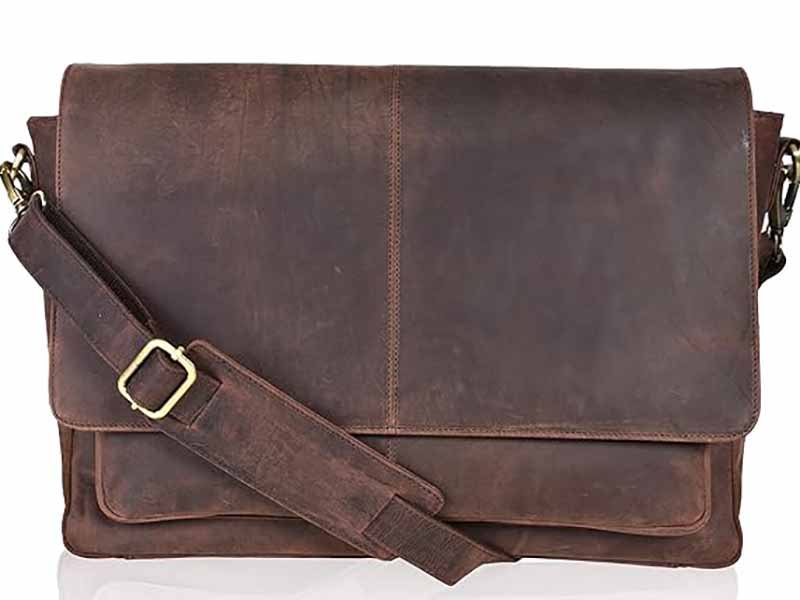
Leather bag making is often romanticized as a craft—hands cutting hides, stitching seams, and shaping elegant products one piece at a time. While craftsmanship remains important, modern leather bag making is far more complex. It is a structured industrial process that connects material science, functional design, manufacturing engineering, and market expectations into one integrated system.
Today’s buyers—especially brand owners and experienced custom clients—no longer ask only “Is this real leather?” They ask harder questions:
How consistent is the leather quality? Can the bag be produced at scale? Will stitching hold up after years of use? Can customization be done without compromising durability or lead time?
Leather bag making is the complete process of transforming genuine leather into finished bags through material selection, design planning, pattern development, cutting, stitching, assembly, finishing, and quality control. Professional leather bag making balances aesthetics, durability, cost, and production feasibility, ensuring that bags can be manufactured consistently while meeting functional and brand requirements.
What makes leather bag making especially challenging—and fascinating—is that leather is a living material. No two hides behave exactly the same. Managing this variability is where experience matters. As you read on, you’ll see how professional factories like Szoneier Leather turn natural leather into reliable, market-ready products—and why the process is very different from simple handcraft alone.
What Is Leather Bag Making
Leather bag making is the professional process of transforming genuine animal hide into finished leather bags through material selection, functional design, pattern engineering, cutting, skiving, stitching, assembly, finishing, and quality control. Unlike simple handcraft, leather bag making focuses on durability, consistency, scalability, and cost control, ensuring that leather bags perform reliably in real use and can be produced at commercial scale.
What does leather bag making actually involve in practice?
In real production, leather bag making is not a single craft step but a systematic manufacturing workflow. It starts with understanding how the bag will be used, then selecting the right leather type and structure to support that use.
A complete leather bag making process typically includes:
- evaluation and grading of raw leather hides
- functional and structural bag design
- technical pattern development
- leather cutting and thickness control
- edge skiving and folding preparation
- stitching, reinforcement, and assembly
- surface finishing and shaping
- multi-stage quality inspection
Each stage affects durability, appearance, and consistency. Professional leather bag making is about controlling variation—especially important because leather is a natural, non-uniform material.
How is leather bag making different from basic handmade leather crafting?
Handmade leather crafting usually focuses on one-off or small-batch items, where minor variation is acceptable. Leather bag making for brands and commercial buyers is fundamentally different.
Key differences include:
- standardization instead of improvisation
- pattern accuracy instead of visual estimation
- process control instead of final inspection only
- repeatability instead of uniqueness
In leather bag making, a design must work not once, but hundreds or thousands of times. This requires engineering thinking, production planning, and quality systems that go far beyond traditional handcraft.
Why is leather bag making considered more complex than fabric bag making?
Leather behaves very differently from fabric. It has natural grain, variable thickness, limited elasticity, and permanent creasing characteristics. These properties increase both the value and the complexity of leather bag making.
Designers and manufacturers must manage:
- hide yield and cutting efficiency
- thickness variation across panels
- stress concentration at seams and handles
- edge finishing durability
- long-term shape retention
A mistake that might be forgiven in fabric bags—such as uneven tension—can permanently damage leather. This is why leather bag making demands higher technical skill and experience.
What role does leather quality play in leather bag making?
Leather quality defines the ceiling of the final product. Even perfect stitching cannot compensate for poor leather selection.
Professional leather bag making evaluates leather by:
- grain integrity and fiber density
- thickness tolerance
- surface treatment and finish stability
- aging behavior over time
Understanding how different leather grades perform allows manufacturers to match materials with product positioning—luxury, mid-range, or functional—without over- or under-engineering the bag.
Who is leather bag making designed for, and when is it required?
Leather bag making is essential when:
- developing custom or private-label leather bags
- producing leather bags at scale
- upgrading quality or durability of existing designs
- launching branded leather collections
It is especially relevant for brands and professional buyers who need consistency, traceability, and long-term reliability—not just a visually appealing sample.
What defines a “professional” leather bag making process?
A professional leather bag making process is defined by:
- controlled leather sourcing and grading
- clear design-for-manufacturing principles
- repeatable patterns and workflows
- structured sampling and validation
- multi-stage quality control
When all these elements work together, leather bag making becomes predictable and scalable—turning a natural material into a dependable commercial product.
Which Materials Are Used in Leather Bag Making
Leather bag making uses genuine leather as the primary material, supported by linings, reinforcement layers, hardware, threads, adhesives, and edge-finishing materials. The choice of leather type, grade, thickness, and tanning method—combined with compatible auxiliary materials—directly affects durability, appearance, cost, and production stability. Professional manufacturers select materials based on function, market positioning, and scalability, not aesthetics alone.
Which types of leather are commonly used in leather bag making?
Leather is not a single material—it is a category. Professional leather bag making typically uses the following types:
| Leather Type | Key Characteristics | Typical Applications |
|---|---|---|
| Full-grain leather | Strong fiber structure, natural grain | Premium handbags, backpacks |
| Top-grain leather | Slightly corrected, consistent surface | Daily-use bags |
| Split leather | Lower cost, coated surface | Budget bags, structured panels |
| Vegetable-tanned leather | Firm, ages naturally | Luxury & heritage bags |
| Chrome-tanned leather | Soft, flexible, color stable | Fashion & functional bags |
Choosing the wrong leather type often causes cracking, deformation, or poor aging. Factories evaluate leather not only by look, but by fiber density, thickness tolerance, and stress performance.
How does leather grade and thickness affect bag performance?
Leather grade determines durability, while thickness controls structure and longevity. Thin leather may look elegant but lacks load-bearing capacity. Overly thick leather increases stiffness, weight, and sewing difficulty.
Professional leather bag making carefully matches thickness to function:
- 1.0–1.4 mm → wallets, small goods
- 1.4–1.8 mm → handbags, totes
- 1.8–2.2 mm → backpacks, travel bags
Consistent thickness across panels is critical for stitching quality and shape retention. This is why experienced factories control leather splitting and selection before cutting.
Is “100% genuine leather” always suitable for bag making?
“100% genuine leather” confirms the material is real leather—but it does not guarantee performance. Some genuine leathers are heavily processed, with reduced fiber strength.
Professional manufacturers evaluate:
- grain integrity
- stretch behavior under load
- surface coating durability
- long-term aging performance
For load-bearing leather bags, fiber strength matters more than marketing terms. This distinction is especially important for brands positioning products as premium or long-lasting.
What lining materials are used inside leather bags—and why?
Linings protect the leather structure and improve usability. Common lining materials include:
- cotton twill (breathable, natural feel)
- polyester (durable, cost-efficient)
- microfiber (luxury touch, abrasion-resistant)
Lining selection affects durability and perceived quality. A weak lining often fails before leather does, causing customer complaints. Professional leather bag making treats lining as a structural component, not decoration.
What reinforcement materials are required for durable leather bags?
Leather alone cannot handle repeated stress at handles, straps, and corners. Reinforcement materials include:
- non-woven interlinings
- PP boards or fiberboard panels
- webbing cores inside handles
- foam padding for comfort
Reinforcement is invisible but critical. Bags without proper reinforcement often deform or tear, even when made from high-grade leather.
Which hardware materials are used in leather bag making?
Hardware affects both function and brand perception. Common options include:
- zinc alloy (cost-effective, decorative)
- stainless steel (durable, premium)
- brass (luxury appearance, corrosion resistance)
Poor hardware causes zipper failure, strap detachment, and early returns. Professional manufacturers test hardware for tensile strength and coating durability before bulk use.
How do threads, adhesives, and edge finishes affect leather bags?
Small materials have large impact:
- Thread: bonded nylon or polyester for tensile strength
- Adhesives: used for positioning, not load-bearing
- Edge finishing: paint, folded edges, or burnishing
Edge failure is one of the most common leather bag complaints. Correct edge treatment depends on leather type, thickness, and usage frequency.
How does material choice affect cost, MOQ, and scalability?
Some leathers require higher MOQs, longer lead times, or specialized processing. Exotic or limited-supply leathers complicate scaling.
Professional factories help clients:
- select stable, scalable materials
- balance cost vs performance
- avoid materials that cause production bottlenecks
Material decisions made early determine whether a leather bag can be produced reliably at scale.
How Do You Design a Leather Bag
Designing a leather bag starts with defining the bag’s function, target users, and usage scenarios. Designers then translate these requirements into structural layouts, leather selection, reinforcement planning, and hardware placement. The design is finalized through technical patterns and prototypes that account for leather behavior, durability, cost, and production feasibility. Good leather bag design balances aesthetics with engineering and manufacturing reality.
How do you define function, target users, and usage scenarios first?
Every successful leather bag design begins with clarity—not sketches. Designers must first understand who will use the bag and how. A leather tote for daily commuting has very different requirements than a leather travel bag or luxury handbag.
Key questions include:
- How often is the bag used, and for how long each time?
- What weight will it regularly carry?
- Is it handheld, shoulder-carried, or worn on the back?
- Is the environment indoor, outdoor, or travel-heavy?
Clear answers guide all later decisions. Designs that skip this step often look appealing but fail in comfort, durability, or practicality once used.
How do leather properties influence bag design decisions?
Leather is a natural material with limited elasticity and permanent memory. It stretches slightly under load but does not fully recover. This makes leather bag design fundamentally different from fabric bag design.
Designers must account for:
- thickness variation across hides
- grain direction and stretch behavior
- creasing and folding limits
- long-term shape retention
For example, soft leather requires internal structure to prevent collapse, while thick leather needs careful panel shaping to avoid stiffness. Ignoring leather behavior leads to deformation, cracked edges, or uncomfortable carrying.
How do you plan structure and load-bearing areas in a leather bag?
Structure is the hidden framework of a leather bag. Designers must identify stress zones—handles, strap anchors, zipper ends, bottom corners—and reinforce them appropriately.
Common structural strategies include:
- layered leather or webbing cores in handles
- reinforcement boards at bag bases
- additional stitching rows at load points
- controlled seam placement to distribute stress
Good structure ensures the bag keeps its shape and survives repeated use. Weak structure causes failure even if premium leather is used.
How are compartments, pockets, and usability designed?
Usability defines customer satisfaction. Pocket depth, opening angle, and accessibility matter more than decoration.
Designers should consider:
- how easily items can be reached
- whether pockets hold shape over time
- how closures behave with leather stiffness
Overcrowding a bag with compartments often reduces usability and increases production complexity. Professional design favors functional simplicity—enough organization without compromising structure or durability.
How are patterns and technical drawings created for leather bags?
Patterns turn design ideas into manufacturable reality. Leather bag patterns must include:
- precise panel dimensions
- seam allowances suitable for leather thickness
- folding and skiving areas
- reinforcement placement
Technical drawings communicate these details to cutting and stitching teams. Poor patterns waste leather, increase defects, and cause misalignment. At experienced factories, pattern development is often reviewed by both designers and production engineers before sampling begins.
How does cost and manufacturability influence leather bag design?
A beautiful design that cannot be produced efficiently will not succeed commercially. Designers must consider:
- leather yield and cutting efficiency
- stitching complexity and labor time
- hardware availability and MOQ
- edge finishing difficulty
Design-for-manufacturing simplifies production without sacrificing quality. Small changes—like reducing panel count or standardizing hardware—can significantly improve consistency and cost control.
Why is prototyping essential in leather bag design?
Prototyping validates assumptions. It reveals issues with comfort, structure, leather behavior, and usability that drawings cannot predict.
Most professional leather bags require 2–4 prototype revisions, each focused on specific improvements. Skipping prototyping or rushing approval is one of the most common causes of post-production failures.
When is a leather bag design considered production-ready?
A leather bag design is ready for production when it:
- performs well under real-use testing
- maintains shape and structure under load
- can be produced consistently at scale
- meets target cost and lead-time requirements
At this stage, the design transitions from concept to a reliable commercial product.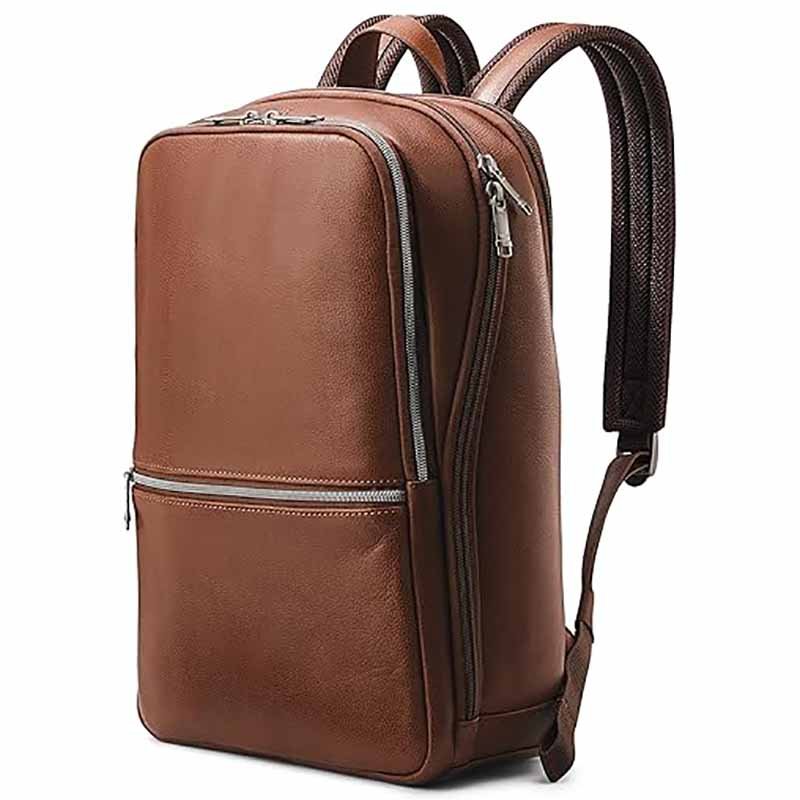
How Is a Leather Bag Made
A leather bag is made through a structured manufacturing process that includes leather inspection, pattern cutting, skiving, component preparation, stitching, assembly, edge finishing, shaping, and multi-stage quality control. In professional factories, each step follows standardized procedures to ensure durability, consistency, and scalability. Compared to simple handcraft, factory production emphasizes repeatability, material control, and long-term performance.
What happens before production starts? (Design & material preparation)
Before any leather is cut, most of the real work has already happened. Factories begin with design finalization and material confirmation. This includes approving the leather type, thickness range, color, lining, hardware, thread, and edge finish method.
Leather hides are inspected and graded for:
- grain quality and surface defects
- thickness tolerance
- stretch behavior
- color consistency
This step is critical because leather is a natural material. Early inspection helps allocate hides correctly and reduce waste later in production.
How is leather cut accurately for bag production?
Leather cutting is one of the most important stages. Unlike fabric, leather cannot be stacked and cut in large layers. Each hide is positioned carefully to maximize yield and avoid weak grain areas.
Cutting methods include:
- manual cutting for complex or premium bags
- die cutting for consistent panel shapes
- CNC cutting for precision and efficiency
Incorrect cutting leads to uneven panels, poor alignment, and structural imbalance. Professional factories control cutting direction, grain orientation, and panel placement to maintain quality and consistency.
What is skiving, and why is it necessary in leather bag making?
Skiving is the process of thinning leather edges to allow folding, stitching, and smooth edge finishing. Without skiving, seams become bulky and uncomfortable.
Skiving is used for:
- seam overlap areas
- folded edges
- handle and strap construction
The depth and angle of skiving must match leather thickness and bag structure. Over-skiving weakens seams; under-skiving causes stiffness and poor appearance. Skilled skiving is a major difference between amateur and professional leather bags.
How are components prepared before final assembly?
Before full assembly, many parts are prepared separately:
- pockets and compartments
- handles and straps
- reinforced bases and panels
This stage allows better control of quality and alignment. Reinforcement materials—such as webbing, boards, or interlinings—are added at stress points to improve load-bearing performance. Preparing components in advance also improves production efficiency and reduces errors during final assembly.
How is stitching performed to ensure strength and durability?
Stitching is where strength is built. Professional factories select thread type, needle size, stitch length, and tension based on leather thickness and usage.
Key stitching considerations include:
- double or reinforced stitching at stress points
- consistent stitch spacing for appearance and strength
- correct tension to avoid leather tearing or puckering
Even high-grade leather can fail if stitching is weak. That’s why stitching quality is inspected continuously during production, not only at the end.
How is the leather bag assembled step by step?
Assembly follows a specific order to protect structure and shape:
- inner components and linings are installed
- panels are joined according to pattern sequence
- handles and straps are attached
- hardware (zippers, buckles, rings) is installed
Following the correct sequence prevents distortion and ensures clean edges. Rushing assembly often leads to misalignment and long-term durability issues.
How are edges finished on leather bags?
Edge finishing is one of the most visible quality indicators. Common methods include:
- folded edges (leather folded inward)
- edge paint (multi-layer application)
- burnished edges (mainly for veg-tan leather)
Edge paint is applied in layers and cured between coats. Poor edge finishing leads to cracking and peeling, one of the most common customer complaints. Professional edge treatment significantly improves both appearance and lifespan.
How are leather bags shaped and stabilized?
After assembly, bags are shaped using molds, stuffing, or controlled resting. This step helps the leather settle into its intended form.
Shaping ensures:
- correct proportions
- stable structure
- consistent appearance across units
Skipping proper shaping can cause bags to lose form during shipping or early use.
How is quality controlled during leather bag production?
Quality control is not a single checkpoint—it is continuous. Professional factories apply QC at multiple stages:
- incoming leather inspection
- in-process stitching and alignment checks
- hardware strength testing
- edge finish inspection
- final functional testing
This process-based QC approach prevents small issues from becoming large-scale failures.
How is factory leather bag production different from handmade methods?
Handmade leather bags emphasize individuality and small-batch craftsmanship. Factory production emphasizes:
- repeatability
- efficiency
- stable quality
- scalability
In professional leather bag making, the goal is not to remove craftsmanship, but to systematize it, so every bag meets the same standard.
Is Leather Bag Making Profitable
Yes, leather bag making can be highly profitable when leather selection, design efficiency, production control, and order volume are well managed. Profitability depends on leather cost, labor efficiency, defect rates, customization level, and market positioning. Brands that work with experienced leather manufacturers and optimize design for production typically achieve more stable margins than those focused only on appearance or low material prices.
Is leather bag making profitable for brands and private-label buyers?
Leather bags generally offer higher perceived value and stronger pricing power than fabric bags. This gives brands more room to build margin—if the product is executed correctly. Profitability does not come simply from using leather; it comes from aligning product positioning, cost structure, and production stability.
For private-label and OEM buyers, leather bag making becomes profitable when:
- the design is validated and repeatable
- the leather grade matches the target price segment
- quality issues and returns are minimized
Brands that rush development or underestimate production complexity often see margins disappear through rework, delays, and customer complaints.
What cost factors have the biggest impact on leather bag profitability?
Several cost drivers dominate leather bag making. Among them, leather yield and labor efficiency are the most critical.
| Cost Factor | Impact on Profitability |
|---|---|
| Leather grade & yield | Very High |
| Labor & stitching complexity | Very High |
| Design complexity | High |
| Hardware quality | Medium |
| Sampling & revisions | Medium |
| Defect & return rate | Critical |
Chasing the cheapest leather often backfires. Lower-grade hides reduce usable yield and increase defects, raising real cost per finished bag.
How does design influence profit margins in leather bag making?
Design decisions directly affect profitability. A well-designed leather bag:
- uses leather efficiently (better cutting yield)
- reduces stitching time
- minimizes assembly errors
- simplifies quality control
Overdesigned products—with excessive panels, decorative seams, or custom hardware—raise labor cost and defect risk. Design-for-manufacturing (DFM) is one of the most effective profit tools in leather bag making.
How does order volume affect profit and unit cost?
Leather bag making benefits from economies of scale, but only after design is stabilized. Small orders carry higher per-unit costs due to setup, material MOQ, and labor inefficiency.
Typical pattern:
- Low volume → higher unit cost, learning phase
- Medium volume → stable quality, improving margin
- Large volume → optimized yield, strong profitability
This is why many brands start with moderate MOQs, refine the product, then scale once sales data confirms demand.
How does customization impact profitability?
Customization increases perceived value but also increases complexity. Logos, special leather colors, unique structures, or custom hardware all affect cost.
Customization is profitable when:
- changes are standardized (logo placement, embossing)
- materials are scalable
- design changes are controlled
Unplanned customization leads to frequent revisions and production instability, which erodes margin quickly.
Why do defect rates and returns matter more than unit cost?
Many buyers focus on unit price, but defects and returns are often the real margin killers. Leather bags returned due to stitching failure, edge cracking, or deformation cost far more than the original saving.
Experienced manufacturers reduce profit risk by:
- controlling leather quality early
- reinforcing stress points
- validating design through prototyping
A slightly higher production cost often results in higher net profit due to fewer post-sale issues.
Is leather bag making more profitable in China?
China remains competitive in leather bag making due to:
- mature leather supply chains
- skilled labor
- integrated design-to-production capability
Factories like Szoneier Leather combine raw material sourcing, sampling, production, and QC under one system, reducing coordination cost and improving efficiency. This integration is a key reason why China-based production remains profitable for global brands.
When does leather bag making become unprofitable?
Leather bag making becomes unprofitable when:
- leather selection is mismatched to product positioning
- designs are not production-ready
- volumes are too low for the complexity involved
- quality issues lead to high returns
Most failures are planning failures, not market failures.
What Are Common Leather Bag Making Challenges
Common leather bag making challenges include inconsistent leather quality, poor structural design, incorrect leather thickness, weak reinforcement at stress points, edge finishing failures, and insufficient prototyping. These issues often lead to deformation, seam breakage, cracking edges, and high return rates. The most effective solutions involve early material evaluation, design-for-manufacturing, controlled sampling, and close collaboration with experienced leather manufacturers.
Why is inconsistent leather quality one of the biggest challenges?
Leather is a natural material, and variation is unavoidable. Differences in hide thickness, grain density, stretch, and surface defects can cause major inconsistencies if not controlled early.
Common problems caused by inconsistent leather include:
- uneven bag shape
- weak stress areas
- visible color or texture mismatch
Professional factories address this by grading hides before cutting, matching leather panels by thickness and grain, and allocating higher-grade leather to load-bearing areas. Without this control, even a well-designed bag can fail in production.
What structural design mistakes cause leather bags to fail early?
Many leather bags fail not because of poor stitching, but because of poor structural planning. Designers sometimes underestimate how much stress leather bags endure during daily use.
Typical structural mistakes include:
- under-reinforced handles and straps
- weak zipper end points
- unsupported bag bases
- incorrect panel alignment
The solution is stress mapping during design—identifying where force concentrates and reinforcing those areas with layered leather, webbing cores, or internal boards before sampling begins.
How does incorrect leather thickness create hidden problems?
Leather that is too thin may stretch or tear under load. Leather that is too thick increases stiffness, weight, and sewing difficulty.
Incorrect thickness often leads to:
- uncomfortable carrying
- seam cracking
- poor shape retention
Professional leather bag making carefully matches thickness to function and controls skiving depth to maintain strength while allowing clean folding and stitching.
Why do edge finishing problems occur so frequently?
Edge cracking, peeling, or separation is one of the most common customer complaints in leather bags. This usually results from:
- incompatible edge paint and leather
- insufficient curing time
- improper edge preparation
Edge finishing is a process, not a single step. Professional factories apply multiple layers, allow proper drying, and test flexibility before approval. Cheap shortcuts here almost always lead to long-term failure.
How do overcomplicated designs increase production risk?
Overdesign—too many panels, decorative seams, or unique components—raises labor time and defect risk. While complex designs may look impressive, they often reduce consistency at scale.
Overcomplicated designs cause:
- longer production cycles
- higher labor cost
- difficulty maintaining uniform quality
Design-for-manufacturing focuses on simplifying structure while preserving function and aesthetics. This approach improves both quality and profitability.
Why is insufficient prototyping a major risk in leather bag making?
Skipping or rushing prototyping is one of the most expensive mistakes. Many leather behaviors—stretch, creasing, edge durability—cannot be fully predicted on paper.
Without proper prototyping:
- structural weaknesses go unnoticed
- comfort issues appear after launch
- costly post-production fixes are required
Professional projects typically require 2–4 prototype rounds, each focused on a specific improvement area.
How do production challenges differ between handmade and factory leather bags?
Handmade leather bags allow flexibility and individual adjustment. Factory production requires repeatability.
Challenges in factory settings include:
- maintaining consistency across hundreds of units
- controlling material variation at scale
- coordinating multiple production stages
Factories solve this through standardized workflows, trained teams, and in-process quality control—not by relying solely on final inspection.
What role does manufacturer experience play in preventing these challenges?
Experienced manufacturers have seen the same problems repeatedly across different projects. This allows them to:
- identify risk points early
- recommend structural improvements
- adjust materials before issues arise
Factories like Szoneier Leather integrate design review, sampling, and QC into one system, preventing many problems before production begins.
How can brands and buyers reduce leather bag making risks upfront?
Buyers can reduce risk by:
- clarifying use cases and performance expectations
- avoiding over-customization in early stages
- allowing sufficient time for sampling
- working with manufacturers experienced in leather goods
Early planning saves far more cost than post-production correction.
Conclusion
Leather bag making is not just about using real leather—it’s about turning a natural material into a reliable, scalable, market-ready product.
With over 18 years of experience, Szoneier Leather offers integrated leather sourcing, design, sampling, manufacturing, and quality control for brands and professional buyers worldwide. Whether you’re developing a new leather bag, refining an existing design, or scaling production, our team provides practical guidance and dependable execution.
Contact Szoneier Leather today to discuss your custom leather bag project and receive a professional quotation.