
How to Make a Leather Rifle Case: Materials, Design, Step-by-Step Construction, Quality Standards, and OEM Custom Manufacturing Guide
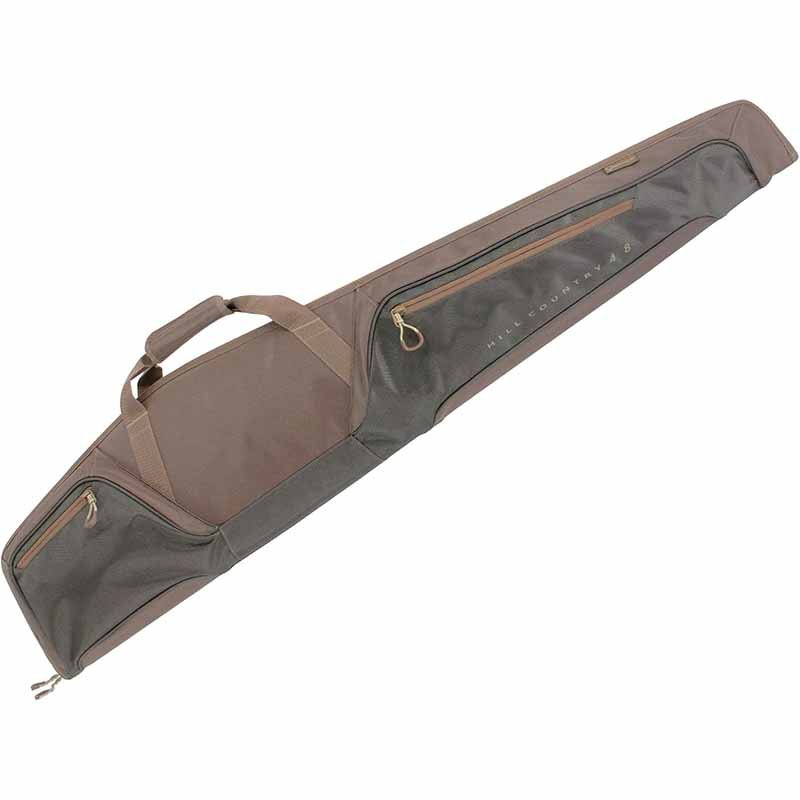
A leather rifle case is more than just a protective sleeve—it is a statement of craftsmanship, responsibility, and respect for the firearm it carries. In a market crowded with synthetic gun bags and injection-molded hard cases, leather rifle cases occupy a unique position. They appeal to hunters, sport shooters, collectors, and premium brands who value durability, aesthetics, and long-term usability over disposable solutions.
Yet many people underestimate how complex it actually is to make a high-quality leather rifle case. It’s not simply cutting leather and sewing it into a long pouch. Every decision—from leather type and thickness to padding density, stitching layout, and closure design—directly affects firearm protection, user safety, and product lifespan. Poorly designed cases can trap moisture, deform optics, or fail under load, while well-engineered cases can last decades.
To make a leather rifle case, manufacturers select suitable leather (typically full-grain or top-grain), design the case based on rifle dimensions, add internal padding and lining for protection, reinforce stress points, stitch panels securely, and finish edges and hardware for durability. Professional rifle cases require careful material selection, precise sizing, moisture control, and quality testing to ensure firearm safety and long-term performance.
Behind every premium leather rifle case is a combination of traditional leatherworking skill and modern engineering logic. Whether you are a brand owner, a product developer, or a buyer seeking reliable OEM production, understanding this process helps you make smarter decisions. Let’s start from the fundamentals.
What Is a Leather Rifle Case and What Is It Used For?
A leather rifle case is a protective carrying case made primarily from leather, designed to safely transport, store, and protect rifles. It shields firearms from scratches, impact, dust, and environmental exposure while offering durability and a premium appearance. Leather rifle cases are commonly used for hunting, sport shooting, travel, firearm storage, and premium firearm accessory collections.
What exactly defines a leather rifle case?
A leather rifle case is defined not only by its material, but by its function-driven structure. At its core, it combines:
- An outer leather shell for abrasion resistance and structural protection
- An internal padding layer to absorb shock and prevent impact damage
- A soft inner lining to protect the firearm’s finish and optics
Unlike generic gun sleeves, a true leather rifle case is engineered around the firearm’s length, weight, and accessories (such as scopes or bolt handles). The leather is not decorative—it is a load-bearing, protective component.
What is a leather rifle case used for in real-life scenarios?
Leather rifle cases serve multiple practical purposes across different user groups:
- Transport – carrying rifles to and from hunting grounds, shooting ranges, or competitions
- Short-term storage – protecting firearms between uses
- Travel protection – shielding rifles during vehicle transport
- Finish protection – preventing scratches on wood stocks, bluing, or optics
For hunters, leather cases offer quiet handling and flexibility in the field. For sport shooters and collectors, they provide controlled protection without the bulk of hard cases.
What types of rifles are leather rifle cases commonly designed for?
Leather rifle cases are most commonly designed for:
- Bolt-action hunting rifles
- Lever-action rifles
- Scoped rifles
- Classic or collectible firearms
They are less frequently used for compact tactical or modular weapons, which often require rigid hard cases. Leather cases excel when the priority is balanced protection, portability, and aesthetics, rather than extreme impact resistance.
How does a leather rifle case differ from fabric soft cases and hard cases?
Understanding the difference helps buyers choose correctly:
| Case Type | Key Strength | Key Limitation |
|---|---|---|
| Fabric soft case | Lightweight, low cost | Wears quickly, less protection |
| Hard case | Maximum impact protection | Bulky, heavy, less flexible |
| Leather rifle case | Durable, flexible, premium look | Requires proper design |
Leather rifle cases occupy the middle ground, offering better durability and longevity than fabric cases, while remaining lighter and more comfortable than hard cases.
Why do shooters prefer leather rifle cases?
Shooters often choose leather rifle cases because they:
- Are quiet (no fabric rustling in hunting scenarios)
- Feel more balanced and comfortable to carry
- Age gracefully and develop character
- Match traditional firearm aesthetics
For many users, a leather rifle case is not disposable gear—it is a long-term accessory that reflects personal values and respect for the firearm.
Why do brands and manufacturers focus on leather rifle cases?
From a brand perspective, leather rifle cases:
- Support premium positioning and storytelling
- Allow higher perceived value and margins
- Differentiate from mass-produced nylon gun bags
However, they also demand higher manufacturing standards. Poorly designed leather cases can trap moisture, deform optics, or fail at stress points. This is why professional brands work with experienced leather manufacturers who understand both leather engineering and firearm use scenarios.
Understanding what a leather rifle case truly is—and what it is used for—sets the foundation for every subsequent step: material selection, design, construction, and quality control. Many production failures happen because cases are treated as simple leather bags rather than protective equipment.
Which Leather Materials Are Best for Making a Rifle Case?
The best leather materials for making a rifle case are full-grain or top-grain cowhide with a thickness of approximately 2.5–3.5 mm. These leathers provide high tear strength, abrasion resistance, and long-term durability. Vegetable-tanned leather offers firm structure and a traditional look, while chrome-tanned leather provides better flexibility and moisture resistance for padded rifle cases.
Why is full-grain leather considered the best choice for rifle cases?
Full-grain leather retains the complete natural grain layer of the hide, preserving the strongest fiber structure. This makes it exceptionally resistant to tearing, stretching, and surface abrasion—qualities that are critical when protecting heavy firearms.
For rifle cases, full-grain leather:
- Handles repeated handling and weight stress
- Ages gracefully without cracking
- Maintains structural integrity at seams and stress points
Unlike corrected or split leather, full-grain leather does not rely on heavy surface coatings, which means it performs reliably over long-term use.
When is top-grain leather a practical alternative?
Top-grain leather is full-grain leather that has been lightly sanded to remove surface imperfections. While slightly thinner, it still offers strong performance and a more uniform appearance.
Top-grain leather is often used when:
- Visual consistency is a priority
- Slightly lighter weight is desired
- Cost must be balanced with durability
For mid- to high-range rifle cases, top-grain leather delivers dependable protection without the premium cost of full-grain hides.
What leather thickness is ideal for rifle case construction?
Thickness directly affects protection and workability. Industry best practice for rifle cases is:
| Leather Thickness | Application |
|---|---|
| 2.0–2.4 mm | Light-duty or soft cases |
| 2.5–3.5 mm | Standard rifle cases |
| 4.0 mm+ | Rigid or molded designs |
Excessively thick leather becomes difficult to sew cleanly and may reduce flexibility, while thin leather lacks impact resistance. Optimal thickness must be balanced with internal padding.
Are vegetable-tanned or chrome-tanned leathers better for rifle cases?
Both tanning methods serve different design goals:
- Vegetable-tanned leather
- Firmer structure
- Traditional appearance
- Excellent shape retention
- Less moisture resistant
- Chrome-tanned leather
- Softer and more flexible
- Better moisture resistance
- More suitable for padded interiors
For classic rifle cases, vegetable-tanned leather is popular. For modern padded cases designed for travel or field use, chrome-tanned leather is often more practical.
Is suede or nubuck suitable for rifle cases?
Suede and nubuck are generally not recommended as primary materials for rifle cases. While visually appealing, they:
- Absorb moisture easily
- Stain and wear quickly
- Lack surface abrasion resistance
They may be used selectively as decorative panels or interior accents but not as structural outer shells.
Why is split leather not suitable for rifle cases?
Split leather lacks the dense fiber structure required for load-bearing applications. In rifle cases, split leather:
- Tears more easily at stress points
- Deforms under weight
- Ages poorly over time
Reputable manufacturers avoid split leather for firearm protection products, as it compromises both safety and longevity.
How should leather selection align with rifle case usage?
Leather choice must reflect how the case will be used:
| Usage Scenario | Recommended Leather |
|---|---|
| Hunting / field use | Chrome-tanned full-grain |
| Travel / transport | Top-grain with padding |
| Classic / heritage style | Vegetable-tanned full-grain |
| Premium brand line | Selected full-grain hides |
Matching leather to usage prevents overengineering or premature failure.
Why leather material choice defines rifle case quality
Many leather rifle cases fail not because of poor craftsmanship, but because the wrong leather was chosen. Material selection determines:
- Protection level
- Product lifespan
- User confidence
How Is a Leather Rifle Case Designed Before Production?
Before production, a leather rifle case is designed by accurately measuring the firearm, defining internal protection layers, selecting suitable leather and lining materials, and engineering stress points, closures, and carry systems. Proper pre-production design ensures correct fit, firearm safety, durability, and consistent manufacturing quality across production runs.
How do you measure and size a rifle case accurately?
Accurate measurement is the foundation of a functional rifle case. Designers begin by measuring:
- Overall rifle length
- Barrel length and muzzle diameter
- Scope height, width, and mounting position
- Bolt handles, magazines, or protruding controls
Measurements are taken with the rifle fully configured, not stripped. Allowances are added for padding and lining thickness. Professional manufacturers also design tolerance margins to prevent pressure on optics or muzzle ends during transport.
Improper sizing is one of the most common causes of product returns and firearm damage.
How is internal padding and protection planned at the design stage?
Padding is not added arbitrarily. Designers select padding materials and thickness based on:
- Rifle weight
- Expected transport conditions
- Required flexibility
Common padding options include EVA foam, PE foam, and felt. Thickness typically ranges from 8–15 mm, depending on protection requirements. Padding layout is engineered to reinforce high-risk zones such as the muzzle, scope area, and stock butt.
This planning stage determines whether the rifle case genuinely protects or merely covers the firearm.
How is lining material chosen to protect firearm finishes?
The inner lining directly contacts the firearm and must:
- Prevent scratches
- Avoid moisture retention
- Resist fiber shedding
Common lining choices include microfiber fleece, brushed polyester, or cotton blends. Breathability is critical—non-breathable linings can trap condensation, leading to corrosion. Designers avoid materials that contain abrasive fibers or chemical residues that may react with firearm finishes.
How are stress points identified and reinforced in the design phase?
Stress points are predicted before production, not fixed afterward. Key stress zones include:
- Carry handles
- Shoulder strap attachments
- Zipper ends
- Case corners
Designers plan reinforcements such as double-layer leather, internal webbing cores, or stitched reinforcement panels. This prevents leather tearing and seam failure under load, especially for heavier rifles.
How are closures and access systems engineered?
Closure design affects safety and usability. Designers evaluate:
- Zipper strength and tooth size
- Buckle placement
- Flap overlap coverage
Zippers are positioned to avoid stress on optics during opening and closing. Lockable zipper systems or buckle-flap combinations are often chosen for transport safety and compliance with local firearm handling norms.
How does carry system design affect comfort and durability?
Handles and straps are designed based on rifle weight distribution. Effective designs:
- Center the load
- Reduce twisting during carry
- Use padded handles or adjustable shoulder straps
Internally reinforced handles with webbing cores significantly improve durability and user comfort. Carry system design is a key differentiator between premium and low-grade rifle cases.
Why are prototypes and samples critical before mass production?
Prototypes validate design assumptions. During sampling:
- Fit and clearance are tested
- Padding performance is evaluated
- Stitching and reinforcement are stress-tested
Revisions at this stage prevent costly mistakes during mass production. Professional OEM manufacturers document design changes to ensure consistency across future production runs.
A leather rifle case is not a simple leather bag—it is a protective equipment product. Design decisions made before production determine safety, durability, and user satisfaction.
How Do You Make a Leather Rifle Case Step by Step?
To make a leather rifle case, you first finalize the pattern based on rifle dimensions, then cut leather panels and lining, prepare padding layers, assemble the inner “sandwich” structure, stitch panels with reinforced stress points, install closures and carry hardware, and finish edges for durability. Professional cases also require fit checks, seam strength testing, and moisture-safe lining choices to protect firearm finishes during transport and storage.
How do you create the pattern and confirm sizing before cutting?
Everything starts with a pattern that accounts for the rifle as actually used (scope mounted, bolt/controls installed, any protrusions). A professional pattern includes: front/back body panels, gusset (if boxed), muzzle reinforcement, stock reinforcement, zipper facing, handle patches, strap tabs, and internal padding templates.
Key design checks at this stage:
- Clearance for optics (height and width allowance)
- Padding thickness allowance (foam adds bulk fast)
- Seam allowance (usually 8–12 mm, depending on construction)
- Zipper opening path (easy access without rubbing optics)
A smart factory will do a quick “paper mock” or cheap fabric mockup to validate fit before expensive leather cutting.
How is leather selected, inspected, and prepped for production?
Before cutting, hides are inspected for scars, loose grain, and weak fiber zones. For rifle cases, you typically want the strongest sections for high-stress areas: handle patches, strap anchors, and zipper ends.
Prep steps often include:
- Conditioning/relaxing leather to stabilize stretch
- Marking grain direction to reduce long-term distortion
- Skiving edges where folds will occur (reduces bulk and improves stitching)
- Planning panel layout to avoid placing defects near corners or seams
This step is where “nice-looking leather” becomes “production-suitable leather.”
How do you cut leather, lining, and padding accurately?
Cutting must be consistent to avoid assembly distortion. Professional methods include CNC cutting tables or steel-rule dies for repeat orders. Components typically cut as:
- Outer shell (leather panels + reinforcements)
- Lining (microfleece/microfiber/brushed fabric)
- Padding (EVA/PE foam or felt, often 8–15 mm)
A practical QC check is to stack the cut sets: misalignment shows immediately. For padding, clean edges matter—ragged foam edges create lumps and uneven protection.
Common mistake: cutting foam exactly the same size as leather panels. In practice, foam often needs slight “relief” trimming near seams to reduce bulk and keep the case from looking swollen.
How do you build the inner protection “sandwich” correctly?
The protective core is typically built as a layered system:
Lining + Padding + (Optional) Stabilizer + Leather Shell
To improve performance:
- Add extra padding zones at muzzle and buttstock impact points
- Use a stabilizer sheet (thin PP board or semi-rigid insert) for shape retention in premium models
- Keep lining breathable to reduce moisture trapping
Here’s a common structure guideline:
| Area | Typical Protection Strategy |
|---|---|
| Muzzle end | Double leather + extra foam cap |
| Scope zone | Thicker foam + “no-pressure” clearance |
| Corners/edges | Reinforcement + clean edge finish |
| Body panels | Standard foam + lining |
A good case feels “protective” without being stiff like a hard case.
How do you stitch the case for strength and long-term durability?
Stitching is where many rifle cases fail—especially at handles and zipper ends. Production sewing typically uses bonded nylon/poly thread and heavy-duty machines.
Best-practice construction includes:
- Double stitching on load-bearing seams
- Backstitch or lockstitch reinforcement at start/end points
- Bar-tacks or boxed-X stitching at strap anchors
- Internal seam binding (optional) to prevent lining fray and improve finish
Stitch length is balanced: too tight can perforate leather like a tear line; too loose reduces seam strength. A professional shop will keep stitch tension consistent across panels and corners.
How do you install zippers, closures, handles, and straps properly?
Hardware installation should be treated like engineering, not decoration.
- Zippers : choose durable zipper size; reinforce zipper ends with extra leather patches; avoid zipper pull rubbing on the rifle.
- Handles : the highest-stress component. Premium builds often use internal webbing cores inside the leather handle to prevent stretching and tearing.
- Shoulder straps : ensure D-rings/tri-glides are load-rated; back strap tabs with reinforcement leather and/or webbing.
- Buckle/flap closures : place so they do not press into optics or sharp edges.
A quick real-world check: load the case to typical weight and lift it repeatedly. If the handle area shows early creasing or pulling, reinforcement is insufficient.
How do you finish edges, corners, and surfaces for a premium look and better wear?
Edge finishing is not just aesthetics—it prevents fibers from absorbing moisture and reduces abrasion wear.
Common finishing steps:
- Edge skive (reduce thickness at folds/corners)
- Edge paint or burnish (sealed edges last longer)
- Corner rounding (sharp corners peel and wear faster)
- Surface treatment (wax/topcoat depending on leather type)
For premium rifle cases, clean edges and crisp corners are often what customers notice first—and what determines “brand-level” perception in photos and unboxing.
How do you verify fit, protection, and QC before shipping?
A professional rifle case isn’t complete until it passes functional checks:
- Fit check : rifle slides in smoothly without forcing; no pressure on scope; zipper closes cleanly.
- Load test : handle and strap anchors hold up under realistic weight.
- Seam inspection : no skipped stitches; no seam puckering; zipper alignment straight.
- Lining inspection : no loose fibers, wrinkles, or abrasive seams.
- Odor and cleanliness : materials should be properly cured and free of residue.
Factories often add an internal QC checklist per batch to ensure consistent results across production runs—this matters a lot for brands scaling SKU count.
What Quality Standards Matter for a Leather Rifle Case?
Quality leather rifle cases must meet standards for material integrity, stitching strength, structural reinforcement, padding performance, and firearm protection. Key requirements include strong full-grain or top-grain leather, reinforced stress points, consistent stitching, secure closures, moisture-safe linings, and thorough functional testing. These standards ensure safety, durability, and long-term reliability during firearm transport and storage.
What material quality standards must leather rifle cases meet?
Material quality is the foundation of every reliable rifle case. High-quality standards include:
- Leather grade : full-grain or top-grain only; split leather is unacceptable
- Leather thickness consistency : typically 2.5–3.5 mm with minimal variance
- Fiber integrity : no loose grain, weak spots, or excessive surface coating
- Odor control : properly cured leather without strong chemical smell
Inferior leather often looks acceptable at first but fails under weight, moisture, or repeated flexing—especially at corners and handle areas.
What stitching and seam strength standards are required?
Stitching failures are one of the most common safety risks. Professional standards require:
- Bonded nylon or polyester thread suitable for heavy leather
- Consistent stitch length and tension across seams
- Double stitching at load-bearing seams
- Reinforced start/end points (backstitch or bar-tack)
A practical benchmark: seams should withstand repeated lifting of a fully loaded rifle case without visible elongation, skipped stitches, or thread breakage.
How are stress points identified and reinforced?
Stress points are predetermined during design and verified during QC. Critical stress zones include:
- Carry handles
- Shoulder strap anchors
- Zipper ends
- Case corners and muzzle ends
Quality standards require:
- Double-layer leather reinforcement
- Internal webbing or fabric backing
- Secure stitching patterns (box-X or bar-tack)
Neglecting reinforcement leads to sudden failure under real-world use.
What padding and protection performance standards matter most?
Padding must absorb shock without compressing permanently. Key standards include:
- Uniform padding thickness (commonly 8–15 mm)
- Secure bonding or stitching to prevent shifting
- Targeted reinforcement at muzzle and stock ends
Padding should protect optics and finishes from minor impacts while maintaining flexibility. Overly soft padding collapses; overly stiff padding reduces usability.
How do lining materials affect quality and firearm safety?
Lining quality directly affects firearm finishes and corrosion risk. Standards include:
- Soft, non-abrasive texture (microfiber fleece or brushed fabric)
- Breathability to reduce moisture buildup
- Colorfastness to avoid dye transfer
Low-quality linings trap condensation or shed fibers, increasing the risk of rust or cosmetic damage.
What hardware and closure standards are required?
Hardware failures can compromise safety. Quality requirements include:
- Durable, corrosion-resistant zippers
- Reinforced zipper ends
- Load-rated buckles and D-rings
- Secure attachment with backing reinforcement
Zippers should operate smoothly without catching lining or padding, even under load.
What functional and durability tests should a rifle case pass?
Professional QC includes:
| Test Type | Purpose |
|---|---|
| Handle load test | Verify carry strength |
| Drop simulation | Check impact protection |
| Seam pull test | Confirm stitching integrity |
| Zipper cycle test | Ensure closure durability |
| Fit check | Verify no pressure on optics |
Testing ensures the case performs under realistic use conditions, not just in appearance.
What common quality failures should buyers watch for?
Frequent issues include:
- Uneven stitching or skipped stitches
- Weak handle anchors
- Poor edge finishing causing peeling
- Misaligned zippers
- Excessive leather odor
These are early warning signs of substandard manufacturing.
A leather rifle case is a safety-related product, not a fashion accessory. Poor quality can damage firearms or endanger users.
How Should Brands Source or Customize Leather Rifle Cases?
Brands should source or customize leather rifle cases by working with experienced manufacturers who understand firearm use, leather engineering, and quality control. The process should include clear material specifications, prototype development, stress-point engineering, and defined QC standards. OEM/ODM customization allows brands to control design, materials, branding, and consistency while reducing long-term risk and ensuring scalable production quality.
Is custom leather rifle case manufacturing worth it for brands?
Yes—custom manufacturing is often the only reliable way to achieve consistent quality in leather rifle cases. Off-the-shelf designs rarely match specific firearm dimensions, brand positioning, or quality expectations.
Custom production allows brands to:
- Design cases for specific rifle models or size ranges
- Choose leather grade, thickness, and tanning method
- Control padding density and lining type
- Differentiate through details (handles, closures, colorways)
For premium, hunting, or heritage firearm brands, customization is not a luxury—it is a necessity.
What information should brands prepare before contacting a manufacturer?
Well-prepared brands get better results. Before sourcing, brands should define:
- Target rifle types and dimensions
- Usage scenarios (field, travel, storage)
- Target price range and market positioning
- Expected order volume and growth plan
Providing sketches, reference images, or competitor samples accelerates development. Clear requirements reduce sampling cycles and cost overruns.
What should buyers ask a leather rifle case manufacturer?
Key evaluation questions include:
- What leather grades and thicknesses do you recommend—and why?
- How do you reinforce handles, straps, and zipper ends?
- What padding and lining options are available?
- What quality tests do you perform before shipment?
A capable manufacturer answers with technical reasoning, not vague promises.
How does OEM/ODM production differ from handmade or small-batch sourcing?
Handmade cases emphasize craftsmanship but often lack:
- Repeatable sizing
- Consistent stitching
- Documented QC standards
OEM/ODM production combines craftsmanship with engineering documentation, standardized patterns, and controlled processes, making it suitable for scaling while maintaining quality.
What customization options matter most for leather rifle cases?
High-impact customization areas include:
- Leather type and finish (full-grain, veg-tan, oil finish)
- Padding structure and thickness
- Closure systems (zipper, buckle, flap)
- Carry systems (handles, shoulder straps)
- Branding (embossed logo, metal plates, stitching color)
These choices directly affect performance, aesthetics, and brand identity.
How do MOQ, lead time, and cost typically work in OEM sourcing?
Typical OEM parameters (varies by design complexity):
| Item | Typical Range |
|---|---|
| MOQ | 100–300 pcs |
| Sampling time | 10–20 days |
| Mass production | 30–45 days |
| Cost drivers | Leather grade, padding, hardware |
Understanding cost structure helps brands optimize design without compromising protection.
Why is long-term supplier partnership important?
Leather rifle cases are not static products. Over time, brands adjust:
- Rifle compatibility
- Materials
- Compliance requirements
Long-term partners maintain pattern archives, QC records, and material continuity—reducing future risk and development time.
Conclusion
A leather rifle case is not just an accessory—it is a safety product, a brand statement, and a long-term investment. Making one correctly requires material expertise, structural design, and disciplined manufacturing.
With over 18 years of experience, Szoneier Leather specializes in developing and manufacturing custom leather rifle cases, gun cases, and premium firearm accessories.
Whether you are launching a premium hunting line or expanding an existing firearm accessory range, our team helps turn your ideas into reliable, market-ready products.
Contact Szoneier Leather today to discuss your leather rifle case project, request samples, or receive a customized quotation.
What Can I Do For You?
Here, developing your OEM/ODM private label leather goods collection is no longer a challenge,it’s an excellent opportunity to bring your creative vision to life.
Make A Sample First?
If you have your own tech packs, logo design artwork, or just an idea,please provide details about your project requirements, including preferred fabric, color, and customization options,we’re excited to assist you in bringing your leather goods designs to life through our sample production process.