
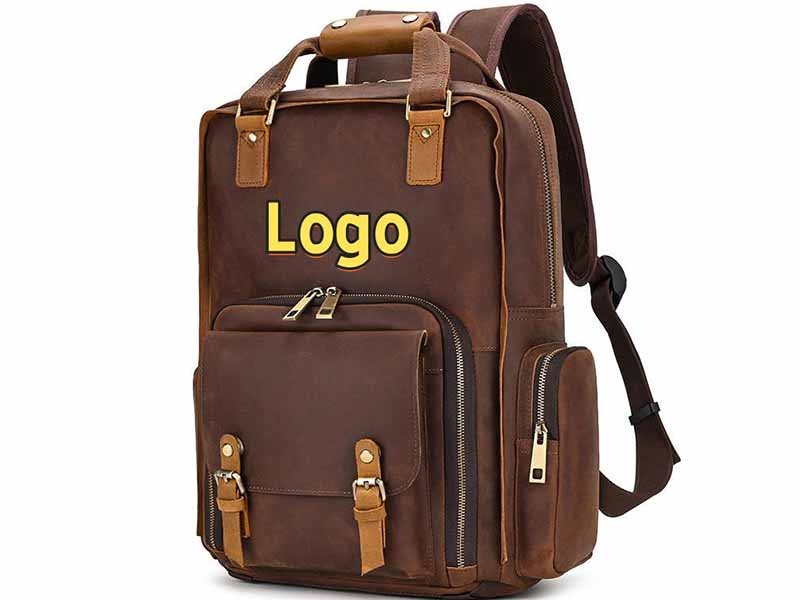
A leather bag can use beautiful leather, clean stitching, solid hardware, and a well-balanced shape, but if the logo looks wrong, the whole product feels less valuable. A logo that is too large can make a premium bag look cheap. A logo pressed too shallow may disappear after use. A foil logo placed on a high-friction area may wear faster than expected. A metal logo that is slightly crooked can make customers question the entire manufacturing quality. On leather goods, the logo is not a small decoration. It is one of the first details customers use to judge whether the product feels professional, premium, and worth paying for.
Custom logo applications for leather bags include embossing, debossing, foil stamping, screen printing, UV printing, heat transfer, embroidery, metal logos, leather patches, zipper pull logos, inner labels, and branded packaging. The best method depends on leather type, surface grain, logo size, product style, durability needs, MOQ, target price, and brand positioning.
For brand owners, private label sellers, boutiques, designers, and custom wholesale clients, the right logo method can make a leather bag feel complete. A minimalist tote may need a quiet debossed logo. A fashion handbag may need a polished metal logo. A wallet may look better with hot foil stamping. A casual travel bag may need an embossed leather patch. The smartest choice is not always the most expensive one. It is the one that fits the leather, the customer, the use scenario, and the story the brand wants to tell.
What Are Custom Logo Applications?
Custom logo applications are the different ways a brand mark is added to leather bags, wallets, belts, straps, accessories, and packaging. These methods include embossing, debossing, foil stamping, printing, embroidery, metal labels, leather patches, zipper pull logos, inner labels, hangtags, dust bags, and box printing. A good logo application should match the leather surface, product style, durability requirement, and brand price level.
Logo application on leather is more technical than many people expect. Leather is not a perfectly flat material. It has grain, thickness, stretch, finish, oil content, coating, softness, and natural variation. Even synthetic leather and microfiber leather have different surface reactions. This means one logo method may look clean on smooth leather but unclear on pebbled leather. A foil logo may look bright on a wallet but less suitable on a flexible strap that bends often. A printed logo may show color well, but it needs the right surface treatment to avoid poor adhesion.
For leather bags, logo application should be planned early in the development process. It affects the material choice, pattern design, panel position, tooling cost, production flow, and quality inspection. For example, if a logo needs to be debossed on the front panel, the factory should know before the bag is sewn. It is usually easier and cleaner to apply logos on flat panels before assembly. If the logo is added too late, placement, pressure, and alignment may become more difficult.
SzoneierLeather works with brand customers and custom wholesale clients who usually care about more than just “adding a logo.” They want a logo that fits their product identity, feels durable, matches their leather choice, and looks consistent across bulk production. This requires communication between design, sampling, material sourcing, production, and inspection teams.
A practical logo decision usually includes five questions:
- What leather or material will be used?
- What logo method best fits the material?
- Where should the logo be placed?
- How large should the logo be?
- How durable does the logo need to be?
If these questions are answered clearly before sampling, the final product is easier to control.
What Makes Leather Bag Logos Different?
Leather bag logos are different because leather reacts to pressure, heat, ink, foil, stitching, and hardware attachment in its own way. A logo on cotton canvas, polyester, or paper is usually easier to predict. Leather is more sensitive. Surface texture, coating, thickness, softness, and finish all influence the final logo effect.
Smooth leather usually gives cleaner results for debossing, foil stamping, and printing. Pebbled leather creates a more textured, natural look, but fine logo details may become softer. Suede and nubuck have a soft surface, so printing and stamping need special care. Oily or waxed leather can look rich, but ink adhesion and foil transfer may be more difficult. PU leather can work well for many logo methods, but heat tolerance and surface coating must be tested.
The leather thickness also matters. Thin leather may not hold deep debossing well. Very soft leather can deform under high pressure. Firm leather can show a sharper stamped logo, but it may need stronger pressure or temperature control. If the logo is placed on a curved or folded area, the result may be uneven.
Key leather factors that affect logo quality:
- Surface grain: smooth, pebbled, corrected, embossed, suede, nubuck
- Thickness: thin leather, medium leather, heavy leather
- Softness: soft, semi-structured, firm
- Finish: matte, glossy, waxed, oily, coated
- Color: light, dark, natural, dyed, metallic
- Heat tolerance: important for foil stamping and hot pressing
- Stretch: important for large logos and flexible panels
- Usage area: front panel, strap, handle, flap, bottom, inner label
For SzoneierLeather, logo testing is usually recommended before bulk production because a small sample can reveal many things. The factory can check logo sharpness, depth, color effect, surface reaction, and alignment before moving forward.
Why Do Logo Details Matter?
Logo details matter because they directly affect how customers judge the leather bag. A customer may not know the production cost, leather grade, or sewing process, but they will notice whether the logo looks balanced, clean, and premium. On leather goods, the logo often works like a quality signal. If it feels careless, customers may assume the whole bag is careless.
Several small details can change the final impression. A logo that is 5 mm too close to the seam may look crowded. A logo that is too deep may damage the leather surface. A logo that is too shallow may look weak. A foil logo that is not centered may look cheap. A metal logo with poor plating may discolor. A printed logo with poor adhesion may crack or peel. These are not just visual issues. They become customer complaints, return risks, and brand image problems.
Logo details also influence manufacturing cost and feasibility. A complex logo with very thin lines may require a larger size to stay readable. A small logo with tiny letters may not work well with debossing. A logo with many colors may need printing instead of stamping. A metal logo may need a mold, plating, attachment parts, and extra inspection. A foil logo may need color matching and adhesion testing.
Important logo details to confirm before production:
- Logo artwork format
- Logo size
- Line thickness
- Letter spacing
- Logo position
- Logo color
- Logo method
- Leather surface
- Heat and pressure setting
- Mold size
- Tooling cost
- Bulk consistency
- Abrasion resistance
- Alignment tolerance
- Packaging match
For leather bag brands, these details become even more important when developing a full product line. If the same logo appears on a tote bag, handbag, wallet, belt, strap, leather box, and packaging, the application method should feel consistent. A customer should recognize the brand identity across the whole collection.
Are Logos Only for Looks?
Logos are not only for looks. On leather bags, logos help communicate product level, brand identity, originality, retail value, and customer trust. A well-applied logo tells the customer that the product was made for a brand, not randomly sourced from a generic catalog.
A logo also helps separate different market levels. A subtle debossed logo may suit a minimalist premium brand. A gold foil logo may suit gift products or luxury-style accessories. A polished metal logo may suit fashion handbags. A leather patch may suit casual travel bags or outdoor-style leather goods. A printed logo may suit colorful collections, promotional products, or lower MOQ projects.
The logo also affects the way the product photographs online. On e-commerce pages, customers often zoom into details. They look at the leather texture, stitching, hardware, lining, zipper, and logo. If the logo looks refined, it supports a higher perceived value. If it looks poorly applied, even a good material may not save the product.
A leather bag logo can support several business goals:
| Business Goal | Logo Role | Suitable Logo Direction |
|---|---|---|
| Build brand recognition | Makes the product identifiable | Front logo, zipper pull logo, inner label |
| Increase perceived value | Makes the product feel more finished | Debossing, foil stamping, metal logo |
| Support retail display | Helps the bag look complete in photos | Front logo, hangtag, packaging logo |
| Create product family | Keeps design consistent across items | Same logo style on bags, wallets, straps |
| Improve gifting value | Makes the product feel more premium | Foil logo, dust bag logo, box logo |
| Support private label sales | Shows that the item belongs to the brand | Exterior logo plus inner label |
A good logo plan usually goes beyond the front panel. It can include the outer logo, inner label, zipper pull, hardware engraving, dust bag, box, hangtag, and care card. This creates a full brand experience instead of a single mark on the surface.
What Should Brands Plan First?
Brands should first plan the logo method, leather type, logo size, placement, product level, quantity, and packaging style. These decisions affect cost, sample time, MOQ, tooling, material selection, and final quality. The earlier the factory understands the logo goal, the easier it is to produce a clean and consistent result.
A common mistake is starting with the question, “Can you put our logo on it?” A better starting point is, “Which logo method fits our leather bag and target market?” The answer may be different for a handbag, tote bag, backpack, wallet, belt, strap, accessory pouch, or leather box.
For example, a premium leather handbag may use a metal logo or small gold foil mark. A men’s leather briefcase may use deep debossing for a quiet professional feel. A leather wallet may use hot stamping because the front surface is small and flat. A leather travel bag may use an embossed patch because it feels durable and casual. A PU leather cosmetic pouch may use printing because it supports more color options and cost control.
Before starting sampling, brands should prepare:
- Logo file in AI, PDF, SVG, EPS, or high-resolution PNG
- Product style or reference images
- Leather type or material preference
- Preferred logo method
- Desired logo size
- Logo placement idea
- Product color
- Hardware color
- Lining preference
- Target order quantity
- Target price range
- Packaging needs
- Sales channel or target market
A practical planning table:
| Planning Item | What to Decide | Why It Matters |
|---|---|---|
| Logo file | Vector file or clear high-resolution image | Prevents blurry or inaccurate logo output |
| Leather type | Genuine leather, PU leather, microfiber, suede, nubuck | Determines which logo methods can work |
| Logo method | Debossing, embossing, foil, printing, metal, patch | Affects cost, tooling, look, and durability |
| Logo size | Small, medium, large, full panel | Affects readability and production risk |
| Logo position | Front, side, flap, strap, zipper pull, lining | Affects product appearance and usability |
| Product level | Entry, mid-range, premium, luxury-style | Helps choose a suitable logo effect |
| Quantity | Trial order, small batch, bulk order | Affects MOQ, mold cost, and unit price |
| Packaging | Polybag, dust bag, gift box, hangtag | Supports brand presentation and retail value |
SzoneierLeather can help customers review these details before sample production. With experience in material sourcing, product design, logo development, sampling, manufacturing, packaging design, and quality inspection, the factory can recommend practical solutions instead of forcing every brand into the same logo method.
Which Logo Application Fits Best?
The best logo application for leather bags depends on leather surface, logo design, product style, durability needs, target price, and brand positioning. Debossing and embossing are strong choices for subtle and durable branding. Foil stamping adds a bright premium effect. Printing works for color logos. Metal logos create strong visibility. Leather patches and zipper pull logos add refined details.
There is no universal logo method that works perfectly for every leather bag. A method that looks elegant on a smooth leather wallet may look unclear on heavily grained leather. A metal logo may look premium on a structured handbag but too heavy on a soft tote. A printed logo may show color beautifully on PU leather but may not suit an oily full-grain leather surface. A foil logo may look expensive on a small flap but may wear faster if placed where the user’s hand rubs every day.
The best logo choice should answer four practical questions:
- What material will the logo be applied to?
- How much friction will the logo area receive?
- What brand feeling should the product create?
- What budget and MOQ does the project need to match?
For SzoneierLeather customers, logo method selection is usually part of the product development discussion. The same brand may need different logo applications across a full product range. A handbag may use a metal logo, a wallet may use foil stamping, a belt may use debossing, a leather box may use hot stamping, and a strap may use an embossed leather patch. The key is consistency in brand feeling, not necessarily using the same technique everywhere.
Is Embossing a Good Choice?
Embossing is a good choice when a brand wants a tactile logo effect that feels integrated with the leather surface. It can create a raised or pressed texture depending on tooling and production setup. In leather goods production, brands often use the word embossing to describe heated stamping or pressure-based logo application on leather.
Embossing works well when the leather has enough body to hold the impression. Smooth leather, semi-firm leather, vegetable-tanned leather, corrected-grain leather, and some PU leathers can show clean results. It is often used for leather bags, wallets, belts, straps, leather boxes, notebook covers, and premium packaging.
The main advantage is durability. Since the mark is formed into the leather surface, it does not depend on a surface layer of ink or foil. This makes it useful for products that need a long-lasting, refined logo. Embossing also gives a quiet and natural look, especially when the logo color remains tone-on-tone with the leather.
However, embossing should be tested. Very soft leather may not hold the shape clearly. Thin leather may show unwanted marks on the reverse side. Pebbled leather may soften fine details. Large logos may require more careful pressure control. Heat-sensitive materials may need lower temperature or a different method.
Embossing is suitable for:
- Leather tote bags
- Leather handbags
- Leather backpacks
- Wallets and card holders
- Belts and straps
- Leather boxes
- Notebook covers
- Gift sets
- Minimalist private label products
- Corporate leather goods
A practical embossing reference:
| Product Type | Recommended Logo Style | Reason |
|---|---|---|
| Leather tote bag | Medium-size front embossing | Clean, visible, not too loud |
| Wallet | Small deep embossing | Durable and elegant |
| Belt | Inner or end embossing | Keeps branding discreet |
| Leather box | Top panel embossing | Strong gift presentation |
| Strap | Repeated small embossing | Adds detail without large decoration |
| Minimalist handbag | Small tone-on-tone embossing | Premium and understated |
For SzoneierLeather, embossing depth, die size, pressure, and temperature can be adjusted during sampling. This helps brands find the right balance between visibility and elegance.
Is Debossing More Premium?
Debossing often feels more premium because the logo is pressed into the leather surface, creating a quiet and refined identity. It is widely used by brands that want the logo to be visible but not loud. Compared with shiny decoration, debossing feels more restrained, which can work well for leather goods with a higher price positioning.
Debossing is especially suitable for minimalist bags, men’s leather goods, premium wallets, briefcases, leather notebooks, corporate gift sets, and luxury-style packaging. It works best on leather that can hold a clean impression. Smooth or lightly textured leather usually gives the sharpest result. Heavy grain can still work, but the logo may appear softer.
A well-made debossed logo can stay attractive over long use because it does not rely on surface color. Even if the leather develops a patina, the logo can continue to feel natural. This is one reason debossing is often chosen for full-grain or vegetable-tanned leather products.
The key is not to make the logo too complex. Fine lines, tiny letters, or thin decorative strokes may lose clarity when pressed into leather. If the brand logo has detailed artwork, the factory may recommend simplifying the logo, increasing the size, or choosing another method.
Debossing works well for:
- Premium leather handbags
- Business briefcases
- Men’s leather backpacks
- Wallets
- Card holders
- Leather folders
- Leather boxes
- Corporate gift products
- Minimalist leather accessories
- High-end private label collections
Debossing decision table:
| Logo Feature | Good for Debossing? | Suggestion |
|---|---|---|
| Simple wordmark | Yes | Works very well |
| Bold icon | Yes | Clean and readable |
| Thin script font | Sometimes | Increase size or thicken lines |
| Detailed illustration | Risky | Simplify or use printing |
| Very small text | Risky | Avoid below readable size |
| Large solid block | Depends | Test pressure and leather reaction |
For SzoneierLeather projects, debossing is often recommended when brands want long-term durability, quiet luxury, and a natural leather feel.
Does Foil Stamping Last?
Foil stamping can last well when used on suitable leather, placed in a lower-friction area, and applied with proper heat, pressure, and foil quality. It creates a metallic or colored logo effect, most commonly in gold, silver, rose gold, black, white, or brand-specific colors. It is a strong option for premium-looking handbags, wallets, gift items, and fashion leather accessories.
The main reason brands choose foil stamping is visual appeal. A small gold foil logo on black leather can look elegant. A silver foil logo on navy leather can feel modern. A rose gold logo on soft-colored leather can suit women’s accessories or beauty-related gift sets. Foil stamping gives a leather product a stronger display effect, especially in product photos and packaging.
The key limitation is friction. Foil sits on the leather surface, so placement matters. It is better to avoid areas that bend heavily, rub against clothing, touch the table often, or contact the user’s hand repeatedly. For example, foil on a wallet front can work well if the surface is smooth and the logo is not too large. Foil on the bottom corner of a travel bag may wear faster.
Foil stamping is suitable for:
- Leather handbags
- Wallets
- Card holders
- Small leather goods
- Leather gift boxes
- Cosmetic bags
- Fashion accessories
- Luxury-style packaging
- Limited edition products
- Gift collections
Foil color reference:
| Foil Color | Visual Feeling | Best Match |
|---|---|---|
| Gold | Classic, warm, premium | Black, brown, burgundy, dark green leather |
| Silver | Modern, clean, cool | Black, navy, gray, white leather |
| Rose gold | Soft, fashionable, feminine | Beige, pink, cream, taupe leather |
| Black | Subtle and sharp | Tan, natural, light leather |
| White | Clean and visible | Black or dark colored leather |
| Matte foil | Refined and less shiny | Minimalist premium products |
| Custom color | Strong brand recognition | Brand-specific collections |
Foil stamping should be checked through real samples. The factory should evaluate foil adhesion, edge sharpness, color effect, rubbing resistance, and leather surface reaction. For brands that want both metallic shine and durability, SzoneierLeather can also test debossing with foil, where the logo is pressed and foil is applied together for a deeper premium effect.
Can Printing Work on Leather?
Printing can work on leather when the surface is suitable and the correct ink or printing process is used. It is useful when a brand needs color logos, gradients, patterns, artwork, slogans, seasonal graphics, or lower-cost branding for certain product lines. Printing is often used on PU leather, smooth coated leather, promotional leather goods, inner labels, lining, leather pouches, and packaging.
The main strength of printing is flexibility. Embossing and debossing are limited to shape and depth. Foil stamping is usually limited to solid color or metallic effects. Printing can show multiple colors, detailed artwork, and larger graphics. For brands with colorful logos, printing may be the most practical method.
However, printing should not be selected only because it is easy to understand. Leather surfaces are not all print-friendly. Oily leather, waxed leather, rough suede, and heavily grained leather may create adhesion problems. Flexible areas may cause cracking if the ink is not suitable. High-friction areas may fade after repeated rubbing. A printed logo needs the right surface, ink, curing process, and quality testing.
Printing is suitable for:
- PU leather bags
- Promotional leather pouches
- Color logo projects
- Fashion graphics
- Limited edition collections
- Patterned panels
- Inner leather labels
- Lining logos
- Hangtags and packaging
- Small batch brand testing
Printing method reference:
| Printing Method | Best Use | Main Advantage |
|---|---|---|
| Screen printing | Simple logos and solid colors | Cost-effective for bulk production |
| Heat transfer | Smooth surfaces and small batches | Clean effect and flexible setup |
| UV printing | Detailed artwork and color designs | High detail and strong visual output |
| Digital printing | Patterns and custom graphics | Good for creative designs |
| Pad printing | Small curved or irregular areas | Useful for small accessories |
For SzoneierLeather customers, printing can be a good solution when the brand needs a colorful logo or special design effect. The factory can help test print clarity, adhesion, color match, and surface compatibility before production.
Are Metal Logos Better?
Metal logos are better when a brand wants a visible, structured, and fashion-oriented identity. They are commonly used on handbags, backpacks, shoulder bags, wallets, luggage tags, straps, and premium leather accessories. A metal logo can make a bag look more polished, especially when it matches the zipper, buckle, chain, rivet, clasp, or other hardware.
Metal logos can be made in different finishes, such as gold, silver, gunmetal, rose gold, antique brass, matte black, brushed nickel, or custom plating. The attachment method also matters. Depending on the bag structure, a metal logo may be attached with prongs, rivets, screws, backing plates, or other hardware systems. For soft leather, the attachment area may need reinforcement to prevent pulling or deformation.
The main advantage of a metal logo is strong visual impact. It catches light and looks more dimensional than stamped or printed logos. This is useful for fashion bags where customers expect visible hardware details. A metal logo can also help a new brand look more established if the execution is clean.
The main risk is over-design. A large shiny metal logo can make a minimalist leather bag feel less refined. Poor plating can fade or discolor. Weak attachment can loosen over time. Sharp edges can scratch the leather or user’s hand. If the metal color does not match the rest of the hardware, the product may look inconsistent.
Metal logos are suitable for:
- Structured handbags
- Premium leather backpacks
- Fashion shoulder bags
- Luxury-style tote bags
- Wallets and card holders
- Leather boxes
- Gift sets
- Branded collections
- Retail leather accessories
Metal logo planning table:
| Detail | Recommendation | Reason |
|---|---|---|
| Metal finish | Match zipper, buckle, rivet, chain | Creates visual consistency |
| Logo size | Keep proportional to bag size | Avoids cheap or oversized look |
| Attachment | Use secure hardware system | Prevents loosening |
| Leather backing | Reinforce if leather is soft | Reduces pulling and distortion |
| Edge finish | Smooth and rounded | Prevents scratching |
| Plating quality | Test color and surface | Improves long-term appearance |
Logo method comparison:
| Logo Method | Best Visual Style | Durability Level | Suitable Products |
|---|---|---|---|
| Embossing | Natural, tactile, classic | High | Bags, wallets, belts, boxes |
| Debossing | Subtle, premium, minimal | High | Handbags, briefcases, wallets |
| Foil stamping | Bright, elegant, gift-ready | Medium to high | Wallets, handbags, boxes |
| Printing | Colorful, flexible, creative | Medium | PU leather, pouches, campaigns |
| Metal logo | Visible, structured, fashionable | High if attached well | Handbags, backpacks, premium bags |
| Leather patch | Casual, durable, textured | High | Travel bags, outdoor-style bags |
| Zipper pull logo | Small, refined, premium | High | Private label leather bags |
For SzoneierLeather, metal logos can be developed together with matching buckles, zipper pulls, rivets, strap hardware, packaging labels, and product accessories. This helps the final leather bag feel like a full branded collection instead of a simple item with one logo attached.
How Does Leather Change Logos?
Leather changes logo results through surface grain, thickness, softness, coating, color, finish, and heat tolerance. A logo method that looks sharp on smooth leather may look softer on pebbled leather. A foil logo that works well on coated PU leather may not perform the same on waxed leather. Good logo application starts with testing the logo on the actual material before bulk production.
Leather is not only a background for the logo. It decides how the logo looks, feels, ages, and performs after repeated use. This is why professional leather bag customization should never separate logo design from material selection. The two decisions belong together.
For example, a small debossed logo may look elegant on smooth full-grain leather, but it may lose detail on deep pebbled leather. A gold foil logo may look premium on a black wallet, but it may feel too shiny on a soft vintage-style tote. A printed logo may show brand colors clearly on PU leather, but it may not bond well to oily pull-up leather. A metal logo may sit beautifully on a structured handbag but may pull or wrinkle soft leather if the back panel is not reinforced.
Brands often focus on the logo artwork first. That is understandable. The logo represents the brand. But in leather bag manufacturing, the material controls the final result more than many people expect. Even the same logo file can look different across cowhide, split leather, sheep leather, microfiber leather, PU leather, suede, nubuck, and embossed leather.
This is why SzoneierLeather normally recommends reviewing logo application together with material samples. The factory can test logo depth, foil adhesion, print clarity, color contrast, leather deformation, and surface damage risk before the bulk order begins. This process helps avoid a common problem: approving a logo design digitally, then discovering during sampling that the chosen leather does not show the logo clearly.
For brands developing leather bags, wallets, belts, straps, accessories, or leather boxes, material understanding can reduce cost and improve final quality. Instead of asking which logo method is “best,” a smarter question is: which logo method works best on this exact leather, in this exact position, for this exact product use?
Which Leather Shows Logos Best?
Smooth and semi-firm leather usually shows logos most clearly because the surface allows better contact with the die, foil, ink, or hardware. Full-grain smooth leather, corrected-grain leather, vegetable-tanned leather, firm PU leather, and microfiber leather can produce clean logo results when the method is matched correctly. These materials are often suitable for debossing, embossing, foil stamping, printing, and metal logo attachment.
Smooth leather gives a more even pressure surface. This helps debossed and embossed logos show sharper edges. It also helps foil stamping transfer more evenly because the foil can contact the surface without being interrupted by deep grain. Printing can also look cleaner on smooth surfaces because ink coverage is more consistent.
Vegetable-tanned leather is often popular for deep debossing or embossing because it can hold a strong impression well. It is suitable for wallets, belts, notebook covers, straps, leather boxes, and premium accessories. However, vegetable-tanned leather may darken or change tone over time, so the logo should be tested with the expected leather finish.
PU leather and microfiber leather can also show logos clearly, especially when the surface is smooth and stable. These materials are often practical for fashion bags, promotional leather goods, cosmetic bags, wallets, and larger-volume private label projects. The key is heat tolerance. Some synthetic leathers may react poorly to high temperature, so stamping pressure and temperature must be controlled.
Leather logo clarity reference:
| Leather Type | Logo Clarity | Suitable Logo Methods | Notes |
|---|---|---|---|
| Smooth full-grain leather | High | Debossing, embossing, foil, metal logo | Premium look, needs careful testing |
| Vegetable-tanned leather | High | Deep debossing, embossing, hot stamping | Holds impression well |
| Corrected-grain leather | Medium to high | Debossing, foil, printing | Surface is more controlled |
| Pebbled leather | Medium | Larger debossing, metal logo, patch | Fine details may soften |
| PU leather | Medium to high | Printing, foil, embossing, metal logo | Heat tolerance must be tested |
| Microfiber leather | Medium to high | Printing, debossing, foil | Good for stable bulk production |
| Suede | Low to medium | Embroidery, patch, special printing | Stamping may be less clear |
| Nubuck | Low to medium | Patch, subtle debossing, printing test | Surface can mark easily |
For brands unsure about leather selection, SzoneierLeather can provide material options based on the target logo effect. If the logo must be sharp and small, a smoother leather may be better. If the bag needs a natural casual look, pebbled leather or leather patches may be more suitable.
Does Grain Affect the Logo?
Grain affects logo quality a lot. The deeper and more uneven the grain, the harder it is to create a sharp, fine logo. Smooth leather gives clearer edges. Light grain gives a natural look with acceptable clarity. Heavy pebbled grain can make small text, thin lines, and detailed icons harder to read.
This does not mean pebbled leather is bad. Pebbled leather can look rich, durable, and commercial. Many handbags, backpacks, tote bags, and wallets use pebbled leather because it hides scratches better and gives the product a textured feel. But the logo design should match the grain. A small delicate logo may not work well. A bolder logo with thicker lines usually performs better.
For pebbled leather, brands can consider:
- Increasing logo size slightly
- Using thicker logo lines
- Avoiding tiny text
- Choosing debossing instead of foil if foil transfer is uneven
- Using a leather patch for better logo clarity
- Using metal hardware for stronger visibility
- Placing the logo on a smoother leather panel or patch
- Testing foil adhesion before approval
Grain also affects foil stamping. On deep grain, the foil may only contact the raised parts of the texture, leaving uneven coverage. This can create a vintage effect if intended, but it can also look defective if the brand expects a clean metallic logo. Printing faces a similar issue. Ink may sit unevenly on heavily textured surfaces.
A grain and logo planning table:
| Grain Type | Visual Style | Logo Risk | Better Logo Direction |
|---|---|---|---|
| Smooth grain | Clean, refined | Low | Small debossing, foil, printing |
| Light grain | Natural, balanced | Low to medium | Debossing, embossing, foil test |
| Medium pebbled grain | Commercial, durable | Medium | Bold debossing, metal logo, patch |
| Heavy pebbled grain | Strong texture | High for fine details | Large logo, patch, metal logo |
| Embossed pattern leather | Decorative | Logo may compete with pattern | Subtle metal logo or inner label |
| Suede/nubuck surface | Soft, matte | Stamping may blur | Patch, embroidery, special print |
For SzoneierLeather projects, grain choice should be discussed before mold making. If the logo is complex, the factory may suggest simplifying the logo or choosing a smoother leather section for application.
Is PU Leather Suitable?
PU leather is suitable for many custom logo applications when the surface quality, backing, coating, and heat tolerance are stable. It can work well with printing, foil stamping, embossing, debossing, metal logos, leather patches, and zipper pull logos. For brands that need cost control, consistent color, larger production volume, or vegan-friendly positioning, PU leather can be a practical option.
One advantage of PU leather is surface consistency. Natural leather may have scars, grain variation, and color differences. PU leather is more controlled in surface texture and color, which can help logo consistency across bulk production. This is useful for private label bags, promotional leather goods, fashion collections, cosmetic bags, wallets, and accessories.
PU leather is also easier to match with trendy colors. If a brand wants cream, pastel pink, bright red, metallic silver, matte black, or seasonal colors, PU leather may offer more stable options than natural leather. Printing can also work well on certain PU surfaces because the surface is more uniform.
However, PU leather must still be tested. Some PU materials are sensitive to high heat. A hot stamping process may damage the coating, create shine marks, or cause surface deformation if the temperature is too high. Some PU surfaces may not hold foil well. Some low-grade PU may crack after bending or abrasion. The logo method should match the material quality.
PU leather logo planning:
| Logo Method | PU Leather Suitability | Production Note |
|---|---|---|
| Printing | High | Good for color logos and patterns |
| Foil stamping | Medium to high | Test heat and adhesion first |
| Embossing | Medium | Depends on surface and backing |
| Debossing | Medium | Depth may be limited |
| Metal logo | High | Reinforce if material is soft |
| Leather patch | High | Good for fashion and casual styles |
| Zipper pull logo | High | Works well for private label details |
For SzoneierLeather customers, PU leather can be a strong choice when the brand wants a polished look, consistent color, flexible MOQ, and controlled cost. The factory can recommend different PU grades according to hand feel, thickness, backing strength, surface finish, and logo requirements.
Do Colors Change the Effect?
Colors change logo effect because contrast, brightness, surface finish, and material tone all influence how the logo appears. The same logo method can look very different on black, brown, tan, white, navy, red, cream, or metallic leather. A debossed logo may look elegant on tan leather but nearly invisible on dark pebbled leather. A gold foil logo may look premium on black but too strong on bright red.
Color matching is one of the easiest places to improve product value. Brands should think about the logo and leather color together, not separately. A logo should either create intentional contrast or subtle harmony. Random contrast can look cheap. Controlled contrast can look premium.
Common color decisions:
- Black leather with gold foil creates a classic premium look.
- Black leather with blind debossing feels subtle and modern.
- Brown leather with debossing feels natural and crafted.
- Tan leather with dark printing feels casual and clear.
- Cream leather with rose gold foil feels soft and fashion-oriented.
- Navy leather with silver foil feels clean and professional.
- Red leather with gold hardware can feel bold and luxury-inspired.
- Matte leather with tone-on-tone logo feels minimalist.
Leather finish also affects color perception. A glossy leather surface reflects light, making foil or metal logos brighter. A matte leather surface makes logos feel softer and more understated. A waxed leather may darken around the logo under pressure. A light leather may show heat marks more easily. Dark leather may hide subtle debossing unless the depth is strong enough.
Color and logo combination table:
| Leather Color | Good Logo Options | Style Direction |
|---|---|---|
| Black | Gold foil, silver foil, blind debossing, metal logo | Premium, modern, fashion |
| Dark brown | Debossing, antique brass metal, gold foil | Classic, vintage, business |
| Tan | Debossing, dark printing, leather patch | Natural, casual, crafted |
| White/Cream | Rose gold foil, silver logo, subtle printing | Clean, elegant, feminine |
| Navy | Silver foil, gunmetal logo, blind debossing | Professional, modern |
| Burgundy | Gold foil, blind debossing, antique metal | Rich, gift-ready |
| Pastel colors | Rose gold foil, printing, small metal logo | Fashion, lifestyle |
| Metallic leather | Minimal debossing, inner logo, small hardware | Avoid over-decoration |
For bulk production, color consistency is important. SzoneierLeather can help customers confirm leather color, logo color, hardware color, lining color, stitching color, and packaging color together. This makes the final product feel more complete and professional.
Where Should Logos Go?
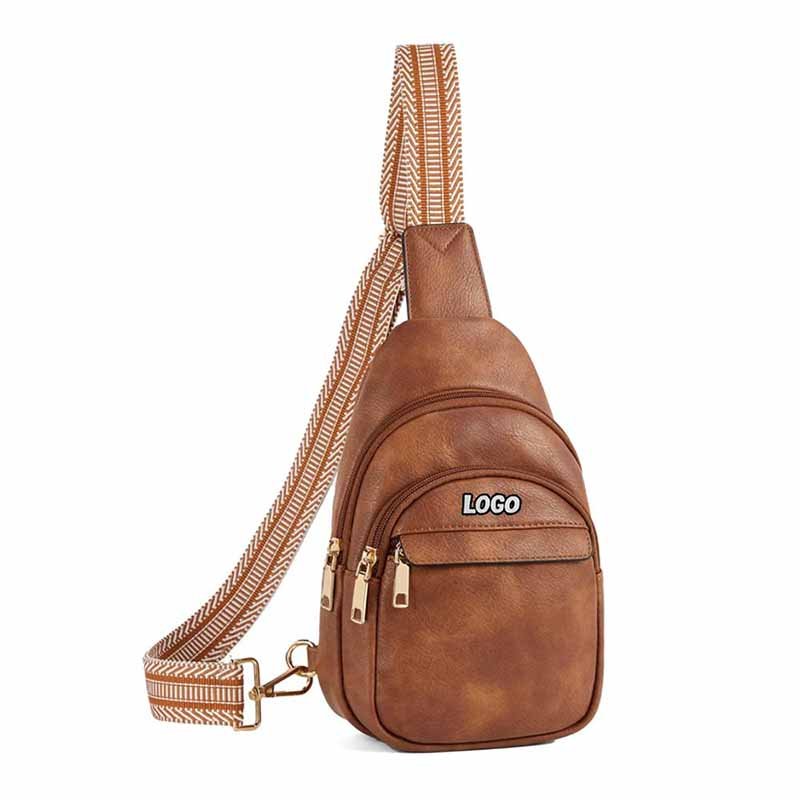
Logos should be placed where they improve brand recognition without disturbing the bag’s function, shape, or premium feeling. Common logo positions include front panels, flaps, handles, straps, zipper pulls, inner labels, lining, side panels, bottom patches, dust bags, boxes, and hangtags. The best position depends on bag style, logo method, leather type, and target customer.
Logo placement is easy to underestimate. Many brands spend time choosing the logo method but then place the logo wherever there is empty space. That often leads to weak product design. Good placement should feel intentional. It should support the bag’s visual balance, not fight with pockets, seams, hardware, zipper lines, handles, or decorative panels.
A front logo is the most visible choice, but it is not always the most refined. A luxury-style handbag may benefit from a small metal logo centered on the front. A minimalist leather tote may look better with a small debossed logo near the lower center. A business briefcase may use a subtle side or front corner logo. A wallet may use a small logo near the bottom corner. A leather backpack may place the logo on the front pocket, patch, puller, or inner label.
Placement also affects durability. Logos placed on high-touch areas may wear faster. Handles, strap contact points, lower corners, and flap folds receive more friction. Foil and printing should usually avoid these zones unless tested carefully. Debossing, embossing, leather patches, or metal logos may perform better in areas with moderate contact.
SzoneierLeather usually recommends planning logo placement during pattern development. Some logos should be applied before sewing, especially debossing, embossing, foil stamping, and printing on flat panels. Metal logos may require reinforcement behind the leather. Zipper pull logos need hardware development. Inner labels and packaging logos need separate production planning.
Is the Front Logo Better?
The front logo is better when the brand wants strong visibility and easy recognition in product photos, retail display, and daily use. It is the most direct branding position and works well for handbags, tote bags, backpacks, shoulder bags, wallets, pouches, and leather boxes. However, front logos must be sized carefully so they do not overpower the product.
A front logo should match the bag’s shape. On a structured handbag, a centered metal logo or foil logo may look polished. On a soft leather tote, a large shiny metal logo may feel too aggressive. On a business briefcase, a small debossed logo in the lower corner may look more professional. On a fashion crossbody bag, a front logo plate may be suitable if it matches the hardware style.
Front logo placement can include:
- Upper center
- Lower center
- Bottom corner
- Flap center
- Front pocket
- Leather patch area
- Metal badge area
- Small side-front position
Each option creates a different feeling. Upper center is more visible. Lower center is more subtle. Bottom corner feels casual and understated. Flap center is common for handbags. Front pocket placement works well for backpacks and travel bags.
Front logo planning table:
| Front Position | Best Product Type | Visual Feeling |
|---|---|---|
| Center front | Handbags, structured bags | Clear, fashion, recognizable |
| Lower center | Tote bags, minimalist bags | Subtle, premium, balanced |
| Bottom corner | Briefcases, wallets, pouches | Quiet, professional |
| Flap center | Crossbody bags, shoulder bags | Classic handbag branding |
| Front pocket | Backpacks, travel bags | Practical and visible |
| Leather patch | Casual bags, outdoor-style bags | Durable and textured |
A front logo should also leave enough space from seams and edges. If the logo is too close to stitching, it can look crowded. If it is too high or low, the bag may feel visually unbalanced. Sample review is the best way to confirm the final position.
Do Inner Logos Add Value?
Inner logos add value because they make the product feel more complete and professionally branded. Even if the outer logo is subtle, an inner label, printed lining, leather tag, or woven brand label can remind customers that the bag belongs to a real brand. This is especially useful for private label leather bags, premium handbags, wallets, and gift products.
An inner logo is also a smart choice when the brand wants a clean exterior. Some minimalist brands do not want a large front logo. Instead, they use a small debossed exterior mark plus a more detailed inner label. This keeps the outside elegant while still building brand identity.
Inner logo options include:
- Woven label
- Leather inner patch
- Printed lining logo
- Embossed leather tag
- Metal inner plate
- Care label
- Size or model label
- QR code label
- Brand story card
- Authenticity card pocket
Inner logos can also support product information. A leather bag may include material details, care instructions, model name, origin label, serial number, or QR code. For premium products, this extra information can increase trust.
Inner logo value table:
| Inner Branding Option | Main Use | Customer Benefit |
|---|---|---|
| Woven label | General private label bags | Clean and cost-effective branding |
| Leather inner patch | Premium handbags, briefcases | More refined and durable |
| Printed lining | Fashion bags, gift products | Stronger brand atmosphere |
| Embossed inner tag | Minimalist premium bags | Subtle but professional |
| Care label | Leather goods and accessories | Helps customers maintain the product |
| QR code label | Modern brands, traceability | Supports digital brand connection |
| Authenticity card | Premium collections | Adds trust and gift value |
For SzoneierLeather, inner branding can be developed together with exterior logo and packaging. This helps customers create a full private label product instead of only applying a front logo.
Can Zippers Carry Logos?
Zippers can carry logos through custom zipper pulls, engraved metal pullers, embossed leather pull tabs, rubber pullers, woven pull tabs, or printed puller details. This is a small but powerful branding method because zipper pulls are touched frequently and seen during daily use.
Custom zipper pulls are especially useful for premium private label bags. They can make the product feel more detailed without making the main logo too large. A leather pull tab with debossed logo feels classic and soft. A metal zipper pull with engraved logo feels more polished. A rubber puller may suit casual or outdoor-style leather bags. A woven puller can work for travel or utility designs.
Zipper pull logo options:
- Engraved metal zipper pull
- Debossed leather pull tab
- Embossed leather pull tab
- Printed leather pull tab
- Rubber logo puller
- Woven logo pull tab
- Custom shape metal puller
The zipper pull should match the bag’s hardware. If the bag uses antique brass buckles, the zipper pull should not be bright silver unless the contrast is intentional. If the bag uses minimalist matte black hardware, a glossy gold puller may feel inconsistent. Small inconsistencies can reduce the product’s premium feeling.
Zipper branding table:
| Puller Type | Best Product Fit | Visual Feeling |
|---|---|---|
| Metal engraved puller | Premium handbags, backpacks | Polished and durable |
| Leather debossed puller | Totes, briefcases, wallets | Soft and classic |
| Rubber puller | Casual bags, travel bags | Practical and modern |
| Woven pull tab | Utility bags, outdoor-style products | Lightweight and sporty |
| Custom shape puller | Fashion collections | Distinctive and memorable |
For SzoneierLeather customers, zipper pull logos can be used together with front logo, inner label, and packaging to create a consistent brand identity. This detail is small, but customers often notice it because they touch it every time they open the bag.
How Big Should Logos Be?
Logo size should match the product size, leather texture, logo method, and brand style. A logo should be large enough to be readable but not so large that it makes the bag look promotional or cheap. For premium leather bags, smaller and cleaner logos often feel more refined than oversized branding.
There is no fixed logo size for every product. A wallet may only need a 15–30 mm logo. A handbag may use a 25–60 mm logo depending on style. A tote bag may support a larger mark, but the logo should still respect the bag’s proportion. A leather box may use a centered logo that feels balanced with the box lid.
Logo size also depends on the logo design. A simple icon can be smaller and still readable. A long wordmark may need more width. Thin letters need a larger size than bold letters. Detailed illustrations may need to be simplified or enlarged. For debossing and foil stamping, very small details may not show clearly.
General logo size guidance:
| Product Type | Common Logo Size Direction | Notes |
|---|---|---|
| Wallet | 15–35 mm width | Keep clean and readable |
| Card holder | 12–25 mm width | Avoid complex details |
| Small pouch | 20–45 mm width | Front or corner placement |
| Handbag | 25–60 mm width | Match hardware and bag shape |
| Tote bag | 35–90 mm width | Can be larger but should stay balanced |
| Backpack | 30–80 mm width | Front pocket or patch area works well |
| Belt | 15–40 mm width | Often placed inside or near end |
| Leather box | 30–100 mm width | Depends on lid size and gift style |
A good size decision also considers viewing distance. A logo on a handbag may be seen from a short distance. A logo on a tote bag may be seen in product photos or retail display. A logo on a wallet is mostly seen when held in hand. This affects how bold the logo should be.
For SzoneierLeather, logo size can be checked through digital mockups and physical samples. The physical sample is especially important because leather texture, color, and lighting can make the logo look larger or smaller than expected.
Placement and Method Matching Table
| Logo Position | Best Logo Methods | Suitable Products | Key Risk |
|---|---|---|---|
| Front center | Metal logo, foil, debossing | Handbags, shoulder bags | Can look too loud if oversized |
| Lower front | Debossing, embossing, small foil | Totes, briefcases | May be too subtle on dark leather |
| Front pocket | Patch, debossing, metal logo | Backpacks, travel bags | Must avoid zipper conflict |
| Flap | Foil, metal logo, debossing | Crossbody bags, handbags | Bending area may affect durability |
| Strap | Debossing, embossing, woven logo | Belts, shoulder straps | Repeated friction risk |
| Zipper pull | Engraving, leather pull logo | Bags, wallets, pouches | Hardware color must match |
| Inner panel | Woven label, leather patch, printed lining | All leather bags | Should not scratch contents |
| Dust bag | Printing, woven label | Premium packaging | Color should match brand style |
| Gift box | Foil stamping, printing, embossing | Leather boxes, gift sets | Needs packaging MOQ planning |
Logo placement should never be random. It should fit the product’s structure, customer use, material behavior, and brand level. A small logo placed perfectly often feels more expensive than a large logo placed carelessly. For leather goods, restraint can be powerful. The best placement is the one customers notice for the right reason, not because it feels forced.
How Are Custom Logos Made?
Custom logos are made through artwork review, material testing, mold or plate preparation, sample application, position approval, durability checking, and bulk production control. For leather bags, the process should not begin directly with mass production. The logo needs to be tested on the selected leather, checked under real lighting, reviewed for alignment, and confirmed for consistency before the final order is produced.
A leather bag logo may look simple after it is finished, but the production process includes many decisions. The factory needs to check whether the artwork is clear enough, whether the leather surface can accept the logo method, whether the logo size is suitable, whether the placement avoids seams or curves, and whether the final effect matches the brand’s price level. A good logo is not only printed, stamped, or attached. It is planned.
For SzoneierLeather, custom logo development is connected with product design, raw material sourcing, sampling, bag manufacturing, packaging design, and quality inspection. This is important because logo quality is affected by every stage. If the leather is changed, the logo may change. If the panel size is adjusted, the logo position may need to move. If the hardware color changes, the metal logo or zipper pull may need a new finish. If packaging is upgraded, the logo style should match.
Brands should also understand that different logo methods have different preparation needs. Debossing, embossing, and foil stamping usually require a mold or die. Metal logos require hardware development and plating confirmation. Printing requires artwork color matching and surface testing. Embroidery requires thread color and stitch testing. Packaging logos may need separate printing plates or foil stamping tools. These steps affect sample time, mold cost, MOQ, and production planning.
A professional custom logo process should help brands answer these questions:
- Does the logo look clear on the selected leather?
- Is the logo size suitable for the bag?
- Is the placement balanced and practical?
- Does the logo method match the product price level?
- Will the logo survive normal daily use?
- Can the same logo effect be repeated in bulk production?
- Does the packaging match the product branding?
When these questions are answered before bulk production, the brand gets a cleaner product and fewer surprises.
What Logo Files Are Needed?
Brands should prepare vector logo files whenever possible. AI, PDF, SVG, and EPS files are usually preferred because they allow the factory to scale the logo without losing sharpness. High-resolution PNG files can also be useful for visual reference, but they may not be enough for mold making, precise printing, foil stamping, engraving, or metal logo development.
A clean logo file helps the factory create accurate molds, clear foil stamps, sharp debossing, correct printing, and well-shaped metal hardware. If the logo file is blurry, low-resolution, or copied from a website image, the final logo may have rough edges, uneven lines, or incorrect proportions. This is especially risky for small leather goods such as wallets, card holders, zipper pulls, belts, and leather labels where every millimeter matters.
Brands should prepare several logo versions:
- Full logo with icon and wordmark
- Icon-only version
- Wordmark-only version
- Single-color version
- Black-and-white version
- Horizontal version
- Vertical or stacked version
- Small-size version for zipper pulls or labels
- Packaging version if needed
Logo file preparation table:
| File Type | Best Use | Quality Level |
|---|---|---|
| AI | Mold making, printing, foil stamping, metal logo | Excellent |
| General production reference and scalable artwork | Excellent if vector-based | |
| SVG | Digital and scalable logo use | Very good |
| EPS | Mold, print, and professional production | Very good |
| PNG | Visual reference, mockups, simple printing | Depends on resolution |
| JPG | Reference only | Not ideal for production |
| Screenshot | Reference only | Not suitable for accurate production |
The logo artwork should also include color information when printing, foil stamping, or packaging is involved. Brands can provide Pantone color codes, CMYK values, RGB values, or physical color references. For metal logos, the brand should confirm finish direction such as gold, silver, gunmetal, antique brass, rose gold, matte black, brushed nickel, or custom plating.
For SzoneierLeather projects, the factory can review the logo file before sampling and advise whether the lines are too thin, the letters are too small, the artwork needs simplification, or the size should be adjusted for the selected logo method.
How Are Samples Checked?
Logo samples are checked by reviewing clarity, depth, color, alignment, position, surface reaction, durability, and overall brand feeling. A logo sample should be tested on the actual leather or a very close material before bulk production. Photos can help, but physical samples are more reliable because leather texture, lighting, and touch affect the final result.
When checking a logo sample, brands should not only ask whether the logo is “visible.” They should check whether it matches the product’s target level. A debossed logo may be visible but too deep. A foil logo may look shiny but slightly uneven. A printed logo may match the color but feel less premium than expected. A metal logo may look beautiful but feel too large for the bag.
A good sample review should include:
- Is the logo centered correctly?
- Is the logo size proportional to the bag?
- Are all letters readable?
- Are thin lines clear?
- Is the logo depth suitable?
- Does the foil transfer evenly?
- Does the printed color match the artwork?
- Does the metal finish match the hardware?
- Does the logo damage the leather surface?
- Is the logo position comfortable for daily use?
- Does it still look good under different lighting?
- Does it match the packaging style?
Sample inspection table:
| Check Point | What to Look For | Common Problem |
|---|---|---|
| Logo clarity | Sharp edges and readable letters | Fine details disappear |
| Logo depth | Proper pressure without damage | Too shallow or too deep |
| Foil coverage | Even metallic transfer | Missing foil on textured leather |
| Print color | Accurate and clean color | Color shift or weak adhesion |
| Metal finish | Correct plating and smooth edges | Scratches, color mismatch |
| Position | Balanced and aligned | Crooked or too close to seams |
| Leather reaction | No burning, cracking, deformation | Heat marks or surface damage |
| Bulk repeatability | Can be produced consistently | Sample looks good but hard to repeat |
For SzoneierLeather, sample checking is part of product development, not only logo approval. If the sample shows that a logo method does not suit the leather, the factory may suggest changing the leather surface, adjusting the logo size, changing the position, simplifying the artwork, or choosing another logo method. This is much safer than forcing a method that looks weak.
What Affects Logo MOQ?
Logo MOQ is affected by the logo method, tooling cost, material type, hardware development, color customization, production complexity, and supplier requirements. Simple logo methods may support lower quantities, while custom metal logos, special molds, custom zipper pulls, and packaging logos usually require higher MOQ because they involve separate tooling or supplier production.
Different logo methods have different setup costs. Debossing, embossing, and foil stamping usually require a logo mold. Printing may require screen setup or color matching. Metal logos require mold making, casting or stamping, polishing, plating, and attachment testing. Custom zipper pulls may require hardware development. Printed lining or custom jacquard straps may require material-level customization, which often increases MOQ.
Brands should understand the difference between product MOQ and logo MOQ. A factory may accept a lower bag order quantity, but a custom hardware supplier may require a higher MOQ for metal logos or zipper pulls. Packaging can also have separate MOQ. A custom gift box, dust bag, printed tissue paper, or hangtag may each have its own minimum quantity.
Common MOQ factors:
- Logo mold cost
- Metal hardware mold cost
- Printing setup cost
- Foil color availability
- Custom zipper pull MOQ
- Custom lining MOQ
- Custom dust bag MOQ
- Custom gift box MOQ
- Material supplier MOQ
- Color dyeing MOQ
- Product complexity
- Trial order quantity
Logo MOQ planning table:
| Logo Method | MOQ Pressure | Cost Factor | Good for Small Orders? |
|---|---|---|---|
| Standard embossing/debossing | Low to medium | Logo mold | Often yes |
| Foil stamping | Low to medium | Mold and foil setup | Often yes |
| Simple printing | Low to medium | Screen or print setup | Often yes |
| Leather patch | Medium | Patch cutting and logo process | Usually yes |
| Metal logo | Medium to high | Mold, plating, attachment | Depends on design |
| Custom zipper pull | Medium to high | Hardware mold and supplier MOQ | Usually higher MOQ |
| Printed lining | High | Fabric printing MOQ | Not ideal for very small orders |
| Custom gift box | Medium to high | Packaging printing and box MOQ | Depends on box type |
For SzoneierLeather customers, low MOQ customization can be planned more efficiently by choosing the right logo method. If the first order is a market test, debossing, foil stamping, leather patches, or standard hardware may be more practical. If the brand plans a larger collection, custom metal logos, zipper pulls, lining, and premium packaging can create a stronger brand system.
How Is Logo Quality Tested?
Logo quality is tested by checking visual accuracy, attachment strength, color stability, abrasion resistance, leather reaction, heat impact, alignment, and bulk consistency. The testing method depends on the logo type. A debossed logo is checked for depth and leather deformation. A foil logo is checked for adhesion and rubbing. A printed logo is checked for color and peeling. A metal logo is checked for plating and attachment security.
For leather bags, logo testing should reflect real use. A logo may look perfect on the first day, but the real question is whether it still looks acceptable after being touched, rubbed, bent, packed, shipped, and used. A front logo on a handbag faces different stress from a logo on a wallet, belt, strap, zipper pull, or leather box.
Common quality tests include:
- Visual inspection under normal light
- Logo position measurement
- Rubbing test
- Adhesion test for printing or foil
- Bend test for flexible areas
- Pull test for metal logos
- Scratch check for hardware
- Color consistency check
- Heat mark inspection
- Leather surface damage check
- Packaging friction check
- Bulk random inspection
Logo testing table:
| Logo Type | Key Test | Quality Risk |
|---|---|---|
| Debossing | Depth and edge clarity | Too shallow, uneven pressure |
| Embossing | Shape and surface reaction | Leather deformation |
| Foil stamping | Rubbing and adhesion | Foil peeling or missing areas |
| Printing | Adhesion and color accuracy | Cracking, fading, color shift |
| Metal logo | Pull strength and plating | Loose logo, scratches, discoloration |
| Leather patch | Stitching and edge finish | Loose patch, rough edge |
| Zipper pull logo | Engraving clarity and hardware strength | Weak puller, plating mismatch |
| Inner label | Position and sewing quality | Crooked label, loose stitching |
For SzoneierLeather, logo quality control should happen at several stages. The factory checks the logo during sampling, before bulk production, during production, and at final inspection. This staged checking helps catch problems early. If a foil temperature is wrong or a metal logo position shifts, it is better to find out before hundreds or thousands of products are finished.
Can Packaging Match the Logo?
Packaging can and should match the logo because it completes the product experience. For leather bags, packaging is not only for protection during shipping. It also affects how customers perceive the brand when they first receive the product. A well-matched dust bag, box, hangtag, care card, tissue paper, and label can make the leather bag feel more valuable.
Packaging logo options include:
- Printed polybag label
- Branded dust bag
- Printed cotton bag
- Logo gift box
- Foil-stamped rigid box
- Hangtag
- Care card
- Thank-you card
- Barcode sticker
- Product information label
- QR code card
- Warranty card
The packaging logo should match the bag’s brand style. If the bag uses a small debossed logo, the packaging may use a clean printed logo or subtle foil stamping. If the bag uses a gold metal logo, the box or hangtag can use gold foil for visual consistency. If the product is casual and natural, a kraft paper hangtag or cotton dust bag may feel more suitable.
Packaging match table:
| Product Style | Bag Logo | Packaging Direction |
|---|---|---|
| Minimalist premium | Blind debossing | Clean box, simple printed logo |
| Luxury-style handbag | Metal logo or gold foil | Rigid box, dust bag, foil hangtag |
| Natural leather goods | Embossing or leather patch | Kraft tag, cotton dust bag |
| Fashion PU leather bag | Printing or metal logo | Color box, printed hangtag |
| Corporate gift set | Debossing or foil logo | Gift box, care card, branded sleeve |
| Travel leather bag | Leather patch or debossing | Durable dust bag, simple label |
For SzoneierLeather customers, packaging can be developed together with the bag. This helps brands prepare for retail, gifting, e-commerce, wholesale, and private label distribution. A matching package also makes the product easier to photograph and sell online.
Build Your Custom Leather Bag Logo with SzoneierLeather
A custom logo on a leather bag is not a small finishing step. It is part of the product’s identity, price feeling, and customer trust. The right logo method can make a simple leather bag look refined. The wrong method can make an expensive material feel ordinary. For brands, designers, retailers, and custom wholesale customers, logo application should be planned with the same care as leather selection, stitching, hardware, lining, and packaging.
SzoneierLeather supports custom logo applications for leather bags, wallets, belts, straps, accessories, leather boxes, and packaging. With over 18 years of experience in leather goods development and manufacturing, SzoneierLeather can help brands choose suitable leather materials, test logo methods, create samples, adjust logo placement, develop packaging, and control quality during bulk production.
Whether your brand needs a subtle debossed logo, a raised embossed mark, gold foil stamping, printed color logo, metal logo plate, leather patch, custom zipper pull, inner label, dust bag, or gift box, SzoneierLeather can support the full process from concept to finished product.
If you are not sure which logo method is best, SzoneierLeather can help compare options based on your leather material, bag structure, budget, and brand positioning. The goal is not only to add a logo. The goal is to create a leather product that feels complete, professional, and ready for your customers.