
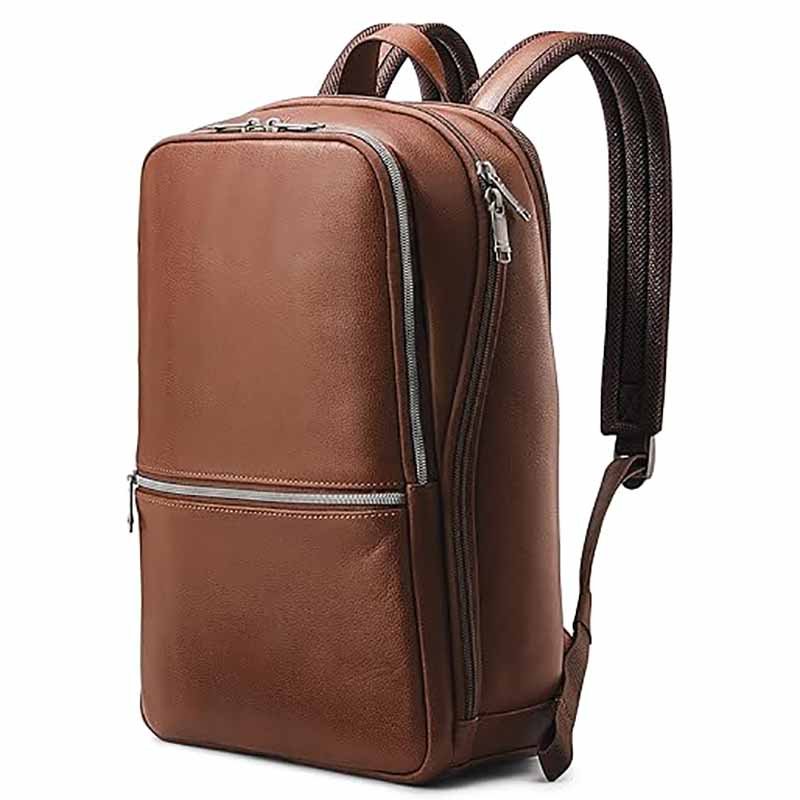
A leather backpack can win attention with its front design, but the back panel decides whether people keep using it. A customer may love the leather grain, zipper layout, color, hardware, and logo placement at first glance. After one week of carrying a laptop, charger, notebook, water bottle, wallet, and daily items, the real opinion comes from the back: Does it press against the spine? Does it feel hot? Does the laptop corner push through? Do the shoulder straps pull unevenly? Does the bag collapse when placed on a table?
Leather backpack back panel construction means building the rear carrying surface with the right mix of leather, foam, lining, mesh, reinforcement board, stitching, shoulder strap anchoring, and shape control. A strong back panel improves comfort, protects laptops, keeps the backpack stable, reduces pressure points, and helps the product feel premium during daily business, commuting, school, and travel use.
For brand clients and custom wholesale clients, the back panel is not a small sewing detail. It directly affects product reviews, return rate, customer comfort, repeat orders, and retail pricing. A backpack that looks premium but feels hard, sweaty, or unstable will not support a strong product line. A well-constructed back panel, however, can make a leather backpack feel reliable from the first carry. The best design is not always the thickest padding or the most technical mesh. It is the right balance between luxury appearance, body comfort, device protection, durability, and production cost.
SzoneierLeather has more than 18 years of leather goods development and manufacturing experience. For leather backpacks, wallets, belts, straps, accessories, leather boxes, and other customized leather products, the company supports material sourcing, leather development, product design, sampling, manufacturing, packaging design, inspection, and private label production. For brands developing leather backpacks, back panel construction is one of the first areas worth getting right.
What Is a Back Panel?
A leather backpack back panel is the rear structure that touches the user’s back and connects the body, shoulder straps, handle, laptop compartment, padding, and lining. It supports carrying comfort, bag shape, laptop protection, and load stability. A proper back panel usually includes leather, foam, lining, reinforcement, stitching control, and sometimes breathable mesh or air channels.
What does the back panel do?
The back panel has several jobs at the same time. It is not only the back side of the backpack. It is the main contact area between the product and the body, so it affects comfort more directly than almost any other part of the bag. When a customer carries a leather backpack for commuting, business travel, school, or daily work, the back panel must reduce pressure, hold shape, and keep the contents from pressing into the body.
The most important functions include:
- Reducing hard pressure from laptops, tablets, books, chargers, and inner seams
- Supporting the bag shape when the backpack is partly or fully loaded
- Helping distribute weight from the shoulder straps to the back body
- Protecting laptop compartments from direct impact and bending pressure
- Improving the wearing feel during walking, standing, or transit
- Supporting the top handle and shoulder strap stress points
- Creating a cleaner rear appearance that matches the product price level
- Helping the backpack stand more naturally when placed on a desk or floor
For leather backpacks, these functions matter even more because leather is usually heavier and less breathable than nylon or polyester. A beautiful leather backpack can quickly feel tiring if the back panel is too thin. A business backpack carrying a 14-inch or 16-inch laptop may need hidden EVA foam and a support board. A luxury daypack may need thinner padding to keep a slimmer silhouette. A travel backpack may need a stronger lower back section because heavier contents settle downward.
A well-designed back panel should feel calm and stable. The user should not think about it. That is usually the sign of good construction.
| Back Panel Function | What It Solves | Manufacturing Detail |
|---|---|---|
| Pressure reduction | Laptop edges, hard items, uneven load | EVA foam, sponge foam, layered padding |
| Shape support | Bag collapse, rear wrinkles, sagging | PE board, fiber board, reinforcement layer |
| Device protection | Laptop corner pressure, rear impact | Laptop sleeve padding, back foam, suspended bottom |
| Carry stability | Backpack pulling away from body | Strap angle, reinforced anchor points |
| Heat control | Sweaty back, sticky leather contact | Mesh zones, air channels, breathable lining |
| Premium feel | Cheap rear finish, rough seams | Clean lining, hidden stitching, smooth edges |
Is leather enough for support?
Leather alone is rarely enough for a comfortable backpack back panel, especially for laptop backpacks, business backpacks, travel backpacks, and daily commuter bags. Leather gives the backpack its surface character, durability, smell, texture, and premium feel. But leather by itself does not absorb pressure well, does not create airflow, and does not stop laptop corners from pushing against the back.
A small leather fashion backpack used for light items may work with a simple leather rear panel and thin lining. But once the bag carries 2–5 kg of daily items, support becomes much more important. A 13-inch laptop usually weighs around 1.2–1.5 kg. A 16-inch laptop can weigh around 1.8–2.3 kg or more depending on model. Add a charger, notebook, water bottle, wallet, keys, documents, and accessories, and the total backpack load can easily reach 3–6 kg for daily business use.
When that weight is carried through a flat leather-only panel, several problems can appear:
- Laptop corners create hard pressure against the back
- The rear panel wrinkles or bends under uneven load
- The backpack feels heavy because weight is not spread well
- Shoulder strap pull marks appear over time
- The bag loses its clean shape after repeated use
- Heat builds up because leather sits directly against clothing
A better construction usually uses hidden internal layers. These may include 5–10 mm EVA foam, sponge foam, non-woven reinforcement, PE board, microfiber lining, nylon lining, 3D mesh, or partial padded zones. The outside can still look like a refined leather backpack, while the inside structure carries the real function.
For premium brands, this hidden construction is important. Customers may not see the foam or reinforcement board, but they feel the difference within minutes. A well-supported leather backpack feels lighter than its actual weight because pressure is spread more evenly. A poorly supported backpack feels heavier because the load concentrates in small areas.
| Backpack Positioning | Leather-Only Panel Risk | Better Construction Direction |
|---|---|---|
| Mini fashion backpack | Acceptable for light use, weak for heavier items | Thin foam plus soft lining |
| Casual city backpack | May wrinkle and feel flat | Medium foam with partial reinforcement |
| Business laptop backpack | Laptop pressure and poor shape control | EVA foam, laptop sleeve padding, PE support layer |
| Travel leather backpack | Heavy load discomfort and strap stress | Thicker padding, reinforced back, strong strap anchors |
| Premium executive backpack | Luxury look but poor comfort if underbuilt | Slim hidden padding with clean leather finish |
How does structure affect comfort?
Back panel structure affects comfort through pressure distribution, body contact, weight stability, and movement control. Comfort does not come from softness alone. A very soft back panel can feel nice when empty but collapse when loaded. A very stiff panel can hold shape well but feel hard during walking. The right construction combines soft pressure relief with enough structural support.
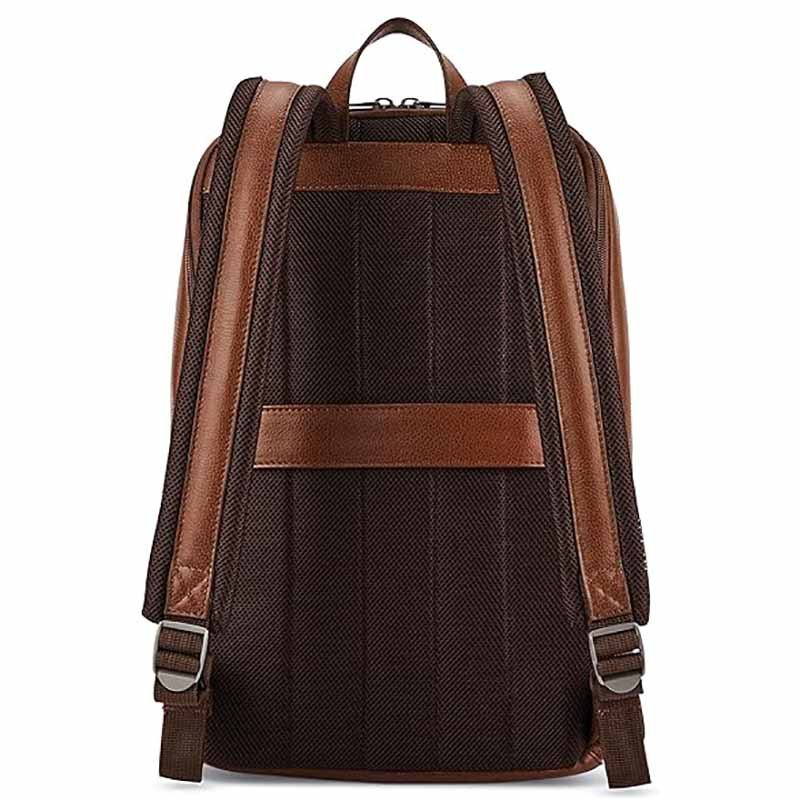
A good back panel usually has several layers working together. The outer leather provides appearance and durability. The foam layer absorbs pressure. A reinforcement layer controls shape. The lining protects the inner structure and gives a clean touch. Mesh or air channels may improve breathability. The shoulder strap anchor area needs extra strength because it carries repeated pulling force.
For laptop backpacks, the back panel and laptop compartment must be designed together. If the laptop sleeve is too close to the rear panel without padding, the customer may feel the device against the back. If the sleeve bottom has no suspension, the laptop may hit the ground when the backpack is placed down. A common premium direction is to raise the laptop sleeve bottom by about 2–3 cm from the base and add foam around the rear panel and sleeve wall. This small detail can greatly improve device protection.
The lower back area also matters. When a backpack is loaded, much of the weight settles downward. If the lower back panel has weak padding or no structure, the bag may sag and pull away from the body. For leather backpacks, sagging looks especially bad because it creates wrinkles and shape distortion on a premium material.
Good comfort construction should consider:
- Foam density, not only foam thickness
- Padding placement around shoulder blade and lower back zones
- Smooth lining to reduce rubbing against clothing
- Stable strap angle to reduce pulling pressure
- Rear panel stiffness that holds shape without feeling like a board
- Lower back support for heavier daily carry
- Laptop protection separate from simple comfort padding
| Structure Choice | Comfort Result | Suitable Use |
|---|---|---|
| Flat leather + lining | Slim but limited comfort | Light fashion bags |
| Leather + thin foam | Better daily comfort | Small city backpacks |
| Leather + EVA + lining | Balanced support and comfort | Business backpacks |
| Leather + foam + PE board | Stronger shape and laptop protection | Work and travel backpacks |
| Segmented foam + mesh | Better airflow and pressure relief | Commuter and warm-climate use |
| Molded back panel | Advanced comfort, higher tooling cost | Premium technical leather backpacks |
What problems happen in poor panels?
Poor back panel construction often creates complaints after the customer starts using the backpack, not when they first open the package. This is why brands should test samples with real loading. A backpack can look excellent in photos and still fail in daily carry.
The most common problem is pressure from inside items. A laptop, book corner, power bank, or charger can push against the back if the rear panel is too thin. This creates discomfort and makes the product feel cheaper than expected. Another common issue is heat. Leather has a dense surface, so a full leather back without breathable design may feel warm during commuting, especially in summer or in cities where people walk or use public transportation.
Shape failure is also common. If the back panel has no reinforcement, the backpack may collapse when half empty or bulge when full. A luxury leather backpack should hold a clean shape because shape is part of its perceived value. When the rear panel wrinkles, the whole product looks less refined.
Stress failure can be more serious. Shoulder straps and top handles pull against the back panel repeatedly. If the internal reinforcement is too small, the leather may stretch, tear, or deform around the attachment points. This is especially risky for backpacks carrying laptops or travel items.
Poor panels usually show these signs:
- The customer can feel the laptop through the back
- The bag feels hot after short use
- Rear panel wrinkles after carrying
- Shoulder straps pull unevenly
- The backpack leans backward when worn
- The lower back section sags
- The top handle area becomes loose
- Inner lining separates from foam
- Back panel shape differs between bulk pieces
- Stitching around padded zones becomes wavy
Brands can reduce these risks by asking the factory for real-use sample testing. A practical test should load the backpack with 3–6 kg depending on target use, carry it for 20–30 minutes, check strap stress, inspect rear shape, and review laptop pressure. For travel backpacks, higher load testing may be needed. For lightweight fashion backpacks, visual shape and surface comfort may matter more.
| Poor Panel Issue | Customer Reaction | Manufacturing Fix |
|---|---|---|
| Thin padding | “The laptop presses my back.” | Add EVA foam or sleeve padding |
| No support board | “The bag collapses.” | Add PE board or reinforcement layer |
| Weak strap anchor | “The straps feel loose.” | Reinforce stress points inside |
| No airflow | “The back feels too hot.” | Add mesh zones or air channels |
| Rough lining | “It rubs my clothes.” | Use smoother lining and better seam finish |
| Poor foam quality | “Padding becomes flat.” | Use higher-density foam |
Which Materials Are Used?
Leather backpack back panels commonly use leather, EVA foam, sponge foam, PE board, non-woven reinforcement, microfiber, nylon lining, polyester lining, 3D mesh, sandwich mesh, and sometimes molded padding. The right material mix depends on backpack weight, laptop size, product positioning, comfort target, ventilation needs, and retail price.
What leather works best?
The best leather for a backpack back panel depends on the product’s style, target price, carrying load, and expected daily use. Full-grain leather gives the strongest natural character and premium surface, but it may be heavier and more expensive. Top-grain leather offers a cleaner look and more controlled finish, making it suitable for business backpacks and modern leather laptop bags. Pebbled leather hides small scratches better and works well for daily commuting. Smooth leather looks elegant but may show marks more easily.
For the back panel, leather must handle friction from clothing and pressure from carrying. It also needs enough stability around the shoulder strap area. A very soft leather may feel luxurious, but if it is not reinforced, it can stretch or wrinkle over time. A very stiff leather may hold shape but can feel uncomfortable if the inner padding is too thin. The best solution often uses medium-firm leather with hidden support layers.
Leather thickness should match the construction. For many backpack bodies, leather thickness may fall around 1.2–2.0 mm depending on the style and leather type. Slim executive backpacks may use thinner leather with reinforcement. Rugged travel backpacks may use thicker leather and heavier internal structure. The factory should not select thickness only by appearance. Cutting, folding, sewing, edge finishing, and weight all change with leather thickness.
Surface finish also affects comfort. A back panel that rubs against light-colored clothing must be checked for color transfer. Oily pull-up leather or crazy horse leather may create a vintage look, but brands should test rubbing performance, especially for warm climates. For premium business backpacks, a stable finish with lower transfer risk is often safer.
Leather selection should consider:
- Daily load weight
- Product price level
- Desired surface texture
- Scratch resistance
- Color transfer risk
- Leather thickness
- Flexibility and stiffness
- Compatibility with foam and lining
- Stitching performance
- Long-term shape control
| Leather Type | Best Use | Strength | Watch Point |
|---|---|---|---|
| Full-grain leather | Premium and heritage backpacks | Natural surface, strong character | Higher cost and weight |
| Top-grain leather | Business and executive backpacks | Clean finish, stable appearance | Needs good reinforcement |
| Pebbled leather | Daily commuter backpacks | Hides scratches better | Texture must match brand style |
| Smooth leather | Minimal luxury backpacks | Elegant look | Scratches show more easily |
| Crazy horse leather | Vintage backpacks | Rich aging effect | Color transfer and oil feel need testing |
| Split leather | Cost-sensitive projects | Lower material cost | Needs stronger finishing and backing |
Which foam is suitable?
Foam is one of the most important hidden materials in a leather backpack back panel. It affects pressure relief, laptop protection, panel thickness, product weight, and long-term comfort. The common choices include EVA foam, sponge foam, EPE foam, high-density foam, and layered foam combinations.
EVA foam is widely used for leather laptop backpacks because it offers a good balance of firmness, resilience, and shape stability. It does not collapse as easily as low-density sponge and can help protect laptops from pressure. Sponge foam feels softer and can improve first-touch comfort, but if density is too low, it may flatten after repeated use. EPE foam is lightweight and cost-friendly, but it may not deliver the same premium feel. High-density foam works well for heavy-load backpacks but should be tested carefully because too much stiffness can reduce comfort.
Foam thickness needs to be selected by product use. A slim fashion backpack may use 3–5 mm padding. A daily business backpack may use 5–8 mm foam. A laptop or travel backpack may use 8–12 mm foam in key zones. More thickness is not always better. Thick padding can make the backpack bulky, reduce internal space, and create a sporty look that may not fit leather brand positioning.
Foam density is often more important than thickness. A 6 mm high-density EVA can perform better than a 10 mm low-density sponge. For brands, the sample should be checked after loading, not only by pressing with fingers. Carry the loaded backpack, then inspect whether the foam bounces back, whether the panel remains flat, and whether the comfort level matches the target retail price.
| Foam Type | Feel | Recommended Use | Main Risk |
|---|---|---|---|
| EVA foam | Firm and stable | Laptop bags, business bags, travel bags | Too stiff if overused |
| Sponge foam | Soft and light | Casual and fashion backpacks | May flatten over time |
| EPE foam | Lightweight and economical | Cost-controlled projects | Less premium hand feel |
| High-density foam | Strong support | Heavy-load backpacks | Needs comfort balancing |
| Layered foam | Balanced comfort | Premium custom backpacks | More complex production |
For SzoneierLeather custom projects, foam can be selected according to target load, laptop size, price point, and backpack style. This helps brands avoid the common mistake of using one padding solution for every backpack.
How is mesh used?
Mesh is used to improve breathability, reduce heat buildup, and soften body contact. In leather backpack design, mesh should be handled carefully because a full technical mesh back may conflict with a premium leather appearance. The goal is not to turn a leather backpack into an outdoor hiking pack. The goal is to improve real wearing comfort while keeping the product refined.
Common mesh choices include 3D mesh, sandwich mesh, breathable polyester mesh, and padded mesh panels. 3D mesh creates a small air gap between the bag and the user’s back. This can reduce the sticky feeling that often happens when leather sits directly against clothing. Sandwich mesh is often used on padded zones because it combines softness and airflow. For business leather backpacks, black or tonal mesh is often preferred because it looks cleaner and less sporty.
Mesh placement can vary. Some backpacks use one large center mesh panel. Others use two vertical padded mesh strips with a center air channel. Some designs use leather edges with mesh only in the contact zones. This approach keeps the leather identity while improving comfort where the body actually touches the bag.
Mesh quality must be tested. Low-grade mesh may pill, snag, stretch, or separate from foam. It can also look cheap beside high-quality leather. The mesh color, texture, thickness, and edge sewing should match the product level. For premium leather backpacks, messy mesh edges can ruin the rear view.
Mesh is most useful for:
- Commuter backpacks used in warm climates
- Laptop backpacks carried for long periods
- Travel backpacks used in airports and public transport
- Business backpacks where comfort matters but appearance must stay clean
- Leather backpacks with heavier loads
| Mesh Design | Comfort Benefit | Visual Effect |
|---|---|---|
| Full mesh back | Strong airflow | More sporty, less formal |
| Leather border + mesh center | Balanced airflow and leather look | Good for business bags |
| Two mesh pads + center channel | Reduced heat and pressure | Clean ergonomic appearance |
| Hidden mesh contact zones | Subtle comfort improvement | Premium and low-profile |
| No mesh, leather only | Luxury appearance | Warmer during long carry |
Are frame sheets needed?
Frame sheets or support boards are not needed for every leather backpack, but they are very useful when the product needs better shape control, laptop protection, and load stability. These support layers are usually hidden inside the back panel. Common materials include PE board, PP board, fiber board, non-woven reinforcement, thin plastic sheet, or composite backing.
A support board helps the rear panel stay flat. Without it, a leather backpack can sag, wrinkle, or bulge when loaded. For laptop backpacks, the board helps prevent the laptop from pressing directly into the user’s back. It also keeps the backpack looking more structured when placed on a desk or used in business settings.
The key is choosing the right stiffness. A very soft backpack may feel relaxed but lack shape. A very stiff backpack may feel overbuilt and uncomfortable. Business leather backpacks often need a moderate support board. Travel backpacks may need stronger structure. Soft fashion backpacks may only need partial reinforcement around the strap anchor and lower back area.
Support boards also help improve production consistency. Leather is a natural material, and different hides may have slightly different flexibility. A hidden support layer can help keep the finished backpack more consistent across bulk production. This is important for brands selling online because product photos and customer expectations must match the delivered item.
A frame sheet should be tested for:
- Bending comfort
- Weight increase
- Noise during movement
- Edge smoothness
- Bonding with foam or lining
- Compatibility with sewing
- Long-term shape recovery
- Laptop pressure reduction
| Support Level | Material Direction | Suitable Backpack |
|---|---|---|
| No support board | Leather + lining only | Small fashion backpack |
| Light reinforcement | Non-woven or thin backing | Casual daypack |
| Medium support | Thin PE or PP board | Business laptop backpack |
| Strong support | Thicker PE board or composite layer | Travel leather backpack |
| Partial support | Board only in laptop/lower back zones | Slim premium backpack |
What lining improves durability?
Lining protects the hidden structure of the back panel and improves the user’s perception of quality. A strong outer leather with weak lining can still create a poor product experience. Customers open the backpack every day, touch the inner compartment, slide laptops in and out, and place chargers, keys, notebooks, pens, and accessories inside. The lining must handle this repeated contact.
Common lining choices include polyester, nylon, cotton, microfiber, suede-like material, and custom printed fabric. Polyester lining is practical and cost-controlled. Nylon lining is usually stronger and smoother, making it suitable for business and travel backpacks. Microfiber or suede-like lining gives a premium touch, especially for laptop sleeves and device pockets. Cotton lining feels natural but may wear faster under heavy daily use.
For laptop backpacks, lining should be smooth enough to prevent scratches. Around the back panel, lining must cover foam and reinforcement cleanly so no hard edges are exposed. If the lining is loose, it may wrinkle and catch the laptop corner. If the lining is too thin, it may tear at stress points. If bonding is poor, the lining may separate from foam after use.
Lining color also affects customer experience. Black lining hides dirt but makes small items harder to see. Light grey, beige, or tan lining makes the interior easier to view and can look more premium, but it may show stains. Custom printed lining can support brand identity, but it must be checked for colorfastness and minimum quantity.
For SzoneierLeather, lining selection is part of product development, not a last-minute choice. A good lining should match the outer leather, backpack function, target market, and expected retail price.
| Lining Material | Best Use | Advantage | Watch Point |
|---|---|---|---|
| Polyester | Standard backpacks | Cost-effective and flexible | Quality grade varies |
| Nylon | Business and travel bags | Durable and smooth | Slightly higher cost |
| Microfiber | Laptop sleeves, premium interiors | Soft and protective | Needs careful cutting |
| Cotton | Casual and natural style bags | Soft, natural feel | Lower abrasion resistance |
| Suede-like fabric | Premium compartments | Rich hand feel | Can collect dust |
| Custom printed lining | Private label products | Strong brand identity | MOQ and color control |
A leather backpack feels more trustworthy when the inside matches the outside. Customers may buy because of the leather, but they keep using the product because the hidden materials perform well.
How Are Back Panels Built?
Leather backpack back panels are built through layered construction. The factory usually combines outer leather, foam padding, reinforcement, lining, mesh, stitching, and strap anchor support into one stable rear structure. Good construction should balance comfort, laptop protection, bag shape, ventilation, and premium appearance without making the backpack too bulky or too heavy.
How is padding layered?
Padding is rarely just one piece of foam placed behind the leather. A better back panel usually uses a layered system. Each layer has a different job. The leather gives the backpack its premium look. Foam reduces pressure. Reinforcement controls shape. Lining protects the inner structure. Mesh or soft contact fabric improves the touch against clothing. When these layers are matched correctly, the backpack feels more comfortable and more reliable.
A common leather backpack back panel may include:
- Outer leather layer for appearance and durability
- Thin reinforcement backing to stabilize the leather
- EVA foam or sponge foam for pressure relief
- PE board or fiber board for shape control
- Interior lining to cover the structure cleanly
- Mesh contact zones for airflow and softness
- Extra reinforcement at shoulder strap and handle areas
For a slim business backpack, padding may stay around 5–8 mm in the main rear area. For a heavier laptop or travel backpack, padding in key pressure zones may reach 8–12 mm. The lower back zone may need stronger support because more weight settles there when the backpack is loaded. The shoulder blade area may need softer contact padding to reduce friction during walking.
The mistake many brands make is asking for “thicker padding” without thinking about density and placement. Thick low-density foam may look soft in a sample but flatten quickly. Thin high-density EVA can sometimes perform better. Also, full thick padding across the entire back panel can make a leather backpack look too bulky. For premium leather products, controlled padding thickness is important because the bag still needs a clean silhouette.
A stronger padding plan usually separates comfort zones from structure zones. The center area may use firmer support. The contact zones may use softer foam or mesh. The laptop sleeve area may use extra protection. Strap anchor zones may use reinforcement rather than soft foam. This prevents the back panel from becoming soft in areas that actually need strength.
| Layer Position | Common Material | Main Function | Notes for Leather Backpacks |
|---|---|---|---|
| Outer surface | Full-grain, top-grain, pebbled leather | Premium appearance and durability | Must resist friction and color transfer |
| Leather backing | Non-woven, microfiber, reinforcement fabric | Prevents stretching and wrinkling | Useful for soft leather |
| Comfort layer | EVA, sponge foam, high-density foam | Reduces pressure | Density matters more than thickness alone |
| Support layer | PE board, PP board, fiber board | Controls shape and laptop pressure | Should not feel too stiff |
| Contact surface | Mesh, microfiber, lining fabric | Improves touch and airflow | Must match product style |
| Stress zones | Extra webbing, leather patch, reinforcement board | Supports straps and handle | Critical for loaded backpacks |
For SzoneierLeather custom projects, padding can be developed around the intended use. A luxury city backpack, a leather laptop backpack, and a weekend travel backpack should not share the same back panel structure. The factory should understand the product load, laptop size, selling price, and target user before confirming padding layers.
How are air channels made?
Air channels are spaces or grooves built into the back panel to reduce direct contact between the backpack and the user’s back. They help air move through the rear surface and reduce the hot, sticky feeling that can happen with leather backpacks. Air channels can be created through segmented padding, raised foam zones, center grooves, mesh panels, or molded foam structures.
For leather backpacks, air channel design needs restraint. Outdoor backpacks often use aggressive raised pads and deep ventilation channels. That style works for hiking but may look too sporty for leather business bags. A leather backpack usually needs a cleaner solution: two vertical padded zones with a center channel, a mesh center panel framed by leather, or subtle stitched padding zones that improve airflow without changing the premium look too much.
Common air channel structures include:
- Center vertical channel: two padded zones on both sides with a space in the middle
- Horizontal lower channel: small gap near the lower back to reduce heat buildup
- Mesh contact panel: breathable mesh sewn over padded foam
- Segmented padding: separate raised pads instead of one flat panel
- Leather border with mesh center: keeps leather appearance while improving comfort
- Molded foam channel: more controlled shape, usually higher development cost
Air channel depth should be practical. If the channel is too shallow, it may not improve comfort much. If it is too deep, the back panel may feel uneven or look too technical. For business leather backpacks, a moderate channel width of around 2–4 cm can often provide visible structure without making the rear panel look like a hiking bag. For travel backpacks, wider or more pronounced channels may be acceptable.
The material over the channel also matters. Mesh allows airflow better than leather. A full leather contact surface with only stitched grooves may improve appearance but offer less ventilation. Some brands choose black sandwich mesh for the central contact area because it looks clean and performs better during daily commuting.
Airflow design should also consider the user’s clothing. A backpack used mostly over jackets in colder markets may not need heavy ventilation. A backpack sold in warm regions, city commuting, or travel markets may need more breathable construction. For brands selling globally, a balanced back panel can serve more customers.
| Air Channel Type | Comfort Level | Visual Style | Best Use |
|---|---|---|---|
| No channel | Low ventilation | Very clean and minimal | Fashion backpacks |
| Stitched groove | Light ventilation | Subtle and premium | Slim business backpacks |
| Center channel | Medium ventilation | Clean ergonomic look | Commuter leather backpacks |
| Mesh center panel | Medium to high ventilation | Modern and functional | Laptop backpacks |
| Segmented mesh pads | High ventilation | More technical | Travel and heavy-use backpacks |
| Molded foam channel | High and controlled | Premium technical design | High-end ergonomic lines |
A good air channel should not feel like a decorative line. It should reduce heat, improve contact comfort, and still fit the backpack’s brand position.
How is laptop protection added?
Laptop protection is one of the most important reasons brands upgrade back panel construction. A leather laptop backpack usually needs protection from three directions: the user’s back side, the bag’s outer side, and the bottom impact area. If the back panel is too thin, the user feels the laptop. If the laptop sleeve has no bottom suspension, the laptop may hit the floor when the bag is placed down. If the side padding is weak, corners may suffer during travel.
A strong laptop protection design usually includes:
- Padded rear wall between laptop and back panel
- Soft lining inside the laptop sleeve
- Bottom suspension of around 2–3 cm above the bag base
- Side padding around the laptop compartment
- Elastic strap or hook-and-loop closure to hold the laptop
- Reinforced back panel to reduce bending pressure
- Smooth opening for easy laptop insertion
- Correct sleeve size for 13″, 14″, 15″, or 16″ devices
The laptop compartment should not be treated as a simple pocket. It must work with the back panel. For example, if the laptop sleeve is sewn directly to a weak rear panel, the device can still press against the user’s back. If the sleeve is too loose, the laptop moves during walking. If the sleeve is too tight, customers struggle to insert the device, especially when the laptop has a protective case.
Brands should define the target laptop size early. A backpack designed for 13″ laptops may not safely fit many 15″ or 16″ devices. A 16″ laptop sleeve needs more height, width, and corner room. The back panel must also be large enough to support the laptop without bending. For business backpacks, many brands now request 14″–16″ compatibility because professional users often carry larger devices.
Laptop protection also affects retail value. Customers buying leather laptop backpacks expect more than style. They expect device safety. A backpack that sells at a premium price but has a thin laptop sleeve can create disappointment quickly.
| Laptop Size Target | Suggested Sleeve Direction | Back Panel Need |
|---|---|---|
| 13″ laptop | Slim sleeve, light padding | Thin EVA or sponge foam |
| 14″ laptop | Standard business sleeve | EVA foam and soft lining |
| 15″ laptop | Wider padded sleeve | Stronger rear support |
| 16″ laptop | Larger sleeve, corner allowance | Reinforced panel and bottom suspension |
| Tablet + laptop | Dual padded sections | Layered lining and separator |
For sample testing, brands should place the actual laptop or a size-matched dummy inside the backpack. Then check whether the laptop presses against the back, whether the sleeve closure works, whether the zipper opening is wide enough, and whether the laptop bottom is protected when the bag is set down.
How are seams reinforced?
Seam reinforcement is where leather backpack back panel construction becomes serious. The strongest material can still fail if the stress points are poorly built. In a backpack, the main stress areas are the shoulder strap attachments, top handle connection, side seams, bottom corners, laptop sleeve attachment, and rear panel perimeter stitching.
Leather has strength, but it can stretch or tear if repeated pulling force is concentrated in a small area. This is why reinforcement layers are added behind the leather. Factories may use webbing tape, extra leather patches, non-woven reinforcement, PE board, fabric backing, or multiple stitching rows. The goal is to spread the pulling force across a larger area instead of letting the outer leather carry all the stress.
Shoulder strap attachment is especially important. Every time the backpack is lifted, worn, or swung onto the shoulder, the strap anchor pulls against the back panel. If the anchor is attached only to the surface leather, deformation may appear after use. A better construction connects the strap into a reinforced internal zone. For heavier laptop backpacks, bar-tack stitching or box stitching may be used to increase strength.
Top handles also need reinforcement. Many customers lift a loaded backpack by the handle, not by both straps. This creates strong vertical pulling force at the top rear area. If the handle is not connected to a reinforced panel, the leather may stretch, the seam may open, or the top shape may collapse.
Reinforcement should be planned before sampling because it affects pattern design, sewing sequence, material thickness, and finished appearance. Adding reinforcement after the sample fails is possible, but it may change the look and cost.
Key seam reinforcement methods include:
- Double stitching around high-stress seams
- Bar-tack stitches at strap anchors
- Box-and-cross stitching for webbing connections
- Hidden leather patches behind strap roots
- Reinforcement tape along rear panel seams
- PE or fiber board support in load-bearing zones
- Larger seam allowance for thicker leather
- Edge binding to reduce fraying in lining areas
| Stress Area | Risk Without Reinforcement | Recommended Fix |
|---|---|---|
| Shoulder strap root | Stretching, tearing, uneven pull | Internal patch, bar-tack, box stitch |
| Top handle | Loose handle, top collapse | Hidden reinforcement and wider stitch area |
| Rear side seam | Panel distortion | Reinforcement tape and stable seam allowance |
| Laptop sleeve seam | Sleeve sagging or tearing | Strong lining and extra stitching |
| Bottom corner | Wear, collapse, corner deformation | Corner reinforcement and stronger base |
| Mesh panel seam | Fraying or separation | Clean binding and controlled stitching |
For premium leather backpacks, reinforcement should be strong but not ugly. The customer should feel the durability without seeing bulky or messy construction.
How is shape controlled?
Shape control is one of the biggest differences between a low-end leather backpack and a well-developed one. Leather naturally changes with use. It bends, softens, wrinkles, and responds to load. That is part of the material’s beauty, but if shape is not controlled, the backpack may collapse too early, bulge at the back, lean backward, or look tired after only a short period.
Back panel shape is controlled through pattern accuracy, leather selection, reinforcement layers, foam placement, board stiffness, seam tension, and final packing. The rear panel acts like the spine of the backpack. If it is stable, the whole bag looks cleaner. If it is weak, the front panel, side panels, and bottom may all lose shape.
For business leather backpacks, shape control is especially important because customers often place the bag in offices, meeting rooms, hotels, airports, and cafés. The backpack should stand or sit neatly. A collapsed back panel makes even good leather look cheap. For travel backpacks, shape control helps distribute load and makes packing easier. For fashion backpacks, controlled softness may be preferred, but even soft bags need enough rear support to avoid ugly deformation.
A common shape-control solution uses a medium-stiff reinforcement board inside the back panel, combined with foam and lining. The board should not be so stiff that it feels uncomfortable. It should be flexible enough to move slightly with the body but strong enough to prevent sagging. In some designs, support is added only to the laptop area or lower back area to keep the bag slim.
Packing also affects shape. If backpacks are compressed too much during shipping, the back panel may arrive with creases. For premium leather backpacks, cartons should be sized properly, stuffing may be needed, and fold pressure should be controlled. Brands often focus heavily on production but forget packaging protection. That can damage the final product before it reaches the customer.
Shape control checklist:
- Select leather firmness based on backpack type
- Add backing to prevent leather stretching
- Use foam density suitable for the load
- Add PE/PP board where shape support is needed
- Keep seam tension even during sewing
- Check rear panel flatness after loading
- Avoid over-compression during packing
- Use stuffing or shape support for premium shipments
- Test whether the bag stands or sits correctly
- Review bulk pieces for consistent silhouette
| Shape Goal | Construction Direction | Suitable Product |
|---|---|---|
| Soft casual shape | Light backing and flexible foam | Vintage or relaxed backpacks |
| Clean business shape | EVA foam plus medium board | Executive laptop backpacks |
| Structured travel shape | Stronger board and reinforced base | Weekend and travel backpacks |
| Slim premium shape | Thin foam plus partial support | Minimal luxury backpacks |
| Ergonomic shape | Segmented foam and shaped padding | High-comfort commuter bags |
For SzoneierLeather, shape control begins from the pattern and material stage, not only final inspection. Once the leather, foam, support layer, and sewing sequence are confirmed, the factory can keep bulk production more stable.
How Does Comfort Improve?
Leather backpack comfort improves when the back panel reduces pressure, controls heat, spreads weight, connects properly with shoulder straps, and protects the laptop without creating bulk. Comfort comes from the full carrying system, not one soft layer. A good back panel should feel stable, breathable enough, supportive, and natural during real daily use.
How does padding reduce pressure?
Padding reduces pressure by creating a buffer between the user’s back and the hard contents inside the backpack. In a leather backpack, this is especially important because users often carry laptops, tablets, chargers, books, power banks, notebooks, and other firm items. Without padding, those objects push through the rear panel and create discomfort.
The pressure problem is not always about total weight. Sometimes a 3 kg backpack feels worse than a 5 kg backpack because the weight is concentrated in small points. Laptop corners, charger shapes, and document edges can create hard pressure. A padded back panel spreads those points across a wider surface, so the load feels smoother.
The best padding uses suitable density and placement. Soft sponge foam can reduce light pressure but may flatten under heavier loads. EVA foam can hold structure better and protect laptops more effectively. Layered padding can combine softness and support. For example, a leather backpack may use a firmer inner EVA layer with a softer outer contact layer. This gives pressure relief without making the bag unstable.
Padding should also be shaped around body contact areas. The upper back, shoulder blade area, spine area, and lower back do not feel pressure the same way. A single flat foam panel can work for simple backpacks, but for premium commuter or laptop backpacks, segmented padding can improve comfort. Still, segmentation should be subtle enough to match leather aesthetics.
Useful padding targets:
- 3–5 mm for slim fashion backpacks
- 5–8 mm for daily leather backpacks
- 8–12 mm for laptop and travel backpacks
- Higher-density foam for heavier products
- Softer contact layer for long carry
- Extra lower back support for loaded bags
- Additional laptop sleeve padding for device protection
| Padding Design | Pressure Relief | Best Use |
|---|---|---|
| Thin foam panel | Light relief | Fashion and lightweight bags |
| Medium EVA panel | Balanced support | Business backpacks |
| Thick foam panel | Strong relief | Travel and heavy-load backpacks |
| Segmented padding | Better body contact | Commuter backpacks |
| Layered foam | Premium comfort | High-end laptop backpacks |
| Foam + support board | Pressure relief and shape | Work and travel leather backpacks |
Good padding should make the backpack feel easier to carry without making it look oversized.
Do breathable panels matter?
Breathable panels matter when the backpack will be carried for more than short indoor use. Leather is naturally dense and does not allow airflow like mesh or technical fabrics. If the back panel is made from full leather with no airflow planning, customers may feel heat buildup during commuting, walking, travel, or warm weather.
Breathability does not mean the entire back panel must be mesh. For leather backpacks, the design must protect the premium look. A business leather backpack may use discreet black mesh zones, hidden air channels, or a center ventilation groove. A travel leather backpack can accept more visible padded mesh. A luxury minimalist backpack may use a leather back with only light padding and accept lower breathability because the visual style is more important.
The key question is how customers use the backpack. If the product is designed for office-to-car use, heavy ventilation may not be necessary. If it is designed for public transport, airport travel, campus use, or city walking, breathability matters more. A customer carrying a laptop backpack for 30–60 minutes will notice heat and sweat much faster than a customer carrying it from car to office.
Breathable construction can include:
- 3D mesh contact panels
- Sandwich mesh over foam
- Center air channel
- Two vertical raised pads
- Lower back ventilation gap
- Moisture-resistant lining
- Partial mesh around shoulder blade zones
- Leather frame with breathable central panel
However, breathable materials must be chosen carefully. Poor mesh can look cheap against premium leather. It may also snag clothing, pill, stretch, or lose shape. Mesh color and texture should match the leather style. Black mesh is safe for many business backpacks. Grey mesh can look softer. Brown mesh may be harder to match but can work for casual leather designs.
| Use Scenario | Breathability Need | Suggested Back Panel |
|---|---|---|
| Fashion city use | Low to medium | Leather back with thin padding |
| Office commute | Medium | Subtle mesh or center air channel |
| Public transport | Medium to high | Mesh contact zones and EVA support |
| Campus use | High | Padded mesh and stronger airflow |
| Business travel | Medium to high | Leather border plus breathable center |
| Warm climate retail | High | 3D mesh and air channel structure |
Breathable panels matter most when customers wear the backpack for real movement, not just short carry.
How does load distribution work?
Load distribution means spreading the backpack’s weight across the back panel, shoulder straps, and body structure instead of letting weight pull from one small area. Good load distribution makes a backpack feel lighter, more stable, and less tiring. Poor load distribution makes the bag feel heavy even when the actual weight is not high.
In leather backpacks, load distribution is affected by several construction choices:
- Back panel stiffness
- Shoulder strap angle
- Strap anchor reinforcement
- Laptop compartment position
- Bottom structure
- Interior pocket layout
- Foam density
- Bag depth
- Handle placement
- Overall pattern balance
A backpack that carries weight too far from the body feels heavier. If the main compartment is very deep and the laptop sits away from the back, the bag can pull backward. A well-designed laptop backpack usually places the laptop closer to the rear panel because flat heavy items are more stable near the body. Small accessories can be placed in front pockets, but heavy items should not all sit at the outer front.
The shoulder strap angle also matters. If straps are too wide, narrow, high, or low, the backpack may pull awkwardly. The strap roots should connect with reinforced zones on the back panel so the load transfers into the structure. For heavier leather backpacks, shoulder straps should also be padded enough to match the back panel. A comfortable back panel cannot fully fix thin or poorly angled straps.
The bottom of the backpack influences load distribution as well. If the bottom is too soft, items sink and pull the bag downward. A firmer bottom panel helps keep the load stable. For travel and laptop backpacks, bottom reinforcement also protects contents when the bag is placed on hard surfaces.
| Load Factor | Poor Design Result | Better Design Choice |
|---|---|---|
| Laptop placed too far forward | Bag pulls backward | Keep laptop close to back panel |
| Weak strap anchors | Uneven shoulder pull | Reinforce anchor zones |
| Soft bottom | Bag sags downward | Add bottom support |
| Deep front pocket overload | Unstable carry | Limit heavy front storage |
| Thin back panel | Hard pressure points | Use foam and support board |
| Poor strap angle | Neck or shoulder discomfort | Adjust strap position in sampling |
For brands, the best way to check load distribution is not only measuring the bag. Load the sample like a real customer would, wear it, walk, sit, lift it by the handle, and check how the weight behaves.
Are shoulder straps connected?
Shoulder straps are deeply connected to back panel performance. A backpack’s comfort depends on how the straps, back panel, and bag body work together. If the straps are weak, too narrow, poorly angled, or attached without reinforcement, even a well-padded back panel will not feel good.
The upper strap connection carries the main load when the backpack is worn. It should be attached to a reinforced area, not only the outer leather. The reinforcement can be hidden inside the back panel using webbing, backing fabric, leather patches, or support board. For leather backpacks carrying laptops, this area must handle repeated stress from daily lifting and wearing.
The lower strap connection also matters. If the lower anchor is too far outward, the backpack may feel loose. If it is too close, the straps may rub the body. If the angle is wrong, the bag may not sit naturally. Adjustable strap length is standard, but the fixed anchor position must be developed correctly in the pattern stage.
Shoulder strap padding should match the back panel. A backpack with a thick comfortable back but thin straps will still feel uncomfortable. For business leather backpacks, straps often need enough foam to reduce pressure while staying slim and elegant. For travel backpacks, wider padded straps may be better.
Strap materials also change the product feel. Full leather straps look premium but may feel stiff or heavy. Leather-faced straps with padded lining can balance appearance and comfort. Nylon webbing adjustment ends improve function but may look less luxurious unless carefully designed. For private label brands, strap design should match the target customer: executive, commuter, traveler, student, or fashion user.
Shoulder strap development points:
- Strap width suited to load weight
- Foam thickness matched to backpack use
- Soft lining on underside for comfort
- Strong upper and lower anchor reinforcement
- Smooth adjustment hardware
- Correct strap angle
- No sharp seam edges
- Color and leather consistency with bag body
- Load test after sample completion
| Strap Design | Best Use | Key Construction Point |
|---|---|---|
| Full leather strap | Luxury fashion backpacks | Needs softness and reinforcement |
| Leather + padded underside | Business backpacks | Balances look and comfort |
| Leather + webbing adjuster | Daily commuter bags | Improves adjustment durability |
| Wide padded strap | Travel backpacks | Better weight distribution |
| Slim strap | Mini or fashion bags | Only for light loads |
A leather backpack is a carrying system. The back panel and shoulder straps must be developed as one structure, not two separate parts.
How is daily carry tested?
Daily carry testing is the most practical way to evaluate back panel construction. A sample may look good on a table, but customers do not use backpacks on a table. They wear them, lift them, place them down, open zippers, carry laptops, and walk with uneven loads. Testing should copy real customer behavior as closely as possible.
For a business leather backpack, a basic test load may include:
- 13″–16″ laptop or dummy laptop
- Charger and cable pouch
- Notebook or documents
- Water bottle
- Wallet, keys, phone, and small accessories
- Total load around 3–6 kg depending on target use
For a travel leather backpack, testing may require higher load, such as 6–10 kg, depending on bag size and market positioning. For a fashion backpack, the load may be lighter, around 1–3 kg. The test should match how the final customer will actually use the product.
Testing should check comfort, shape, and durability. The sample should be worn for 20–30 minutes to feel pressure points and heat buildup. It should be lifted repeatedly by the top handle. Shoulder straps should be pulled and adjusted. The bag should be placed on the floor to check bottom support. The laptop should be inserted and removed several times to test sleeve access. Zippers should be opened while the bag is loaded because tension can change when the backpack is full.
Daily carry inspection points:
- Does the laptop press against the back?
- Does the lower back area sag?
- Do straps pull evenly?
- Does the back panel feel too hot?
- Does the bag keep shape when loaded?
- Does the handle feel secure?
- Does the lining wrinkle around the laptop sleeve?
- Do seams show stress after lifting?
- Does the bag stand or sit properly?
- Does the finished appearance match the brand’s price point?
| Test Item | Suggested Method | What It Reveals |
|---|---|---|
| Load test | Fill bag with target weight | Back support and strap strength |
| Wear test | Carry for 20–30 minutes | Pressure and heat issues |
| Laptop test | Insert real laptop or dummy | Sleeve size and rear pressure |
| Handle lift test | Lift loaded bag repeatedly | Top reinforcement strength |
| Shape test | Place loaded bag on table/floor | Sagging and structure control |
| Strap pull test | Adjust and pull straps | Anchor durability |
| Zipper test | Open/close when loaded | Pattern balance and tension |
For SzoneierLeather custom production, sample testing helps confirm whether the design is ready for bulk manufacturing. It is better to fix pressure, shape, or reinforcement issues during sampling than after hundreds or thousands of backpacks are finished.
What Should Brands Customize?
Brands should customize leather backpack back panels according to product use, load weight, laptop size, comfort level, target price, climate, and visual style. A business backpack needs clean structure and laptop protection. A travel backpack needs stronger support and durability. A fashion backpack needs a slimmer silhouette. Good customization connects user comfort with brand positioning.
Which back panel suits business bags?
Business leather backpacks need a back panel that looks clean, feels stable, protects laptops, and stays comfortable during commuting. Most business users carry a laptop, charger, documents, notebook, phone, wallet, and small accessories. The total load often reaches 3–6 kg. If the back panel is too thin, the backpack may look elegant in photos but feel uncomfortable during daily use.
A business back panel should not look overly sporty. Many professional users want a refined rear structure that matches office clothing, airport travel, meetings, and daily commuting. This means the design should control thickness, keep stitching clean, and avoid aggressive outdoor-style padding. A leather border with subtle padded zones, a thin breathable center channel, or a soft mesh contact panel can work well.
Recommended business backpack back panel features:
- Medium-density EVA foam for pressure reduction
- Smooth lining or microfiber around laptop sleeve
- Thin PE board or support layer for shape control
- Suspended laptop bottom around 2–3 cm above base
- Reinforced shoulder strap anchors
- Clean rear stitching with minimal bulk
- Optional breathable mesh contact zones
- Slim but padded shoulder straps
- Stable top handle reinforcement
- Rear panel shape that stays flat when loaded
Business bags also require size planning. Many professional users need 14″–16″ laptop compatibility. The back panel should support the full height of the laptop without bending. A sleeve that barely fits the device may create zipper stress and corner pressure. A sleeve that is too loose allows the laptop to move during walking.
For premium business brands, the back panel should make the backpack feel quietly reliable. It should not shout for attention. The user should feel balanced weight, smooth contact, and strong structure without seeing too many technical details.
| Business Backpack Requirement | Recommended Construction |
|---|---|
| Clean professional look | Leather rear frame with subtle padding |
| Laptop protection | EVA foam, padded sleeve, suspended bottom |
| Shape stability | Thin PE board or reinforcement layer |
| Daily comfort | Medium padding and soft contact surface |
| Commute use | Optional center air channel |
| Premium feel | Smooth lining, neat stitching, hidden reinforcement |
Which panel suits travel bags?
Travel leather backpacks need stronger back panel construction because they carry heavier loads, face longer wearing times, and experience more movement. A travel user may carry a laptop, clothes, documents, charger, passport, bottle, camera, headphones, and other items. The load can easily reach 6–10 kg. Under this condition, a thin fashion-style back panel will not be enough.
A travel back panel should focus on durability, lower back support, shape stability, and strap strength. The structure can be slightly thicker than a business backpack because travel products are expected to handle more pressure. EVA foam, high-density foam, PE board, reinforced lower section, padded shoulder straps, and stronger top handle connection are important.
Breathability also matters more for travel backpacks. Customers may wear the bag in airports, train stations, city streets, and warm outdoor environments. A leather travel backpack with no airflow can feel hot quickly. A center air channel, padded mesh zones, or breathable contact panels can make the bag easier to carry for longer periods. The rear design should still match the leather style, but it can accept more visible functional details than an executive office backpack.
Travel backpacks also need better load control. Heavy items should sit closer to the back. The laptop compartment should stay near the rear panel. Front compartments should not pull the backpack too far away from the body. The back panel must work with the interior layout.
Travel back panel development should consider:
- Higher load capacity than daily business bags
- Stronger strap anchor reinforcement
- Wider or more padded shoulder straps
- Stable lower back structure
- Better airflow for long carry
- Stronger top handle support
- Bottom reinforcement for repeated placement
- Laptop and tablet protection
- Durable lining for frequent packing
- Shape protection during transport
| Travel Backpack Feature | Why It Matters |
|---|---|
| High-density foam | Reduces pressure under heavier load |
| Support board | Keeps rear structure stable |
| Mesh contact zones | Reduces heat during long carry |
| Strong strap anchors | Handles repeated lifting and wearing |
| Reinforced bottom | Protects contents and shape |
| Smooth laptop sleeve | Helps fast airport or office use |
| Wider shoulder straps | Improves weight distribution |
For SzoneierLeather travel backpack projects, sample testing should use higher weight than business backpacks. A travel sample should be loaded, carried, lifted, opened, placed on hard surfaces, and checked for shape recovery. This helps confirm whether the construction can handle real travel use.
How should laptop bags be designed?
Leather laptop backpacks should be designed around the laptop first, then the body structure, then the outer appearance. Many design problems happen when the backpack is styled first and the laptop compartment is added later. The result may look good but fail in fit, comfort, or protection.
The first step is confirming laptop size. A bag designed for 13″ laptops is not the same as a bag for 16″ laptops. Width, height, thickness, zipper opening, sleeve depth, and corner allowance all change. Brands should decide whether the product targets 13″, 14″, 15″, 15.6″, or 16″ laptops. If the backpack needs to fit devices with protective cases, extra clearance should be added.
The second step is protection. A laptop sleeve should have padding on the rear side, front side, and bottom. Bottom suspension is especially useful. Raising the sleeve bottom by around 2–3 cm can reduce direct impact when the backpack is placed on the floor. This is a small detail customers may never notice visually, but it can make the product feel much more carefully developed.
The third step is comfort. The laptop sits flat and heavy, so it should be placed close to the back panel. If the laptop sits too far toward the front, the bag pulls backward and feels heavier. The back panel should include foam and support layers to prevent the laptop from pressing into the user’s back.
The fourth step is access. A beautiful sleeve is frustrating if the zipper opening is too narrow. Customers need to insert and remove the laptop smoothly. For business users, quick access matters at airports, offices, cafés, and meetings.
Laptop backpack design checklist:
- Confirm target laptop size range
- Add sleeve clearance for protective cases if needed
- Use soft lining around laptop contact areas
- Add rear padding and front padding
- Add suspended bottom protection
- Keep laptop close to the back panel
- Reinforce back panel with foam and support board
- Check zipper opening width
- Add strap or closure to prevent movement
- Test with actual laptop weight
| Laptop Design Detail | Recommended Direction |
|---|---|
| 13″ laptop | Slim sleeve, light padding, clean structure |
| 14″ laptop | Standard business size with EVA padding |
| 15″ laptop | Wider sleeve, stronger rear support |
| 15.6″ laptop | Common work size, needs clear opening |
| 16″ laptop | Larger rear panel, stronger sleeve and bottom suspension |
| Tablet pocket | Softer lining and separate divider |
| Device with case | Add extra width and thickness clearance |
For brands selling leather laptop backpacks, laptop protection should be treated as a core product feature, not an accessory pocket. Customers are trusting the backpack with expensive devices. The back panel must prove that trust through real construction.
What details affect price?
Leather backpack back panel price is affected by leather type, foam density, mesh quality, lining grade, support board, stitching complexity, reinforcement method, labor time, sample revision, and order quantity. A back panel that looks simple may still cost more if it includes hidden layers and precise construction.
Leather is usually one of the biggest cost factors. Full-grain and premium top-grain leather cost more than corrected or split leather. Thicker leather also increases material cost and sewing difficulty. If the back panel uses leather plus mesh, patchwork cutting and sewing steps may increase labor time.
Foam and reinforcement also affect cost. A basic sponge layer costs less than high-density EVA or layered foam. A PE support board adds material and assembly time. A molded ergonomic back panel may require more development and tooling, making it more suitable for higher-volume or premium products.
Logo and branding may also influence cost if the back panel includes embossed logos, stitched labels, custom lining, or branded hardware near the rear area. For private label brands, these details can improve perceived value, but they must be matched with the target retail price.
Labor cost rises when construction becomes more complex. Segmented padding, air channels, curved stitching, mesh inserts, reinforced anchors, and multiple layers all require more careful sewing. In leather manufacturing, sewing accuracy matters because needle holes are permanent. Mistakes cannot be hidden as easily as with fabric.
Order quantity also affects unit cost. Small custom orders may have higher unit cost because pattern setup, sample work, material preparation, and printing setup are spread over fewer pieces. Larger orders usually allow better cost control, but only if the design is stable.
| Cost Factor | Lower-Cost Direction | Higher-Cost Direction |
|---|---|---|
| Leather | Split or corrected leather | Full-grain or premium top-grain leather |
| Foam | Basic sponge foam | High-density EVA or layered foam |
| Ventilation | No mesh | 3D mesh, segmented pads, air channels |
| Support | No support board | PE/PP board or molded structure |
| Lining | Standard polyester | Microfiber or custom printed lining |
| Reinforcement | Basic stitching | Bar-tack, hidden patches, support tape |
| Labor | Flat panel | Multi-layer ergonomic panel |
| Branding | Simple logo | Embossing, woven label, custom lining |
Brands should not only ask for the lowest price. A back panel failure can create higher costs through returns, poor reviews, warranty claims, and lost repeat sales. A better approach is to define the product’s expected use and retail price, then build the back panel structure that fits that value level.
How to prepare specs?
Clear specifications help the factory build the right back panel faster and reduce sampling revisions. Brands do not need to prepare a perfect technical file at the beginning, but they should provide enough information about use, size, material preference, load, laptop requirement, and design direction.
The most important information includes:
- Backpack type: business, travel, fashion, laptop, school, commuter
- Target user: office worker, traveler, student, executive, lifestyle customer
- Target laptop size: 13″, 14″, 15″, 15.6″, 16″
- Expected carrying weight: light, medium, heavy, or actual kg range
- Preferred leather type and color
- Back panel style: full leather, mesh contact, air channel, padded zones
- Comfort requirement: slim, medium padding, high support
- Breathability requirement: low, medium, high
- Interior layout: laptop sleeve, tablet pocket, document space
- Logo and branding method
- Target order quantity
- Target retail price or cost range
- Reference photos or existing sample
- Destination market and shipping plan
When brands provide these details, the factory can recommend suitable leather thickness, foam density, lining, support board, strap reinforcement, and sampling method. If no specs are provided, the factory may only quote a generic construction that does not fit the product’s real use.
A helpful spec format can be simple:
| Spec Item | Example |
|---|---|
| Product type | Leather business laptop backpack |
| Target laptop | Up to 16″ laptop |
| Daily load | 3–6 kg |
| Back panel look | Clean leather border with subtle mesh center |
| Padding | Medium support, not bulky |
| Leather | Black pebbled top-grain leather |
| Interior | Nylon lining, padded laptop sleeve |
| Ventilation | Center air channel |
| Strap | Padded leather-faced straps |
| Order plan | Sample first, then 500–1,000 pcs |
| Market | USA and Europe |
| Branding | Debossed logo and woven label |
Good specs save time. They also make quotations more accurate. A factory can only price correctly when it understands the real construction. For SzoneierLeather custom projects, early spec discussion helps turn a rough idea into a production-ready backpack.
How Can SzoneierLeather Help?
SzoneierLeather helps brands develop custom leather backpacks through raw material sourcing, leather selection, structure design, back panel engineering, sampling, manufacturing, packaging design, quality inspection, and OEM/ODM production. With more than 18 years of leather goods experience, the company supports brands that need professional factory development instead of simple ready-made catalog products.
What development support is offered?
SzoneierLeather can support leather backpack development from early concept to finished production. Many brands come with a reference photo, rough sketch, existing sample, or product idea. The factory can help turn that idea into a manufacturable backpack by reviewing leather choice, back panel structure, strap connection, laptop sleeve, hardware, lining, stitching, packaging, and cost direction.
Development support can include:
- Product structure review
- Leather and lining selection
- Back panel construction recommendation
- Foam and reinforcement planning
- Laptop sleeve design
- Shoulder strap and handle engineering
- Logo placement and branding method
- Sample making and adjustment
- Packaging design support
- Bulk production planning
- Quality inspection before shipment
- OEM/ODM private label service
For back panel construction, SzoneierLeather can recommend different solutions based on product positioning. A slim executive backpack may use hidden EVA padding, smooth lining, and partial support board. A travel leather backpack may use thicker padding, mesh zones, stronger strap anchors, and reinforced bottom structure. A fashion backpack may use light padding and softer leather to keep a relaxed silhouette.
The factory’s role is not only sewing what is requested. A professional leather goods factory should also point out risks. If the shoulder strap anchor is too weak, it should be changed. If the laptop sleeve is too small, it should be adjusted. If the back panel is too stiff, comfort testing should be done. If the leather is too soft for the structure, backing or reinforcement should be added.
For brands, this kind of early development support can prevent expensive mistakes before bulk production begins.
How are materials selected?
SzoneierLeather has a strong raw material supply chain, which helps brands select leather, lining, foam, reinforcement, mesh, hardware, thread, and packaging materials according to product goals. Material selection is one of the most important steps in backpack development because it controls comfort, appearance, durability, weight, and cost.
For leather backpacks, SzoneierLeather can help compare material directions such as full-grain leather, top-grain leather, pebbled leather, smooth leather, crazy horse leather, split leather, or alternative leather materials. The choice depends on the brand’s target customer, retail price, surface style, and expected use.
For back panels, hidden materials are just as important as visible leather. EVA foam may be selected for laptop support. Sponge foam may be used for softer contact. PE board may be added for shape control. Mesh may be used for breathability. Nylon or microfiber lining may be selected for durability and premium interior feel.
Material selection should answer practical questions:
- Will the backpack carry a laptop daily?
- What is the target weight of the finished bag?
- Does the brand want a soft or structured look?
- Is the product used in warm climates?
- Does the leather need scratch resistance?
- Should the interior feel premium or cost-controlled?
- Does the back panel need visible mesh?
- Is the order for a small custom run or larger repeat production?
SzoneierLeather can help brands balance these factors instead of overbuilding or underbuilding the product. Overbuilding can make the backpack too heavy and expensive. Underbuilding can lead to complaints and poor reviews. The best material plan fits the product’s real use.
How is sampling handled?
Sampling is where the back panel design becomes real. During sample development, SzoneierLeather can confirm pattern size, leather thickness, padding feel, support board stiffness, shoulder strap angle, laptop sleeve fit, lining quality, logo placement, and back panel comfort. This stage is critical because small changes made during sampling can prevent major problems in bulk production.
A sample should be tested with real contents. For a laptop backpack, a laptop or dummy laptop should be inserted. For a business backpack, documents, charger, notebook, and daily items should be added. For travel backpacks, heavier loading should be tested. The goal is to see how the back panel performs under realistic use.
Sampling may include several adjustments:
- Increase or reduce foam thickness
- Change foam density
- Add or remove support board
- Adjust laptop sleeve height or width
- Add bottom suspension
- Move shoulder strap anchor position
- Reinforce top handle area
- Change mesh size or placement
- Adjust back panel shape
- Improve lining or seam finishing
A good sample is not only good-looking. It should be comfortable, stable, and production-ready. Brands should review the sample from multiple angles: appearance, comfort, load behavior, laptop protection, sewing quality, and packing needs.
| Sampling Check | What to Review |
|---|---|
| Appearance | Leather quality, shape, rear panel style |
| Comfort | Pressure points, heat, strap feel |
| Laptop fit | Sleeve size, padding, bottom protection |
| Structure | Shape stability, back panel flatness |
| Strength | Strap anchors, handle, seams |
| Interior | Lining, pocket access, smoothness |
| Branding | Logo placement, label, hardware |
| Production readiness | Can the design be repeated in bulk? |
Once the sample is approved, SzoneierLeather can keep the confirmed specifications for bulk production and repeat orders. This helps brands maintain consistency across future batches.
How is quality checked?
Quality checking for leather backpack back panels should cover material, cutting, padding, reinforcement, stitching, strap anchors, laptop sleeve, lining, shape, comfort, and final packing. The back panel has hidden layers, so inspection should not only look at the outside. The factory must control quality during production, not only after bags are finished.
Important inspection points include:
- Leather surface scratches, color difference, and thickness
- Foam thickness and placement
- Support board position
- Mesh quality and stitching
- Shoulder strap anchor strength
- Top handle reinforcement
- Back panel symmetry
- Stitching tension and alignment
- Lining smoothness and attachment
- Laptop sleeve size and bottom protection
- Rear panel shape after loading
- Final packing protection
For leather products, consistency is a major part of quality. Natural leather may have grain differences, but bulk pieces should still match the approved standard. Back panel shape should be consistent across the order. Strap position should not vary from piece to piece. Laptop sleeve size should remain accurate. If the first sample fits a 16″ laptop but bulk production varies, customer complaints may follow.
Load testing can also be included for backpacks designed for laptops or travel. A loaded backpack can be lifted by the handle, worn by straps, and checked for stress. This helps confirm whether the reinforcement works under real use.
| Quality Area | Defect Risk | Control Method |
|---|---|---|
| Leather | Scratches, color difference, stretching | Material inspection before cutting |
| Foam | Uneven thickness, poor recovery | Foam check and placement control |
| Support board | Misalignment, stiffness issue | Pattern placement control |
| Mesh | Pilling, loose edges | Material test and seam inspection |
| Strap anchors | Pulling, tearing | Reinforcement and load test |
| Laptop sleeve | Wrong size, weak padding | Fit test with laptop dummy |
| Shape | Wrinkles, sagging | Load test and packing control |
| Lining | Loose fabric, rough seams | Interior inspection |
SzoneierLeather’s quality work supports brands that need stable production for custom, private label, OEM, and ODM leather goods. A strong back panel is part of that reliability.
How to start a project?
Starting a custom leather backpack project with SzoneierLeather is easier when the brand provides clear product information. The factory can help refine the structure, but the first discussion should include the product type, target user, preferred leather, laptop size, back panel style, quantity, and target market.
Brands can prepare:
- Product reference images or sketches
- Existing sample if available
- Target backpack size
- Laptop size requirement
- Expected carrying weight
- Leather type or preferred surface
- Back panel comfort requirement
- Mesh or no-mesh preference
- Logo and branding files
- Hardware color
- Lining preference
- Order quantity
- Packaging needs
- Target delivery time
- Destination country
With this information, SzoneierLeather can review feasibility, suggest material options, recommend back panel construction, estimate sampling direction, and prepare a quotation. If the brand is unsure about the best structure, SzoneierLeather can propose options based on product positioning.
A useful first message may look like this:
“We are developing a leather business backpack for 14–16 inch laptops. The target customer is office commuters. We want a clean black leather look, padded back panel, comfortable shoulder straps, laptop protection, and private label branding. Initial order may be 500–1,000 pieces after sample approval.”
This type of information helps the factory respond with practical suggestions instead of a generic price.
Request Custom Leather Backpack Development from SzoneierLeather
A leather backpack back panel is easy to overlook, but customers feel it every time they carry the bag. It affects comfort, laptop protection, shape, durability, heat control, and the overall sense of quality. For brands developing leather backpacks, a strong back panel can make the difference between a product that only looks premium and a product that customers enjoy using every day.
SzoneierLeather is a leather goods development and manufacturing factory with more than 18 years of experience. The company produces leather bags, wallets, belts, straps, accessories, leather boxes, and customized leather products for brand clients and custom wholesale clients. With raw material sourcing, product development, design, sampling, manufacturing, packaging design, inspection, and OEM/ODM support, SzoneierLeather can help brands turn leather backpack concepts into production-ready products.
Custom leather backpack support can include:
- Leather selection and material development
- Back panel structure design
- EVA foam and support board selection
- Breathable mesh or leather rear panel options
- Laptop sleeve and device protection
- Shoulder strap and handle reinforcement
- Custom logo, embossing, label, and hardware
- Private label and OEM/ODM production
- Packaging design and quality inspection
- Sample development before bulk production
If you are preparing a leather backpack collection, laptop backpack line, travel backpack project, or private label leather goods program, send your product idea, target size, laptop requirement, logo file, quantity, and market direction. SzoneierLeather can help recommend the right construction, materials, and sampling plan for your custom project.
Build leather backpacks that look premium, feel comfortable, and perform in real daily use with SzoneierLeather.