 Skip to content
leather vs pu leather:What’s the Real Difference for Your Brand?
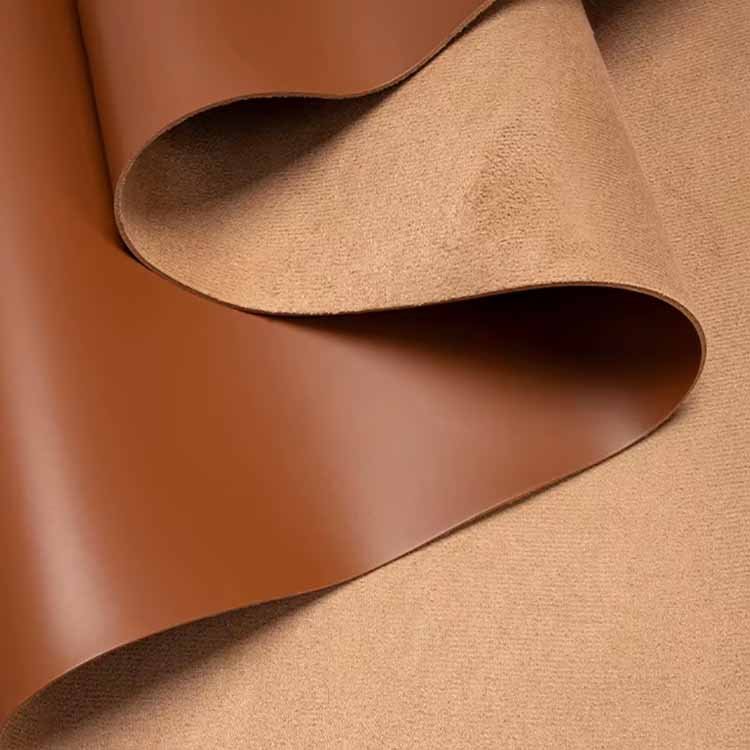
For decades, “leather” has symbolized craftsmanship, heritage, and luxury — yet today, one question dominates the minds of designers and brand founders: should I use real leather or PU leather? The choice isn’t just about price — it defines your brand’s identity, customer perception, and long-term value.
Leather and PU leather differ in origin, performance, and perception. Genuine leather is made from animal hide with natural grain and high durability, while PU leather is a synthetic polymer-coated fabric offering affordability and color consistency. Choosing between them depends on your product purpose, budget, and sustainability goals.
Leather carries emotional weight — every crease tells a story. PU leather represents modern control — uniform, scalable, and cruelty-free. But which truly fits your next design line? Let’s dive into the craftsmanship, chemistry, and commercial logic behind each material.
What Are Leather and PU Leather Made Of?
Genuine leather is made from animal hides — most commonly cowhide — that are cleaned, tanned, and finished to create a strong, breathable, and natural material. PU (polyurethane) leather, by contrast, is a synthetic alternative made from a fabric base coated with layers of polyurethane resin to replicate leather’s texture and look. The two differ not only in composition but also in durability, feel, and environmental impact.
Understanding the Foundations: Natural vs. Synthetic Origins
Leather and PU leather may look similar at first glance, but their foundations couldn’t be more different. Genuine leather begins as a living material — animal hide with a fibrous collagen structure — while PU leather starts as a manufactured product, created in controlled industrial environments.
This difference shapes everything: breathability, weight, flexibility, smell, and even how each ages over time. Real leather breathes, stretches, and forms a patina. PU leather remains uniform and consistent — a design advantage for some, a limitation for others.
Let’s break down their exact compositions and processes.
What Is Genuine Leather and How Is It Produced?
Genuine leather is derived from animal hides — most often cow, buffalo, goat, or sheep — that are cleaned, soaked, de-haired, and treated to prevent decomposition. The process transforms raw hides into durable, flexible, and aesthetically beautiful material through tanning, one of the world’s oldest crafts.
Main Steps in Leather Production:
| Stage | Process | Purpose |
|---|---|---|
| Preparation | Liming, fleshing, dehairing | Removes impurities and softens fibers |
| Tanning | Chrome, vegetable, or synthetic tanning | Preserves and strengthens the hide |
| Re-Tanning / Dyeing | Adds color, oils, and flexibility | Defines texture and tone |
| Finishing | Buffing, embossing, coating | Adjusts shine, texture, and protection |
This multi-step transformation produces a material that can last decades — one that carries history, character, and unique imperfections.
The Five Types of Leather Quality
In leather production, not all leathers are equal. The cut and layer of the hide determine its grade, strength, and cost.
| Leather Type | Layer | Grain Structure | Durability | Typical Application |
|---|---|---|---|---|
| Full-Grain Leather | Top layer | Natural, uncorrected grain | ⭐⭐⭐⭐⭐ | Luxury bags, belts |
| Top-Grain Leather | Upper layer | Slightly corrected, smooth finish | ⭐⭐⭐⭐ | Fashion bags, shoes |
| Split Leather | Lower layer | No grain, suede-like texture | ⭐⭐⭐ | Lining, low-cost goods |
| Corrected-Grain Leather | Sanded, embossed | Artificial uniform pattern | ⭐⭐ | Furniture, cases |
| Bonded Leather | Leather dust & resin | Synthetic composite | ⭐ | Promotional items |
The lowest quality of leather is bonded leather — made from shredded scraps and glued together. While affordable, it lacks the structural integrity and feel of true grain leather. It’s used in budget markets but not recommended for high-end brand products.
Tip: Szoneier Leather uses full-grain and top-grain hides for durability and texture consistency, ensuring products retain a natural appearance even after years of use.
What Is PU Leather and How Is It Manufactured?
PU (Polyurethane) leather, sometimes called synthetic or artificial leather, is not animal-based. Instead, it’s made from a textile base (usually polyester, cotton, or microfiber) that’s coated with layers of polyurethane resin to simulate leather’s texture and softness.
Typical PU Leather Structure:
- Base Fabric Layer – Provides mechanical strength.
- Adhesion Layer – Binds fabric and polymer together.
- PU Coating – Forms the visible grain pattern through embossing.
- Top Protective Layer – Adds shine, scratch resistance, or matte effect.
PU can be hot-pressed or roller-coated to create textures like pebbled, saffiano, or embossed croc patterns.
Does PU Mean Fake Leather?
Technically, yes — PU leather is a “faux” material, but not necessarily a “cheap” one. Modern PU innovations, like microfiber PU, replicate the elasticity and breathability of real leather while offering:
- Lightweight feel
- Water resistance
- Consistent texture across large batches
- Custom color possibilities (over 500+ shades achievable)
Industry Insight: Many mid- to high-end fashion brands use microfiber PU for vegan collections, ensuring aesthetic quality without animal components.
So while PU is synthetic, it has evolved far beyond being merely “fake.” It’s now a strategic material for brands balancing cost, sustainability goals, and visual quality.
Which Synthetic Leather Is Best? PU vs PVC vs Microfiber
| Feature | PU Leather | PVC Leather | Microfiber Leather |
|---|---|---|---|
| Base Material | Polyurethane on fabric | Polyvinyl chloride on fabric | Ultra-fine microfiber base |
| Flexibility | Soft & elastic | Rigid & heavy | Highly flexible |
| Aging Resistance | Moderate | Poor | Excellent |
| Eco Impact | Low VOC | Contains chlorine | Lower emissions |
| Common Use | Bags, wallets | Car seats, upholstery | Premium “vegan” products |
Comparing Composition and Material Science
| Property | Genuine Leather | PU Leather |
|---|---|---|
| Source | Animal hide (collagen fibers) | Synthetic resin on fabric |
| Structure | Natural fiber matrix | Layered polymer system |
| Breathability | High | Moderate |
| Elasticity | Organic & adaptive | Controlled & uniform |
| Finish Variety | Natural grain, dyed, waxed | Embossed, coated, printed |
| Aging | Develops patina | Retains surface until peel |
| Biodegradability | Yes (especially vegetable-tanned) | No (plastic-based) |
How Do Leather and PU Leather Compare in Look, Feel and Durability?
Leather and PU leather differ in texture, flexibility, and longevity. Genuine leather offers natural grain, a warm touch, and a patina that deepens with age, lasting up to 10–15 years. PU leather provides a uniform look, lighter weight, and easy maintenance but usually lasts 2–4 years before cracking or peeling. Choosing between them depends on your product’s positioning, customer expectations, and desired balance between premium feel and cost efficiency.
Look: Grain, Color, and Surface Depth
| Visual Property | Genuine Leather | PU Leather |
|---|---|---|
| Grain Texture | Natural, varied, with small imperfections | Machine-embossed, uniform texture |
| Surface Depth | Deep pores and organic sheen | Flat, consistent reflection |
| Color Variation | Slight tone shifts by hide | Precise, repeatable color control |
| Visual Aging | Develops patina and character | Retains static appearance until wear |
| Edge Quality | May darken or soften with use | Clean, sealed polymer edges |
A. Genuine Leather Visual Traits
Each hide carries unique grain patterns — no two panels are identical. Under angled light, real leather reveals micro pores, wrinkles, and fiber depth.
- Full-grain leather highlights natural beauty and irregularity.
- Top-grain provides refined smoothness while preserving authenticity.
- Over time, sunlight and oils create a rich patina — an unmistakable sign of quality.
B. PU Leather Visual Traits
PU’s surface is perfectly consistent. It can imitate any texture — pebble, saffiano, or crocodile — using heat embossing.
- Ideal for large batch production requiring identical panels.
- Supports bright, stable colors (over 500+ shades).
- Reflects light more uniformly, often creating a glossy or semi-matte sheen.
Brand Insight: Luxury collections often use genuine leather for hero products (handbags, belts) and PU for complementary lines (cases, organizers), creating visual harmony while balancing cost.
Feel: Texture, Weight, and Temperature Response
| Tactile Property | Genuine Leather | PU Leather |
|---|---|---|
| Touch Temperature | Warm and organic | Cool and synthetic |
| Texture Feedback | Slightly grainy or oily | Smooth, sometimes rubbery |
| Flexibility | Naturally elastic, molds to use | Uniform, less stretch |
| Weight | Denser and more substantial | Lighter and thinner |
| Smell | Rich, earthy aroma | Synthetic or neutral scent |
A. Touch and Hand Feel
Real leather carries a soft resistance — it pushes back gently when pressed, reflecting its fibrous collagen network. The warmth of touch comes from its natural porosity, allowing body heat to transfer through. PU leather feels cooler and smoother — pleasant but less “alive.”
B. Flexibility and Aging Behavior
- Leather: Becomes softer and more pliable with use while retaining strength.
- PU Leather: Starts flexible but stiffens or cracks as polymer coatings age. This is why vintage leather bags look better after years — PU bags, conversely, often deteriorate with time.
C. The Sensory Factor
For consumers, texture and scent influence buying decisions. Studies show that shoppers perceive natural leather’s irregular texture as higher value, while PU’s uniform surface signals mass production and accessibility.
Durability: Strength, Longevity, and Aging Resistance
| Property | Full-Grain Leather | Top-Grain Leather | PU Leather | PVC Leather |
|---|---|---|---|---|
| Lifespan (avg.) | 10–15 yrs | 7–10 yrs | 2–4 yrs | 1–3 yrs |
| Tear Strength | 25–35 N/mm | 20–30 N/mm | 10–15 N/mm | 8–12 N/mm |
| Abrasion Resistance | Excellent | Very good | Moderate | Moderate |
| Crack Resistance | High | High | Low (peeling risk) | Low |
| Breathability | High | Moderate | Low | Very low |
A. Real Leather: Strength with Character
Leather’s interwoven collagen fibers create an internal mesh structure that’s both flexible and tear-resistant. It can endure daily friction, pressure, and moisture cycles without delaminating. When cared for properly, genuine leather can outlast synthetic materials fivefold, gaining a unique aged beauty.
B. PU Leather: Practical but Shorter Life
PU’s durability depends on its coating thickness and base fabric. Over time, exposure to:
- UV light
- Heat
- Body oils causes hydrolysis — a chemical breakdown leading to cracks or peeling.
High-end microfiber PU, however, uses ultra-fine fiber bases (0.3–0.6 denier) that resist hydrolysis for up to 5–6 years, significantly outperforming standard PU.
Technical Insight: In tensile testing, full-grain leather averages 35 N/mm tear strength, whereas common PU scores under 15 N/mm. The difference is the leather’s fiber matrix — not just surface coating.
Weight and Structural Behavior in Products
| Product Type | Genuine Leather Advantage | PU Leather Advantage |
|---|---|---|
| Bags & Luggage | Structural support and luxury feel | Lightweight, color consistency |
| Wallets & Accessories | Patina and resilience | Slim form, easy embossing |
| Belts & Straps | Tensile strength and longevity | Lower cost, wide color options |
| Boxes & Packaging | Premium tactile appeal | Clean surface, low maintenance |
Real leather adds heft and stability, ideal for structured goods like handbags and belts. PU’s lower density makes it great for lightweight accessories, fashion totes, or travel items.
Resistance to Elements: Water, Heat, and UV
| Test Condition | Genuine Leather | PU Leather |
|---|---|---|
| Water Exposure | Absorbs moisture but can be treated | Naturally water-resistant |
| Heat Tolerance (°C) | Up to 80°C before stiffening | 60–70°C — may warp or peel |
| UV Resistance | Fades slowly | May discolor or crack |
| Humidity | Expands, then returns to shape | May delaminate if stored wet |
- Leather absorbs some water, but surface treatments like wax or oil improve repellence.
- PU leather resists water, making it excellent for travel or outdoor bags. However, high heat or direct sunlight can cause surface deformation in PU — especially over long-term use.
Maintenance and Aging Aesthetics
Leather:
- Requires periodic cleaning and conditioning.
- Improves with care — edges burnish naturally, color deepens, and surface softens.
- A well-maintained leather product can last decades.
PU Leather:
- Easy to clean — wipe with a damp cloth.
- No conditioning required, but lifespan is limited by coating degradation.
- Aging is visual decline, not enhancement.
Aging Philosophy: Leather ages gracefully — PU leather ages visibly. That difference is often the deciding factor for premium vs. budget market positioning.
Is Leather or PU Leather Better for Sustainability and Ethics?
PU leather is vegan and avoids animal use, but it’s petroleum-based and non-biodegradable. Genuine leather uses animal byproducts but requires chemical tanning. Sustainable choices exist in both, such as vegetable-tanned leather and water-based PU.
Is PU Leather Really More Eco-Friendly and Is It Vegan?
PU is vegan-friendly and avoids livestock farming emissions — a major selling point for eco-conscious brands. However, it’s not fully sustainable: polyurethane is plastic-based and not biodegradable.
PU vs PVC Leather: PU wins in softness, lower toxicity, and recyclability. PVC leather, made from polyvinyl chloride, often contains chlorine compounds and phthalates, making it less eco-safe.
So, between PU and PVC, PU leather is the better synthetic choice for responsible design.
How Sustainable Is Natural Leather with Modern Tanning?
Natural leather can also be eco-conscious when tanned using vegetable extracts instead of chromium salts.
- Vegetable-tanned leather is biodegradable.
- Chrome-free tanning reduces wastewater toxicity by 80%.
- Modern tanneries now recycle 90% of process water.
Although animal-based, genuine leather often utilizes by-products of the meat industry, preventing hide waste.
Are There Lower-Impact Options in Both Leather and PU?
| Category | Sustainable Variant | Key Benefit |
|---|---|---|
| Natural Leather | Vegetable-tanned, chrome-free | Biodegradable, durable |
| PU Leather | Water-based PU, solvent-free | Lower VOCs, safer for workers |
| Alternative Hybrids | Recycled leather composite | Reduces raw material waste |
Forward-looking factories like Szoneier Leather invest in cleaner finishing systems and traceable material sourcing — aligning durability with environmental responsibility.
How Do You Tell Leather from PU Leather in Real Life?
You can distinguish leather from PU leather by examining the grain, smell, edges, and backing. Real leather shows natural pores, uneven patterns, and a warm, earthy scent. PU leather looks uniform, smells synthetic, and has a woven or fabric backing. Simple tests—such as water absorption, wrinkle behavior, and fiber inspection—help confirm authenticity. These sensory and physical cues allow professionals to quickly identify material quality during sourcing or product inspection.
Visual Inspection: What the Eyes Can See
| Visual Cue | Genuine Leather | PU Leather | What It Means |
|---|---|---|---|
| Grain Pattern | Irregular pores, uneven shapes | Perfectly repeated pattern | Natural hide vs. machine emboss |
| Surface Depth | Multi-layered tone, visible pores | Flat, glossy, uniform | PU film lacks depth |
| Edge Finish | Fibrous when cut | Smooth or sealed edge | Leather fibers vs. PU coating |
| Backside | Suede-like fibers | Woven or knitted fabric backing | PU needs textile support |
| Color Variation | Slight tonal differences | Identical shade throughout | Natural dye vs. sprayed pigment |
A. Grain and Pore Irregularities
Real leather grain is chaotic yet beautiful — pores vary in size and spacing because they belonged to an animal’s skin. PU’s embossed pattern repeats every few centimeters — a giveaway of machine embossing.
Tip: Under magnification, genuine leather shows small irregular valleys and raised fiber edges; PU looks perfectly symmetrical like wallpaper.
B. Edge Examination
When cut, leather exposes tiny fibers, resembling suede or hair. PU reveals a cross-section of layers — a solid polymer surface on top of a fabric base.
C. Color and Reflection
Real leather absorbs dye unevenly, giving richer tone depth. PU’s surface reflects light uniformly, sometimes looking overly smooth or plasticky.
Touch and Feel: The Sense of Authenticity
| Tactile Property | Genuine Leather | PU Leather |
|---|---|---|
| Temperature | Warm to the touch | Cool surface |
| Flexibility | Wrinkles softly when bent | Forms stiff crease lines |
| Weight | Heavier, denser | Lighter |
| Elastic Recovery | Slowly returns to shape | Springs back instantly |
| Sound When Rubbed | Soft squeak | Plastic “slip” sound |
A. Warmth and Weight
Real leather feels alive — slightly warm because its porous structure allows temperature transfer. PU feels cooler and lighter, as its polymer film blocks heat conduction.
B. The Wrinkle Test
Bend or fold the sample:
- Leather wrinkles naturally and keeps soft folds for a few seconds.
- PU forms shallow lines that disappear instantly or crack at sharp angles.
This test reveals material elasticity — genuine leather stretches slightly before returning, while PU behaves like coated plastic.
C. The Sound Factor
Rub the surface between your fingers:
- Leather emits a muted, organic squeak (fibers shifting).
- PU makes a sharper, slippery sound (plastic friction).
Factory Insight: Szoneier’s inspection line uses tactile consistency tests — measuring hand-feel in “Warmth Units (WU)” to maintain sensory uniformity across collections.
Smell: Nature vs Polymer
Smell remains one of the fastest ways to differentiate materials.
| Property | Genuine Leather | PU Leather |
|---|---|---|
| Scent Profile | Earthy, woody, slightly sweet | Synthetic, chemical, plasticky |
| Longevity | Lasts for months | Fades quickly |
| Reaction to Heat | Intensifies organic aroma | Releases plastic odor |
Genuine leather’s aroma comes from the tanning process (vegetable oils, animal proteins). PU’s smell originates from polyurethane chemicals and dissipates over time. A heated pin near real leather enhances its natural scent, whereas PU releases an acrid plastic smell — though this should only be done carefully or on scrap material.
Water Absorption Test
This simple, non-destructive test can be done on swatches or hidden edges.
| Observation | Genuine Leather | PU Leather |
|---|---|---|
| Water Drop Reaction | Absorbs slowly; dark spot forms | Repels water; no color change |
| Drying Time | 2–5 minutes | Instant beading off |
| After-Effect | Slight stiffening | None |
Leather’s porous structure allows slow absorption because of microscopic collagen channels. PU’s plastic surface acts as a barrier — droplets sit on top or roll off entirely.
Backside & Fiber Structure
Peeling back or cutting a small corner exposes the real truth.
- Leather Back: Fuzzy fibers interwoven randomly — visible depth.
- PU Back: Knitted or woven fabric, usually polyester or cotton.
Under magnification, you can spot the micro-fibers in PU’s backing cloth — evidence of a manufactured base rather than a natural hide.
Burn and Heat Tests (For Controlled Environments Only)
Caution: These tests should only be done on small, safe samples in controlled lab conditions.
| Reaction | Genuine Leather | PU Leather |
|---|---|---|
| Flame Response | Chars slowly, smells like burnt hair | Melts and drips, smells like plastic |
| Residue | Brittle ash | Hard black bead |
| Color Change | Dark brown | Glossy black or bubbled |
Leather’s protein content burns like organic fiber (keratin), producing smoke with a hair-like smell. PU melts due to synthetic polymers.
Szoneier QC Use Case: Controlled heat tests confirm composite structure — especially for mixed leather/PU constructions used in hybrid handbags or packaging.
Advanced Factory-Level Identification Methods
Professional manufacturers employ additional tools beyond sensory checks:
| Method | Description | Accuracy |
|---|---|---|
| Microscopic Fiber Analysis | 200× lens reveals collagen bundles vs. woven fabric | ⭐⭐⭐⭐⭐ |
| FTIR Spectroscopy | Identifies chemical signatures (organic vs. synthetic) | ⭐⭐⭐⭐ |
| Tear Strength Test | Evaluates fiber bonding strength | ⭐⭐⭐⭐ |
| Hydrolysis Resistance Test | Accelerated aging under humidity | ⭐⭐⭐⭐ |
Quick Field Reference: 7-Point Checklist
| Step | What to Check | Real Leather Sign | PU Leather Sign |
|---|---|---|---|
| 1 | Grain Pattern | Random & natural | Repeated emboss |
| 2 | Edge | Fibrous | Smooth plastic |
| 3 | Touch | Warm, soft | Cool, slick |
| 4 | Smell | Natural, earthy | Synthetic |
| 5 | Backside | Fuzzy fiber | Woven fabric |
| 6 | Water Drop | Absorbs slowly | Beads off |
| 7 | Wrinkle | Soft fold remains | Sharp line disappears |
If a sample shows 4 or more genuine signs — it’s real leather.
Which Material Should You Choose for Your Next Project?
The right choice depends on product type, brand positioning, and customer values. Genuine leather suits luxury and longevity; PU leather fits affordability, color control, and vegan branding. Partnering with a professional factory ensures both performance and appeal.
Which Works Best for Bags, Wallets, Belts, Straps and Leather Boxes?
| Product | Best Material | Rationale |
|---|---|---|
| Luxury Bags | Top-grain or full-grain leather | Rich texture, high value |
| Mass-Market Bags | PU leather | Lightweight, uniform |
| Wallets & Accessories | Either | Choose by budget & longevity |
| Belts & Straps | Real leather | Strength, structure |
| Boxes & Packaging | PU leather | Smooth, easy to clean |
Szoneier engineers often combine both — using genuine leather for visible panels and PU for reinforcement layers.
How Do Your Target Customers and Brand Positioning Affect the Choice?
Luxury buyers value tactile authenticity, scent, and patina. Eco-conscious millennials prefer cruelty-free synthetics. Corporate buyers often demand long-term warranty and repairability — favoring natural leather.
Szoneier’s consultation service helps you match material identity with brand emotion — ensuring product storytelling aligns with customer values.
Conclusion
Choosing between leather and PU leather isn’t simply a material decision — it’s a brand-defining moment. Both have their place: leather tells stories of craftsmanship and endurance; PU speaks to innovation, ethics, and scalability. The best designs often blend both worlds — authentic feel with modern efficiency.
At Szoneier Leather, your ideas evolve from sketches into tangible artistry — backed by advanced production, sustainable materials, and a partnership built on trust.
Ready to Start Your Leather Project?
What Can I Do For You?
Here, developing your OEM/ODM private label leather goods collection is no longer a challenge,it’s an excellent opportunity to bring your creative vision to life.
Make A Sample First?
If you have your own tech packs, logo design artwork, or just an idea,please provide details about your project requirements, including preferred fabric, color, and customization options,we’re excited to assist you in bringing your leather goods designs to life through our sample production process.