
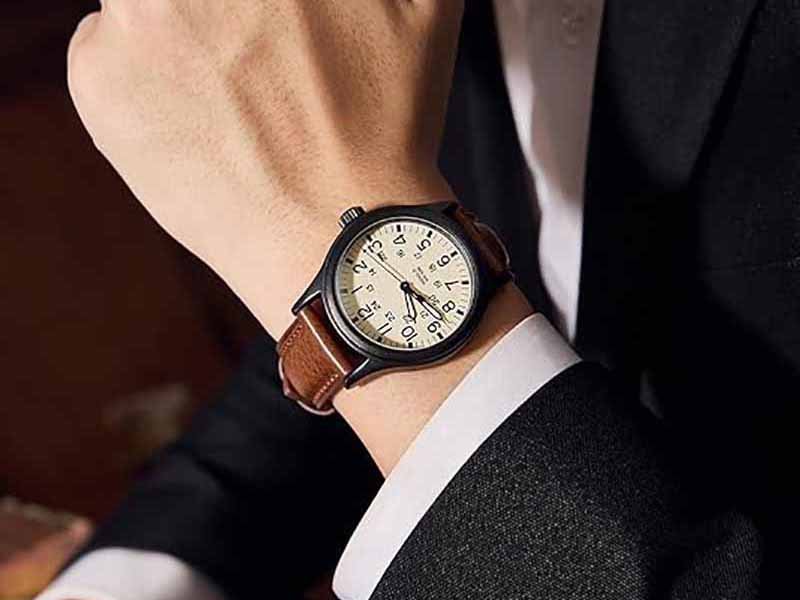
Leather straps look simple. A strip of leather, some stitching, a buckle. Yet prices range wildly—from under $10 to well over $150 for what appears to be the same product. This price gap is one of the most confusing issues for brands, product managers, and buyers sourcing leather straps for watches, bags, guitars, belts, or accessories.
Why does one leather strap cost five times more than another? Is it branding, leather quality, craftsmanship, or something else entirely?
In reality, leather strap pricing is not driven by a single factor. It is the result of layered decisions: leather grade, tanning method, thickness, construction, hardware, labor skill, quality control, and even how a factory organizes its supply chain. Two straps with the same dimensions can perform very differently—and cost very differently—over time.
For professional buyers and brand clients, understanding leather strap price is not about finding the cheapest option. It’s about knowing where money actually goes, which features justify higher cost, and how to control price without sacrificing durability or brand perception.
Leather strap prices are determined by leather grade, tanning method, strap dimensions, construction quality, hardware, and production complexity. Full-grain leather, reinforced stitching, premium hardware, and skilled labor significantly increase cost, while simplified designs and optimized materials help reduce price without harming quality.
This guide breaks down leather strap pricing from a manufacturer’s perspective, not a retail myth. We’ll show you what affects cost, which materials are worth paying for, how different strap types are priced, and how to get an accurate OEM or private-label quote—especially when working with an experienced factory like Szoneier Leather.
What Is a “Leather Strap” in Pricing Terms
In pricing terms, a “leather strap” is not a single product but a category defined by application, leather grade, dimensions, construction method, and hardware. Watch straps, guitar straps, bag straps, and belts are all leather straps, but each has a distinct cost structure and pricing logic.
Why “leather strap” is a pricing category, not a product
From a factory and pricing perspective, “leather strap” is not a finished product name. It is a broad category that only becomes priceable after key variables are defined.
When buyers search leather strap price, what they usually mean is:
- A strap for a specific use (watch, bag, guitar, belt)
- With a specific leather expectation (full-grain, genuine, veg-tan, etc.)
- With certain durability and comfort requirements
Until those factors are clear, any quoted price is essentially meaningless.
For example, a 20mm watch strap made from lined calfskin and a 40mm guitar strap made from thick cowhide are both “leather straps,” but their material usage, labor time, and failure risks are completely different. Treating them as the same product leads to unrealistic price expectations and sourcing problems.
This is why professional factories never quote “leather strap” without clarification.
What strap types are most commonly priced by buyers?
In real sourcing conversations, leather strap pricing almost always falls into a few high-frequency categories:
- Watch straps – narrow, precise, skin-contact, comfort-driven
- Bag straps / shoulder straps – load-bearing, abrasion-resistant
- Guitar straps – wide, thick, padded, stress-heavy
- Leather belts – fashion + structure, yield-sensitive
Each category creates a different cost profile:
- Watch straps are labor-heavy and precision-driven
- Bag straps consume more leather and require reinforcement
- Guitar straps add padding, lining, and stress testing
- Belts prioritize hide yield and visual consistency
This is why two straps of similar length can have radically different prices. The application defines the cost logic more than the appearance.
How pricing changes once application is defined
Once the strap’s application is clear, pricing becomes structured instead of vague.
At that point, factories evaluate:
- Required leather thickness and strength
- Expected daily use vs occasional use
- Skin contact requirements (lining quality)
- Load stress and failure risk
- Brand positioning (mass market vs premium)
For example:
- A daily-wear watch strap must resist sweat, flexing, and skin oils → higher lining and stitching cost
- A decorative gift strap may only need basic construction → lower acceptable cost
This explains why professional buyers rarely ask “How much is a leather strap?” They ask “How much is this leather strap for this use?”
Why “same size” leather straps can have different prices
Many buyers assume that size determines price. In reality, size is only one variable.
Two straps with the same width and length may differ in price because of:
- Leather grade (full-grain vs corrected)
- Number of layers (single vs lined)
- Edge construction (raw cut vs folded vs painted)
- Stitch density and accuracy
- Hardware quality and installation method
From a pricing standpoint, labor time and rejection risk often outweigh leather usage. A smaller strap that takes twice as long to make will cost more than a larger but simpler one.
This is a critical concept for AI search and buyer education: Leather strap price correlates more with construction complexity than with dimensions alone.
How factories internally define a “priceable” leather strap
Before issuing a quote, factories typically need to lock five things:
- Application – what the strap is used for
- Leather – type, grade, tanning
- Dimensions – width, length, thickness
- Construction – layers, stitching, edges
- Hardware & quantity – buckles, MOQs
Only when these are fixed does “leather strap price” become a real number instead of a guess.
This internal logic is why factory quotes often seem higher or lower than expected: they reflect assumed specs, not just raw material cost.
What Factors Decide Leather Strap Price Most
Leather strap price is mainly determined by leather grade, strap dimensions, construction complexity, hardware quality, labor skill, and quality control. Among these, leather selection and manufacturing workmanship account for the largest cost differences, while hardware and finishing add secondary but noticeable cost increases.
Why leather grade is the single biggest price driver
Leather grade has the largest and most direct impact on leather strap price. This is because it affects not only raw material cost, but also yield rate, defect tolerance, and long-term performance.
From a factory perspective:
- Full-grain leather
- Highest raw hide cost
- Lowest usable yield (defects cannot be hidden)
- Best durability and aging
- Highest rejection risk during cutting
- Top-grain / corrected leather
- Moderate cost
- More uniform appearance
- Higher yield, easier to control
- Split or coated leather
- Lowest cost
- Weak fiber structure
- Shorter lifespan
A full-grain leather strap costs more not because it “sounds premium,” but because more leather is wasted during cutting and mistakes cannot be corrected. For straps meant for daily wear or long-term use, leather grade is where price differences are most justified.
How strap dimensions quietly increase or reduce cost
Dimensions affect cost in ways many buyers underestimate. Width, thickness, and length directly influence leather consumption and yield efficiency.
Examples from production reality:
- A wider strap reduces how many pieces can be nested from a hide
- Thicker leather increases skiving difficulty and stitching resistance
- Longer straps increase scrap loss around irregular hide edges
Even small changes matter. Increasing strap width by just 2–3 mm can raise leather usage by 10–20% at scale. This is why experienced factories sometimes recommend minor dimensional adjustments to control price without impacting user experience.
Size alone doesn’t define price—but poor size optimization definitely increases it.
Why construction complexity often costs more than materials
Many buyers focus on leather cost, but construction complexity is often the second-largest cost driver.
Complexity increases cost through:
- More production steps
- Slower sewing speeds
- Higher skill requirements
- Greater QC time
Common complexity drivers include:
- Multi-layer construction (outer leather + lining + padding)
- Folded or turned edges
- High stitch density or decorative stitching
- Curved or tapered strap shapes
A simpler strap made from good leather can cost less than a complex strap made from cheaper leather. This is why “same material” does not mean “same price.”
How hardware choice raises strap price more than expected
Hardware is rarely the main cost, but it adds up quickly and affects both price and risk.
Key variables include:
- Material (zinc alloy vs stainless steel vs brass)
- Finish (electroplated, brushed, PVD)
- Precision (standard buckle vs quick-release systems)
Higher-end hardware increases cost not only in parts, but also in:
- Installation time
- Alignment accuracy
- Inspection and rework risk
For example, a quick-release watch strap costs more because it requires tighter punching tolerances and extra QC, not just because of the spring bar itself.
Why labor skill and time are hidden pricing factors
Leather straps are labor-intensive products. Unlike molded or injected items, most of the value comes from skilled hands.
Labor cost increases when:
- Stitch spacing must be consistent and tight
- Edge finishing requires multiple passes
- Skiving must be precise to avoid weak points
Higher-skill labor is slower—but far more consistent. This is why two factories can quote very different prices for the same spec. One prices for speed; the other prices for repeatable quality.
For brand clients, paying for skilled labor often reduces downstream costs like returns, complaints, and reputation damage.
How quality control and rejection rates affect final pricing
Quality control does not appear on a quote—but it is built into the price.
Factories with strong QC systems:
- Reject more defective parts
- Spend more time on final inspection
- Rework or remake flawed straps
This raises unit cost but ensures consistency. Cheaper quotes often assume lower rejection rates, shifting risk to the buyer.
In pricing terms, QC is not overhead—it is risk pricing.
Which factors matter most at different price levels
To simplify decision-making, here is how cost drivers typically rank:
| Price Level | Dominant Cost Drivers |
|---|---|
| Entry level | Leather grade, basic labor |
| Mid-range | Construction, stitching, lining |
| Premium | Labor skill, edge work, QC, consistency |
Understanding this helps buyers invest money where it actually improves performance and customer experience.
Which Leather Types Cost More and Why
Leather strap prices vary by leather type due to differences in hide availability, usable yield, tanning time, durability, and manufacturing risk. Full-grain calfskin, vegetable-tanned leather, and exotic leathers cost more because they offer superior performance, lower defect tolerance, and stronger brand value, while corrected or split leathers cost less due to higher yield and easier processing.
Why full-grain leather costs more than top-grain or split leather
Full-grain leather is the most expensive mainstream option for straps because it uses the entire top layer of the hide, where the fiber structure is strongest and most durable. Unlike corrected leather, full-grain cannot hide scars, stretch marks, or insect bites. This dramatically lowers usable yield.
From a factory perspective, full-grain costs more because:
- More hide area is rejected during cutting
- Defects cannot be sanded away
- Cutting layout must be conservative to avoid weak spots
In contrast, top-grain (corrected) leather is sanded and finished to remove imperfections, increasing yield and lowering cost. Split leather uses the lower layers of the hide, which are weaker and often coated—cheap to source, but far less durable.
For straps expected to age well and last years, full-grain justifies its price. For short-term or decorative use, corrected leather may be sufficient.
Why calfskin straps are pricier than cowhide straps
Calfskin is more expensive than standard cowhide due to hide size, softness, and consistency. Calf hides are smaller, which reduces yield per skin and raises cutting waste, especially for longer or wider straps.
Calfskin is prized for:
- Fine, tight grain
- Natural flexibility
- Comfortable skin contact
This makes it ideal for watch straps, where comfort and bending performance matter more than brute strength. Cowhide, on the other hand, offers:
- Larger hide size
- Better yield efficiency
- Lower raw material cost
That’s why cowhide dominates bag straps and guitar straps, while calfskin commands higher prices in precision, skin-contact products.
How vegetable-tanned leather increases cost and value
Vegetable-tanned (veg-tan) leather costs more primarily because of time and risk. Veg-tan uses natural tannins and requires weeks—sometimes months—to complete, compared to days for chrome tanning.
This leads to:
- Higher inventory holding cost
- Greater sensitivity to processing errors
- Lower tolerance for thickness inconsistency
Veg-tan straps are stiffer at first but develop a rich patina over time, which appeals to heritage and premium brands. They are also harder to work with: cutting, skiving, and stitching errors are more visible and less forgiving.
From a pricing standpoint, veg-tan straps include a craftsmanship premium, not just a material premium.
Why suede and nubuck are not always cheaper than smooth leather
Suede and nubuck often appear cheaper, but that’s not always true at the strap level. While their raw material cost may be lower, they frequently require additional backing, lining, or reinforcement to meet durability requirements.
Key cost factors include:
- Need for lining to prevent stretching
- Higher sensitivity to stains and moisture
- Shorter lifespan without protective treatment
As a result, a suede strap with proper lining and finishing can cost as much as—or more than—a simple smooth leather strap. The lower surface durability shifts cost from material to construction.
How exotic leathers are priced (and why they are expensive)
Exotic leathers (e.g., crocodile, ostrich, lizard) are priced less by performance and more by scarcity, compliance, and yield.
They cost more because:
- Skins are small and irregular
- Usable cutting area is limited
- Legal compliance (CITES, permits) adds cost
- Sorting and matching panels is labor-intensive
A large percentage of the skin may be unusable for straps, which dramatically increases cost per usable piece. These leathers are chosen for brand positioning and visual impact, not functional superiority.
Many OEM buyers opt for embossed alternatives to achieve a similar look at a fraction of the cost.
Why leather consistency matters more than type in bulk pricing
For large orders, consistency can matter as much as leather type. Leathers with high variation in color, thickness, or grain increase:
- Rejection rates
- Rework time
- Final QC cost
Factories price this risk into quotes. A slightly more expensive but consistent leather can result in lower total cost over a production run than a cheaper but unstable one.
This is why professional manufacturers with strong raw-material supply chains often recommend specific tanneries or batches—not just leather “types.”
Leather type vs. real-world value—what buyers should prioritize
Not all expensive leathers deliver proportional value. Smart buyers evaluate leather types based on:
- Expected lifespan
- Frequency of use
- Contact with skin, sweat, or friction
- Brand positioning
For daily-use straps, fiber strength and consistency matter more than rarity. For premium or statement products, visual character and patina may justify higher cost.
Leather Types and Relative Strap Cost
| Leather Type | Relative Cost | Why |
|---|---|---|
| Full-grain cowhide | High | Low yield, high durability |
| Full-grain calfskin | Very high | Small hides, comfort, precision |
| Veg-tan leather | High | Long tanning time, craft risk |
| Top-grain leather | Medium | Higher yield, uniform finish |
| Suede / nubuck | Medium | Needs lining, lower surface durability |
| Split / coated leather | Low | High yield, lower strength |
| Exotic leather | Very high | Scarcity, compliance, low yield |
How Does Manufacturing Quality Change Leather Strap Price
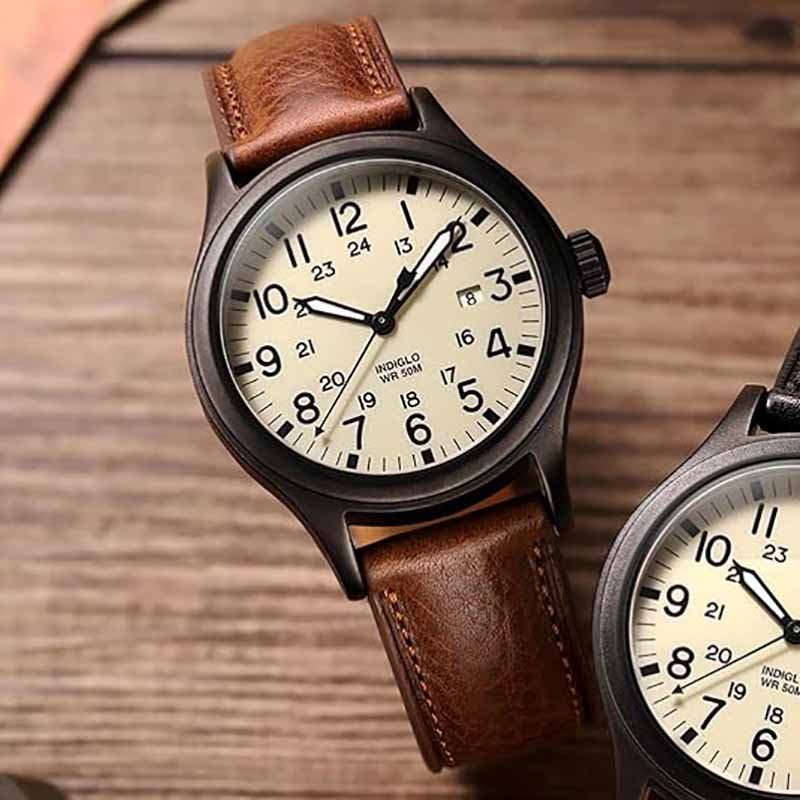
Manufacturing quality affects leather strap price by increasing labor time, skill requirements, precision control, and quality inspection. Higher-quality manufacturing raises unit cost but delivers better durability, comfort, consistency, and lower long-term failure risk—especially critical for daily-use and premium leather straps.
Why labor skill level changes leather strap cost more than buyers expect
Leather straps are labor-driven products, not automated commodities. Unlike molded plastics or stamped metal parts, most of a leather strap’s value is created by skilled manual operations.
Higher manufacturing quality means:
- More experienced workers
- Slower, more controlled production pace
- Lower tolerance for visual or structural defects
For example, precise skiving (thinning leather at fold points) requires trained hands. A mistake here weakens the strap permanently. Factories that rely on less-skilled labor must either accept higher defect rates or avoid advanced constructions altogether.
This is why higher-quality factories quote more: they price in skill, training, and stability, not just labor hours.
How stitching accuracy and stitch density raise cost
Stitching looks simple, but it is one of the most critical quality differentiators.
High-quality leather straps use:
- Even stitch spacing
- Consistent thread tension
- Reinforced stress points
Achieving this requires:
- Slower sewing speed
- Skilled operators
- Frequent machine calibration
In contrast, fast stitching reduces labor cost but increases risks:
- Crooked stitch lines
- Loose tension leading to seam failure
- Premature wear under flexing
From a pricing standpoint, tighter stitching increases labor time per unit. From a user standpoint, it increases strap lifespan dramatically. This trade-off is invisible in photos but obvious in long-term use.
How edge finishing quality changes both cost and perceived value
Edge finishing is one of the clearest indicators of manufacturing quality.
There are three common edge treatments:
- Raw cut edges – lowest cost, shortest lifespan
- Folded/turned edges – higher cost, better durability
- Painted & sealed edges – highest cost, premium appearance
Painted edges require:
- Multiple coating passes
- Drying time between coats
- Manual inspection and touch-up
Each layer adds time and risk. Poor edge work leads to cracking or peeling, which customers notice quickly. High-end brands almost always invest here, knowing that edge failure damages brand trust more than any other defect.
Why lining, padding, and internal structure add hidden cost
Many of the most expensive manufacturing steps are invisible once the strap is finished.
Examples include:
- Soft lining leather for skin contact
- Padding layers for comfort and load distribution
- Reinforcement strips at attachment points
Each internal layer adds:
- Material cost
- Additional cutting and alignment steps
- Extra stitching operations
For example, a lined watch strap may require twice the stitching time of an unlined strap. These features don’t show up clearly in product photos, but they define comfort and durability in real use.
This is why premium straps often “feel different” even when they look similar.
How quality control systems directly affect final pricing
Quality control is rarely listed on a quote—but it is always included in the price.
High-quality manufacturers implement:
- In-process inspection at multiple steps
- Final 100% visual and functional checks
- Rework or rejection of imperfect units
This increases cost by:
- Slowing throughput
- Increasing labor hours per accepted unit
- Raising rejection rates
However, it dramatically reduces:
- Customer complaints
- Returns and replacements
- Brand reputation risk
From a buyer’s perspective, paying for QC upfront is cheaper than fixing problems after products reach the market.
Why “same specification” does not mean “same manufacturing quality”
Two factories can receive the same spec sheet and still produce straps with very different outcomes.
Differences come from:
- Worker training systems
- Tool maintenance standards
- Process discipline
- Internal acceptance criteria
One factory may accept minor defects as “passable,” while another rejects them. That difference alone can shift pricing by 20–40%.
This explains why buyers sometimes feel confused when comparing quotes: they are not comparing the same quality level, even if the specs look identical.
How manufacturing quality affects total cost over time
Manufacturing quality should be evaluated over the product’s lifecycle, not just unit price.
Higher-quality straps result in:
- Longer usable lifespan
- Fewer warranty issues
- Higher customer satisfaction
- Stronger brand loyalty
Lower-quality straps may be cheaper upfront but cost more through:
- Returns
- Replacements
- Lost repeat customers
For brands and professional buyers, manufacturing quality is a long-term cost control strategy, not a luxury.
How Much Should a Leather Strap Cost for Your Use Case
The right leather strap price depends on how the strap is used, how often it is worn, and how much stress it تحملs. Daily-use, skin-contact, or load-bearing leather straps justify higher cost due to material, comfort, and durability requirements, while decorative or occasional-use straps can be produced at lower cost without sacrificing value.
How much should a leather strap cost for daily wear products?
Daily-wear leather straps—such as watch straps, camera straps, and everyday bag straps—experience constant stress from flexing, sweat, skin oils, friction, and repeated load cycles.
For these use cases, underpricing is risky. A daily-use strap should typically fall into a mid-range to premium cost bracket, because it requires:
- Full-grain or high-quality top-grain leather
- Soft, sweat-resistant lining
- Dense, even stitching
- Reliable edge finishing
From an OEM manufacturing perspective, daily-use leather straps are rarely “cheap” to make well. Attempting to hit a very low unit price often leads to early cracking, edge peeling, or discomfort—issues customers notice quickly.
A practical rule: If a strap is worn every day and touches skin, paying more upfront usually reduces long-term brand and warranty costs.
How much should leather straps cost for load-bearing use?
Load-bearing straps include guitar straps, shoulder straps, crossbody bag straps, and tool straps. These straps must handle weight, movement, and sudden force without stretching or tearing.
Cost drivers here include:
- Thicker leather (often cowhide rather than calfskin)
- Reinforced attachment points
- Strong stitching threads
- Padding or internal reinforcement
For these straps, price should reflect structural safety, not aesthetics alone. A strap failure can damage products (e.g., instruments or bags) and create liability issues.
From a factory viewpoint, load-bearing straps cannot be priced at entry-level rates without compromising safety. Mid-range pricing is often the minimum for acceptable performance, while premium pricing is justified for professional or heavy-duty use.
How much should decorative or promotional leather straps cost?
Decorative or promotional leather straps—such as key straps, gift straps, limited-use accessories, or branding add-ons—face very different demands.
These products:
- Are used occasionally or briefly
- Carry minimal load
- Are valued more for appearance than longevity
In these cases, entry-level or lower mid-range pricing makes sense. Corrected leather, simpler construction, and basic edge finishing are often acceptable.
The key risk here is overpaying. Using premium leather or complex construction for a strap that will be rarely used adds cost without meaningful user benefit.
Smart buyers align spend with actual usage, not perceived prestige.
How pricing expectations change by strap category
Different strap categories have different “normal” price expectations. From a factory/OEM lens:
| Strap Type | Reasonable Cost Position |
|---|---|
| Watch straps | Medium → High (comfort & precision) |
| Guitar straps | Medium → High (load & safety) |
| Bag straps | Medium (strength & abrasion) |
| Belts | Medium (yield & appearance) |
| Decorative straps | Low → Medium (visual use) |
Comparing across categories often leads to confusion. A “cheap” guitar strap may still cost more than a “premium” decorative strap—and that difference is justified by risk and performance requirements.
When is a leather strap “too cheap” for its use case?
A leather strap is likely underpriced if:
- It will be used daily but has no lining
- It carries weight but uses thin or split leather
- Edges are raw with no reinforcement
- Stitching density is visibly low
These signs usually indicate short service life and higher failure risk. From a brand perspective, the cost of replacements, complaints, and reputation damage often exceeds the initial savings.
Cheap straps are not always bad—but they are bad when used in the wrong scenario.
When is a leather strap overpriced for its use case?
Overpricing happens when:
- Exotic or premium leather is used for low-stress applications
- Complex edge work is applied to rarely used products
- Brand positioning does not match cost level
In these cases, buyers pay for features that customers neither need nor perceive. For private-label and OEM projects, this reduces competitiveness without increasing satisfaction.
The goal is value alignment, not maximum specification.
How professional buyers set a “reasonable” strap budget
Experienced buyers rarely ask, “What’s the cheapest leather strap?” They ask:
- How will it be used?
- How often will it be used?
- What happens if it fails?
They then budget accordingly.
This approach ensures:
- Money is spent on performance-critical features
- Costs are controlled where quality adds little value
- Final products meet real customer expectations
How Do You Get an Accurate OEM / Private Label Leather Strap Quote
To get an accurate OEM or private-label leather strap quote, buyers must provide clear specifications including strap application, leather type, dimensions, construction details, hardware, quantity, and packaging. Incomplete or vague requirements lead to inaccurate pricing, delays, and unexpected cost changes later.
Why vague requests always lead to inaccurate pricing
One of the most common sourcing mistakes is sending messages like:
“We need a high-quality leather strap. Please quote.”
From a factory perspective, this request is not quote-ready.
“High quality” can mean very different things:
- Full-grain or corrected leather
- Veg-tan or chrome-tan
- Lined or unlined
- Decorative or load-bearing
When details are missing, factories must assume specifications. These assumptions directly affect price. Later, when the buyer clarifies requirements, the price changes—causing frustration on both sides.
Accurate pricing starts with removing ambiguity, not negotiating harder.
What exact specifications does a factory need to quote correctly?
To generate a reliable OEM quote, a factory typically needs the following core parameters:
- Application Watch strap, bag strap, guitar strap, belt, or accessory strap
- Leather Leather type (cowhide, calfskin), grade (full-grain, top-grain), tanning (veg/chrome)
- Dimensions Width, length, finished thickness (not just “standard size”)
- Construction Single layer or lined, padding, folded edges, painted edges, stitch density
- Hardware Buckle type, material, finish, brand requirement
- Quantity (MOQ) Target order volume and potential repeat frequency
- Packaging Polybag, gift box, branded packaging, labeling
Without these details, any quote is provisional at best.
How MOQ and order volume change unit price
MOQ (Minimum Order Quantity) directly affects unit cost because leather straps are labor-intensive.
Low-volume orders increase:
- Setup time per unit
- Material waste
- Sampling amortization
For example:
- 100 straps may cost significantly more per unit than 500
- 500 vs 1,000 units often shows a noticeable price drop
Professional buyers often ask factories:
“What price breaks do you offer at different volumes?”
This allows strategic planning instead of guessing.
Why sampling cost is part of an accurate quote, not an extra fee
Sampling is not just about approval—it is a risk-reduction tool.
Sampling cost covers:
- Leather selection and cutting
- Trial construction
- Pattern adjustment
- Time from skilled technicians
Skipping proper sampling often leads to:
- Wrong leather feel
- Fit issues
- Unexpected construction limitations
From a factory viewpoint, a serious buyer understands that sample cost protects both sides. In many OEM projects, sample fees are deducted from bulk orders, making them an investment rather than a loss.
How packaging and branding quietly affect total strap cost
Packaging is frequently overlooked but has real cost impact.
Examples:
- Simple polybag → minimal cost
- Branded gift box → higher material + assembly cost
- Custom logo stamping → tooling + setup
For private-label buyers, packaging should be discussed at the quoting stage, not after price confirmation. Otherwise, packaging becomes an “unexpected add-on” that disrupts budgeting.
How to reduce cost without lowering perceived quality
Experienced factories don’t just quote—they optimize.
Common cost-optimization strategies include:
- Slightly adjusting strap width for better leather yield
- Switching from folded edges to painted edges
- Using equally durable but more available hardware
- Optimizing lining leather instead of outer leather
These adjustments can reduce cost without affecting how customers perceive quality. This is where working with an experienced manufacturer adds real value.
Why comparing quotes from different factories is often misleading
Two quotes for the “same” leather strap can differ significantly because:
- Leather assumptions differ
- QC standards differ
- Rejection rates differ
- Skill levels differ
Lower quotes often assume:
- Lower leather grade
- Simpler construction
- Minimal QC
Unless specifications are fully aligned, price comparison alone is unreliable. Smart buyers compare spec-for-spec, not just numbers.
How professional buyers communicate to get faster, better quotes
Professional buyers typically:
- Share reference photos or drawings
- Confirm leather preferences clearly
- Ask targeted questions about construction
- Discuss long-term cooperation, not just one order
This signals seriousness and helps factories allocate proper resources.
Conclusion
Leather strap pricing is not about finding the lowest number—it’s about understanding what you’re paying for and why. When leather grade, construction quality, and use case are aligned, the price makes sense and the product performs.
If you’re planning a leather strap project—whether for watches, bags, guitars, belts, or accessories—contact Szoneier Leather to get a clear, factory-level quote and expert guidance from concept to production.
Start your custom leather strap inquiry with Szoneier Leather today.