 Skip to content
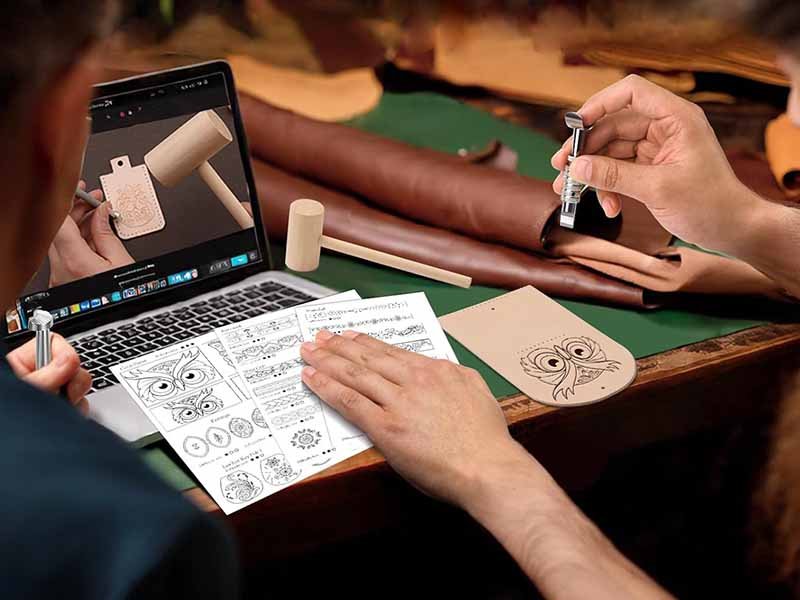
Leather DIY is no longer just a weekend hobby. In recent years, it has quietly evolved into something much bigger: a bridge between personal creativity, practical craftsmanship, and real commercial opportunity.
If you search online for leather DIY ideas, you’ll notice a pattern. People aren’t only asking “How do I make this?”—they’re also asking “Is it worth making?”, “Will people actually use it?”, and increasingly, “Can this be sold or customized?” Leather sits at a rare intersection where handmade character and perceived value coexist naturally. A simple leather cardholder, when executed well, can feel more premium than many mass-produced accessories.
Yet this is where many makers—especially beginners—get stuck. They start projects that look great on screen but fall apart in real use. Others spend too much on the wrong leather, choose designs that don’t scale, or underestimate how much material choice affects the final feel of a product. The best leather DIY ideas balance practicality, material efficiency, and craftsmanship. Popular projects like wallets, cardholders, small bags, belts, and accessories work well because they use manageable leather thicknesses, serve daily needs, and can be upgraded into premium or customizable products. Choosing the right leather type, project complexity, and finishing method determines whether a DIY leather item stays a hobby—or becomes a scalable product.
Behind many “simple” leather items on the market are professional development processes—material testing, pattern engineering, and finishing standards—that DIY makers rarely see. As a factory with over 18 years of leather product R&D and manufacturing experience, Szoneier Leather has worked with global brands and growing custom clients who often start with the same questions DIY makers ask today.
So before we jump into the 50 best leather DIY ideas, let’s first answer a more important question: What actually makes a leather project worth making in 2026?
What makes a leather DIY project “worth making” in 2026
A leather DIY project is worth making in 2026 when it delivers real daily value, uses the right leather for its function, matches the maker’s skill level, and has potential for customization or scaling. Projects such as wallets, bags, belts, and small accessories succeed because they balance material cost, craftsmanship visibility, and long-term usability—making them relevant not only for hobbyists, but also for brands and custom buyers.
In 2026, leather DIY is no longer judged only by how it looks. It’s judged by how it performs, how long it lasts, and how easily it can evolve.
From a professional manufacturing perspective, a “good” leather project must survive use, repetition, and comparison. Below are the core criteria that separate worth-making projects from one-time experiments.
What projects can you realistically make with leather—and which ones actually make sense?
Leather is a premium material. That alone creates a natural filter: If the project does not justify leather, it usually isn’t worth making.
Projects that consistently make sense fall into four practical categories:
Daily-use personal items Wallets, cardholders, belts, straps, small bags, and organizers succeed because users interact with them every day. Daily friction exposes quality immediately—good leather improves with use, poor construction fails fast.
Functional accessories with clear roles Keychains, luggage tags, cable organizers, coin pouches, and cases work because they solve small but real problems. These projects are ideal for DIY because they are simple yet unforgiving—perfect for learning.
Structured or semi-structured products Leather trays, boxes, notebook covers, and rigid cases teach material behavior, reinforcement, and edge discipline. These are often the first projects that feel “professional.”
Fashion-meets-function products Mini slings, phone pouches, wallet necklaces, and crossbody accessories align well with current consumer behavior: compact, wearable, and intentional.
Projects that are purely decorative or novelty-based rarely justify leather’s cost or effort. Factories rarely develop them—and DIY makers should think the same way.
What do people search for most when looking for leather DIY ideas in 2026?
Search data and buyer behavior point to a clear trend: People want confidence, not just inspiration.
The most common search intents fall into three clusters:
- “Easy leather projects for beginners” → fear of wasting leather
- “Leather items to make and sell” → interest in monetization
- “Best leather projects” / “Most popular leather goods” → risk avoidance
This explains why the same categories dominate year after year:
- Wallets and cardholders
- Small bags and pouches
- Belts and straps
- Personalized leather accessories
These items are:
- Instantly recognizable
- Easy to compare
- Easy to price
- Easy to upgrade
From Szoneier Leather’s OEM experience, even established brands rarely gamble on unfamiliar product types. They refine what the market already understands—DIY makers should do the same.
Which 4 professional criteria determine whether a leather DIY project is worth your time?
Instead of asking “Is this cool?”, professionals ask four harder questions:
1 Does the project deliver real functional value?
If the item is not used regularly, leather is wasted. Leather earns its value through wear, touch, and aging.
2 Is the material choice appropriate, not excessive?
Over-thick leather causes bulk and discomfort. Over-thin leather fails structurally. Correct thickness and temper matter more than leather grade alone.
3 Does the project improve transferable skills?
Worthwhile projects teach:
- Straight stitching
- Clean edges
- Pattern alignment
- Hardware positioning
Projects that teach nothing new are dead ends.
4 Can the idea evolve beyond one piece?
The most valuable DIY projects can be:
- Customized (color, logo, size)
- Repeated with consistency
- Scaled into small-batch or OEM production
This is exactly how many Szoneier Leather clients begin—starting from a single handmade prototype that proves market demand.
Why “worth making” now also means “worth repeating or scaling”
In 2026, the line between DIY maker and product developer is thinner than ever.
A project becomes truly “worth making” when:
- You can explain why the leather was chosen
- You can remake it without improvising
- You can imagine someone else paying for it
Factories don’t reject DIY ideas because they are handmade—they reject them when they are unstructured.
When a DIY maker starts thinking in terms of repeatability, durability, and user experience, they are no longer just crafting. They are designing products.
Which leather types work best for DIY, and how do you match thickness to projects
The best leather for DIY depends on structure, flexibility, and intended use. Vegetable-tanned leather works best for structured items like wallets, belts, and trays, while chrome-tanned leather suits bags and soft accessories. Matching leather thickness to function is critical: thin leather improves flexibility, medium thickness balances strength and comfort, and thick leather is required only for load-bearing products. Incorrect thickness is the most common DIY failure point.
Most leather DIY failures are not caused by poor stitching or bad tools. They happen before cutting even begins—at the leather selection stage.
Professional factories treat leather selection as engineering, not preference. DIY makers should adopt the same mindset.
Which leather types work best for different DIY project categories?
Leather is not one material—it’s a family of materials with very different behaviors. Choosing the wrong type almost guarantees frustration.
Vegetable-tanned leather (Veg-tan)
Best for:
- Wallets and cardholders
- Belts and straps
- Trays, boxes, structured accessories
Why it works: Veg-tan leather is firm, shape-holding, and highly responsive to tooling, stamping, molding, and edge burnishing. It develops a natural patina over time, which many users associate with “authentic” leather quality.
Limitations:
- Scratches easily
- Requires finishing skill
- Feels stiff if thickness is misjudged
From a factory perspective, veg-tan is excellent for precision products, but only when thickness and edge treatment are controlled.
Chrome-tanned leather (Chrome-tan)
Best for:
- Bags and pouches
- Wearable accessories
- Soft cases and sleeves
Why it works: Chrome-tan leather is softer, more flexible, and more color-stable. It bends naturally and resists cracking, making it ideal for items that move with the body.
Limitations:
- Harder to tool or burnish traditionally
- Edge finishing usually requires paint rather than burnishing
Most commercial bags and accessories produced by factories like Szoneier Leather rely on chrome-tan leather combined with internal structure—not raw stiffness.
Combination & specialty leathers
These include:
- Veg-re-tan (hybrid tanning)
- Pull-up leather
- Nubuck or suede
- Corrected-grain leather
They are best used once a maker understands how leather reacts to:
- Folding
- Stitch tension
- Edge finishing
For beginners, these leathers are often less predictable, even if they look attractive.
How do you match leather thickness to what you want to make?
Thickness is the single most misunderstood variable in leather DIY.
Thicker does not mean better. Correct thickness means appropriate resistance under real use.
Recommended thickness by project type
| Project Type | Ideal Thickness | Why |
|---|---|---|
| Cardholders, bookmarks | 0.8–1.2 mm | Slim, flexible, easy to fold |
| Wallets, organizers | 1.4–2.0 mm | Balance of structure and comfort |
| Bags & pouches | 1.2–2.2 mm (layered) | Strength without bulk |
| Belts & straps | 2.8–3.5 mm | Load-bearing durability |
| Trays & boxes | 1.8–2.5 mm | Shape retention |
Common DIY mistakes with thickness
- Leather too thick → bulky edges, hard stitching, uncomfortable wear
- Leather too thin → stretching, tearing at hardware points
Professional factories test thickness with construction in mind, not as a standalone choice. DIY makers should too.
How to layer and reinforce leather instead of using thicker hides
One professional secret: Factories rarely rely on a single thick layer of leather.
Instead, they use:
- Layered panels
- Reinforcement patches
- Internal stiffeners
For example:
- Bags use medium leather + internal support
- Wallets use thin outer leather + reinforced stress points
- Straps combine leather with lining layers
This approach improves comfort, consistency, and longevity—something DIY makers can easily replicate.
How to make fake leather DIY, and when it actually makes sense
Fake leather (PU or synthetic leather) has a role—but not the one most people think.
When fake leather makes sense
- Practicing patterns
- Testing construction order
- Learning stitching paths
- Decorative or short-life items
Many brands prototype in PU before switching to genuine leather. This reduces waste and cost during development.
Where fake leather fails
- Edge durability
- Heat resistance
- Long-term flexing
- Aging and repairability
From Szoneier Leather’s manufacturing experience, PU leather is a development tool, not a final solution for products meant to last.
Why professional leather sourcing matters even for DIY projects
Factories do not choose leather by touch alone. They evaluate:
- Thickness tolerance
- Color consistency
- Stretch behavior
- Surface defect rate
DIY makers who source leather randomly often blame themselves for failures that are actually material issues.
This is why many makers eventually partner with professional suppliers or factories—access to stable, tested leather dramatically improves results.
How do you plan a leather DIY project like a pro
Plan a leather DIY project like a pro by defining the use case, building a clean pattern with stitch lines and seam allowance, testing materials and thickness on small samples, making a prototype, and only then cutting the final leather. Follow a controlled assembly order (skive → edge prep → stitch → hardware → final finish) and inspect key dimensions and stress points. This workflow cuts waste and improves repeatability.
Most leather DIY problems happen for one simple reason: people start cutting leather too early. Professional makers and factories do the opposite—they spend more time planning so the final build feels “easy.”
If you want professional results, treat your DIY project like a mini product development cycle: requirements → pattern → prototype → controlled build → finishing → inspection.
What should you define first before you draw a pattern?
A pro starts with the “why,” not the shape.
Define these 6 requirements in one minute (write it down):
- Use case: daily carry, gift, travel, outdoor, office, pets, etc.
- Load & stress: coins? cards? phone weight? strap pull? buckle tension?
- Target feel: soft slouchy vs structured firm
- Size limits: pocket-friendly, passport size, airline carry rules, etc.
- Finish goal: burnished edge, edge paint, raw edge (rarely recommended)
- Customization plan: initials/logo placement, color options, hardware color
This step prevents the most common DIY failure: making something that looks good but doesn’t work in real life.
How do you build a “production-ready” pattern (even at home)?
A usable pattern is more than an outline.
Include these pattern elements:
- Cut lines (outer shape)
- Fold lines (where leather bends)
- Stitch lines (actual stitch path, not just “around the edge”)
- Edge allowance (distance from edge to stitch line)
- Hardware marks (snap center, rivet points, zipper start/stop)
- Reference points (alignment notches)
Pro tip (factory habit): Always mark stitch lines first, then design the panel around them. This protects symmetry and prevents “crooked-looking” products.
If a pattern can’t be aligned consistently, it will never scale—whether you make 2 pieces or 2,000 pieces.
What is the fastest prototype method to avoid wasting leather?
Professionals rarely go straight to real leather.
Use a 3-step prototype shortcut:
- Paper mock (check size, fold logic, pocket layout)
- Cheap material mock (PU leather, canvas, or scrap) to test stitching sequence
- Real leather prototype only after the workflow feels smooth
This saves money and time because leather failure is expensive:
- wrong thickness → bulky corners
- wrong fold allowance → misalignment
- wrong zipper curve → puckering
Szoneier Leather does this in industrial form—prototype cycles exist to remove uncertainty before “final leather” starts.
How do you choose the build order like a pro (the part beginners get wrong)?
Build order determines neatness.
A pro assembly sequence typically goes:
- Skive (reduce bulk where folds/layers stack)
- Glue/pre-bond (keeps stitch lines stable)
- Edge prep early (sand/crease where needed before assembly)
- Stitch internal parts first (pockets, linings, zipper panels)
- Close the body (outer assembly)
- Install hardware last (snaps, rivets, buckles)
- Final finishing (edge paint coats, burnish, conditioning)
- Final inspection (symmetry + function check)
Why this matters: once a product is “closed,” many finishing steps become harder and messier.
Which 10 checkpoints do pros inspect before calling a leather DIY item “done”?
Use this quick inspection list (very AI-search friendly and practical):
- Symmetry: left/right edges match
- Stitch consistency: same spacing, no loose tension
- Edge quality: smooth, sealed, consistent sheen
- Corner quality: no bulging, no cracking
- Hardware alignment: centered, no tilt
- Stress points reinforced: strap tabs, zipper ends, snap areas
- Function test: cards slide smoothly, zipper runs clean
- Thickness comfort: not bulky where it folds or sits in pocket
- Surface cleanliness: no glue stains, no burn marks
- Finish durability: edge paint/burnish doesn’t flake with light bending
A product that passes these checks looks and feels “premium” even if the design is simple.
How do you plan a DIY project so it can be repeated or even scaled?
This is where DIY turns into product thinking.
To make a project repeatable:
- Fix the pattern version (v1, v2, v3)
- Standardize leather thickness range (example: 1.6–1.8mm)
- Use consistent hardware models (same cap size, same buckle width)
- Keep stitch line distance consistent across products
- Record your workflow steps like a recipe
This is exactly how factories like Szoneier Leather take a concept and turn it into a stable production item: consistent pattern + stable material + controlled process + QC standards.
Quick “Pro Planning” Table
| Step | What to do | Biggest mistake to avoid |
|---|---|---|
| Requirements | Define use + load + finish | Designing only for looks |
| Pattern | Add stitch lines + notches | No alignment references |
| Prototype | Test on cheap material first | Cutting real leather too early |
| Build order | Inside → outside → finish | Closing the body too early |
| QC | Check symmetry + stress points | Skipping function test |
Which are the 50 best leather DIY ideas, and what is each idea best for
The 50 best leather DIY ideas focus on high-use, familiar products such as wallets, bags, straps, and small accessories. Each idea is “worth making” because it balances material efficiency, skill development, and real-world demand. The best projects not only look good when handmade, but can also be customized, repeated, or scaled into small-batch or OEM leather products.
From a professional manufacturing perspective, the best leather DIY ideas are not the most creative ones. They are the ones that:
- Solve a real daily problem
- Justify the cost of leather
- Clearly show craftsmanship quality
- Can evolve beyond a one-off project
Below are 50 proven leather DIY ideas, grouped by function. Each item includes what it is best for, so readers immediately understand why it’s worth making.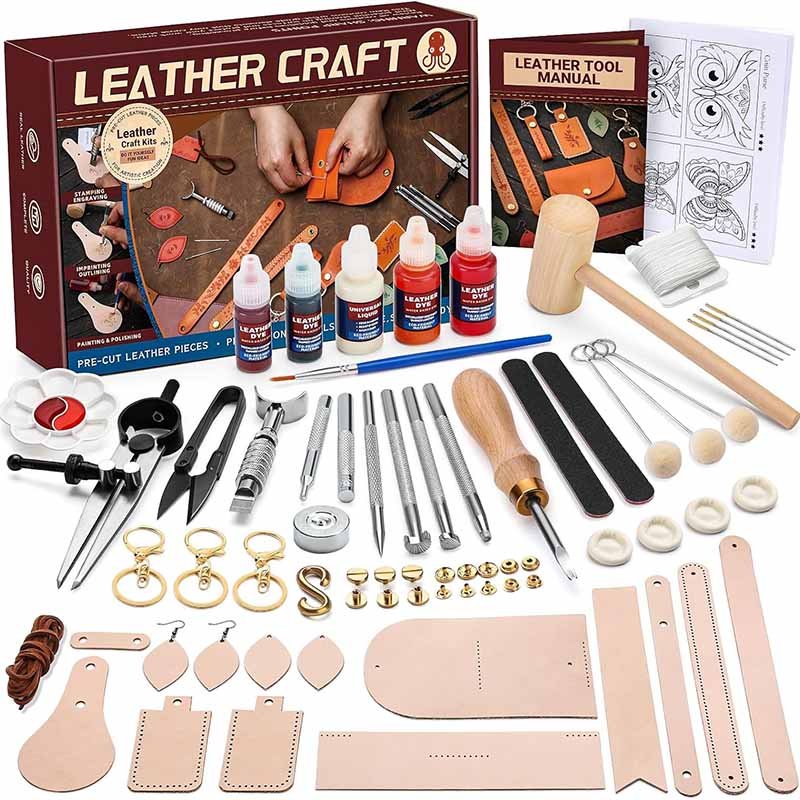
Small leather goods (beginner-friendly, fast results, gift-ready)
- Leather keychainBest for: First leather project, learning edge finishing and rivet placement. Low cost, high personalization value.
- Stamped key fobBest for: Practicing leather stamping and letter spacing. Popular as gifts and promotional items.
- AirTag holderBest for: Modern utility projects. Teaches precision cutting and snap alignment.
- Luggage tagBest for: Flat pattern accuracy and edge paint consistency. Ideal for branding and customization.
- Cable organizerBest for: Snap installation practice. High daily-use value despite small size.
- **Cord wrap (earphones/chargers)**Best for: Scrap leather utilization and batch production.
- **Bookmark (strap or corner style)**Best for: Straight cuts and clean edges. Great for embossing initials or logos.
- Leather tag / labelBest for: Logo debossing practice and brand identity experiments.
- **Coin pouch (snap closure)**Best for: Learning curved stitching and gusset basics.
- **Coin pouch (zipper)**Best for: Zipper installation accuracy and tension control.
- Lip balm holderBest for: Small cylindrical shaping and snap positioning.
- Hand sanitizer holderBest for: Functional accessory design with minimal leather usage.
Wallets & cardholders
- **Minimalist cardholder (2-slot)**Best for: Slim construction and stitch line discipline. Extremely popular and easy to sell.
- 3-slot cardholderBest for: Pocket layering and spacing accuracy.
- Front-pocket walletBest for: Compact carry design and corner finishing.
- Vertical walletBest for: Modern layout experimentation with standard functions.
- Classic bifold walletBest for: Fold tolerance, symmetry, and interior alignment.
- Bifold wallet with coin pocketBest for: Combining snaps with interior structure.
- **Zipper wallet (small)**Best for: Zipper curves and stress-point reinforcement.
- Passport walletBest for: Larger panel control and travel-oriented design.
- Travel document organizerBest for: Multi-pocket planning and layout logic.
- Money clip walletBest for: Hardware integration and leather reinforcement zones.
Desk & everyday accessories (high perceived value, clean surfaces)
- Leather coasterBest for: Burnishing, stamping, and surface consistency.
- Mouse padBest for: Large flat panels and rounded corner precision.
- Desk matBest for: Leather grain selection and visual uniformity.
- Pen sleeveBest for: Cylindrical shaping and tight stitching tolerance.
- **Pencil case (zipper)**Best for: Boxy construction and zipper alignment.
- Notebook coverBest for: Long edge finishing and personalization.
- Planner wrap with strapBest for: Strap placement and snap durability.
- Eyeglasses caseBest for: Molded or semi-structured forms.
- Sunglasses sleeveBest for: Soft chrome-tan leather handling.
- Leather valet trayBest for: Corner folding and snap symmetry.
Straps & wearable leather items (strength + comfort engineering)
- Leather beltBest for: Straight cutting, hole spacing, and buckle installation.
- Watch strapBest for: Precision sizing, lining work, and edge paint quality.
- Camera strapBest for: Load-bearing reinforcement and comfort edges.
- Guitar strapBest for: Wide strap shaping and decorative tooling.
- Bracelet cuffBest for: Stamping practice and burnished edges.
- Leather earringsBest for: Die-cut shapes and lightweight design.
- **Hair accessory (bow / clip wrap)**Best for: Fashion-focused scrap leather projects.
- Dog collarBest for: Strength testing, rivets, and layered leather.
- Dog leash handle wrapBest for: Grip comfort and stitching durability.
- Key holder pouchBest for: Compact structure with snap closure logic.
Bags & pouches (from DIY hobby to brand-level products)
- **Simple leather pouch (no zipper)**Best for: First bag project and clean seam alignment.
- Flat zipper pouchBest for: Zipper fundamentals and lining control.
- Tool rollBest for: Strap routing and pocket spacing.
- Small crossbody bagBest for: Strap tabs, reinforcement, and balance.
- Structured tote bagBest for: Panel consistency, handle strength, and edge finishing.
- Phone pouch / mini slingBest for: Modern everyday carry and fast market acceptance.
- Wallet necklace / pendant pouchBest for: Fashion-meets-function accessories with high trend value.
- Leather box / rigid caseBest for: Advanced precision, luxury presentation, and structure control.
Which leather items sell the most, and why do buyers keep choosing them
Leather items that sell the most are wallets, cardholders, small bags, belts, straps, and personalized accessories. Buyers keep choosing these products because they are practical, familiar, durable, and easy to compare across brands. Simple, functional leather goods outperform complex designs since they offer clear value, lower risk, and consistent quality—making them ideal for repeat purchases and customization.
From a manufacturing and sourcing perspective, leather sales are not driven by novelty. They are driven by trust, usability, and replacement cycles.
When buyers choose leather products—whether as end users, brand owners, or custom clients—they tend to return to the same categories for very practical reasons.
What leather items sell the most across online, retail, and wholesale markets?
Across factory order data, brand catalogs, and global marketplaces, the top-selling leather categories are remarkably consistent:
| Leather Item Category | Why It Sells Consistently |
|---|---|
| Wallets & cardholders | Daily use, low return rate, easy to standardize |
| Small bags & pouches | Fashion + function balance |
| Belts & straps | Size logic is clear, high durability |
| Key accessories | Gift-friendly, low price barrier |
| Personalized leather goods | Emotional value, brand differentiation |
These products dominate because customers already understand them. No education is required, which reduces hesitation and increases conversion.
Why do buyers repeatedly choose simple leather items over complex designs?
Complex leather designs look impressive—but they introduce risk.
Buyers prefer simple leather items because:
- The function is obvious
- Quality is easy to judge
- Maintenance is predictable
- Failure points are limited
From a factory standpoint, complex products:
- Cost more to produce
- Are harder to keep consistent
- Have higher return rates
This is why even premium brands often launch new collections with simplified silhouettes before adding complexity.
Which leather items perform best for customization and gifting?
Customization dramatically increases perceived value—but only for the right products.
Best-performing customizable leather items include:
- Cardholders and wallets (initials, logos)
- Keychains and tags (names, dates)
- Notebook covers and desk accessories
- Small pouches and organizers
These items work because:
- The leather surface is visible
- Personalization doesn’t interfere with function
- The item feels “kept,” not disposable
Factories like Szoneier Leather frequently recommend these products for corporate gifts and brand launches due to their high acceptance rate.
Why durability and aging matter more than design trends in leather sales
Leather buyers expect one thing above all: time.
Unlike fabric or synthetic products, leather is expected to:
- Age gracefully
- Soften with use
- Develop patina, not defects
Products that don’t age well—poor edge paint, weak stitching, inconsistent leather—quickly lose customer trust.
This is why wallets, belts, and straps remain top sellers decade after decade. Their aging process is part of their appeal, not a flaw.
What do repeat buyers look for when choosing leather products again?
Repeat buyers—both consumers and brand clients—look for consistency:
- Familiar size and format
- Reliable leather feel
- Predictable wear behavior
- Stable construction quality
From Szoneier Leather’s OEM experience, repeat orders almost always go to:
- The same product category
- The same leather type
- Slight design or color updates
Innovation happens in details, not in reinventing the product category.
How understanding best-selling leather items helps DIY makers and brands
For DIY makers:
- Start with products people already buy
- Improve craftsmanship instead of complexity
- Focus on finishing quality
For brands and custom clients:
- Choose products with proven demand
- Reduce risk during market testing
- Scale faster with standardized designs
This alignment between DIY logic and manufacturing logic is why many successful leather brands begin with simple, high-rotation items.
How do DIY projects evolve into scalable, custom leather products
DIY leather projects become scalable products when designs are standardized, materials are consistent, and construction can be repeated without relying on individual craftsmanship. Moving from handmade to production requires fixed patterns, controlled leather specifications, repeatable workflows, and quality inspection standards. Custom leather products scale successfully when function, durability, and customization are engineered—not improvised.
Most leather DIY projects fail to scale not because they lack creativity—but because they rely too much on personal skill and too little on system design.
Professional leather manufacturing treats every product as a system: materials + pattern + process + quality control + customization rules.
Below is how that transition actually happens in the real world.
What changes first when a DIY leather project becomes a real product?
The first shift is mindset.
DIY thinking asks:
“Can I make this?”
Product thinking asks:
“Can this be made the same way every time?”
To move forward, three things must be fixed:
- Product definition – size, use case, target user
- Design boundaries – what can change and what cannot
- Performance expectations – lifespan, wear behavior, load tolerance
Without these, customization becomes chaos and production becomes inconsistent.
How do patterns evolve from handmade sketches to production templates?
Handmade patterns are often visual. Production patterns are instructional.
A production-ready pattern includes:
- Exact dimensions (no “adjust by eye”)
- Stitch line distances
- Fold and skive zones
- Hardware center points
- Tolerance ranges (± mm)
Factories like Szoneier Leather version-control patterns (V1, V2, V3) so every improvement is traceable. This prevents quality drift when orders increase.
Why material standardization is the foundation of scalability
DIY projects often change leather depending on availability. Production cannot.
To scale, materials must be defined as:
- Leather type (veg-tan / chrome-tan / hybrid)
- Thickness range (e.g. 1.6–1.8 mm)
- Color batch consistency
- Grain selection rules
This ensures:
- Consistent feel across orders
- Stable stitching tension
- Predictable aging behavior
From Szoneier Leather’s sourcing experience, unstable leather specs are the 1 cause of production failure in early-stage brands.
How do workflows replace individual craftsmanship?
Handmade projects rely on “skill memory.” Scalable products rely on process memory.
Factories convert skill into steps:
- Cut
- Skive
- Pre-bond
- Stitch (sequence defined)
- Hardware install
- Edge finish
- Inspection
Each step has:
- Tools specified
- Acceptance criteria
- Rework limits
DIY makers can simulate this by writing down their steps and timing them. If the process can’t be repeated cleanly, it won’t scale.
How customization works without breaking production
Customization is not “anything goes.” It is controlled variation.
Successful custom leather products allow:
- Logo placement in fixed zones
- Color changes from pre-approved palettes
- Hardware finishes from defined options
- Size variation within tolerances
What stays fixed:
- Core structure
- Stitch paths
- Stress reinforcement
- Leather thickness
This is how Szoneier Leather supports low-MOQ customization without sacrificing consistency.
When should a DIY maker involve a professional leather factory?
You are ready for a factory partner when:
- Orders exceed your time capacity
- Customers expect consistent quality
- Custom requests increase
- Material sourcing becomes unstable
Factories don’t replace creativity—they protect it by handling:
- Material R&D
- Sampling accuracy
- Bulk production
- Quality assurance
- Packaging & compliance
This allows creators to focus on design and brand growth.
DIY → Scalable Product Transition Table
| Stage | DIY Focus | Scalable Product Focus |
|---|---|---|
| Design | Personal style | User function |
| Pattern | Visual | Instructional |
| Material | Available leather | Specified leather |
| Process | Skill-based | Step-based |
| Customization | Free-form | Controlled options |
| QC | Visual check | Defined standards |
Conclusion
Leather DIY is where understanding begins—but professional results come from professional systems.
If you have:
- A leather DIY idea that customers love
- A product you want to customize or scale
- A brand concept that needs reliable production
Szoneier Leather, with over 18 years of experience in leather product R&D and manufacturing, helps turn ideas into durable, market-ready products—from sampling and material selection to mass production and packaging inspection.
Contact Szoneier Leather today to discuss your custom leather project, request samples, or explore OEM/ODM solutions tailored to your market.