
Full Grain Leather vs Top Grain Leather for Watch Straps: Which Is Better
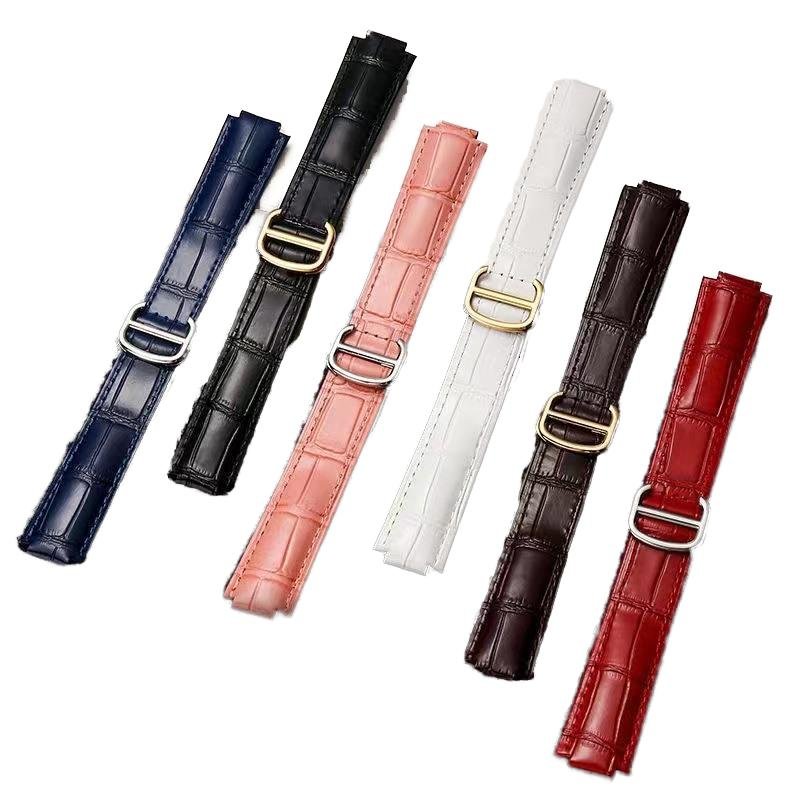
A leather watch strap may use less material than a wallet or handbag, but it is often more demanding to manufacture. The strap bends around the wrist, passes repeatedly through the buckle and keepers, absorbs perspiration, rubs against clothing, and places constant pressure on a small number of punched holes. A beautiful piece of leather can still produce a disappointing strap when its thickness, temper, lining, reinforcement, edge finish, or surface coating is unsuitable.
Full grain and top grain leather are both widely used for watch straps, yet the difference is often oversimplified. Full grain leather is frequently presented as the unquestioned premium option, while top grain leather is sometimes treated as a lower-grade substitute. In actual product development, the result is more complicated.
Full grain leather is usually better for watch straps that need natural grain, visible character, gradual patina, and a handcrafted appearance. Top grain leather is often better for straps that require smooth color, consistent texture, easier maintenance, higher cutting yield, and repeatable appearance across larger production runs. The better choice depends on the watch style, target price, wearing conditions, finishing system, and strap construction.
Imagine approving a rich brown full grain sample under showroom lighting. Three months after launch, customers begin reporting dark sweat marks, enlarged buckle holes, and uneven color between production batches. The leather name sounded impressive, but the product specification was incomplete. That gap between a material label and actual wearing performance is where many watch strap projects go wrong.
What Is Full Grain Leather?
Full grain leather is produced from the grain-side layer of the hide without sanding away the natural grain surface. It retains visible pores, wrinkles, growth marks, and small natural variations. For watch straps, it can provide strong character, attractive aging, and a premium feel, but its final quality still depends on hide selection, tanning, dyeing, thickness, finishing, cutting position, and construction.
How Is Full Grain Leather Made?
Leather production begins with an animal hide that must be cleaned, prepared, tanned, dyed, dried, conditioned, softened, and finished. When the upper grain surface remains intact rather than being mechanically sanded to remove imperfections, the material can be classified as full grain leather.
This description identifies the condition of the surface, but it does not fully describe how the leather will perform. Full grain leather may be vegetable-tanned, chrome-tanned, combination-tanned, oil-treated, waxed, drum-dyed, aniline-finished, semi-aniline-finished, or protected with a light surface coating. Each process changes the leather’s flexibility, color depth, water sensitivity, scratch behavior, and aging pattern.
For watch strap production, several material details should be confirmed before sampling:
- Animal type and leather source
- Tanning method
- Grain condition
- Surface finish
- Dyeing method
- Leather thickness
- Temper or firmness
- Stretch direction
- Colorfastness performance
- Permitted natural markings
- Cutting location on the hide
- Surface gloss level
- Moisture and perspiration resistance
A leather swatch that looks attractive does not provide enough information for production. Watch strap materials should be reviewed in larger panels because small samples may hide shade variation, loose grain, uneven dye penetration, or differences between the center and outer areas of the hide.
The production team should also confirm whether the leather is supplied at a consistent thickness or needs splitting before cutting. A variation of only 0.2 to 0.3 millimeters can noticeably affect a thin watch strap, especially when the outer leather, reinforcement, adhesive, and lining are laminated together.
| Material Detail | Why It Matters for Watch Straps |
|---|---|
| Leather thickness | Controls flexibility, profile, and finished strap weight |
| Temper | Determines whether the strap feels soft, firm, or overly rigid |
| Dye penetration | Affects appearance when edges are cut or burnished |
| Surface finish | Influences scratch resistance, patina, and stain resistance |
| Stretch | Affects hole enlargement and long-term shape retention |
| Hide location | Influences grain tightness and structural stability |
| Color variation | Affects consistency between straps and production batches |
| Moisture resistance | Influences sweat marks, darkening, and lining performance |
A professional specification should describe the exact material rather than simply stating “premium full grain leather.” A clearer description might read: “Full grain cowhide, semi-aniline finish, drum-dyed, medium-firm temper, 1.2 ± 0.1 millimeters, matte surface, light wax treatment, and controlled natural grain variation.”
What Does Natural Grain Look Like?
Natural grain is not perfectly uniform. Fine pores, light wrinkles, minor healed scratches, growth lines, and small tonal changes may remain visible. These characteristics can make each strap look slightly different, which is often desirable in heritage, luxury, handmade, and vintage-inspired collections.
Natural variation still needs limits. Customers may accept a small wrinkle or subtle pore difference, but they may reject deep scars, insect damage, loose belly grain, open scratches, heavy color patches, or visible grain break. The factory and customer should agree on a material acceptance standard before mass production begins.
The strongest sections of a hide are generally found in areas with tighter and more stable fiber structure. Belly areas are often softer, stretchier, and less uniform. If these sections are used without control, watch straps may become wavy, lose shape, or show greater grain distortion around the buckle holes.
A practical leather grading standard can divide visible characteristics into three groups:
| Classification | Production Decision |
|---|---|
| Acceptable | Fine pores, mild wrinkles, small tonal variation, light natural marks |
| Restricted | Noticeable scratches, wider grain variation, moderate wrinkles |
| Rejected | Deep scars, loose grain, holes, severe color patches, weak belly structure |
Customers developing full grain watch straps should request a visual approval board showing several acceptable and unacceptable examples. This is more reliable than approving one perfect sample that cannot represent the natural variation found across multiple hides.
Cutting direction also matters. Leather stretches differently along different directions of the hide. Poor cutting placement can cause the tail section to lengthen or the buckle holes to become oval after repeated use. Cutting dies should therefore be positioned according to both visual appearance and fiber direction.
For larger orders, material yield must be included in pricing. Full grain leather often produces lower usable yield because more areas must be avoided. Depending on the hide quality, strap width, length, and accepted natural markings, the usable area may be noticeably lower than with a corrected leather. This affects leather consumption, cutting time, inspection labor, and final unit cost.
Does Full Grain Leather Develop Patina?
Full grain leather can develop patina because its natural surface remains visible and responds to oils, friction, moisture, sunlight, and daily handling. Over time, the color may deepen, the surface may become smoother, and high-contact areas may gain a soft sheen.
Patina is not the same as damage. Attractive patina develops gradually and remains consistent with the character of the leather. Dark perspiration rings, severe water staining, peeling finish, surface cracking, sticky coating, and heavy dye transfer should not be marketed as natural aging.
The speed and appearance of patina depend on the leather finish:
| Finish Type | Aging Behavior |
|---|---|
| Aniline | Changes quickly and shows scratches, oils, and color variation clearly |
| Semi-aniline | Develops character while offering moderate surface protection |
| Waxed | Gains contrast and can often be refreshed by rubbing |
| Oiled | Darkens in high-contact areas and may recover from light scratches |
| Lightly pigmented | Changes more slowly and remains more uniform |
| Heavy pigmented coating | Shows limited natural patina and may age through coating wear |
For a luxury heritage strap, visible aging may strengthen the product story. For a fashion collection sold in precise seasonal colors, strong patina may create customer complaints because the worn strap no longer matches the original product image.
Color choice also affects aging. Light tan, natural brown, and medium cognac leather usually show darkening more clearly. Black and dark navy leather may change less visibly, although gloss and texture can still evolve. Light colors may reveal perspiration, water spots, and surface contamination more quickly.
Customers should decide whether they want the strap to remain visually stable or develop a personal appearance. This decision should be communicated before the leather is selected because surface protection and patina potential often work against each other. Greater protection usually reduces visible natural change, while a highly transparent finish usually increases sensitivity.
A controlled wear test is useful before approving a new leather. Several finished straps can be worn for two to four weeks under different conditions, including office wear, humid weather, light exercise, and frequent buckle use. Photographs should record darkening, edge wear, lining condition, hole deformation, and surface scratches.
Is Full Grain Leather Always Premium?
Full grain leather can support a premium product, but the name alone does not guarantee premium performance. A leather may retain its natural grain and still be dry, weak, unevenly dyed, poorly finished, overly stretchy, or unsuitable for repeated bending.
The following issues can appear even in full grain leather:
- Loose grain that wrinkles excessively during bending
- Uneven thickness between strap panels
- Surface cracking around the buckle fold
- High dye transfer during perspiration exposure
- Excessive stretch around punched holes
- Uncontrolled shade variation between hides
- Dry fibers that create a stiff hand feel
- Weak adhesion between the outer leather and lining
- Visible defects placed in prominent areas
- Poor edge compatibility with paint or burnishing
Premium watch straps require control at both material and product levels. The leather should be checked before cutting, and the finished strap should be inspected after assembly.
| Quality Area | Suggested Control Point |
|---|---|
| Outer leather thickness | ±0.1 mm for tightly controlled thin straps |
| Finished strap width | Often controlled within ±0.2 to ±0.3 mm |
| Hole position | Checked with a fixed gauge or template |
| Color consistency | Compared under standard lighting |
| Stitch distance | Checked from the cut or folded edge |
| Edge coating | Inspected for bubbles, ridges, cracks, and separation |
| Surface rubbing | Checked under dry and damp conditions |
| Flex performance | Tested around the buckle and wrist curve |
| Strap length | Measured from defined reference points |
| Hardware finish | Checked for scratches, plating variation, and corrosion |
These values should be adjusted according to the design, leather thickness, equipment, and customer quality standard. A padded five-millimeter strap cannot be controlled in exactly the same way as a two-millimeter dress strap.
The most reliable approach is to approve a complete production standard that includes the leather swatch, color reference, thickness range, natural-marking limits, stitching, edge finish, dimensions, buckle finish, lining, packaging, and test requirements.
What Is Top Grain Leather?
Top grain leather is made from the grain-side layer of the hide, but its surface is generally lightly buffed, corrected, or finished to improve uniformity. It can provide excellent durability, smooth color, controlled texture, higher cutting yield, and easier maintenance. Its performance depends on how much correction is applied and how the surface coating is formulated.
How Is Top Grain Leather Finished?
Top grain leather often receives light surface sanding to reduce visible scars, wrinkles, insect marks, or grain irregularities. The surface may then be recolored, coated, embossed, waxed, or protected with a clear top finish.
Correction can range from very light to heavy. A lightly corrected leather may still show natural pores and subtle grain variation. A more heavily corrected leather may have a uniform embossed pattern and thicker pigmented finish.
Customers should not treat all top grain leather as the same material. The factory should clarify:
- How deeply the surface has been buffed
- Whether the grain is natural or embossed
- Whether the finish is transparent, semi-transparent, or pigmented
- Whether the leather is drum-dyed or surface-colored
- Whether wax, oil, resin, or polyurethane is used
- How the leather performs during rubbing and flexing
- Whether the finish becomes sticky in heat or humidity
- Whether the coating cracks around small bending areas
A smooth surface can be useful for clean, modern watch strap designs. It allows sharper color matching and a more controlled appearance around the lugs, buckle, and keepers. However, a surface coating that is too thick may make the leather feel artificial and can create cracking after repeated bending.
For watch straps, the buckle section is a critical inspection area. The leather may be folded tightly around the buckle bar, creating a much smaller bending radius than the rest of the strap. A finish that looks stable on a flat panel may crack after several hundred buckle movements.
Surface performance should be evaluated on the finished strap rather than only on an uncut leather sample. Adhesive, reinforcement, edge paint, stitching tension, and folded construction can all influence how the outer leather behaves.
Is Top Grain Leather More Uniform?
Top grain leather usually provides better control over color, grain pattern, and surface appearance. This makes it suitable for product collections with multiple strap widths, repeated orders, strict photography requirements, and narrow color tolerances.
Uniformity can reduce customer complaints in online retail. Product photographs often show one carefully selected strap, while the delivered order may contain material from several hides. If the leather has strong natural variation, customers may feel that the received item does not match the photograph.
Top grain leather can also improve cutting yield because small surface marks are reduced or concealed. More sections of the hide may become usable, lowering material waste and improving production efficiency.
The financial impact becomes more noticeable in larger orders. Consider a watch strap program with 5,000 pieces:
| Cost Factor | Full Grain Program | Top Grain Program |
|---|---|---|
| Natural defect avoidance | Higher | Lower |
| Cutting inspection time | Higher | Moderate |
| Shade sorting | More demanding | Easier |
| Usable hide area | Often lower | Often higher |
| Visual consistency | Controlled natural variation | More uniform |
| Replacement risk | Higher if standards are unclear | Lower when finish is stable |
| Patina potential | Stronger | More controlled |
| Surface maintenance | More sensitive | Often easier |
The table does not mean top grain leather is always cheaper. Premium calfskin, specialty embossing, complex finishing, or imported leather can still carry a high material cost. However, the production yield and consistency may make the final cost easier to control.
For customers planning repeat orders, the factory should retain approved color references and production records. Leather is a natural material, so exact shade duplication may not be possible across different tanning lots. A clear color tolerance should be agreed upon instead of relying on visual memory.
Does Top Grain Leather Resist Stains Better?
Top grain leather can provide better resistance to light stains, moisture, and surface dirt when it has a stable protective finish. The coating slows the absorption of water, skin oils, perspiration, cosmetics, and other substances.
This can be valuable for light-colored straps, daily office wear, promotional products, and collections sold to customers who prefer easy maintenance. A smooth protective finish may allow small marks to be wiped away before they penetrate the leather.
The level of resistance depends on the coating system. A light semi-aniline finish offers a balance between natural touch and protection. A stronger pigmented finish offers greater uniformity and stain resistance but may feel less natural.
Customers should ask for testing in the following areas:
- Dry rubbing
- Damp rubbing
- Artificial perspiration exposure
- Water spotting
- Surface abrasion
- Repeated flexing
- Heat and humidity exposure
- Adhesion of the surface finish
- Color transfer onto light fabric
- Cleaner and lotion contact
Watch straps come into direct contact with skin, so the lining and edge should be tested together with the outer leather. Sweat can enter through stitching holes, buckle holes, cut edges, and the gap between laminated layers.
A water-resistant surface does not make a leather strap waterproof. Moisture may still enter through the lining or edges. Product descriptions should avoid promising waterproof performance unless the complete strap has been designed and tested for that claim.
Is Top Grain the Same as Genuine Leather?
Top grain leather and genuine leather are not interchangeable terms. Top grain identifies leather made from the grain-side layer, usually with some degree of correction or finishing. Genuine leather only confirms that the material contains real leather. It does not clearly describe the hide layer, grain quality, finish, or durability.
A product labeled genuine leather may use full grain leather, top grain leather, corrected leather, split leather, or another leather construction. The term is too broad for professional sourcing.
Customers should request a complete material description instead of accepting a general label. A useful production description might include:
- Cowhide, calfskin, goatskin, or another leather type
- Full grain, lightly corrected top grain, or heavily corrected grain
- Vegetable-tanned, chrome-tanned, combination-tanned, or chrome-free
- Aniline, semi-aniline, waxed, oiled, or pigmented finish
- Thickness and tolerance
- Color reference
- Surface gloss
- Temper
- Lining material
- Performance requirements
For example:
“Top grain calf leather, lightly corrected, semi-aniline finish, drum-dyed, soft temper, 1.0 ± 0.1 millimeters, matte surface, low color transfer, and approved for repeated flexing.”
This description gives the design, sourcing, engineering, and quality teams clear information. “Genuine leather watch strap” does not.
Top grain leather should not be dismissed as an inferior option. A carefully selected top grain calfskin with stable color, controlled thickness, clean grain, and reliable flex performance can produce an excellent watch strap. In many commercial programs, it offers the right balance between appearance, durability, production consistency, and cost control.
Which Leather Performs Better?
Full grain leather usually provides richer natural grain, stronger patina potential, and a more distinctive appearance. Top grain leather often provides better color consistency, easier cleaning, higher cutting yield, and more predictable production. Actual performance depends on tanning quality, surface finish, leather thickness, lining, reinforcement, stitching, edge construction, hardware, and wearing conditions.
A watch strap is exposed to a combination of repeated bending, perspiration, friction, pulling, skin oils, heat, and occasional moisture. These stresses are concentrated in small areas, especially around the buckle fold, adjustment holes, spring-bar ends, keepers, and strap edges. For that reason, comparing only the outer leather does not provide a complete durability picture.
Which Leather Is More Durable?
High-quality full grain leather can offer excellent structural durability because the natural grain layer remains intact. However, full grain leather is not automatically stronger than every top grain leather. A poorly selected full grain hide with loose fibers, excessive stretch, or low moisture resistance may perform worse than a well-developed top grain leather with stable tanning and a controlled finish.
Watch strap durability should be evaluated in several separate areas:
- Resistance to repeated bending
- Resistance to tearing around punched holes
- Dimensional stability during daily wear
- Surface resistance to rubbing
- Color stability under sweat exposure
- Adhesion between the outer leather and lining
- Edge resistance to cracking and peeling
- Stitch resistance at stress points
- Buckle and spring-bar security
- Resistance to moisture-related deformation
The adjustment holes are one of the first areas to show wear. Every time the buckle tongue is inserted, pressure is concentrated around a small opening. Soft or stretchy leather may gradually deform, causing round holes to become oval. The strap can still function, but the worn appearance may reduce the perceived value of the product.
A stronger construction may include a thin reinforcement layer between the outer leather and lining. Reinforcement helps distribute pulling force and limits stretch, but it must remain flexible enough to wrap around the wrist comfortably. Material that is too stiff can create a board-like strap that never conforms properly to the wearer.
The buckle fold is another high-risk area. This section is skived thinner, folded around the buckle bar, stitched, and repeatedly flexed. If the leather surface finish is brittle, cracks may appear along the fold. If the leather is too thick, the fold becomes bulky. If it is skived too aggressively, the leather may tear near the stitch line.
A practical durability assessment should examine both the leather and the completed strap.
| Durability Area | Possible Failure | Recommended Check |
|---|---|---|
| Buckle holes | Stretching, tearing, oval deformation | Repeated fastening and pull test |
| Buckle fold | Surface cracking or tearing | Repeated bending around buckle bar |
| Tail section | Waviness or excessive elongation | Pull-through and dimensional check |
| Lug ends | Layer separation or spring-bar movement | Repeated mounting and removal |
| Stitching | Broken thread or loose stitches | Tension and cycle inspection |
| Edge finish | Cracking, peeling, or color loss | Flex, rubbing, and moisture checks |
| Lining | Delamination or sweat staining | Wear and perspiration exposure |
| Outer surface | Scratches, finish wear, dye transfer | Dry and damp rubbing checks |
For premium custom programs, test samples from actual production leather rather than using only development swatches. Leather behavior can change between tanning lots, particularly in color, softness, thickness, and surface finish.
Customers should also ask whether the factory checks leather stretch before cutting. A strap panel cut from a highly elastic area may look acceptable during final inspection but begin to lengthen after repeated use. Controlling cutting direction and hide location can greatly reduce this problem.
The word durable should therefore be tied to specific performance requirements. A dress strap worn twice a week does not need the same construction as a strap intended for daily use on a heavy automatic watch.
Which Leather Handles Sweat Better?
Neither full grain nor top grain leather can be declared universally better for sweat exposure. The result depends heavily on the lining, dye fixation, surface protection, edge sealing, adhesive, thread, and drying conditions.
Perspiration is more challenging than clean water. It contains salts, oils, and other substances that can darken leather, weaken adhesive bonds, transfer color, create odor, and leave visible marks. Warm weather and tight wrist fit can increase the amount of moisture trapped beneath the strap.
The outer leather may not receive direct contact with most perspiration, but moisture can travel through several paths:
- Through the lining surface
- Through stitch holes
- Through adjustment holes
- Through unfinished edges
- Around the buckle fold
- Between laminated material layers
- Through cracks in edge paint
- Through open pores in lightly finished leather
Full grain aniline leather can be more sensitive because its surface has limited protection. It may darken quickly or show water and perspiration marks. A waxed or semi-aniline full grain leather can offer better resistance while still retaining a natural appearance.
Top grain leather with a stable protective finish may resist surface staining more effectively. However, heavy surface protection on the outside does not solve problems caused by an absorbent lining. In many strap projects, lining selection has a greater effect on sweat performance than the outer leather category.
Common lining options include the following:
| Lining Type | Main Advantage | Main Concern |
|---|---|---|
| Calfskin | Soft, refined, traditional feel | Can absorb sweat if untreated |
| Goatskin | Fine grain, flexible, comfortable | Color and finish must be stable |
| Treated leather | Improved moisture and stain resistance | Treatment may change hand feel |
| Microfiber | Consistent, lightweight, quick drying | Less traditional luxury character |
| Rubber lining | Strong moisture resistance | Heavier and less breathable |
| Technical synthetic | Controlled performance and consistency | Must match product positioning |
| Unlined leather | Natural construction and fewer layers | Direct sweat exposure to outer leather |
Customers should decide how the strap will be used. A strap for formal wear may prioritize thinness and soft calf lining. A strap for warmer climates may need a treated leather or technical lining that dries faster and transfers less color.
Sweat-related development checks should include:
- Color transfer onto white fabric
- Darkening after moisture exposure
- Odor after repeated wear
- Lining surface roughness after drying
- Adhesive strength after damp conditions
- Edge paint condition after moisture cycling
- Stiffness changes after repeated wetting and drying
- Skin comfort during extended wear
A simple wear trial can provide useful information. Several users can wear samples for ten to twenty working days under different climate and activity conditions. The straps should be photographed and inspected at fixed intervals.
A practical wear-test record can track:
| Inspection Time | Areas to Record |
|---|---|
| Day 1 | Initial comfort, fit, surface appearance |
| Day 3 | Early lining darkening and hole deformation |
| Day 7 | Edge condition, odor, flexibility, color transfer |
| Day 14 | Buckle fold, lining adhesion, surface staining |
| Day 20 | Overall shape, hole wear, stitching, user comfort |
Leather straps should not be described as waterproof unless the complete finished product has been designed and verified for water exposure. Even when the outer leather has a water-resistant finish, moisture may still enter through holes, edges, thread, and lining.
Clear product care instructions can also reduce customer dissatisfaction. Users should allow a damp strap to dry naturally in a ventilated area, avoid placing it on a heater, and rotate straps when possible. Aggressive heat can dry the leather and weaken adhesives.
Which Leather Is More Flexible?
Top grain leather is often easier to produce with a soft and uniform handle because splitting, milling, tanning, and finishing can be controlled to create consistent flexibility. Full grain leather may feel firmer at first, especially when vegetable-tanned or designed for a structured vintage appearance.
Flexibility must be considered together with recovery and shape retention. A strap that feels extremely soft in the hand may stretch too much, wrinkle around the buckle, or lose its original profile. A slightly firmer strap may need a brief break-in period but remain more stable over time.
Several properties affect how a watch strap feels:
- Outer leather thickness
- Tanning method
- Amount and type of internal oils
- Surface coating thickness
- Fiber density
- Reinforcement type
- Padding material
- Lining thickness
- Edge construction
- Strap width
- Finished strap thickness
A thin dress strap at approximately 2.0 to 2.5 millimeters may feel flexible even when the leather itself has a medium-firm temper. A padded strap at 4.0 to 5.0 millimeters may feel stiff unless the padding is shaped and skived correctly.
The point where the strap exits the watch lugs deserves special attention. If the strap is too stiff, it may extend outward before bending around the wrist, leaving an uncomfortable gap. This problem is more noticeable on smaller wrists and watches with short or downward-curving lugs.
Flexibility can be evaluated through several production checks:
| Check | What It Reveals |
|---|---|
| Hand bend test | Initial softness and surface reaction |
| Wrist-form test | Ability to wrap around different wrist sizes |
| Recovery check | Whether the strap returns to shape |
| Repeated flex cycle | Risk of cracking or permanent deformation |
| Keeper pull-through | Resistance and surface wear |
| Buckle fold cycle | Performance at the tightest bending point |
| Cold-condition bend | Risk of increased stiffness at low temperature |
| Heat-condition bend | Risk of softening or finish tackiness |
The best flexibility level depends on the product concept. A refined dress strap should feel comfortable quickly and fit close to the wrist. A thick vintage strap may be intentionally firm and develop shape gradually. A large sports watch may require enough structure to support the case without feeling loose.
Customers should approve the feel of the finished strap, not only the leather swatch. Laminating, reinforcement, stitching, padding, and edge treatment can make the completed product feel very different from the original material.
How Long Do Leather Straps Last?
The service life of a leather watch strap varies widely. Wearing frequency, climate, perspiration level, watch weight, wrist fit, water exposure, leather quality, lining, construction, and maintenance all influence how long the strap remains attractive and functional.
A person who wears the same strap every day in a hot and humid climate may create far more stress than someone who wears it twice a week in an air-conditioned office. A tightly fitted strap may experience more bending and sweat contact than a slightly looser fit.
Instead of promising a fixed lifespan, product developers should identify the most common failure points and design to delay them.
Common reasons for replacement include:
- Adjustment holes becoming enlarged
- Lining developing strong odor
- Edge paint peeling or cracking
- Outer leather cracking near the buckle
- Stitching breaking at stress points
- Lining separating from the upper layer
- Surface color wearing away
- Strap becoming permanently stretched
- Buckle plating becoming scratched or corroded
- Spring-bar area becoming weak
A premium product should remain structurally safe even after cosmetic aging begins. Surface darkening or patina may be acceptable, but tearing around the spring-bar or buckle should never be treated as normal wear.
Service life can be improved through several design decisions:
- Use dense leather from stable hide sections.
- Control the leather thickness within a narrow range.
- Reinforce the buckle holes and lug ends.
- Select a sweat-appropriate lining.
- Use thread with suitable abrasion and moisture resistance.
- Keep stitch holes far enough from the edge.
- Apply edge coatings in thin, well-cured layers.
- Use stainless steel or properly plated hardware.
- Avoid overly aggressive skiving at folded areas.
- Complete real-wear testing before production approval.
Watch weight should also be considered. A heavy steel watch places greater load on the strap than a small dress watch. Wider straps may distribute force more effectively, but they also create a larger contact area against the wrist.
A product-development team can create a use profile before sampling:
| Use Profile | Development Priority |
|---|---|
| Occasional formal wear | Thinness, comfort, refined appearance |
| Daily office wear | Color stability, edge durability, soft lining |
| Hot climate | Sweat resistance, quick drying, low dye transfer |
| Heavy watch case | Reinforcement, hole strength, shape retention |
| Heritage product | Natural grain, patina, burnished or waxed edges |
| Fashion collection | Color matching, consistent grain, repeat production |
| Travel use | Stain resistance, reliable hardware, easy maintenance |
Customers should avoid marketing claims that cannot be supported. Statements such as “built for years of daily wear” may create unrealistic expectations unless the product has been tested under defined conditions.
More credible claims describe the construction: reinforced holes, sweat-resistant lining, stainless-steel buckle, multi-layer edge finish, and repeated flex testing. These features tell customers what has actually been done to improve performance.
How Does Strap Construction Affect Quality?
Strap construction can influence performance as much as the leather itself. Thickness, lining, reinforcement, skiving, padding, stitching, edge finishing, hole punching, keeper design, hardware, and adhesive determine whether the strap feels comfortable, remains stable, and survives repeated daily use.
A well-constructed top grain strap may outperform a poorly assembled full grain strap. Likewise, premium full grain leather will not deliver a premium product if the lining separates, the edge paint cracks, or the holes stretch after a few weeks.
Does Leather Thickness Matter?
Thickness affects almost every part of a watch strap: comfort, flexibility, visual proportion, weight, edge appearance, stitching, hole strength, and compatibility with the watch case.
There is no universal ideal thickness. The correct measurement depends on the watch size, lug geometry, intended style, outer leather, lining, padding, and user preference.
Common development ranges include:
| Strap Style | Approximate Finished Thickness |
|---|---|
| Thin dress strap | 1.8–2.5 mm |
| Standard flat strap | 2.5–3.2 mm |
| Lightly padded strap | 3.0–4.0 mm |
| Vintage strap | 3.5–4.5 mm |
| Heavy padded strap | 4.0–5.5 mm |
| Extra-heavy decorative strap | Above 5.5 mm |
These figures are practical starting points rather than fixed standards. The strap may also taper in thickness from the lug end toward the buckle and tail.
A thick strap can look powerful beside a large watch, but it may create several production challenges:
- Difficult bending around the wrist
- Bulky buckle fold
- Crowding between the lugs
- Excess pressure on spring bars
- Difficulty passing through keepers
- Increased edge-paint cracking risk
- Higher material consumption
- Longer break-in period
A very thin strap creates different risks:
- Weak appearance beside a large case
- Faster hole deformation
- Reduced stiffness at the lug end
- Greater visibility of adhesive irregularities
- Limited room for padding or reinforcement
- Increased risk of edge distortion
The outer leather and lining should be measured before assembly. The completed strap should then be measured at defined locations, such as:
- Lug end
- Main body
- First adjustment hole
- Buckle fold
- Tail tip
- Padded center
- Taper transition
A specification stating only “3 millimeters thick” is incomplete. It should define where the measurement is taken and whether the value includes lining, reinforcement, padding, adhesive, and edge finish.
Tolerances should reflect the product. Thin dress straps often need tighter control because small differences are more noticeable. Thick padded straps may allow slightly wider tolerances, provided the left and right strap pieces remain visually balanced.
Which Lining Material Is Best?
The lining sits directly against the wrist, making it one of the most important comfort and performance components. A good lining should feel smooth, resist excessive dye transfer, manage perspiration appropriately, remain bonded to the upper leather, and avoid becoming rough after repeated wear.
Traditional leather linings remain popular for premium watch straps. Calfskin offers a smooth and refined feel, while goatskin can provide flexibility and a fine grain. Treated leather may improve moisture resistance, though the treatment can change softness and breathability.
Microfiber and technical linings can provide consistent thickness, lower color variation, and faster drying. They may be suitable for sport, travel, or warmer climates. However, some luxury collections prefer natural leather throughout for positioning and customer expectations.
The lining should be selected according to the intended use rather than appearance alone.
| Product Requirement | Suitable Lining Direction |
|---|---|
| Luxury dress watch | Fine calfskin or goatskin |
| Warm-climate wear | Sweat-treated leather or technical microfiber |
| Sport-inspired strap | Rubberized or moisture-resistant technical lining |
| Heritage strap | Natural leather lining or unlined construction |
| Light-colored strap | Low-transfer, stain-resistant lining |
| High-volume uniform program | Consistent leather or microfiber lining |
| Thin profile | Lightweight, finely split lining |
Important lining checks include:
- Surface smoothness
- Colorfastness under perspiration
- Dry and damp rubbing resistance
- Adhesion to the outer leather
- Flexibility after drying
- Odor retention
- Thickness consistency
- Edge compatibility
- Skin comfort
- Resistance to surface peeling
The lining color should also be chosen carefully. Light beige or natural tones can show sweat and dirt more quickly. Dark lining can hide stains but may carry a greater risk of visible dye transfer onto skin or clothing if dye fixation is weak.
Customers sometimes request the softest possible lining, but very soft lining leather may be thin, absorbent, or less structurally stable. Comfort should be balanced with durability and moisture performance.
For larger programs, the factory should keep records for each lining lot, including color, thickness, supplier, and test results. A change in lining material can alter the feel of the finished strap even when the outer leather remains unchanged.
How Does Stitching Improve Durability?
Stitching holds the strap layers together, supports stressed areas, and provides backup strength if adhesive performance decreases. It also plays a major role in appearance.
Thread selection should consider:
- Tensile strength
- Abrasion resistance
- Moisture resistance
- Colorfastness
- UV stability
- Surface sheen
- Thread diameter
- Compatibility with needle size
- Compatibility with leather thickness
Polyester thread is commonly used because it offers good strength, abrasion resistance, and color stability. Nylon can provide high strength and elasticity but may behave differently under moisture and sunlight. Natural linen thread can create a traditional handmade appearance but requires appropriate waxing and process control.
Stitch density should match the design. Fine dress straps may use smaller stitches, while vintage straps may use larger, more visible stitching. More stitches do not automatically mean greater durability. If the holes are too close together, the leather can become weakened along the stitch line.
The distance between the stitch and edge is critical. Stitching too close to the edge increases the chance of tearing. Stitching too far inward may look heavy and reduce the clean visual proportion of the strap.
Stress areas usually include:
- Buckle fold
- Spring-bar ends
- Keeper attachment
- Transition around padding
- Tail section near the first hole
- Reinforcement termination points
The upper and lower stitch appearance should both be checked. Poor lower-thread tension may create loose loops even when the visible upper surface looks clean.
A production stitch standard should record:
| Stitch Detail | Required Approval |
|---|---|
| Thread material | Polyester, nylon, linen, or specified option |
| Thread color | Matched to approved sample |
| Thread thickness | Defined by product style |
| Stitch length | Set range per centimeter |
| Edge distance | Fixed visual and strength requirement |
| Start and stop points | Consistent location |
| Backstitch length | Controlled to avoid bulk |
| Needle size | Compatible with leather and thread |
| Bottom tension | No loops or loose thread |
| Corner treatment | Smooth turning without distorted holes |
Hand stitching and machine stitching can both produce premium results. Hand stitching offers a distinctive craft appearance and can use saddle-stitch construction. Machine stitching provides greater consistency and efficiency for larger orders. The choice should align with price, volume, appearance, and delivery requirements.
Do Edge Finishes Prevent Cracking?
Edge finishing seals exposed layers, creates a clean visual line, and reduces direct moisture entry. It does not eliminate all cracking risk, but a properly developed edge system can greatly improve durability.
Common edge constructions include:
- Multi-layer painted edge
- Folded edge
- Turned edge
- Waxed raw edge
- Burnished vegetable-tanned edge
- Heat-treated synthetic edge
- Painted and polished combination edge
Painted edges are widely used for refined and modern watch straps. A durable painted edge usually requires multiple thin applications rather than one heavy coat.
A controlled process may include:
- Cutting and leveling the edge
- Initial sanding
- Base coat application
- Drying or curing
- Intermediate sanding
- First color coat
- Further drying
- Additional color coat
- Final smoothing
- Protective topcoat or polishing
Skipping sanding or drying stages can create bubbles, ridges, weak adhesion, and early peeling. Excessive edge paint can also produce a thick rubber-like ridge that cracks when bent.
Folded edges conceal the cut edge and can provide a refined appearance. They require accurate skiving so that the folded area does not become bulky. Uneven skiving can cause ripples, visible thickness differences, or weak spots.
Burnished edges work especially well with dense vegetable-tanned leather. The exposed fibers are compressed and polished with water, wax, gum, or other finishing materials. This creates a natural craft appearance but may require more maintenance than a protected painted edge.
Edge durability should be checked in the highest-flex areas:
| Edge Area | Main Risk |
|---|---|
| Buckle fold | Cracking from tight bending |
| Tail tip | Abrasion from keeper insertion |
| Hole area | Paint separation around punched openings |
| Lug end | Compression and fitting pressure |
| Wrist curve | Repeated flex and sweat exposure |
| Padding transition | Uneven stress and thickness change |
Customers should inspect edge paint under magnification during sample approval. Tiny bubbles or poor leveling can become obvious defects after mass production.
Color matching also matters. Edge paint may match the outer leather, contrast with it, or coordinate with stitching. Dark edge paint can hide small inconsistencies more easily, while light colors require stronger process control.
Is Vegetable-Tanned Leather Better?
Vegetable-tanned leather is often preferred for heritage, vintage, and craft-style watch straps because it can offer a firm body, natural color depth, burnishable edges, and visible patina. Chrome-tanned leather is often softer, more flexible, and available in a wider range of stable colors and finishes.
Neither tanning method is automatically superior.
Vegetable-tanned leather may be a strong choice when the product needs:
- Natural patina
- Firm structure
- Burnished edges
- Traditional appearance
- Carving or embossing detail
- Waxed or pull-up character
- A visible handcrafted story
Possible limitations include:
- Greater sensitivity to water spots
- Longer break-in period
- More visible color change
- Reduced softness in thick constructions
- Greater shade variation
- Increased risk of stiffness if overly dry
Chrome-tanned leather may be a strong choice when the product needs:
- Immediate softness
- Good flexibility
- Broad color selection
- Smooth surface consistency
- Thin and refined construction
- Faster manufacturing availability
- Stable repeated production
Possible limitations include:
- Less dramatic natural patina in protected finishes
- Greater dependence on finish quality
- Possible surface coating wear
- Less suitable for traditional edge burnishing in some cases
Combination tanning can provide a useful balance. The leather may receive chrome tanning for softness and stability, followed by vegetable retanning for fuller body and natural character.
| Tanning Method | Common Strap Application |
|---|---|
| Vegetable-tanned | Heritage, vintage, handmade, patina-focused |
| Chrome-tanned | Dress, fashion, soft daily-wear straps |
| Combination-tanned | Premium straps needing both structure and comfort |
| Chrome-free | Programs with defined material or chemical requirements |
| Oil-tanned | Rugged, outdoor, pull-up appearance |
| Waxed leather | Vintage character with recoverable surface marks |
The correct tanning method should be chosen according to wear conditions, appearance, edge construction, production volume, and expected customer behavior.
A strap intended for light formal wear may benefit from thin chrome-tanned calfskin. A rugged strap for a large field watch may perform better with structured vegetable-tanned or combination-tanned leather. A fashion collection requiring twelve tightly matched colors may favor a more controlled top grain chrome-tanned leather.
The strongest development approach is to compare several finished strap samples rather than selecting leather from names alone. The customer should evaluate comfort, appearance, bending, sweat performance, color stability, edge behavior, and production consistency before confirming the final material.
Which Leather Should You Choose?
Full grain leather is usually the stronger choice when natural texture, individual character, visible patina, and a traditional leather story are central to the product. Top grain leather is often more suitable when smooth color, controlled texture, easier maintenance, efficient cutting, and repeatable appearance across larger quantities matter more.
The correct choice should begin with the intended watch, wearer, retail position, and use environment. Leather terminology alone cannot determine whether a strap will succeed. A material that works beautifully for a vintage mechanical watch may be unsuitable for a slim fashion watch, a humid climate, or a tightly color-controlled collection.
Before choosing the leather, define the following requirements:
- Watch case size and weight
- Lug width and buckle width
- Intended finished strap thickness
- Flat, tapered, padded, or raised construction
- Formal, vintage, fashion, outdoor, or daily-wear positioning
- Natural grain or smooth uniform surface
- Immediate softness or gradual break-in
- Stable color or visible patina
- Expected perspiration and moisture exposure
- Required lining material
- Edge construction
- Stitching style
- Hardware material and finish
- Production quantity
- Number of colors and sizes
- Repeat-order expectations
- Target product cost
- Packaging and labeling requirements
A product team that begins with these details can compare leather options more accurately. A product team that begins only with “we want premium full grain leather” may receive beautiful samples that are too thick, too sensitive, too variable, or too expensive for the intended collection.
Which Is Best for Luxury Watches?
Full grain leather is often selected for luxury watch straps because it offers natural depth, visible pores, controlled variation, and the ability to develop character over time. It works especially well for heritage watches, mechanical watches, limited editions, vintage-inspired collections, and products that emphasize craftsmanship.
A luxury strap, however, does not always need obvious natural variation. Many refined dress watches require a thin, smooth, and highly consistent strap. In these cases, lightly corrected top grain calfskin may create a cleaner and more elegant result than a heavily textured full grain leather.
Luxury should be defined through the complete product rather than one material term. Customers evaluate the way the strap looks beside the watch, the way it wraps around the wrist, the smoothness of the lining, the precision of the stitching, the quality of the edges, and the finish of the buckle.
Important luxury strap details include:
- Fine, tightly controlled grain
- Clean color depth without cloudy patches
- Even thickness from left strap to right strap
- Smooth taper from the lug end to the buckle
- Accurate skiving at folds and transitions
- Soft lining without rough fibers
- Precise stitching with consistent tension
- Thin, level edge finishing
- Cleanly cut adjustment holes
- High-quality buckle finishing
- Controlled logo embossing
- Balanced proportions beside the watch case
- Packaging that protects the strap surface
Luxury straps often use calfskin because its fine grain can create a smooth and refined appearance. Cowhide may provide more structure and broader material availability. Goatskin can offer a distinctive fine texture and good flexibility. The selected leather should support the desired appearance rather than being chosen according to reputation alone.
The following product directions illustrate how different leathers may support luxury positioning:
| Luxury Strap Direction | Suitable Leather Approach | Important Construction Detail |
|---|---|---|
| Slim dress watch | Smooth full grain or lightly corrected calf | Thin profile and precise taper |
| Heritage mechanical watch | Full grain vegetable-tanned cowhide | Controlled patina and burnished edges |
| Minimalist luxury watch | Uniform top grain calfskin | Clean surface and narrow tonal stitching |
| Limited-edition watch | Distinctive full grain leather | Natural variation approval standard |
| Padded luxury strap | Soft top grain or full grain calf | Smooth padding transition |
| Vintage reissue | Full grain waxed or pull-up leather | Aged character and reinforced holes |
| Modern fashion watch | Fine top grain leather | Tight color consistency across production |
A luxury watch strap should also avoid excessive bulk. A thick piece of premium leather can still feel poorly designed when it crowds the lugs or creates an oversized buckle fold. Proportion matters as much as material cost.
For thin dress straps, the finished thickness may begin around 1.8 to 2.5 millimeters, depending on the watch and construction. Padded luxury straps may rise to approximately 3.0 to 4.5 millimeters near the lugs and taper toward the tail. These figures should be treated as development ranges rather than fixed rules.
The best leather for a luxury watch is the leather that supports the intended design with clean workmanship, controlled dimensions, comfortable lining, and stable long-term performance.
Which Is Best for Daily Wear?
Top grain leather with a stable semi-aniline or lightly pigmented finish is often practical for daily wear. It can maintain a more uniform appearance, resist light surface contamination, and require less careful handling than highly transparent full grain leather.
Full grain leather can also work well for daily use when it has suitable wax, oil, or surface protection. The main question is not whether the leather is full grain or top grain, but whether the complete strap has been designed for repeated perspiration, friction, bending, and fastening.
Daily-wear customers commonly care about:
- Comfortable fit during long hours
- Limited color transfer onto the wrist
- Reduced odor after perspiration
- Stable adjustment holes
- Smooth edges that do not rub the skin
- Lining that does not become rough
- A surface that is reasonably easy to clean
- Buckle plating that does not wear too quickly
- Stitching that remains secure
- A strap that keeps its original shape
A daily strap should be evaluated according to the climate in which it will be sold. A strap developed for a cool European market may behave differently when worn in Southeast Asia, southern China, the Middle East, or other hot and humid regions.
Warm-climate products often benefit from:
- Lower-transfer lining
- Moderate surface protection
- Thin, flexible construction
- Moisture-resistant adhesive
- Fully sealed edge layers
- Stable synthetic or treated thread
- Adequate drying between wear periods
- Clear care instructions
Light-colored leather deserves extra attention. Beige, cream, pale gray, light blue, and natural tan can show sweat marks, dirt, denim transfer, cosmetics, and edge contamination more quickly than dark brown or black.
For light colors, development should include tests with:
- Damp white and dark fabric
- Artificial perspiration
- Skin oil simulation
- Water droplets
- Hand cream or lotion
- Repeated keeper insertion
- Edge rubbing
- Heat and humidity exposure
The following table can guide leather selection for daily use:
| Wearing Situation | Recommended Direction | Main Risk to Control |
|---|---|---|
| Office wear | Smooth full grain or top grain calf | Edge wear and buckle-hole deformation |
| Hot climate | Protected upper with treated lining | Sweat, odor, and color transfer |
| Frequent travel | Top grain with stable finish | Scratches, stains, and repeated fastening |
| Casual weekend wear | Waxed full grain leather | Water spotting and uneven darkening |
| Light-colored fashion strap | Controlled top grain finish | Surface contamination and dye transfer |
| Heavy watch case | Structured leather with reinforcement | Stretch and lug-end deformation |
| Long daily wear | Soft upper with smooth lining | Skin irritation and moisture retention |
Daily-use products should not be developed solely through laboratory checks. Several completed straps should be worn by different people because wrist shape, perspiration level, fitting tightness, and daily activity vary considerably.
A development trial involving 10 to 20 working days can reveal early problems with comfort, odor, hole shape, edge cracking, surface darkening, and lining adhesion. Longer trials may be used for important programs or new material combinations.
Which Is Better for Custom Straps?
Full grain leather is often selected for custom straps with strong natural character, lower-volume special editions, heritage styling, or premium storytelling. Top grain leather is often easier to control for multi-color collections, repeated orders, private-label programs, and products that require consistent appearance across many pieces.
Custom strap development involves more than choosing a color and adding a logo. The factory must translate a design idea into dimensions, cutting patterns, material layers, stitch positions, edge processes, hardware specifications, and inspection standards.
The first development decision should be the product structure.
Common structures include:
- Flat two-layer strap
- Flat reinforced strap
- Lightly padded strap
- Heavily padded strap
- Rolled-edge strap
- Folded-edge strap
- Raw-edge strap
- Burnished-edge strap
- One-piece pass-through strap
- Quick-release strap
- Integrated leather and rubber strap
- Leather strap with decorative inserts
Each structure places different demands on the leather. A full grain vegetable-tanned leather may perform well in a flat vintage strap but become too stiff in a highly padded construction. Soft top grain calfskin may work beautifully in a padded dress strap but stretch too much in a heavy one-piece design without reinforcement.
Customers should also decide whether the project requires one-time production or long-term replenishment. Repeat production introduces additional concerns:
- Can the tannery reproduce the color?
- Can the grain remain sufficiently consistent?
- Is the leather regularly available?
- Is the finish stable across different lots?
- Can replacement buckles and thread colors be sourced later?
- Can the factory retain the cutting patterns and approved samples?
- Will the packaging remain available for future orders?
Multi-SKU programs need especially careful planning. A collection may include five colors, four lug widths, two strap lengths, and two buckle finishes. This creates 80 possible combinations before packaging variations are considered.
A simple SKU calculation demonstrates how quickly complexity grows:
| Product Variable | Number of Options |
|---|---|
| Leather colors | 5 |
| Lug widths | 4 |
| Strap lengths | 2 |
| Buckle finishes | 2 |
| Total combinations | 80 |
Each SKU must be connected to the correct cutting pattern, buckle, thread, edge color, label, and packaging. A clear product matrix reduces assembly errors and prevents the wrong components from being combined.
Customers should provide a specification chart rather than relying on separate email comments. The chart should identify:
- SKU code
- Leather color
- Lug width
- Buckle width
- Long-side length
- Short-side length
- Finished thickness
- Thread color
- Edge color
- Buckle finish
- Logo method
- Spring-bar type
- Packaging code
SzoneierLeather can support custom watch strap development through material sourcing, design review, sampling, manufacturing, packaging design, and quality inspection. The development process should identify technical risks before bulk cutting begins.
How Do You Verify Leather Quality?
Leather quality should be verified through documentation, physical inspection, sample development, performance checks, and production controls. A material name or supplier statement is not enough.
The verification process should begin before the leather reaches the cutting department.
Incoming leather inspection can include:
- Material name and supplier confirmation
- Leather species
- Grain condition
- Tanning type
- Finish type
- Hide size
- Thickness measurement
- Color comparison
- Surface gloss comparison
- Hand-feel comparison
- Odor check
- Visible defect mapping
- Stretch and recovery
- Grain tightness
- Dye transfer screening
- Moisture-response screening
Several points should be measured across each hide because thickness and texture may vary between the shoulder, center, flank, and belly areas.
A watch strap often contains narrow components, so even small defects can affect the visible surface. Cutting teams should mark restricted areas before placing cutting dies. Defect mapping can improve both appearance and yield control.
A practical incoming leather inspection plan may look like this:
| Inspection Item | Suggested Method | Production Risk |
|---|---|---|
| Thickness | Measure several hide locations | Uneven finished strap profile |
| Color | Compare under controlled lighting | Shade variation between straps |
| Grain | Visual and bending inspection | Loose grain and excessive wrinkling |
| Stretch | Manual or controlled pull check | Hole deformation and strap elongation |
| Finish adhesion | Rub and flex check | Peeling or surface cracking |
| Dye transfer | Dry and damp fabric rubbing | Wrist or clothing staining |
| Moisture response | Controlled water-drop screening | Dark spots and permanent marks |
| Odor | Closed-bag and open-air check | Customer complaints after unpacking |
| Defects | Mark scars, holes, weak areas | Visible defects in finished pieces |
Finished strap inspection should cover a different set of risks. The leather may pass incoming inspection but still be damaged during skiving, gluing, folding, stitching, edge painting, or hardware assembly.
Finished-product checks can include:
- Overall length
- Lug width
- Buckle width
- Taper accuracy
- Finished thickness
- Hole size and spacing
- Hole center alignment
- Stitching position
- Stitch density
- Thread tension
- Keeper dimensions
- Edge-paint thickness
- Edge smoothness
- Buckle surface
- Logo position
- Logo depth
- Lining cleanliness
- Left and right piece color match
- Spring-bar fit
- Quick-release function
- Packaging accuracy
The following dimensional tolerances may be considered during development, depending on the construction and customer requirements:
| Dimension | Possible Control Range |
|---|---|
| Strap width | ±0.2 to ±0.3 mm |
| Overall length | ±1.0 to ±2.0 mm |
| Hole spacing | ±0.5 mm |
| Hole diameter | ±0.1 to ±0.2 mm |
| Finished thickness | ±0.2 to ±0.3 mm |
| Stitch-to-edge distance | ±0.2 mm |
| Logo position | ±0.5 to ±1.0 mm |
These ranges should not be copied automatically into every specification. A hand-finished vintage strap may require different controls from a thin machine-stitched dress strap. The approved limits should match the design, equipment, materials, and visual requirements.
Quality verification should continue during production rather than waiting until final inspection. Correcting a leather problem after thousands of panels have been cut is expensive and may be impossible.
An effective production control sequence can include:
- Incoming leather inspection
- Leather shade sorting
- Cutting approval
- First-piece dimensional check
- Skiving thickness check
- Lamination and adhesion check
- Stitching approval
- Edge-process approval
- Hardware assembly check
- In-line random inspection
- Final appearance inspection
- Packaging verification
- Pre-shipment sampling or full inspection
The first finished pieces from each color and size should be compared against the approved sample before full production continues.
What Should Brands Specify?
A complete watch strap specification should describe every feature that affects appearance, comfort, durability, manufacturing, and packaging. Vague terms such as premium leather, high-quality buckle, or fine stitching are not sufficient for production control.
The leather specification should include:
- Animal type
- Full grain or defined top grain condition
- Tanning method
- Finish type
- Surface texture
- Color code or approved physical swatch
- Gloss level
- Temper
- Outer leather thickness
- Thickness tolerance
- Dyeing method
- Permitted natural marks
- Restricted hide areas
- Required colorfastness
- Required moisture performance
The strap construction specification should include:
- Lug-end width
- Buckle-end width
- Long-side length
- Short-side length
- Finished thickness
- Taper shape
- Flat or padded construction
- Padding material
- Reinforcement material
- Lining material
- Skiving position
- Fold position
- Hole number
- Hole diameter
- Hole spacing
- Tail shape
- Keeper quantity
- Keeper dimensions
The stitching specification should include:
- Machine or hand stitching
- Thread material
- Thread size
- Thread color
- Stitch length
- Stitch-to-edge distance
- Stitch start and end positions
- Reinforcement method
- Backstitch length
- Acceptable thread tension
The edge specification should include:
- Painted, folded, burnished, waxed, or raw edge
- Base-coat requirement
- Number of color layers
- Edge color
- Gloss level
- Final topcoat
- Required smoothing level
- Flex-performance expectation
The hardware specification should include:
- Buckle material
- Buckle dimensions
- Pin dimensions
- Surface finish
- Plating color
- Logo position
- Logo process
- Spring-bar diameter
- Quick-release mechanism
- Corrosion-resistance requirement
- Permitted surface scratches
The packaging specification should include:
- Individual protective bag
- Paper sleeve or branded card
- Product label
- Barcode
- SKU identification
- Care instruction card
- Inner box
- Retail box
- Master-carton quantity
- Carton marking
- Moisture protection
- Export packaging requirements
A complete specification line for one leather option may read:
“Full grain vegetable-tanned cowhide upper, semi-aniline finish, medium-firm temper, matte surface, 1.2 ± 0.1 millimeters, controlled natural markings, sweat-resistant calf lining, reinforced adjustment holes, tonal polyester stitching, hand-burnished edges, brushed stainless-steel buckle, and quick-release spring bars.”
A top grain option may read:
“Lightly corrected top grain calfskin, drum-dyed, semi-aniline finish, soft temper, smooth matte grain, 1.0 ± 0.1 millimeters, low-transfer lining, reinforced lug ends, fine tonal stitching, multilayer painted edges, polished stainless-steel buckle, and laser-engraved logo.”
These descriptions establish a far clearer production target than “custom genuine leather watch strap.”
How Should Samples Be Approved?
Sample approval should confirm appearance, dimensions, materials, construction, wearing comfort, and production feasibility. Approving a sample only through photographs can leave important issues undiscovered.
A complete development process may include several stages.
Material Sample
The customer reviews leather swatches, lining options, thread colors, edge colors, and hardware finishes. Material swatches should be large enough to show grain, shade variation, and surface character.
The material approval should record:
- Leather code
- Supplier
- Color code
- Thickness
- Grain description
- Finish type
- Lining code
- Thread code
- Edge-paint code
- Buckle finish
Construction Sample
The first construction sample verifies dimensions, shape, thickness, padding, taper, stitching, edge style, and hardware fit.
At this stage, the customer should evaluate:
- Lug fit
- Buckle fit
- Wrist comfort
- Tail length
- Keeper position
- Hole range
- Edge smoothness
- Strap curvature
- Logo size
- Overall proportion
The first sample may not use the final production color if the purpose is to confirm structure. However, the final material must be tested in the approved construction before production.
Revision Sample
A revision sample incorporates agreed changes. Revisions should be recorded in a numbered change list rather than scattered across messages.
A revision list may include:
| Item | Original | Revised |
|---|---|---|
| Lug thickness | 4.2 mm | 3.8 mm |
| Tail length | 120 mm | 115 mm |
| Stitch color | Contrast cream | Tonal brown |
| Hole diameter | 2.2 mm | 2.0 mm |
| Edge gloss | High gloss | Matte |
| Buckle finish | Polished | Brushed |
Every revision should be reflected in the specification sheet and pattern version.
Pre-Production Sample
The pre-production sample should use the confirmed leather, lining, thread, edge materials, buckle, logo method, and packaging. It becomes the main reference for bulk manufacturing.
Approval should cover:
- Material authenticity
- Color
- Grain
- Dimensions
- Thickness
- Stitching
- Edge finish
- Hardware
- Logo
- Packaging
- Wearing comfort
- Performance checks
A signed or otherwise clearly confirmed pre-production sample reduces disputes during final inspection. The factory should retain one approved reference, and the customer should retain another when practical.
How Can Production Risks Be Reduced?
Watch straps are small products, but their production contains many tightly connected processes. A minor variation in one process can become a visible defect in the finished item.
Common risks include:
- Shade differences between leather hides
- Inconsistent strap thickness
- Incorrect cutting direction
- Excessive skiving
- Uneven padding
- Misaligned holes
- Stitching too close to the edge
- Edge paint cracking
- Keeper size variation
- Incorrect buckle finish
- Logo depth variation
- Wrong size packed into the wrong box
Several controls can reduce these risks.
Shade Sorting
Leather hides should be grouped by color before cutting. Left and right strap pieces for one set should be cut from matching shade groups whenever possible.
Pattern Control
Each size should have a clearly identified cutting pattern. Pattern revision numbers should be recorded to prevent old versions from re-entering production.
First-Piece Approval
The first completed pieces from each major SKU should be checked before the production line continues. This allows dimensions, stitching, edge treatment, and hardware to be corrected early.
Process Samples
The production team can retain approved examples of:
- Correct skiving
- Correct stitching
- Correct edge finish
- Correct logo depth
- Correct buckle assembly
- Correct packaging
These examples give workers and inspectors a visual reference.
SKU Separation
Different widths, colors, lengths, and buckle finishes should be separated physically and identified clearly. Mixed components are a frequent risk in multi-SKU orders.
Final Inspection
Final inspection should verify both appearance and function. The inspector should fasten the buckle, pass the tail through the keepers, check spring-bar movement, examine the edges under bending, and confirm the packaging label.
A watch strap can look correct when lying flat but reveal problems during use. Functional inspection should therefore be part of the process.
Final Recommendation
Full grain leather is usually the better choice for watch straps that rely on natural grain, rich character, visible aging, and a heritage or handcrafted appearance. Top grain leather is often the better choice for straps requiring smooth color, controlled texture, practical maintenance, efficient cutting, and repeatable production.
Neither category guarantees a good watch strap. A successful product requires the right combination of leather, thickness, temper, lining, reinforcement, stitching, edge construction, buckle, dimensions, and production control.
Choose full grain leather when:
- Natural variation adds value
- Patina is part of the product story
- The collection has a heritage or craft direction
- Customers understand how natural leather changes
- The product can tolerate moderate visual variation
- Lower cutting yield is acceptable
Choose top grain leather when:
- Color consistency is critical
- The collection contains many SKUs
- Repeat orders are expected
- Easy surface maintenance is important
- A smooth modern appearance is required
- Production yield and cost control matter
For many projects, the best decision is not full grain versus top grain in isolation. It is a comparison between several completed strap samples made with different leather constructions.
SzoneierLeather has more than 18 years of experience in leather product research, material sourcing, product design, sampling, manufacturing, packaging design, and quality inspection. Our production capabilities cover leather bags, wallets, belts, straps, accessories, leather boxes, and related custom products.
SzoneierLeather can review these details, recommend suitable leather and construction options, develop samples, and prepare the project for controlled bulk production.
Contact SzoneierLeather to request leather options, discuss custom watch strap development, or receive a production quotation.
What Can I Do For You?
Here, developing your OEM/ODM private label leather goods collection is no longer a challenge,it’s an excellent opportunity to bring your creative vision to life.
Make A Sample First?
If you have your own tech packs, logo design artwork, or just an idea,please provide details about your project requirements, including preferred fabric, color, and customization options,we’re excited to assist you in bringing your leather goods designs to life through our sample production process.