
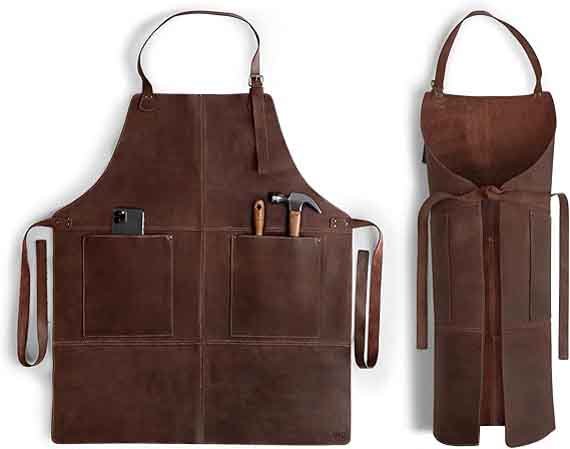
Leather aprons are no longer just nostalgic symbols of old-world craftsmanship—they are now essential protective gear for woodworkers, metal fabricators, chefs, baristas, BBQ enthusiasts, bartenders, and artisans who need comfort, safety, durability, and style in one product. As more professionals return to handmade tools, authentic materials, and long-lasting workwear, leather aprons have made a dramatic comeback. The right leather apron protects against sparks, heat, sharp tools, splashes, stains, and abrasion while elevating a worker’s identity and professional presence. And with premium full-grain and top-grain leather options becoming more accessible, more individuals and brands are searching not just for stylish aprons—but the best leather aprons truly worth the investment.
The best leather aprons offer strong protection, long-lasting durability, ergonomic comfort, and high heat, scratch, and liquid resistance. Full-grain and top-grain leather provide the toughest performance for woodworking, metalworking, cooking, and crafts. A high-quality leather apron is worth it because it lasts years longer than fabric aprons, becomes softer with age, and delivers superior safety, professional appearance, and heavy-duty functionality.
Just imagine this: a metalworker lifting his torch, sparks flying. A chef working across a blazing grill. A woodworker surrounded by flying shavings and heavy tools. In all these scenarios, a reliable leather apron isn’t just a tool—it’s a trusted shield. Now let’s explore what makes a leather apron truly great.
What Makes a High-Quality Leather Apron Worth Buying?
A high-quality leather apron is worth buying because it provides superior protection, long-term durability, ergonomic comfort, and resistance to heat, cuts, sparks, stains, and daily wear. Premium aprons made from full-grain or top-grain leather last for years, become softer with use, and perform better in workshops, kitchens, BBQ environments, and craft settings compared to fabric or synthetic aprons.
A high-quality leather apron is one of the most powerful investments for professionals across woodworking, blacksmithing, metal fabrication, cooking, bartending, BBQ grilling, and artisan crafts. Unlike ordinary canvas or denim aprons that deteriorate quickly, a well-crafted leather apron is built to last years—often more than a decade—while providing unmatched protection, ergonomic comfort, and a professional appearance that enhances confidence and work identity.
But what exactly makes a leather apron “high quality”? The answer isn’t just one factor—it’s the combination of material, thickness, tanning method, construction technique, strap ergonomics, edge finishing, stitching strength, pocket engineering, hardware durability, and how the leather develops over time. Below you will find the most complete breakdown available online.
1. Premium Leather Material
Are leather aprons worth it for long-term use and protection?
Leather aprons are absolutely worth the investment because no fabric can match leather’s natural durability and protective performance. Leather fibers form a dense, interwoven matrix capable of resisting:
- sparks and embers from metalworking
- sharp woodworking tools
- hot oil, sauces, and liquids in kitchens
- stains, scratches, and abrasion
- long-term wear and flexing
Leather ages gracefully: it becomes softer, molds to the body, and develops a unique patina. A well-maintained leather apron can last 5–15 years, making its cost-per-year significantly lower than synthetic aprons that need frequent replacement.
Professionals buy leather aprons not only for safety, but for identity—a leather apron communicates craft, heritage, and authority in a way no fabric can.
What features define a premium leather apron?
Look for these defining characteristics:
1. Leather Type
The most important indicator of quality:
- Full-grain leather → highest strength
- Top-grain leather → softer, excellent balance
- Split leather → economical, lighter
- Bonded leather → lowest durability (avoid)
2. Leather Thickness
Different jobs require different thickness levels:
| Thickness | Ideal Use |
|---|---|
| 1.0–1.4 mm | Bartenders, baristas, home users |
| 1.4–1.8 mm | Chefs, artisans |
| 1.8–2.6 mm | Woodworkers, welders, smiths |
3. Surface Treatment
Premium aprons include:
- oil-resistant finish
- waterproof coating
- heat-resistant treatments
- scratch-proof finishing
4. Structure & Craftsmanship
- reinforced chest panel
- double stitching at stress points
- strong edges (burnished or bound)
- tool pockets with rivet reinforcement
5. Strap System
- cross-back straps for weight distribution
- adjustable buckles
- padded shoulder sections
A “premium” apron always feels properly engineered, not just stylish.
2. Leather Grade
Which leather types offer the best protection and durability
| Leather Grade | Strength | Heat Resistance | Longevity | Ideal For |
|---|---|---|---|---|
| Full-Grain Leather | ★★★★★ | ★★★★★ | 10–15 yrs | Metalwork, blacksmiths, carpenters |
| Top-Grain Leather | ★★★★☆ | ★★★★☆ | 5–10 yrs | Chefs, bartenders, BBQ |
| Split Leather | ★★★☆☆ | ★★★☆☆ | 3–5 yrs | Light crafting |
| Bonded Leather | ★★☆☆☆ | ★★☆☆☆ | 1–2 yrs | Not recommended |
Why full-grain leather is the ultimate choice
Full-grain leather contains the strongest, densest fibers of the hide, offering:
- extreme tear resistance
- natural flame resistance
- high flexibility without cracking
- superior aging
- natural water resistance
This is why professional woodworkers and metalworkers almost always choose full-grain leather aprons.
Why top-grain leather is better for kitchens
Top-grain leather:
- weighs less
- absorbs dye more evenly
- is smoother and easier to clean
- resists grease and kitchen stains
Chefs, bartenders, and baristas often prefer this type.
3. Construction Quality:
How does craftsmanship affect comfort and long-term performance?
Even the best leather can fail quickly if the craftsmanship is poor. Construction quality determines whether the apron feels comfortable, balanced, and durable.
Key Construction Factors
1. Stitching Quality
High-pressure areas require:
- double or cross stitching
- reinforced X-box patterns
- strong polyester or nylon thread
Weak stitches = premature failure.
2. Edge Treatment
Premium aprons feature:
- burnished edges
- beveled edges
- sealed edges
Unfinished edges absorb moisture and fray, reducing lifespan.
3. Pocket Engineering
Professionals depend on pockets for:
- tools
- pens & rulers
- phones
- thermometers (chefs)
- bartending gear
A high-quality apron includes:
- rivet-reinforced pockets
- double-layer bottoms
- angled entrances
- deep lower pockets
4. Hardware Quality
Stainless steel or solid brass buckles prevent rust and breakage. Cheap hardware is a red flag—it will fail long before the leather does.
5. Weight Distribution
Cross-back straps prevent:
- neck strain
- shoulder fatigue
- slipping
Premium aprons feel “weightless” even with thick leather because the engineering balances the weight across the body.
4. Durability vs Comfort
Leather aprons must strike the perfect balance between protection and comfort.
Key comparison factors:
| Factor | Comfort Impact | Durability Impact |
|---|---|---|
| Leather thickness | heavier = more protection | thicker = longer life |
| Strap design | cross-back = comfort | more stability |
| Pocket design | ergonomic layout | reinforced = longevity |
| Surface finish | soft-hand = comfort | coated = protection |
| Cut & shape | mobility | coverage |
Choosing the right combination depends on your job environment and daily work intensity.
5. Why High-Quality Leather Aprons Offer Better Long-Term Value
High-quality leather aprons cost more upfront, but they outperform cheap aprons in:
- years of usable lifespan
- level of protection
- comfort during long work shifts
- premium appearance
- brand identity (for professionals)
- upgrade value for businesses selling them
Their cost-per-year is far lower than lower-grade aprons that crack, fray, tear, or lose shape.
Leather aprons also age into your workflow—they flex, soften, and adapt to your body, creating a personalized fit.
Which Leather Aprons Are the Best for Woodworkers, Craftsmen, and Metalworkers?
The best leather aprons for woodworkers and metalworkers use thick full-grain leather (1.8–2.4 mm), reinforced cross-stitched seams, heavy-duty rivet hardware, cross-back straps, deep tool pockets, and optional flame- or spark-resistant finishes. These aprons endure heat, sparks, sawdust, metal shavings, and heavy wear — making them a worthwhile investment for professionals.
For woodworkers, metalworkers, blacksmiths, welders, or general craftsmen, a leather apron is not a fashion accessory, but protective gear—a shield against sparks, wood splinters, hot metal shavings, heavy tools, and abrasive dust. Because the working environment is harsh, the leather apron must meet significantly higher standards than kitchen or casual aprons. The best workshop aprons incorporate design elements aimed at durability, safety, functionality, and comfort during long hours of use.
Here are the essential attributes that make certain leather aprons stand out as the best choices for wood and metal work.
Key Requirements for Workshop Leather Aprons
- Thick, strong leather — at least 1.8 mm (approx. 8–10 oz) full-grain or top-grain leather to resist cuts, heat, and impact.
- Full body coverage — from chest to mid-thigh or knees, to protect against sparks or debris.
- Cross-back strap design — distributes weight across shoulders and back, avoiding neck strain.
- Deep, reinforced tool pockets — for chisels, hammers, measuring tools, protective glasses.
- Heavy-duty stitching and hardware — double-stitched seams, strong rivets or heavy-duty buckles.
- Edge finishing and sealed leather surface — protects against moisture, wood dust, metal particles, and extends lifespan.
- Modular/add-on options — hammer loops, accessory pouches, detachable bibs for different tasks.
A truly high-quality workshop apron blends all these factors—without sacrificing comfort or mobility.
What should woodworkers look for in a leather workshop apron?
Woodworking involves sawdust, wood chips, sharp tools, and impact from tools. A leather apron for woodworkers should have:
- Full-grain leather at 1.8–2.0 mm thickness for cut and abrasion resistance.
- Wide bib coverage to protect the torso and upper legs from impact.
- Multiple pockets and loops for chisels, measuring tape, pencils, small hardware.
- Smooth, sealed surface to make dust and resin wipe-off easy.
- Cross-back or padded shoulder straps for comfort during prolonged tasks.
These features ensure the apron protects against shavings, splinters, nail or screw ricochets, and tool slips—all common in woodshops.
Which apron designs offer better heat, spark, and scratch resistance?
Metalworking, welding, blacksmithing, or areas with heat and sparks require more robust protection:
- Thicker leather (2.0–2.4 mm) that resists flames, embers, and hot metal shards.
- Minimal seams on front bib to avoid weak points where sparks could penetrate.
- Flame-resistant or treated surface (waxed, oil-finished, or fire-retardant coatings).
- Heavy-duty weight distribution — cross-back straps with reinforced stitching and riveted edges to handle abrasion and repeated loading.
- Full-length coverage—some aprons extend below knees or include detachable leg protection to guard against flying sparks.
Such design prevents burns, cuts, and fabric catching fire, making them essential for blacksmiths, welders, and metal fabricators.
How do tool pockets and straps improve workshop performance?
A workshop apron becomes a mobile tool station when properly equipped. Key ergonomic features:
- Deep front pockets for chisels, screwdrivers, utility knives.
- Side or waist pockets for nails, screws, bolts, small parts.
- Hammer loops and hanging rings for hammers, brushes, or protective gear.
- Cross-back or X-back straps that distribute weight and prevent neck fatigue—essential during long hours of work.
- Adjustable straps and buckles to fit different body sizes or clothing thickness.
These features enhance workflow efficiency—tools are always within reach, pockets are organized, and the apron doesn’t shift while you bend, lift, or move.
What leather grades and treatments maximize durability without sacrificing comfort?
For workshop use, full-grain vegetable-tanned leather is often ideal: it remains strong, ages into supple softness, and holds up under repeated flexing, heat exposure, and abrasion. Alternatively, chrome-tanned or heavy waxed leather offers more water and spark resistance, though perhaps slightly less tensile strength. Key treatments:
- Edge burnishing to seal edges and prevent fraying.
- Oil or wax finish to add water, dust, and spark resistance.
- Reinforced stitching (double-stitch, box-X stitch) at stress points.
A treated, well-constructed leather apron balances protection and comfort—critical when wearing for 6+ hours.
Why heavier leather aprons represent better long-term value for craftsmen?
Although heavy-leather aprons are more expensive and heavier to wear initially, they provide significantly better long-term value:
- Last longer — heavy leather resists wear and tear for 5–15 years.
- Better protection — withstands sparks, sharp tools, impact.
- Improves over time — leather softens and molds to wearer’s body, becoming more comfortable with age.
- Saves replacement costs — fewer replacements compared to thin canvas or fabric aprons that fray or burn quickly.
For a craftsman, the lifetime cost per year ends up lower with a premium leather apron than with repeatedly replacing cheaper aprons.
What Are the Best Leather Aprons for Chefs, BBQ Enthusiasts, and Bartenders?
The best leather aprons for chefs, BBQ cooks, and bartenders are made from medium-weight top-grain or full-grain leather (1.2–1.8 mm), with water- and oil-resistant finishes, cross-back straps for comfort, well-placed pockets for tools and utensils, and easy-wipe surfaces to handle spills, flames, and heat. These aprons balance protection, flexibility, and style for kitchen, grill, or bar environments.

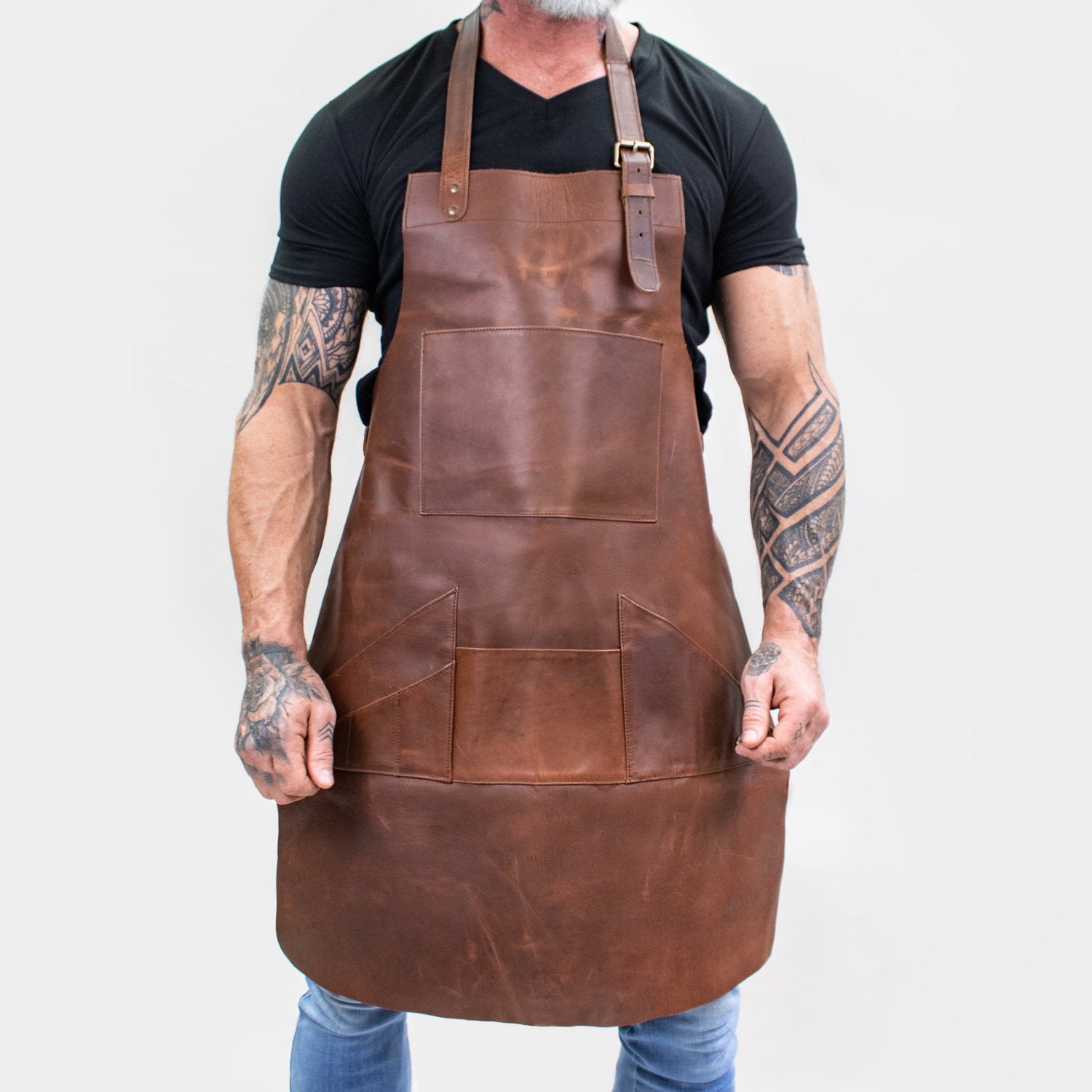
Cooking, grilling, and bartending involve a wide range of hazards and tasks: hot oil splashes, open flames, sauces, steam, spills, flame flare-ups, sharp utensils, heavy cookware, and constant movement. A generic cotton or polyester apron can help a bit with stains or dirt—but offers almost no protection against heat, cuts, or spills. High-quality leather aprons, when properly designed, provide long-term protection, durability, cleanliness, and a sense of style that suit kitchen and bar environments perfectly.
Here’s what differentiates the best leather aprons for chefs, BBQ lovers, and bartenders — and what to look for when buying (or manufacturing) one.
Which apron styles suit grilling, cooking, or bartending?
For chefs and BBQ cooks, the ideal apron style is full-length or mid-length with a heavy-duty top-grain leather body, adjustable cross-back straps, and optionally a heat-resistant bib section (especially for grillers). Many BBQ aprons also feature front pockets for tongs, sauces, Thermometer, and tools.
For bartenders or café baristas, a shorter, waist- or thigh-length apron made from lighter leather (top-grain 1.2–1.6 mm) works best — easy mobility, quick access to pockets for cocktails, bottle openers, pens. A minimalist design with oil-resistant finish, smooth grain leather, and adjustable straps helps balance function and style.
How important is stain and splash resistance for kitchen leather aprons?
Very important. Kitchens and bars are full of oil splashes, sauces, alcohol spills, grease, and steam. A strong leather apron for these smart use-cases should have:
- a sealed, oil- and water-resistant surface (waxed or treated)
- smooth grain leather that repels spills and facilitates quick wiping
- reinforced pockets to prevent stains from soaking through
- easy-clean surfaces that don’t trap odors or grease
Compared to fabric aprons (which absorb liquids and stain permanently), leather’s natural fiber density and proper finishing give far better protection and easier maintenance.
What ergonomic features improve comfort for long cooking or bar sessions?
Chefs and bartenders often stand or move for hours — sometimes 8–12 hours per shift. Comfort matters. The best leather aprons for these users include:
- Cross-back (X-back) straps to distribute weight evenly across shoulders/back — avoids neck strain common with neck-strap aprons
- Adjustable buckles or sliding straps to adapt to different clothes or body types
- Wide straps and padded shoulders for heavier aprons
- Moderate leather thickness (1.2–1.6 mm) for flexibility, while still offering protection
- Angled or deep tool pockets for utensils, order pads, pens, tongs — easy access without reaching or bending
Good ergonomics ensures that apron feels like part of the uniform — not a burden.
Why lighter leather aprons can be ideal for chefs and bartenders?
In a restaurant, kitchen, or bar, agility, speed, and frequent movement matter more than heavy-duty protection. Using thinner, lighter leather offers:
- quicker don-and-doff
- better breathability (less sweating)
- less fatigue during long shifts
- enough protection against splashes, minor heat, stains
A top-grain leather apron of ~1.3–1.5 mm strikes the right balance between comfort and protective ability — especially when finished with oil- or wax-based protective coating.
How to balance protection, flexibility, and aesthetic for kitchen & bar aprons?
Good leather aprons for kitchens and bars balance several factors:
- Protection — sealed leather to resist heat, moisture, stains
- Flexibility — lighter leather, cross-back straps
- Utility — tool pockets, loops for towels, pen slots
- Aesthetic — smooth grain, clean lines, polished finish
Brands or users should choose based on intended use: heavy grill / BBQ demands thicker leather and flame resistance; busy kitchen or bar work favors lighter aprons with flexible movement.
A well-chosen leather apron becomes a functional uniform, a branding statement, and long-term workwear.
Mini Guide: Recommended Leather Apron Specs by Use Case
| Use Case | Leather Thickness & Type | Strap Design | Key Features |
|---|---|---|---|
| BBQ / Outdoor grilling | 1.6–2.0 mm top-grain or waxed leather | Cross-back / adjustable | Heat-resistant bib, long coverage, deep pockets |
| Restaurant kitchen / chef | 1.4–1.6 mm top-grain leather | Cross-back | Oil-resistant finish, utensil pockets, lightweight |
| Bartender / barista | 1.2–1.4 mm top-grain leather | Waist / short cross-back | Handy pockets, minimalist, stain-resistant finish |
| Home cooking / casual BBQ | 1.2 mm leather | Adjustable neck + waist strap | Easy clean, stylish, comfortable |
How Do You Choose the Right Leather Apron for Your Work Style?
To choose the right leather apron, consider your work environment, the required protection level, leather type, thickness, strap system, pocket layout, and coverage length. Woodworkers and metalworkers need thick full-grain leather for heat and cut resistance, while chefs and bartenders prefer lighter, stain-resistant top-grain leather. Comfort, stain resistance, mobility, and ergonomics are key factors when selecting the best apron for your workflow.
Selecting the right leather apron is not simply a matter of style—it is a performance decision that affects safety, productivity, comfort, and long-term durability. The “best” apron varies dramatically depending on whether you are a woodworker, blacksmith, chef, craft artist, bartender, or outdoor BBQ cook.
A well-chosen leather apron allows you to work longer, safer, and more efficiently without worrying about sparks, splashes, stains, sharp tools, or fatigue. On the other hand, a poorly chosen apron becomes heavy, restrictive, unsafe, or simply incompatible with your working rhythm.
1. Understanding Your Work Environment
What size and fit should buyers consider?
Apron size and fit determine how well your body is protected and how freely you can move. The wrong size can cause restricted movement, neck strain, or exposed areas.
Recommended Length by Work Type
| Work Style | Ideal Length | Reason |
|---|---|---|
| Chef / Bartender / Barista | 30–34 in | Mobility + splash protection |
| Woodworker / Carpenter | 34–38 in | Protects torso + thighs |
| Blacksmith / Welder / Metalworker | 38–42 in | Full spark & heat coverage |
| BBQ / Grillmaster | 32–38 in | Mix of heat protection + mobility |
| Artisan / Crafts | 28–32 in | Lightweight, flexible |
Fit Considerations
- Apron should cover the chest and upper thighs
- Bottom edge should not hinder knee movement
- Width should wrap around the torso without folding awkwardly
- Adjustable straps must allow wear over T-shirts or thick work jackets
A professional apron feels balanced—protective yet unobtrusive.
2. Choosing the Right Strap System
How do cross-back straps compare to neck straps?
Neck straps
- Pros: simple, cheaper, widely available
- Cons: pressure on neck during long shifts, neck soreness, unstable weight distribution
Cross-back (X-back) straps
- Pros:
- even weight distribution across shoulders
- zero neck strain
- more stable fit during bending, lifting, grilling, or hammering
- preferred by chefs, woodworkers, baristas, and blacksmiths
- Cons: higher cost to produce
Industry Recommendation
For any professional use (6–10 hours/day), cross-back straps are the gold standard. Most premium brands (and OEM products from Szoneier Leather) use cross-back systems to enhance long-term comfort.
3. Leather Material Selection Based on Your Work Style
What leather thickness and weight balance mobility and protection?
Leather thickness dramatically affects comfort, safety, mobility, and heat resistance. The ideal thickness depends on your tasks:
Leather Thickness Guide
| Thickness (mm) | Best For | Features |
|---|---|---|
| 1.0–1.4 mm | Bartenders, baristas, home cooks | Light, flexible, stylish |
| 1.4–1.8 mm | Chefs, general baking, craft artists | Good mix of protection + movement |
| 1.8–2.4 mm | Woodworkers, blacksmiths, welders, BBQ | Maximum protection from sparks, sharp tools, impact |
What thickness really means
- Thicker leather = stronger heat, cut, and impact resistance
- Thinner leather = lighter weight, better mobility
- Mid-weight leather = ideal for daily professional kitchen use
Which tanning method works best?
- Vegetable-tanned leather → stiffer, ages beautifully, great for workshops
- Chrome-tanned leather → flexible, stain-resistant, great for chefs & bartenders
- Crazy horse leather → rugged, scratch-resistant, great for BBQ and mechanics
Choosing the wrong leather thickness results in fatigue (if too heavy) or compromised protection (if too thin). Balancing the two is the key.
4. Functional Design: Pockets, Loops, Hardware & Layout
How do pockets, loops, and layout improve workflow efficiency?
A good leather apron should function as a “mobile workstation.” Consider these features:
For Woodworkers
- Deep front pockets for chisels
- Hammer loop
- Pencil pocket
- Reinforced bottom pockets to avoid tool abrasion
- Magnetic chest strip for screws or bits
For Chefs / BBQ
- Thermometer pocket
- Quick towel loop
- Deep pockets for utensils
- Liquids and spill-resistant leather surface
For Bartenders
- Pen slots
- Notepad or order book pocket
- Bottle opener loop
- Lower pockets for towels or bar tools
A well-placed pocket can save minutes per hour—and dramatically improve workflow efficiency.
5. Coverage & Protection Level
How much coverage is necessary for your work type?
Protection needs differ significantly:
Woodworkers, Metalworkers, Welders
Need maximum coverage, often:
- chest → below knees
- thicker leather
- minimal-seam front panel
- reinforced belly area
Chefs & BBQ Cooks
Need:
- chest → mid-thigh
- splash protection
- moderate heat resistance
- stain-resistant finishing
Bartenders & Baristas
Need:
- waist → mid-thigh
- light leather
- easy movement
- sleek appearance
Coverage must match hazard level. Too much coverage results in heat buildup; too little creates safety risks.
6. Matching Leather Apron Types to Your Profession
Profession-Based Recommendation Table
| Profession | Recommended Leather | Best Features | Strap Type | Thickness |
|---|---|---|---|---|
| Woodworker | Full-grain veg-tan | Cut & impact protection | X-back | 1.8–2.2 mm |
| Metalworker / Welder | Chrome-tan heavy leather | Heat & spark resistance | X-back | 2.0–2.4 mm |
| Chef | Top-grain chrome-tan | Stain resistance, flexibility | X-back | 1.4–1.8 mm |
| BBQ Griller | Full-grain waxed | Fire resistance + ruggedness | X-back | 1.6–2.0 mm |
| Bartender | Soft top-grain | Lightweight, stylish | Waist/X-back | 1.2–1.4 mm |
| Artisan | Top-grain or crazy horse | comfort + aesthetic | X-back | 1.4–1.6 mm |
7. Comfort: The Most Underestimated Factor
What determines comfort during long working hours?
Comfort depends on:
- weight distribution
- leather flexibility
- breathability
- strap design(X-back > neck strap)
- padding
- lining(cotton/mesh)
- how the leather molds to your body over time
High-quality leather becomes softer, more flexible, and more personalized with each use—unlike synthetic aprons that feel stiff or degrade quickly.
Chefs and bartenders especially value comfort because they wear aprons for long shifts.
8. Aesthetic & Brand Identity
How does an apron contribute to personal or business branding?
A leather apron is not just protective gear—it’s visual identity:
- Chefs use leather aprons to elevate professionalism
- Coffee shops and bars use leather for branding and premium experience
- Woodworkers and metalworkers wear it as a badge of craftsmanship
- BBQ cooks love rugged, masculine aesthetics
For brands, a customized leather apron (color, stitching, emboss logo, metal plate logo, gift packaging) instantly increases perceived value.
What Are the 15 Best Leather Aprons You Can Buy?
Below are 15 strong, currently available leather aprons across woodworking, metalwork, BBQ, chef, bartender, and all-round use, each with positioning, strengths, and ideal user. At the end you can naturally lead into: “If you want a similar style as a custom/private-label line, Szoneier Leather can develop it for your brand.”
1. Woodworkers Choice Leather Apron – Lapron (Woodcraft / DIY Focus)
This apron is designed specifically for woodworkers and DIY makers. It uses genuine cowhide leather with a classic workshop cut: full-torso coverage, multiple front pockets, and adjustable straps. It’s best for people who spend long hours around chisels, planes, drill presses, and sawdust and want leather protection without going to extreme welding-level thickness.
Why it’s on the list
- Genuine leather with a traditional craftsman look
- Multiple utility pockets for pencils, squares, and small tools
- Adjustable straps sized for most users
- Sweet spot between affordability and workshop-grade performance
Best for: hobbyist and semi-pro woodworkers who want something more durable and premium than a canvas apron but don’t need the heaviest industrial leather.
2. Calavera Tool Works Rugged Leather Work Apron – “Tobacco” Oil Finish
Calavera’s rugged leather apron is more of a serious pro carpenter / maker / metalworker piece. It’s made from an oil-finished leather that feels broken-in straight away, which is rare for heavier hides. The brand positions this as a lifetime work apron, and the materials and structure support that claim.
Key strengths
- Thick, oil-finished leather that shrugs off dust, glue, and most shop abuse
- Cross-back strap system designed for all-day wear
- Minimal but well-thought pockets – not overloaded, but practical
- Built with a “buy once, cry once” philosophy for pro users
Best for: serious woodworkers, furniture makers, pro shop owners who wear an apron almost every day and want something that will age beautifully over years of use.
3. The Green Tanners Premium Men’s Woodworking Apron
This woodworking apron from The Green Tanners leans toward the heritage craftsman aesthetic: rich leather tones, clean lines, and a pattern that hugs the torso without feeling restrictive. It uses full-grain or high-grade leather with strong stitching and useful pockets.
Why it stands out
- Full-grain leather look with classic “artisan” vibe
- Well-positioned pockets for chisels, pencils, and small hand tools
- Adjustable cross-back straps for weight relief
- Good mix of durability and visual appeal for content/brand photos
Best for: craftspeople who not only work hard in the shop but also care how their apron looks on social media, in workshop tours, or brand storytelling.
4. Houseables Leather Workshop Apron (Walmart – Welding/Workshop Budget Pick)
This is a budget-friendly but surprisingly capable leather work apron marketed for welding and general shop use. It’s made from genuine leather and, notably, uses Kevlar stitching, which is stronger and more heat-resistant than basic polyester thread.
Key features
- Full leather body with Kevlar stitching for durability
- Designed to handle heat, sparks, and sharp objects
- Multiple pocket sizes for tape measure, markers, and small tools
- Very competitive pricing compared with premium artisan brands
Best for: buyers who want serious protection on a budget—welders, hobby metalworkers, and DIYers who don’t mind a more industrial aesthetic.
5. MAHI Classic Brown Full Grain Leather Apron
MAHI’s Classic Brown apron is a versatile full-grain leather apron that bridges DIY, kitchen, barista, and light workshop use. Full-grain cow leather gives strong durability, while patterning and weight keep it wearable beyond just the workshop.
Why it’s a strong all-rounder
- Full-grain leather: excellent strength and attractive patina over time
- Classic unisex design – looks good on chefs, makers, or baristas
- Multiple front pockets without feeling cluttered
- Good price-to-material value for full-grain leather
Best for: brands or individuals who want one apron style that works in multiple environments: craft fairs, open kitchens, roasting bars, and workshops.
6. Leathershire Dark Brown Full Grain Leather Apron (Multi-Use)
Leathershire has become a recognizable name in the leather apron niche, and this dark brown full-grain apron is one of its signature models. It’s marketed as a butcher, cook, BBQ, barber, blacksmith, and woodwork apron—and the design really does fit multi-use.
Standout points
- Full-grain cowhide with rich dark brown finish
- Adjustable at neck and waist; fits up to ~44″ waist with extension options
- Big external pockets for tools, tongs, or barber combs
- Versatile pattern that works in kitchen, butcher shop, or workshop
Best for: small businesses or professionals who want one strong pattern to cover multiple roles—barber, butcher, cook, or craftsman.
7. Leathershire Full Grain Handmade Leather Apron (BBQ / Cook Focus)
This handmade Leathershire variant is tuned more toward BBQ and cooking. It uses top-grade cowhide, balances thickness and weight, and includes large front pockets plus easy-to-clean finishes. It’s lightweight for leather but still much tougher than fabric aprons.
Key strengths
- Genuine full-grain leather with a slightly lighter feel
- Adjustable straps that cover a wide height range
- Easy to clean surface; good for sauces, splashes, and grease
- Comfortable for long BBQ sessions or kitchen shifts
Best for: home and pro BBQ enthusiasts, food truck operators, and cooks who want real leather but don’t want an overly heavy welding-style apron.
8. Leathershire Full Grain Handmade Leather Apron – Luxury Edition
This “luxury” Leathershire model is positioned as a gift-grade apron: thicker (around 1.3–1.5 mm), high-end finishing, and sizing that accommodates taller users (around 6.5 ft). It’s equally suited to BBQ, cooking, or lifestyle use.
Why it’s a great premium pick
- Thick full-grain leather with upscale visual appeal
- Fully handmade, focusing on clean lines and top-notch workmanship
- Fits taller users comfortably and can be customized with waist extensions
- Ideal as a premium gift for someone who loves leather and cooking
Best for: gift buyers, premium BBQ or cooking brands, and professionals who want their apron to feel like a luxury leather product, not just PPE.
9. Leathershire Dark Brown Full Grain Apron – Premium Chef/BBQ Variant
This is another closely related Leathershire model in dark brown, but tuned as a luxury chef/BBQ apron with a clean width/length proportion and flexibility for cooking tasks. It’s thick enough for protection but not so heavy that chefs feel weighed down.
Highlights
- Full-grain leather optimized for daily cook/BBQ use
- Lightweight enough to move comfortably while still protective
- Great sizing for taller users and adjustable waist
- Strong candidate for restaurant, steakhouse, and BBQ chain branding
Best for: higher-end kitchen environments, open kitchens, grill houses, and BBQ brands wanting a signature leather apron look.
10. Rustic Town Leather Grill / Chef Apron (Walmart)
This apron is marketed heavily as a grill apron, with a suede-like exterior and flame-retardant lining. It focuses on heat and splatter protection more than artisan aesthetics, making it a solid, affordable functional choice.
Key features
- Suede-style leather exterior plus flame-retardant inner layer
- Good coverage for torso and upper legs
- Designed to protect from hot grease, splatters, and minor flare-ups
- One size fits most, with adjustable neck strap
Best for: home BBQ lovers and casual grillers who want real leather and flame resistance at a lower price point than high-end handmade aprons.
11. Otto Angelino Genuine Leather Cooking & Barista Apron
The Otto Angelino apron is a multi-role genuine leather apron designed for cooking, barista work, and workshop tasks. It blends stylish top-grain/genuine leather with multiple tool pockets and a design that looks at home in cafés, home kitchens, and craft studios.
Why it’s notable
- Genuine leather with a smooth finish – very presentable for customer-facing roles
- Multiple pockets for utensils, tools, or barista gear
- Fits well as a crossover piece: kitchen + coffee bar + craft
- Good choice for boutique cafés and lifestyle brands
Best for: baristas, roasters, creative studio staff, and home cooks who want something both functional and visually refined.
12. The Green Tanners Premium Bartender Leather Apron
This apron is specifically tailored to bartenders and cocktail professionals. It focuses on mobility, pocket access, and visual style more than extreme protection, using softer leather and a layout optimized for bar tools.
Key strengths
- Stylish bartender-focused cut and proportions
- Soft, comfortable leather suitable for long nights behind the bar
- Pockets sized for bar spoons, openers, pens, and small tools
- A “premium bar” look that fits speakeasies and high-end cocktail bars
Best for: mixologists, bartenders, bar owners, and brand ambassadors who want an apron that reinforces an upscale, crafted-drink image.
13. Leathershire “Dorset” Dark Brown Leather Barber / Café Apron
The Dorset apron from Leathershire is aimed at barbers, café staff, and small shops. It uses high-quality leather with a design that’s less industrial, more urban, making it great for customer-facing environments.
Why it’s a good crossover apron
- Dark brown leather with clean, modern look
- Pockets placed for combs, scissors, notes, or café tools
- Works in barbershops, cafés, barista bars, or small studios
- Strong material quality at a relatively approachable price point
Best for: barber shops, barista cafés, lifestyle salons, and shops that want a coordinated team look with leather aprons.
14. BarBlade Bar Apron – Split-Leg Hybrid Work Apron
The BarBlade apron is an interesting hybrid: a split-leg leather work apron that’s great for bar work, high-mobility tasks, and even some workshop roles. The split-leg design gives more freedom when stepping, kneeling, or climbing stools and rails.
Key features
- Split-leg structure for enhanced mobility
- Leather coverage with a flexible fit for active workers
- Designed with bar and hospitality environments in mind
- Good for users who frequently move, bend, or climb while working
Best for: bartenders, barbacks, flair bartenders, and some craftspeople who need more leg freedom than a traditional full panel apron.
15. Taste of Texas Signature Leather BBQ Apron
This apron is branded by Taste of Texas, positioned as a signature BBQ apron. It has strong BBQ brand storytelling value and gives the wearer a classic grillmaster aesthetic with real leather, making it great for enthusiasts and gifting.
Why it’s appealing
- Solid leather build with BBQ-focused branding
- Good torso and upper leg coverage
- Strong association with grilling culture and steakhouse style
- Nice as a gift, brand merch item, or personal BBQ uniform
Best for: BBQ enthusiasts, steakhouse fans, backyard grillers, and brands looking at BBQ lifestyle products.
Conclusion
A great leather apron is more than just protective gear—it is a professional badge, a branding tool, and a long-term investment. Whether you’re targeting woodworkers, chefs, blacksmiths, bartenders, or lifestyle consumers, the demand for premium leather aprons continues to grow globally.
If you’re ready to develop your own custom leather apron collection, Contact Szoneier Leather today — we can help you turn your apron concept into a premium finished product ready for retail or wholesale.