 Skip to content
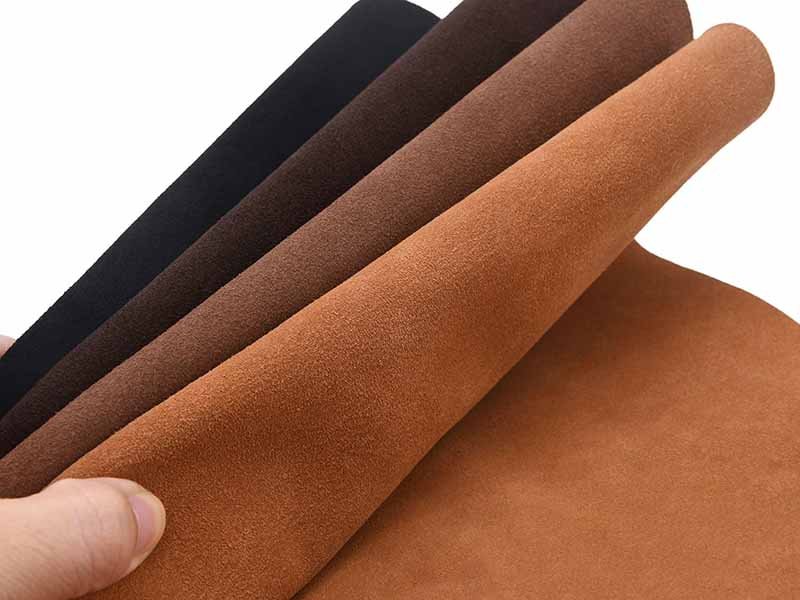
Suede is one of those materials that almost everyone recognizes instantly—but surprisingly few people truly understand. It feels soft, looks refined, and carries a sense of understated luxury. Yet when buyers, designers, or brand owners start asking deeper questions—Is suede real leather? Is 100% suede leather? Why does it behave so differently from full-grain leather?—the answers often become vague or contradictory.
Part of the confusion comes from how suede is marketed. In retail environments, suede is frequently presented as a “style” rather than a material category with its own technical logic. In manufacturing, however, suede is not a trend or a surface treatment—it is a specific way of processing animal hide, with clear implications for durability, performance, cost, and sustainability.
Suede is a type of real leather made from the inner layer of animal hide, most commonly cow, calf, goat, lamb, or pig. It is produced by splitting the hide and buffing the flesh side to create a soft, napped surface. Unlike full-grain leather, suede emphasizes softness and texture over surface strength, making material selection, tanning, and finishing critical to its quality and performance.
What makes suede especially interesting is that its value doesn’t come from surface perfection, but from controlled imperfection—a balance between softness, structure, and craftsmanship. Understanding where that balance comes from is the key to using suede successfully in bags, wallets, accessories, and premium leather goods. And that story starts with one basic question: what exactly is suede?
What Is Suede
Suede is a type of genuine leather made from the inner (flesh) side of animal hide. It is produced by splitting the hide and buffing the surface to create a soft, velvety nap. Suede is real leather, not synthetic, but it differs from full-grain and top-grain leather in structure, durability, and surface performance, prioritizing softness and texture over abrasion resistance.
What exactly defines suede as a leather material?
From a professional leather-manufacturing perspective, suede is defined by two core factors:
- Which layer of the hide is used
- How that layer is finished
Unlike full-grain leather, which uses the outer grain layer of the hide, suede comes from the inner flesh side. This layer is either naturally exposed (in thinner hides like lamb or goat) or revealed by splitting thicker hides such as cowhide.
After splitting, the surface is buffed or sanded to raise fine fibers, forming what is known as the nap. This nap is the defining visual and tactile feature of suede.
In short, suede is not a coating, treatment, or artificial texture. It is a structural leather category with its own material behavior.
Is suede a real leather or a synthetic material?
This is one of the most common global search questions: Is suede real leather?
Yes—genuine suede is always real leather.
True suede is made from animal hide fibers and shares the same collagen structure as other leathers. It breathes, absorbs oils, ages naturally, and develops character over time.
Confusion arises because the market also offers:
- Faux suede
- Microfiber suede
- Vegan or synthetic suede
These materials may look similar but are not leather. They are petroleum-based textiles designed to imitate suede’s appearance, not its structure or aging behavior.
For brands and OEM buyers, this distinction matters because real suede and synthetic suede behave very differently in cutting, stitching, wear, and long-term performance.
Is 100% suede leather, and how does it relate to split leather?
Yes. 100% suede leather means the material is entirely made from genuine leather fibers, not bonded leather or coated composites.
Most suede is technically a form of split leather, meaning the hide has been horizontally divided into layers. The top layer may become grain leather, while the lower layer becomes suede.
Important clarification:
- Split leather does not automatically mean low quality.
- Quality depends on fiber density, hide selection, and finishing control.
High-grade suede uses dense, resilient fibers and precise buffing. Low-grade suede often comes from loose fiber splits that shed or flatten quickly.
How is suede structurally different from full-grain and top-grain leather?
The key difference lies in the presence or absence of the grain layer.
| Leather Type | Surface Layer | Key Characteristics |
|---|---|---|
| Full-grain leather | Natural grain intact | Strong, water-resistant, ages slowly |
| Top-grain leather | Lightly corrected grain | Balanced durability and uniform look |
| Suede | Flesh side, no grain | Soft, breathable, textured |
Because suede lacks the dense grain layer, it is:
- Softer and more flexible
- More breathable
- More sensitive to moisture and abrasion
This makes suede ideal for fashion-forward and lifestyle leather goods, but less suitable for harsh outdoor or high-abrasion use.
Why does suede feel softer than other leathers?
Suede’s softness comes from exposed collagen fibers rather than a sealed surface.
In grain leather, the compact grain layer acts like a protective shell. In suede, that shell is absent, allowing the fibers to move freely. This creates:
- A warmer hand feel
- A matte, light-absorbing surface
- Greater tactile comfort
However, this also means suede requires intentional finishing and correct application to maintain performance.
Why do people often think suede is “delicate” or “weak”?
Suede is often misunderstood because it is used incorrectly.
When suede is applied to:
- Shoes worn in rain
- Outdoor gear
- Heavy-abrasion environments
it appears fragile. In reality, suede performs extremely well when used in:
- Bags and small leather goods
- Wallets and accessories
- Decorative or lifestyle products
Professional leather factories, such as Szoneier Leather, guide clients on where suede should be used—and where it should not.
How do manufacturers classify different types of suede?
In production, suede is often classified by:
- Animal origin (cow, calf, goat, lamb, pig)
- Nap length (short, medium, long)
- Tanning system (chrome, chrome-free, vegetable)
- Intended application (bags, wallets, straps, linings)
These classifications help factories control consistency and help brands specify exactly what they need.
Which Animal Hides Are Used to Make Suede
Suede is most commonly made from cowhide, calfskin, goatskin, lambskin, and pigskin. Each animal hide produces suede with different fiber density, softness, durability, and cost. Cow and calf suede offer better strength and consistency, lamb suede provides exceptional softness, goat suede balances durability and flexibility, and pig suede is breathable and cost-effective. Hide selection directly determines suede performance and end use.
Why animal origin matters more than finishing
In suede manufacturing, finishing techniques can enhance texture and color—but they cannot change the underlying fiber structure. That structure is defined at the animal level.
Two suedes can look identical after dyeing, yet behave very differently in real use because:
- Fiber thickness varies
- Fiber density differs
- Natural elasticity changes by species
For brands and OEM buyers, understanding animal origin prevents costly mismatches between expected performance and actual material behavior.
1. Cowhide Suede
What is cowhide suede?
Cowhide suede is produced from split cowhide and is the most widely used suede type in commercial leather goods. It offers stable supply, consistent thickness, and strong fiber structure.
Key characteristics
- Medium softness
- High fiber density
- Good abrasion resistance
- Stable pricing
Best applications
- Suede bags
- Totes and backpacks with structure
- Leather boxes and organizers
Cowhide suede is often recommended for scalable production because it balances cost, durability, and batch consistency.
2. Calfskin Suede
What makes calf suede different?
Calfskin suede comes from younger animals, resulting in finer and more uniform fibers. It feels softer than cow suede while retaining good strength.
Key characteristics
- Finer nap
- Smoother hand feel
- Better visual refinement
- Higher cost than cow suede
Best applications
- Premium wallets
- Fashion-forward bags
- High-end accessories
Calf suede is ideal when brands want luxury feel without sacrificing too much durability.
3. Goatskin Suede
Why is goat suede known for durability?
Goat hide has naturally tight fiber bundles, which translate into excellent tear resistance even after splitting.
Key characteristics
- High strength-to-weight ratio
- Moderate softness
- Excellent resilience
- Long service life
Best applications
- Daily-use bags
- Straps and trims
- Small leather goods requiring durability
Goat suede is often underestimated but performs exceptionally well in products that are handled frequently.
4. Lambskin Suede
Why is lamb suede considered the softest?
Lambskin has very fine, loosely packed fibers, which create extreme softness and drape.
Key characteristics
- Ultra-soft hand feel
- Lightweight
- Lower abrasion resistance
- Higher price volatility
Best applications
- Fashion bags
- Soft pouches
- Decorative panels
Lamb suede should be used intentionally for touch-focused products, not high-stress areas.
5. Pigskin Suede
What makes pig suede unique?
Pigskin suede is easily recognized by visible pore patterns and high breathability.
Key characteristics
- High air permeability
- Moderate strength
- Distinctive texture
- Lower cost
Best applications
- Linings
- Casual accessories
- Budget-friendly suede goods
Pig suede is rarely used for luxury positioning but offers functional value in cost-sensitive projects.
Animal Hides Used for Suede
| Hide Type | Softness | Durability | Cost Level | Best Use |
|---|---|---|---|---|
| Cowhide | Medium | High | $$ | Bags, boxes |
| Calfskin | High | Medium–High | $$$ | Premium goods |
| Goatskin | Medium | High | $$–$$$ | Daily-use items |
| Lambskin | Very High | Low–Medium | $$$$ | Fashion items |
| Pigskin | Medium | Medium | $ | Linings, casual |
How Is Suede Produced
Suede is produced by processing the inner (flesh) side of animal hide through splitting, tanning, buffing, dyeing, and finishing. The hide is first split to the desired thickness, then tanned to stabilize the fibers. The flesh side is mechanically buffed to raise a soft nap, followed by dyeing and finishing to control softness, color, and durability. Each production step directly affects suede quality and performance.
Step 1: Raw hide selection and preparation
Suede quality does not start at buffing—it starts with raw hide selection.
Before any processing, hides are evaluated for:
- Fiber density and uniformity
- Scar distribution
- Thickness potential after splitting
Hides with uneven fiber structure or excessive defects are unsuitable for high-quality suede, no matter how advanced the finishing later becomes.
Once selected, hides go through soaking and liming, removing hair, fat, and impurities while opening up the collagen fiber network. This stage prepares the hide for splitting and tanning. Poor preparation here often leads to weak, powdery suede later.
Step 2: Splitting the hide to create the suede layer
Splitting is the most critical structural step in suede production.
In this process, the hide is horizontally split into layers:
- The upper layer may become full-grain or top-grain leather
- The lower layer becomes suede
The split thickness determines:
- Final suede strength
- Softness and drape
- Suitability for bags, wallets, or accessories
Too thin → weak, shedding suede
Too thick → stiff, uneven nap
Professional factories control split tolerance tightly, often within fractions of a millimeter, to ensure batch consistency.
Step 3: Tanning – stabilizing the collagen fibers
Tanning converts raw hide into leather by stabilizing collagen fibers so they resist decay and deformation.
Common tanning systems for suede include:
- Chrome tanning – soft, flexible, excellent color absorption
- Chrome-free tanning – lower heavy-metal risk, firmer hand feel
- Vegetable tanning (limited use) – stiffer suede, niche applications
Tanning choice affects:
- Suede softness
- Color richness
- Environmental compliance
- Long-term aging behavior
At Szoneier Leather, tanning systems are selected based on product category and target market, not habit.
Step 4: Buffing and sanding – creating the suede nap
This is the step most people associate with suede—but it is only effective if earlier steps were done correctly.
Mechanical buffing or sanding raises fine fibers on the flesh side to create the characteristic nap.
Key variables include:
- Abrasive type
- Pressure level
- Number of passes
Light buffing produces short, dense nap (more durable).
Heavy buffing creates longer, looser nap (softer but weaker).
High-quality suede balances softness and resilience rather than maximizing nap length.
Step 5: Dyeing and fatliquoring – defining color and hand feel
After buffing, suede is dyed. Because suede lacks a grain layer, it absorbs dye deeply and evenly.
During dyeing, fatliquors (oils and lubricants) are added to:
- Prevent fiber brittleness
- Improve flexibility
- Enhance hand feel
Poor fatliquoring leads to dry, noisy suede that cracks over time. Excess fatliquoring causes greasy feel and weak structure.
This step largely defines whether suede feels luxurious or cheap.
Step 6: Drying, brushing, and nap control
Once dyed, suede is carefully dried under controlled conditions. Uneven drying can cause:
- Color variation
- Fiber stiffness
- Nap collapse
After drying, suede is brushed repeatedly to:
- Align nap direction
- Remove loose fibers
- Create uniform texture
Professional suede is brushed multiple times at different angles to achieve a consistent surface.
Step 7: Finishing treatments
Finishing does not change suede’s nature, but it extends its usability.
Common finishing treatments include:
- Water-repellent sprays
- Anti-stain coatings
- Light wax or resin finishes
For bags and wallets, finishing is often calibrated to improve daily resistance while preserving suede’s natural look and touch.
Over-finishing makes suede feel artificial; under-finishing leaves it vulnerable. Balance is critical.
Step 8: Final inspection and grading
Before delivery, suede is graded based on:
- Nap consistency
- Color uniformity
- Thickness tolerance
- Surface defects
High-grade suede is reserved for visible product panels, while lower grades may be used for internal components.
Factories like Szoneier Leather integrate suede inspection with end-product design, ensuring the right material is used in the right place.
Suede Production Process Overview
| Production Step | Purpose | Impact on Quality |
|---|---|---|
| Hide selection | Fiber integrity | Sets quality ceiling |
| Splitting | Thickness control | Strength & drape |
| Tanning | Fiber stabilization | Softness & durability |
| Buffing | Nap creation | Texture & feel |
| Dyeing | Color penetration | Visual consistency |
| Finishing | Performance tuning | Usability & lifespan |
Is Suede Sustainable and Eco-Friendly
Suede can be sustainable and eco-friendly when it is sourced as a by-product of the meat industry and processed through responsible tanning, chemical management, and traceable supply chains. The environmental impact of suede depends more on how it is produced—tanning method, wastewater treatment, and compliance—than on suede as a material itself. Ethically sourced, chrome-free, and regulated suede is widely accepted by global brands.
Is suede inherently bad for the environment?
A common misconception—especially in consumer discussions—is that suede is automatically “unsustainable” because it is animal-derived. From an industry and life-cycle perspective, this view is overly simplified.
In reality, most genuine suede comes from hides that are by-products of the meat and food industry. These hides exist regardless of whether leather is produced. Using them for suede converts waste into long-lasting materials, which in many sustainability frameworks is considered resource efficiency, not excess consumption.
The real environmental question is not “Is suede leather?” but “How was this suede produced, and under what controls?”
Is it ethical to wear suede leather today?
Ethical concerns around suede generally fall into three categories:
- Animal welfare
- Environmental pollution
- Supply chain transparency
Suede itself does not require animals to be raised specifically for fashion. Ethical risk increases when hides are sourced from unclear origins or when welfare standards are undocumented.
This is why professional brands increasingly ask:
- Where does the hide come from?
- Is it traceable to approved slaughterhouses?
- Are animal welfare standards aligned with regional regulations?
From an OEM perspective, suede becomes ethically acceptable when it is part of a transparent, regulated supply chain, not an anonymous commodity.
What environmental issues are associated with suede production?
The environmental footprint of suede is mainly determined by tanning and finishing, not by the material category itself.
Key impact areas include:
- Chemical use (tanning agents, dyes, fatliquors)
- Water consumption during soaking, tanning, and dyeing
- Wastewater treatment and sludge disposal
Poorly regulated tanneries cause pollution problems—but this is true for all leather, not suede specifically. Well-managed tanneries operating under international standards dramatically reduce these impacts.
In short: unsustainable suede is a production problem, not a material problem.
How do chrome-tanned and chrome-free suede compare environmentally?
Chrome tanning is widely used because it is efficient, produces soft suede, and allows consistent color. When managed correctly, modern chrome tanning systems are safe and compliant.
However, environmental risk arises when:
- Chromium waste is not properly treated
- Effluent systems are outdated or missing
Chrome-free and vegetable-based tanning systems reduce heavy-metal concerns and are increasingly requested by brands targeting eco-conscious markets.
Trade-offs to understand:
- Chrome-free suede is usually firmer
- Color range may be slightly limited
- Production cost is often higher
At Szoneier Leather, clients choose tanning systems based on market regulations, product category, and brand positioning, not ideology alone.
How does suede compare to synthetic “eco” alternatives?
Many consumers assume synthetic or vegan suede is automatically greener. This is not always accurate.
Synthetic suede is typically made from:
- Polyester or polyurethane
- Petroleum-based chemicals
- Energy-intensive manufacturing processes
These materials:
- Do not biodegrade easily
- Release microplastics over time
- Have shorter usable lifespans
From a life-cycle perspective, well-produced suede can outperform synthetic alternatives in durability and end-of-life impact—especially when used in products designed to last many years.
How do responsible supply chains improve suede sustainability?
Sustainability is not a single label—it is a system of controls:
- Verified hide sourcing
- Approved chemical suppliers
- Closed-loop or controlled water systems
- Waste and by-product management
- Batch-level traceability
Factories with mature systems can demonstrate compliance and consistency, which reduces both environmental and reputational risk for brands.
This is why many professional buyers focus less on “material bans” and more on partner selection.
Sustainability Comparison Table
| Material Type | Resource Origin | Durability | End-of-Life Impact |
|---|---|---|---|
| Genuine suede (regulated) | By-product | High | Biodegradable |
| Chrome-free suede | By-product | Medium–High | Biodegradable |
| Synthetic suede | Petroleum-based | Medium | Non-biodegradable |
What Are Common Uses of Suede
Suede is commonly used in bags, wallets, footwear, belts, straps, accessories, and decorative leather goods where softness, texture, and visual depth are valued. It is best suited for fashion, lifestyle, and premium products rather than heavy-duty or harsh outdoor use. With proper finishing and care, suede performs reliably in daily-use leather goods.
Why suede is not a “one-size-fits-all” leather
Suede’s defining characteristics—soft nap, matte appearance, and flexible structure—make it fundamentally different from full-grain leather. Because it lacks the dense grain layer, suede interacts more directly with the user’s hands and environment.
This means suede excels in applications where:
- Touch and comfort matter
- Visual richness is important
- Moderate, controlled use is expected
At the same time, suede is less suitable for products exposed to:
- Constant friction
- Heavy moisture
- Rough outdoor conditions
Understanding this balance is what separates successful suede products from disappointing ones.
1. Suede Bags
Why suede is widely used in bags
Suede bags are among the most popular suede applications worldwide. The material adds:
- A soft, premium hand feel
- Visual depth through light absorption
- A relaxed yet upscale aesthetic
Common suede bag types include:
- Tote bags
- Shoulder and crossbody bags
- Drawstring and soft-structure bags
- Decorative panels on leather backpacks
For bags, suede is often combined with grain leather reinforcements at handles, corners, and bases. This hybrid construction improves durability while keeping the suede look.
2. Suede Wallets & Small Leather Goods
Why suede works for wallets and pouches
Wallets, card holders, coin pouches, and small organizers benefit from suede’s:
- Lightweight feel
- Soft touch during frequent handling
- Ability to create contrast with smooth leather interiors
Suede is often used on:
- Exterior panels for fashion wallets
- Interior linings for tactile comfort
Because small goods are handled constantly, nap density and shedding control are critical. High-quality finishing matters more here than in large items.
3. Suede Footwear
Why suede is popular in shoes—but not everywhere
Suede footwear is common in:
- Casual shoes
- Loafers
- Sneakers
- Boots for dry environments
Its appeal lies in flexibility and comfort. However, suede shoes are more sensitive to water and dirt than smooth leather.
Most brands apply water-repellent treatments and clearly communicate care instructions. Suede footwear succeeds when customers understand how and where to wear it.
4. Suede Belts, Straps & Trims
Why suede is chosen for belts and straps
Suede belts and straps offer:
- Softer contact with the body
- A more relaxed, casual look
- Visual contrast when paired with smooth leather
They are commonly used in:
- Fashion belts
- Watch straps
- Bag shoulder straps (outer layer only)
For load-bearing straps, suede is usually laminated to a strong core material (cowhide or webbing). Suede alone is rarely used structurally.
5. Suede Accessories & Decorative Leather Goods
Where suede adds value without structural risk
Suede is ideal for:
- Jewelry pouches
- Sunglasses cases
- Leather boxes
- Gift and presentation items
In these applications, suede’s softness protects contents and enhances perceived value.
This is why luxury packaging often uses suede or suede-like linings—even when the outer structure is rigid.
6. Suede as Panels, Accents & Linings
Why many brands use suede selectively
Rather than making entire products from suede, many brands use it as:
- Accent panels
- Interior linings
- Contrast textures
This approach:
- Reduces wear risk
- Controls cost
- Adds tactile interest
For example, a leather bag with a suede interior feels immediately more premium, even if the exterior is full-grain leather.
What Happens If Suede Gets Wet?
When suede gets wet:
- Fibers absorb moisture quickly
- The nap may flatten or stiffen temporarily
- Water marks can appear if dried unevenly
However, suede is not ruined by a single wetting event.
Proper handling includes:
- Air drying away from heat
- Gentle brushing after drying
- Optional re-application of water-repellent spray
For OEM products, light protective finishing significantly improves daily performance.
Common Suede Applications vs Performance Expectations
| Application | Why Suede Is Used | Key Consideration |
|---|---|---|
| Bags | Soft, premium look | Reinforce stress areas |
| Wallets | Tactile comfort | Control fiber shedding |
| Footwear | Flexibility | Moisture protection |
| Belts & straps | Soft contact | Structural backing |
| Accessories | Visual richness | Finishing consistency |
| Linings | Luxury feel | Abrasion resistance |
How to Evaluate Suede Quality
High-quality suede is defined by uniform nap, dense and resilient fibers, consistent color, controlled thickness, and stable finishing. Buyers can evaluate suede by checking nap direction and recovery, fiber shedding, surface defects, hand feel, flex resistance, color rub fastness, and water spot behavior. For OEM production, consistent batch quality and clear specifications (hide type, thickness, tanning system, finish) matter more than softness alone.
Why suede quality must be judged as “material + performance,” not appearance
Suede can look perfect under showroom lighting and still perform poorly after two weeks of use. That’s because suede quality is determined by:
- fiber structure (hide origin and split depth)
- process control (tanning, buffing, dyeing, finishing)
- application fit (how the product will be used)
A reliable suede evaluation combines visual checks, hand tests, and simple performance tests. Below is a professional-grade framework that brands and OEM buyers can use before approving a suede program.
1 Visual Inspection
A. Nap uniformity and direction
High-quality suede shows:
- Even nap height across the panel
- Smooth direction shift when brushed
- No patchy “dead zones”
Red flags
- Bald spots
- Uneven nap length
- Areas that look “shiny” or flattened before use (often weak fiber zones)
B. Surface defects and hide scars
Suede will always have some natural character, but premium suede minimizes:
- deep scars
- loose fiber clusters
- large growth marks in visible areas
ask suppliers for grading rules (A/B/C) and define which grade is acceptable for main panels vs hidden parts.
2 Hand Feel & Structure
A. “Soft but dense” vs “soft and fluffy”
Many buyers mistakenly equate maximum softness with premium quality. In reality:
- Soft + dense = premium suede (resilient, longer life)
- Soft + fluffy = often lower-grade (sheds and collapses)
A quick check:
- Press the suede with your fingertip
- Premium suede rebounds and regains texture
- Low-grade suede stays flattened or feels “powdery”
B. Thickness stability
In OEM work, suede must stay within a controlled thickness range, especially for:
- wallets
- straps
- structured bags
- leather boxes
Uneven thickness leads to cutting issues, stitching inconsistency, and shape distortion.
3 Fiber Strength & Shedding
A. Shedding test
Rub the suede surface firmly with a clean white cloth.
- Premium suede: minimal fiber transfer
- Lower-grade suede: visible dust or fuzz transfer
This test is important because fiber shedding creates:
- messy customer experience
- dirty linings
- poor reviews (“my suede is falling apart”)
B. Scratch-and-recover test
Lightly scratch with a fingernail:
- Premium suede: nap changes direction then recovers after brushing
- Weak suede: nap breaks down or leaves permanent marks easily
4 Color Quality
A. Color consistency across panels
Common suede problems:
- one panel darker than another
- edges looking lighter
- visible shade variation between lots
For brand programs, consistency matters as much as “beauty.”
B. Color rub fastness
Suede with poor dye fixation can transfer color onto:
- clothing
- hands
- lining fabrics
Practical test
- Rub with dry white cloth
- Repeat with slightly damp cloth
Even if lab testing is done later, this quick screen prevents costly surprises.
5 Flex & Crease Behavior: Will it age well in real products?
A. Flex test
Fold the suede panel repeatedly 20–30 times.
- Premium suede: no cracking, no powdering
- Weak suede: surface dust, stiffness lines, visible breakdown
B. Crease appearance
Some creasing is normal, but premium suede creases:
- more evenly
- with softer lines
- without looking “broken”
This matters for bags and wallets that are handled daily.
6 Water Spot Behavior
A. What happens when suede gets wet?
Place a small drop of water on the suede:
- Premium finished suede: slower absorption, less staining
- Unfinished or weak suede: immediate dark spot and ring marks
This doesn’t mean the suede is “bad”—but it tells you:
- whether protective finishing exists
- how much care instruction is needed
- whether the suede fits the product’s use-case
7 OEM Specification
A professional suede spec should include:
| Spec Item | Why it matters |
|---|---|
| Hide type (cow/calf/goat/lamb/pig) | Sets fiber structure |
| Thickness range (mm) | Controls construction consistency |
| Tanning system | Influences softness & compliance |
| Finish type (water repellent / anti-stain) | Controls performance |
| Color standard | Prevents batch mismatch |
| Grade definition (A/B/C) | Aligns material usage |
This is the difference between “buying suede” and running a repeatable suede program.
Conclusion
Ready to develop custom suede products?
Suede is more than just a surface material; it’s a material that requires proper sourcing, proper processing, and correct application.
Szoneier Leather boasts over 18 years of experience in leather research and manufacturing.
Share your product idea, target market, or case study today.
The right suede—used correctly—can become one of the most distinctive materials in your leather collection.