 Skip to content
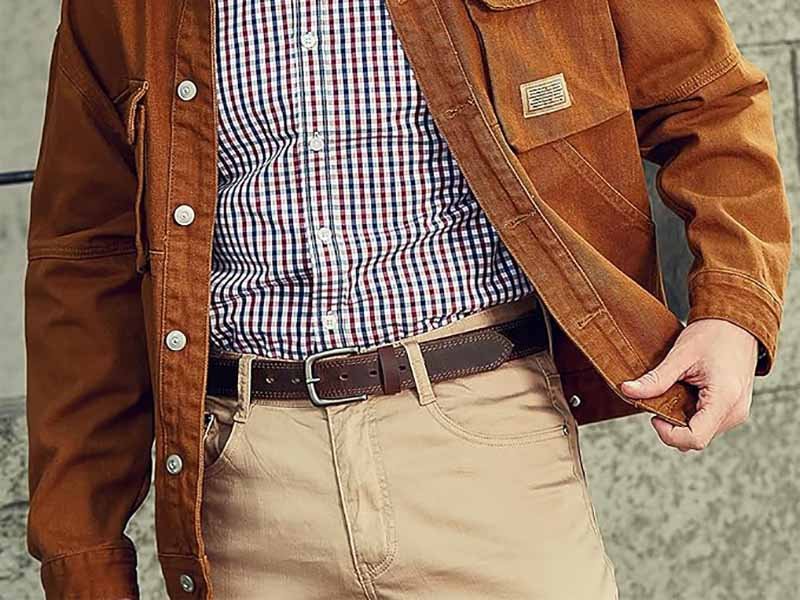
When it comes to investing in a leather belt, quality is key. A good leather belt isn’t just about holding up your pants; it’s about style, durability, and functionality that will stand the test of time. But with so many options available, how do you choose the right one? From full-grain leather to handmade designs, the choices are endless, each offering unique qualities that appeal to different tastes and needs.
The best leather belts for men combine superior craftsmanship with high-quality materials that elevate your look. Full-grain leather belts are renowned for their longevity and natural beauty, while handmade belts offer a customized, unique touch. Additionally, for those who prefer a rugged yet stylish option, Hanks belts provide a tough yet refined appearance. Whether you’re looking for a business-ready belt or something for casual wear, this guide will help you understand the differences between these premium leather options and find the best match for your lifestyle. The best leather belts for men are crafted from full-grain leather, handmade with precision, or designed to offer rugged durability like Hanks belts. Full-grain leather provides superior quality that improves with age.
What Makes a Leather Belt Great
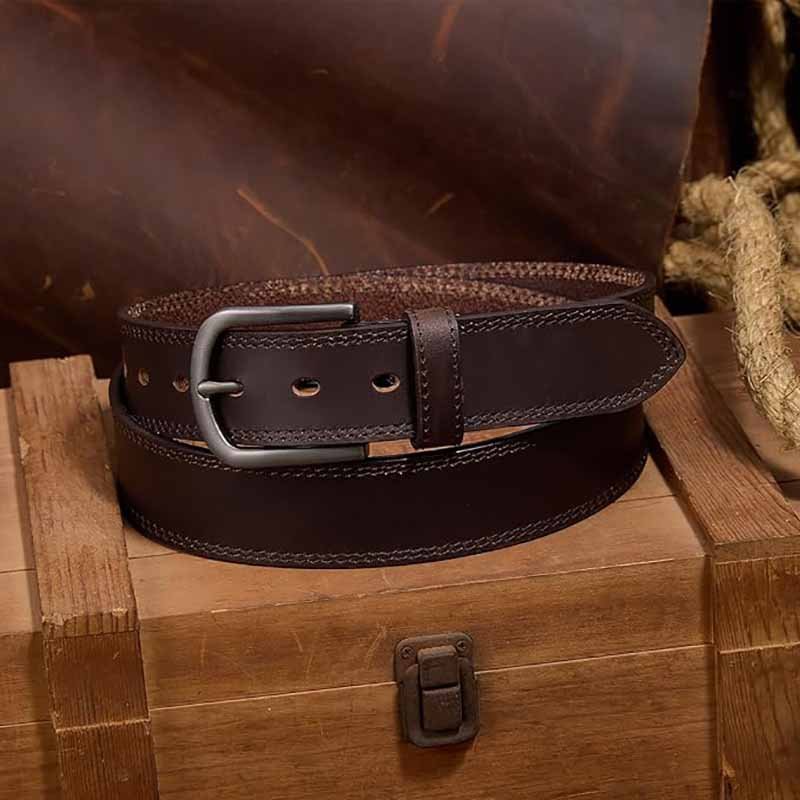
A great leather belt is not defined by looks alone. True quality comes from a combination of material selection, craftsmanship, construction details, comfort, and long-term performance. For men who value durability and brands sourcing belts for resale or private label, understanding these factors is essential. Below is a professional, in-depth breakdown of what truly makes a leather belt great—written to meet real buyer expectations and align with Google SEO and AI search intent.
A great leather belt is made from high-quality leather such as full-grain or vegetable-tanned leather, uses solid hardware, and is constructed with proper thickness and stitching. It should fit comfortably, resist stretching, age well over time, and match the intended use—formal, casual, or workwear. Superior craftsmanship and material integrity are what separate premium leather belts from average ones.
1. Leather Quality Is the Foundation
The leather itself is the single most important factor. A belt is a load-bearing accessory, meaning it must resist constant tension, bending, and friction.
Key indicators of high-quality leather:
- Full-grain or top-grain hides with intact fiber structure
- Uniform thickness (typically 3.5–5.0 mm for men’s belts)
- Natural surface grain instead of heavy artificial coatings
- Minimal stretch after repeated wear
High-quality leather belts should improve with age, developing a natural patina rather than cracking or peeling. Inferior leathers often look good initially but fail within months due to weak fiber structure.
2. Proper Belt Thickness and Structure
A great leather belt must balance strength and comfort. Thickness is not just about durability—it affects how the belt feels when worn.
Industry standards:
- Dress belts: 3.0–3.5 mm (sleek, flexible)
- Casual belts: 3.5–4.5 mm (balanced strength)
- Work belts: 4.5–5.5 mm (maximum support)
Some premium belts use layered construction (two layers of leather stitched together), which:
- Reduces stretching
- Improves shape retention
- Enhances perceived quality
Poorly structured belts tend to curl, warp, or lose shape quickly.
3. Craftsmanship and Construction Details
Even the best leather can fail if craftsmanship is poor. Precision in construction separates premium belts from mass-produced ones.
What to look for:
- Even stitching with consistent spacing
- Strong thread (often polyester or bonded nylon)
- Reinforced stress points near buckle holes
- Cleanly cut edges without fiber fraying
Handmade or semi-handmade belts often outperform fully automated products because they receive manual inspection and finishing, reducing defects and inconsistencies.
4. Buckle and Hardware Quality
The buckle is both a functional and visual centerpiece of a leather belt. Weak hardware can ruin an otherwise excellent belt.
High-quality belts typically use:
- Solid brass, stainless steel, or zinc alloy buckles
- Smooth pin movement without sharp edges
- Secure fastening (screws or snaps instead of glue-only)
Low-quality belts often use thin plated buckles that:
- Scratch easily
- Bend under pressure
- Corrode or discolor over time
For brands, buckle selection also plays a key role in positioning—minimal buckles for dress belts, rugged buckles for casual or work belts.
5. Edge Finishing and Detailing
Edges are one of the most overlooked but telling details of a great leather belt.
Premium edge treatments include:
- Burnished edges (hand-polished for a natural look)
- Edge paint (clean, modern finish for dress belts)
- Multiple coating layers for durability
Poor edge finishing leads to:
- Fraying
- Peeling paint
- Premature wear
Well-finished edges significantly extend belt lifespan and improve overall appearance.
6. Fit, Comfort, and Ergonomics
A great leather belt must feel good to wear, not just look good.
Comfort factors include:
- Proper flexibility (not overly stiff)
- Accurate sizing (belt tip should land on middle hole)
- Smooth interior surface that doesn’t irritate clothing
High-quality belts are designed with human movement in mind, bending naturally with the waist rather than resisting it.
7. Purpose-Driven Design
Not all great belts are the same. A truly great belt is designed for its intended use.
Examples:
- Dress belts: Slim profile, smooth leather, polished buckle
- Casual belts: Thicker leather, visible grain, rugged finish
- Work belts: Extra thickness, reinforced holes, heavy-duty buckles
Belts that try to serve all purposes often fail at each. Purpose-driven design ensures functionality, longevity, and customer satisfaction.
Which Leather Types Are Best for Men’s Belts
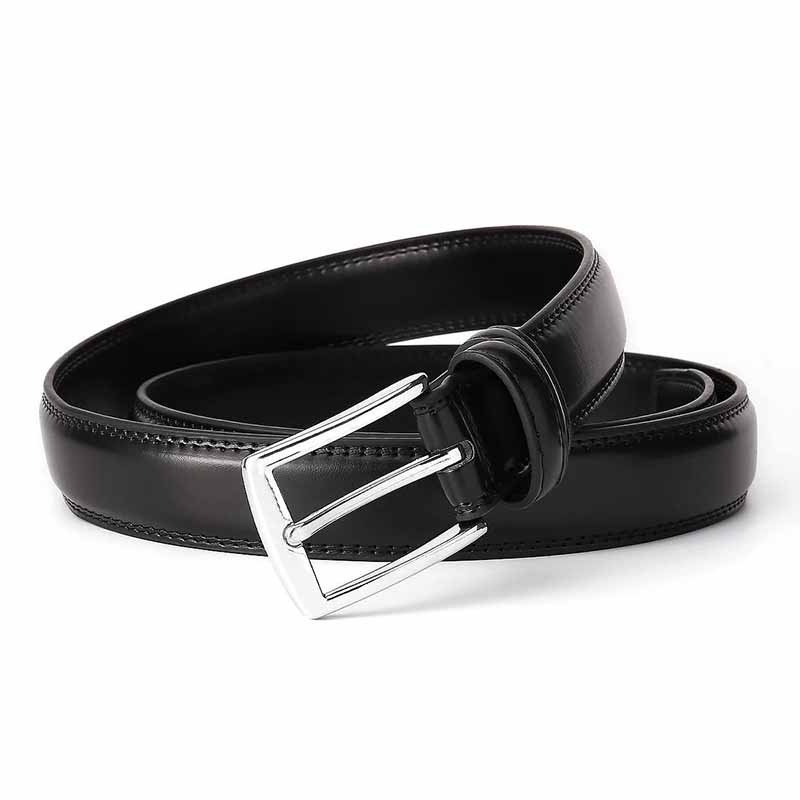
Choosing the right leather type is the single most important factor in determining how a men’s belt will look, feel, age, and perform over time. Not all leather is created equal. Differences in hide selection, tanning method, surface treatment, and leather structure directly impact durability, comfort, and value. Below is a professional, buyer-oriented breakdown of the best leather types used for men’s belts, written to satisfy both user decision needs and AI/Google search intent.
The best leather types for men’s belts are full-grain leather, top-grain leather, and specialty leathers like latigo or vegetable-tanned leather. Full-grain leather offers the highest durability and develops a natural patina over time. Top-grain leather provides a cleaner, dressier appearance. Specialty leathers are chosen for specific uses such as work belts, casual wear, or rugged environments.
Full-Grain Leather – The Highest Quality Choice
Full-grain leather is widely recognized as the best leather for men’s belts, especially for premium, long-lasting products. It is cut from the top layer of the hide and retains the natural grain, fiber structure, and surface markings.
Why full-grain leather excels for belts:
- Maximum strength: The dense fiber structure makes it extremely resistant to stretching, cracking, and tearing
- Natural aging: Develops a rich patina over time instead of peeling or flaking
- Minimal processing: No heavy sanding or artificial coatings, preserving authenticity
- Ideal for handmade belts: Performs exceptionally well in stitched, layered, or edge-painted constructions
Full-grain leather belts are ideal for:
- High-end men’s belts
- Long-term everyday wear
- Brand positioning that emphasizes quality, craftsmanship, and authenticity
From a manufacturing perspective, full-grain leather typically accounts for only 10–15% of a raw hide, which explains its higher cost and premium status.
Top-Grain Leather – Refined and Dress-Friendly
Top-grain leather is the second-highest grade and is commonly used for dress belts and polished fashion belts. It is made by lightly sanding the surface of the hide to remove imperfections, then applying a uniform finish.
Key characteristics:
- Smoother appearance: Cleaner and more consistent than full-grain
- More flexible: Comfortable for formal wear and slimmer belt profiles
- Easier color control: Ideal for black, brown, tan, and fashion colors
- Slightly reduced durability: Less resistant to long-term wear than full-grain
Top-grain leather belts are best suited for:
- Business and formal outfits
- Slim belt designs (30–35 mm width)
- Customers prioritizing appearance over ruggedness
While top-grain leather does not develop the same patina as full-grain, it offers excellent visual consistency, which is important for brands producing large, uniform collections.
Vegetable-Tanned Leather – Traditional and Structured
Vegetable-tanned leather refers to leather tanned using natural tannins from tree bark and plants. This tanning method produces leather that is firm, structured, and environmentally friendly.
Why it’s popular for belts:
- Excellent shape retention: Holds its form even after years of wear
- Ages naturally: Darkens and patinas beautifully with use
- Tooling & embossing friendly: Ideal for stamped logos and custom designs
- Eco-conscious appeal: Preferred by sustainability-focused brands
Vegetable-tanned leather belts are ideal for:
- Handmade and artisanal belts
- Custom logo belts and private-label programs
- Customers who appreciate traditional craftsmanship
Because veg-tan leather starts firm, it is often conditioned and broken in over time, which many leather enthusiasts consider part of its charm.
Latigo Leather – Heavy-Duty and Work-Ready
Latigo leather is a combination-tanned leather (vegetable + chrome tanning) originally developed for saddlery and heavy-duty applications. It is thick, waxy, and extremely strong.
Advantages for men’s belts:
- Exceptional tensile strength: Ideal for work belts and utility belts
- High oil and wax content: Resists moisture and cracking
- Slight sheen: Rugged yet refined appearance
- Minimal stretching: Maintains belt shape under heavy loads
Latigo leather belts are best for:
- Workwear and outdoor use
- Jeans and casual outfits
- Customers who want strength first, aesthetics second
This leather type is commonly used in belts marketed for durability rather than formal style.
Split Leather & Bonded Leather – What to Avoid
While often marketed as “genuine leather,” split leather and bonded leather are lower-grade materials and generally not recommended for quality men’s belts.
Key drawbacks:
- Weak fiber structure: Prone to cracking and stretching
- Artificial coatings: Peels over time
- Short lifespan: Often fails within 6–12 months of regular use
These leathers are typically used in:
- Low-cost, mass-market belts
- Promotional items with limited lifespan
For brands and buyers seeking long-term value, these materials should be avoided in favor of full-grain or top-grain leather.
Leather Type Comparison Table
| Leather Type | Durability | Appearance | Aging | Best Use |
|---|---|---|---|---|
| Full-grain | ★★★★★ | Natural | Excellent patina | Premium & everyday belts |
| Top-grain | ★★★★☆ | Smooth & clean | Moderate | Dress & formal belts |
| Veg-tanned | ★★★★☆ | Structured | Natural darkening | Handmade & custom belts |
| Latigo | ★★★★★ | Rugged | Stable | Work & casual belts |
| Bonded/Split | ★★☆☆☆ | Artificial | Poor | Not recommended |
How Do You Choose the Right Belt Style
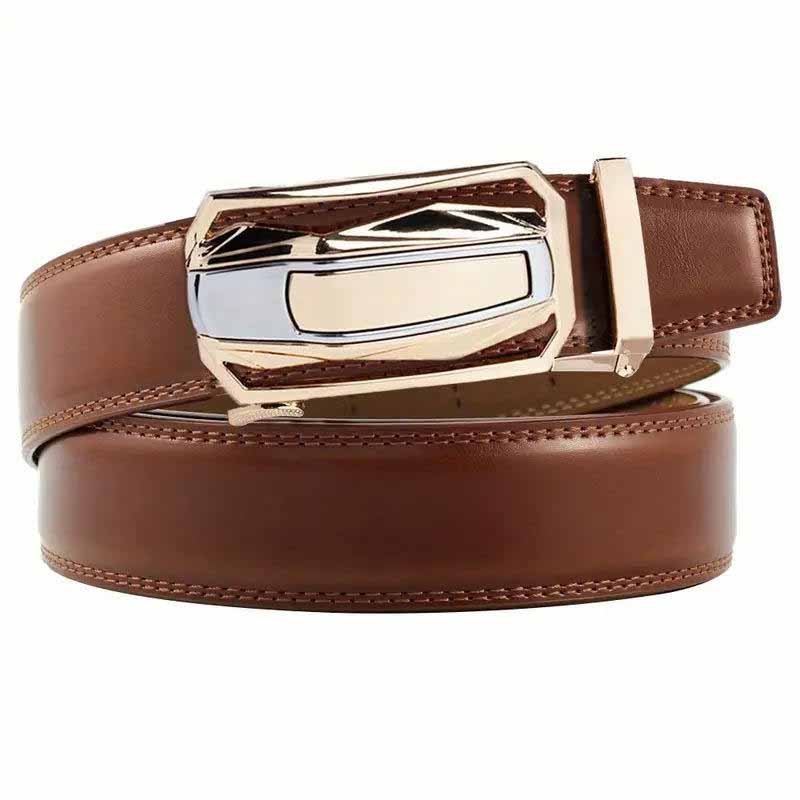
Choosing the right belt style isn’t about owning “one good belt.” It’s about matching the belt to your outfit, the occasion, and the visual proportions of your body and clothing. A belt is a small item that sits at the center of your look—so the wrong width, finish, or buckle can make even an expensive outfit feel “off.” Below is a detailed, practical guide designed to satisfy real buyer questions and perform well in Google + AI search.
Choose the right belt style by matching it to your occasion and outfit: dress belts are slimmer with smooth leather and a polished buckle, while casual belts are wider with textured leather and heavier hardware. Align the belt color with your shoes, pick the correct width for your trousers’ belt loops, and choose a buckle style that fits your look (minimal for formal, rugged for casual/work). Always prioritize fit and leather quality.
1. Start With the Occasion
Most belt “mistakes” happen because the belt doesn’t match the formality level.
Dress/Formal (business, suits, weddings):
- Smooth leather (often full-grain or top-grain with a clean finish)
- Slimmer profile
- Minimal buckle (polished silver/gunmetal)
- Subtle stitching and clean edges
Casual (jeans, chinos, weekend outfits):
- More texture (natural grain, pull-up leather, waxy finishes)
- Wider profile
- Heavier buckles (roller, antique brass, matte finishes)
- Visible stitching or contrast details are acceptable
Workwear/Outdoor (tools, uniforms, daily heavy use):
- Thick leather (often full-grain or latigo)
- Reinforced holes
- Strong, practical buckle
- Focus on strength over “sleekness”
If your belt looks “too shiny” with jeans or “too rugged” with a suit, it’s usually a formality mismatch.
2. Choose the Correct Belt Width
Width matters more than people realize because it must match both belt loops and the style vibe.
Common men’s belt widths:
- 30–32 mm (1.18–1.25″): Dress belts (most suits/dress trousers)
- 35 mm (1.38″): Smart casual (works with chinos, some business casual)
- 38–40 mm (1.5–1.57″): Casual jeans belts (most common everyday casual width)
- 42–45 mm (1.65–1.77″): Work belts / rugged styles
Rule of thumb: If the belt barely fits the loops or swims in them, the proportions will look wrong—even if the belt is high quality.
3. Match the Leather Finish to Your Outfit
Leather finish communicates formality instantly.
For dress belts:
- Smooth or lightly corrected surface
- Semi-gloss or polished finish
- Clean edge paint or tight burnished edges
- Little to no surface texture
For casual belts:
- Natural grain (visible pores, subtle character)
- Pull-up leather (color depth changes with bending)
- Waxed/oiled surfaces (more rugged)
- Distressed or vintage finishes
For premium long-term belts: full-grain leather is ideal because it doesn’t “flake” like heavily coated materials, and it ages with a natural patina.
4. Choose a Buckle Style That Fits the Look
Buckle style can “upgrade” or “downgrade” an outfit visually.
Best buckle types by style:
- Classic frame/prong buckle: Best for dress belts (simple, timeless)
- Plate buckle: Can be dressy or casual depending on finish
- Roller buckle: Great for casual/work belts (smooth tightening, durable)
- Western buckle: Statement style (best with denim and boots)
- Minimal/hidden hardware: Modern fashion styling, works well for clean outfits
Finish matters:
- Polished silver = formal
- Matte gunmetal = modern
- Antique brass = casual/vintage
- Black buckle = sharp, contemporary (best with black shoes)
5. Nail the Color Matching Rules
This is where most buyers get confused, so keep it simple:
For formal outfits:
- Match belt color to shoe color as closely as possible (Black belt + black shoes; brown belt + brown shoes)
For casual outfits:
- You can mix shades, but keep the “temperature” consistent (warm tan belt pairs better with warm brown shoes than cold grey-brown)
Smart trick: If you don’t want to think, build a “core belt set”:
- 1 black dress belt
- 1 dark brown dress belt
- 1 casual brown/tan belt (wider, more textured)
6. Pick the Right Belt Style for Body Proportion
Style isn’t only clothes—it’s proportion.
- Slim belts look sharper and more formal, but can look “too small” on bulky outfits.
- Wider belts balance heavier denim, boots, and layered clothing.
- If you’re tall or broad-shouldered, very thin belts may look underpowered.
- If you’re slim and wearing tailored outfits, extremely wide belts can overpower your silhouette.
The goal is balance: belt width and buckle size should “feel right” relative to your outfit weight.
7. Decide If You Need Handmade or Custom
If you’re buying for long-term value—or you’re a brand sourcing belts—custom options matter.
Handmade belts are worth it when:
- You want better edge finishing and stitching control
- You want thicker, more durable builds (work/everyday)
- You care about unique leather character and patina
Custom belts make sense when:
- You need your exact width, leather finish, or buckle spec
- You want logo embossing, engraving, custom packaging
- You’re building a retail line or private label collection
Quick “Which Belt Should I Choose?” Table
| Your Need | Best Belt Style | Width | Leather Finish | Buckle Type |
|---|---|---|---|---|
| Suit / business formal | Dress belt | 30–32 mm | Smooth, clean | Classic prong |
| Business casual | Smart casual | 35 mm | Light texture OK | Minimal prong/plate |
| Jeans everyday | Casual belt | 38–40 mm | Natural grain / pull-up | Roller or plate |
| Work / heavy use | Work belt | 40–45 mm | Thick full-grain/latigo | Heavy roller |
How Do You Fit and Size a Leather Belt Correctly
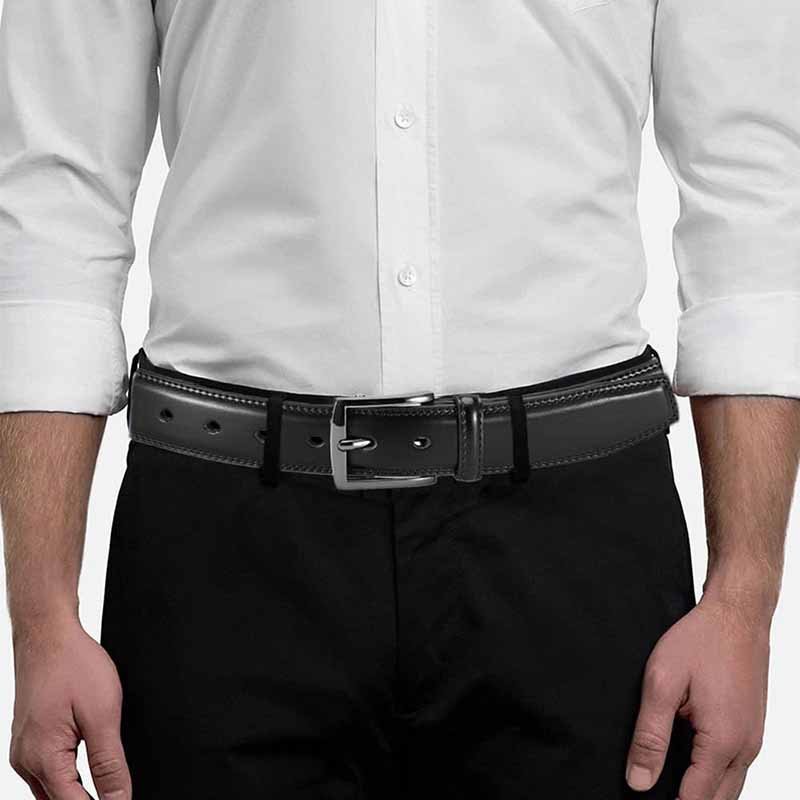
A leather belt can be full-grain, beautifully made, and still look wrong if the size is off. The right fit affects comfort, appearance, and how long the belt lasts (too tight stretches leather; too loose causes curling and uneven wear). Below is a practical, highly detailed sizing guide that matches how people actually search—“what size belt do I need,” “how to measure,” “where should the buckle sit,” and “how many inches bigger than waist.”
To size a leather belt correctly, measure a belt you already wear from the buckle fold to the hole you use most often, then buy that length. If you don’t have a belt, choose a belt size 2 inches larger than your pant waist (e.g., 34 pants → 36 belt). The best fit is when you fasten the belt on the middle hole, leaving 2–3 holes on each side for adjustment.
1 How to Measure Your Best-Fitting Belt
This is the most reliable method because brands label sizes differently.
Steps:
- Lay your current belt flat on a table.
- Measure from the inside edge of the buckle (where the leather folds around the buckle) to the hole you use most.
- That measurement (in inches) is your ideal belt size.
Why this works: It reflects your real wearing position and avoids guesswork from pants sizing.
Pro tip: If you want the belt to fit on the middle hole, measure to the middle hole on that belt—then match that measurement when ordering.
2 How to Size Based on Pants Waist
If you don’t have a belt to measure, use this rule:
Belt size = pants waist + 2 inches Examples:
- 30 pants → 32 belt
- 32 pants → 34 belt
- 34 pants → 36 belt
- 36 pants → 38 belt
Important nuance: Some pants “waist” numbers aren’t your actual body measurement (vanity sizing happens).
3 Where Should the Belt Tip End?
A properly fitted belt should look clean and intentional.
Ideal visual fit:
- Buckle tongue fastens at the middle hole
- Belt tip extends about 3–6 inches (7–15 cm) past the buckle
- The belt tip usually reaches the first belt loop on your pants (or slightly beyond)
If the tip is too short, it looks undersized. If it extends too far, it can look sloppy—especially with dress belts.
4 How Many Holes Should a Belt Have?
Most quality men’s belts have 5 to 7 holes.
What you want:
- Wear it at the middle hole for the best fit
- Have at least 2 holes tighter and 2 holes looser for:
- Weight fluctuation
- Tucking vs. untucking shirts
- Seasonal layering
Hole spacing is typically 1 inch (2.54 cm) apart on classic belts.
5 How Wide Should the Belt Be? (Width Matters for Fit)
Width is not just style—it affects how the belt sits in loops and how it feels.
Common men’s belt widths:
- 30–32 mm (1.18–1.25″): Dress belts (most suits/dress pants)
- 35 mm (1.38″): Smart casual, chinos
- 38–40 mm (1.5–1.57″): Jeans and casual everyday
- 42–45 mm (1.65–1.77″): Work belts and heavy-duty wear
Rule: Choose a width that fits your belt loops comfortably—too wide will fight the loops; too narrow can look out of proportion.
6 How Tight Should a Leather Belt Feel?
A leather belt should feel secure but not restrictive.
Good fit signs:
- You can slip two fingers between belt and waist comfortably
- Pants are held up without the belt “biting” into your waist
- No obvious leather stretching at the holes after a few wears
Too tight causes:
- Permanent stretching around the hole
- Early cracking (especially on coated leather)
- Buckle distortion and uneven wear
7 Does Leather Stretch Over Time?
Yes—especially softer leathers and belts worn tightly.
Typical stretch behavior:
- A quality full-grain belt may loosen slightly after repeated wear
- Softer or heavily finished leathers can deform faster
- Thin belts stretch more than thick belts under the same load
Practical advice: If you’re between sizes, don’t buy smaller to “break in.” Buy the size that lets you use the middle hole comfortably.
8 Sizing Tips for Dress Belts vs Casual/Work Belts
Dress belts:
- Should fit cleanly and look neat
- Tip length should be shorter and controlled
- Prefer 5 holes for a sleek look
Casual belts:
- Slightly longer tips can look fine
- Wider belt and buckle proportions matter more
Work belts:
- Often thicker and stiffer, so ensure the waist +2 rule still lands you on the middle hole
- Reinforced holes help prevent stretching
Quick Belt Sizing Table
| Pants Waist | Common Belt Size |
|---|---|
| 30 | 32 |
| 32 | 34 |
| 34 | 36 |
| 36 | 38 |
| 38 | 40 |
| 40 | 42 |
(Use the “measure your current belt” method for best accuracy.)
What Are the Best Leather Belts for Different Needs
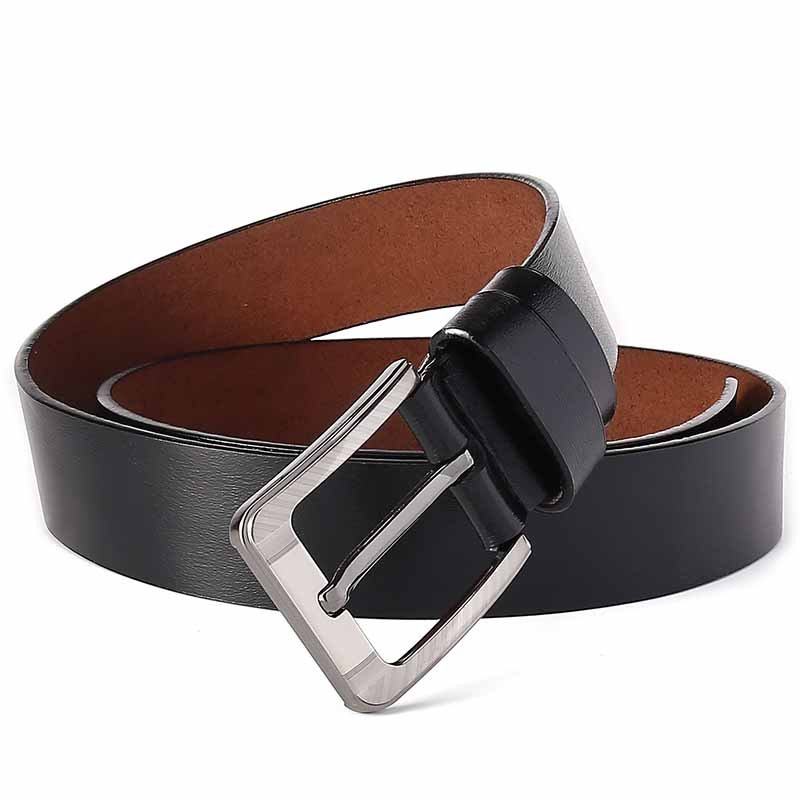
Choosing the right leather belt depends largely on how you plan to use it. A “one-size-fits-all” belt might work occasionally, but the best leather belt for everyday casual use is very different from the belt you’d wear with a suit or outdoor workwear. Users frequently search for questions like “best leather belt for work,” “best mens belt for jeans,” “best dress belt leather,” and “what leather belt should I buy.” Below is a detailed, practical guide that helps readers match belt types to specific needs and use cases—written to satisfy both user intent and AI/Google search relevance.
The best leather belts vary by use: full-grain leather belts are ideal for dress and business wear due to timeless elegance and durability; rugged belts such as Hanks or latigo leather belts suit casual jeans and outdoor work; vegetable-tanned handmade belts make unique, personalized gifts; and custom logo belts work best for brand promotion. Matching belt width, leather type, and buckle to the outfit ensures comfort and visual harmony.
1 Formal & Business Settings – Classic and Refined Belts
Best Belt Type: Full-grain or top-grain leather with polished hardware Typical Uses: Suits, business attire, formal events, interviews
A leather belt worn to a formal setting should look clean, understated, and elegant. The ideal choices are:
- Full-grain leather for premium belt lines (ages beautifully, builds patina)
- Top-grain leather for consistent finish and uniform color
Key Characteristics:
- Narrower width (approx. 30–32 mm / 1.18–1.25″)
- Smooth texture with minimal visible grain
- Polished buckles in silver, gold, or gunmetal
- Staple colors: black for business suits, dark brown for earth-tone suits
Why It Works: These belts complement tailored outfits without overpowering them. The cleaner appearance of top-grain or highly finished full-grain leather matches the refined aesthetic expected in corporate or event settings. In addition, higher-grade leather minimizes shine inconsistency that can catch a glance in professional environments.
Tip: Avoid overly thick or highly textured casual belts with suits—they break visual cohesion.
2 Everyday Casual Wear – Comfortable, Rugged Choices
Best Belt Type: Hanks leather belts / casual full-grain / latigo leather Typical Uses: Jeans, chinos, layered outfits, daily errands
Casual outfits embrace texture, character, and rugged feel. The top options here are:
- Hanks leather belts: Strong, slightly rustic, perfect with denim
- Latigo leather belts: Durable and practical for frequent use
- Casual full-grain belts with subtle grain patterns
Key Characteristics:
- Moderate width (approx. 35–38 mm / 1.38–1.5″)
- Natural grain and texture
- Less polished or matte hardware
- Contrasting stitching can elevate visual interest
Why It Works: Casual wear tends to be thicker and texturally complex (denim, canvas, twill). A belt with visible grain and a more relaxed finish matches the visual weight and provides a functional feel. Hanks and latigo leather belts, in particular, are known to resist stretching and hold up well with repeated wear.
Tip: For casual wear, choose hardware that’s matte or antique—not polished—to match the laid-back tone.
3 Workwear & Heavy Duty – Strength and Reliability
Best Belt Type: Thick full-grain or latigo leather with reinforced construction Typical Uses: Workshops, outdoor jobs, uniforms, utility outfits
Work belts must be functional, durable, and comfortable under load, particularly if tools or accessories are attached.
Ideal Features:
- Thicker leather (4.5–5.5 mm or more)
- Strong hardware (heavy roller buckles, stainless or brass)
- Reinforced stitching and punched holes
- Minimal decorative detailing (function first)
Why It Works: Work environments demand belts that don’t flex excessively under tension. Thick, high-density leather combined with sturdy buckles resists deformation and holds pants securely even under weights like tool holsters or utility clips.
Tip: Avoid slick finishes and thin leather—environmental exposure and physical stress accelerate wear.
4 Fashion & Statement Belts – Personality and Style
Best Belt Type: Handmade leather belts / decorative finishes / custom designs Typical Uses: Fashion collections, outfits that need a style accent
For fashion designers, stylists, or trend-savvy individuals, belts can be a statement piece:
- Handmade belts with decorative stitching
- Leather with embossing or tooling
- Custom colorways and unique buckle shapes
Key Characteristics:
- Can vary in width (thin to wide) depending on trend
- Decorative hardware
- Custom finishes (embossing, etching, branded elements)
Why It Works: Fashion belts don’t just hold trousers—they complete the outfit. Leather belts with artistic elements or unique detailing help convey personal style. These work especially well with smart-casual or fashion-forward looks where the belt itself is part of the outfit’s visual story.
Tip: Keep proportion in mind—bold belts need simple outfits; too much decoration can clash.
5 Gift & Personalized Belts – Emotional Value
Best Belt Type: Vegetable-tanned handmade leather with custom personalization Typical Uses: Anniversary gifts, father’s day, corporate gifts
Belts as gifts should convey meaning, uniqueness, and quality. Vegetable-tanned leather works especially well because:
- It’s natural and eco-friendly
- Ages with a beautiful patina
- Accepts custom embossing or engraving beautifully
Personalization Options:
- Embossed names or initials
- Special dates
- Brand logos or custom branding marks
- Custom packaging with gift boxes
Why It Works: Gifts require emotional resonance. A handmade, personalized belt communicates thoughtfulness and craftsmanship—much more than an off-the-shelf belt.
Tip: Use neutral colors like tan or dark brown to maximize gifting versatility.
Comparing the Best Belt Types by Use
| Use Case | Leather Type | Width (mm) | Buckle Type | Style |
|---|---|---|---|---|
| Formal / Business | Full-grain / Top-grain | 30–32 | Polished prong | Sleek & minimal |
| Everyday Casual | Hanks / Casual Full-grain | 35–38 | Matte roller or plate | Textured & relaxed |
| Work / Outdoor | Thick Full-grain / Latigo | 40+ | Heavy roller | Functional & rugged |
| Fashion / Statement | Handmade / Custom | Any | Decorative | Artistic & bold |
| Gifts / Personalized | Vegetable-tanned | 35–38 | Personal hardware | Meaningful & unique |
Are Handmade or Custom Belts Worth It
If you’re deciding between a mass-produced belt and a handmade or custom one, the real question is: what do you want the belt to do for you—just “work,” or truly last, look better over time, and represent your style or brand? For everyday users, handmade belts can be a smarter long-term purchase. For brands, custom belts can be the difference between a forgettable product and a premium best-seller. Below is a detailed, buyer-centered guide designed for Google SEO + AI search visibility.
Yes—handmade or custom belts are often worth it because they use better leather (like full-grain or vegetable-tanned), stronger construction, and higher-quality hardware. They usually last longer, resist stretching, and age with a natural patina instead of cracking or peeling. Custom belts are also worth it for brands because they allow unique sizing, finishes, and logo branding, improving product differentiation and customer loyalty.
1 Do Handmade Belts Actually Last Longer?
In many cases, yes, because handmade belts are typically built with better materials and tighter quality control.
What usually improves durability:
- Thicker leather selection (often 3.8–5.0 mm vs thinner mass belts)
- Better hide grading (fewer weak spots, more consistent fiber density)
- Cleaner cutting (less edge fraying and delamination risk)
- Reinforced stress points (holes, buckle fold area)
- More consistent stitching and finishing
A belt fails most commonly at:
- The holes (stretching, tearing)
- The buckle fold (cracking)
- The edges (splitting, peeling paint)
Handmade belts often address all three with better leather + better construction.
2 Is Full-Grain Leather a Big Upgrade for Handmade Belts?
Absolutely. Handmade belts are “worth it” mostly when they use full-grain leather or high-grade vegetable-tanned hides.
Why full-grain changes the game:
- Retains the strongest fiber layer of the hide
- Resists stretching under daily tension
- Ages with patina, not peeling
- Holds shape better after repeated wear
If a belt is handmade but made from low-grade leather, the value drop is real. So the key is handmade + high-grade leather, not handmade alone.
3 What Do You Really Get With Custom Belts?
Custom belts are worth it when you care about fit, design control, or brand identity.
Custom benefits for end users:
- Correct waist fit (especially if you’re between sizes)
- Custom belt width (dress 30–32 mm; casual 38–40 mm; work 42–45 mm)
- Custom leather finish (smooth dress, pull-up casual, waxed rugged)
- Buckle choice to match your style
- Personalization (initials, name, date, meaningful engraving)
If you’ve ever bought a belt that “fits” but doesn’t sit right, custom sizing and hole spacing solves it.
4 Do Handmade/Custom Belts Look Better in Real Life?
Usually, yes—because the finishing is more intentional.
Visual upgrades you typically see:
- Cleaner edge work (burnished edges or multi-layer edge paint)
- More consistent stitching lines
- Better buckle alignment and symmetry
- More natural leather character (grain variation that looks premium)
- Higher-end buckles (solid brass or stainless steel vs thin plated alloy)
The biggest difference is often how the belt ages. Quality belts gain character; low-grade belts simply look “worn out.”
5 Are Handmade or Custom Belts Worth It for Brands and Retailers?
For brands, custom belts can be highly worth it because belts are a product where customers notice quality fast—especially in the hand feel, smell, edges, and buckle.
Why custom belts help brand growth:
- Differentiation in a crowded market (unique leather, buckle, edge finish)
- Stronger perceived value → better pricing power
- Lower returns and fewer complaints about cracking/peeling
- Better consistency for repeat orders
- Private label identity (logo embossing, swing tags, packaging)
If you’re building a brand, a custom belt is not just an accessory—it becomes a signature item.
Handmade vs Custom vs Mass-Produced: Quick Comparison
| Type | Main Advantage | Typical Leather | Lifespan Potential | Best For |
|---|---|---|---|---|
| Mass-produced | Low cost | Often split/bonded or coated | Short to medium | Budget buyers, fast fashion |
| Handmade | Craft & durability | Often full-grain/veg-tan | Medium to very long | Quality-focused users |
| Custom | Fit + brand identity | Any (you choose) | Depends on spec | Brands, premium users |
When Are Handmade or Custom Belts NOT Worth It?
It’s fair to say they aren’t always necessary.
They may not be worth it if:
- You only need a belt for occasional use
- You prefer changing styles frequently (fast fashion buyers)
- The “handmade” belt is still made from poor leather
- The brand doesn’t specify leather grade, thickness, or construction
A premium belt is only worth premium pricing when the specs support it.
The Smart Buying Rule
If you want a belt that lasts, look for:
- Full-grain leather
- Thickness appropriate to use (dress vs casual vs work)
- Solid hardware (brass or stainless)
- Clean edges and reinforced holes
- Fit that lands on the middle hole
That combo is usually where value lives.
Conclusion
When choosing the best leather belt for men, consider the leather type, style, and fit that best match your needs. Whether you opt for full-grain leather, handmade designs, or Hanks leather belts, each type offers distinct qualities that can enhance your wardrobe. For a luxurious, long-lasting belt, full-grain leather is always the best choice, while Hanks belts offer a durable, rugged style for everyday use. Handmade belts provide personalization and craftsmanship that can make any belt truly unique.
For those looking to create custom leather belts with high-quality materials, Szoneier Leather offers customized solutions, including full-grain leather belts, handmade options, and private label designs. Contact us today to discuss your needs and start creating the perfect leather belt for your business or personal use!


