Recycled leather is often presented as a simple solution: collect leather waste, process it again, and turn it into a new bag or accessory. In real manufacturing, however, the material name answers very few of the questions that determine whether a product will succeed. A buyer still needs to understand what type of waste was used, how much leather the material contains, what binds the fibers together, how the surface was coated, and whether the finished construction can withstand folding, pulling, rubbing, moisture, heat, and everyday handling.
Recycled leather goods are manufactured by recovering leather scraps or fibers, combining them with binders, backing materials, coatings, or reinforcements, and converting the resulting sheets or panels into bags, wallets, covers, cases, and accessories. Product quality depends on the material composition, sheet-forming process, pattern design, reinforcement, stitching, edge finishing, testing, traceability, and control from approved sample to bulk production.
A polished sample can look convincing while hiding weak peel adhesion, unstable color, poor edge-paint bonding, or insufficient support around a handle. Those failures often appear only after the product has been folded repeatedly, filled with weight, transported in a hot container, or used for several months. The most important work therefore begins before bulk production, when the buyer and manufacturer agree on what the material is expected to do. That decision can turn an attractive sustainability concept into a reliable product—or into a shipment of goods that never performs as promised.
What Is Recycled Leather?
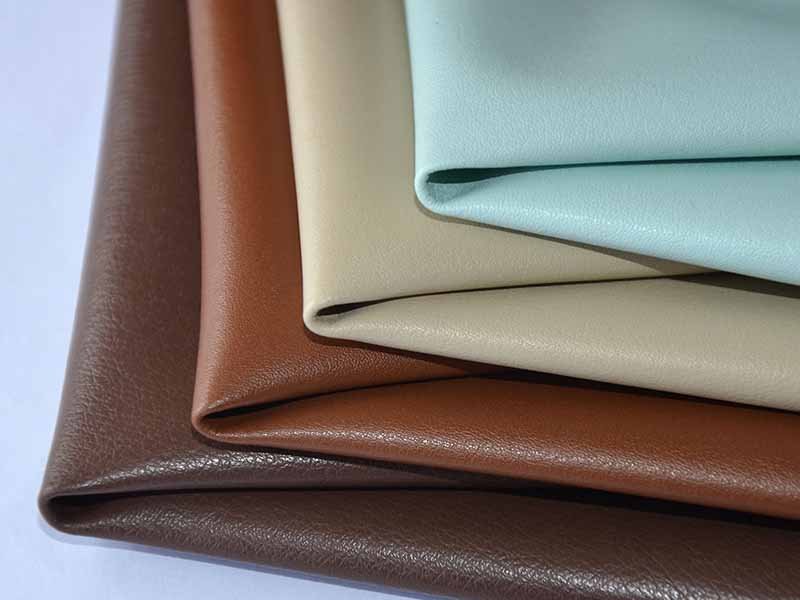
Recycled leather is a broad term for materials or products containing recovered leather waste. The input may remain as recognizable offcuts or be reduced into fibers and particles that are bonded into new sheets. The finished material may also include polyurethane, latex, textile backing, pigments, adhesives, and protective coatings, so buyers should verify its composition instead of relying on the name alone.
Material Composition
Recycled leather commonly starts with post-industrial leather waste generated during cutting, splitting, trimming, sampling, or quality rejection. These inputs may include clean offcuts from handbags, footwear, upholstery, belts, wallets, or other leather-goods programs. Cleaner and more consistent waste streams are easier to process because the supplier can control the original leather type, color, finish, thickness, and chemical history. Mixed waste is more difficult because it may contain several leather grades, synthetic leather, adhesive residue, lining fabric, foam, thread, paperboard, and metal hardware.
When the waste is used in a fiber-based sheet, it is normally cut, milled, shredded, or mechanically opened into smaller particles. The recovered leather fraction is then combined with a binding system that creates enough internal strength for the material to be pressed or formed into a continuous sheet. Depending on the technology, the binder may be polyurethane, latex, rubber, a water-based resin, or another polymer. Pigments, processing aids, cellulose fibers, or textile fibers may also be added to improve color, formation, density, or handling.
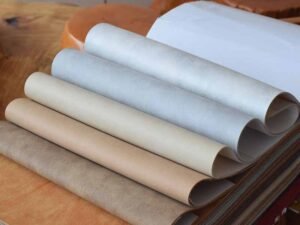
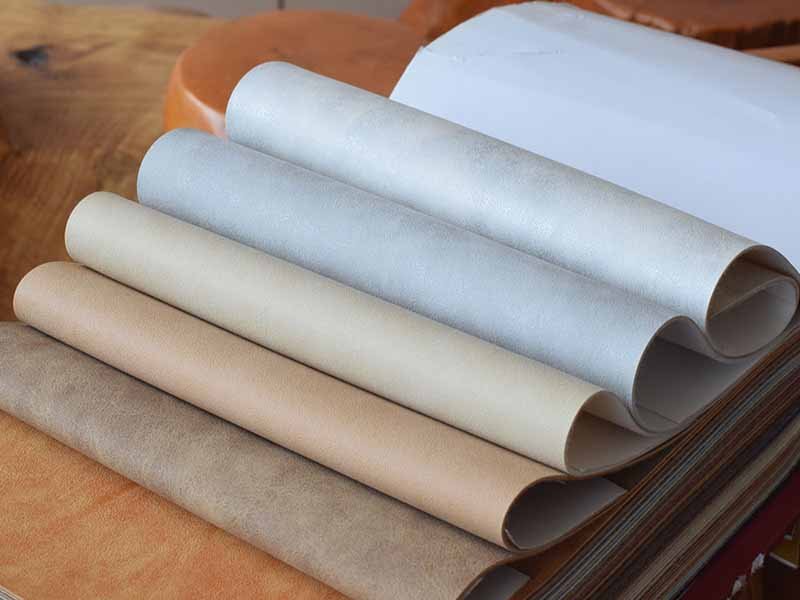
The finished material may contain several layers rather than one uniform substance. A decorative coating forms the visible grain and color. Beneath it, a recycled leather and binder layer provides body. A woven or nonwoven backing may improve dimensional stability and tear resistance. Adhesive layers connect the components, while a topcoat adjusts gloss, touch, stain resistance, and rubbing performance. This layered construction is why two sheets called recycled leather can feel similar in a sample book but behave very differently during sewing, folding, skiving, and long-term use.
Leather vs Bonded Leather
Recycled leather may contain genuine leather fibers, but that does not make every recycled sheet equivalent to full-grain, top-grain, corrected-grain, or split leather. Conventional leather retains the natural three-dimensional fiber network of the hide after tanning. Fiber-based recycled leather breaks that original structure down and reconstructs it with binders, pressure, backing, heat, and surface finishing. The visual result may resemble leather, while the mechanical behavior and aging pattern remain different.
Bonded leather normally refers to a material in which leather particles or fibers are held together by a binding system. Recycled leather is a wider commercial expression and may include bonded leather, leather-fiber composites, materials laminated to textile backing, or products made from recognizable leather offcuts. Some suppliers also use terms such as regenerated leather, reconstituted leather, leather fiber material, or sustainable leather composite. These descriptions are not always used consistently across markets.
A responsible buyer should therefore move beyond the argument over whether a material is “real leather” or “fake leather.” The more useful questions concern its measurable composition and intended application. The supplier should explain the leather percentage, whether that percentage is calculated by weight, what type of binder is used, whether the backing contributes most of the structural strength, and what type of surface coating protects the material. Product descriptions should reflect those facts accurately rather than suggesting that a composite sheet will behave exactly like an intact hide.
| Material Type | Typical Construction | Main Advantage | Main Limitation |
|---|---|---|---|
| Upcycled leather offcuts | Recognizable leather pieces joined, woven, or laminated | Preserves more natural leather character | Color, size, and thickness may vary |
| Bonded leather | Leather fibers or particles combined with a binder | Uniform sheets and predictable cutting area | Performance depends heavily on binder and coating |
| Recycled leather composite | Recovered leather combined with polymer and supporting layers | Can be engineered for specific stiffness and thickness | Multiple layers may create delamination risk |
| Textile-backed recycled leather | Recycled leather face bonded to woven or nonwoven backing | Better dimensional stability and sewing support | Face-to-backing adhesion must be controlled |
| Conventional leather | Tanned hide retaining its natural fiber structure | Strong natural structure and distinctive aging | Natural defects and irregular cutting yield |
Common Material Types
One common route uses larger leather offcuts without reducing them into fibers. The scraps may be sorted by color and thickness, then cut into geometric shapes, woven into strips, joined as patchwork, or laminated into larger panels. This approach is often closer to upcycling because the original leather pieces remain visible and recognizable. It can produce distinctive bags, covers, decorative panels, and small accessories, although thickness control and color matching require disciplined sorting.
A second route converts leather scraps into fibers or particles. These materials are blended with a binder, formed into sheets, dried or pressed, and finished with color and embossing. The resulting material can offer regular roll widths or sheet sizes, which may improve pattern nesting and cutting yield compared with irregular hides. Its performance, however, depends on fiber length, binder ratio, backing, density, coating adhesion, and curing conditions.
A third route combines a recycled leather layer with woven, knitted, or nonwoven textile backing. The backing may carry much of the tear resistance and can reduce stretch during cutting and sewing. This type is frequently useful for broad handbag panels, notebook covers, pouches, and decorative components, but the bond between the face and the backing needs to survive repeated flexing, humidity, and heat.
A fourth group uses leather waste as one component in a more complex polymer composite. The material can be engineered for a particular hardness, density, surface texture, or molding process. It may be suitable for trims, cases, inserts, covers, and structured components. The leather content can vary considerably, so buyers should never assume that all recycled leather sheets contain a similar proportion of recovered leather.
What Buyers Should Confirm
A color swatch is not enough to approve recycled leather for commercial production. Buyers should request a material data sheet, composition statement, recycled-content declaration, material code, production-lot information, backing description, total thickness, usable width, weight per unit area, recommended application, and available test reports. The supplier should also explain whether the recycled input is pre-consumer production waste or post-consumer material.
Thickness needs to be measured at several locations because a composite sheet may vary across its width or between rolls. Some controlled materials can be supplied within a tolerance near ±0.10 mm, but that figure should be confirmed rather than assumed. A difference of 0.20 mm becomes significant when several layers meet at a corner, around a zipper, or beneath a rivet. It can change seam bulk, hardware post length, folding quality, and finished dimensions.
Color approval should consider gloss and grain as well as pigment. A glossy surface can look darker than a matte surface made with a similar color formulation. Brand-sensitive projects may require a physical master sample, defined lighting conditions, and numerical color controls. The same discipline applies to surface texture, touch, odor, backing appearance, and edge color.
The factory should cut, fold, glue, sew, emboss, edge-paint, rub, and flex the actual material before it enters a bulk order. Heat from logo stamping can flatten the grain or soften the coating. Adhesive can stain or weaken a surface. Edge paint can separate from a porous core. Needle holes can form a tear line when the stitch density is too high. Experienced manufacturing begins by testing the real construction rather than trusting the material name.
How Is Recycled Leather Made?
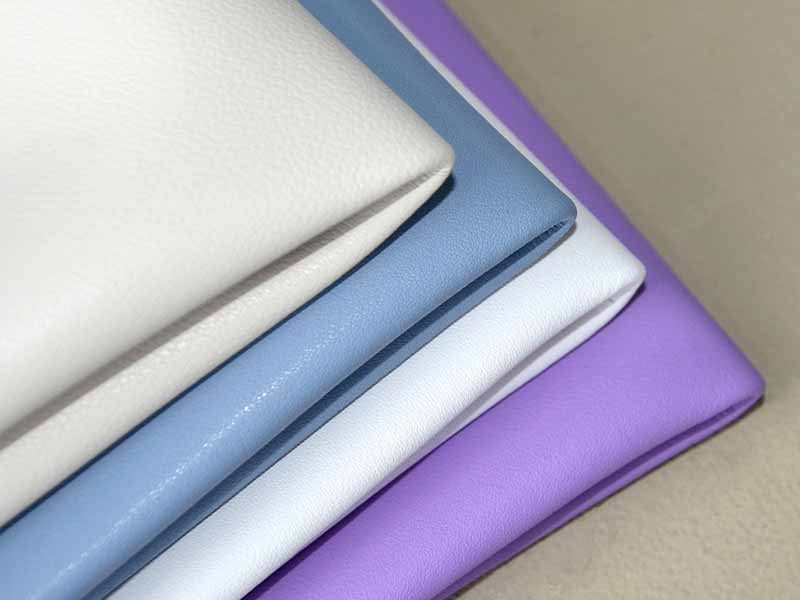
Recycled leather is generally made by collecting suitable leather waste, separating foreign materials, reducing the leather into reusable pieces or fibers, and forming it into panels or composite sheets. Fiber-based materials are usually mixed with binders, pressed or cast, dried, laminated to a backing, colored, embossed, coated, and inspected before being supplied to a leather-goods factory.
Waste Collection
The manufacturing process starts with the quality of the waste stream. Post-industrial waste comes from cutting rooms, splitting operations, trimming, sample development, production setup, and rejected panels. It is often easier to control because the leather type, finish, color, and source may already be known. Post-consumer waste comes from discarded footwear, furniture, bags, garments, and accessories, which normally require more complex collection, cleaning, and separation.
Sorting prevents unsuitable materials from entering the production batch. Mixed waste can contain chrome-tanned leather, vegetable-tanned leather, finished leather, coated splits, synthetic leather, fabric, paper, foam, adhesive, thread, zippers, magnets, rivets, and other hardware. Incompatible inputs may lead to hard particles, unstable odor, uneven color, poor bonding, excessive stiffness, or contamination in the final sheet.
A controlled system normally separates leather from synthetic materials and removes obvious foreign components. Waste may also be sorted by color family, thickness, finish, or origin. Dark mixed input is easier to convert into black, dark brown, or navy material, while clean pale colors usually require a more controlled waste stream or a heavier pigment coating.
Storage also affects quality. Leather scraps should remain dry, identified, and protected from dust, mold, moisture, oil, and unrelated production waste. Batch references should connect the collected input with the resulting material lot. Without that traceability, a supplier may still produce a usable sheet, but the buyer has less support for a specific recycled-content or waste-origin claim.
Fiber Preparation
After sorting, the leather waste is cut, shredded, milled, ground, or opened into a target fiber or particle size. Smaller particles can create a smoother and more uniform sheet, while longer fibers may provide more internal reinforcement. Neither approach is automatically superior. The correct distribution depends on the binder system, sheet thickness, required flexibility, surface finish, and intended product.
Poorly controlled fiber preparation can create weak areas, visible clumps, uneven density, hard spots, and inconsistent absorption of pigments or adhesives. Very fine powder may disperse easily but provide limited structural reinforcement. Longer fibers may improve internal strength but can be difficult to spread evenly. A stable production process therefore needs defined equipment settings, screening, mixing time, batch weight, and moisture control.
The prepared leather fraction is blended with a binder. The formula may also include textile fibers, cellulose, pigments, fillers, processing aids, and water. Too little binder can produce a weak or crumbly sheet. Too much binder can create a material that feels excessively plastic and contains less recycled leather than the buyer expects. A flexible formula may work well on broad body panels but stretch around hardware, while a rigid formulation may hold shape but crack at tight folds.
Uniform mixing is critical because variation inside one batch may be difficult to see before the sheet is cut. The supplier should control fiber-to-binder ratio, mixing time, temperature, viscosity, and batch identification. A well-made development sample does not guarantee stable bulk material unless these production variables remain consistent.
Sheet Formation
The prepared mixture may be cast, rolled, wet-laid, calendared, hydraulically pressed, or hot-pressed into sheets. The forming stage establishes thickness, density, internal bonding, surface flatness, and dimensional stability. Heat, pressure, moisture, and drying time need to be balanced carefully. Incomplete drying can cause odor, warping, poor coating adhesion, or unstable dimensions, while excessive heat can make the sheet brittle.
A woven or nonwoven backing may be introduced during forming or added later through lamination. Backing helps the material move through coating and embossing equipment, improves cutting stability, and can strengthen sewn areas. The adhesive layer must remain stable during flexing, high humidity, transport, and normal use. A strong textile backing provides little benefit when the recycled leather face separates from it.
Surface finishing normally begins with sealing or priming. Pigments create color, and embossing rollers or release paper create pebble grain, crosshatch, smooth, saffiano-style, or other textures. A topcoat controls gloss, scratch resistance, rubbing performance, stain release, and touch. Heavy coatings can create a very uniform appearance, but they may also hide the composite structure and make peeling more visible when the surface is damaged.
| Production Stage | Main Control Point | Practical Check | Common Risk |
|---|---|---|---|
| Waste sorting | Input type and contamination | Visual inspection and batch identification | Mixed material, odor, or hard particles |
| Size reduction | Fiber and particle distribution | Equipment setting and screening | Weak zones and uneven texture |
| Mixing | Leather-to-binder consistency | Batch weight, viscosity, and mixing time | Brittle or overly plastic sheets |
| Sheet forming | Thickness and density | Multi-point measurement | Warping and inconsistent folding |
| Backing lamination | Adhesive coverage and curing | Peel and flex screening | Delamination |
| Surface coating | Coating weight and cure | Rub, adhesion, and flex checks | Peeling, tackiness, or cracking |
| Embossing | Heat, pressure, and grain depth | Comparison with approved master | Uneven grain or surface damage |
| Final inspection | Width, color, defects, and consistency | Roll and lot sampling | Sample-to-bulk mismatch |
Batch Consistency
Recycled inputs naturally vary, so consistency has to be created through process control. A material supplier should define acceptable limits for thickness, density, usable width, weight, color, gloss, grain depth, flexibility, backing construction, and visible defects. The buyer should retain an approved master sample and compare new production lots against it before the material reaches the cutting room.
Color variation is one of the most common commercial problems. The sheet may appear correct under warm factory lights but shift under daylight, retail illumination, or studio photography. Visual approval should therefore use controlled lighting, and demanding brand programs may also specify numerical color tolerance. Grain and gloss should be checked at the same time because surface reflection changes the way a color is perceived.
Thickness variation affects almost every downstream operation. It changes skiving, folding, edge finishing, stitch tension, seam bulk, finished dimensions, and hardware selection. Density variation changes weight and hand feel. Backing variation changes stretch and needle penetration. A material that looks consistent on the face can behave differently when it reaches a curved seam or reinforced handle attachment.
Bulk material should be reviewed before the entire order is cut. A practical process includes sampling several locations from several rolls, making a short sewing trial, checking edge finishing, and comparing the result with the approved product. This extra step is especially important for wallets, tightly folded goods, heat-stamped logos, painted edges, curved handbag panels, and products with load-bearing recycled leather components.
How Are Recycled Leather Goods Manufactured?
Recycled leather goods are produced through incoming material inspection, pattern engineering, cutting, skiving, reinforcement, bonding, sewing, edge finishing, lining installation, hardware assembly, shaping, cleaning, and final inspection. Composite sheets often require different seam allowances, fold radii, needle settings, reinforcement methods, and adhesives from those used for conventional leather, fabric, or standard synthetic leather.
Material and Pattern Control
Incoming inspection should confirm that bulk material matches the approved sample and purchase specification. The team should verify the supplier, material code, color, lot number, backing, thickness, usable width, grain, gloss, odor, touch, flexibility, and visible defects. Measurements should be taken from several positions because one reading from the edge of a roll cannot represent the whole lot.
Pattern development translates the design into repeatable production components. A pattern originally created for soft cowhide may not work with a firmer recycled composite. A fabric pattern may not allow enough room for folded edges, board, reinforcement, lining, and hardware. The pattern maker needs to adjust seam allowances, corner radii, gusset geometry, zipper openings, fold lines, stitch positions, and reinforcement zones according to the actual material.
Small changes can produce major improvements. A slightly larger corner radius reduces stress in a coated surface. Moving a rivet farther from a cut edge reduces tearing risk. Replacing a heavy four-layer overlap with a stepped seam reduces bulk. Extending the handle reinforcement beyond the visible stitch box transfers force into a larger section of the panel.
Every pattern component should identify its name, quantity, material, cut direction, skiving area, reinforcement, stitch line, logo location, hardware position, and tolerance. These controls are particularly important in multi-SKU orders, where similar panels can be confused during cutting or sewing. A production-ready pattern is more than a shape; it is a technical instruction connecting the approved design with consistent bulk manufacturing.
Cutting and Skiving
Recycled leather can be cut with steel-rule dies, hydraulic presses, digital cutting machines, knives, or other systems. Digital cutting offers flexibility during development and small production runs, while dies provide speed and repeatability in larger orders. The selected process should create a clean edge without marking the decorative surface or leaving uncut backing fibers.
Cutting pressure must match the full material structure. A sheet may appear completely cut from the face while textile fibers remain connected on the reverse. Operators should examine the cut edge for fraying, crumbling, coating lift, layer separation, and deformation. They should also confirm direction when the material stretches or tears differently along the length and width.
Skiving is often more sensitive than it is with conventional leather. Natural leather can be feathered gradually because its fiber structure remains continuous. A recycled sheet may contain a coating, composite body, adhesive, and textile backing as separate layers. Skiving too deeply can expose a porous core, remove structural backing, or cause the decorative surface to lift.
Some wallet or cover constructions may begin development with a folded residual thickness around 0.4–0.8 mm, but this is not a universal specification. The suitable thickness depends on the original material, fold radius, backing, edge design, and use frequency. When the material does not skive cleanly, the design may need open-cut edges, thinner pocket materials, a separate hinge, stepped overlaps, or microfiber in hidden sections.
Reinforcement and Assembly
Reinforcement is required wherever force is concentrated into a small area. Typical risk points include handles, shoulder-strap anchors, D-rings, zipper ends, magnetic closures, turn locks, rivets, snaps, feet, and narrow bridges between cutouts. A recycled leather face sheet should not be expected to carry every load alone unless the assembled product has been tested and approved for that purpose.
A reinforcement patch must extend beyond the immediate hardware hole or stitch box. A very small patch may prevent local pull-through while doing little to distribute stress into the panel. Woven fabric, nonwoven reinforcement, microfiber, webbing, foam, board, or thin leather can be selected according to the required flexibility, stiffness, thickness, and weight.
Handle construction is especially important. When recycled leather forms the visible handle surface, a continuous internal webbing or microfiber core can carry the main load. The outer material then provides appearance and touch rather than functioning as the only structural element. This method is frequently more reliable for totes, crossbody bags, laptop bags, and daily-use handbags.
Adhesives should be tested with the exact material and production conditions. Some systems can stain the face, soften a coating, create odor, or release after heat and humidity exposure. The process needs controlled adhesive quantity, open time, pressure, and curing. Insufficient adhesive allows movement during sewing, while excessive adhesive creates hard spots, visible ridges, or contamination around the edge.
Edges, Hardware, and QC
Open-cut edges may need sanding, sealing, priming, and several thin coats of edge paint. Recycled leather often reveals separate surface, body, and backing layers, so the primer must stabilize the complete edge. One thick coat may appear smooth initially but crack during flexing. Several controlled coats with proper drying usually create a more stable result.
Turned edges need enough radius to prevent excessive surface strain. Sharp folds stretch the outer coating and compress the inner composite layer. Controlled skiving, rounded folds, balanced adhesive, and correct pressure reduce cracking risk. Bound edges can be suitable for casual or functional bags because the binding protects the cut edge from direct abrasion and can simplify bulk production.
Hardware should be selected by function as well as appearance. Rivet post length must match the compressed assembly thickness. Magnetic closures should not be so strong that users repeatedly pull the panel rather than the closure tabs. Rings, hooks, and buckles need smooth edges that will not cut into handles or coatings. Plating, corrosion resistance, weight, and finish consistency should match the target market.
A practical stitch density for many bag constructions may begin around 3–4 stitches per centimeter, or approximately 7.5–10 stitches per inch. The final setting depends on thread, needle, material thickness, seam structure, and appearance. Very dense stitching can create a perforated tear line, while very long stitches may provide insufficient seam control. In-line and final inspection should check seam balance, skipped stitches, needle-hole damage, reinforcement placement, edge finish, hardware security, dimensions, cleanliness, and shape.
Which Goods Suit Recycled Leather?
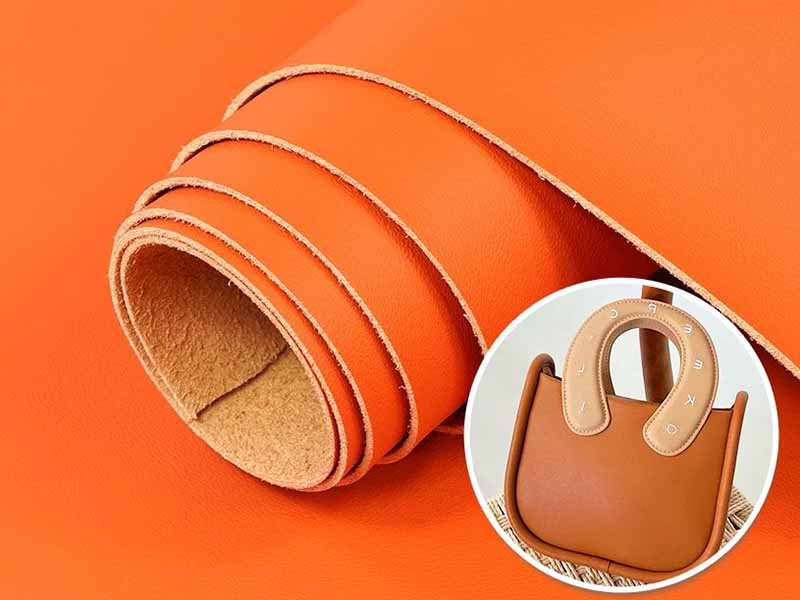
Recycled leather is commonly suitable for products with broad panels, moderate flexing, controlled loads, and adequate backing or reinforcement. Totes, structured handbags, cosmetic pouches, wallets, card holders, passport covers, cases, tags, trims, and presentation goods can be practical applications. Narrow unsupported straps, severe folds, heavy-load equipment, prolonged wet exposure, and safety-critical products require additional qualification.
Bags and Pouches
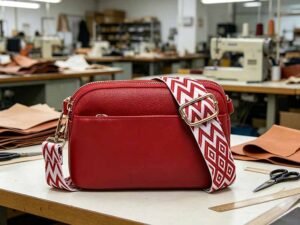
Tote bags, structured handbags, crossbody bags, cosmetic pouches, document cases, laptop sleeves, presentation bags, and gift packaging can all work with recycled leather when the material and construction are properly matched. Broad panels are generally easier to manage because the load is distributed across a larger area and the material does not bend repeatedly along one narrow line.
A tote with webbing handles may be a safer design than one whose narrow recycled leather handles carry the entire load. A structured handbag supported by board, foam, microfiber, or nonwoven reinforcement may perform better than a soft, collapsible bag that is squeezed and folded repeatedly. The design should take advantage of the material’s uniform surface while protecting high-stress zones.
Hybrid construction is frequently the most practical solution. Recycled leather may be used on the body, base, pocket, zipper pull, logo patch, handle wrap, or decorative trim, while fabric, webbing, microfiber, or another material carries structural stress. This approach can preserve the desired appearance and recycled-material story without placing unrealistic performance demands on one sheet.
Cosmetic pouches normally carry moderate loads, but zipper ends still need reinforcement. Users pull the zipper in the same direction hundreds of times, concentrating stress into two small points. Backing behind the zipper ends and a carefully designed seam extension can reduce tearing. Laptop sleeves can also use recycled leather effectively when foam, lining, and corner structure absorb impact and prevent sharp surface folding.
Small Leather Goods
Wallets, card holders, passport covers, key cases, luggage tags, notebook covers, coin pouches, eyewear cases, and cable organizers can make efficient use of recycled leather. Their relatively small pattern pieces support high cutting yield, especially when the material is supplied in regular sheets or rolls. However, small products often place more layers, folds, and painted edges into a limited area.
A wallet may contain several pocket layers, a center hinge, folded edges, lining, reinforcement, and stitching within a few millimeters of one another. A material that feels thin as a single sheet can become bulky when five or six layers meet at a corner. Patterns should reduce unnecessary overlaps and use thinner lining or pocket materials where possible.
Card pockets need controlled friction and recovery. If the material stretches too much, the cards may become loose. If it remains too rigid, insertion becomes difficult. A coated surface with high friction can also make the product uncomfortable to use. Samples should be tested with the number and type of cards expected in actual use rather than assessed when empty.
Repeated folds are another key risk. A passport-cover spine or wallet hinge may bend thousands of times. A separate flexible hinge, reduced coating thickness, larger fold radius, or microfiber support can improve performance. Logo processes also require testing because heat stamping may flatten grain, debossing may recover too quickly, and some coatings may not accept printing or foil consistently.
Application Specifications
The following specifications are practical development ranges rather than universal requirements. The correct thickness depends on material density, backing, surface coating, finished structure, reinforcement, load, and required test performance. Two sheets of the same thickness may behave very differently when one has a strong textile backing and the other relies mainly on the composite body.
| Product Application | Common Starting Thickness | Suggested Support | Main Risk to Test |
|---|---|---|---|
| Card holder | 0.6–0.9 mm | Thin support at folds and pocket openings | Edge cracking and pocket recovery |
| Wallet | 0.7–1.0 mm | Flexible hinge or controlled skiving | Repeated flexing and seam bulk |
| Passport cover | 0.7–1.1 mm | Thin lining or microfiber backing | Center-fold cracking |
| Cosmetic pouch | 0.8–1.2 mm | Lining and zipper-end reinforcement | Tearing around zipper ends |
| Tote body | 1.0–1.4 mm | Base support and reinforced handle anchors | Stretching under load |
| Structured handbag | 1.1–1.6 mm | Board, foam, or microfiber | Delamination around curves |
| Laptop sleeve | 0.9–1.4 mm | Foam and textile lining | Compression and corner stress |
| Logo patch | 0.7–1.2 mm | Depends on base material | Heat damage and edge lifting |
| Presentation case | 0.8–1.4 mm | Board or rigid insert | Corner separation |
| Narrow strap | Material-specific | Continuous internal webbing recommended | Tensile failure and edge cracking |
Product weight should be considered at the same time as thickness. Selecting the thickest option does not automatically create a better product. A heavy sheet increases seam bulk, hardware requirements, shipping weight, and user fatigue. A thinner material with controlled backing and reinforcement can sometimes deliver better structural performance than a thick but weak composite.
The development team should compare at least two or three possible constructions. One material may offer better flexibility, another stronger backing, and a third cleaner edge finishing. Full prototypes should be loaded, opened, closed, packed, handled, and reviewed under realistic conditions. The right decision comes from the finished product, not from choosing the most impressive swatch.
High-Risk Uses
High-risk applications are not always impossible, but they require stronger evidence before production. Narrow shoulder straps made entirely from recycled leather can fail because the complete load passes through a small cross-section. Heavy tool bags, large luggage handles, industrial carriers, outdoor equipment, and products exposed to continuous abrasion need specific structural testing.
Water resistance also needs careful communication. A recycled leather surface may resist light splashes, while the finished bag still allows water through seams, needle holes, zippers, edge paint, and hardware openings. Claims such as waterproof, fire-resistant, chemical-resistant, or safety-protective should be based on testing of the finished product rather than on general material descriptions.
Very sharp folds and tight corners are another concern. The outer coating stretches while the inner layers compress, creating high stress at the bend. Increasing the radius by a few millimeters can reduce whitening, cracking, and separation. Designs with frequent flexing should be evaluated after aging, not only when the material is new.
Products intended for strong heat, freezing temperatures, prolonged humidity, food contact, baby use, or other regulated applications need appropriate material and product testing. A sheet that performs well in a sample room may soften or become tacky in a hot container, while another may stiffen in cold storage. The intended market, climate, cleaning method, service life, retail price, and consumer expectation should guide the decision.
Is Recycled Leather Durable and Sustainable?
Recycled leather can be sufficiently durable for many accessories and bags when its composition, backing, coating, structure, and application are properly matched. It can recover leather waste and reduce demand for virgin materials, but sustainability depends on more than recycled content. Product lifespan, binder chemistry, energy use, traceability, repairability, logistics, packaging, and end-of-life options also influence its environmental value.
Durability Factors
Durability is not a single property attached to the word recycled. A sheet may have acceptable tensile strength while its surface coating performs poorly during repeated flexing. It may resist rubbing on a flat panel but tear around a rivet. It may work successfully as a decorative patch while failing as an unsupported handle. Product developers need to separate performance into the properties that match the actual use.
Tensile and tear behavior matter for straps, seams, hardware holes, and loaded panels. Flex resistance matters for flaps, wallet folds, gussets, and hinges. Rubbing and abrasion matter for corners, handles, bases, and surfaces that contact clothing or furniture. Adhesion matters wherever the construction includes a coating, backing, lamination, edge paint, or glued assembly.
Temperature and moisture can change the way a composite performs. Certain binder and coating systems may soften in heat, stiffen in cold, or gradually weaken in humid conditions. Transport must also be considered because finished products can remain in closed cartons and shipping containers for several weeks. The environment inside a container may be considerably hotter and more humid than the conditions in a sample room.
During development, a bag may be filled to around 1.5–2.0 times its intended working load as an internal screening exercise. The product can then be held, lifted, or cycled according to the expected use. This is not a universal standard, but it can reveal stretching, rivet movement, handle deformation, and weak seam areas before formal laboratory testing and bulk production.
Peeling and Cracking
Peeling occurs when the bond between two layers fails. The decorative coating may separate from the recycled leather body, the body may detach from the textile backing, or a glued assembly may release. Failure often begins at an edge, fold, needle hole, hardware opening, or corner where stress is concentrated.
Several conditions can contribute. The coating may be too rigid for the base sheet. The binder may be sensitive to humidity. Lamination adhesive may not have cured completely. Excessive skiving may remove the supporting layer. A product may be folded below the material’s safe radius. Heat, moisture, plasticizer migration, or incompatible glue can weaken the interface over time.
Cracking can occur even when the layers remain attached. A heavy topcoat may not stretch sufficiently over a tight bend. Repeated flexing can create small surface lines that gradually become visible fractures. Whitening at a fold is often an early warning sign, especially around wallet spines, flap hinges, gusset corners, and painted edges.
Prevention should begin during sample development. The material needs to be folded face-in and face-out, glued with the intended adhesive, sewn with the production needle and thread, edge-painted, heat-stamped, and flexed after full curing. Testing only a flat raw sheet does not represent the stresses introduced during assembly. When failure appears, the team should identify whether it involves the coating, backing, internal fiber body, adhesive, or edge finish before changing the construction.
Sustainability Beyond Content
Recovering leather waste can divert material from disposal and reduce the quantity of virgin material required for some products. Regular sheets and rolls may also improve cutting yield compared with irregular hides, particularly for small accessories and geometric panels. These advantages are meaningful, but they do not automatically make every recycled leather product environmentally superior.
Binder and coating chemistry matter because a high proportion of synthetic polymer can complicate further recycling. Textile backing, adhesive, edge paint, lining, foam, reinforcement, thread, zippers, and hardware make the final product a multi-material system. Separating those components at the end of the product’s life may be difficult, even when the outer material contains verified recycled leather.
Manufacturing energy also matters. Shredding, drying, pressing, coating, curing, laminating, embossing, and transporting the material all require resources. The environmental result depends on the complete system rather than one percentage printed on a marketing page. Waste origin, factory process, energy source, chemical controls, logistics, packaging, and defect rate can all affect the final impact.
Product lifespan is one of the most important considerations. A recycled-content bag that cracks or delaminates quickly may use more resources per year of service than a longer-lasting alternative. Durability, repairability, replaceable hardware, controlled construction, and honest care instructions should therefore be included in the sustainability strategy. The strongest claim is not the broadest claim; it is the one supported by specific evidence and a product that performs as intended.
Performance-Impact Balance
The highest recycled percentage is not always the best engineering decision. Increasing leather-fiber content may reduce flexibility or internal bonding if the binder system is not adjusted. Adding textile backing or structural reinforcement may increase product lifespan even though it introduces another material. The development team must balance recycled content, durability, appearance, weight, cost, manufacturability, repairability, and expected service life.
Hybrid construction can provide a better overall result. Recycled leather may cover broad exterior panels, while recycled polyester webbing carries the handle load. Microfiber may form a flexible hinge. A coated fabric can protect areas exposed to moisture. Replaceable hardware can extend useful life. A simplified pattern can reduce material use and make future repair easier.
Environmental claims should follow the evidence. A material declaration supports a composition claim. Recycled-content certification may support chain-of-custody or material sourcing. Physical testing supports performance. Factory receiving and production records show that the approved material entered the order. Final inspection confirms that the product matches the agreed specification. These are connected but separate layers of proof.
From a manufacturing perspective, sustainability becomes credible when it survives production and use. A material story has limited value if the factory cannot cut it consistently, the edges cannot be finished cleanly, the surface fails during flexing, or the handle attachment cannot carry the expected load. A longer-lasting, well-engineered product often creates a stronger environmental outcome than a poorly designed product with a larger recycled-content claim.
How Do Buyers Verify Recycled Leather Goods?
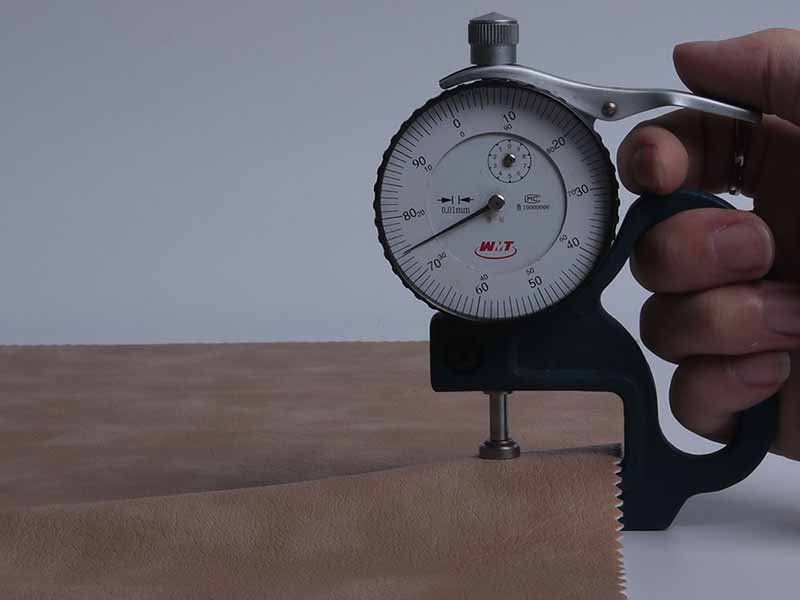
Buyers can verify recycled leather goods through material specifications, composition declarations, recycled-content records, batch traceability, approved samples, relevant laboratory testing, production documentation, in-line inspection, and final quality control. Certification alone does not prove durability, while a passed material test does not prove the entire finished product. Verification should connect the claimed input, actual production lot, finished construction, and agreed performance.
Material Documents
The first document should identify the material accurately. A useful supplier declaration states the material name, composition, recycled percentage, calculation method, waste origin, binder, backing, coating, thickness, weight, width, color, lot number, and recommended application. Descriptions such as eco leather, green leather, sustainable leather, or recycled material are not detailed enough for a purchasing specification.
The buyer should confirm whether the recycled percentage is calculated by weight and whether it applies to the entire sheet or only one layer. A face layer may contain recycled leather while the backing and coating do not. The recycled percentage of the finished bag will be different because the product also contains lining, reinforcement, foam, thread, zippers, hardware, labels, adhesives, and packaging.
Traceability records should connect the material supplier’s lot with the leather-goods factory’s receiving report, storage label, cutting batch, production order, and finished shipment. The system can be straightforward, but it must remain consistent. Roll labels, receiving records, cutting tickets, material issue sheets, and production-lot numbers can form a practical evidence chain.
Where third-party certification is requested, the buyer should confirm the certified organization, validity date, certified material category, facility scope, and transaction-level documentation. A general company certificate does not prove that every material or every order is covered. Chemical-compliance documentation may also be needed for the target market, but chemical testing and recycled-content verification address different questions and should not be treated as interchangeable.
Performance Testing
Testing should reflect how the finished product will be used. A card holder needs fold, rub, edge, and pocket-recovery testing. A tote needs seam, handle, load, abrasion, and hardware-retention testing. A laptop sleeve needs dimensional stability, zipper performance, surface resistance, and compression assessment. The buyer and manufacturer should agree on test methods, conditioning, sample direction, quantity, and acceptance criteria before testing begins.
| Verification Area | Practical Method | Example Development Reference | What It Reveals |
|---|---|---|---|
| Thickness consistency | Multi-point gauge measurement | Suitable materials may be controlled near ±0.10 mm | Seam bulk and batch variation |
| Color consistency | Visual master and instrument where required | Buyer-defined tolerance, sometimes using ΔE | Lot-to-lot color shift |
| Flex resistance | Repeated folding or laboratory flex testing | Often 20,000–50,000+ cycles depending on use | Cracking and delamination |
| Dry and wet rubbing | Controlled rub test | Method- and market-specific rating | Color transfer and coating wear |
| Layer adhesion | Peel or separation screening | No lifting under agreed conditions | Delamination risk |
| Seam strength | Pull testing across sewn assembly | Based on expected product load | Needle-hole and seam failure |
| Handle attachment | Static or cyclic loaded-bag test | Screening may use 1.5–2.0 times intended load | Reinforcement and anchor weakness |
| Hardware retention | Pull test on rivets, rings, and snaps | Project-specific requirement | Hole elongation and release |
| Edge finish | Flex, rub, and visual inspection | No cracking, peeling, or tackiness | Primer and edge-paint compatibility |
| Finished dimensions | Measurement against approved sample | Often ±2–3 mm for small goods and ±3–5 mm for bags | Pattern and assembly consistency |
| Final inspection | Buyer-defined AQL plan | AQL 2.5 major and 4.0 minor are common starting references | Shipment-level defect risk |
These figures are project-development references rather than automatic standards. A demanding luxury-style wallet, a promotional luggage tag, and a daily-use tote may require different criteria. Laboratories should confirm whether conventional leather methods, textile methods, coated-fabric methods, or adapted procedures are technically appropriate for the selected composite.
The finished construction should be tested wherever possible. A raw material may pass flexing but fail after skiving, edge painting, gluing, and stitching. A strong panel may still fail at a handle attachment. Material testing confirms the sheet’s properties, while product testing evaluates the complete construction and how its components interact.
Sample-to-Bulk Control
The approved sample should act as a physical and technical standard. It should identify the outer material, color, thickness, backing, lining, reinforcement, thread, stitch density, hardware, edge treatment, logo process, dimensions, packing method, labeling, and performance requirements. Any unclear detail can become a source of variation during mass production.
A pre-production sample made with bulk materials is often more valuable than the original development sample. Early prototypes may use hand-selected material, temporary hardware, different adhesive, or manually adjusted construction. The pre-production sample confirms that actual bulk components and the intended manufacturing process can reproduce the approved result.
In-line inspection should focus on operations that will become hidden later. These include reinforcement beneath handles, backing behind snaps and rivets, internal webbing, board placement, adhesive coverage, zipper-end support, pocket construction, and lining assembly. Final inspection cannot verify every hidden component without damaging the finished product.
Material substitutions should never be made without approval. A visually similar sheet can have a different backing, binder, coating, thickness, or edge behavior. Any proposed substitution should be documented, sampled, tested where necessary, and approved before production continues. Sample-to-bulk consistency depends as much on disciplined communication and records as it does on sewing skill.
Manufacturer Evaluation
A capable manufacturer should be willing to explain both the advantages and the limitations of a recycled leather material. A supplier that promises one sheet will work for every product is less credible than a team that identifies high-risk folds, narrow straps, heavy-load components, problematic edge constructions, and testing requirements before quotation.
Buyers should ask the factory to review the complete product rather than quote from a photograph alone. A meaningful review includes intended use, dimensions, material construction, thickness, expected load, lining, reinforcement, hardware, edge design, logo method, packaging, testing, order quantity, target market, and delivery requirements. These details influence material consumption, labor, quality risk, and cost.
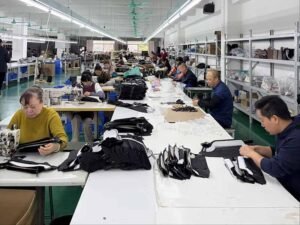
Factory evaluation may include the sample room, material storage, pattern development, cutting, skiving, sewing, edge finishing, hardware installation, in-line inspection, final inspection, packing, and traceability records. Similar product samples, video factory reviews, online technical meetings, pilot runs, and quality documentation can help buyers understand whether the factory controls the complete process or merely transfers the project to an unknown workshop.
Szoneier is a Shenzhen-based custom bags and soft goods OEM/ODM manufacturer with more than 18 years of experience in material sourcing, sample development, sewing production, quality inspection, packaging, and export delivery. For a recycled leather project, buyers can send a reference product, sketch, tech pack, target dimensions, material preference, logo artwork, quantity, testing needs, packaging requirements, and delivery country. The team can then review the material, structure, sampling plan, bulk-production risks, and quotation factors before the project moves forward.
When material identity, sample approval, product testing, production control, and final inspection are connected, recycled leather becomes more than a sustainability label. It becomes a measurable manufacturing specification. To discuss a custom recycled leather bag, wallet, pouch, case, cover, or accessory program, contact Szoneier with your product files and sourcing requirements to begin a practical material and sample evaluation.